
Reviewed · BROOKLYN TOURS
Brooklyn: 2-Hour Brooklyn Navy Yard Walking Tour
Brooklyn’s shipbuilding past is still standing, and you can walk right through it. This 2-hour Brooklyn Navy Yard tour pulls you from the site’s classic wartime role to what’s happening there now—plus you’ll get guided stops that include an 1851 dry dock still used for ship repair and WWII-era audio clips from workers.
My favorite part is how the Yard’s old structures stay in use. You see preserved buildings repurposed for modern industry, not just staged ruins. The main tradeoff: it’s a walking-and-looking experience, not a ride on a tram or an on-board ship visit.
In This Review
- Key Highlights You’ll Feel in Your Feet and Your Head
- Brooklyn Navy Yard in Two Hours: What This Tour Really Is
- Finding the Meet-Up Spot at Building 77 (So You Don’t Get Lost)
- The Secure Campus Reality: You’re Touring a Working Place
- Stop One That Sets the Tone: The Historic 1851 Dry Dock
- WWII Through the Lens of Work: Audio Clips and the Food Manufacturing Space
- Historic Buildings, Modern Industry: How Adaptation Looks Up Close
- Seeing the Waterfront Like a Local: Angles, Infrastructure, and Practical City Power
- What’s Included (and Why It Matters)
- What to Bring and How to Prepare Like a Smart Walker
- Price and Value: Is $25 Worth It?
- Who This Tour Best Fits (and Who Might Skip It)
- Tips to Make the Most of Your Stops
- Should You Book the Brooklyn Navy Yard Walking Tour?
- FAQ
- Where do I meet for the tour?
- How long is the Brooklyn Navy Yard walking tour?
- How much does it cost?
- Is hotel pickup included?
- What’s included with the tour?
- Is the tour wheelchair accessible?
- Is the tour mostly walking?
- Are pets allowed?
- What can I expect to see during the tour?
Key Highlights You’ll Feel in Your Feet and Your Head
- 1851 dry dock in active use for today’s ship repair
- WWII-era audio clips that add voice to the stories of shipbuilding work
- WWII-era food manufacturing space tied to the Yard’s WWII role
- Preserved buildings adapted for modern manufacturing and creative businesses
- A real sense of industrial infrastructure that keeps the city running
- Small, story-focused stops across a huge, secure campus
Deeper into Brooklyn, a few more picks
- Brooklyn Food Walking Tour: Local Eats & Family‑Run Shops
★ 5.0 · 592 reviews - NYC: Brooklyn Graffiti Workshop with Local Artist
★ 4.8 · 570 reviews - Brooklyn Bridge & DUMBO Food Tour: Local Eats & Landmarks
★ 5.0 · 478 reviews - Brooklyn: Bushwick Street Art Walking Tour
★ 4.7 · 462 reviews
Brooklyn Navy Yard in Two Hours: What This Tour Really Is
The Brooklyn Navy Yard is one of those places where history isn’t behind velvet rope. It’s working-class, industrial, and built for function. At its peak it turned out America’s best-known fighting ships, from the USS Maine to the USS Missouri. Today, the site still covers about 300 acres and is packed with 70+ buildings, so you’re not getting a “quick history museum.” You’re getting a guided tour through a live industrial campus.
This tour runs for two hours and stays on foot. That matters, because it shapes what you’ll remember: angles, details, the way buildings relate to the water, and how repair and production happen in a real working environment. You also get audio clips tied to WWII workers, which helps you connect names of ships and eras to the people who made the work happen.
If you like history that you can physically locate—stone blocks, shipyard structures, industrial layouts—this tour is a good match. If you’re expecting a big bus ride and constant high-drama sights, read that second sentence again: it’s mostly walking, stopping, and learning.
Finding the Meet-Up Spot at Building 77 (So You Don’t Get Lost)
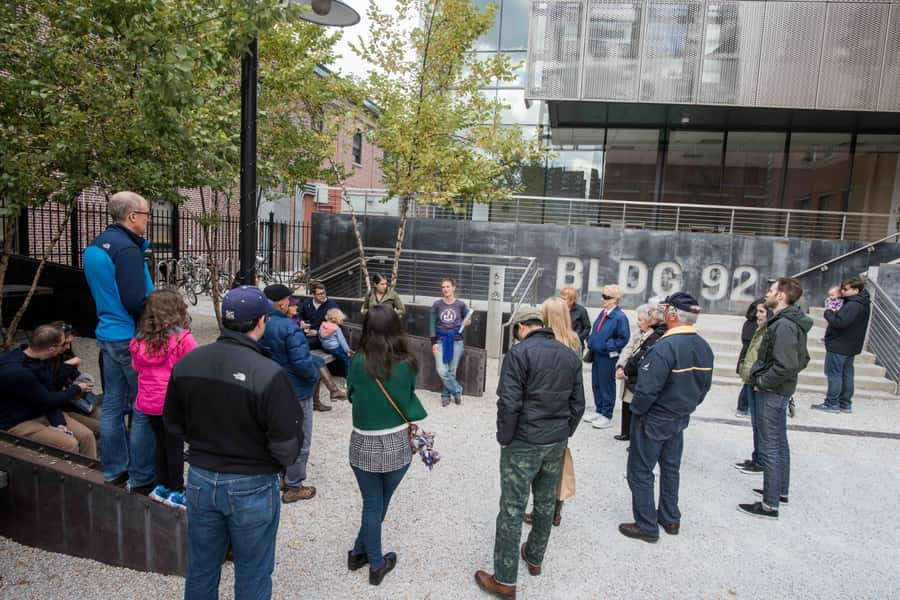
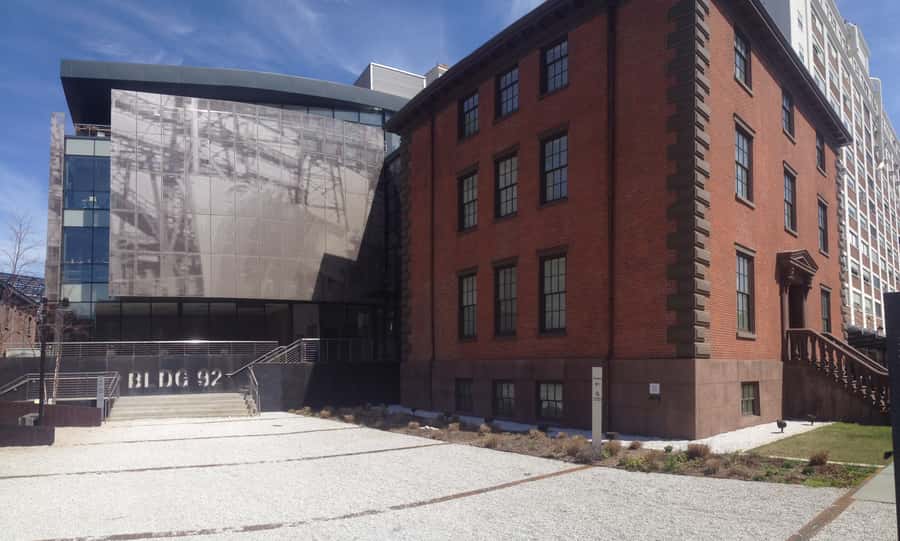
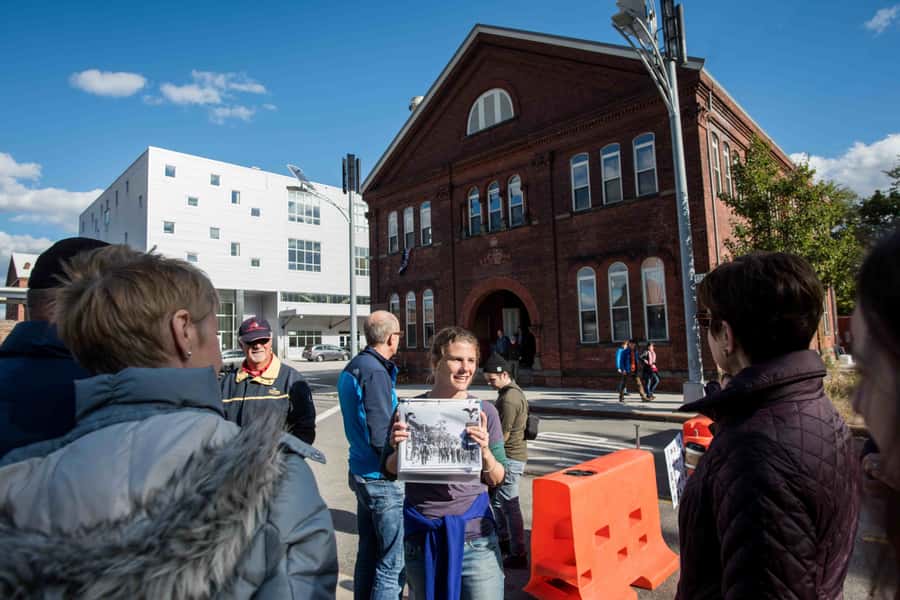
Your starting point is simple, but it’s easy to mess up if you punch in the wrong address. Meet your guide in front of Russ & Daughter’s bakery, on the ground floor public space at Building 77, 141 Flushing Avenue. It’s at the intersection of Flushing and Vanderbilt Avenues, and it’s publicly accessible from Flushing Avenue.
Good news: the Brooklyn Navy Yard NYC Ferry stop is nearby, so if you’re combining this with other waterfront plans, you can build your day around that. Still, use the exact Building 77 address as your anchor. The Yard is a massive secure facility, and you don’t want to wander toward security gates thinking you’ll just “ask your way in.” You won’t.
Plan to arrive a few minutes early so you can get oriented. This tour is scheduled and timed around your guide’s route through the Yard, so starting late tends to compress the experience.
The Secure Campus Reality: You’re Touring a Working Place
One thing I appreciate about this tour is that it sets expectations upfront. The Brooklyn Navy Yard is not a casual park. It’s a secure industrial facility. You’ll explore on foot with your guide, but you should treat every boundary and gate like it’s there for a reason—because it is.
That’s also why the guide’s presence matters. You’re walking through areas where modern businesses operate. You’re not meant to enter restricted areas on your own. So your “win” here is staying in the story: the Yard’s layout, its past uses, and how those same spaces support today’s ship repair and production.
If you’re the type who loves small details—brickwork changes, reused structures, visible industrial infrastructure—this place rewards you. You can’t just wing it here and get the same context in an unhurried way.
Brooklyn at street level, a few more walks



Stop One That Sets the Tone: The Historic 1851 Dry Dock
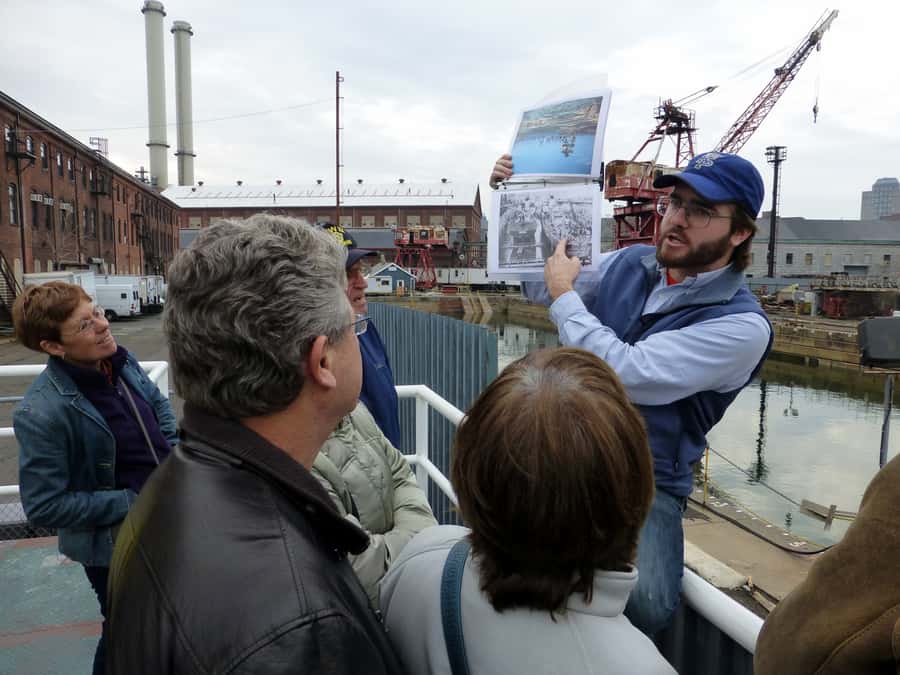
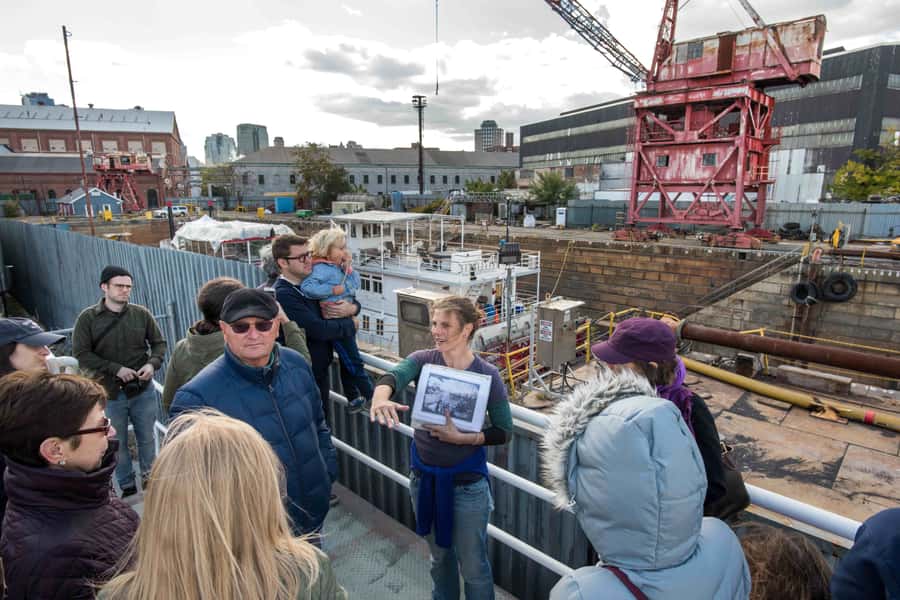
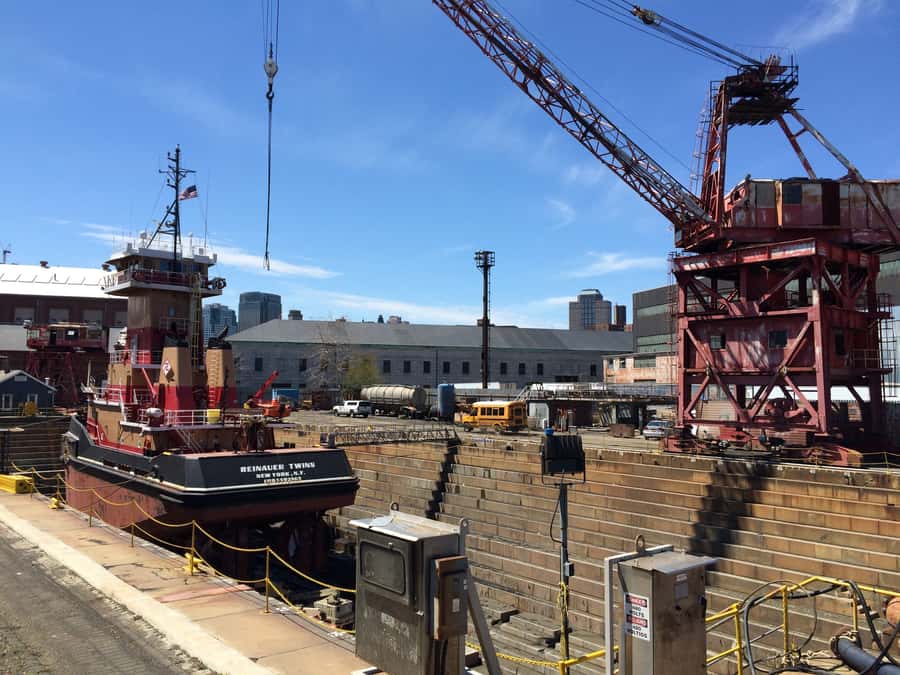
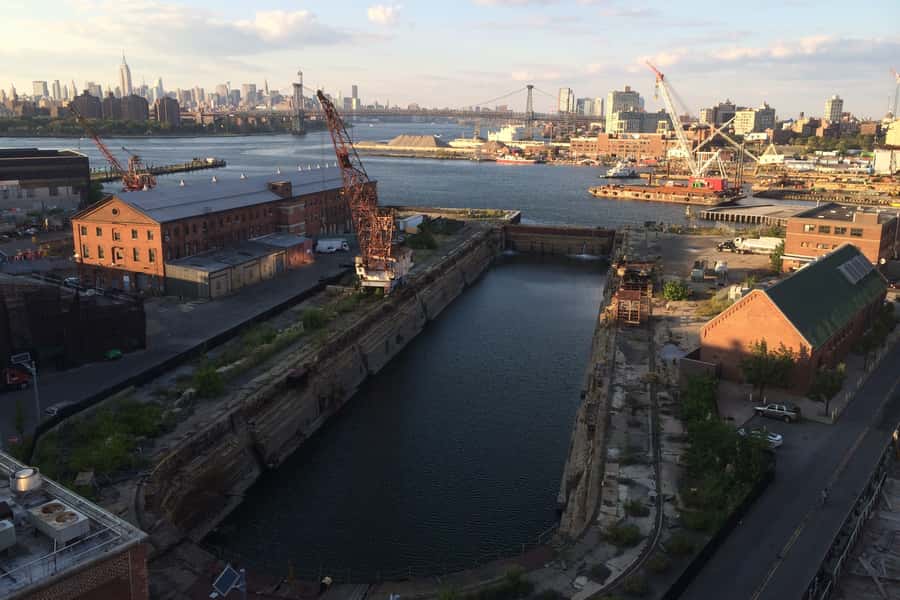
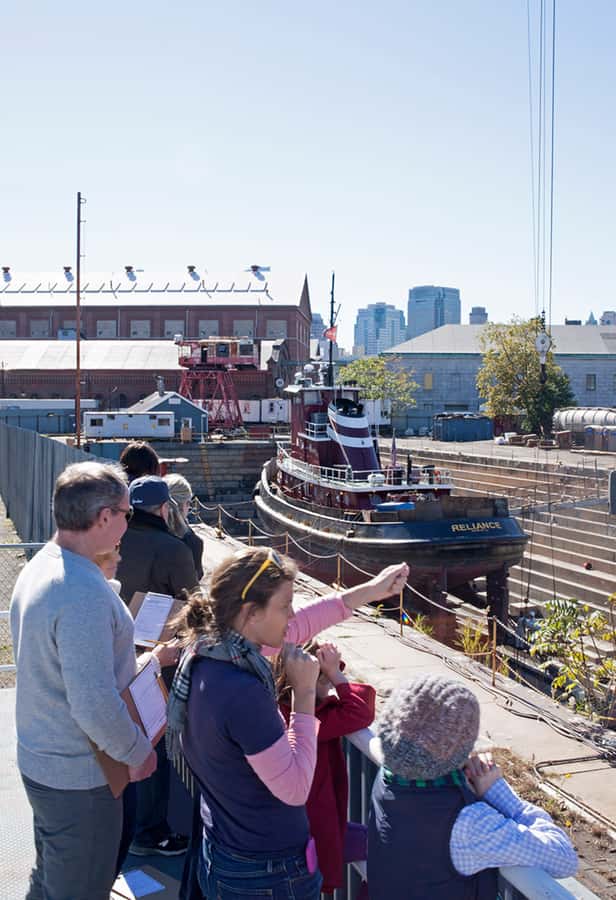
The 1851 dry dock is the kind of anchor point that makes the whole tour click. Dry docks are where ship repair becomes practical—where vessels can be brought out of the water and worked on, hull by hull. Seeing a structure from the mid-1800s that is still used for ship repair today is the clearest proof that the Yard isn’t just “old.” It’s functional.
On this tour, you’ll visit this dry dock as one of the highlights, and your guide will connect the dots between how ship repair works now and how it worked when the Yard was producing America’s most famous naval ships. Even if you’re not a ship-nerd (no judgment), the physical layout tells a story: water, access, support structures, and the practical logic of industrial design.
This is also where audio elements can help. Hearing WWII-era stories while looking at a site that long predates the war gives you perspective. You’re seeing the machinery of work that long served defense and repair, then watching how the same kinds of needs keep returning in modern form.
WWII Through the Lens of Work: Audio Clips and the Food Manufacturing Space
This tour includes more than shipbuilding lore. It also points out how the Navy Yard’s WWII role went beyond steel and ships. You’ll visit a food manufacturing space that served as a nerve center of the site during WWII.
That might sound unexpected if your mental image of a navy yard is mostly docks and hulls. But it’s exactly the kind of detail that makes a short guided tour worthwhile. War logistics run on food, supplies, and systems that keep people working and moving. In a WWII context, “food manufacturing” is part of national capacity—not a side story.
The audio clips from WWII-era workers add a human layer. You’re not only looking at buildings; you’re hearing voices tied to the era the Yard is famous for. That makes the stop feel less like sightseeing and more like time travel with a soundtrack you can actually follow.
If you want to understand the Yard as a full production ecosystem—industrial, supply, repair—this is one of the best parts of the experience.
Historic Buildings, Modern Industry: How Adaptation Looks Up Close
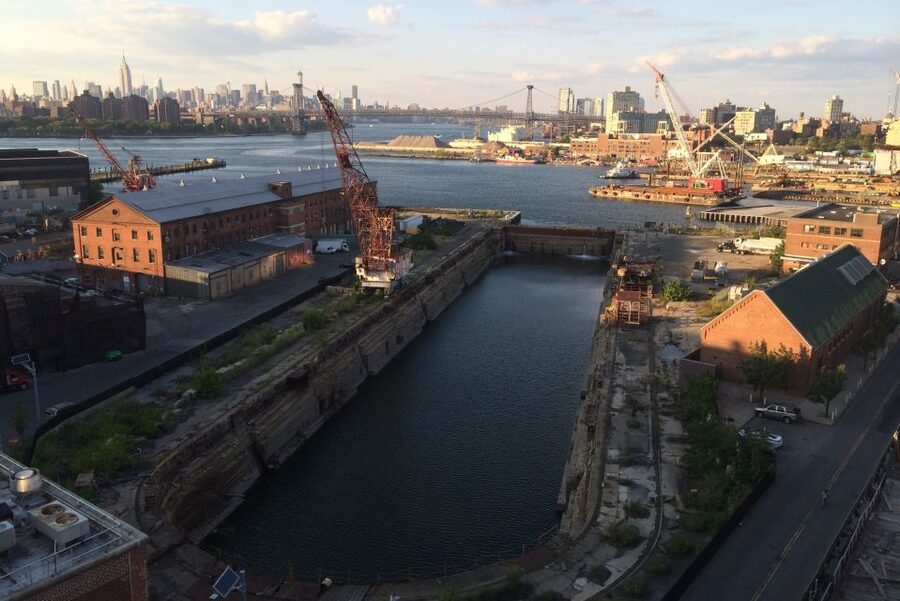
One of the tour’s core promises is that you’ll see how historic structures were preserved and adapted for modern use. On a huge 300-acre site, that’s not just a philosophical concept. It’s visible in how buildings relate to the waterfront, how space is reused, and how old industrial forms can stay in service when needs change.
You’ll also hear about the types of work happening now. The Yard is home to hundreds of businesses, including manufacturers and creative industries. The tour doesn’t treat “today” like a separate world. It frames it as a continuation of making things, repairing equipment, and running logistics from a physical layout designed for production.
I like that this approach keeps the story grounded. You don’t get a “greatest hits” slideshow. Instead, you see the bones of the site and learn what those bones enabled—then you see what they support now.
Seeing the Waterfront Like a Local: Angles, Infrastructure, and Practical City Power
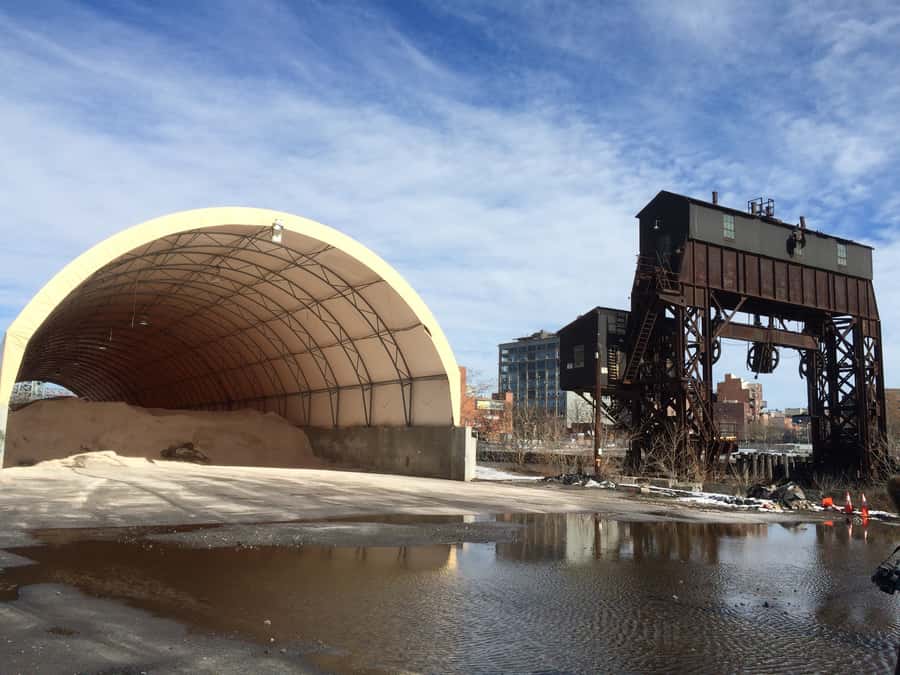
The Yard isn’t just scenic. It has infrastructure that’s central to keeping New York running. During your walk, you’ll notice how the facility’s systems support ship repair, movement, and production. Even from a distance, the layout explains why industrial waterfronts look the way they do.
This part is also where one review-friendly reality shows up: don’t expect constant dramatic “wow.” It’s more like smart, patient sightseeing. You’ll stop at points where the Yard makes sense—where you can see the relationship between buildings, water, and repair spaces.
If you’re the kind of traveler who enjoys “I get it now” moments, you’ll likely love this. If you need constant motion on a bus or the chance to step onto a preserved ship, you might feel the pacing is calmer than you hoped. This tour is built for walking and learning, not for transportation theater.
What’s Included (and Why It Matters)
This tour includes assistive listening devices if you ask in advance. That’s a genuinely useful add-on, because the Navy Yard environment can be noisy, and the stories are the point. If you rely on hearing support, this is worth taking seriously rather than treating it as a “maybe.”
Also included are the guided elements: your live English-speaking guide and the audio clips. You’re paying for interpretation—someone helping you connect what you’re seeing to what it meant.
What to Bring and How to Prepare Like a Smart Walker
Wear comfortable shoes. You’ll be on foot for two hours in an industrial setting, and the right shoes make the difference between a relaxed walk and a day you regret.
Other practical notes from the tour info:
- Pets aren’t allowed, so leave them at home.
- Wheelchair accessibility is supported, but you’ll still be moving through a working campus environment. If you’re bringing a mobility device, I’d plan for time and check in on what surfaces and routes the guide uses.
And bring a basic mindset: this is a working place. You’ll get the most out of it if you watch for details instead of only chasing famous landmarks.
Price and Value: Is $25 Worth It?
At $25 per person for two hours, this tour sits in the “reasonable and focused” category. You’re paying for:
- a guided path through a large, secure industrial site (not something you’d easily explore alone with context),
- visits to standout locations like the 1851 dry dock, and
- interpretive storytelling, including WWII-era audio clips and a WWII-era food manufacturing space.
The value is highest if you care about the why behind what you see. If you like walking tours where the guide turns architecture and infrastructure into a story, you’ll likely feel it was worth the ticket.
It may feel less worth it if you mainly want big interactive experiences, like boarding an old ship or riding around in a vehicle for the whole loop. This tour doesn’t promise that kind of access based on the information you have. It’s built around looking, walking, and learning.
Who This Tour Best Fits (and Who Might Skip It)
This is ideal for you if:
- you’re interested in maritime and WWII-era logistics,
- you like industrial architecture and adaptive reuse,
- you want a guided “sense-making” walk rather than a self-guided wander.
It’s a weaker fit if:
- you want constant variety every five minutes,
- you expect vehicle transportation or an on-ship experience,
- you’re mainly there for pure museum content you can study on your own.
Think of it like this: the tour is a practical way to get the Yard’s story fast, without trying to decode a complex campus solo.
Tips to Make the Most of Your Stops
A short tour can either feel like information overload or it can feel like a clear storyline. Here’s how to tilt it toward the second outcome:
- Listen for the workers’ role, not only the machines. The WWII-era audio clips are there for context.
- Watch the transitions: old structures becoming new uses. That’s the whole theme.
- Slow down at the dry dock. Dry docks are technical, and you’ll get more out of it if you look before moving on.
- Ask yourself what the Yard needed to function—ship repair, production, supply. When you think that way, every stop becomes clearer.
If you do just one thing, do this: treat the Yard like a workplace with a past, not like a theme park with exhibits.
Should You Book the Brooklyn Navy Yard Walking Tour?
If you want a 2-hour guided walk that connects the Brooklyn Navy Yard’s famous shipbuilding era to what’s happening there now—especially with a visit to the 1851 dry dock and storytelling that includes WWII-era audio clips—then yes, this is worth booking.
Skip it only if you’re chasing big thrills, vehicle rides, or the chance to board an old ship. Based on how the experience is described, this tour is best for travelers who enjoy steady walking, smart explanations, and real-world industrial context you can actually see.
Go in with the right expectation—comfortable shoes, curious eyes, and an appetite for how infrastructure shapes history—and you’ll come away feeling like you understand the Yard, not just visited it.
FAQ
Where do I meet for the tour?
Meet your guide in front of Russ & Daughter’s bakery in the ground floor public space at Building 77, 141 Flushing Avenue, at the intersection of Flushing and Vanderbilt Avenues.
How long is the Brooklyn Navy Yard walking tour?
The tour lasts about 2 hours.
How much does it cost?
The price is $25 per person.
Is hotel pickup included?
No. Hotel pickup and drop-off are not included.
What’s included with the tour?
It includes a live tour guide, audio components, and assistive listening devices are available with advance notice.
Is the tour wheelchair accessible?
Yes, the tour is wheelchair accessible.
Is the tour mostly walking?
Yes. The Yard is explored on foot during the tour.
Are pets allowed?
No, pets are not allowed.
What can I expect to see during the tour?
You’ll see historic preserved buildings adapted for modern industry, visit an 1851 dry dock still used for ship repair, learn about workers and shipbuilding, and explore areas connected to WWII and today’s businesses.
More Tour Reviews in Brooklyn
- Brooklyn Food Walking Tour: Local Eats & Family‑Run Shops★ 5.0 · 592 reviews
- NYC: Brooklyn Graffiti Workshop with Local Artist★ 4.8 · 570 reviews
- Brooklyn Bridge & DUMBO Food Tour: Local Eats & Landmarks★ 5.0 · 478 reviews
- Brooklyn: Bushwick Street Art Walking Tour★ 4.7 · 462 reviews
- All Inclusive Airport Departure Transfer NYC/ Brooklyn/Queens★ 4.0 · 342 reviews
Brooklyn, One Block at a Time
- Brooklyn Food Walking Tour: Local Eats & Family‑Run Shops★ 5.0 · 592 reviews
- Brooklyn: Bushwick Street Art Walking Tour★ 4.7 · 462 reviews
- NYC: Brooklyn Bridge and Dumbo District Walking Tour★ 4.7 · 200 reviews
- Brooklyn: 2-Hour Best of Brooklyn Walking Tour -Williamsburg★ 4.3 · 120 reviews
- Brooklyn NYC Food & Walking Tour with a 5th Generation New Yorker★ 5.0 · 73 reviews
Keep Going in Brooklyn
- Brooklyn Food Walking Tour: Local Eats & Family‑Run Shops★ 5.0 · 592 reviews
- NYC: Brooklyn Graffiti Workshop with Local Artist★ 4.8 · 570 reviews
- Brooklyn Bridge & DUMBO Food Tour: Local Eats & Landmarks★ 5.0 · 478 reviews
- Brooklyn: Bushwick Street Art Walking Tour★ 4.7 · 462 reviews
- All Inclusive Airport Departure Transfer NYC/ Brooklyn/Queens★ 4.0 · 342 reviews
Just in: the newest Brooklyn reviews on our desk





Brooklyn Tours, compared.
 ★ 5.0NYC Bus Tour of Brooklyn, Bronx, Queens: Art, Food & SportsFrom $843,805 reviews
 ★ 4.5NYC Highlights Tour: Bronx, Brooklyn, Harlem, Queens & ConeyFrom $462,846 reviews
 ★ 4.6From Manhattan: 4-Hour Dyker Heights Holiday Lights Bus TourFrom $632,426 reviews
 ★ 4.5Contrasts Tour of Harlem, The Bronx, Queens & BrooklynFrom $392,167 reviews
 ★ 4.7Brooklyn Nets NBA Game Ticket at Barclays CenterFrom $312,033 reviews
 ★ 4.3From Manhattan: Bronx, Queens and Brooklyn Half-Day TourFrom $791,321 reviews
 ★ 4.7Dyker Heights Christmas Lights & Skyline View Bus TourFrom $691,192 reviews
 ★ 4.4From Manhattan: Full-Day NYC Boroughs and Coney Island TourFrom $491,120 reviews
Browse the lists this tour appears in