
Reviewed · 3-HOUR EXPERIENCES
3 Hour Midtown Manhattan Architectural Tour
Midtown becomes readable when someone points things out. This 3-hour architecture walk turns the grid into a story, with stops from The Plaza to Grand Central Terminal and plenty of design history you’ll actually remember.
I love the chance to see famous buildings at sidewalk level and spend real time in the lobbies and public interiors where access is offered. I also love the small-group feel, capped at 8, and the way the guide (Annabel is often the one leading) shapes the pace around what your group cares about.
One thing to consider: you’re outside for most of it, so traffic noise can make the first minutes harder to hear. If you struggle with street sound, bring a little patience and plan to settle in as the tour gets moving.
In This Review
- Key highlights worth planning for
- Midtown on Foot: Why This 3-Hour Route Works
- Start at The Plaza (768 5th Ave): The Fifth Avenue “Stage Set”
- The Plaza to Sherry-Netherland: Lobbies as City-Branding
- St. Regis and Millionaires’ Row: From Residences to Business Avenue
- Seagram Building and Corporate Modernism: The Style That Spread Worldwide
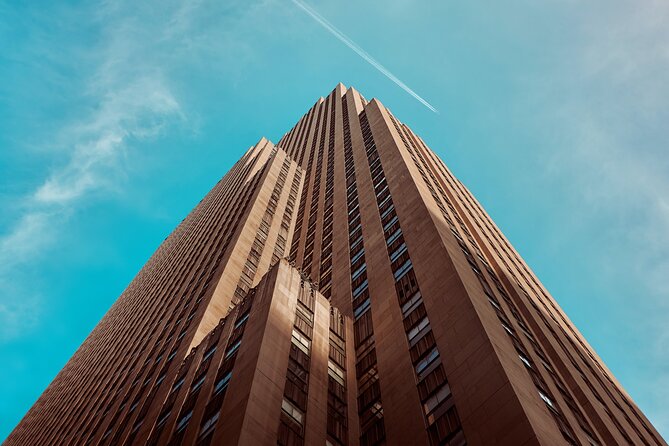
- GE (RCA) Building: Chrome, Marble, and the Radio-Waves Crown
- Waldorf Astoria: Luxury as a Hosting Machine
- Rockefeller Center: 22 Acres, 100+ Artworks, and Depression-Era Ambition
- Empire State Building From Outside: Icon Views Without the Ticket
- New York Public Library’s Schwarzman Building: Stacks, Space, and Time
- Chrysler Building: Art Deco and the Power of a Signature Shape
- Grand Central Terminal: The City’s Transportation Brain
- What Annabel’s Tour Style Adds (And Why It Matters)
- Price and Value: Getting $85 Worth of Midtown
- Who Should Book This Midtown Architecture Tour
- Should You Book This Midtown Architecture Tour?
- FAQ
- How long is the Midtown Manhattan Architectural Tour?
- Where does the tour start and end?
- What is the price per person?
- What language is the tour offered in?
- Are there admission fees for the stops?
- How many people are in the group?
- Is it a walking tour that requires physical effort?
- Do I need anything to enter the tour?
- Are service animals allowed?
Key highlights worth planning for
- Lobby-first architecture: you get more than quick photos; you look closely at interiors that shaped Midtown’s image.
- Modernism, Art Deco, and corporate power: the tour connects styles to the people and economics behind them.
- Famous landmarks, no ticket needed: many major stops are included without paid admission (but Empire State Building is not).
- Annabel’s tailoring: the tour adjusts to your interests and keeps the conversation going.
- Tight timing: about 15 minutes per stop, with enough talk to feel informed without feeling rushed.
Worth a look right next to this New York City pick:
- NYC at Night: 3-Hour Luxury Bus Tour of Top Highlights
★ 4.5 · 448 reviews - 3 Hour Luxury Bus Tour of NYC Night Highlights
★ 4.5 · 204 reviews - Brooklyn: 3-Hour Williamsburg Bites Food Tour
★ 4.5 · 58 reviews - 3-Hour Private New York Classic Films Guided Tour
★ 4.5 · 57 reviews
Midtown on Foot: Why This 3-Hour Route Works
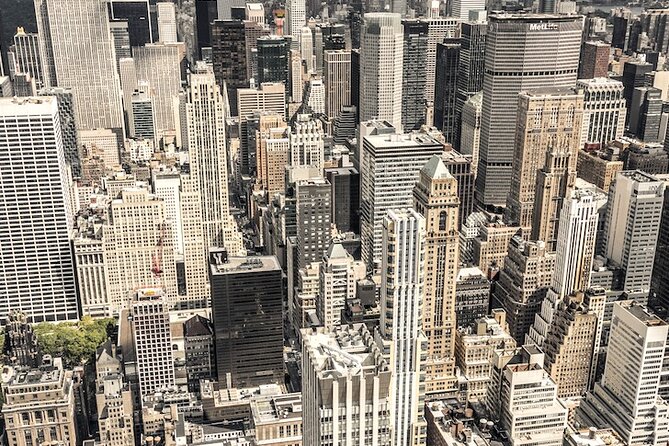
This tour is built for people who want architecture, not a bus-and-museum checklist. Midtown can feel like one long “wow,” but walking with a guide helps you sort the styles, spot details, and understand why these buildings look the way they do.
For $85 per person, you’re paying for a focused morning and a guided filter through the city’s most famous blocks. The big value move is that many stops come with free access to what you’re looking at—especially lobbies and public areas—so your money goes toward interpretation, not extra tickets.
You’ll also appreciate the small group size (maximum 8). That matters in New York, where foot traffic and crosswalk timing can ruin a big-group experience. A tighter group keeps it conversational, and it gives the guide room to answer questions without turning the walk into a lecture.
Finally, it ends at Grand Central Terminal, which is perfect timing if you’re trying to slot in breakfast, transit, or a later museum plan afterward.
Start at The Plaza (768 5th Ave): The Fifth Avenue “Stage Set”
Your meeting point is The Plaza, 768 5th Ave, starting at 9:00 am. This is a smart choice because The Plaza sits right at the showy end of Fifth Avenue, so you begin in the exact mood the rest of the tour builds on: glamour, money, and design meant to impress.
The Plaza’s look is famously tied to the pomp of a French chateau. It’s the kind of landmark that shows up in movies and press because it’s instantly recognizable. But the tour framing helps you see beyond the postcard: you start to notice how luxury architecture uses symmetry, materials, and grand entrances to signal status.
The first moments can feel loud outside, especially with street noise. Give it a minute. Once the group is oriented, you’ll hear the stories better and start connecting what you see with what the building was trying to communicate.
And yes, you’ll likely take plenty of photos—but the goal is learning how to look at them later.
The Plaza to Sherry-Netherland: Lobbies as City-Branding
After The Plaza, you move toward the Sherry-Netherland area for a key interior-design story. The stop is brief, but the point is big: Midtown’s architects didn’t just design buildings; they designed experiences for wealthy guests and business elites.
At the Sherry-Netherland, the lobby is modeled after the Vatican Library. That’s the kind of detail that sounds like a trivia nugget until you realize how it works. Libraries, scholarship, and curated knowledge were status symbols long before the internet—so borrowing that visual language turned a hotel lobby into a “you belong here” statement.
Even in a short stop, this is where the tour’s format shines. You’re not stuck waiting for a long line or a museum ticket. You get a focused moment to look at materials and space as if you’re reading a visual essay.
If you care about how architecture sells an identity, this segment is worth showing up for.



St. Regis and Millionaires’ Row: From Residences to Business Avenue
The St. Regis New York stop is timed to make you understand the shift in Fifth Avenue’s role. It connects the story of John Jacob Astor IV—one of the wealthiest men in America—to the transformation of the street from Millionaires’ Row into a fashionable commercial corridor.
This isn’t just name-dropping. The tour uses Astor’s influence to explain why these buildings landed where they did, and why luxury design became a tool for attracting both residents and later, business traffic. In other words: the architecture isn’t random. It’s a response to how power wanted to move through the city.
You’ll also get a sense of how luxury branding evolves. Hotels and grand lobbies weren’t only about comfort. They were about signaling taste, connections, and legitimacy in a city where reputation mattered.
If you like your city history with a clear cause-and-effect thread, you’ll enjoy this stop.
Seagram Building and Corporate Modernism: The Style That Spread Worldwide
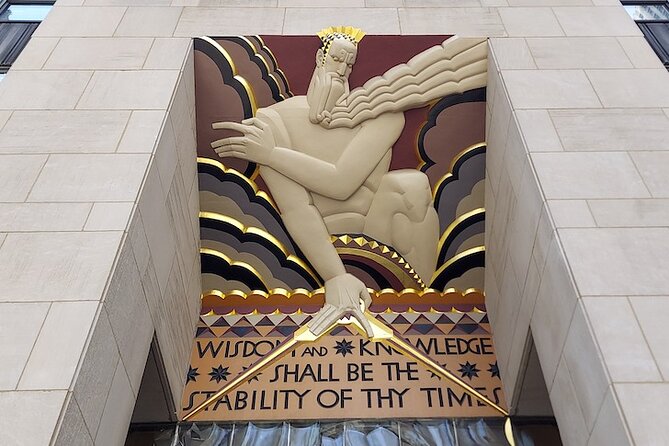
Next is the Seagram Building, one of those Midtown landmarks that keeps getting referenced because it changed the rules. The tour frames it as an architectural milestone and points out that its design set standards for office towers around the world.
Corporate modernism can feel intimidating at first because it looks “simple” compared with ornate Art Deco. The trick is learning what modernism is doing instead of copying older styles. Pay attention to proportions, the way the building relates to the street, and the idea that office architecture could be designed like a machine—clean lines, serious materials, and a confident stance.
You’ll get enough context in about 15 minutes to make the building make sense rather than just “look cool.” This stop is a reminder that New York’s skyline is not only about height; it’s about how business wanted to present itself to the public.
GE (RCA) Building: Chrome, Marble, and the Radio-Waves Crown
The General Electric Building (originally the RCA Building) adds a different flavor: sleek materials plus a “communication” theme. The tour highlights the building as a work of art that ranges from the chrome and marble lobby to a crown shaped like radio waves.
That combo is what makes the building a favorite for people who like connections between design and technology. In a pre-digital world, broadcasting and electronic signals were modern miracles. Architecture leaned into that story by giving the building a visual personality—part corporate headquarters, part symbol of the future.
This is also a good place to slow down with your eyes. If you only glance, it can look like another tower. If you look a little longer, you’ll catch how the lobby materials and the crown are speaking different “languages” that still add up to the same message: power plus progress.
Waldorf Astoria: Luxury as a Hosting Machine
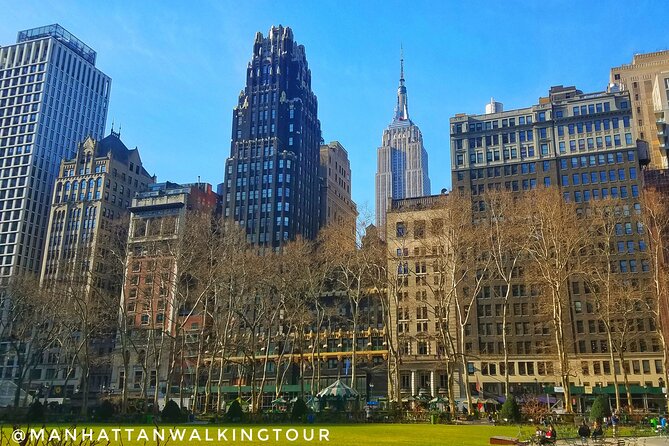
Then you arrive at the Waldorf Astoria New York, a legendary luxury hotel tied to names you’ve heard in history class and in the news. The tour’s angle here is not only opulence—it’s the building as a stage for leadership and diplomacy.
The highlight is that the hotel has played host to U.S. presidents, world leaders, famous celebrities, and foreign dignitaries. When you hear that list, you start to understand why the architecture and interior design matter so much. These buildings are infrastructure for high-level meetings and public image.
The stop is short, but it’s enough to notice how luxury spaces work on multiple levels: entry experience, lobby atmosphere, and the subtle choreography of who is seen where. If you enjoy human stories attached to architecture, this is a satisfying midpoint.
Rockefeller Center: 22 Acres, 100+ Artworks, and Depression-Era Ambition
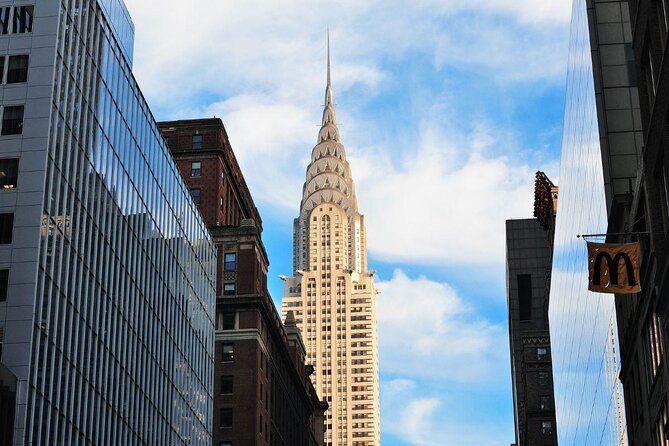
At Rockefeller Center, the tour shifts into large-scale city planning. You’ll hear that it’s a complex of 19 commercial buildings covering 22 acres, with over 100 artworks. More importantly, it was the largest and most expensive development project of its time, providing 60,000 jobs during the Great Depression.
That’s the kind of fact pattern that makes you look differently at public spaces. Rockefeller Center doesn’t feel like a “single building.” It feels like a designed civic environment. The guide’s job here is to connect art, commerce, and economic history so it’s not just a collection of landmarks.
I like this stop because it bridges the gap between high design and real-world need. It’s easy to romanticize architecture. This story brings it back to jobs, budgets, and timing.
If you’ve only thought of Rockefeller Center as somewhere to take photos, this will give you a reason to care about what’s under the surface.
Empire State Building From Outside: Icon Views Without the Ticket
The tour includes the Empire State Building as a sight stop, but you’re not paying for admission during the tour. The point is clear: you still get the scale and the story—like the fact it was the tallest building in the world for 40 years, built in 410 days, and came in under budget.
You also get the naming explanation: “Empire State” ties to the nickname of New York State. That’s a neat way to connect the building to regional identity, not just engineering bragging rights.
Because the tour doesn’t include a ticket here, you should plan for an exterior or street-level experience. If Empire State Building is on your must-do list for indoor observation decks, you can add that separately—but this tour gives you the context so your later visit lands with more meaning.
This is a practical way to fit a top NYC icon into a morning without blowing your schedule or your budget.
New York Public Library’s Schwarzman Building: Stacks, Space, and Time
Next comes the New York Public Library – Stephen A. Schwarzman Building, a stop with serious cultural weight. The tour explains how the library formed through consolidation of the Tilden Trust and the Astor and Lenox libraries on May 23, 1895, and that when it opened in 1911 it held 350,000 volumes.
Then it zooms forward: the collection has grown to over 55 million books and other items, spread over 7 floors.
What I like about including this stop is how it reinforces the whole tour theme: architecture is about intention. The library is not just a building; it’s a physical promise about learning, preservation, and civic pride. When you walk through or view public areas, you feel the design supporting that mission.
It also pairs nicely with earlier stops. You’ve already heard about lobbies modeled on cultural references like the Vatican Library, and now you see a real institution that became a cultural reference itself.
Chrysler Building: Art Deco and the Power of a Signature Shape
The Chrysler Building is treated like a personal symbol of Walter Chrysler and the strength of his corporation. The tour also flags it as often cited as the classic example of Art Deco architecture.
This building is a great final “style” lesson in a walking tour. Art Deco is about geometry, confidence, and a kind of glamorous machine-age spirit. It’s not only decorative. It’s also a way of projecting modernity at a time when the future needed branding.
A short stop here is still enough because the tower shape does much of the storytelling for you. The guide helps you decode why it’s considered iconic and why that signature silhouette mattered to the identity of a corporation.
If you enjoy skyline spotting while you’re in the city, you’ll leave here seeing Art Deco details more often than you did when you started.
Grand Central Terminal: The City’s Transportation Brain
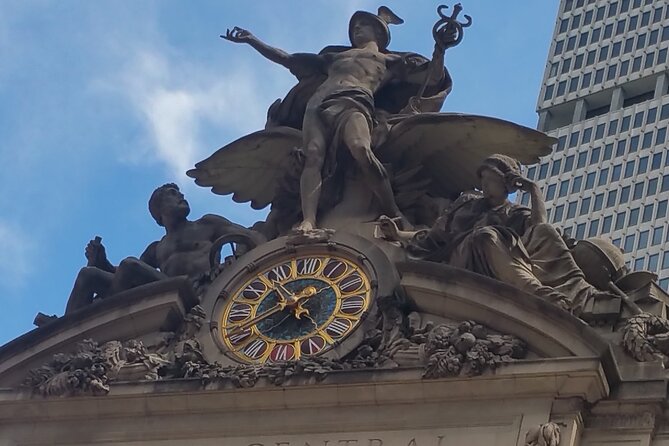
Your tour ends at Grand Central Terminal, 89 E 42nd St, where the focus lands on planning, engineering, and American transit culture. The tour points out there are 44 platforms and 67 tracks, and that the terminal’s innovations influenced decades of American architecture, engineering, and culture.
This ending works because it ties architecture to daily life. Grand Central isn’t just pretty. It’s a system built for movement. When you walk out of the tour, you’ll likely notice how often you’ve passed it without realizing how much is happening inside the structure.
If you’re heading to lunch or catching a train afterward, you’re in the perfect place. You can also use this moment to reset before your next plan.
And because you finish here, you’re not dragging yourself across town at the end of a walking morning.
What Annabel’s Tour Style Adds (And Why It Matters)
Several features make this tour feel better than a standard “look at buildings” walk. The guide—often Annabel—keeps the tone friendly and conversation-based, not just a data dump. That helps you stay engaged for the full route without losing the thread.
Another big strength is tailoring. The tour adjusts to your interests, and you can ask questions as you go. It also connects architecture to the personalities and economics behind the skyline—who had the money, what they wanted the building to say, and how design choices reflected that.
The pacing also matters. Each stop is about 15 minutes, which is just long enough to learn what to notice next. With a small group, you won’t feel like you’re sprinting to keep up, and the guide can slow down if the discussion gets interesting.
Finally, you get access where possible. The stops are marked as free, and the experience often includes time in lobbies and other public areas, which lets you see the buildings as people actually experienced them—not just as exterior silhouettes.
Price and Value: Getting $85 Worth of Midtown
Let’s talk value honestly. At $85 for about 3 hours, the ticket is not cheap. But Midtown architecture isn’t cheap either—your money buys interpretation plus a structured route that saves time figuring out what’s worth seeing.
The best value element is the free access to many stops. You’re not paying separate admission for lobbies and public spaces during the tour route. That’s a smart way to keep costs predictable while still feeling like you got close to the buildings.
The one caveat is Empire State Building isn’t included for admission. You’re viewing it, but not paying for a deck visit as part of the tour. If your priority is going inside, you’ll want to budget that separately.
Overall, this is best viewed as a guided “investment in attention.” The city’s details are right there, but you need someone to point at the right things, in the right order.
Who Should Book This Midtown Architecture Tour
This tour is a great fit if you:
- want a focused morning walking route through Midtown landmarks
- enjoy architecture plus history and the business stories behind it
- like learning how styles evolved, from older grand designs to corporate modernism and Art Deco
- prefer a small-group experience rather than a crowd shuffle
It may be less ideal if you:
- want only exterior views and wide “best-of skyline” photo spots
- dislike walking in street traffic areas for several hours
- need a quiet, seated lecture format the whole time
Also, this tour is rated for people with moderate physical fitness. If you’re comfortable with brisk walking and multiple short stops, you should be fine.
Should You Book This Midtown Architecture Tour?
If you’re spending limited time in Manhattan and want Midtown to feel meaningful, I think you should book it. The route hits the heavy hitters—Plaza, Rockefeller Center, Grand Central—and the guide approach makes those landmarks feel connected instead of random.
I’d especially recommend it if you like learning through details: lobby design choices, how corporations marketed themselves, and how architecture reflects money and ambition. With Annabel’s talk-and-answer style, you’ll likely come away with a new way of seeing the skyline, not just a list of stops.
If you’re sensitive to street noise, plan to arrive a bit early and give your ears time to adjust. Other than that, this tour is a strong “first architecture lens” for Midtown.
You’ll walk away knowing what to look for on your own later.
FAQ
How long is the Midtown Manhattan Architectural Tour?
The tour runs for about 3 hours.
Where does the tour start and end?
It starts at The Plaza, 768 5th Ave, New York, NY 10019, and ends at Grand Central Terminal, 89 E 42nd St, New York, NY 10017.
What is the price per person?
The price is $85.00 per person.
What language is the tour offered in?
The tour is offered in English.
Are there admission fees for the stops?
Most stops are listed as admission free. The Empire State Building stop notes admission is not included, so you would need to plan separately if you want paid entry.
How many people are in the group?
The tour has a maximum of 8 travelers.
Is it a walking tour that requires physical effort?
It’s designed for travelers with moderate physical fitness. You should be comfortable walking for a few hours.
Do I need anything to enter the tour?
You receive a mobile ticket, and confirmation is received at booking.
Are service animals allowed?
Yes, service animals are allowed.
More 3-Hour Experiences in New York City
- NYC at Night: 3-Hour Luxury Bus Tour of Top Highlights★ 4.5 · 448 reviews
- 3 Hour Luxury Bus Tour of NYC Night Highlights★ 4.5 · 204 reviews
- Brooklyn: 3-Hour Williamsburg Bites Food Tour★ 4.5 · 58 reviews
- 3-Hour Private New York Classic Films Guided Tour★ 4.5 · 57 reviews
- 3-Hour Private NYC TV and Movie Tour★ 4.5 · 53 reviews
More Tours in New York City
- Statue of Liberty and Ellis Island Tour: All Options★ 5.0 · 13,571 reviews
- New York in One Day Guided Sightseeing Tour★ 5.0 · 13,166 reviews
- Central Park Pedicab Guided Tours★ 5.0 · 7,108 reviews
- New York City: Manhattan Helicopter Tour★ 4.7 · 7,076 reviews
- Private Central Park Pedicab Tour★ 5.0 · 6,981 reviews
More Tour Reviews in New York City
- NYC: SUMMIT One Vanderbilt Tickets★ 4.7 · 51,195 reviews
- NYC: Empire State Building Tickets – Observatory & Museum★ 4.7 · 25,757 reviews
- New York City: Statue of Liberty & Ellis Island with Ferry★ 4.6 · 18,683 reviews
- New York City: American Museum of Natural History Ticket★ 4.5 · 15,447 reviews
- Statue of Liberty and Ellis Island Tour: All Options★ 5.0 · 13,571 reviews
Just in: the newest New York City reviews on our desk





3-Hour Experiences, compared.
 ★ 4.5NYC at Night: 3-Hour Luxury Bus Tour of Top HighlightsFrom $42448 reviews
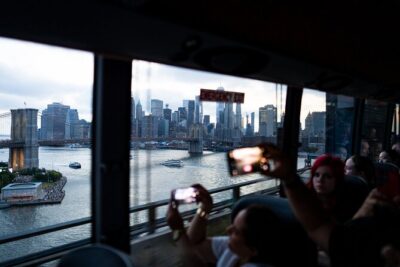 ★ 4.53 Hour Luxury Bus Tour of NYC Night HighlightsFrom $49204 reviews
 ★ 4.5Brooklyn: 3-Hour Williamsburg Bites Food TourFrom $8858 reviews
 ★ 4.53-Hour Private New York Classic Films Guided TourFrom $27157 reviews
 ★ 4.53-Hour Private NYC TV and Movie TourFrom $31953 reviews
 ★ 5.03 Hour NYC Photography WorkshopFrom $12545 reviews
 ★ 5.03-Hour Private Walking Tour with Guide in New York City25 reviews
 ★ 5.03 Hours tour in the city (New York City) – Explore the city 🙂From $31017 reviews
Browse the lists this tour appears in