
Reviewed · NYC WALKING TOURS
New York City: History of Lower Manhattan Walking Tour
Walking history feels different on Lower Manhattan. This guided loop connects major landmarks of American power and everyday city life, from the Brooklyn Bridge area to the World Trade Center Memorial. I especially like the way the guide keeps it lively (lots of humor) while staying grounded in real stories and clear explanations, and I like that you’re not just snapping photos—you get time to explore key stops. One thing to consider: it’s a 3-hour outdoor walking tour, so comfy shoes and a bit of stamina really matter.
For $50 per person, the value is strong because you get a live English-speaking guide plus a New York style pizza slice at the end. It’s also a straightforward route to follow, starting at City Hall Park and working your way south through the places you’ve seen in movies, books, and headlines. I think it’s a smart pick if you want a guided path through dense, high-contrast neighborhoods without spending your whole day hopping between subway stops.
Here’s the arc: you begin at the Tweed Courthouse steps in City Hall Park, head toward South Street Seaport, spend time around Wall Street (Federal Hall, the NYSE area, Trinity Church), then move past Charging Bull toward a Statue of Liberty viewpoint. You finish at One World Trade Center for a quiet moment with the 9/11 Memorial, then wrap up at a NYC pizzeria.
In This Review
- Key things that make this tour worth your time
- Starting at City Hall Park and the Brooklyn Bridge crosswalk energy
- South Street Seaport: from Dutch colony roots to old-stone streets
- Wall Street time: Federal Hall, the NY Stock Exchange area, and Trinity Church
- Charging Bull and the Statue of Liberty viewpoint—money, myth, and sea air
- One World Trade Center and the 9/11 Memorial: a moment for private reflection
- The New York pizza finish: more than a food stop
- Price and value for a $50, 3-hour guided walk
- Meeting point you can actually find, plus subway lines that help
- Who this tour fits best—and who might want a different plan
- Should you book this Lower Manhattan History walking tour?
- FAQ
- How long is the Lower Manhattan History of Lower Manhattan Walking Tour?
- How much does the tour cost?
- Where does the tour start?
- Where does the tour end?
- Is the tour guided, and what language is it in?
- What is included in the price?
- Is the tour wheelchair accessible?
Key things that make this tour worth your time
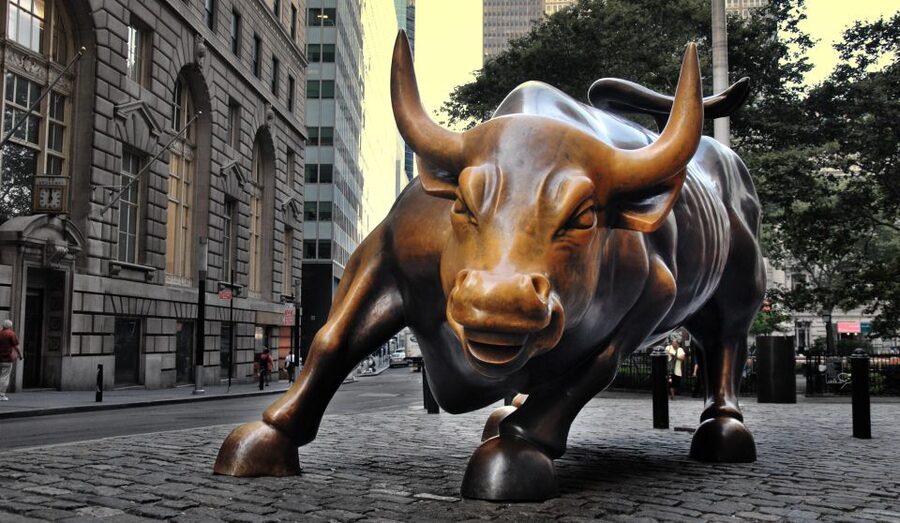
- A walk built around iconic stops: Brooklyn Bridge area, Wall Street landmarks, Charging Bull, and the World Trade Center Memorial
- Clear history with real-world humor: you’ll get smart explanations delivered in a light, friendly way
- Time to look and linger: you’re given moments to explore rather than just rush from spot to spot
- A classic NYC finish: a free New York style pizza slice, plus context on how it became famous
- End at the start point: the tour concludes back at the meeting location for an easier wrap-up
New York City at street level, a few more walks
- SoHo, Little Italy, and Chinatown Walking Tour in New York
★ 5.0 · 3,153 reviews - Secrets of Grand Central Station Walking Tour New York City
★ 5.0 · 1,796 reviews - Greenwich Village Walking and Food Tasting Tour
★ 5.0 · 1,572 reviews - Artistic, Alternative Greenwich Village Walking Tour
★ 5.0 · 971 reviews
Starting at City Hall Park and the Brooklyn Bridge crosswalk energy
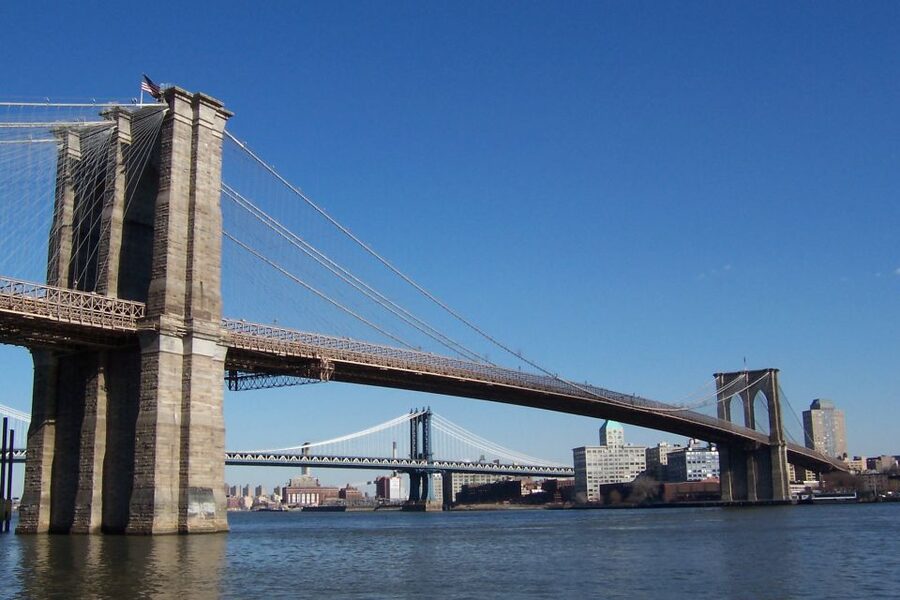
The tour kicks off in City Hall Park, on the steps of the Tweed Courthouse. That’s a great starting point because it puts you right where downtown navigation starts to click: big civic landmarks, broad streets, and easy connections to subway lines. Your guide will be easy to spot—wearing the local partner’s shirt and carrying a black umbrella.
If you’re the type who likes to get oriented early, this is a good way to do it. The meeting spot sits at a natural crossroads of downtown geography, so the opening walk helps you understand how the city’s “layers” fit together. You start at the place where the famous Brooklyn Bridge meets Manhattan, then gradually shift from skyline spectacle to street-level stories.
You’ll also want to arrive about 10 minutes early. On a downtown route, that buffer matters because you’ll be ready to roll when the group starts moving.
South Street Seaport: from Dutch colony roots to old-stone streets
From City Hall Park, the walk heads toward South Street Seaport, an area tied to where New York City first took shape as a Dutch colony. The tour points out that Seaport is where the city was born out of that early colonial chapter—and it doesn’t stay in abstract history. You get to see some of the oldest architecture in the city, which is a big deal in a place that modernized fast.
This is one of the smartest transitions in the itinerary: you move from dramatic landmark edges to a section of town that feels more “original” in materials and scale. Even if you’ve read about New York’s early days, seeing older buildings in place helps those dates turn into something you can picture.
Practical tip: this stretch is often where people start feeling the day’s walking pace. If you pace yourself out of the gate, you’ll feel better later when the route concentrates around Wall Street and the memorial area.
Wall Street time: Federal Hall, the NY Stock Exchange area, and Trinity Church
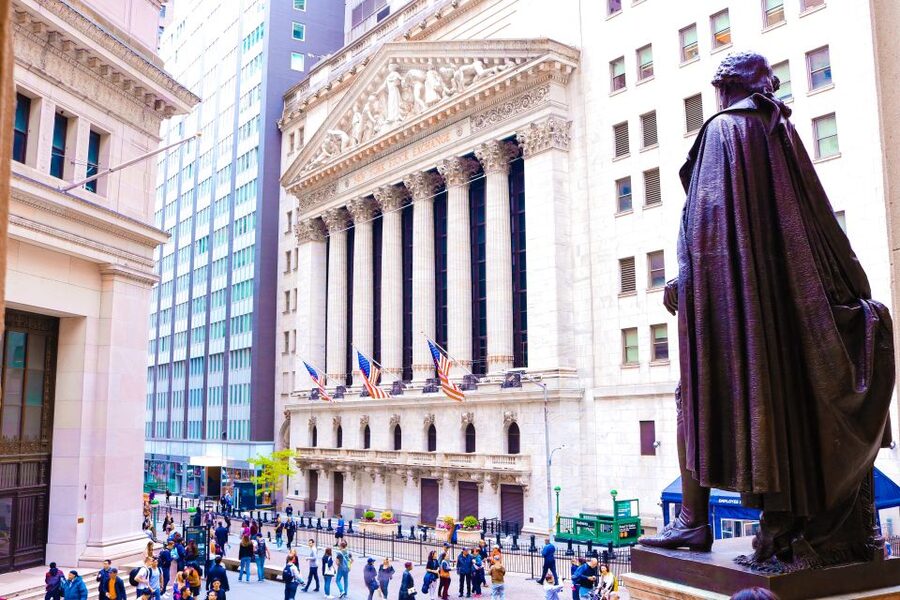
Next comes Wall Street, and the tour gives you a focused storyline rather than a scattershot photo stop. You’ll explore the history connected to Federal Hall, the New York Stock Exchange area, and Trinity Church. That combo works because it covers three angles of the financial world—government origins, market power, and long-established institutional presence.
Here’s what I like about this part of the tour for real-world learning: Federal Hall isn’t just a name on a map. It represents the early American government setting the stage for the city’s financial gravity. Pair that with the NYSE area and the story becomes easier to understand—you’re watching the shift from civic foundation to commercial engine.
Trinity Church adds a different texture. Even if you’re not a church-tour person, it helps ground the area in continuity. You see how long-standing landmarks coexist with the high-speed reputation of Wall Street today.
The one drawback to keep in mind? Wall Street is an area where attention and movement can get hectic. If you prefer calm sightseeing, you’ll still enjoy this stop, but you’ll want to stay aware of foot traffic and the group’s pace. The benefit is you’re guided, so you spend less time figuring out what matters and more time learning why it matters.
New York City on foot, a few more routes

Charging Bull and the Statue of Liberty viewpoint—money, myth, and sea air
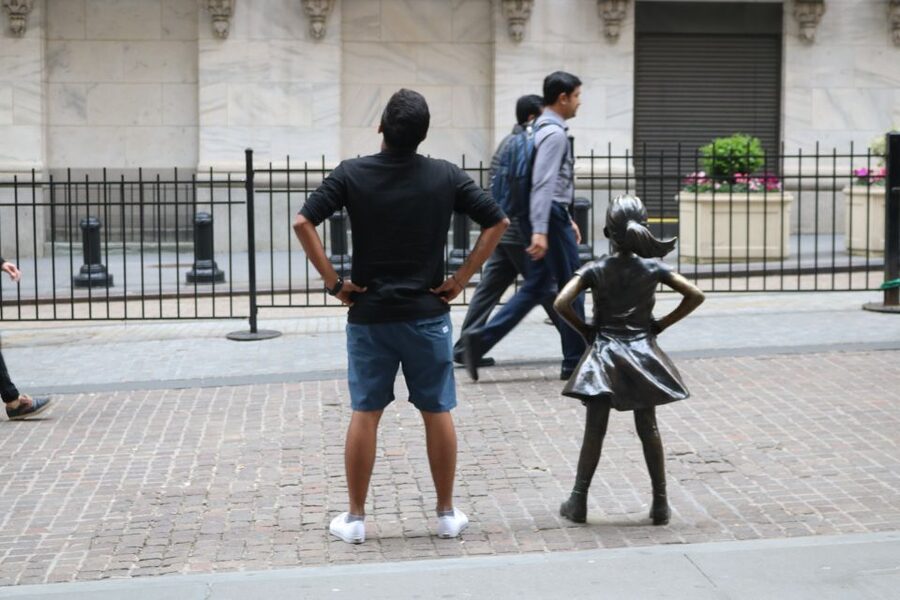
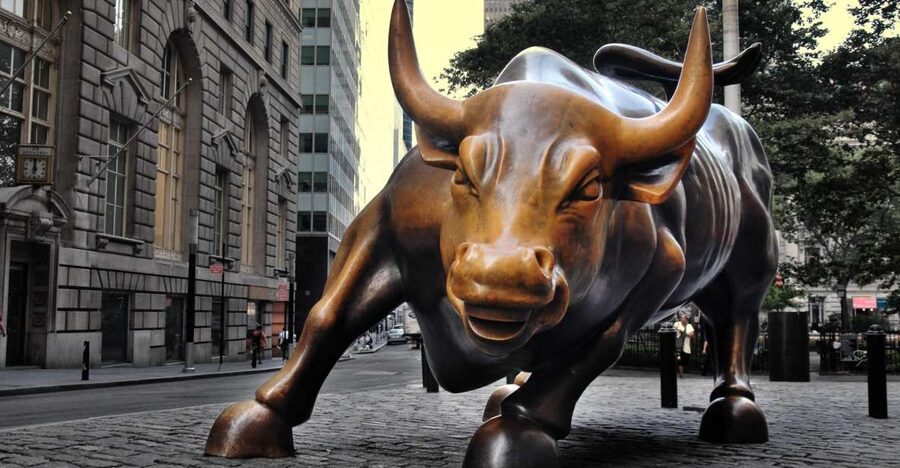
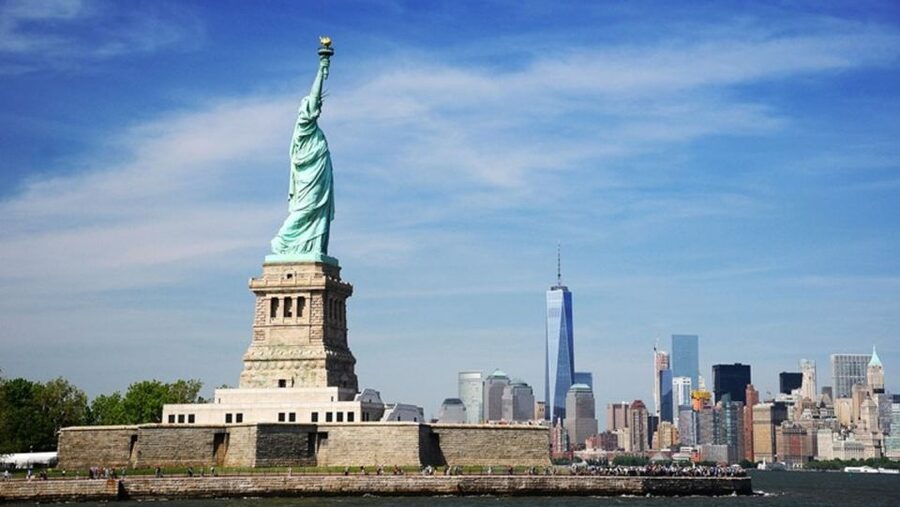
As the tour continues south, you’ll pass the Charging Bull, described as an iconic monument of capitalism. It’s a recognizable landmark, but the tour frames it as a symbol, not just a photo op. That’s helpful because the bull can easily turn into a “been there, done that” moment if you don’t have context.
From there, you get a view of the Statue of Liberty. Even without going all the way to the island, seeing the statue from this area gives you a strong sense of direction—like you’re closing the loop on what “America” has meant to New York, from finance and government to immigration and freedom symbolism.
If you’re traveling with a partner or group, this section is also a good moment to refuel mentally. The route is moving toward a more reflective stop next, and breaking up the day with a big iconic scene helps you transition without feeling like everything is one long concentration session.
One World Trade Center and the 9/11 Memorial: a moment for private reflection
Then the tone shifts. The tour heads to One World Trade Center, where you get time for private reflection and to fully appreciate the 9/11 Memorial.
This part of the day can feel heavy, and that’s exactly why the itinerary includes actual time to slow down. You’re not being herded through a checklist—you’re given space to absorb what you came to see. That matters, because the memorial isn’t just architecture; it’s meaning in public space.
One practical note: memorial areas tend to have strong crowd patterns. You’ll enjoy it more if you keep your expectations realistic—this is a place where people stop, look, and think. Going in calm and unhurried makes the experience better for you and easier for the whole group.
The New York pizza finish: more than a food stop
To close things out, the tour ends at a true New York pizzeria. You’ll enjoy a New York slice, and you’ll also learn how New York style pizza became world-famous.
I like finishing with food for two reasons. First, it gives your legs a clear endpoint. Second, it turns the day’s theme into something you can carry home. By the time you’re holding a slice, the places you walked past—American government, Wall Street, the memorial—have emotional weight. The pizza gives a different kind of truth: New York as daily life, not just monuments.
If you have dietary restrictions, you’ll want to plan ahead and ask when you get there, since the tour data only says a pizza slice is included. But if you’re a normal omnivore with a healthy appetite after 3 hours of walking, this finish is a solid reward.
Price and value for a $50, 3-hour guided walk
At $50 per person for a 3-hour guided tour, the math works out best if you value two things: guidance in a dense area and a structured path through big landmarks. Lower Manhattan is compact, but it can feel like information overload if you’re winging it on your own. A live guide helps you connect the dots—so you’re not just seeing the Brooklyn Bridge and calling it a day.
You’re also not just getting “sightseeing.” The tour includes the guided walking portion plus a pizza slice. That means a chunk of your day’s cost is already covered, and the pizza isn’t an afterthought tacked onto the end.
One more value point: the tour is described as wheelchair accessible. If mobility is part of your planning, this tour is at least designed with access in mind. For details beyond that, it’s still smart to confirm with the operator for your specific needs, since walking routes always vary in curb cuts and sidewalk conditions.
Meeting point you can actually find, plus subway lines that help
Your start location is specific and easy to use: City Hall Park, on the steps of the Tweed Courthouse. The guide will wear the local partner’s shirt and carry a black umbrella, which makes meeting up much less stressful.
Subway options listed for the start point:
- Take 4/5/6/J/Z to Brooklyn Bridge City Hall station
- Take 2/3 to Park Row station
- Take R/W to City Hall station
The tour ends back at the meeting point. That’s underrated value. You don’t have to mentally map a new finish line or worry about getting stuck far from where you began.
Who this tour fits best—and who might want a different plan
This tour is a strong fit if you want:
- A guided path through major Lower Manhattan landmarks without picking which order to do them in
- A history-focused walk that still includes iconic “I’ve seen that before” sites like Charging Bull and the Brooklyn Bridge area
- A day structure that ends with something fun and local: a New York pizza slice
It may be less ideal if you:
- Prefer a completely self-paced tour where you can linger as long as you want at every corner
- Don’t like long walking stretches or standing in busy public areas
If you’re visiting for the first time, this is especially useful because it covers a big emotional spread: government and finance, then the memorial, then pizza. That mix is exactly what makes Lower Manhattan feel like New York instead of just a set of famous spots.
Should you book this Lower Manhattan History walking tour?
Yes, if your goal is a guided, 3-hour introduction to Lower Manhattan that connects major landmarks with clear context—and ends with an included pizza slice. The highlights line up well: Brooklyn Bridge area at the start, South Street Seaport’s early roots, Wall Street’s core institutions, a Statue of Liberty viewpoint, and time at One World Trade Center and the 9/11 Memorial for genuine reflection.
I’d book it especially if you value a guide who brings both knowledge and humor. That combination is exactly what makes history tours feel worth your time, not like homework.
If you want maximum flexibility, you can still enjoy it, but go in with the understanding that it’s a scheduled walking route with set stops.
FAQ
How long is the Lower Manhattan History of Lower Manhattan Walking Tour?
The tour lasts 3 hours.
How much does the tour cost?
It costs $50 per person.
Where does the tour start?
The tour starts at City Hall Park, on the steps of the Tweed Courthouse.
Where does the tour end?
The tour ends back at the meeting point (City Hall Park on the steps of the Tweed Courthouse).
Is the tour guided, and what language is it in?
Yes, it has a live tour guide, and the tour is in English.
What is included in the price?
The included items are a guided walking tour of Lower Manhattan and a New York style pizza slice.
Is the tour wheelchair accessible?
Yes, the activity is wheelchair accessible.
More Tours in New York City
- Statue of Liberty and Ellis Island Tour: All Options★ 5.0 · 13,571 reviews
- New York in One Day Guided Sightseeing Tour★ 5.0 · 13,166 reviews
- Central Park Pedicab Guided Tours★ 5.0 · 7,108 reviews
- New York City: Manhattan Helicopter Tour★ 4.7 · 7,076 reviews
- Private Central Park Pedicab Tour★ 5.0 · 6,981 reviews
More Tour Reviews in New York City
- NYC: SUMMIT One Vanderbilt Tickets★ 4.7 · 51,195 reviews
- NYC: Empire State Building Tickets – Observatory & Museum★ 4.7 · 25,757 reviews
- New York City: Statue of Liberty & Ellis Island with Ferry★ 4.6 · 18,683 reviews
- New York City: American Museum of Natural History Ticket★ 4.5 · 15,447 reviews
- Statue of Liberty and Ellis Island Tour: All Options★ 5.0 · 13,571 reviews
New York City, One Block at a Time
- SoHo, Little Italy, and Chinatown Walking Tour in New York★ 5.0 · 3,153 reviews
- Secrets of Grand Central Station Walking Tour New York City★ 5.0 · 1,796 reviews
- Greenwich Village Walking and Food Tasting Tour★ 5.0 · 1,572 reviews
- Artistic, Alternative Greenwich Village Walking Tour★ 5.0 · 971 reviews
- Brooklyn Bridge & DUMBO Neighborhood Tour – from Manhattan to Brooklyn★ 5.0 · 826 reviews
Just in: the newest New York City reviews on our desk





NYC Walking Tours, compared.
 ★ 5.0SoHo, Little Italy, and Chinatown Walking Tour in New YorkFrom $393,153 reviews
 ★ 5.0Secrets of Grand Central Station Walking Tour New York CityFrom $391,796 reviews
 ★ 5.0Greenwich Village Walking and Food Tasting TourFrom $941,572 reviews
 ★ 5.0Artistic, Alternative Greenwich Village Walking TourFrom $39971 reviews
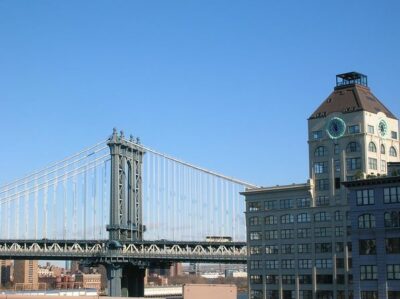 ★ 5.0Brooklyn Bridge & DUMBO Neighborhood Tour – from Manhattan to BrooklynFrom $49826 reviews
 ★ 5.0Central Park Guided Walking TourFrom $44774 reviews
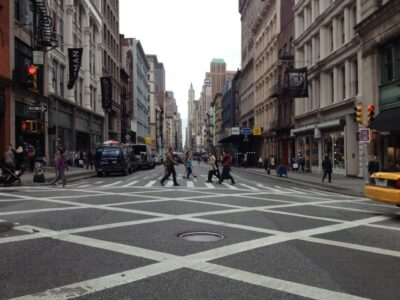 ★ 4.6Private Walking Tour with a LocalFrom $55771 reviews
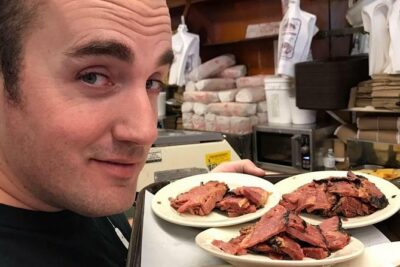 ★ 5.0NYC Lower East Side Walking and Food TourFrom $94646 reviews
Browse the lists this tour appears in