
Reviewed · CENTRAL PARK TOURS
Best of Central Park Tours by Pedicab – Stories & Photos
Central Park is big, but this makes it manageable. A private pedicab ride turns the park’s must-sees into a smooth, stop-and-shoot outing with stories along the way.
I especially love the photo-stop help—you’re not just seeing famous spots, you’re getting guidance to frame them well. I also like that the tour includes a friendly licensed NYC guide, who ties the sights to design details, movie moments, and local lore.
One thing to consider: this experience runs on good weather, and it can require a minimum of two people to book your departure.
In This Review
- Key things to know before you go
- A Private Pedicab Makes Central Park Feel Smaller
- How the Ride Gets You to Central Park’s Best Photo Stops
- Central Park Carousel: Old-school New York joy
- Chess & Checkers House: a game spot with movie credentials
- Dairy House: Gothic cottage charm, now a visitor hub
- Wollman Rink, Gapstow Bridge, and the Pond: Classic Central Park Scenes
- Wollman Rink: skyline views and a sense of tradition
- Gapstow Bridge: turtles, ducks, and a postcard angle
- The Pond: the calm center of the park’s world
- Zoo, Balto, and Rumsey Playfield: Fun Stops That Don’t Feel Like Filler
- Central Park Zoo: older roots, newer-style habitats
- The Balto statue: heroics turned into a park monument
- Rumsey Playfield: SummerStage energy, historic layers
- Conservatory Water, Bethesda Terrace, and The Mall’s Straight-Line Magic
- Conservatory Water: model boats and literary statue scenery
- The Mall: Literary Walk under elm trees
- Bethesda Terrace and its Minton tiles
- Bethesda Fountain: The Angel of the Waters symbolism
- Cherry Hill Fountain and the Lake’s postcard loop
- The Boathouse: year-round dining with heated outdoor seating
- Bow Bridge, Sheep Meadow, and Film-Famous Corners
- Bow Bridge: romantic, cast-iron, and story-heavy
- Sheep Meadow: the big lawn feeling in the middle of the city
- The Dakota: building drama at Central Park West
- Pinebank Arch and the offbeat photo break
- Falconer and Daniel Webster: art and politics, in the same park
- Heckscher Playground and Tavern on the Green area
- Short-Tour Add-Ons: Alice, Cleopatra’s Needle, the Met, the Reservoir, and Belvedere Castle
- Alice in Wonderland statue
- Cleopatra’s Needle and the Met exterior zone
- Jacqueline Kennedy Onassis Reservoir and Belvedere Castle views
- Picking the Right Time: 1, 2, or 3 Hours in Central Park
- Price and What Makes It Good Value at $38.40
- Should You Book This Central Park Pedicab Tour?
- FAQ
- How long is the Central Park pedicab tour?
- Is this a private tour?
- What’s the meeting point?
- Is the guide included?
- Do I need to purchase admission tickets for the attractions?
- What language is the tour offered in?
- Are blankets or rain covers provided?
- Is hotel pickup included?
- Can I bring a car seat?
- Do I need a minimum number of people to book?
Key things to know before you go
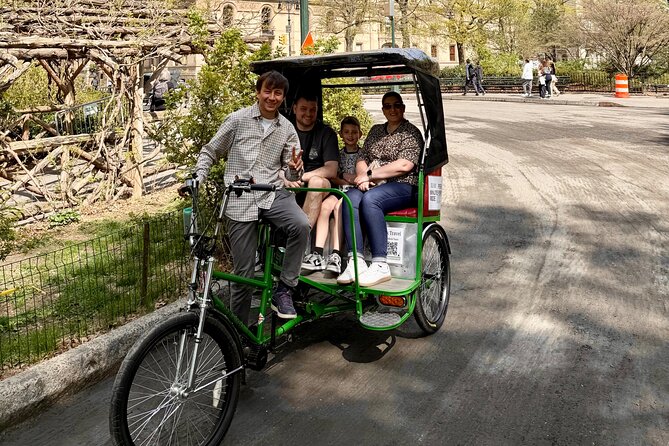
- Private pedicab, your pace: your group controls the rhythm, with planned pauses for pictures.
- Licensed guide + film facts: you get context at places you’d normally just pass.
- Easy-on-your-feet Central Park: less walking than a self-guided loop through the park.
- Photo framing support: the guide helps you look good at the postcard angles.
- Weather add-ons: blankets in cold weather, plus a rain cover if needed.
- Family-friendly mix: you’ll see things like the carousel, Zoo area, and game tables.
More ways to see Central Park
- Central Park Pedicab Guided Tours
★ 5.0 · 7,108 reviews - Private Central Park Pedicab Tour
★ 5.0 · 6,981 reviews - NYC: Central Park Bike Rentals
★ 4.2 · 2,528 reviews - Official NYC Horse Carriage Rides in Central Park since 1979 ™
★ 5.0 · 2,365 reviews
A Private Pedicab Makes Central Park Feel Smaller
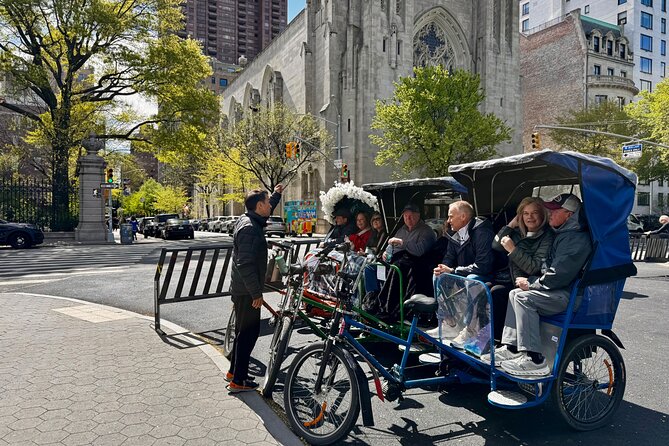
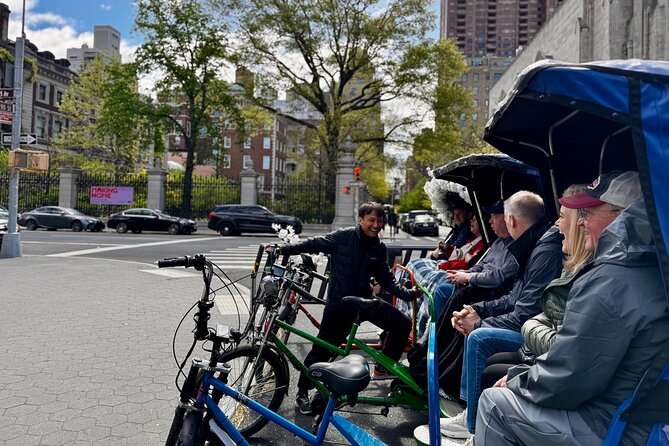
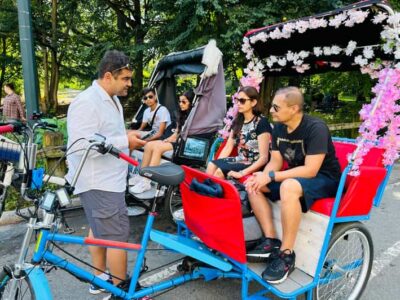
Central Park can swallow a day—if you walk it like a checklist, your feet will vote first. This is different. By pedicab, you glide between highlights and spend your energy on photos, questions, and the moments you’d otherwise rush.
The “private” part matters, too. This isn’t a crowded cattle-car tour with everyone herded to the same corner. It’s just your group, so you can linger at a view, take a second picture, or ask for a bit more story about what you’re seeing.
How the Ride Gets You to Central Park’s Best Photo Stops
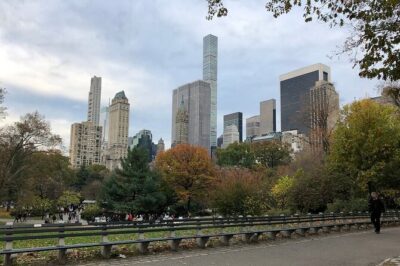
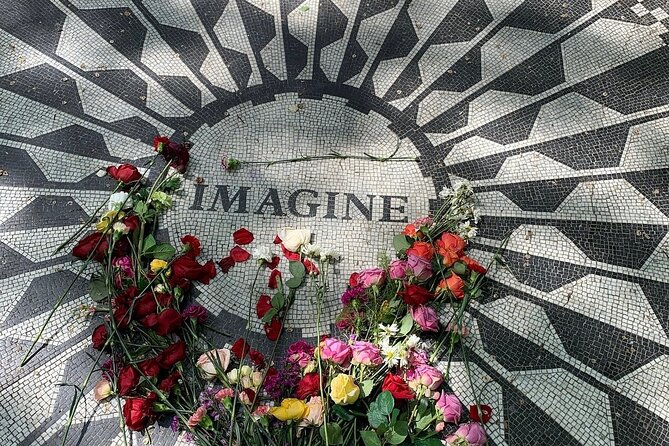
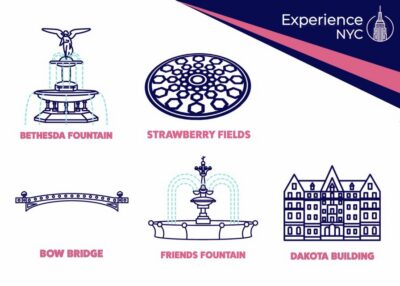
Your tour route focuses on the park’s most recognizable landmarks, with photo pauses at key spots. You’re set up to see big-name sights like Bethesda Fountain, Strawberry Fields, The Mall, and Bow Bridge, but you’re also guided through the smaller moments that make Central Park feel like a real place, not just a backdrop.
Here’s what that “guided photo stop” style looks like in practice. The guide doesn’t just point and move on. They help you understand why the spot is famous, what to look for, and how to angle yourself so the landmark looks its best behind you.
Central Park Carousel: Old-school New York joy
You’ll likely pause for the Central Park Carousel, one of the park’s most loved attractions. The carousel story is layered: the current one dates to 1951, and it’s the fourth version. The design details are the fun part—57 hand-carved, painted horses are part of the appeal, and the style traces back to the early 1900s work by Stein and Goldstein.
If you’re visiting with kids, it’s a guaranteed mood booster. If you’re an adult, it’s still worth a stop because it’s one of the few places where Central Park feels like a childhood memory built into the city.
Let someone else pedal: more pedicab tours
Chess & Checkers House: a game spot with movie credentials
Next up is the Chess & Checkers House, an octagonal brick building from 1952 surrounded by 24 game tables. This is one of those “you’ll only notice it if you know to look” stops—right in the middle of the park, people are there to play, talk, and slow down.
It also shows up in pop culture, including the film Searching for Bobby Fischer. Even if you’ve never seen it, you’ll appreciate how the setting blends nature and strategy.
Dairy House: Gothic cottage charm, now a visitor hub
The Dairy House is the kind of stop that makes the ride feel like a tour and not just transportation. Built in 1870 in a Gothic cottage-style, it started as a refreshment spot with dairy treats for families. Over time, the building fell into disuse, then got restored in the 1980s.
Today it’s a visitor center, which means it can double as a practical reset point—maps, brochures, and park info—without turning your day into paperwork.
Wollman Rink, Gapstow Bridge, and the Pond: Classic Central Park Scenes
Central Park has “signature” visuals, and this route taps them hard.
Wollman Rink: skyline views and a sense of tradition
Wollman Rink has been a Central Park winter destination since 1950, named after Kate Wollman. The rink quickly became a public skating spot for families, tourists, and all skill levels, and it’s come back strong after earlier decline.
Even if you’re not skating, it’s a great photo pause area because the view toward the Manhattan skyline gives you that classic “NYC in the frame” feeling.
Gapstow Bridge: turtles, ducks, and a postcard angle
Gapstow Bridge is one of the park’s most photographed bridges. You’ll get views toward The Pond and the Midtown skyline. The bridge’s materials tell a story too: first built in 1874 from wood and cast iron, then replaced in 1896 with the stone version you see today.
The ivy-covered look and the nearby pond wildlife make it feel calm. If you want a slower, scenic break from landmark crowds, this stop does that.
The Pond: the calm center of the park’s world
The Pond covers 3.8 acres and was shaped by the original 1858 plan. You’ll get a sense of why this is such a cinematic spot—changing tree scenes, winding paths, and water that makes the park feel like it has its own weather.
This is also the kind of place where you can stand for a minute, watch people strolling, and just let your brain unclench. If you’re the photo type, this is where your camera roll starts to look like you planned it.
Zoo, Balto, and Rumsey Playfield: Fun Stops That Don’t Feel Like Filler
This tour keeps Central Park interesting with stops that mix family-friendly fun and “wait, that’s famous?” moments.
Central Park Zoo: older roots, newer-style habitats
The Central Park Zoo started as a small menagerie in 1864, became the city’s first official zoo in 1934, and later shifted toward more natural habitats in 1988. Today it’s managed by the Wildlife Conservation Society.
If you like animals but don’t want to make your entire day about one museum-style attraction, this gives you a taste of the Zoo experience while staying inside the broader Central Park story.
The Balto statue: heroics turned into a park monument
You’ll also see the Balto statue, tied to the 1925 Serum Run to Nome mission. Balto is the sled dog credited with leading the final leg through blizzards and extreme cold so medicine could reach Nome in time.
It’s one of those monuments that makes the park feel like a living museum—Central Park isn’t only nature and architecture. It also preserves stories people decided mattered.
Rumsey Playfield: SummerStage energy, historic layers
Rumsey Playfield is known for its connection to SummerStage, plus a surprising history. Calvert Vaux’s original plan included a restaurant called the Casino, and by the 1920s the spot shifted into an Art Deco nightlife era. In the 1980s the Central Park Conservancy transformed it into a sports field, and by 1990 SummerStage moved there and kept going.
This is a great stop if you like seeing how a park adapts without losing its character.
Conservatory Water, Bethesda Terrace, and The Mall’s Straight-Line Magic
Now you get to the parts of Central Park that make architecture lovers smile.
Conservatory Water: model boats and literary statue scenery
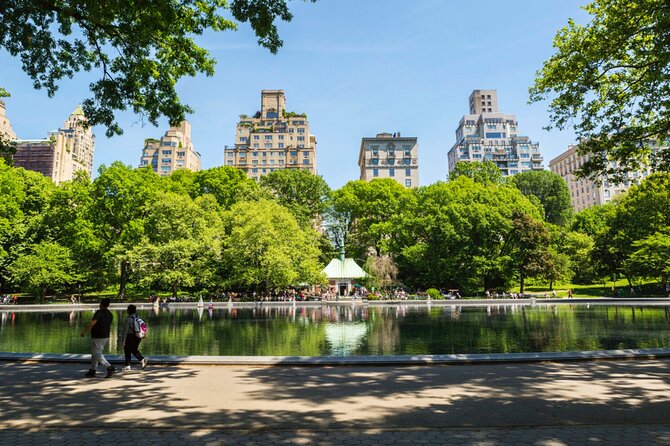
Conservatory Water is a calm pond area that became popular for model boat sailing. It’s surrounded by cherry trees and benches, and it includes statues of literary figures like Alice in Wonderland and Hans Christian Andersen—so it’s family-friendly without feeling like a theme park.
This is also one of those film-friendly spots, showing up in Stuart Little with a model boat racing scene. If you’re into movie trivia, this stop will feel like a gift.
The Mall: Literary Walk under elm trees
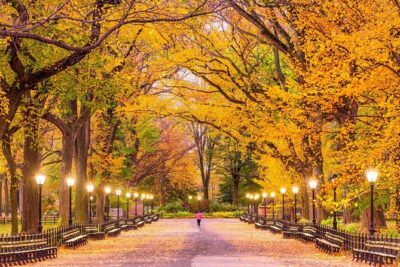
The Mall (also known as Literary Walk) is a straight path cutting through Central Park’s otherwise winding layout. It’s lined with statues honoring famous writers, and it’s especially dramatic during fall when the elm canopy forms a tunnel of leaves.
If you like walking, this is where you can enjoy it without feeling like you’re crossing the park’s “long slog” zones.
Bethesda Terrace and its Minton tiles
Bethesda Terrace is famous for its view, but the real wow factor here is the ceiling covered in Minton encaustic tiles. These tiles were originally installed in the 1860s, removed in the 1980s due to restoration cost, and then returned after a long storage period—thanks to private funding and a restoration project.
You’re looking at something rare: a giant, handcrafted design element that survived political decisions, funding hurdles, and time. It’s an architectural detail you’d never track down on your own unless you knew exactly where to look.
Bethesda Fountain: The Angel of the Waters symbolism
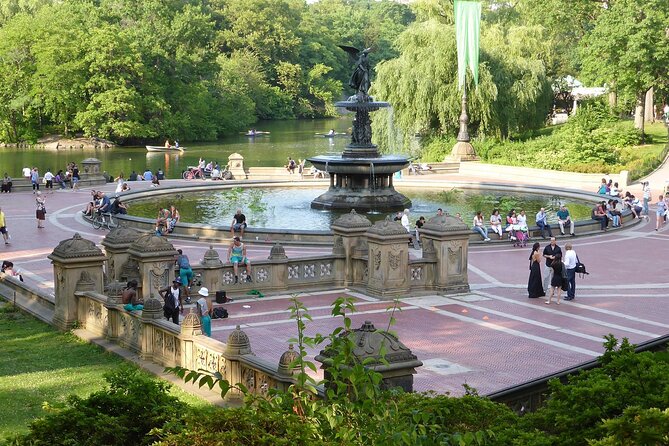
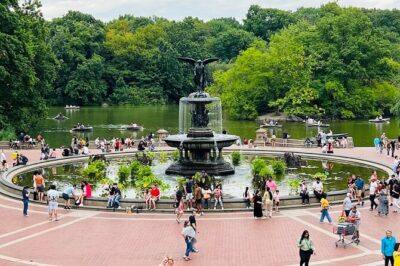
Not far into the same lower-terrace zone is Bethesda Fountain, centered on The Angel of the Waters sculpture by Emma Stebbins. It was designed in 1868 and unveiled in 1873, and it references the biblical Pool of Bethesda story about healing.
You’ll see it in pop culture too, including Home Alone 2. Even if you’re not chasing movie spots, it’s one of the best “pause and breathe” monuments in the park.
Cherry Hill Fountain and the Lake’s postcard loop
Cherry Hill Fountain was built in the 1860s and originally served as a watering trough for horses. It features Minton tiles and frosted glass lamps, and it’s the kind of detail that makes the park feel intentionally designed, not accidental.
Then you’ll reach The Lake, a 20-acre water setting that connects major areas of the park. If you want a classic Central Park stroll moment or plan to look out toward the Ramble/Bethesda areas, this is a key stop.
The Boathouse: year-round dining with heated outdoor seating
The Central Park Boathouse is a cinema-friendly landmark too, appearing in Sex and the City and 27 Dresses. After an earlier structure burned down, today’s Boathouse dates to 1956 and offers year-round dining, including heated outdoor seating.
This is a good stop to imagine a longer Central Park day—snack, drink, then photos around the water.
Bow Bridge, Sheep Meadow, and Film-Famous Corners
This is where Central Park starts to feel like a movie set—without the production crew.
Bow Bridge: romantic, cast-iron, and story-heavy
Bow Bridge is iconic for a reason. Completed in 1862, it’s a graceful cast-iron bridge designed by Calvert Vaux and Jacob Wrey Mould. The foundry that made it was Janes, Kirtland & Co., tied to major ironwork work for the U.S. Capitol dome.
It also has a history of restoration, including work in 1974, plus a short closure for renovation around late 2023. Either way, it remains one of the best “romantic bridge” photo stops in the park.
Sheep Meadow: the big lawn feeling in the middle of the city
Sheep Meadow is a 15-acre lawn on the southern end of Central Park and a go-to spot for relaxing, reading, picnicking, and sunbathing. It also keeps its early history in a subtle way—the area was once a grazing field for sheep.
It’s been used in films like Ghostbusters and Wall Street, which says a lot about the visual mood: open sky, big grass, city skyline contrast.
The Dakota: building drama at Central Park West
You may also spot The Dakota, completed in 1884, with a Renaissance Revival style that made it a landmark from the start. It’s known for famous residents such as John Lennon and Yoko Ono, plus other big names.
Lennon was killed outside the building in 1980, which adds heavy historical weight to what otherwise looks like elegant architecture from the street. It’s one of those moments where your camera keeps going because it’s a story, not just a facade.
Pinebank Arch and the offbeat photo break
Pinebank Arch is a smaller, quieter bridge that blends into the park’s rocky outcrops. It gained extra fame from Elf (2003), which makes it a fun stop if you like spotting familiar holiday scenery in real life.
Falconer and Daniel Webster: art and politics, in the same park
The Falconer statue (donated in 1875) is another European-style detail in Central Park, showing a falconer releasing a falcon into flight. Nearby, the Daniel Webster Monument honors the U.S. statesman with an emphasis on his oratory and constitutional role.
These are great pauses for people who like learning what a statue represents beyond the obvious “big figure here.”
Heckscher Playground and Tavern on the Green area
If you have kids, Heckscher Playground can be a worthwhile photo stop—it’s noted as the oldest and largest of Central Park’s 22 playgrounds, opened in 1926. And near Sheep Meadow, you’ll be close to Tavern on the Green, which traces its roots to an 1870 sheepfold design by Calvert Vaux and Jacob Wrey Mould.
Tavern on the Green’s history includes closure in 2009 and reopening in 2014 after major renovation, which makes the building area a great “Central Park over time” story.
Short-Tour Add-Ons: Alice, Cleopatra’s Needle, the Met, the Reservoir, and Belvedere Castle
Your tour can run 1 to 3 hours, and some stops are clearly tied to shorter versions. If you’re choosing a tighter schedule, look for the 2-hour inclusions, which can bring you to big “on the map” landmarks at the park edges.
Alice in Wonderland statue
The Alice in Wonderland statue was donated in 1959 by George Delacorte, intended as a gift to New York children and a memorial to his wife Margarita. It’s interactive and photo-friendly, which makes it a hit for families and for adult fans of the whimsical side of Central Park.
Cleopatra’s Needle and the Met exterior zone
Cleopatra’s Needle is the oldest outdoor monument in New York City, dating back more than 3,500 years. Dedicated in Central Park in 1881, it sits between the Great Lawn and the Metropolitan Museum of Art.
You may also pass or stop near the Met, which opened in 1880 along Central Park’s eastern edge. The museum’s scale is massive, with over 2 million works and about 5,000 years of human history.
Jacqueline Kennedy Onassis Reservoir and Belvedere Castle views
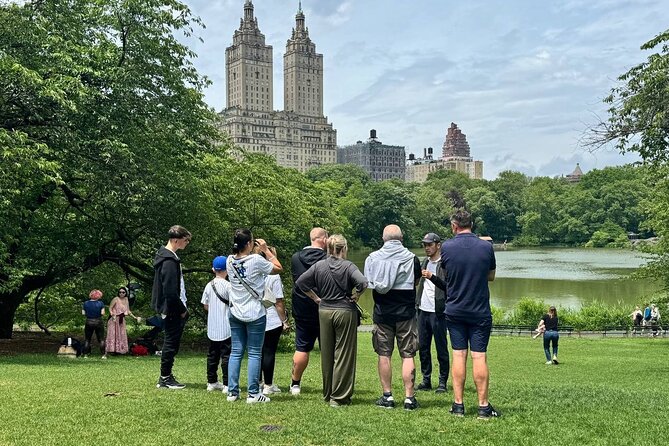
The Jacqueline Kennedy Onassis Reservoir was built 1858–1862 and holds more than one billion gallons. It has a curving footprint designed to harmonize with the park, and it includes three gatehouses along the shoreline.
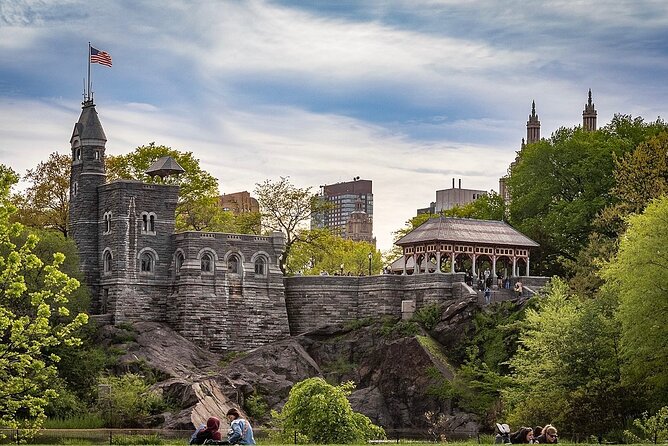
Then there’s Belvedere Castle, a decorative folly with Gothic and Romanesque styling, designed by Calvert Vaux and Jacob Wrey Mould. It’s named for its view purpose, and it includes an observation deck plus a weather station function for the National Weather Service since 1919.
If you want “views plus story,” this is one of the strongest clusters.
Picking the Right Time: 1, 2, or 3 Hours in Central Park
Because the tour runs about 1 to 3 hours, you’re not stuck doing the full park in one sitting. A shorter option makes sense if you’re visiting from somewhere else in Manhattan and want the top hits without losing your whole morning/afternoon.
For most people, the 2-hour structure is a sweet spot because it adds the park’s biggest icon clusters at the edges (Alice, Cleopatra’s Needle, the Met zone, Reservoir, Belvedere Castle) without turning it into a day-long grind.
If you pick the longer end of the range, you’ll have more time for additional themed stops like the carousel area, game spots, Zoo region, and more water/bridge moments. That’s where you’ll start to notice small details, like how the park’s design keeps shifting from formal architecture to water calm to open lawn.
Price and What Makes It Good Value at $38.40
At $38.40 per person, this tour isn’t cheap in a “discount” way. It’s priced like a comfort-first experience. And for good reason: you’re buying transportation inside the park plus a licensed guide, planned photo stops, and extra touches like blankets in cold weather and rain cover.
The value is strongest if you fall into one of these categories:
- You want an easier Central Park day with less walking.
- You care about stories and want context for landmarks.
- You want help getting photos at the right angles, not just holding your camera out.
- You’re visiting with someone who moves slower, like older relatives or anyone who dislikes long walks.
The main trade-off is that you’re in a defined route with planned pauses, not a totally free-form “walk wherever” plan. But if your goal is seeing a lot without getting exhausted, this price starts to feel fair.
Should You Book This Central Park Pedicab Tour?
I’d book it if you want Central Park to feel like a guided experience with built-in photo help, not a survival hike through huge acreage. The private pedicab setup is especially strong for couples, first-timers, and families who want recognizable landmarks with minimal legwork.
Skip it (or pick a different plan) if you’re the type who enjoys spending hours wandering without structure, or if your schedule is tight and weather risk would cause stress. Since it needs good weather, it’s worth checking your day plan early.
If you want a smooth, story-filled way to see Central Park’s best-known spots—plus a few extras you might not find on your own—this is a solid call.
FAQ
How long is the Central Park pedicab tour?
The tour runs about 1 to 3 hours, depending on the exact version you choose.
Is this a private tour?
Yes. It’s a private tour/activity, and only your group participates.
What’s the meeting point?
The tour starts at 1415 6th Ave, New York, NY 10019 and ends back at the same meeting point.
Is the guide included?
Yes. The tour includes a friendly, licensed NYC guide, plus photo stops at iconic locations.
Do I need to purchase admission tickets for the attractions?
The details list some stops as free admission (for example, Wollman Rink, Gapstow Bridge, and several others), and the Central Park portion notes an admission ticket included. Specific paid admissions beyond that aren’t listed in the provided information.
What language is the tour offered in?
The tour is offered in English.
Are blankets or rain covers provided?
Yes. Blankets are included in cold weather, and a cover is provided if it rains.
Is hotel pickup included?
No, hotel pickup and drop-off are not included.
Can I bring a car seat?
No. The information notes you cannot have a carseat on the pedicab.
Do I need a minimum number of people to book?
Yes. This tour needs 2 persons minimum for booking.
More Tour Reviews in New York City
- NYC: SUMMIT One Vanderbilt Tickets★ 4.7 · 51,195 reviews
- NYC: Empire State Building Tickets – Observatory & Museum★ 4.7 · 25,757 reviews
- New York City: Statue of Liberty & Ellis Island with Ferry★ 4.6 · 18,683 reviews
- New York City: American Museum of Natural History Ticket★ 4.5 · 15,447 reviews
- Statue of Liberty and Ellis Island Tour: All Options★ 5.0 · 13,571 reviews
Ride Along: More Pedicab Tours
- Central Park Pedicab Guided Tours★ 5.0 · 7,108 reviews
- Private Central Park Pedicab Tour★ 5.0 · 6,981 reviews
- New York City: Private Central Park Pedicab Tour★ 4.9 · 1,637 reviews
- NYC: Central Park Celebrity Homes & Film Spots Pedicab Tour★ 4.9 · 817 reviews
- Central Park Guided Pedicab Tours★ 5.0 · 590 reviews
More of Central Park
- Central Park Pedicab Guided Tours★ 5.0 · 7,108 reviews
- Private Central Park Pedicab Tour★ 5.0 · 6,981 reviews
- NYC: Central Park Bike Rentals★ 4.2 · 2,528 reviews
- Official NYC Horse Carriage Rides in Central Park since 1979 ™★ 5.0 · 2,365 reviews
- NYC: Central Park Bike Rental★ 4.1 · 1,651 reviews
Just in: the newest New York City reviews on our desk

Central Park Tours, compared.
 ★ 5.0Central Park Pedicab Guided ToursFrom $387,108 reviews
 ★ 5.0Private Central Park Pedicab TourFrom $386,981 reviews
 ★ 4.2Central Park Bike RentalsFrom $92,528 reviews
 ★ 5.0Official NYC Horse Carriage Rides in Central Park since 1979 ™From $992,365 reviews
 ★ 4.1Central Park Bike RentalFrom $81,651 reviews
 ★ 4.9Private Central Park Pedicab TourFrom $401,637 reviews
 ★ 4.7Central Park Bike RentalFrom $91,509 reviews
 ★ 4.0Carriage Ride in Central Park (VIP – PRIVATE) Since 1964™From $141,074 reviews
Browse the lists this tour appears in