
Reviewed · BROOKLYN TOURS
Brooklyn: Discover Hidden NYC Subway Secrets – Private
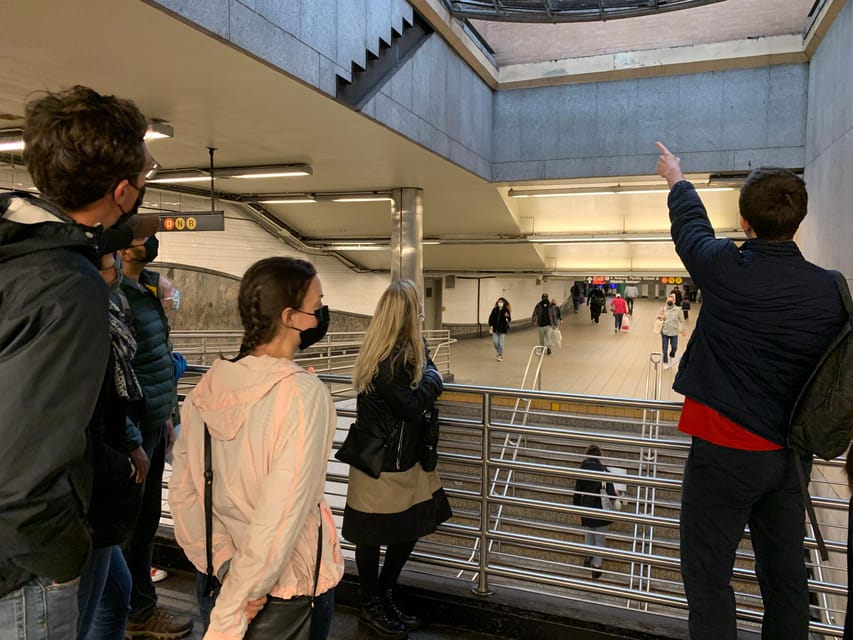
The Brooklyn subway has secrets underground. On this private 2-hour ride-and-walk, I love that you’re not just seeing stations. You’re learning why they were built, what got left behind, and how the borough’s design choices still shape your commute.
I really like two things most. First, the view from Smith-9 St down toward the Gowanus Canal—spectacular in a way that feels like a portal. Second, the chance to study the oldest Brooklyn subway station design up close, with a planner’s eye for how stations and neighborhoods grew together.
One thing to plan for: this is real underground walking with stairs and steps, so comfortable shoes matter.
In This Review
- Key highlights you’ll feel right away
- The meeting point: start where Downtown Brooklyn makes sense
- Rayn Riel, licensed guide and certified urban planner
- Walking into the oldest station layers
- Abandoned stations and hidden platforms you can actually view
- Smith-9 St: the Gowanus Canal look-down moment
- Art inside stations: public projects, not random decoration
- Riding multiple lines: IRT, BMT, and IND in one route
- The Bad moonwalk practice spot: pop culture with a purpose
- Small subway details you’ll start noticing forever
- What’s included (and why it makes the tour feel smoother)
- Price and value: $200 per group up to 15
- Ending at Barclays Center: easy to roll into Brooklyn food
- Should you book this Brooklyn subway secrets tour?
- FAQ
- Where is the meeting point?
- How long is the tour?
- Is this a private tour?
- What’s the maximum group size?
- What does the tour include for transit?
- Are ear pieces provided?
- Does the tour access restricted areas?
- Where does the tour end?
- What should I bring?
- What train lines are included?
Key highlights you’ll feel right away
- Abandoned stations and platforms in plain sight (you’ll learn how to spot what most people rush past)
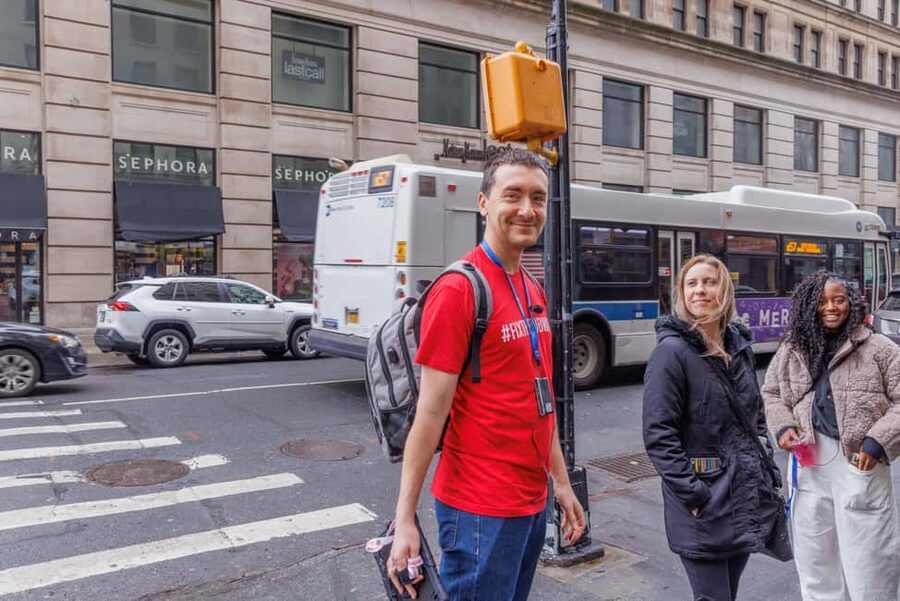
- Rayn Riel’s city-planning lens connects subway choices to the streets and buildings above
- Smith-9 St and the Gowanus Canal view from the highest rapid transit stop in the Western hemisphere
- Nevins St lower level and other unused infrastructure you can view from public areas
- Public art across Downtown Brooklyn that changes how you read the architecture
- A Michael Jackson Bad moonwalk practice spot added into the route as a fun pop of pop-culture context
Deeper into Brooklyn, a few more picks
- NYC Bus Tour of Brooklyn, Bronx, Queens: Art, Food & Sports
★ 5.0 · 3,805 reviews - NYC Highlights Tour: Bronx, Brooklyn, Harlem, Queens & Coney
★ 4.5 · 2,846 reviews - From Manhattan: 4-Hour Dyker Heights Holiday Lights Bus Tour
★ 4.6 · 2,426 reviews - NYC: Contrasts Tour of Harlem, The Bronx, Queens & Brooklyn
★ 4.5 · 2,167 reviews
The meeting point: start where Downtown Brooklyn makes sense
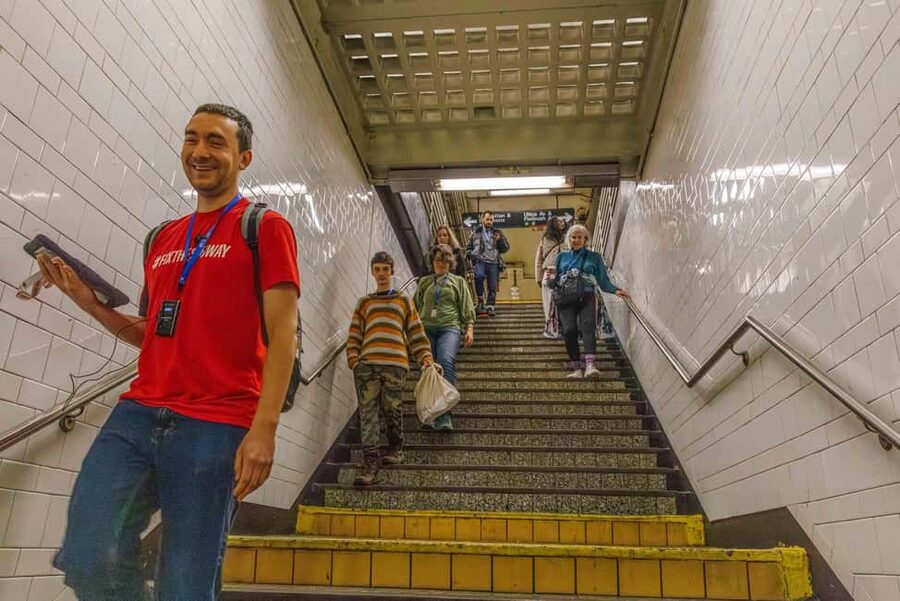
The tour begins outside Starbucks at 50 Court Street. That matters because it’s not a random station pick. Court Street sits in the heart of Downtown Brooklyn, where the borough’s subway story is thick with early 20th-century decisions—before the system got complicated, before the upgrades piled on top.
Right away, you’ll get your bearings. You’ll hear the guide’s plan for the next two hours, what you’re seeing and why, and how the route will mix walking, stairs, and subway rides. You’ll also get ear pieces so everyone can hear clearly, even when the station gets loud or you’re a few steps back.
And you’ll notice the tour’s tone: practical, not museum-only. This isn’t about staring at tiles and moving on. It’s about reading the subway like an engineered city document.
Rayn Riel, licensed guide and certified urban planner
This tour is led by Rayn Riel, a licensed NYC tour guide and certified urban planner. In plain terms, he doesn’t treat the subway like a single object. He treats it like a system with constraints: land cost, street patterns, building heights, ridership needs, and political decisions.
One reason the tour clicks fast is that Rayn can connect details you’d normally ignore to the bigger map. The subway is full of small design choices—platform geometry, lighting, signage styles, and how lines connect. Rayn’s job is to make those choices legible.
I also like that you’re not only getting history. You’re getting structure: how and why the transit system was built underground in the early 1900s, and how those choices echo in today’s routes, transfers, and station layouts.
And from what people say about him, he’s not doing a lecture voice. He keeps it engaging and is attentive with groups, even when kids are involved—meaning adults will feel welcome, and questions don’t get brushed aside.
Walking into the oldest station layers
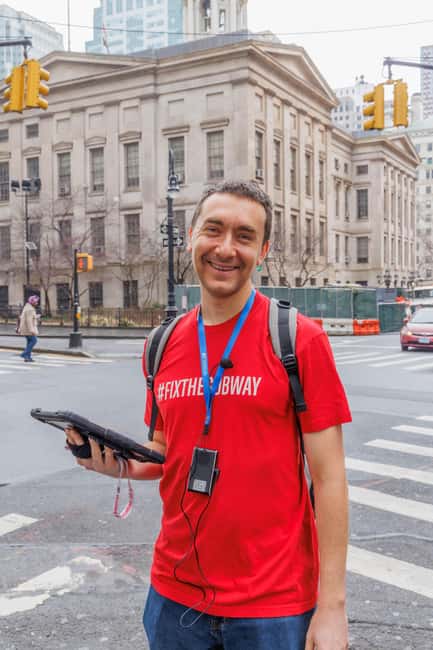
As you move through Downtown Brooklyn, the focus is on some of the borough’s oldest subway stations and the architecture around them. That’s a key difference from a generic subway history tour. Here, the stations aren’t just backdrops. They’re evidence.
Rayn points out what the original design tried to solve, and how later changes added new layers without fully replacing the old logic. You’ll see station elements that explain the system’s evolution—things that look simple at speed but become meaningful when you slow down and read the structure.
You’ll also get context for the way Brooklyn’s subway stations blend into the neighborhood above. That’s where the urban planner angle helps. You start to see how streets and transit had to negotiate space, grade, and access, often in a hurry.
Just your group: more private options


Abandoned stations and hidden platforms you can actually view
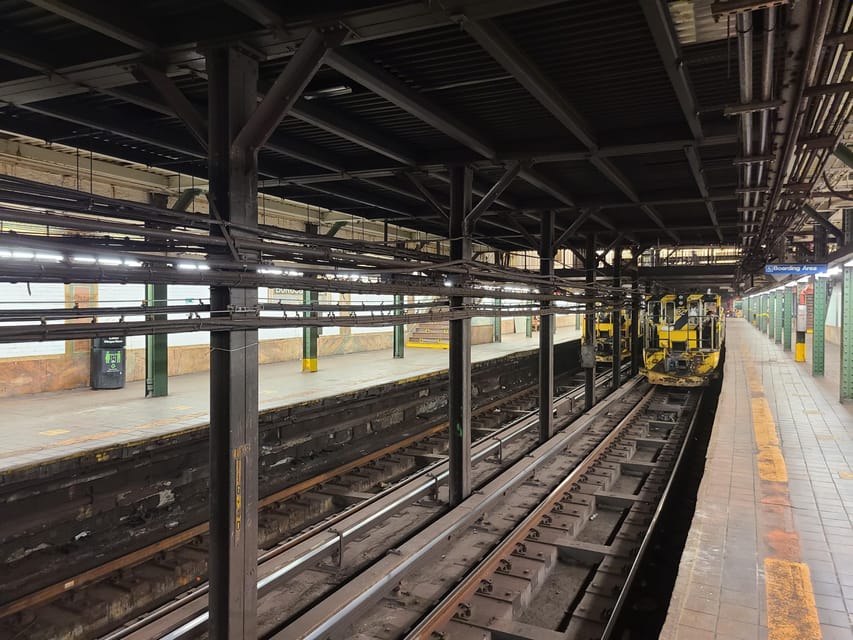
A standout promise here is the look at abandoned subway stations and platforms that are effectively hidden in plain sight. The tour only visits public areas, so you’re not getting into off-limits spaces. That’s important for comfort and safety, and it also means you’ll learn how to “see” what’s there without needing access to restricted tunnels.
One of the big thrills is learning how older stations were partially built, reconfigured, or superseded by route changes. On this tour, Rayn helps you connect the dots: the infrastructure you can still spot, the parts that got disconnected, and how the subway’s operating needs changed over time.
People often mention places like Nevins St lower level and other unused areas that you can’t just find on your own. It’s the kind of experience where you’ll walk away thinking, I’ve stood in this station for years and never noticed that.
Smith-9 St: the Gowanus Canal look-down moment
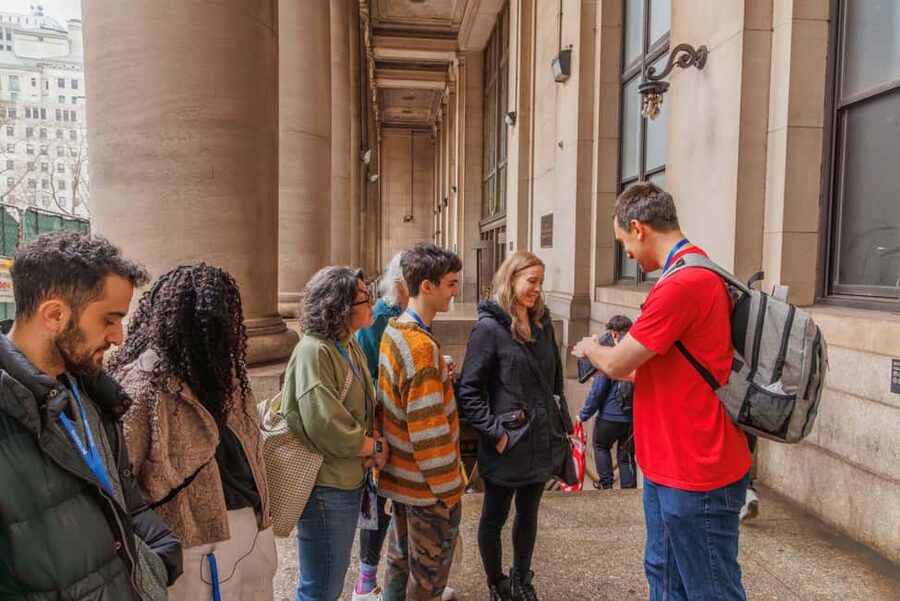
If you want a single image that sums up why this tour is different, it’s the view from Smith-9 St down toward the Gowanus Canal. That look isn’t just scenic. It’s educational.
Rayn uses this stop to explain the vertical thinking behind the system—how routes and grades dictated station placement and how the built environment shaped what could be done. You’ll get the feeling that the subway isn’t only moving people; it’s moving them through a landscape of engineering tradeoffs.
This is also tied to one of the tour’s headline facts: the station is described as the highest rapid transit station in the Western hemisphere. Even if you don’t memorize the exact technical framing, you’ll feel the meaning while you’re standing there—because you can see how the street level and canal-adjacent geography connect to subway design choices.
Art inside stations: public projects, not random decoration
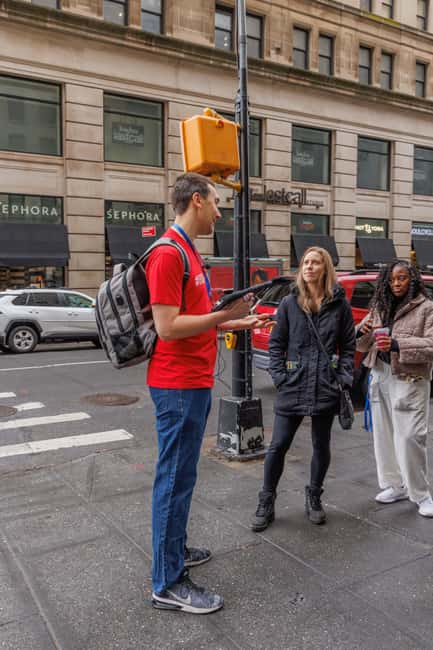
Brooklyn’s subway stations often treat art as part of the architecture. On this tour, you’ll see public art projects throughout the borough, and Rayn will help you decode what you’re looking at.
This is one of those small shifts that changes the whole experience. Instead of asking, What is that sculpture? you start asking, Why is it placed here, and what was the goal? That planner lens makes the art feel tied to access, wayfinding, and the passenger experience—not just something bolted on after the fact.
You’ll also notice how older stations can feel ornate or structured in ways that seem purely aesthetic until you realize they were part of a larger passenger-flow and identity strategy.
Riding multiple lines: IRT, BMT, and IND in one route
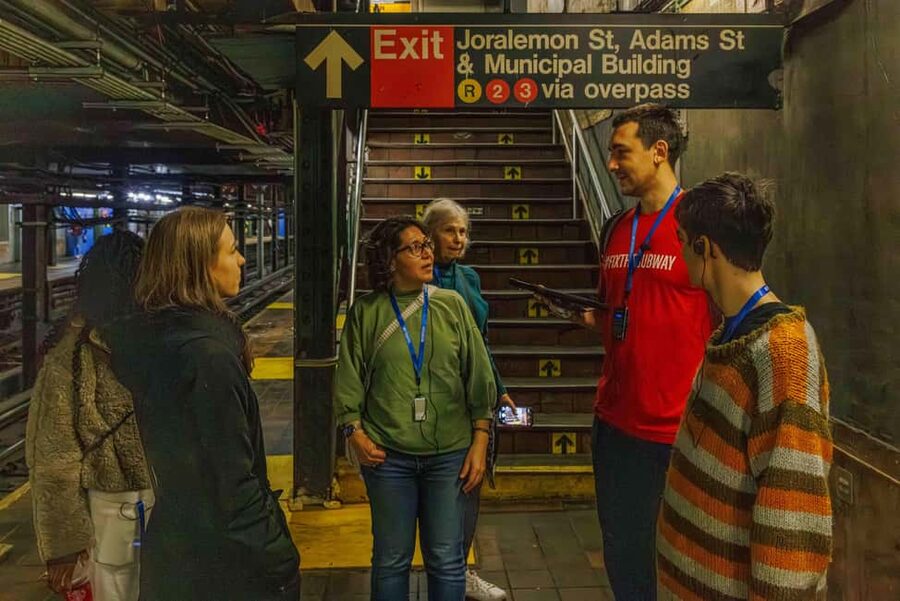
You don’t just walk. You also ride trains, and you’ll experience a mix of lines including the 4/5, D, G, F, and R. That line list matters because it reflects how Brooklyn’s subway story connects multiple legacy operators.
People appreciate that you get representative coverage of the system’s earlier identities—IRT, BMT, and IND—without needing to hunt for the right combination of trains on your own. The practical value: you see how different lines enter Downtown Brooklyn and how transfers and station layouts reflect older planning decisions.
On top of that, Rayn uses train time to explain details of how the system works day to day, not just how it used to work. That balance keeps the route from turning into a pure archaeology session.
The Bad moonwalk practice spot: pop culture with a purpose
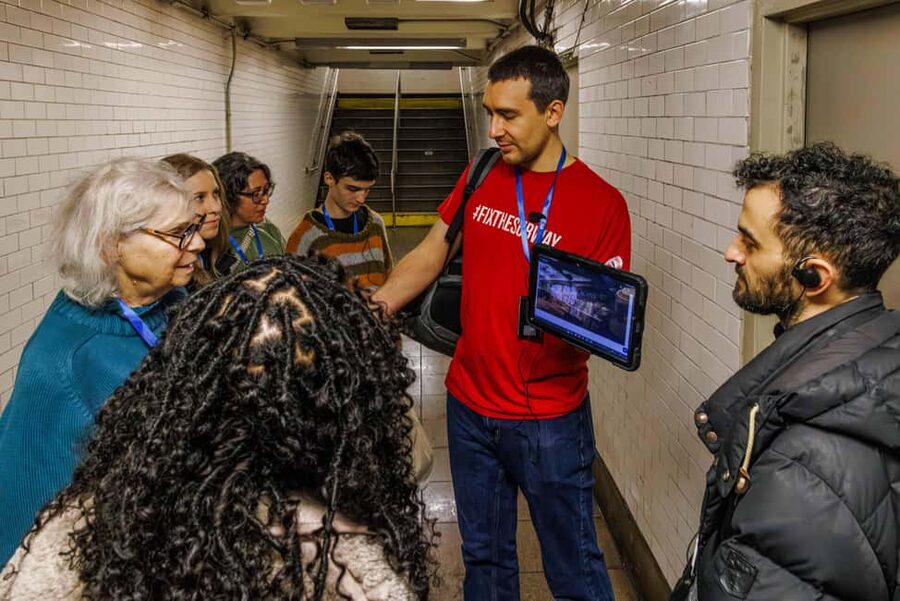
Yes, you’ll get the fun moment: you’ll practice your moonwalk in the exact spot where Michael Jackson filmed the music video Bad. It’s a playful stop, but it also works as a reset during all the underground engineering talk.
More importantly, it shows how the subway environment becomes part of broader city culture. The station isn’t only infrastructure—it’s a public stage that artists, photographers, and filmmakers use because it’s visually distinctive and instantly recognizable.
If you’re traveling with kids, this is the kind of moment that turns a history-heavy tour into a story everyone remembers. If you’re traveling solo or with friends, it’s a low-pressure way to break the walking-and-reading rhythm.
Small subway details you’ll start noticing forever
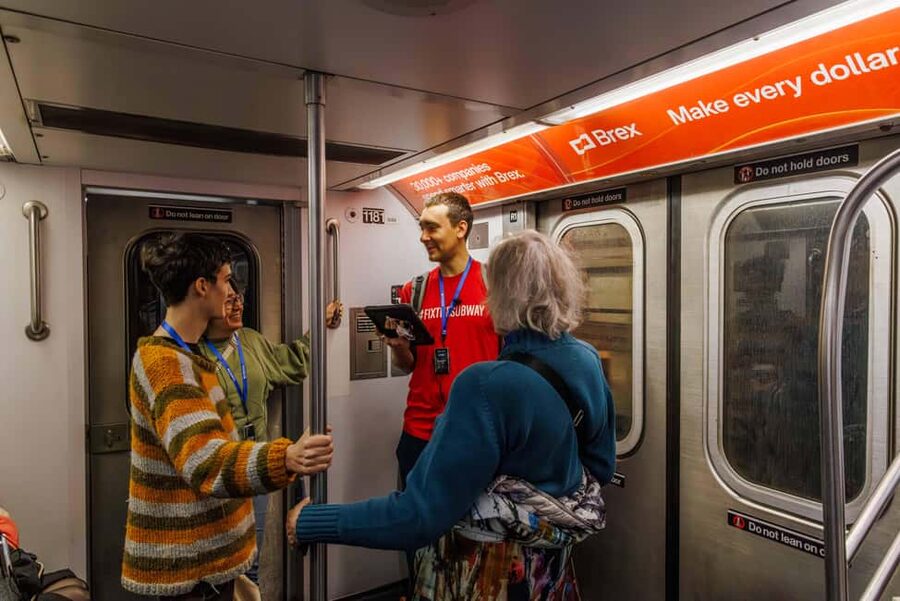
One of the best ways to measure a subway tour is whether it changes how you watch the next station you enter. This one has that effect, especially because Rayn points out details people normally skip.
For example, you might notice subtle lighting differences and other physical cues—small design choices that end up shaping how stations feel and how passengers move through them. One report even mentions how some light bulbs can appear slightly different shades of blue, which becomes a reminder that even mundane components have design logic behind them.
The same goes for train design details, like how there can be a vertical cable between cars. Those details sound too tiny to matter until you learn they’re part of how the system is built to operate and maintain safely.
The lesson: the subway isn’t just a way to get somewhere. It’s a living machine with a visible design language.
What’s included (and why it makes the tour feel smoother)
You get a few things built into the experience that lower friction:
- Subway fare included, so you’re not stopping to buy tickets or figure out payment while the group is moving.
- Ear pieces provided, which makes the guide’s explanations clearer and reduces the “I can’t hear you” problem that happens in busy stations.
- Licensed guide and certified urban planner leadership, with a route designed around older stations and public spaces.
- The tour stays in areas open to the public, so you’re viewing abandoned or unused features from permitted vantage points.
The overall result is that you spend your time looking at what matters, not managing logistics.
Price and value: $200 per group up to 15
The price is $200 per group up to 15 for a 2-hour experience. That’s not cheap if you’re thinking per person, but it becomes a strong deal once you consider what’s included.
Here’s the value math in a practical way:
- Subway fare is covered.
- Everyone gets ear pieces.
- You’re paying for expert interpretation from a guide who can explain both history and the planning logic behind station design.
- It’s private, so your group can ask questions and stay together without waiting for strangers.
If you’re a couple, it may feel like a splurge. If you’re a small group of friends, a family with older kids, or a group of coworkers, it can land closer to the cost of a standard attraction ticket—while offering something you can only get by walking and riding with a specialist.
Also, it’s timed well for city exploring. Two hours is long enough to hit multiple stations, but short enough that you won’t feel stuck underground all day.
Ending at Barclays Center: easy to roll into Brooklyn food
The tour concludes at the Barclays Center subway station in Downtown Brooklyn. That’s a smart finish point because you’re not being dropped somewhere inconvenient or confusing.
From there, you’re steps away from a ton of local food options, so you can turn the tour into a full Brooklyn half-day instead of ending the experience with a scramble.
It also helps you connect the tour back to the modern moment: after seeing older infrastructure, you emerge near one of the borough’s biggest contemporary landmarks.
Should you book this Brooklyn subway secrets tour?
Book it if you want a Brooklyn experience that feels like a walk-through of real infrastructure—one that teaches you how the system grew and why certain designs still matter. I think it’s especially worth it if you enjoy:
- abandoned or unused spaces you can see from public areas
- station architecture and the engineering choices behind it
- city planning explanations that connect underground decisions to the streets above
- a fun mix of history and pop-culture at the Bad filming spot
Skip it if you dislike stairs, crowded subway environments, or underground walking in general. This is not an elevator-only experience, and you should plan to move.
If you’re the kind of person who already takes the subway and then wonders what you’re passing, this tour gives you real answers—and new eyes for every stop afterward.
FAQ
Where is the meeting point?
Please meet outside the Starbucks at 50 Court Street.
How long is the tour?
The duration is 2 hours.
Is this a private tour?
Yes, it’s a private group experience.
What’s the maximum group size?
It’s priced per group up to 15 people.
What does the tour include for transit?
Full subway fare during the tour is included.
Are ear pieces provided?
Yes. Individual ear pieces are provided so everyone can hear perfectly.
Does the tour access restricted areas?
No. The tour only visits areas open to the public and does not access any restricted areas.
Where does the tour end?
The experience ends at Barclays Center subway station in Downtown Brooklyn.
What should I bring?
Wear comfortable shoes, since the tour involves walking up and down steps.
What train lines are included?
The tour includes rides on the 4/5, D, G, F, and R lines.
Your Group Only, No Strangers
- Private Central Park Pedicab Tour★ 5.0 · 6,981 reviews
- Private Transfer from Manhattan to NYC Airports (JFK/EWR/LGA)★ 3.5 · 1,683 reviews
- New York City: Private Central Park Pedicab Tour★ 4.9 · 1,637 reviews
- Carriage Ride in Central Park (VIP – PRIVATE) Since 1964™★ 4.0 · 1,074 reviews
- NYC: Private Central Park Horse Carriage Ride with Guide★ 4.9 · 790 reviews
More Tour Reviews in New York City
- NYC: SUMMIT One Vanderbilt Tickets★ 4.7 · 51,195 reviews
- NYC: Empire State Building Tickets – Observatory & Museum★ 4.7 · 25,757 reviews
- New York City: Statue of Liberty & Ellis Island with Ferry★ 4.6 · 18,683 reviews
- New York City: American Museum of Natural History Ticket★ 4.5 · 15,447 reviews
- Statue of Liberty and Ellis Island Tour: All Options★ 5.0 · 13,571 reviews
Keep Going in Brooklyn
- NYC Bus Tour of Brooklyn, Bronx, Queens: Art, Food & Sports★ 5.0 · 3,805 reviews
- NYC Highlights Tour: Bronx, Brooklyn, Harlem, Queens & Coney★ 4.5 · 2,846 reviews
- From Manhattan: 4-Hour Dyker Heights Holiday Lights Bus Tour★ 4.6 · 2,426 reviews
- NYC: Contrasts Tour of Harlem, The Bronx, Queens & Brooklyn★ 4.5 · 2,167 reviews
- NYC: Brooklyn Nets NBA Game Ticket at Barclays Center★ 4.7 · 2,033 reviews
Just in: the newest New York City reviews on our desk




Brooklyn Tours, compared.
 ★ 5.0NYC Bus Tour of Brooklyn, Bronx, Queens: Art, Food & SportsFrom $843,805 reviews
 ★ 4.5NYC Highlights Tour: Bronx, Brooklyn, Harlem, Queens & ConeyFrom $462,846 reviews
 ★ 4.6From Manhattan: 4-Hour Dyker Heights Holiday Lights Bus TourFrom $632,426 reviews
 ★ 4.5Contrasts Tour of Harlem, The Bronx, Queens & BrooklynFrom $392,167 reviews
 ★ 4.7Brooklyn Nets NBA Game Ticket at Barclays CenterFrom $312,033 reviews
 ★ 4.3From Manhattan: Bronx, Queens and Brooklyn Half-Day TourFrom $791,321 reviews
 ★ 4.7Dyker Heights Christmas Lights & Skyline View Bus TourFrom $691,192 reviews
 ★ 4.4From Manhattan: Full-Day NYC Boroughs and Coney Island TourFrom $491,120 reviews
Browse the lists this tour appears in