
Reviewed · CENTRAL PARK TOURS
Central Park Horse Carriage Ride
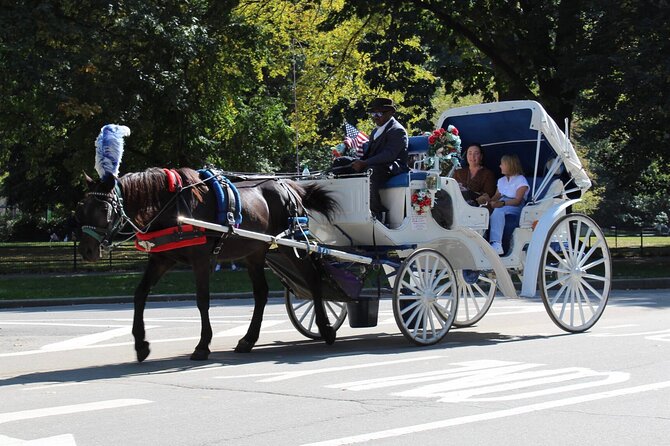
A horse ride can shortcut your Central Park chaos. A 55-minute private carriage tour rolls past Central Park’s biggest landmarks with a driver who adds context along the way, so you get the classic sights without getting turned around. I like the pace most: you sit back, keep your energy, and still feel like you saw a lot.
I also love the small comfort touches, especially the warm blanket and the built-in photo stops at the places most people hustle past. The only real caution is service reliability: a few bookings have been reported as no-shows, with issues like missing photo pauses or not getting the full paid time—so plan extra buffer time and be ready to follow up on the day.
In This Review
- Key highlights before you go
- A private 55-minute carriage route through Central Park’s biggest hits
- What you can expect from the carriage experience and your driver
- One practical consideration
- Cop Cot, Wollman Rink, and the classic southern sights
- Cop Cot: the little hill cottage story
- Wollman Rink: winter fame year-round
- Board-game calm: the pavilion for chess and friends
- The carousel: old school fun that still works
- Zoo time, a dash of heroism, and the Literary Walk vibe
- Central Park Zoo: animal viewing in a compact footprint
- Literary Walk: William Shakespeare, and other big names
- Balto: the statue of delivery heroism
- SummerStage and Pilgrim Hill: culture and curious naming
- Conservatory Water, Bethesda Terrace, and the Mall’s elm tunnel
- Conservatory Water and model boating
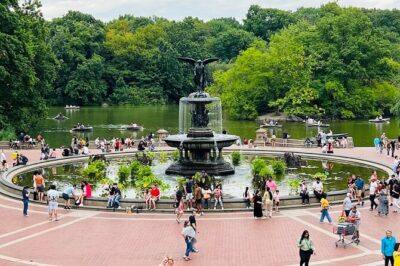
- Bethesda Terrace: icon level, with time for photos
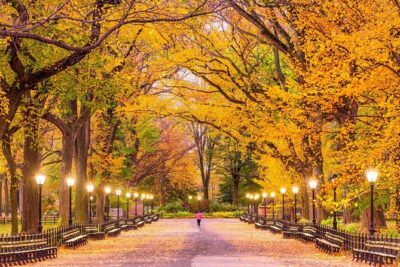
- The Mall: a shaded elm-lined walkway
- Loeb Boathouse: waterfront eating options
- Cherry Hill, Bow Bridge, and Daniel Webster moments
- Cherry Hill: spring color in a small window
- Bow Bridge: film, romance, and quick picture time
- Daniel Webster: another name from the park’s walkways
- Strawberry Fields and The Dakota: music history you can actually see
- Strawberry Fields and the Imagine Mosaic
- The Dakota: a real address tied to real events
- Sheep Meadow, Tavern on the Green, and Pinebank Arch
- Sheep Meadow: where locals sprawl
- Tavern on the Green: a landmark meal waiting for later
- Pinebank Arch: a small historic bridge with style
- Price and value: when a carriage ride is worth paying for
- Who should book this Central Park horse carriage ride?
- Should you book Central Park Horse Carriages INC?
- FAQ
- How long is the Central Park horse carriage ride?
- What language is the tour offered in?
- Where do I meet for the tour?
- Is this a private tour?
- What’s included in the tour?
- Does it require good weather?
Key highlights before you go
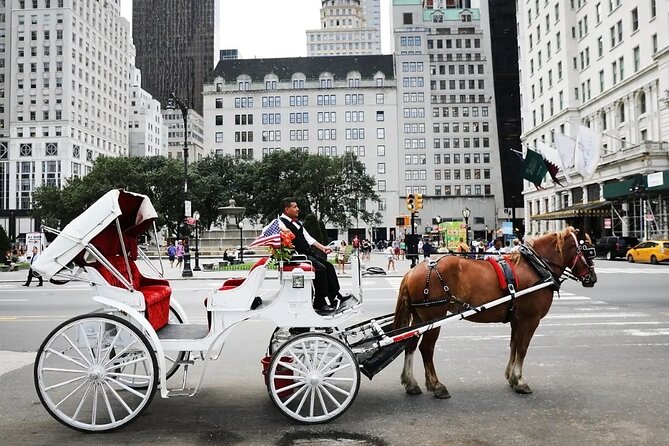
- Private carriage for up to four: your group controls the feel and timing.
- Photo stops built into the route: you’re not only riding through; you pause for pictures.
- Driver-led storytelling in English: you’ll hear the landmark details most people miss.
- Nice and warm blanket included: helpful for cooler months and breezy afternoons.
- Central Park “greatest hits” in one loop: less walking, more seeing.
More ways to see Central Park
- Central Park Pedicab Guided Tours
★ 5.0 · 7,108 reviews - Private Central Park Pedicab Tour
★ 5.0 · 6,981 reviews - NYC: Central Park Bike Rentals
★ 4.2 · 2,528 reviews - Official NYC Horse Carriage Rides in Central Park since 1979 ™
★ 5.0 · 2,365 reviews
A private 55-minute carriage route through Central Park’s biggest hits
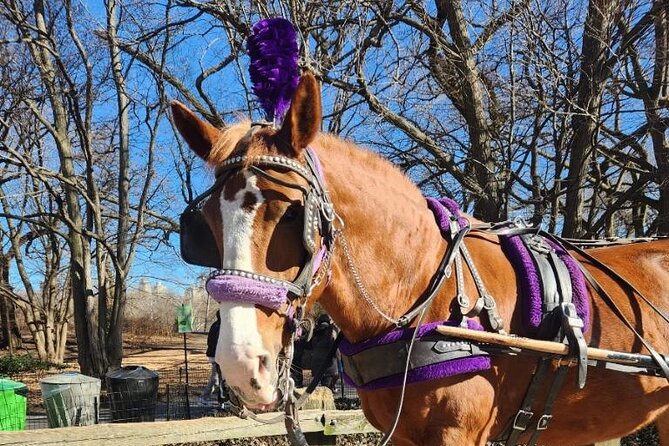
This is one of those Central Park experiences that works on multiple levels. If you’re a first-timer, the ride helps you get your bearings quickly. If you’ve visited before, you still get value because the carriage route strings together the park’s most famous landmarks in a way that’s hard to replicate on foot in the same time.
It’s also the kind of tour that helps you travel smarter, not harder. In roughly 55 minutes, you can cover stretches that would take you a lot longer to walk—especially if you’re juggling kids, jet lag, or just don’t want to spend your vacation calculating distances.
What you can expect from the carriage experience and your driver
You’ll start and finish at 1428 6th Ave, New York, NY 10019, and the tour ends back at the same meeting point. The tour is private, so it’s only your group on the carriage. Expect a guided ride with photo stops, plus a nice and warm blanket. The tour is offered in English, and you use a mobile ticket.
A big part of the appeal is the driver. The positive experiences I took from the info here point to drivers who slow down at the right moments—taking time for photos and explaining what you’re seeing. In one standout account, the driver team was called out by name (Leo and Lily), and the emphasis was on both relaxation and good storytelling. In another, the driver was also able to assist with a friend’s wheelchair, which matters if you need extra care around transitions and paths.
One practical consideration
Because this is a live, in-person service, reliability matters. The downside that shows up in the provided info is serious enough to take seriously: reports include a no-show and cases where the actual experience didn’t match what was paid for (including missing photo stops). If you book, I’d treat it like a reservation with a real-world check-in—arrive early, confirm you’re at the right spot, and keep a plan B in your back pocket if something goes wrong.
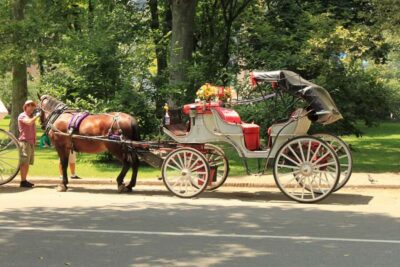
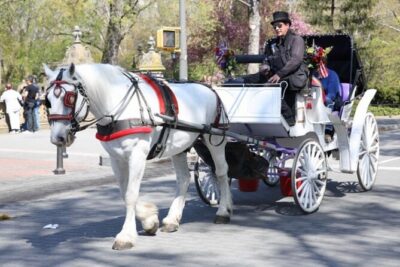
More clip-clop rides through the park
Cop Cot, Wollman Rink, and the classic southern sights
The ride starts near the southern end of the park, where Central Park’s “old world” charm and iconic landmarks are packed close together. If you’ve only seen these places from afar, this section helps you recognize them instantly once you’re actually there.
Cop Cot: the little hill cottage story
One early stop is Cop Cot, one of the park’s oldest and largest wooden structures. It sits on a small hill near the southern end, close to 59th Street and 6th Avenue. The name comes from Old English meaning little cottage on the crest of a hill. Even if you don’t spend long here, it’s a great “welcome to the park” stop because it connects you to the park’s early design character.
Wollman Rink: winter fame year-round
Next is Wollman Rink, a famous ice-skating rink in the southern portion near 59th Street and 6th Avenue. Opened in 1949 as a gift from philanthropist Kate Wollman, it’s one of the city’s best-known outdoor skating venues in winter. In warmer months you might not see skating, but you still get the landmark atmosphere—and a feel for how Central Park transforms by season.
Board-game calm: the pavilion for chess and friends
A charming break comes at the board game pavilion, where you can play chess, checkers, backgammon, and other games. The nice thing about this stop is its low-key vibe. It’s not about big crowds or big views; it’s about Central Park life—people slowing down, thinking, and enjoying the setting.
The carousel: old school fun that still works
Then you get the Central Park Carousel, near the Conservatory Water area and close to 65th Street. It dates back to 1871, making it one of the oldest operating carousels in the United States. The current carousel was built in 1951, with beautifully hand-carved wooden horses and detailed painting.
This stop is especially good if you’re traveling with kids or if you just want a burst of nostalgia without committing to a long walk. It’s also a strong photo moment.
Zoo time, a dash of heroism, and the Literary Walk vibe
Central Park is a park, but it also behaves like a collection of mini-neighborhoods. This mid-southern stretch captures that.
Central Park Zoo: animal viewing in a compact footprint
One stop includes the Central Park Zoo, spread across about 6.5 acres. It’s a wildlife-focused area and an educational resource about conservation. Even if you don’t go inside for a full visit, seeing that area from the ride gives you a sense of how much the park offers besides scenery.
Literary Walk: William Shakespeare, and other big names
The tour then hits the Literary Walk area near the southern end. One named stop centers on a statue commemorating William Shakespeare, described here as among the greatest writers in the English language.
This is a smart inclusion on a carriage tour because it’s easy to miss details like the Literary Walk statues if you’re speed-walking. From the carriage seat, you can quickly connect names to places—and then use that to explore further later if you want.
Balto: the statue of delivery heroism
You’ll also pause for Balto, a statue tied to an important story. In 1925, an outbreak of diphtheria in Nome required a rapid delivery of antitoxin serum. Balto and his team of sled dogs traveled nearly 700 miles through dangerous conditions to deliver it. Balto became a symbol of heroism and loyalty, and that meaning sticks even if you’re only there briefly.
SummerStage and Pilgrim Hill: culture and curious naming
The route includes SummerStage, founded in 1986 and a staple of New York’s summer arts scene focused on bringing performances to the public and supporting community engagement.
Nearby you may also pass Pilgrim Hill, a name believed to come from a pilgrim statue placed there in the 19th century (even though the statue isn’t present anymore). The ride makes these small “why is this called that?” stops feel like part of the park’s personality, not random trivia.
Conservatory Water, Bethesda Terrace, and the Mall’s elm tunnel
As the ride moves northward and eastward, you start getting the postcard architecture and the park’s signature paths.
Conservatory Water and model boating
One stop centers on Conservatory Water, a pond surrounded by trees and benches. It’s a peaceful area with wildlife like ducks. Here’s a fun detail: the pond is also known for model boating, where people can rent small model sailboats and sail them on the water. If the timing is right, you might spot people enjoying the activity, and it adds a quietly “New York hobby” feel to the experience.
Bethesda Terrace: icon level, with time for photos
One of the longer pauses is at Bethesda Terrace, including its view of Bethesda Fountain. This area is known for stunning architecture, views, and activity, and it’s been a gathering place since the park’s early years. The provided timing here is about 10 minutes, which is meaningful because it gives you a chance to actually look up, take photos, and orient yourself for later walks.
The Mall: a shaded elm-lined walkway
Then comes The Mall, the famous tree-lined, straight path with American elm canopies. It’s a favorite year-round because it’s wide, straight, and shaded—easy for photos and easy for imagining how you’d wander the park on foot if you had more time.
Loeb Boathouse: waterfront eating options
Near the Mall is the Loeb Boathouse, which includes a restaurant and café with indoor and outdoor seating overlooking the water. Even if you’re not eating on the ride, it’s a useful landmark to remember. If you extend your day after the carriage, this is the kind of spot that turns Central Park into a full outing instead of a quick hit.
Cherry Hill, Bow Bridge, and Daniel Webster moments
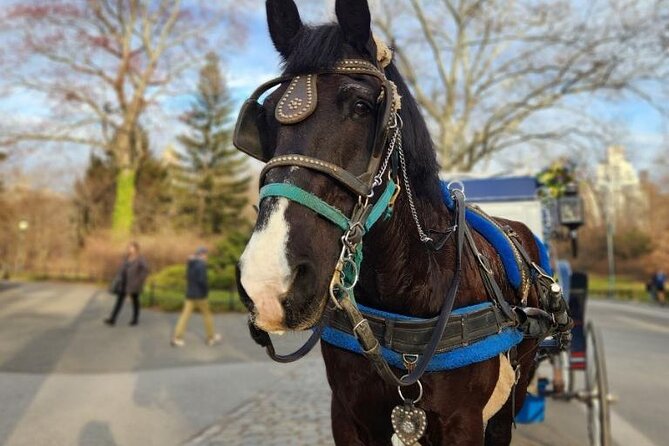
This stretch is where the visuals get romantic and cinematic.
Cherry Hill: spring color in a small window
Cherry Hill is known for cherry blossom trees, which bloom in spring and draw visitors and photographers. On a carriage tour, you might not get control over the bloom timing, but you’ll still understand why people chase this spot. It’s also a photo-stop that feels different across seasons.
Bow Bridge: film, romance, and quick picture time
Next is Bow Bridge, famous in film, TV, and photographs, and known for its romantic setting. It’s the kind of landmark where even a short stop feels worth it—especially for couples or anyone who wants a classic Central Park image without hiking.
Daniel Webster: another name from the park’s walkways
You’ll also see the stop tied to Daniel Webster (1782–1852), a major American political figure connected to federalism and a strong national government. He’s tied here to key 1850 debates, which makes the area around him more than just scenery. Like the Shakespeare statue, this is part of the park’s habit of placing big ideas and big names into a walkable setting.
Strawberry Fields and The Dakota: music history you can actually see
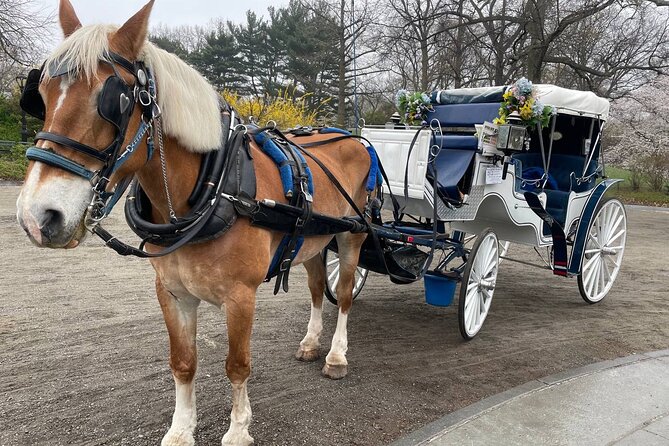
If you’re the type who likes your sightseeing to mean something, this portion is the heart of the route.
Strawberry Fields and the Imagine Mosaic
You’ll stop at Strawberry Fields, centered on the Imagine Mosaic, a circular mosaic in the pavement designed as a tribute to John Lennon’s song Imagine. Italian artisans created it, and it often gets decorated with flowers, candles, and other tokens left by visitors.
This memorial is designed as a quiet zone in Central Park—landscaped with trees, flowers, and benches to create a calmer spot away from louder activity. The timing here is about 10 minutes, which is great because it lets you slow down and actually take in the meaning, not just snap a photo and move on.
The Dakota: a real address tied to real events
Then you reach The Dakota, famous as the home of musician John Lennon and his wife Yoko Ono. Lennon lived there from 1973 until his death in 1980. The provided info also notes he was fatally shot outside the building’s entrance by Mark David Chapman on December 8, 1980. Yoko Ono still resides at the Dakota and has worked to preserve Lennon’s legacy, including her role in creating Strawberry Fields.
The tour schedules about 10 minutes for this stop. That’s long enough to take in the building from the outside and to understand why people come here from around the world. Just remember: the setting is emotional, so keep your voice low and let the moment land.
Sheep Meadow, Tavern on the Green, and Pinebank Arch
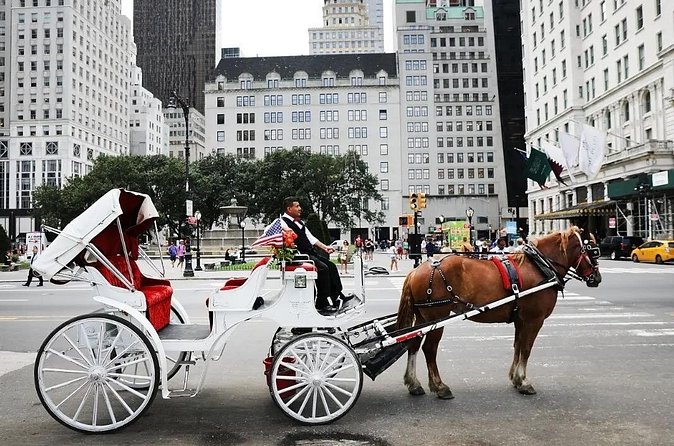
The ride finishes with some big open-space energy and a couple of classic Central Park structures.
Sheep Meadow: where locals sprawl
You’ll stop near Sheep Meadow, a large open lawn covering 15 acres between 66th and 69th Streets. It’s one of Central Park’s most popular areas for picnics, sunbathing, and relaxing. This stop works even if you’re not looking for a long stop, because it gives you that immediate sense of why Central Park feels like a world away from the city.
Tavern on the Green: a landmark meal waiting for later
Next is Tavern on the Green, an iconic restaurant on the western edge of the park at 67th Street. It has history dating back to the 19th century and sits in a setting surrounded by park greenery. If you want to turn the day into more than sightseeing, this is the kind of place you can plan for afterward.
Pinebank Arch: a small historic bridge with style
Finally, you reach Pinebank Arch, one of Central Park’s charming cast-iron bridges near the southwestern corner at 62nd Street and West Drive. It’s one of the few surviving cast-iron bridges in the park, with historic significance and elegant design. For me, ending on a structure like this is a good closer because it gives you a clean visual memory before you head back to the meeting point.
Price and value: when a carriage ride is worth paying for
No one books a carriage ride only for the animal part. You’re paying for time, guidance, and comfort.
Here’s what you’re effectively buying:
- Less walking for a first sweep of Central Park’s most famous areas.
- A driver-guided route with photo stops so you can actually capture what you came to see.
- A warm blanket and guided pacing that can feel like a break, not another chore during your trip.
- A private setup for your group (up to four), which reduces the stress of mixing with strangers.
When carriage value can drop is when service doesn’t match what you expect. Because the provided info includes serious issues like no-shows and not getting the full paid time, I recommend a simple strategy: arrive early at 1428 6th Ave, keep your phone charged for your mobile ticket, and be ready to speak up quickly if your carriage isn’t there when it should be.
Who should book this Central Park horse carriage ride?
This is a strong fit if:
- You want a classic first Central Park experience without spending the day walking.
- You’re traveling as a small group (up to four) and want a more personal pace.
- You care about photo timing at specific landmarks like Bethesda Terrace and Strawberry Fields.
- You want driver context, not just scenery.
It can also work well for people who have trouble walking long distances. One provided positive note specifically praises the driver’s help with a wheelchair, which suggests real attention to guest needs. If you have mobility considerations, I’d still ask about practical comfort and handling when you book so you’re not guessing.
Should you book Central Park Horse Carriages INC?
I’d book if your priority is classic Central Park landmarks with minimal walking, plus photo pauses and a driver who tells the stories behind the sights. The inclusion of a warm blanket and the private, up-to-four setup make it feel more like a tailored outing than a mass sightseeing product.
I would not book blindly. Because the provided info includes reports of no-shows and timing problems, you should treat this as a day-of experience that needs attention. Show up early, confirm you’re at the correct 1428 6th Ave meeting point, and keep your expectations grounded in the fact that weather and real-world operations can affect timing.
If you want, you can pair this with a later self-guided walk around Bethesda Terrace or a longer sit-down meal near Tavern on the Green. The carriage ride gives you the map; you choose what to linger on.
FAQ
How long is the Central Park horse carriage ride?
It lasts about 55 minutes.
What language is the tour offered in?
The tour is offered in English.
Where do I meet for the tour?
You meet at 1428 6th Ave, New York, NY 10019, and the activity ends back at the same meeting point.
Is this a private tour?
Yes. It’s a private tour/activity, and only your group participates.
What’s included in the tour?
Included items are a guided tour, photo stops, and a nice and warm blanket.
Does it require good weather?
Yes. The experience requires good weather; if canceled due to poor weather, you’ll be offered a different date or a full refund.
More Tour Reviews in New York City
- NYC: SUMMIT One Vanderbilt Tickets★ 4.7 · 51,195 reviews
- NYC: Empire State Building Tickets – Observatory & Museum★ 4.7 · 25,757 reviews
- New York City: Statue of Liberty & Ellis Island with Ferry★ 4.6 · 18,683 reviews
- New York City: American Museum of Natural History Ticket★ 4.5 · 15,447 reviews
- Statue of Liberty and Ellis Island Tour: All Options★ 5.0 · 13,571 reviews
Through the Park by Carriage
- Official NYC Horse Carriage Rides in Central Park since 1979 ™★ 5.0 · 2,365 reviews
- Carriage Ride in Central Park (VIP – PRIVATE) Since 1964™★ 4.0 · 1,074 reviews
- NYC: Guided Central Park Horse Carriage Ride★ 4.8 · 877 reviews
- NYC: Private Central Park Horse Carriage Ride with Guide★ 4.9 · 790 reviews
- Official Private NYC Central Park Horse Carriage Ride Since 1970™★ 4.5 · 447 reviews
More of Central Park
- Central Park Pedicab Guided Tours★ 5.0 · 7,108 reviews
- Private Central Park Pedicab Tour★ 5.0 · 6,981 reviews
- NYC: Central Park Bike Rentals★ 4.2 · 2,528 reviews
- Official NYC Horse Carriage Rides in Central Park since 1979 ™★ 5.0 · 2,365 reviews
- NYC: Central Park Bike Rental★ 4.1 · 1,651 reviews
Just in: the newest New York City reviews on our desk




Central Park Tours, compared.
 ★ 5.0Central Park Pedicab Guided ToursFrom $387,108 reviews
 ★ 5.0Private Central Park Pedicab TourFrom $386,981 reviews
 ★ 4.2Central Park Bike RentalsFrom $92,528 reviews
 ★ 5.0Official NYC Horse Carriage Rides in Central Park since 1979 ™From $992,365 reviews
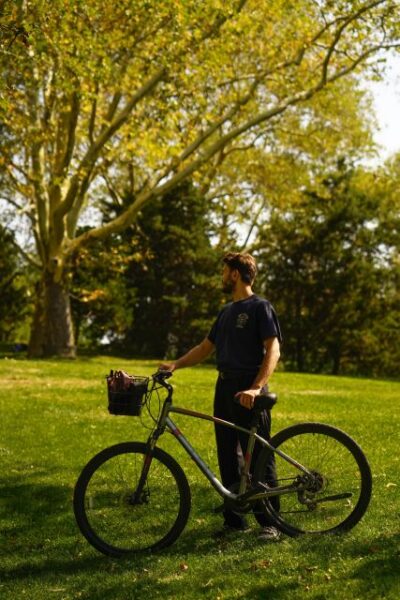 ★ 4.1Central Park Bike RentalFrom $81,651 reviews
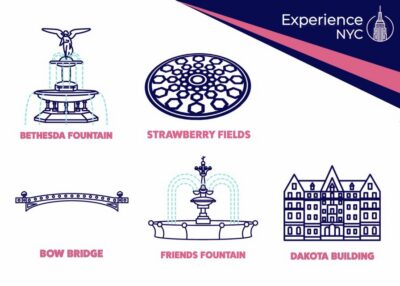 ★ 4.9Private Central Park Pedicab TourFrom $401,637 reviews
 ★ 4.7Central Park Bike RentalFrom $91,509 reviews
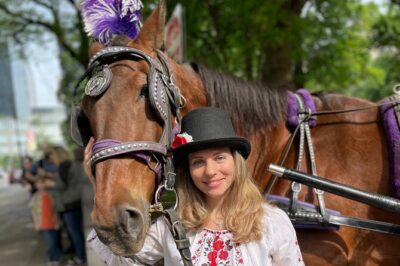 ★ 4.0Carriage Ride in Central Park (VIP – PRIVATE) Since 1964™From $141,074 reviews
Browse the lists this tour appears in