
Reviewed · CENTRAL PARK TOURS
Central Park Pedicab Tour with local Guide
A pedicab tour in Central Park feels like a shortcut. I love the private pace and the way your guide handles photo stops, so you’re not stuck lining up with strangers. One thing to consider: some stops are quick view-and-shoot moments, so you won’t get long wandering time on foot.
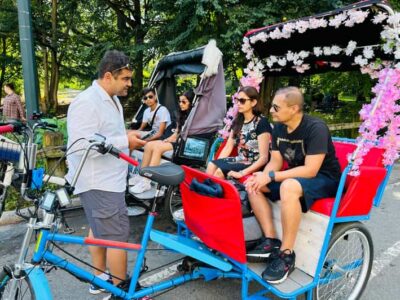
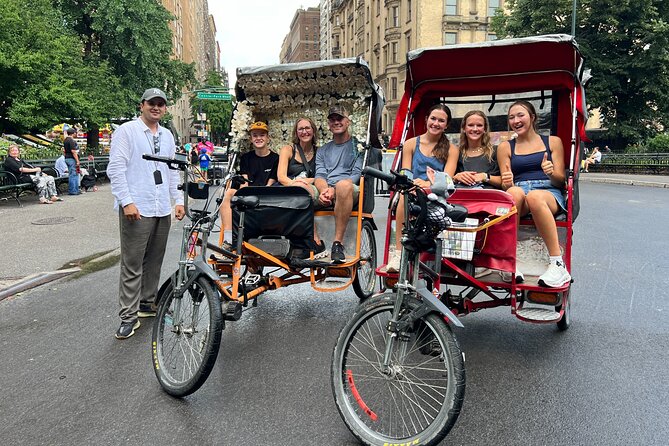
The best part is how human it feels. You’ll meet at the General William Tecumseh Sherman Monument, ride with a local guide in a comfortable pedicab, and get help staying warm with blankets (and a cover if it rains). Guides like Roman and MJ come up in the reviews for being patient, funny, and very good at making kids and adults feel settled fast, even when the weather is rude.
This is also a smart way to see Central Park without turning your day into a sore-feet project. The tour runs about 1 to 3 hours, in English, and you’ll mostly be stopping for photos and stories rather than paying museum fees. If you want maximum time inside one single area, you may find the stop timing a bit brisk.
In This Review
- Key reasons this Central Park pedicab tour works so well
- Why a pedicab tour is the best way to see Central Park fast
- Meeting at the Sherman Monument and what the ride feels like
- Central Park highlights you’ll hit: fountains, bridges, and film-famous views
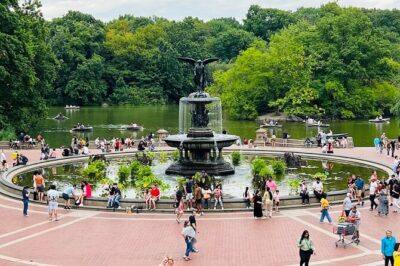
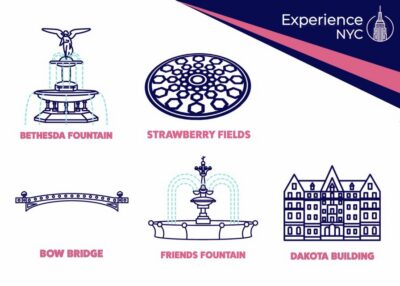
- Bethesda Fountain and Bethesda Terrace: the cinematic heart of the park
- Gapstow Bridge: romance, skyline views, and that classic arch
- Bow Bridge: proposals waiting to happen
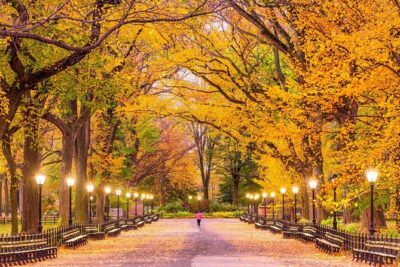
- Literary Walk: statues, straight lines, and classic New York vibes
- Small stops that add big charm: carousel horses, chess cottages, and Balto
- Central Park Carousel: 57 hand-carved horses and old-school New York
- The chess-and-checkers cottage: strategy in the middle of the park
- The Victorian visitor center cottage: architecture you’ll want to look at
- Balto’s statue: a heartwarming story right where you can touch it
- Umpire Rock, Wollman Rink, and the pond-side rhythm
- Umpire Rock: a short climb with a big payoff
- Wollman Rink: a winter icon, even when you visit outside the season
- Conservatory Water: model sailboats and fairy-tale details
- Rumsey Playfield: SummerStage energy
- Cherry Hill and Strawberry Fields: spring romance, then peace memorial
- Cherry Hill: lake views framed by cherry blossoms
- Strawberry Fields: the John Lennon memorial near the Dakota
- Sheep Meadow, Tavern on the Green, and the park-with-a-city skyline feeling
- Bow Bridge to the Dakota: classic skyline drama and a real-life story
- Pinebank Arch and the fun of finding a less-obvious icon
- The 2-hour add-ons: Met views, the reservoir, Belvedere Castle, and Cleopatra’s Needle
- Metropolitan Museum of Art (outside view): art scale on the park’s edge
- Jacqueline Kennedy Onassis Reservoir: a massive water story you can see
- Belvedere Castle: a decorative folly with panoramic views
- Alice in Wonderland statue: a gift with a personal story
- Cleopatra’s Needle: ancient Egypt in Manhattan
- Price and value: is $55 per person a good deal?
- Who this Central Park pedicab tour suits best
- Should you book this Central Park pedicab tour?
- FAQ
- How long is the Central Park pedicab tour?
- Is this tour private?
- What language is the guide?
- What’s included in the price?
- Where does the tour start and end?
- What tickets or admissions are included?
Key reasons this Central Park pedicab tour works so well
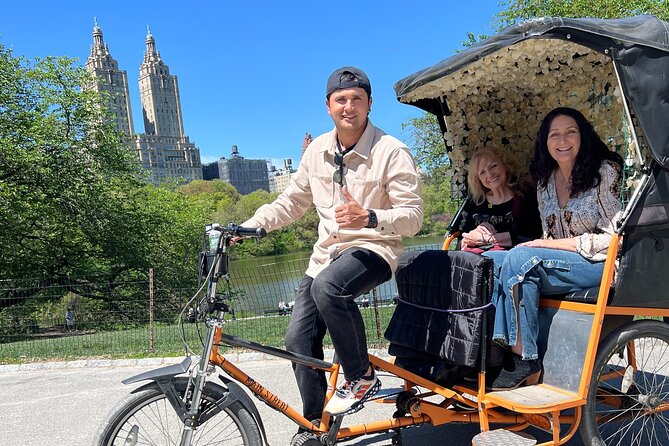
- Photo-stop guidance built into the ride so you’ll get angles you’d miss on your own
- Local stories tied to real places, including film locations and celebrity homes
- A private format for a group-only experience and an adjustable pace
- Comfort perks like blankets in cold weather and cover if it rains
- Big sights grouped efficiently, so you cover more ground in less time
More ways to see Central Park
- Central Park Pedicab Guided Tours
★ 5.0 · 7,108 reviews - Private Central Park Pedicab Tour
★ 5.0 · 6,981 reviews - NYC: Central Park Bike Rentals
★ 4.2 · 2,528 reviews - Official NYC Horse Carriage Rides in Central Park since 1979 ™
★ 5.0 · 2,365 reviews
Why a pedicab tour is the best way to see Central Park fast
Central Park is huge. On foot, you can spend more time moving between highlights than actually enjoying them. In a pedicab, you get a smoother route that helps you get your bearings fast—you’ll see the iconic parts early and then let your guide steer you toward the spots that match your vibe.
I like that the tour is designed around quick, repeatable moments: roll in, pause, snap photos, learn a little, roll again. That’s what makes it feel efficient without feeling rushed. And because it’s eco-friendlier than cars in the park, you don’t get that exhaust-and-traffic mood that can take over a sight-seeing day.
The “private” part matters too. If your group wants extra time at Bethesda Fountain for photos, or you want to slow down near Strawberry Fields, you’re not fighting a big herd. Your guide can also adapt if you’re traveling with kids or if you’re simply the type who likes to stop and look.
Meeting at the Sherman Monument and what the ride feels like
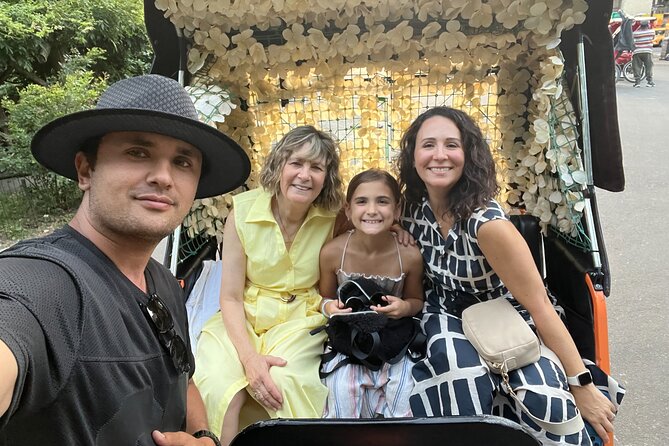
Your tour starts and ends back at the same meeting point at 764 Doris C Freedman Pl, New York, NY 10019. There’s no hotel pickup, so you’ll want to arrive a few minutes early and take a quick moment to regroup before boarding.
Once you’re on the pedicab, the experience becomes mostly about three things:
- your guide’s storytelling (history, design, and movie trivia)
- photo stops timed for good views
- comfort support for New York weather
In cold weather, the blankets are a practical lifesaver. In rain, the cover keeps the experience from collapsing into wet misery. Even if the day is gray, the ride still works because your “action” is bundled into those short stops—less time stuck standing around, more time moving between the best angles.
The tour is offered in English, uses a mobile ticket, and is limited to your group only. If you’re traveling with service animals, they’re allowed, and the meeting area is near public transportation (helpful if you’re adding this to a longer NYC itinerary).
Central Park highlights you’ll hit: fountains, bridges, and film-famous views
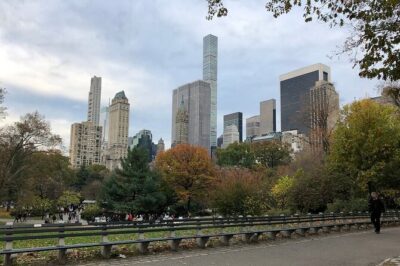
A lot of Central Park tours line up famous landmarks, but this one actually connects them. You’re not just checking boxes—you’re learning why certain locations feel the way they do and why filmmakers keep coming back.
Let someone else pedal: more pedicab tours
Bethesda Fountain and Bethesda Terrace: the cinematic heart of the park
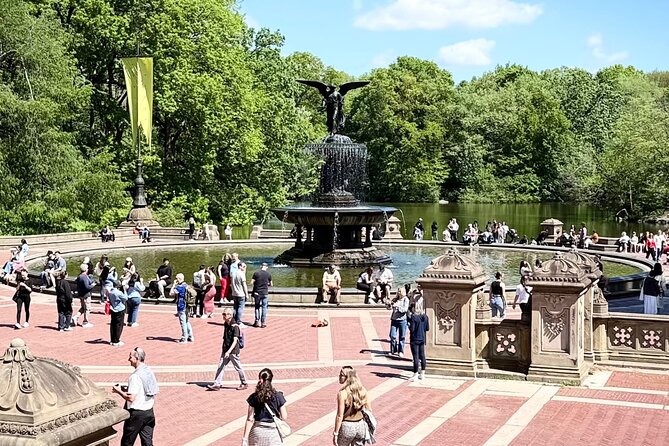
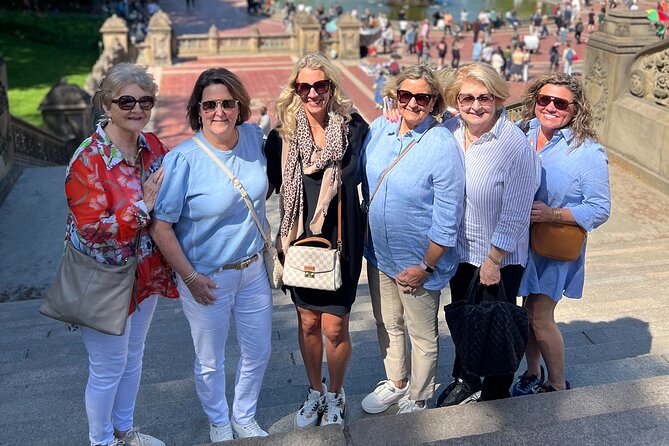
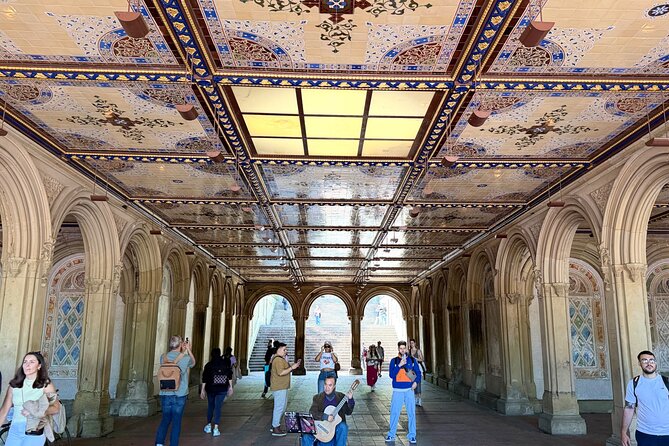
Bethesda Terrace is the park’s grand center of gravity. You’ll see the staircases and the Angel of the Waters fountain, plus the tiled arcade where sound can bounce and linger. This is one of those places where the architecture makes photos look like they’re already framed for a movie poster.
Your guide usually ties what you’re seeing to pop culture and atmosphere. It’s been featured in films and series like Home Alone 2: Lost in New York, The Avengers, John Wick, Gossip Girl, and Enchanted. The point isn’t the trivia itself—it’s that Bethesda is a “camera magnet,” so your guide knows where the view lines land best.
Possible drawback: because this is a major photo stop, it can feel busier than calmer parts of the park. The pedicab helps, but you’ll still want to be ready for brief crowds around the most photogenic spots.
Gapstow Bridge: romance, skyline views, and that classic arch
Next up, you’ll glide to Gapstow Bridge, one of Central Park’s most photographed bridges. The view ties together The Pond, the skyline, and the bridge’s graceful curve. It’s especially magical in winter, when the winter light makes everything look more dramatic.
You’ll also get the movie connection to Home Alone 2: Lost in New York, Cruel Intentions, and The Devil’s Advocate. Again, the value is in learning how the place looks on screen and then using that to find your own angles.
Bow Bridge: proposals waiting to happen
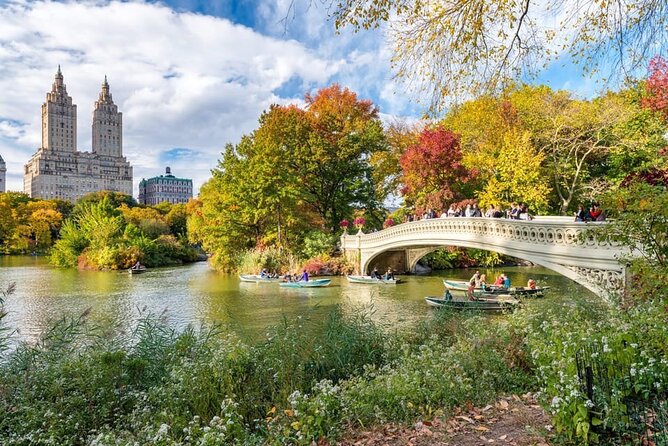
Bow Bridge is cast iron, full of elegant lines, and it practically demands a photo. It’s another one where your guide’s timing helps. You’ll be positioned for views over The Lake and toward the skyline, which is what makes it such a go-to for couples and photographers.
It’s featured in movies like Spider-Man 3, Autumn in New York, Night at the Museum, and Manhattan. You don’t need to be a movie buff to appreciate Bow Bridge. It’s just pretty—simple as that.
Literary Walk: statues, straight lines, and classic New York vibes
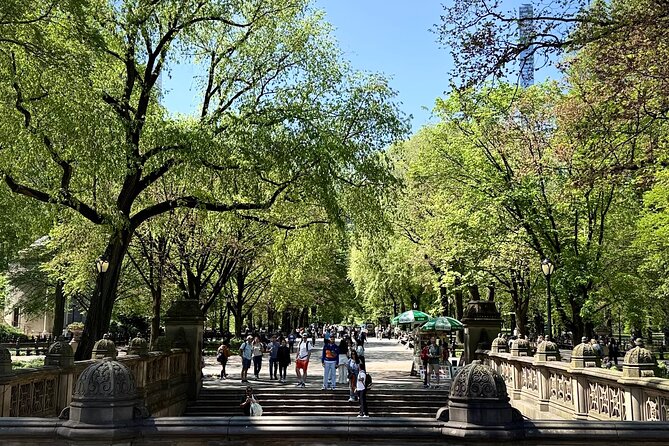
Central Park’s Literary Walk is an easy stop to love because it’s orderly in a park built on curves. It’s the only straight path in Central Park, and you’ll see statues of literary figures including Shakespeare and Robert Burns. This makes it feel slightly different from the rest of the park—more like a promenade than a winding nature escape.
This area shows up in films like Breakfast at Tiffany’s, Enchanted, Kramer vs. Kramer, and Maid in Manhattan. If you want that “storybook elegance” feel without having to walk for miles, this is a strong stop.
Small stops that add big charm: carousel horses, chess cottages, and Balto
The route doesn’t only focus on the big ticket landmarks. You’ll also get charming side stops that make Central Park feel personal.
Central Park Carousel: 57 hand-carved horses and old-school New York
You’ll pause at the Central Park Carousel, which has delighted visitors since 1871. The current carousel dates to 1951 and has 57 hand-carved horses. It’s shown in films like The Producers and The Spanish Prisoner.
This stop is great because it’s visual and instantly likable. If you’re traveling with kids, it also gives you a break point that feels fun rather than just educational.
The chess-and-checkers cottage: strategy in the middle of the park
A particularly sweet pause is at the chess-and-checkers cottage. It’s a quiet stone spot where you can enjoy free games, opened in 1952. It’s also been featured in indie film scenes that need a calm, thoughtful New York moment.
Even if you don’t play, it’s a chance to slow down. This is the kind of stop that makes a photo tour feel warmer and more human.
The Victorian visitor center cottage: architecture you’ll want to look at
You’ll also see a Victorian-style cottage that began life in 1870 serving milk and snacks to children. Today it functions as a visitor center and gift shop, and the building’s architecture is part of the appeal. If you’re the type who likes seeing how old park functions became new ones, this is a smart quick stop.
Balto’s statue: a heartwarming story right where you can touch it
Balto is a bronze statue honoring the heroic Siberian Husky who delivered life-saving medicine during a 1925 diphtheria outbreak in Alaska. The statue is beloved and is also one of the most touched spots in Central Park.
Balto’s story inspired the animated film Balto (1995). For families, it often lands as a meaningful moment that breaks up the sightseeing fatigue.
Umpire Rock, Wollman Rink, and the pond-side rhythm
Some Central Park stops are quick photo stops, but they still help you understand the park’s layout and mood.
Umpire Rock: a short climb with a big payoff
Umpire Rock is near Central Park South and is perfect for a quick climb and views. Your guide will explain the nickname: it’s near baseball fields where umpires once stood during games. For kids and families, this can be the “stretch your legs” moment that keeps the whole tour feeling energetic.
It’s also one of the better places for a skyline-meets-nature photo without committing to a long walk.
Wollman Rink: a winter icon, even when you visit outside the season
You’ll pass by or stop near Wollman Rink, one of Central Park’s winter icons. It’s surrounded by the Manhattan skyline, and it has a movie history too, including Serendipity and Love Story. Even if it’s not winter, the rink’s setting is still a strong reminder that Central Park changes personality by season.
Conservatory Water: model sailboats and fairy-tale details
At Conservatory Water, you’re in reflecting-pond territory, where model sailboats glide on weekends. Nearby you’ll see statues connected to Alice in Wonderland and Hans Christian Andersen, which gives this stop a whimsical tone.
If your group includes art lovers or families, this stop often becomes a favorite because it’s scenic and not as crowded as the most famous photo magnets.
Rumsey Playfield: SummerStage energy
Rumsey Playfield is an open-air performance venue and the home of the famous SummerStage series. It’s a place where music and arts can take over the park in a very NYC way. Even if you’re visiting off-season, it helps to understand this corner as one of the park’s “not just pretty, also alive” areas.
If you’re the type who likes seeing how New York culture uses public spaces, you’ll appreciate this stop.
Cherry Hill and Strawberry Fields: spring romance, then peace memorial
Two of the most emotionally different stops on the route are also two of the most meaningful.
Cherry Hill: lake views framed by cherry blossoms
Cherry Hill is a peaceful lake view spot, framed by cherry blossom trees in spring. Historically it started as a carriage turnaround, but now it’s a scenic photo stop with a romantic hillside feel.
It shows up in films like You’ve Got Mail, Autumn in New York, and 27 Dresses. This is the kind of spot where you’ll probably want a few extra photos because the lighting and framing can be just right.
Strawberry Fields: the John Lennon memorial near the Dakota
Strawberry Fields is a memorial to John Lennon located just steps from the Dakota. The center is the Imagine mosaic, a tribute to his message of peace. You’ll see flowers, photos, and people singing Beatles songs.
It’s one of those places where your guide’s story helps you understand why the emotions here are so steady. It’s not just a landmark—it’s a ritual space for fans and visitors who want a moment of reflection.
Sheep Meadow, Tavern on the Green, and the park-with-a-city skyline feeling
Sheep Meadow is one of Central Park’s biggest lawn spaces, and it’s one of those places you can feel in your chest. It’s a 15-acre open area where people come to relax, picnic, read, and soak up sun while the skyline looms nearby.
Your guide will point out the contrast: deep green space in the middle of a dense city. It’s also been used in films like Ghostbusters, Wall Street, and The Fisher King.
Near the meadow, you’ll also pass the area tied to Tavern on the Green. Here’s the historical arc: it opened in 1934, closed in 2009, then the building reopened in 2014 after a major renovation. Before all that, the site was the sheepfold for sheep that grazed Sheep Meadow, built in 1870 based on designs by Calvert Vaux and Jacob Wrey Mould—sheep were evicted from the sheepfold in 1934 under NYC Parks commissioner Robert Moses.
Possible drawback: because Sheep Meadow is popular, it can feel like you’re looking at a lot of people enjoying the park, not just a scene for photos. The pedicab helps you move through, but don’t expect total quiet.
Bow Bridge to the Dakota: classic skyline drama and a real-life story
After the meadow, the ride keeps shifting from open lawns to edge-of-the-park feeling.
Heckscher Playground is near Central Park South and is the oldest and largest of Central Park’s 22 playgrounds, opened in 1926. It’s a good stop for families because it adds a “this is everyday NYC life” texture.
Then you’ll reach The Dakota. Built in 1884, it’s famous worldwide as John Lennon’s residence and also the site of his death in 1980. Architecturally it has serious presence, and it’s appeared in films like Rosemary’s Baby and Vanilla Sky. This stop tends to land differently depending on your mood—romantic city drama for some, emotional history for others.
Pinebank Arch and the fun of finding a less-obvious icon
Central Park has plenty of obvious stars. Pinebank Arch is a quieter star. It’s a cast-iron bridge designed to blend into the surrounding rocky outcrops, with lacy ironwork that looks like part of the park rather than bolted onto it.
It gained attention when featured in the holiday movie Elf (2003). The best part is that it gives you that “I didn’t know this existed” satisfaction without requiring extra time. Your guide’s knowledge makes it easier to appreciate, because they can explain how the bridge fits the designers’ ideas of integrating structure with nature.
The 2-hour add-ons: Met views, the reservoir, Belvedere Castle, and Cleopatra’s Needle
Depending on which time option you choose, you may add extra stops that widen your Central Park day into a bigger NYC snapshot.
Metropolitan Museum of Art (outside view): art scale on the park’s edge
In the 2-hour option, you’ll also visit the Metropolitan Museum of Art area. The original museum building opened in 1880 along Central Park’s eastern edge, designed by park architect Calvert Vaux. The museum became the massive institution it is today through major expansions, including the Fifth Avenue entrance and work by Richard Morris Hunt, along with additions by McKim, Mead & White.
The museum houses over 2 million works of art spanning 5,000 years. Your experience here is about seeing the museum’s relationship to Central Park—how art and green space share a border—rather than doing an indoor museum day.
Jacqueline Kennedy Onassis Reservoir: a massive water story you can see
Also included on the 2-hour option is the Jacqueline Kennedy Onassis Reservoir. It was built between 1858 and 1862 to increase capacity for the city’s receiving reservoir system. It spans 106 acres, is 40 feet deep, holds more than one billion gallons of water, and at the time of construction it was the world’s largest man-made water body.
The reservoir’s design uses an irregular, curvilinear footprint to harmonize with the park. This stop is great when you want a different kind of “why does this place look like it does?” explanation.
Belvedere Castle: a decorative folly with panoramic views
Belvedere Castle is whimsical, perched atop Vista Rock, and you’ll get some of Central Park’s best views from it—Turtle Pond, the Great Lawn, and the Ramble. Designed by Calvert Vaux and Jacob Wrey Mould in 1867, it was created as a decorative folly blending Gothic and Romanesque styles.
Inside, there are exhibit rooms and an observation deck. Since 1919, it has served as the location for Central Park’s official weather station, with data sent to the National Weather Service. This stop adds personality: it’s playful architecture plus real function.
Alice in Wonderland statue: a gift with a personal story
You’ll also see the Alice in Wonderland statue, donated by George Delacorte in 1959. He intended it as a gift to New York City children and as a memorial to his wife, Margarita, an avid reader. Since Alice’s Adventures in Wonderland was one of her favorite books, the statue’s meaning is more personal than it first looks.
Cleopatra’s Needle: ancient Egypt in Manhattan
Finally, on the 2-hour option, you’ll reach Cleopatra’s Needle, the oldest outdoor monument in New York City. The obelisk is more than 3,500 years old and originally carved in Egypt under Pharaoh Thutmose III. It was moved across ancient cities, then gifted to the United States, transported across the Atlantic, and dedicated in Central Park in 1881.
Its hieroglyphs connect ancient Egypt with modern Manhattan, especially because it sits between the Great Lawn and the Met. It’s a strong reminder that Central Park holds stories from far beyond New York.
Price and value: is $55 per person a good deal?
At $55 per person, the value comes from combining several things you’d otherwise spend money and time on separately:
- a private, guided format (so you’re not navigating alone)
- photo stops with help getting the shots right
- local stories tied to real locations and movie scenes
- comfort support (blankets in cold weather, cover if it rains)
- efficient coverage of Central Park highlights without long walks
Because most of the stops are admission-free photo moments, you’re paying for the guide and the experience, not entry fees. The tour also includes all fees and taxes, which makes it easier to budget.
In plain terms: if you’re a first-timer who wants the best-known Central Park sights plus the “how did that movie get filmed here” context, this is a tidy way to buy time and reduce stress.
If you already know Central Park well and don’t care about photo stops, you might decide you can do it cheaper on your own. But for a one-day NYC visitor, or a family with limited stamina, private pedicab + a guide is often the most relaxing way to do it.
Who this Central Park pedicab tour suits best
This experience fits best if you:
- want a guided route that covers a lot without draining you
- care about film locations and celebrity-home style viewpoints
- travel with kids (several guides are praised for being patient and making it comfortable)
- want a simple way to get great photos without playing photographer for your whole group
It might not fit if you want long, slow hikes or if your group prefers museum time and deep walking over ride-and-stop photos.
Should you book this Central Park pedicab tour?
I’d book it if you want a stress-light way to see Central Park’s headline moments plus the story behind them. The combination of private pacing, guide-led photo support, and comfort perks like blankets is what makes it feel worth the $55.
If your schedule is tight, the 1- to 3-hour options help you match your day. And if weather turns nasty, you’ll be offered a different date or a full refund due to poor conditions, with free cancellation available up to 24 hours before start time.
If you’re the type who likes to linger, you may want the longer option so you can breathe at the stops you care about most.
FAQ
How long is the Central Park pedicab tour?
It runs about 1 to 3 hours, depending on the option you choose.
Is this tour private?
Yes. It’s a private tour/activity, and only your group participates.
What language is the guide?
The tour is offered in English.
What’s included in the price?
The price includes all fees and taxes, a fully guided Central Park tour, photo stops, help with photos, local stories and film facts, and comfort items like blankets in cold weather and a cover if it rains.
Where does the tour start and end?
It starts at the General William Tecumseh Sherman Monument at 764 Doris C Freedman Pl, and it ends back at the same meeting point.
What tickets or admissions are included?
The information provided lists admission ticket free for the stops described, and the tour includes the sightseeing experience with photo stops rather than paid museum admissions.
More Tour Reviews in New York City
- NYC: SUMMIT One Vanderbilt Tickets★ 4.7 · 51,195 reviews
- NYC: Empire State Building Tickets – Observatory & Museum★ 4.7 · 25,757 reviews
- New York City: Statue of Liberty & Ellis Island with Ferry★ 4.6 · 18,683 reviews
- New York City: American Museum of Natural History Ticket★ 4.5 · 15,447 reviews
- Statue of Liberty and Ellis Island Tour: All Options★ 5.0 · 13,571 reviews
Ride Along: More Pedicab Tours
- Central Park Pedicab Guided Tours★ 5.0 · 7,108 reviews
- Private Central Park Pedicab Tour★ 5.0 · 6,981 reviews
- New York City: Private Central Park Pedicab Tour★ 4.9 · 1,637 reviews
- NYC: Central Park Celebrity Homes & Film Spots Pedicab Tour★ 4.9 · 817 reviews
- Central Park Guided Pedicab Tours★ 5.0 · 590 reviews
More of Central Park
- Central Park Pedicab Guided Tours★ 5.0 · 7,108 reviews
- Private Central Park Pedicab Tour★ 5.0 · 6,981 reviews
- NYC: Central Park Bike Rentals★ 4.2 · 2,528 reviews
- Official NYC Horse Carriage Rides in Central Park since 1979 ™★ 5.0 · 2,365 reviews
- NYC: Central Park Bike Rental★ 4.1 · 1,651 reviews
Just in: the newest New York City reviews on our desk




Central Park Tours, compared.
 ★ 5.0Central Park Pedicab Guided ToursFrom $387,108 reviews
 ★ 5.0Private Central Park Pedicab TourFrom $386,981 reviews
 ★ 4.2Central Park Bike RentalsFrom $92,528 reviews
 ★ 5.0Official NYC Horse Carriage Rides in Central Park since 1979 ™From $992,365 reviews
 ★ 4.1Central Park Bike RentalFrom $81,651 reviews
 ★ 4.9Private Central Park Pedicab TourFrom $401,637 reviews
 ★ 4.7Central Park Bike RentalFrom $91,509 reviews
 ★ 4.0Carriage Ride in Central Park (VIP – PRIVATE) Since 1964™From $141,074 reviews
Browse the lists this tour appears in