
Reviewed · CENTRAL PARK TOURS
Central Park Pedicab Tours – History and Movie Locations
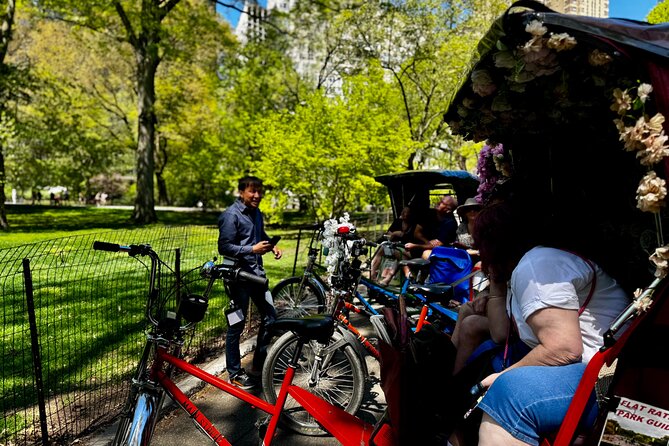
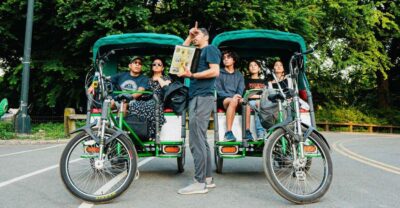
A pedicab turns Central Park into a fast, fun tour. You’ll see major sights in one outing, plus movie locations that make the park feel like a set you can visit for real. I like how this is built for the “one-and-done planning headache” traveler.
Two things I really loved: saving my feet while still getting real stops (not just a drive-by), and learning the stories behind the park design and the famous film scenes. One possible drawback: some of the route involves a lot of getting on/off and looking up—so if you hate waiting for photo moments or you’re very sensitive to motion, it may not be your best day.
In This Review
- Key things to look for before you go
- Why a Central Park pedicab beats walking
- Value for $38.40: tickets, timing, and what to expect
- Central Park classics: Bethesda Terrace tiles and Cherry Hill
- Bridges, the Lake, and movie scenes you can spot fast
- Carousels, chess tables, and family history that feels real
- The Mall, Rumsey Playfield, and the monuments that teach you how to look
- From Strawberry Fields to the Dakota: memorials, lawns, and famous edges
- Two-hour add-on: Alice in Wonderland, Cleopatra’s Needle, and Belvedere views
- Should you book Central Park Pedicab Tours?
- FAQ
- How much does Central Park Pedicab Tours cost?
- How long is the tour?
- Is this tour private?
- What language is the tour offered in?
- Where does the tour start and end?
- What’s included in the price?
- What if the weather is bad?
Key things to look for before you go
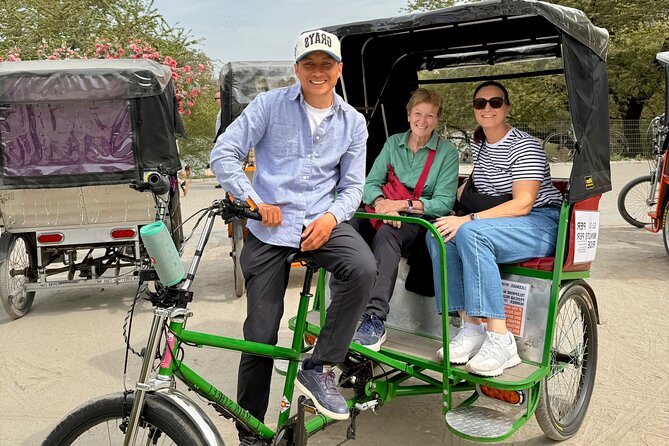
- Private group ride: only your crew in the pedicab, so you can move at your pace.
- Movie-location spotting: you’ll connect landmarks to scenes from well-known films and TV.
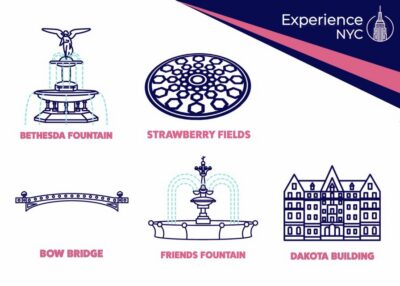
- Photo stops at big icons: Bethesda Terrace, Bow Bridge, Strawberry Fields, and more.
- A mix of “wow” and “fun” stops: fountains and monuments side by side with carousel-and-chess moments.
- Route flexibility (1 to 3 hours): the longer options add additional marquee sights.
- Guide name you may get: Ricky: friendly, story-focused, and tuned to pointing out film references.
More ways to see Central Park
- Central Park Pedicab Guided Tours
★ 5.0 · 7,108 reviews - Private Central Park Pedicab Tour
★ 5.0 · 6,981 reviews - NYC: Central Park Bike Rentals
★ 4.2 · 2,528 reviews - Official NYC Horse Carriage Rides in Central Park since 1979 ™
★ 5.0 · 2,365 reviews
Why a Central Park pedicab beats walking
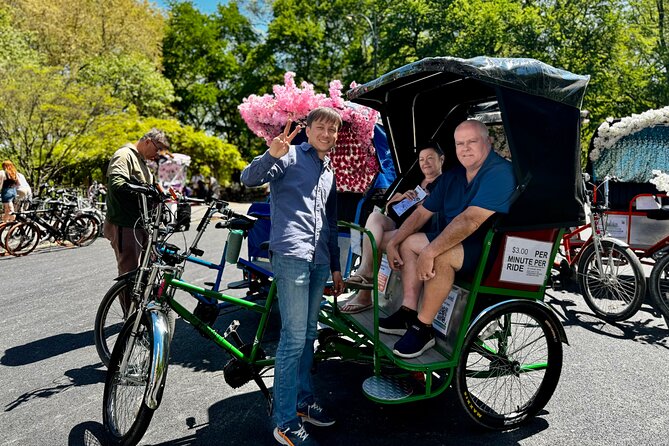
Central Park is huge, and trying to do it all on foot can turn into a sore-feet mission. A pedicab changes the math. You cover ground, but you still get to stop at recognizable places long enough to take photos and actually look around.
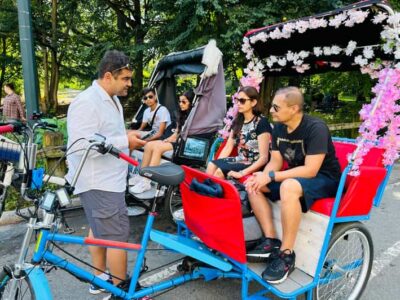
This also feels more personal than the usual hop-on, hop-off vibe. Your activity is private, so your group rides together and your guide can shape the experience to how your crew likes to move. In the best way, it reduces the mental load: you don’t have to decide what to see next while you’re busy watching the pond, bridges, or skyline.
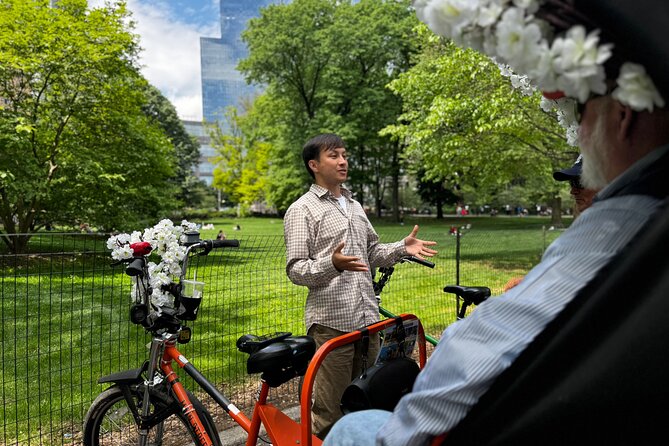
One more practical win: your guide can point out details you’d miss if you were just wandering. That includes why certain spots became film backdrops and what design choices by Frederick Law Olmsted and Calvert Vaux still show up in the park today.
Value for $38.40: tickets, timing, and what to expect
At $38.40 per person for an experience that runs about 1 to 3 hours, you’re paying for three things: transportation, a guide, and access to specific park moments. A big value point here is that the pedicab is included, and the experience also includes admission tickets where noted on the route.
Some stops are listed as admission included (like parts of the Bethesda area and Bethesda Fountain), while others are free (like Gapstow Bridge and parts of the Wollman Rink experience). In plain terms, you’re not just paying to be driven past things—you’re paying to hit landmarks that can otherwise chew up time and planning.
You’ll get a mobile ticket and the tour is offered in English. Service animals are allowed, and the start point is near public transportation, which can help if you’re pairing this with the rest of your day in Manhattan.
Timing is another quiet value lever. If you’re tight on time, you can choose the shorter version. If you have more energy, the 2-hour option includes major “outside-the-park-edge” landmarks like the Met area and Belvedere Castle.
Central Park classics: Bethesda Terrace tiles and Cherry Hill
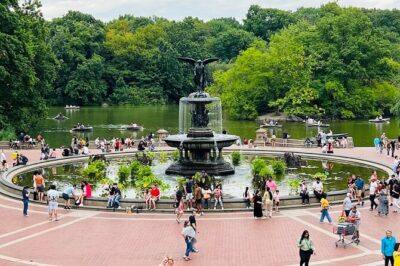
If you only pick one “Central Park feels like New York royalty” cluster, it’s the Bethesda area. You’ll see Bethesda Fountain on the lower level of Bethesda Terrace, with the central sculpture The Angel of the Waters by Emma Stebbins (unveiled in 1873, designed after the 1868 unveiling plan). The symbolism matters here: it references the Gospel of John and the angelic healing story tied to the Pool of Bethesda.
Right above and around it is Bethesda Terrace, including the arcade ceiling covered in English Minton encaustic tiles. This is the kind of detail that’s easy to overlook if you’re rushing, but it’s a huge reason people love the spot. The tiles were restored after being removed for renovation work, and the Central Park Conservancy managed the reinstallation starting in 2004, funded by a private donation, with the tiles restored after more than two decades in storage.
Then you’ll likely move to Cherry Hill Fountain, built in the 1860s by Jacob Wrey Mould. It started as a watering trough for horses, with a granite dome, bluestone basin, and frosted round glass lamps on top. Even if you’re not a “history museum” person, this stop gives you a sense of what the park was built to support for carriage travel and daily park life.
One practical note: this area is popular. Going by pedicab can help you reach it with less walking, but you’ll still want to be ready for people around you during photo stops.
Let someone else pedal: more pedicab tours
Bridges, the Lake, and movie scenes you can spot fast
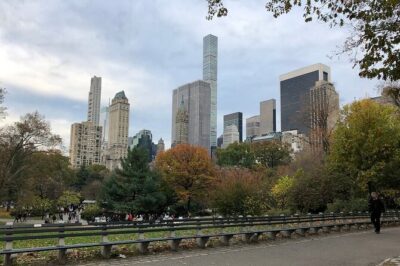
Central Park loves a good reflection, and this route leans into that. You’ll see Gapstow Bridge, built in 1874 and rebuilt in stone in 1896. It’s famous for its Pond views and ivy-covered charm. If you want a simple “where do I look first” guide, it’s: aim for the pond line and skyline angle from the bridge.
You’ll also connect to the Pond, a 3.8-acre lake area designed as part of the Olmsted and Vaux vision for natural-looking park scenery. Film fans get a bonus here, because The Pond appears in Home Alone 2: Lost in New York during the pigeon-lady moment.
Then comes the Lake, the park’s 20-acre centerpiece for calm water views and rowboat time. Rentals are available near Loeb Boathouse. Even if you don’t rent a boat, you’ll feel why this is often called the heart of the park—so many iconic areas link visually to this water stretch.
Wollman Rink is another key sight, especially in winter. It opened in 1950 and has a backdrop that makes it feel extra New York. If you’re visiting during colder months, you’re basically walking into a scene that looks like it belongs in a postcard, with skating and skyline views right there.
For another signature Central Park angle, you’ll hit Bow Bridge, completed in 1862. It’s an elegant cast-iron bridge with a graceful curve, restored in 1974, and it was temporarily closed for a renovation period starting in November 2023 (for about two months). Bow Bridge is a frequent film and TV reference point, so the guide’s job here is to help you recognize why directors love it.
If you’re the kind of traveler who notices cinematic lighting and set design, this section is one of the best payoffs.
Carousels, chess tables, and family history that feels real
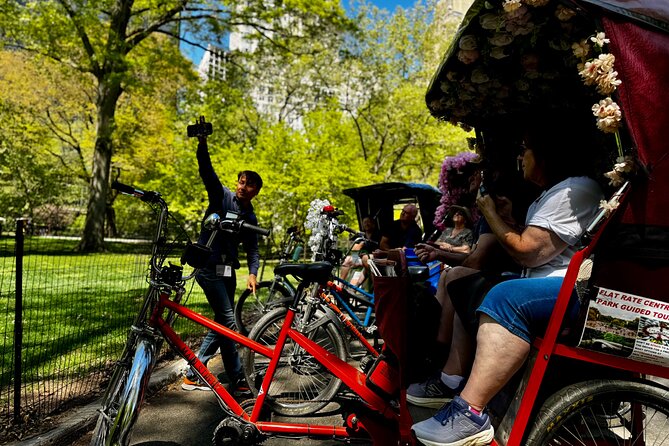
One reason people get emotional about Central Park is that it’s not only grand views. It has playful, lived-in corners too—and this tour doesn’t skip them.
You’ll likely stop at the Central Park Carousel, a beloved landmark with a complicated story. The original carousel was horse-powered, and the current version installed in 1951 is the park’s fourth carousel. The current carousel features 57 intricately carved and painted horses, and it’s considered one of the best examples of early 20th-century carousel craftsmanship in the United States.
Then there’s the Chess & Checkers House, an octagonal brick structure built in 1952 with 24 game tables around it. The big value of this stop is that it turns “Central Park sightseeing” into “watch real people play.” Plus, it’s a film hook: this place appears in Searching for Bobby Fischer (1993), tying the outdoor game tradition to a very specific New York memory.
You’ll also see the Dairy, built in 1871 as a Gothic Revival refreshment cottage designed by Calvert Vaux. This is the kind of stop where the details do the work. It was meant for children to enjoy fresh milk and snacks, and it reflects how “milk” mattered as a luxury in urban life at the time.
Some routes also include the Central Park Zoo. The zoo began in 1864 as a small menagerie and became an official zoo in 1934, with later changes in 1988 toward habitat-style exhibits. It’s managed by the Wildlife Conservation Society and includes zones like Polar Circle, Temperate Territory, and the Tropic Zone.
And if you’re into surprising small-to-medium stories, keep an eye out for the Balto statue, commemorating the 1925 Serum Run to Nome. The inscription and the “sled dog hero” story give you a pop of grit and courage inside the park’s gentler scenery.
The Mall, Rumsey Playfield, and the monuments that teach you how to look
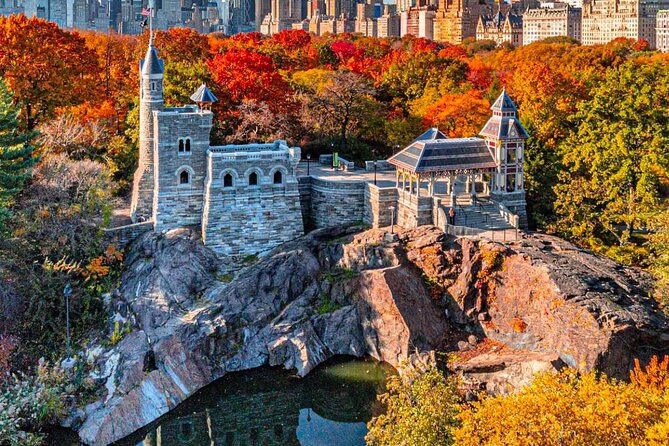
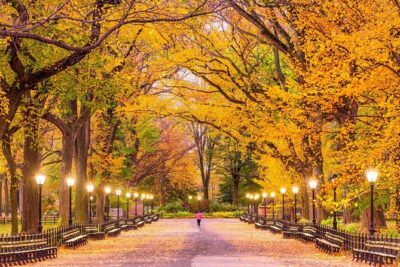
Central Park rewards slow looking, and the Mall (also called Literary Walk) helps you do exactly that. It’s the only intentionally straight line inside the park’s winding layout, lined with American elm trees that create that classic “tunnel” effect when the seasons cooperate. It’s also a reading list in stone: statues honoring famous writers like Shakespeare, Robert Burns, and Sir Walter Scott, plus a Christopher Columbus statue at the southern end.
Your guide can also connect the Mall’s design to the broader park idea: create purposeful routes that feel natural once you’re inside them. That’s one reason the Mall works so well for photos. It gives you a clean visual structure even when everything around it curves.
You may also pass through Rumsey Playfield, tied to SummerStage. The site has layered uses: a Calvert Vaux-designed Casino restaurant in earlier days, later an Art Deco nightclub, then razed under Robert Moses to make way for a playground named after Mary Harriman Rumsey, and then reworked again by the Central Park Conservancy. Today, SummerStage uses it for outdoor performances.
Another stop that feels like a pop quiz in New York storytelling is Conservatory Water. It’s a tranquil pond known for model boat sailing. The park tradition still runs today, and the film connection in Stuart Little adds a fun “you’ve probably seen this from the screen” moment.
If your route includes The Falconer and the Daniel Webster Monument, you’ll get a shift from “park play” to “park memory.” The Falconer is a bronze statue donated in 1875, and the Daniel Webster Monument was unveiled in 1876 with the statue designed by Thomas Ball. Both work best if you pause and look at how the sculptures sit in the park environment instead of on top of it.
From Strawberry Fields to the Dakota: memorials, lawns, and famous edges
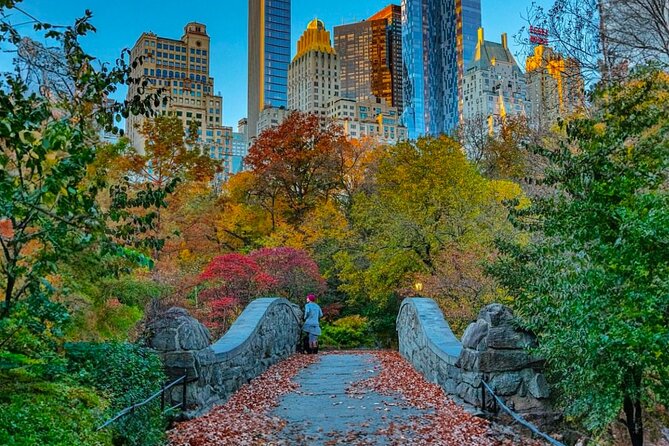
This part of the tour is often the most emotional for first-timers because you mix iconic memorials with iconic New York architecture.
Strawberry Fields is a 2.5-acre John Lennon tribute designed by Bruce Kelly. It’s named after Strawberry Fields Forever, with an international focal point: the Imagine mosaic, inspired by Lennon’s peace vision. If you like reading meaning into places, this stop is a clear win because it gives you a simple, repeatable symbol to remember.
Nearby, The Dakota is a major residential landmark at 72nd Street and Central Park West, completed in 1884 in Renaissance Revival style. The building’s name already carries weight, but the tour adds one more layer: it’s most famously tied to the 1980 killing of John Lennon outside the building, and it also appears in Rosemary’s Baby (1968) through its exterior.
Then comes Sheep Meadow, a 15-acre lawn that used to graze sheep and now is one of the park’s most popular relaxation spots. It’s an easy place to picture Central Park as the “city’s backyard.” Film connections include Ghostbusters (1984) and The Fisher King (1991), giving you a sense of why this open green space appears so often on screen.
Depending on your loop, you might also pass Pinebank Arch, a cast-iron bridge that blends into its surroundings with delicate ironwork. Nearby, some routes include Tavern on the Green, which started as a sheepfold (built in 1870 based on designs by Calvert Vaux and Jacob Wrey Mould), closed and reopened in later years, and has changed roles several times.
And for something very local-feeling, Heckscher Playground is the oldest and largest of Central Park’s 22 playgrounds, opened in 1926 and named for philanthropist August Hecksche. It’s a good stop if you’re traveling with kids or you like seeing everyday park life.
Two-hour add-on: Alice in Wonderland, Cleopatra’s Needle, and Belvedere views
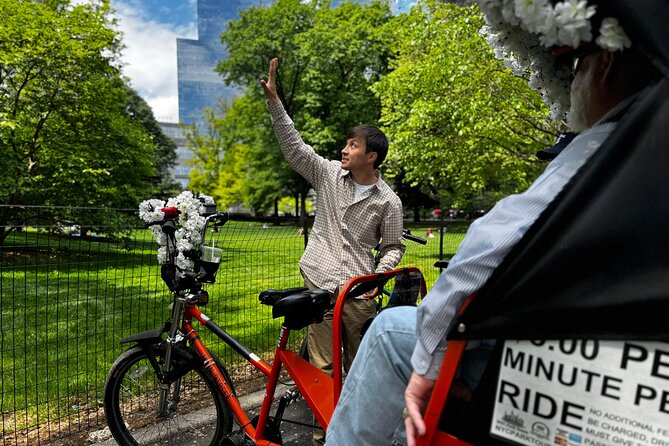
If you choose the longer version, the tour extends your Central Park story into the edges of Manhattan’s museum-and-monument world.
You’ll get the Alice in Wonderland statue, donated by George Delacorte in 1959. It’s interactive by design—children are meant to climb, touch, and play. It also sits in a wider theme of Central Park’s storytelling through art and literature.
Then there’s Cleopatra’s Needle, the oldest outdoor monument in New York City. It dates back more than 3,500 years to ancient Egypt, was gifted to the United States in the late 19th century, and dedicated in Central Park in 1881. If you want one stop that turns “Central Park day” into “ancient world connection,” this is it.
Next is The Metropolitan Museum of Art (The Met), founded in 1870 and with a building opened in 1880 along Central Park’s eastern edge. The museum spans 5,000 years of human history and has over 2 million works of art. You don’t have to be a museum marathoner to enjoy the exterior and the immediate sense of scale from the park side.
To finish the view section, you’ll likely hit Jacqueline Kennedy Onassis Reservoir, a large man-made water body built between 1858 and 1862. It holds more than one billion gallons and uses an irregular, curvilinear design to better fit the park.
Then comes Belvedere Castle on Vista Rock, designed by Calvert Vaux and Jacob Wrey Mould in 1867. It’s a decorative folly with Gothic and Romanesque features, and it also has an observation deck with panoramic views. Since 1919, it’s hosted Central Park’s official weather station and connects the park to real scientific monitoring in a very practical way.
Should you book Central Park Pedicab Tours?
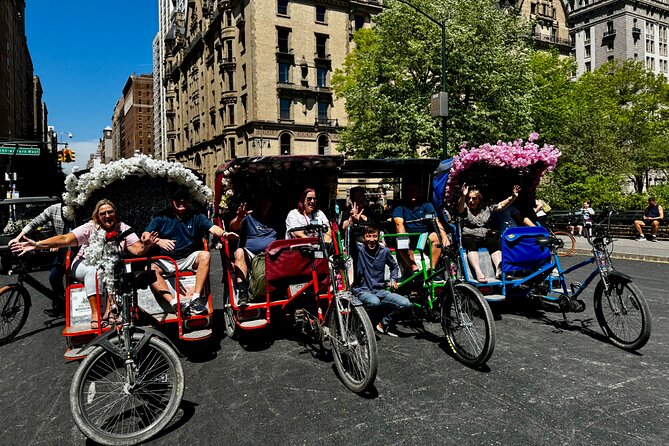
Book it if you want the best kind of first pass through Central Park: lots of famous stops, film-location moments, and less time dragging your feet uphill across Manhattan blocks. It’s also a strong pick if your group includes a mix of ages—carousels, chess tables, and fountains all help different interests click.
Skip it (or switch to a lighter route) if you hate crowds around major icons or if you need a very slow, quiet, long-walk day with lots of unplanned exploring. A pedicab tour works best when you’re okay with structured stops and photo breaks.
If you’re trying to do Central Park without turning it into a logistics headache, I’d call this one a smart way to see more of what makes the park memorable. With a guide like Ricky—friendly, story-driven, and good at connecting landmarks to what you’ve seen on screen—you’ll leave with a mental map that keeps paying off long after your ride ends.
FAQ
How much does Central Park Pedicab Tours cost?
The price is $38.40 per person.
How long is the tour?
It runs about 1 to 3 hours.
Is this tour private?
Yes. It’s a private activity for your group only.
What language is the tour offered in?
It’s offered in English.
Where does the tour start and end?
It starts at 1415 6th Ave, New York, NY 10019, USA, and ends back at the meeting point.
What’s included in the price?
The pedicab is included, along with all fees and taxes. Admission is listed as included for certain stops, while some stops are free.
What if the weather is bad?
This experience requires good weather. If it’s canceled due to poor weather, you’ll be offered a different date or a full refund.
More Tour Reviews in New York City
- NYC: SUMMIT One Vanderbilt Tickets★ 4.7 · 51,195 reviews
- NYC: Empire State Building Tickets – Observatory & Museum★ 4.7 · 25,757 reviews
- New York City: Statue of Liberty & Ellis Island with Ferry★ 4.6 · 18,683 reviews
- New York City: American Museum of Natural History Ticket★ 4.5 · 15,447 reviews
- Statue of Liberty and Ellis Island Tour: All Options★ 5.0 · 13,571 reviews
Ride Along: More Pedicab Tours
- Central Park Pedicab Guided Tours★ 5.0 · 7,108 reviews
- Private Central Park Pedicab Tour★ 5.0 · 6,981 reviews
- New York City: Private Central Park Pedicab Tour★ 4.9 · 1,637 reviews
- NYC: Central Park Celebrity Homes & Film Spots Pedicab Tour★ 4.9 · 817 reviews
- Central Park Guided Pedicab Tours★ 5.0 · 590 reviews
More of Central Park
- Central Park Pedicab Guided Tours★ 5.0 · 7,108 reviews
- Private Central Park Pedicab Tour★ 5.0 · 6,981 reviews
- NYC: Central Park Bike Rentals★ 4.2 · 2,528 reviews
- Official NYC Horse Carriage Rides in Central Park since 1979 ™★ 5.0 · 2,365 reviews
- NYC: Central Park Bike Rental★ 4.1 · 1,651 reviews
Just in: the newest New York City reviews on our desk

Central Park Tours, compared.
 ★ 5.0Central Park Pedicab Guided ToursFrom $387,108 reviews
 ★ 5.0Private Central Park Pedicab TourFrom $386,981 reviews
 ★ 4.2Central Park Bike RentalsFrom $92,528 reviews
 ★ 5.0Official NYC Horse Carriage Rides in Central Park since 1979 ™From $992,365 reviews
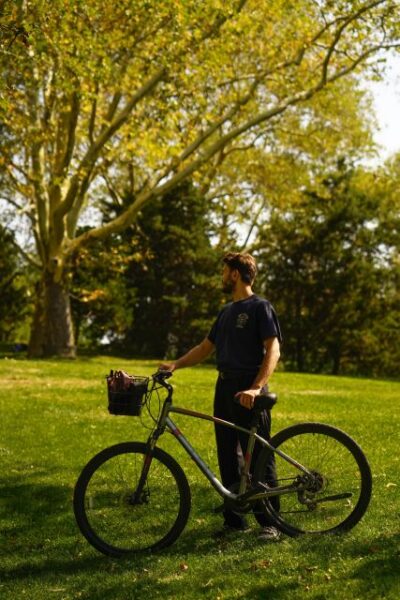 ★ 4.1Central Park Bike RentalFrom $81,651 reviews
 ★ 4.9Private Central Park Pedicab TourFrom $401,637 reviews
 ★ 4.7Central Park Bike RentalFrom $91,509 reviews
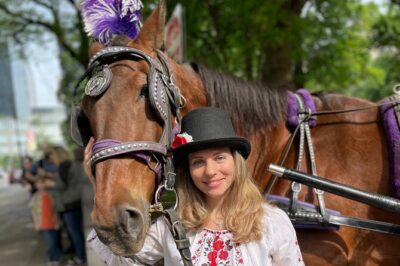 ★ 4.0Carriage Ride in Central Park (VIP – PRIVATE) Since 1964™From $141,074 reviews
Browse the lists this tour appears in