
Reviewed · PRIVATE
Custom Private New York Architecture, Art and City Tour
New York looks different when you know why. I like the way this private walk pairs architecture with art-world stops, led by Dr. Ivan Shumkov, so you get stories you can actually use while you’re walking. I also like the practical setup: each person gets an in-person headset, which keeps the group focused on details instead of crowd noise. The main drawback is simple: this is still a walking tour, and it’s not recommended if walking is a problem.
You meet at Washington Square Park and the tour ends back there. You can expect a tailored-feel route through multiple neighborhoods, usually in about two-hour chunks, with Dr. Shumkov adjusting the pace and emphasis to match your interests in design, buildings, and city change. Bring your camera or a sketchbook if you like capturing angles and proportions, not just selfies.
In This Review
- Key highlights worth planning for
- What makes this architecture-and-art walk a smart New York use of time
- One quick reality check on pacing
- Meet Dr. Ivan Shumkov: how the guide style changes the whole experience
- Financial District: Battery Park City, Wall Street, Trinity, and the East River edge
- What to watch for as you walk
- Possible drawback
- East Village, Lower East Side, Bowery, and SoHo: cast iron, tenements, and today’s art anchors
- Why this mix of old + new is valuable
- Photo-and-sketch friendly moments
- Chelsea and the art-warehouse story: Washington Square Park, NYU, Whitney, Standard Hotel, and the High Line
- Practical timing tip
- Midtown Manhattan: Time Square energy and skyscraper evolution from early 1900s to today
- What you’ll likely understand by the end
- The main consideration
- Is $299 per person good value for a private NYC architecture tour?
- What to bring, and how to get the most from each stop
- Who this tour fits best
- Should you book this NYC architecture and art tour?
- FAQ
- How long is the Custom Private New York Architecture, Art and City Tour?
- Where does the tour start and end?
- Is this tour private?
- What neighborhoods are included?
- What is included in the price?
- Are there admission tickets you need to buy?
- What happens if weather is bad?
Key highlights worth planning for
- Dr. Ivan Shumkov leads with architect-level context and clear street explanations
- Headsets for every guest make it easier to hear design details on busy blocks
- A neighborhood-by-neighborhood route that connects colonial-era New York to modern landmarks
- Major architecture and art anchors like Trinity Church, the New Museum, the Whitney, and the High Line
- Private group format means you can ask questions without getting rushed
The big picture: more New York City sightseeing
- New York City: Statue of Liberty & Ellis Island with Ferry
★ 4.6 · 18,683 reviews - New York City: American Museum of Natural History Ticket
★ 4.5 · 15,447 reviews - New York City: Manhattan Helicopter Tour
★ 4.7 · 7,076 reviews - Top of the Rock Observation Deck New York City Ticket
★ 4.5 · 4,556 reviews
What makes this architecture-and-art walk a smart New York use of time
If you’ve ever wandered Midtown or SoHo and thought, So…where do I even start?, this tour gives you a starting point and keeps it moving. It’s not about collecting facts for a test. It’s about learning how to see the city: scale, materials, street-level patterns, and why particular buildings exist where they do.
I like that the experience is structured around major neighborhoods, not random photo stops. That means each area has a theme—old versus new in the Financial District, industrial-era forms turned into art spaces in Lower Manhattan, and the century-by-century “boss battle” of Midtown skyscrapers. You’ll come away with mental shortcuts for what you’re looking at when you’re on your own later.
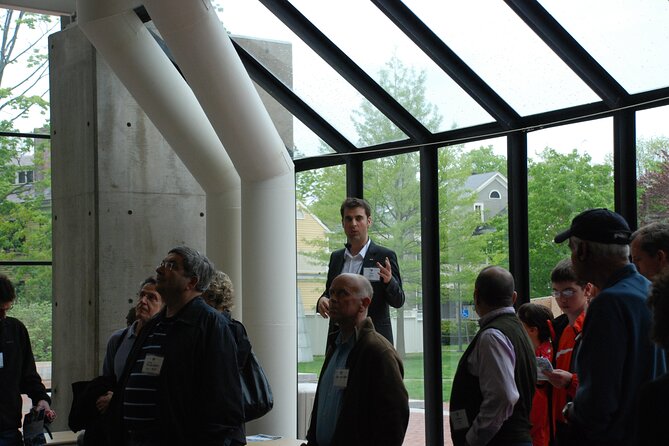
Another practical win: you get an in-person guide plus professional individual headsets. New York is loud. Headsets keep the tour from turning into a guessing game.
One quick reality check on pacing
The schedule lists stops of about two hours each, and the total tour can run from roughly 2 to 8 hours. That’s a wide range, so plan your day like a walking day, not a sit-down day. Wear comfortable shoes and keep a water plan, especially if you’re doing the longer version.
Meet Dr. Ivan Shumkov: how the guide style changes the whole experience
The tour is led by Dr. Ivan Shumkov, and the best sign of a strong guide is that the conversation stays useful. The goal here is not just to name buildings, but to explain what design choices mean in real life: street behavior, how institutions shaped neighborhoods, and how architectural language changed as New York’s economy and culture shifted.
You’ll also have language support with the guide speaking English, Spanish, French, or Italian. If you’re traveling with a group, that flexibility matters because it lets everyone follow the architecture talk without feeling like they’re half-lost.
Finally, the headset setup helps you hear fine points—things like why one facade style reads differently from across the street, or how one building type connects to the city’s economic story. That’s the difference between walking past a landmark and understanding why it matters.
Just your group: more private options
Financial District: Battery Park City, Wall Street, Trinity, and the East River edge
This is where New York compresses centuries into a small walk. The Financial District route focuses on the contrast between the city’s older foundation and its newer skyline push: the area where colonial-era roots meet postwar and contemporary ambition.
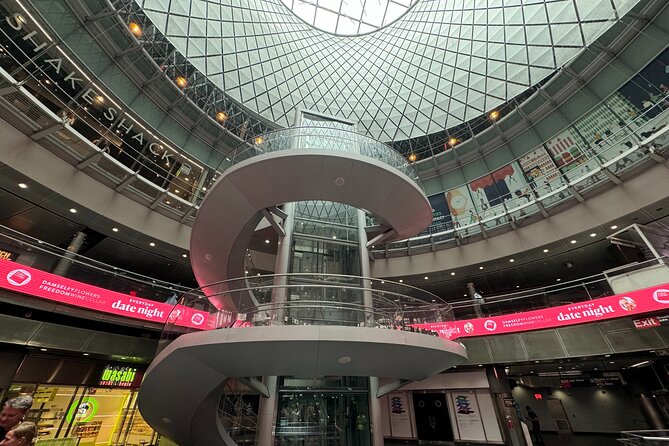
You’ll spend time around the southern tip of Manhattan, taking in major anchors such as Battery Park City, Wall Street, Frances Tavern, Stone Street, and Trinity Church. Even if you’ve seen these names online, the tour approach helps you connect the dots—how the financial economy shaped street design, how older buildings survive in the shadow of new towers, and how the street-level “grammar” of the neighborhood tells its own history.
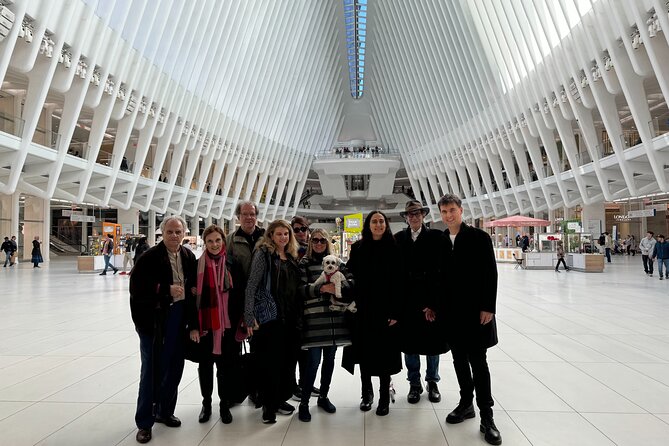
A powerful part of this stop is the set of World Trade Center and 9/11 memorial sites. You’ll be in the right mindset for reflection because the guide’s emphasis is on both urban form and civic meaning—how a city rebuilds its identity through architecture, planning, and public space.
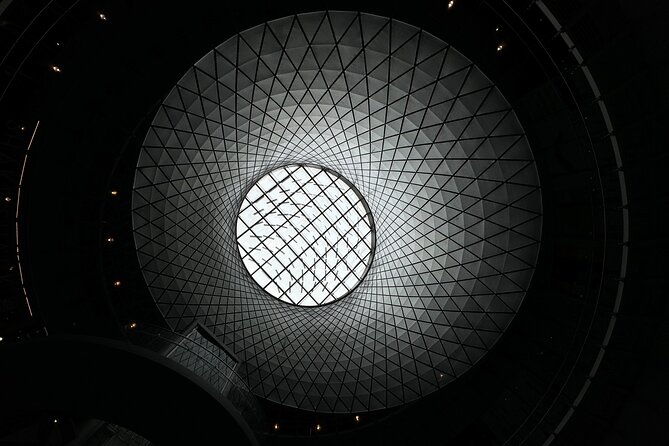
You also cover Fulton Station and the revitalized East River waterfront. That waterfront angle is practical: it shows how New York uses public space to reframe what used to feel like a hard edge between land and water. You’ll likely look at modern developments with more clarity because you understand the starting point.
What to watch for as you walk
- Street-level contrasts: older building massing versus new tower rhythm
- Transitions in materials: stone, steel, and glass read differently when you’re close enough to see the facade logic
- How public space works: memorial/civic areas and waterfront improvements shift how people move through the district
Possible drawback
If you’re sensitive to emotional or heavy historical sites, this stop includes them. The tour is still framed as an architecture and city experience, but you should be prepared for a serious tone around the memorial area.
East Village, Lower East Side, Bowery, and SoHo: cast iron, tenements, and today’s art anchors
This part of the route explains why Lower Manhattan feels like layers stacked on layers. The focus is on architectural typologies tied to real neighborhoods: the industrial-era forms and the housing patterns that grew with waves of residents.
The tour area highlights the Lower East Side, Bowery, and SoHo, with a clear emphasis on two older building types:
- the cast iron industrial spaces that helped define SoHo’s look
- the tenement apartments that shaped much of the Lower East Side’s residential character
What I like here is the way the guide links building forms to city life. Cast iron becomes more than a style word; it becomes a clue to how industrial work and speculative building fit together. Tenements become more than “old apartments”; they become a readable response to density and immigration-era growth.
Then the tour adds contemporary architecture and art-world landmarks—so you can see how today’s designers play with the neighborhood’s existing structure. Stops include the New Museum by SANAA, the Prada flagship by Rem Koolhaas, and Copper Union by Morphosis.
Why this mix of old + new is valuable
If you’ve only seen SoHo as a shopping corridor, this tour helps you notice the design logic that made it a creative zone in the first place. SoHo’s cast-iron heritage and the Lower East Side’s density are part of the reason galleries and institutions can thrive there now. You’re not just seeing famous buildings; you’re seeing how the city’s physical setup supports a cultural economy.
Photo-and-sketch friendly moments
This route naturally offers angles that work for both cameras and sketching: repeating window grids on older facades, unexpected ironwork rhythms, and newer buildings that contrast sharply with historic street walls.
Chelsea and the art-warehouse story: Washington Square Park, NYU, Whitney, Standard Hotel, and the High Line
Chelsea is often described as an art district, but this tour frames it as an architectural transformation story. After the Lower Manhattan segment, you shift to the West Side side of the city where industrial buildings and factory spaces became containers for culture.
The route includes the area around Washington Square Park and NYU buildings, then continues through the gallery-heavy Chelsea stretch. You’ll also look at cultural anchors such as the Whitney Museum and the Standard Hotel, and then connect it to the high-profile outdoor infrastructure story at the High Line.
This is where you’ll likely start noticing how New York uses design to change pedestrian behavior. The High Line functions like a moveable street—part park, part architecture viewpoint—and it changes how people experience the block edges. If you’re used to street-level only, this can be a real eye-opener.
The route also references modern mega-projects and venues, including Hudson Yards and the Javits Center. The value here is seeing Midtown-adjacent modern development as part of the same planning conversation: how transportation, tourism, and institutional needs shape what gets built and how people flow.
Practical timing tip
If you’re doing this as part of a longer day, consider how much museum energy you can handle. The tour is walking-focused, so it’s great for architecture context, but it won’t replace a full museum visit. If you want museum time too, save it for after the walk and keep the tour as your architecture primer.
Midtown Manhattan: Time Square energy and skyscraper evolution from early 1900s to today
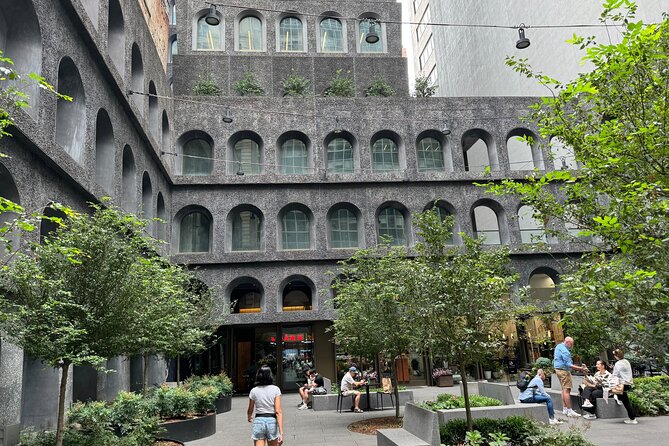
Midtown is the city’s architecture performance space—big scale, bigger ambition. This portion of the tour helps you track the evolution of Midtown through the buildings themselves, starting with early twentieth-century examples and moving toward the latest additions in the urban skyline.
You’ll cover classic Midtown landmarks and public energy points like Time Square, then shift your attention upward and outward toward the business district’s signature skyline shapes. The guide’s job here is to translate what can feel like a blur of tall buildings into a readable timeline.
What you’ll likely understand by the end
- why earlier skyscrapers and later towers use different facade strategies
- how the idea of a business district shaped street width, access points, and building massing
- how the “latest additions” still respond to what’s already around them
The main consideration
Midtown walking can be busy and loud, even with headsets. Plan for it, don’t fight it. Keep your pace steady, and use the guide to focus your attention—cross streets when it’s safe, and give your eyes a job.
Is $299 per person good value for a private NYC architecture tour?
At $299 per person, this is not a budget walking tour. The value comes from what you get bundled: a professional guide, a private group format, and headsets for every guest, plus the route covering multiple major districts with architecture and art context.
Here’s how I’d judge the price as a traveler:
- If you want a generic overview, you can find cheaper walking options.
- If you want design-level street explanations, private pacing, and language flexibility, the cost starts to make sense.
- If you’re paying for museum tickets and then still leaving confused about what you’re looking at outside, this tour can save you time by giving context first.
Also, some listed site access is marked Admission Ticket Free, which matters because it keeps your day from ballooning with extra fees.
If you’re traveling as a group, a private format can also be cost-effective compared to splitting time among multiple tours. You’ll still be walking together, asking questions together, and hearing the same architectural story.
What to bring, and how to get the most from each stop
A few small choices make the tour feel better in your hands:
- Bring comfortable walking shoes and plan for city pace.
- Bring your camera if you want facade shots and street-level angles.
- Bring a sketchbook if you like drawing proportions; this tour’s stops are good for that kind of attention.
- Charge your phone enough to use maps and photos without panic.
Because everyone gets a headset, you don’t have to hover close to the guide to catch every point. Use that freedom: step back, look up, then move forward with intention. The tour is at its best when you treat it like an architecture walk, not a race to landmarks.
Weather matters too. The experience requires good weather, and if it gets canceled for poor conditions, you’re offered a different date or a full refund.
Who this tour fits best
This tour is ideal if you:
- love architecture and want context, not just names
- care about how neighborhoods change through time
- want art-world connections tied to the city’s buildings
- prefer a private group with real conversation and less crowd noise
It’s less ideal if:
- walking is hard for you (the tour is not recommended for people with walking problems)
- you only have the energy for a few photos and no discussion
If you’re the type who enjoys noticing details—window patterns, facade materials, street planning—you’ll get a lot more out of it.
Should you book this NYC architecture and art tour?
Book it if you want a structured walk through the city’s most important architecture districts, with a guide who explains what you’re seeing in plain terms. The private format plus headsets is a big quality-of-life upgrade, especially in crowded Midtown and around popular Lower Manhattan streets.
Skip or shorten your plan if you’re worried about walking time or you’d rather do architecture at a slower pace through museums alone. For most people, though, this is a smart “day plan” because it gives you a mental map you can keep using long after the walk ends.
FAQ
How long is the Custom Private New York Architecture, Art and City Tour?
The duration is listed as approximately 2 to 8 hours, and each neighborhood stop on the route is planned around about 2 hours.
Where does the tour start and end?
The tour starts at Washington Square Park in New York, NY 10012, and it ends back at the meeting point.
Is this tour private?
Yes. It’s a private tour/activity, and only your group participates.
What neighborhoods are included?
The route includes the Financial District, East Village (Lower East Side/Bowery/SoHo area), Chelsea, and Midtown Manhattan.
What is included in the price?
The price includes all fees and taxes, an in-person guide (English, Spanish, French, or Italian), and professional individual headsets for each guest.
Are there admission tickets you need to buy?
The stops are listed with admission ticket free, so you should not expect additional admission fees for the featured sites.
What happens if weather is bad?
The experience requires good weather. If it’s canceled due to poor weather, you’ll be offered a different date or a full refund. Free cancellation is available up to 24 hours in advance.
All of New York City in One Day
- New York City: Statue of Liberty & Ellis Island with Ferry★ 4.6 · 18,683 reviews
- New York City: American Museum of Natural History Ticket★ 4.5 · 15,447 reviews
- New York City: Manhattan Helicopter Tour★ 4.7 · 7,076 reviews
- Top of the Rock Observation Deck New York City Ticket★ 4.5 · 4,556 reviews
- From New York City: Washington and Philadelphia 1-Day Tour★ 4.5 · 2,877 reviews
More Tours in New York City
- Statue of Liberty and Ellis Island Tour: All Options★ 5.0 · 13,571 reviews
- New York in One Day Guided Sightseeing Tour★ 5.0 · 13,166 reviews
- Central Park Pedicab Guided Tours★ 5.0 · 7,108 reviews
- New York City: Manhattan Helicopter Tour★ 4.7 · 7,076 reviews
- Private Central Park Pedicab Tour★ 5.0 · 6,981 reviews
More Tour Reviews in New York City
- NYC: SUMMIT One Vanderbilt Tickets★ 4.7 · 51,195 reviews
- NYC: Empire State Building Tickets – Observatory & Museum★ 4.7 · 25,757 reviews
- New York City: Statue of Liberty & Ellis Island with Ferry★ 4.6 · 18,683 reviews
- New York City: American Museum of Natural History Ticket★ 4.5 · 15,447 reviews
- Statue of Liberty and Ellis Island Tour: All Options★ 5.0 · 13,571 reviews
Just in: the newest New York City reviews on our desk





Private, compared.
 ★ 5.0Private Central Park Pedicab TourFrom $386,981 reviews
 ★ 3.5Private Transfer from Manhattan to NYC Airports (JFK/EWR/LGA)From $361,683 reviews
 ★ 4.9Private Central Park Pedicab TourFrom $401,637 reviews
 ★ 4.0Carriage Ride in Central Park (VIP – PRIVATE) Since 1964™From $141,074 reviews
 ★ 4.9Private Central Park Horse Carriage Ride with GuideFrom $13790 reviews
 ★ 4.7JFK Airport to Manhattan Private Transfer Up to 5paxFrom $103786 reviews
 ★ 4.6Private Walking Tour with a LocalFrom $55771 reviews
 ★ 5.0Private Statue of Liberty and Ellis Island TourFrom $139656 reviews