
Reviewed · TOURS
Financial Crisis Tour with a Finance Professional
Wall Street, explained like a story. I love the behind-the-scenes Wall Street perspective and how the walk connects the 2008 collapse to the exact streets and landmark buildings you see today. You also get a fun, photo-ready moment with the Charging Bull, plus stops tied to big turning points in finance. One key catch: the New York Stock Exchange stays outside this tour because it has been closed to visitors since 2001.
This is a mostly outdoor, moderate-walking experience in Lower Manhattan, designed to keep moving without feeling rushed. With a max group size of 20, you can actually ask questions along the way, and the guide’s real-world finance background helps complex topics land in a human way. If you’re visiting in winter, plan for wind downtown.
Here’s the sweet spot: if you want a clear picture of the Great Recession’s roots—without drowning in jargon—this tour is built for you. Just show up ready to walk, listen, and make sense of how the system broke.
In This Review
- Key things I’d focus on
- Where You Start and How the Walk Really Feels
- Wall Street Up Close: Seeing 2008 Through the Streets
- A practical note before you reach for your camera
- Charging Bull Photo Stop: More Than a Landmark
- Federal Hall and the Building Blocks of Power
- Why You Don’t Go Inside the NYSE (And Why That Can Be Fine)
- The Big Short Angle: Turning a Movie Into Real-World Sense
- Ending Near the Federal Reserve: What You’ll Notice on the Way Out
- Price and Value: Is $59 Worth It?
- Who This Tour Fits Best (And Who Might Want Something Else)
- Practical Tips for a Smoother Wall Street Morning
- Should You Book This Financial Crisis Tour?
- FAQ
- How long is the Financial Crisis Tour?
- Where does the tour start?
- Where does the tour end?
- Does the tour include admission to the New York Stock Exchange?
- Is the tour mostly indoors or outdoors?
- What language is the tour offered in?
- How large is the group?
- Will I get a mobile ticket?
- Are service animals allowed?
- Is there free cancellation?
Key things I’d focus on
- Front-line finance guides bring the 2008 story to life with real-world context
- Wall Street + Financial District landmarks in a tight 2-hour loop
- The NYSE is viewed from outside since it’s been closed to the public since 2001
- Big Short connections explain what you see in the film in everyday terms
- Small group size (max 20) means more back-and-forth, not just a lecture
Not sold yet? Here is how this one lines up against other New York City picks:
- NYC: SUMMIT One Vanderbilt Tickets
★ 4.7 · 51,195 reviews - NYC: Empire State Building Tickets – Observatory & Museum
★ 4.7 · 25,757 reviews - New York City: Statue of Liberty & Ellis Island with Ferry
★ 4.6 · 18,683 reviews - New York City: American Museum of Natural History Ticket
★ 4.5 · 15,447 reviews
Where You Start and How the Walk Really Feels
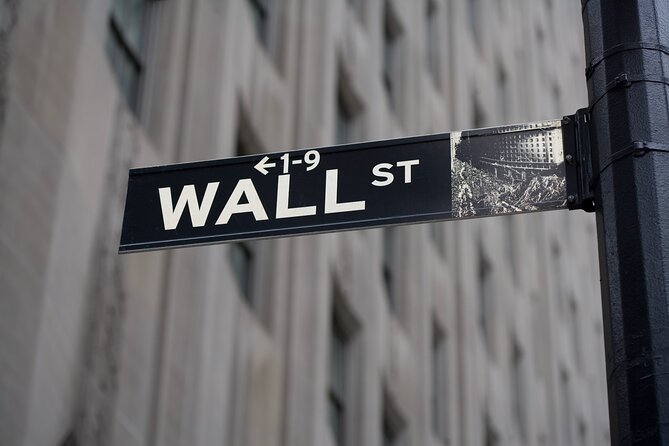
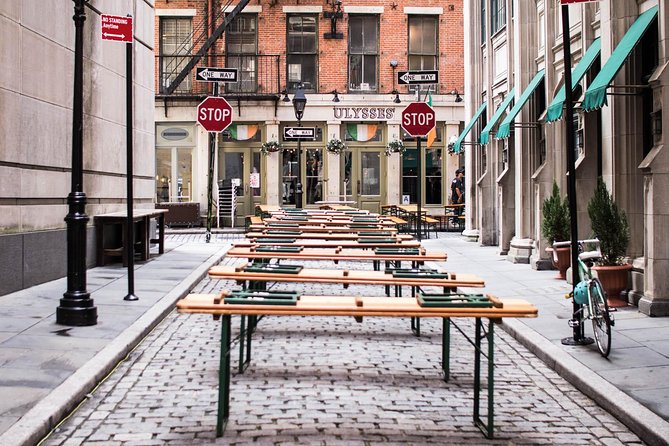
You’ll meet at 22 Broad St, New York, NY 10005, then head out on foot through the Financial District and Wall Street area. The total time is about 2 hours, and it’s paced as a walk-first experience. Translation: you’re not stuck in a bus, but you are outside a lot.
Most of the route is outdoors, with a chance to step inside a few buildings along the way. That matters if you’re traveling in colder months or it’s rainy—those brief indoor stops can make the difference between a fun tour and a miserable one.
The group size cap of 20 people is also a big deal. It keeps things interactive. Guides who’ve led this walk before, like Emily, Ben, Jared, James, Tom, Jonathon, and Mike, are repeatedly praised for being able to explain finance concepts in a way people can follow and for staying approachable while keeping the pace moving.
Wall Street Up Close: Seeing 2008 Through the Streets
The heart of the tour is the Wall Street portion, where your guide frames the biggest financial crisis since the Great Depression and the fallout that became the Great Recession. Instead of treating 2008 like a distant headline, you connect it to the place where deals were made and risk spread.
You’ll start by looking past the polished facades and into what the crisis meant on the ground. The tour’s story line includes major names like Lehman Brothers and Bear Stearns, and it describes how the meltdown unfolded after years of aggressive financial behavior. You also get a sense of how traders and deal-makers could profit during the good times—then how quickly the system turned when confidence vanished.
One of the strongest parts is how the guide explains complex investment ideas in plain language. In past groups, guides like Jonathon have been singled out for simplifying concepts such as CDOs and CDWs, while still keeping the level appropriate for people who are new to finance. That balance is the reason this tour works for mixed groups: one person can ask, the other can listen, and you can still leave with a real understanding of cause and effect.
You’ll also hear commentary that feels grounded in real decision-making, not just summary facts. That’s what you want from a guide with direct finance experience—because it helps you understand why certain products and incentives behaved the way they did, and why the fallout hit so many parts of the economy.
A practical note before you reach for your camera
This is a “look up and look around” walking tour. Street-level views matter. If you plan to photograph building fronts, give yourself a second to stop safely and let the group catch up, especially when the sidewalk is crowded.



Charging Bull Photo Stop: More Than a Landmark
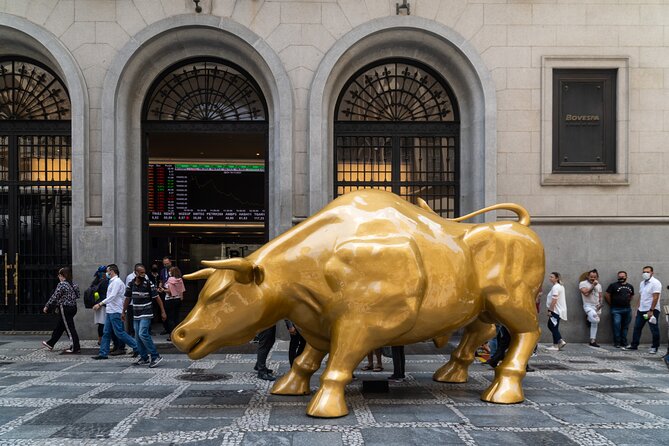
Yes, you’ll stop for the Charging Bull and get the classic chance to pose for photos. But the guide won’t treat it like a random tourist detour. They use the bull as a symbol—power, momentum, and the idea of an economy driven by confidence.
That symbolic layer is useful, because finance can feel abstract until you connect it to an actual place. Standing near the bull gives you a quick visual pause in the middle of a serious story. It’s also a good moment to ask one question you’ve been holding in your head, like what went wrong in the years leading up to 2008.
It’s only about 15 minutes, so it’s not going to eat your time. You’ll get in, get the photo, and move on.
Federal Hall and the Building Blocks of Power
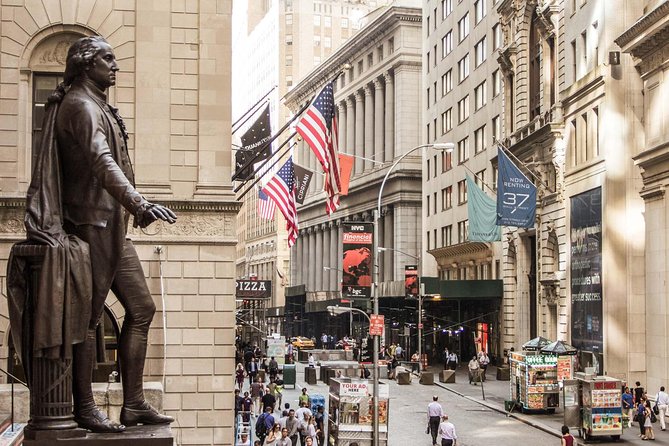
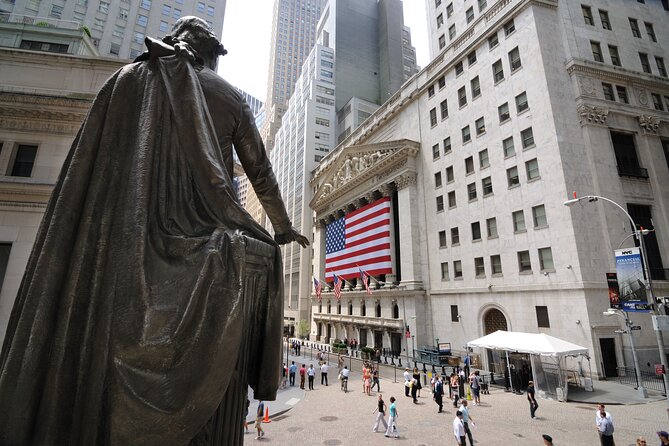
From the Wall Street segment, you continue toward landmarks tied to finance and government authority. One of the standout historical stops is Federal Hall, where George Washington became President.
That stop adds perspective. You’re not only learning about modern markets and bank failures—you’re also seeing how money, power, and policy have always intersected in Lower Manhattan. Even if you came for the 2008 crash, this is where the tour widens your mental frame.
Expect about 20 minutes at Federal Hall. If your group likes architecture and symbolism, this stop tends to land well because the site is visually imposing and historically meaningful. It’s also a moment where the guide can connect the “who had authority” question across different eras: leaders, institutions, and the rules that shaped outcomes.
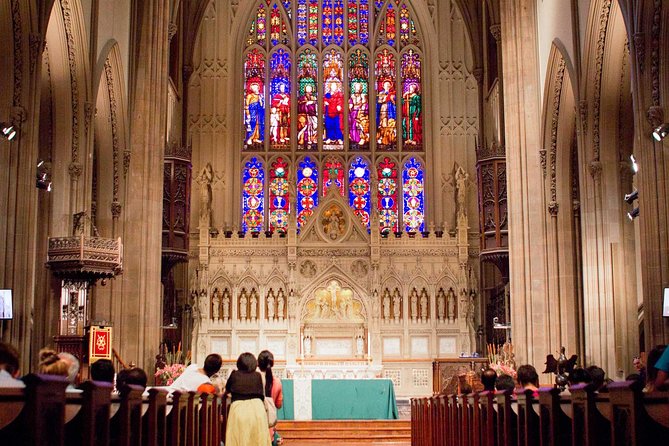
Some guides have also woven in the financial story connected to other nearby landmarks. For example, Ben has been noted for bringing in the financial history connected to Trinity Church, which can make the walk feel like it has more threads than just the 2008 narrative.
Why You Don’t Go Inside the NYSE (And Why That Can Be Fine)
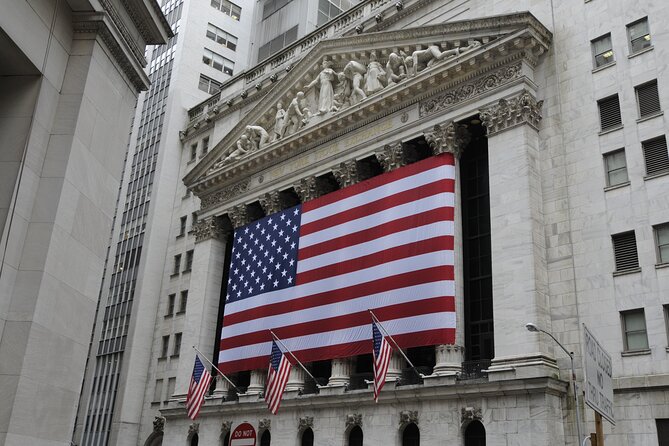
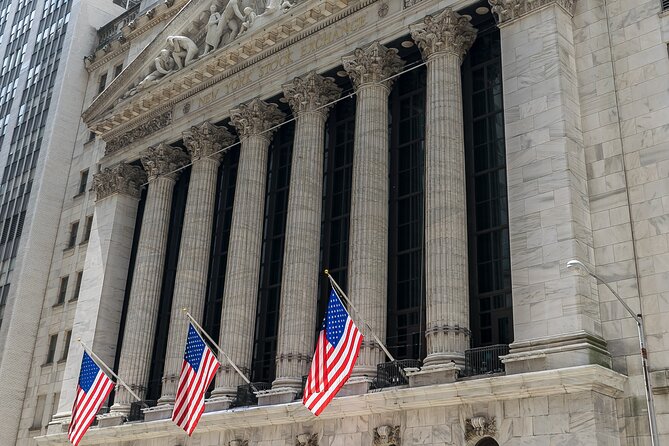
A lot of people hope to step into the New York Stock Exchange itself. This tour doesn’t include that. The reason is simple: it has been closed to visitors since 2001.
So what do you do instead? You get the context and the street-level experience. You learn what the Exchange represents, how it functioned in the broader system around the crisis, and what changed when confidence broke. Since you can’t go inside, the guide focuses on explanation that makes the external space meaningful.
This actually helps in a way. You’re not distracted by trying to squeeze in a quick interior visit. You’re free to listen, ask questions, and build a mental timeline while your eyes follow along the streets.
One word of advice: if the NYSE interior is your must-see, look for another experience that specifically includes access. For everyone else, this tour’s approach often feels more practical—especially if you want to understand the “why,” not just collect a photo.
The Big Short Angle: Turning a Movie Into Real-World Sense
The tour connects its lessons to the film The Big Short, offering an insider-style look at what’s portrayed and why it matters. This is a smart teaching move, because the movie takes complicated behavior and turns it into characters and decisions.
On this walk, you don’t just reference the film. You use it as a bridge to understand what the crisis depended on: how financial instruments worked, how incentives encouraged risky behavior, and how the system failed when it couldn’t absorb the losses.
Guides with front-line experience are especially good at this part. Past leadership includes people like James and Jared, who have been credited with keeping the tour engaging for both people with finance backgrounds and people who were there just to learn something new.
If you’ve seen the movie before, expect the tour to sharpen details and connect them to the actual landscape of Lower Manhattan. If you haven’t seen it, you should still follow easily, because the tour’s core goal is plain-language clarity.
Ending Near the Federal Reserve: What You’ll Notice on the Way Out
The tour ends near the Federal Reserve Bank. The listed end point is 33 Liberty St, New York, NY 10045, so you’re basically finishing in the central neighborhood where monetary authority feels real, not theoretical.
This ending location is more than geographic convenience. By the time you reach the Federal Reserve area, you’ve already walked through the story of failure—so the stop helps you think about the response side of the crisis, and why central banks matter when markets seize up.
Also, it’s a helpful location if you want to keep sightseeing right after. In one past group, the tour’s finish point was described as being within a short walk of the 9/11 National Memorial Museum area, so pairing these two themes can make an emotionally powerful day that still stays manageable time-wise.
Price and Value: Is $59 Worth It?
At $59 per person for about 2 hours, the value mostly comes from three things:
- You’re paying for a guide with professional finance experience, not just a standard walking-history narrator. That matters when the subject is 2008, because you need interpretation, not only dates.
- You’re getting an educational story that ties to specific streets and landmarks, so your brain doesn’t treat the crisis like a textbook chapter.
- The group limit of 20 people supports interaction, and many guides have been praised for explaining tough ideas clearly and staying approachable.
The only major element you aren’t getting for that price is interior access to the NYSE (since it’s not available to visitors). That’s not a “deal breaker” for most people, but it should be part of your expectations.
If you like finance, or you want a smarter way to understand why Wall Street still shapes daily life, this price can feel fair. If you’re expecting a hands-on trading floor visit or access that simply isn’t possible, you may feel let down.
Who This Tour Fits Best (And Who Might Want Something Else)
This tour is a great fit if you want:
- a clear, walking-friendly introduction to what caused the 2008 financial crisis
- a connection between the Big Short story and the actual place where finance lives
- a group experience that stays conversational thanks to a small size limit
It may be less ideal if:
- you need very little walking (this is described as a moderate-walking, mostly outdoor experience)
- you strongly need to enter the stock exchange building itself (this isn’t part of the experience)
One more practical fit note: the tour is offered in English, and guides have been praised for speaking in a clear, concise way that can work well even when English isn’t a first language.
Practical Tips for a Smoother Wall Street Morning
To get the most out of this tour, I’d plan for the basics:
- Wear shoes you can walk in for an extended city block stretch. Sidewalks near Wall Street can be crowded, and you’ll be moving continuously.
- Bring a light layer. Even when the day isn’t freezing, wind down around Lower Manhattan can make the tour feel colder than you expected.
- Save your big questions for when the guide pauses at stops. Because the group is small, it’s usually the moments at landmarks that allow the best answers.
If you’re traveling as a family or bringing a teenager, it helps that guides like Jared and James have been noted for keeping the pacing interesting across ages. The key is that the tour explains rather than lectures.
And if you’re someone who likes to understand the logic behind systems, not just the headlines, you’ll probably leave with a more usable mental model of how the crisis spread.
Should You Book This Financial Crisis Tour?
Book it if you want a focused, street-level explanation of the 2008 collapse and the Great Recession, guided by someone with real finance experience. The small group size, the landmark route, and the effort to translate complex ideas (including CDOs/CDWs) into everyday language are the reasons I think this is good value at $59.
Skip it or pair it differently if your top goal is to go inside the NYSE, since that access isn’t part of the experience. Also, be honest with yourself about walking time: it’s mostly outdoors with moderate movement, so plan clothing and footwear accordingly.
If you want Wall Street to make sense—without turning your vacation into a finance textbook—this tour is the kind of straight-shooting learning walk that tends to stick.
FAQ
How long is the Financial Crisis Tour?
The tour lasts about 2 hours (approx.).
Where does the tour start?
You meet at 22 Broad St, New York, NY 10005.
Where does the tour end?
The tour ends near the Federal Reserve Bank, at 33 Liberty St, New York, NY 10045.
Does the tour include admission to the New York Stock Exchange?
No. The tour does not go inside the New York Stock Exchange because it has been closed to visitors since 2001.
Is the tour mostly indoors or outdoors?
It is mostly an outdoor walking tour, with a chance to visit inside a few buildings.
What language is the tour offered in?
The tour is offered in English.
How large is the group?
The tour has a maximum of 20 people.
Will I get a mobile ticket?
Yes, the tour uses a mobile ticket.
Are service animals allowed?
Yes, service animals are allowed.
Is there free cancellation?
Yes. You can cancel for a full refund if you cancel at least 24 hours in advance of the experience start time.
More Tours in New York City
- Statue of Liberty and Ellis Island Tour: All Options★ 5.0 · 13,571 reviews
- New York in One Day Guided Sightseeing Tour★ 5.0 · 13,166 reviews
- Central Park Pedicab Guided Tours★ 5.0 · 7,108 reviews
- New York City: Manhattan Helicopter Tour★ 4.7 · 7,076 reviews
- Private Central Park Pedicab Tour★ 5.0 · 6,981 reviews
More Tour Reviews in New York City
- NYC: SUMMIT One Vanderbilt Tickets★ 4.7 · 51,195 reviews
- NYC: Empire State Building Tickets – Observatory & Museum★ 4.7 · 25,757 reviews
- New York City: Statue of Liberty & Ellis Island with Ferry★ 4.6 · 18,683 reviews
- New York City: American Museum of Natural History Ticket★ 4.5 · 15,447 reviews
- Statue of Liberty and Ellis Island Tour: All Options★ 5.0 · 13,571 reviews
Just in: the newest New York City reviews on our desk


Tours, compared.
 ★ 5.0Statue of Liberty and Ellis Island Tour: All OptionsFrom $6913,571 reviews
 ★ 5.0New York in One Day Guided Sightseeing TourFrom $9913,166 reviews
 ★ 5.0Central Park Pedicab Guided ToursFrom $387,108 reviews
 ★ 4.7Manhattan Helicopter TourFrom $2997,076 reviews
 ★ 5.0Private Central Park Pedicab TourFrom $386,981 reviews
 ★ 5.09/11 Memorial, Ground Zero Tour with Optional 9/11 Museum TicketFrom $396,381 reviews
 ★ 4.2Hop-on Hop-off Sightseeing Tour by Open-top BusFrom $445,863 reviews
 ★ 4.8Manhattan Sightseeing Helicopter TourFrom $2995,826 reviews