
Reviewed · TOURS
Gilded Age Mansions Tour in New York
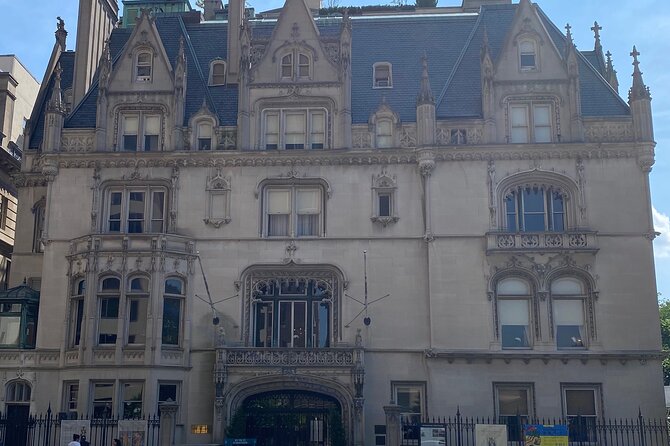
A Gilded Age mansion tour hits different in New York. You’ll walk past still-standing icons of the era and hear the human stories behind the stone: power, romance, generosity, scandal, and even murder-and-prison-level drama. Expect a guided mix of outdoor views and a few preserved interior moments, plus a visit inside the Met.
I especially like two things about this experience. First, you get to see the architecture in context—who commissioned what, and why certain design choices mattered to New York society. Second, I love that the tour connects the glitz we associate with the Met Gala back to the same Gilded Age social push for status and spectacle.
One thing to consider: this is not a full “walk through every room” mansion parade. Most stops are quick exterior looks, with interior access limited to preserved public spaces—so if you want long, room-by-room exploration, manage expectations and focus on the stories and craftsmanship you can see.
In This Review
- Key things I’d circle on your planning list
- Walking the Upper East Side’s Gilded Age power corridor
- What you actually get for your $40: access plus a Met visit
- Stop-by-stop: what you’ll see and why each one matters
- Stop 1: 1 E 78th St (intro from the curb)
- Stop 2: 972 5th Ave (a story with real bite)
- Stop 3: Manhattan (an ex-wife as a pioneer)
- Stop 4: 2 E 79th St (prison, hidden links, and saving the building)
- Stop 5: 1009 5th Ave (a surprise about scale + a scholarship gift)
- Stop 6: The Metropolitan Museum of Art (Met Gala glamour, explained)
- Stop 7: 1040 5th Ave (saving a famous building)
- Stop 8: Neue Galerie (Vanderbilt connection)
- Stop 9: 2 E 91st St (philanthropy tied to science, arts, and peace)
- Stop 10: 1 E 91st St (pop culture shock: Taylor Swift, Lady Gaga, Jonas Brothers)
- Stop 11: 1109 5th Ave (defying society)
- Interior access: what you should expect (and what you won’t)
- Your guide makes the tour: Matthew, Care, and AJ-style storytelling
- Gear and timing tips that actually help
- Accessibility and who this tour fits best
- Should you book the Gilded Age Mansions Tour?
- FAQ
- How long is the Gilded Age Mansions Tour?
- How much does it cost?
- Is the tour inside museums and mansions, or mostly outside?
- Which admission is included during the tour?
- Is the ticket digital?
- Is the tour wheelchair-friendly?
- How large is the group?
- Are snacks included?
- What if the weather is bad or I need to cancel?
Key things I’d circle on your planning list

- Brief interior access in preserved spaces, not a full private-home walkthrough
- Met Museum stop included, with a tie-in to Gilded Age glamor
- Small groups (max 20) for a calmer, easier walk and better Q&A
- Story-heavy guiding that turns buildings into characters
- Wheelchair-friendly route, plus service animals are welcome
- Mobile ticket and a straightforward Upper East Side meeting point
Not sold yet? Here is how this one lines up against other New York City picks:
- NYC: SUMMIT One Vanderbilt Tickets
★ 4.7 · 51,195 reviews - NYC: Empire State Building Tickets – Observatory & Museum
★ 4.7 · 25,757 reviews - New York City: Statue of Liberty & Ellis Island with Ferry
★ 4.6 · 18,683 reviews - New York City: American Museum of Natural History Ticket
★ 4.5 · 15,447 reviews
Walking the Upper East Side’s Gilded Age power corridor

This tour plays out in the part of Manhattan where the Gilded Age never really left. Even when buildings have been repurposed over time, the facades still show what mattered: status, wealth made visible, and a kind of social theater that New York became famous for.
I like that the guide doesn’t treat these mansions like museum props. You’ll get a clear sense of how the wealthy elite used architecture to broadcast influence—then you’ll hear the personal side: who lived here, who designed it, and how scandal or philanthropy shaped reputations for decades.
The best part of the format is the pacing. It’s about two hours on foot with multiple short stops, so you’re not stuck in one location for ages. You get a rhythm: look closely, hear the story, move on, repeat.
What you actually get for your $40: access plus a Met visit
At $40 per person for roughly two hours, the value comes from the combination: a guided walking experience plus paid admission for one key stop. You’re not just paying to hear facts. You’re paying for a plan: a route through specific addresses, a guide who connects them into one story arc, and a chance to go inside at least one major cultural site.
A lot of similar tours in NYC are “mostly photos of the outside.” Here, interior access does happen—just in limited, preserved public spaces. That means the payoff isn’t the fantasy of wandering a private mansion. The payoff is craftsmanship you might otherwise walk past without noticing, paired with the real-world stories that explain why these buildings still matter.
Also, snacks aren’t included, so plan on water and something small if you tend to get hungry mid-walk. You’ll be outdoors and moving, even when you step inside briefly.
Stop-by-stop: what you’ll see and why each one matters
You start at 1 E 78th St and end at 1109 5th Ave, so the route is designed to keep you gradually walking east/south through a tight cluster of Upper East Side addresses. Each pause is short (often about 5–10 minutes), so the guide has to be sharp—and they are.



Stop 1: 1 E 78th St (intro from the curb)
You’ll begin with an exterior view and an orientation to the Gilded Age mindset—how this society worked and how these homes fit into it. The focus here is groundwork: the owner, the architects, and what New York Society expected from people with serious money.
Why I like it: this first stop sets the “language” for the rest of the tour. You’ll start noticing details you’d usually miss on a quick pass.
Stop 2: 972 5th Ave (a story with real bite)
At this address, you go inside and hear a scandalous story tied to the architect. Even if you’re not an architecture nerd, the guide makes the details stick by framing them as consequences—choices that affected careers, reputations, and what happened next.
Tip for you: keep your camera ready, but also look up. Interior tours like this often reward the “big glance” more than the slow inspection.
Stop 3: Manhattan (an ex-wife as a pioneer)
This stop is listed simply as Manhattan and focuses on a striking angle: the ex-wife of a former owner was a pioneer for women in America. It’s a reminder that the Gilded Age wasn’t only about men building legacies; it was also about women pushing against limits—sometimes in ways that changed how history gets remembered.
Why it works: it breaks the usual “robber baron only” framing and gives you a more complete picture of influence.
Stop 4: 2 E 79th St (prison, hidden links, and saving the building)
Here you’ll hear why a former owner went to prison for one of the biggest scandals in American history. Then comes a set of connections: two reclusive owners linked to a famous man from early New York history. The stop ends with an important conservation story—how the building was saved from destruction.
What to watch for: the guide’s conservation angle helps you understand why some buildings survive intact while others don’t. It’s not just luck. It’s choices, timing, and pressure.
Stop 5: 1009 5th Ave (a surprise about scale + a scholarship gift)
This stop includes two threads. First, you’ll get a surprise about the size of the mansion. Second, you’ll learn about a gift left by a former owner that supports students with full scholarships to one of the best universities in America.
Why I think this stop is especially valuable: you see the shift from “status as performance” to “status used for impact.” It’s one of the clearest ways the era still reaches forward.
Stop 6: The Metropolitan Museum of Art (Met Gala glamour, explained)
You’ll go inside the Met and learn about the Met Gala and how the museum has a fun connection to Gilded Age glamor. Since this admission is included, it’s a strong anchor point in the tour.
Practical note: if you’ve never been inside the Met, this is a great low-pressure taste. You’re there for a focused story, not for a full museum day.
Stop 7: 1040 5th Ave (saving a famous building)
At 1040 5th Ave, the story centers on a famous former resident who helped save one of the most famous and beautiful Gilded Age buildings from being destroyed.
Why it matters: this isn’t just a sad “what we lost” moment. It’s about why preservation efforts sometimes take a champion with influence.
Stop 8: Neue Galerie (Vanderbilt connection)
You’ll learn the Vanderbilt connection to the building and how the Vanderbilts became the richest family in America and one of the most influential. This stop is marked as admission not included, so you’re not there for a full ticketed exploration.
How to make it count: treat this as a story stop. You’ll get the context, and then you can decide if you want to explore on your own afterward.
Stop 9: 2 E 91st St (philanthropy tied to science, arts, and peace)
This mansion’s owner is presented as a pioneer in philanthropy in America, contributing to science education, the arts, and peace. It’s a deliberate move away from just “money talk” and toward “how power got used.”
Good angle for you: it helps you see Gilded Age wealth as more than flashy spending—sometimes it funded institutions and causes.
Stop 10: 1 E 91st St (pop culture shock: Taylor Swift, Lady Gaga, Jonas Brothers)
This stop brings it into modern pop life: the owner of the building has a surprising connection to Taylor Swift, Lady Gaga, and the Jonas brothers. It’s a quick hit, but it works because it gives you a hook for conversation and future memory.
If you like pop culture tie-ins: you’ll probably enjoy this moment more than you expect.
Stop 11: 1109 5th Ave (defying society)
The guide tells how the owner was warned not to build it—then defied New York society and built it anyway. It’s one of those “rules exist until someone ignores them” stories, with architecture as the proof.
Why it lands at the end: it leaves you with the idea that these homes weren’t only shaped by taste. They were shaped by power, risk, and defiance.
Interior access: what you should expect (and what you won’t)
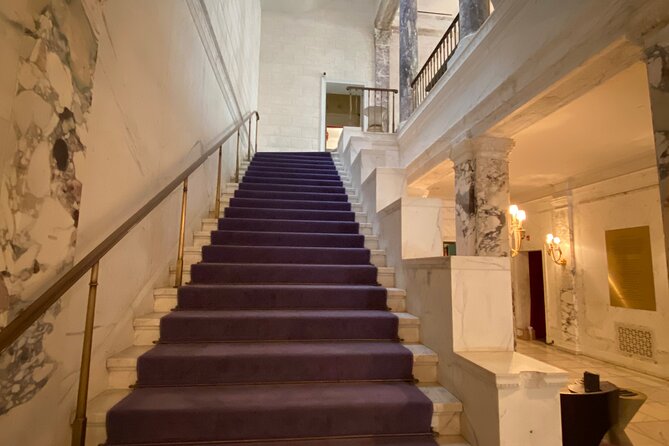
A key detail for your expectations: even when you go inside, you’re usually seeing preserved public interiors, not living rooms of private residences. The tour focuses on the parts of these buildings that still reflect the Gilded Age experience—places like preserved main halls or lobbies, depending on the building’s current use.
Also, some buildings on the route may be schools, modern museums, or privately owned structures where full-room access isn’t possible. So you’ll get architecture + story, with only certain spaces open during the tour.
That’s not a dealbreaker. It’s actually part of what makes the tour honest. You’re not promised “everything inside.” You’re guided to the moments that still survive—and then you’re taught to read what’s left.
Your guide makes the tour: Matthew, Care, and AJ-style storytelling

This experience shines when the guide is in full storyteller mode. In the small set of names I saw linked with the tour, Matthew and Care (and also AJ) show up as strong narrative leads. One theme across them: clear, energetic delivery, with supporting visuals like photos (and sometimes videos) that keep the stories grounded.
I also like the human touch. On colder days, the guide may offer hand warmers, and you’ll often get small adjustments for comfort so the tour stays enjoyable in real weather—not just in brochures.
If you want to get the most out of your two hours, come ready to ask questions. The story format makes follow-ups easy.
Gear and timing tips that actually help
This is a walking tour, even though it’s short. Dress for the weather first. In winter, plan warm layers and gloves you can still move in. The tour includes brief indoor moments, but you’ll spend plenty of time outside.
A few more practical moves:
- Bring your mobile ticket and make it easy to access before you meet.
- Wear comfortable shoes with decent traction. Upper East Side sidewalks can be icy in cold months.
- If you’re sensitive to walking noise or traffic, arrive a few minutes early so you can get in the best spot when the group starts.
- If you love photos, think “stop-by-stop,” not “wander around.” The timing is tight, and the guide will be moving you along.
Accessibility and who this tour fits best
The tour is wheelchair-friendly, and service animals are welcome. It’s also set up for most travelers to participate, and it’s near public transportation, which helps if you want to combine it with other Upper East Side plans.
Who it’s best for:
- You enjoy architecture but want it explained through people, not just materials.
- You like story-driven history with scandal and consequence.
- You watch period TV and want the real-world addresses behind the vibe.
- You’re staying around Midtown/Upper East Side and want a high-impact outing without a full museum day.
Who may find it less satisfying:
- You’re hunting for long, slow interior tours of multiple floors.
- You want snacks included and lots of downtime.
Should you book the Gilded Age Mansions Tour?
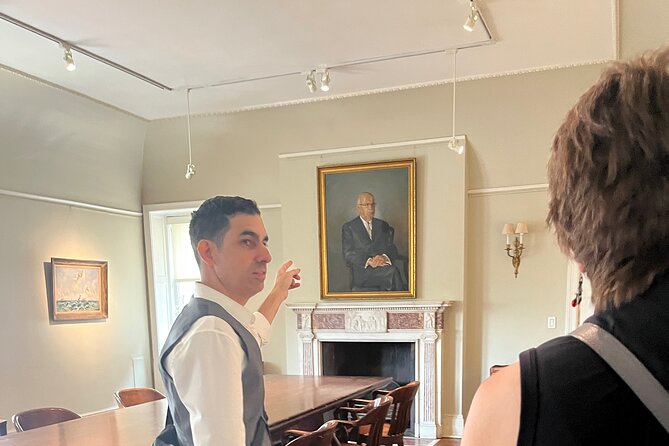
If you want a smart, story-rich way to see the Upper East Side’s Gilded Age leftovers, I’d book this. For $40, you’re paying for a route with guide-led context, a few preserved interior glimpses, and an included visit inside the Met—so it’s not just a “point and walk” show.
Just go in with the right expectation: it’s a tight, two-hour walking story, not a full mansion room tour. If that matches your style, you’ll leave with a much clearer sense of how wealth, design, and social power played out on these blocks—and why some buildings survived when others didn’t.
FAQ
How long is the Gilded Age Mansions Tour?
The tour is about 2 hours.
How much does it cost?
It costs $40.00 per person.
Is the tour inside museums and mansions, or mostly outside?
It’s a mix. You’ll view several Gilded Age locations from the outside, and you’ll also go inside some buildings and the Metropolitan Museum of Art.
Which admission is included during the tour?
Admission to the Metropolitan Museum of Art is included. Neue Galerie admission is not included.
Is the ticket digital?
Yes. You receive a mobile ticket.
Is the tour wheelchair-friendly?
Yes, the tour is wheelchair-friendly. Service animals are also welcome.
How large is the group?
The maximum group size is 20 travelers.
Are snacks included?
No, snacks are not included.
What if the weather is bad or I need to cancel?
The tour requires good weather. If it’s canceled due to poor weather, you’ll be offered a different date or a full refund. Free cancellation is available up to 24 hours before the experience starts.
More Tours in New York City
- Statue of Liberty and Ellis Island Tour: All Options★ 5.0 · 13,571 reviews
- New York in One Day Guided Sightseeing Tour★ 5.0 · 13,166 reviews
- Central Park Pedicab Guided Tours★ 5.0 · 7,108 reviews
- New York City: Manhattan Helicopter Tour★ 4.7 · 7,076 reviews
- Private Central Park Pedicab Tour★ 5.0 · 6,981 reviews
More Tour Reviews in New York City
- NYC: SUMMIT One Vanderbilt Tickets★ 4.7 · 51,195 reviews
- NYC: Empire State Building Tickets – Observatory & Museum★ 4.7 · 25,757 reviews
- New York City: Statue of Liberty & Ellis Island with Ferry★ 4.6 · 18,683 reviews
- New York City: American Museum of Natural History Ticket★ 4.5 · 15,447 reviews
- Statue of Liberty and Ellis Island Tour: All Options★ 5.0 · 13,571 reviews
Just in: the newest New York City reviews on our desk





Tours, compared.
 ★ 5.0Statue of Liberty and Ellis Island Tour: All OptionsFrom $6913,571 reviews
 ★ 5.0New York in One Day Guided Sightseeing TourFrom $9913,166 reviews
 ★ 5.0Central Park Pedicab Guided ToursFrom $387,108 reviews
 ★ 4.7Manhattan Helicopter TourFrom $2997,076 reviews
 ★ 5.0Private Central Park Pedicab TourFrom $386,981 reviews
 ★ 5.09/11 Memorial, Ground Zero Tour with Optional 9/11 Museum TicketFrom $396,381 reviews
 ★ 4.2Hop-on Hop-off Sightseeing Tour by Open-top BusFrom $445,863 reviews
 ★ 4.8Manhattan Sightseeing Helicopter TourFrom $2995,826 reviews