Reviewed · NEW YORK CITY
Journey Park NYC
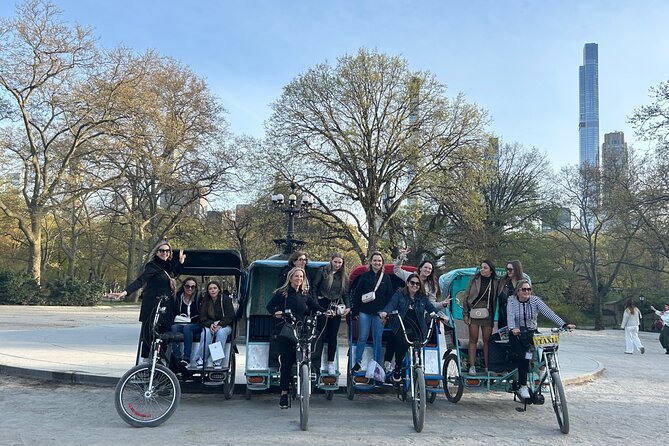
Central Park fatigue is real. This private pedicab ride is a smart way to see more ground without feeling like you’re marching. Two things I really like: the expert guide who connects landmarks to stories and film locations, and the easy “stop and look” pacing that lets you enjoy photos, views, and classic park moments instead of just walking through them.
There is one catch to plan for: the tour runs on good weather, and the route is built around quick scenic stops, not long museum-style time at any single attraction.
In This Review
- Key things to know before you go
- Private pedicab in Central Park: why this format works
- Where the tour starts on W 57th St and what your day feels like
- The park’s biggest “wow” stops: carousel, chess house, and the zoo area
- Central Park Carousel (1908) with 57 hand-carved horses
- Chess & Checkers House (built 1952) with 24 game tables
- Central Park Zoo (6.5 acres) and the animal-view vibe
- Bridges and film-famous angles: Wollman Rink, Gapstow Bridge, and Balto
- Wollman Rink (late Oct to early April) and movie links
- Gapstow Bridge (rustic stone with vines)
- Balto Statue near the Zoo
- Lake and garden highlights: Conservatory Water to Bethesda Terrace and beyond
- Conservatory Water (Model Boat Pond) and the miniature sailboat scene
- Central Park Boathouse (originally opened 1874; current building 1956)
- Bethesda Terrace and the Angel of the Waters
- Cherry Hill fountain (1860s horse watering trough roots)
- Bow Bridge (completed 1862) over the lake
- Storybook memorials and classic “New York in miniature” sights
- Strawberry Fields and the Imagine mosaic
- The Dakota and John Lennon’s connection
- Alice in Wonderland statue (gift from George Delacorte, 1959)
- Cleopatra’s Needle and the Met steps vibe
- Neighborhood edges: Sheep Meadow, Tavern on the Green, and playground life
- Sheep Meadow and skyline moments
- Tavern on the Green (1870 sheepfold; restaurant since 1934)
- Heckscher Playground (opened 1926)
- Pinebank Arch for a quiet, scenic photo angle
- Value for $32: what you’re really paying for
- Winter note: warm blankets and weather that can change plans
- Who this tour suits best (and who might want something else)
- Should you book Journey Park NYC?
- FAQ
- How long is the Central Park pedicab tour?
- Is this tour private?
- What’s included in the experience?
- Do they offer pickup or drop-off?
- What language is the tour offered in?
- What happens if weather is bad?
Key things to know before you go
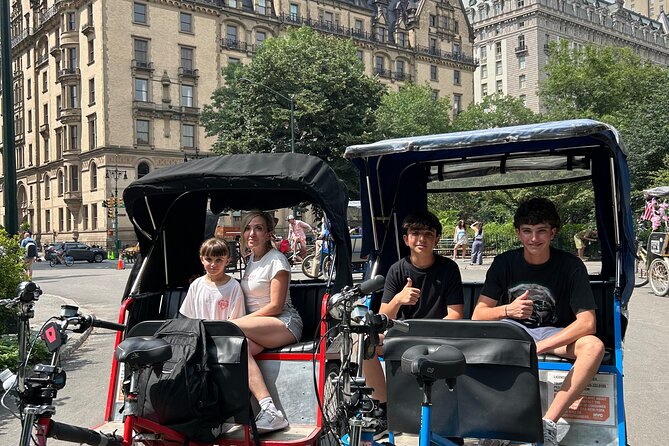
- Private pedicab comfort: You travel as just your group, with warm blankets in winter.
- See icons without the grind: A faster way to cover major areas of Central Park that you’d otherwise hit on foot over a long day.
- Guides who make landmarks click: Expect clear explanations, with guides like Jafar and Mirzotohir praised for friendly, confident storytelling and excellent English.
- Film-location friendly: The ride naturally works as a Central Park “where was that movie filmed” tour.
- Plenty of walk-off photo stops: You step out briefly at standout spots—many marked as admission-free viewing points.
- No pickup/drop-off: You’ll start at the meeting point on West 57th Street and head back there.
Not sold yet? Here is how this one lines up against other New York City picks:
- NYC: SUMMIT One Vanderbilt Tickets
★ 4.7 · 51,195 reviews - NYC: Empire State Building Tickets – Observatory & Museum
★ 4.7 · 25,757 reviews - New York City: Statue of Liberty & Ellis Island with Ferry
★ 4.6 · 18,683 reviews - New York City: American Museum of Natural History Ticket
★ 4.5 · 15,447 reviews
Private pedicab in Central Park: why this format works
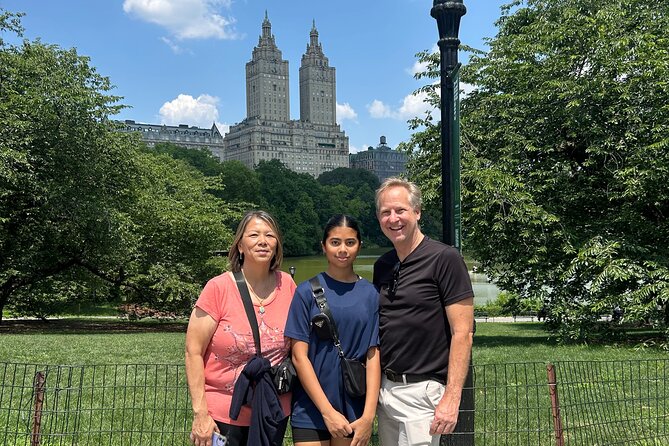
Central Park is huge. Even if you’re in good shape, a straight sightseeing plan can turn into sore feet, missed views, and that feeling of always being a little behind schedule.
A pedicab changes the math. Instead of spending all your energy on getting from landmark to landmark, you can actually enjoy the park’s “in-between” moments: the sudden opening to the lake, a vine-covered bridge view, the calm of a pond where miniature sailboats float, or the way the city skyline peeks through trees. It’s not just transportation. It’s a way to keep your eyes up.
And because this is private, you’re not stuck with a one-size-fits-all group pace. You can ask questions, request extra time at a particularly photogenic spot, and generally move like you’re sightseeing with a local friend rather than a crowd.
Where the tour starts on W 57th St and what your day feels like
The tour starts at 57 W 57th St, New York, NY 10019, and it ends back at the same meeting point. That “back to start” design matters. It means you’re not constantly re-orienting yourself for the next leg of your day, and it helps keep timing more predictable.
Duration is listed as about 1 to 3 hours, so your experience will feel like a highlighted tour, not an all-day crawl. Many stops are designed for quick viewing and photo time, so you’ll want to think about what you truly care about:
- If you want the greatest hits fast—this is ideal.
- If you want long breaks for a full carousel ride, a deep museum visit, or extended browsing, you’ll likely need to pair this with additional time outside the tour.
The park’s biggest “wow” stops: carousel, chess house, and the zoo area
This tour leans hard into Central Park’s most recognizable landmarks, and it does it early and often.


Central Park Carousel (1908) with 57 hand-carved horses
The Central Park Carousel is more than a cute photo stop. It’s a major historic attraction, built in 1908, with 57 hand-carved horses and two chariots. The scale alone makes it feel like you’re stepping into a small classic world. If you’re visiting with kids, it’s also a built-in “agree on something everyone wants” moment.
Practical note: if you want to actually ride, plan to treat this as your mini break. If you’re mostly there for landmark photos, you can enjoy it quickly and keep rolling.
Chess & Checkers House (built 1952) with 24 game tables
Right nearby, the Chess & Checkers House is one of those Central Park details that feels almost hidden until you’re standing in it. Built in 1952, it offers space for games with 24 tables, and it sits under a wooden trellis that provides a bit of shade.
Why it’s a great pedicab stop: it’s a scene. You can watch people playing, learn about the place, and grab a calm, “human life” moment that isn’t just statues and views.
Central Park Zoo (6.5 acres) and the animal-view vibe
The tour also includes the Central Park Zoo in the southeast corner of the park, a 6.5-acre space with animals like penguins, sea lions, and snow leopards. It’s small compared with big-city zoos, but it’s tightly integrated into the park experience—so you get that “animals in the middle of the city” feeling.
If you’re an animal lover, this is a strong add. If you’re not, the zoo area still works because it’s visually distinct and a convenient anchor point for other classic park sights.
Bridges and film-famous angles: Wollman Rink, Gapstow Bridge, and Balto
Central Park has a particular movie-ready charm: foggy pond edges, vine-covered stones, and the kind of bridges directors love.
Wollman Rink (late Oct to early April) and movie links
Wollman Rink is a public ice-skating rink that operates from late October to early April. It’s been featured in films like Serendipity and Home Alone 2, and it was originally funded by the Wollman family.
Even if you’re not skating, it’s worth seeing because it gives you a different texture of Central Park—more “seasonal set piece” than “quiet walk.”
Gapstow Bridge (rustic stone with vines)
Gapstow Bridge is one of the most picturesque Central Park bridges, a stone structure known for a rustic design covered in vines. It spans the narrow neck of the Pond and delivers classic “look at that view” energy. It also appears in films including Home Alone 2 and Gossip Girl.
This is exactly the kind of spot where a pedicab helps. You don’t want to waste time hiking across the park just to get the shot and move on. You can step off, look around, and keep your momentum.
Balto Statue near the Zoo
Balto the sled dog gets honored here with a bronze statue by Frederick Roth. Balto helped deliver a life-saving diphtheria serum to Nome, Alaska in 1925, and the statue is placed near the zoo area.
It’s a meaningful pause—more than just a recognizable name—because it connects the park to a real story of bravery and rescue.
Lake and garden highlights: Conservatory Water to Bethesda Terrace and beyond
If you picture Central Park as the mix of calm water, formal architecture, and storybook corners, you’re thinking of this section.
Conservatory Water (Model Boat Pond) and the miniature sailboat scene
Conservatory Water—also called the Model Boat Pond—is a peaceful ornamental spot near the east side of the park. It’s known for people watching and for watching miniature sailboats race.
In winter, the pond freezes and becomes a skating area. That seasonal shift is part of Central Park’s charm. It’s the same location, but it feels different.
Also nearby, you’ll find the famous Alice in Wonderland and Hans Christian Andersen statue elements that make this area feel like a living storybook.
Central Park Boathouse (originally opened 1874; current building 1956)
The Central Park Boathouse sits along the eastern shore of the lake. The original opened in 1874, but the current building dates to 1956. It’s a dining and event spot, and it’s also associated with boat rentals and lake views.
Even if you don’t sit for a meal, the boathouse area is a great “slow down for a minute” moment because the waterline and surrounding greenery do the work for you.
Bethesda Terrace and the Angel of the Waters
Bethesda Fountain is one of New York’s best-known park landmarks, with the Angel of the Waters statue representing healing and renewal. Bethesda Terrace itself is a grand two-level platform overlooking the fountain and surrounding park.
This is a high-value photo stop because it’s architectural, not just scenic. If you like classic NYC “postcard but real” views, you’ll get your fix here.
Cherry Hill fountain (1860s horse watering trough roots)
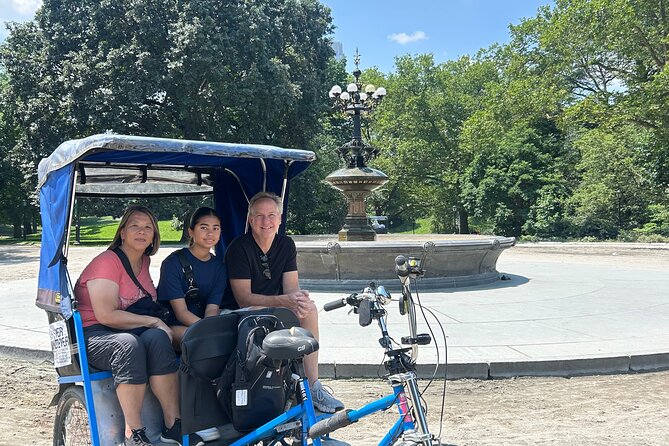
Cherry Hill is just west of Bethesda Fountain. It includes a fountain originally designed in the 1860s as a watering trough for horses. Now it’s a scenic, peaceful spot around a circular plaza, named for cherry trees that once flourished there.
A pedicab guide can make this stop feel special because the story turns a small fountain into something you remember.
Bow Bridge (completed 1862) over the lake
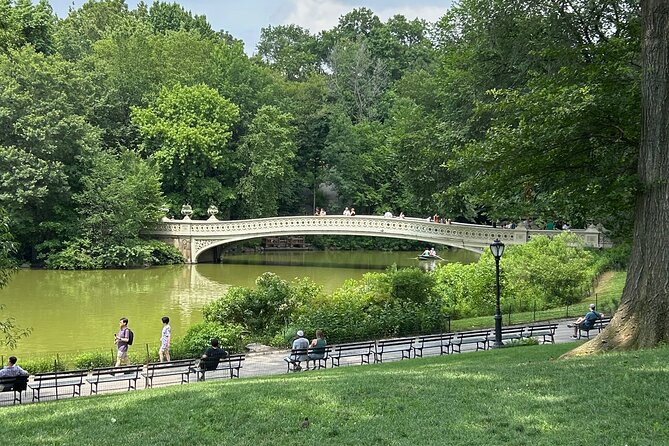
Bow Bridge is one of the park’s icons: an elegant cast-iron bridge completed in 1862, spanning across the lake. It’s known for stunning views and is one of Central Park’s most reliable photography areas.
Tip for your photos: plan to pause, look at the angle across the water, and then decide your exact position. The bridge rewards small changes in where you stand.
Storybook memorials and classic “New York in miniature” sights
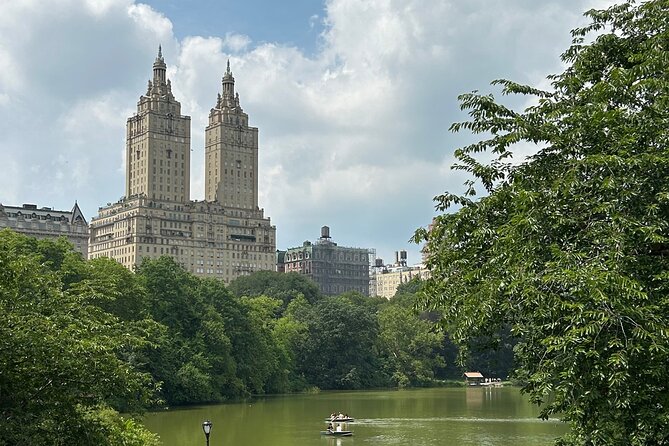
Central Park doesn’t just do nature and architecture. It also does culture, pop-culture, and literal storytelling.
Strawberry Fields and the Imagine mosaic
Strawberry Fields is a 2.5-acre John Lennon memorial. It’s named after the Beatles song Strawberry Fields Forever, and the centerpiece includes the iconic Imagine mosaic surrounded by flowers and trees.
This spot tends to be reflective rather than flashy. If you want one calm, emotional stop in the middle of sightseeing, this is it.
The Dakota and John Lennon’s connection
The Dakota is a historic building on the Upper West Side, built between 1880 and 1884, designed by architect Henry Janeway Hardenbergh. It’s famed as John Lennon’s residence, and he was tragically murdered outside the entrance in 1980.
Even though you’re not going inside, it’s one of those stops where the guide’s context helps you see why the building matters in New York’s story.
Alice in Wonderland statue (gift from George Delacorte, 1959)
The Alice in Wonderland Statue is whimsical and beloved, showing Alice sitting on a mushroom with characters like the Cheshire Cat and the White Rabbit. It was a gift from George Delacorte in 1959, designed by Jose de Creeft.
This is a fun stop for kids, but adults often enjoy it too because it’s clearly playful rather than overly serious.
Cleopatra’s Needle and the Met steps vibe
Cleopatra’s Needle is a red granite obelisk, 69 feet tall, originally from Heliopolis, Egypt, and gifted to the U.S. in 1881. It’s a powerful, simple marker that makes the park feel connected to world history.
And then you’re in the area near The Metropolitan Museum of Art (The Met), one of the largest and most famous art museums in the world. Even if you don’t go in, the setting matters: the grand architecture and the steps are iconic and frequently used as filming locations.
Neighborhood edges: Sheep Meadow, Tavern on the Green, and playground life

A big advantage of touring by pedicab is you get a feel for Central Park as a full “city park experience,” not just a list of monuments.
Sheep Meadow and skyline moments
Sheep Meadow is a 15-acre open space in the southern part of the park. It used to have sheep, but now it’s known for picnics, sunbathing, and outdoor relaxation with city skyline views.
If you’re visiting in good weather, this is where you can imagine yourself sitting down and doing nothing—one of the best parts of Central Park.
Tavern on the Green (1870 sheepfold; restaurant since 1934)
Tavern on the Green is a historic restaurant with a building that started as a sheepfold in 1870 and became a restaurant in 1934. It has beautiful outdoor seating and park views, and it was renovated and reopened in 2014.
Even if you’re not planning a meal, the location is worth noticing because it anchors a specific “Central Park tradition” feeling.
Heckscher Playground (opened 1926)
Heckscher Playground is the oldest and largest playground in Central Park, opened in 1926. It’s an easy stop near Central Park South and includes a variety of play equipment for children.
If you’re touring as a family, this can be a great “let kids decompress” pause.
Pinebank Arch for a quiet, scenic photo angle
Pinebank Arch is a rustic stone bridge-like arch that blends with the natural landscape. It’s known as a tranquil photo opportunity.
A pedicab makes it easier to slot in a calmer, softer stop between more famous landmarks.
Value for $32: what you’re really paying for
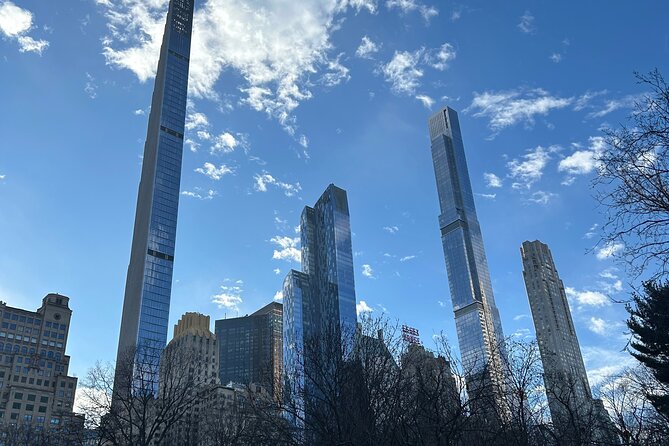
At $32 per person, this tour is priced in the range of a couple of coffees in Manhattan. But what you’re buying is time and ease: a guided route that covers a lot of Central Park’s signature points without you spending your whole day walking.
The guide factor matters too. You’re not just getting a “here’s a bridge” moment. You’re getting context—why a bridge looks a certain way, what a statue represents, and how certain places link to film titles like Home Alone 2, Gossip Girl, Serendipity, Madagascar, and Mr. Popper’s Penguins.
If you’re short on time—or if your legs are already tired from museums and subway staircases—this is the kind of experience that feels like a practical upgrade.
Winter note: warm blankets and weather that can change plans
Central Park can look great in any season, but winter adds real cold. This tour includes warm blankets in winter, which helps make outdoor stops more comfortable.
That said, the experience requires good weather. If conditions aren’t right, you may be offered an alternate date or a full refund. So I’d treat it like a plan that depends on the sky doing its part.
Who this tour suits best (and who might want something else)
This pedicab tour is a good match if:
- You want a high-signal overview of Central Park in 1–3 hours.
- You like stories tied to famous places and film settings.
- You want comfortable sightseeing for couples, small groups, or families.
You might want to choose a different format if:
- You’re the type who hates quick stops and wants long stays in just one area.
- You’re planning to fully ride attractions like the carousel or spend extended time at ticketed museums during the tour window.
Should you book Journey Park NYC?
If your goal is to see Central Park’s greatest hits without spending the day walking, I’d book it. The 5/5 rating with 43 reviews fits the pattern: strong guide experiences, comfortable pacing, and “best hour tour and best spent money” energy comes up in the kind of feedback people remember.
My decision rule:
- Book if you want guided value and a smooth way to hit iconic spots like Bethesda Terrace, Bow Bridge, Strawberry Fields, and the zoo area.
- Consider adding extra time outside the tour if you want to linger deeply at a single attraction or take longer breaks.
If you want your Central Park day to feel fun instead of exhausting, this is one of the smarter ways to do it.
FAQ
How long is the Central Park pedicab tour?
It runs for about 1 to 3 hours (approx.), depending on the pace and how long you want at each scenic stop.
Is this tour private?
Yes. It’s private, so only your group participates.
What’s included in the experience?
You’ll get a guided experience, mobile ticket access, scenic stop time for photos, and a comfortable private pedicab. Warm blankets are included in winter.
Do they offer pickup or drop-off?
No. Pickup and drop-off are not included. The activity starts and ends at the meeting point at 57 W 57th St.
What language is the tour offered in?
The tour is offered in English.
What happens if weather is bad?
The experience requires good weather. If it’s canceled due to poor weather, you’ll be offered a different date or a full refund.
More Tour Reviews in New York City
- NYC: SUMMIT One Vanderbilt Tickets★ 4.7 · 51,195 reviews
- NYC: Empire State Building Tickets – Observatory & Museum★ 4.7 · 25,757 reviews
- New York City: Statue of Liberty & Ellis Island with Ferry★ 4.6 · 18,683 reviews
- New York City: American Museum of Natural History Ticket★ 4.5 · 15,447 reviews
- Statue of Liberty and Ellis Island Tour: All Options★ 5.0 · 13,571 reviews