
Reviewed · CENTRAL PARK TOURS
New York Central Park Guided Electric Scooter Tour
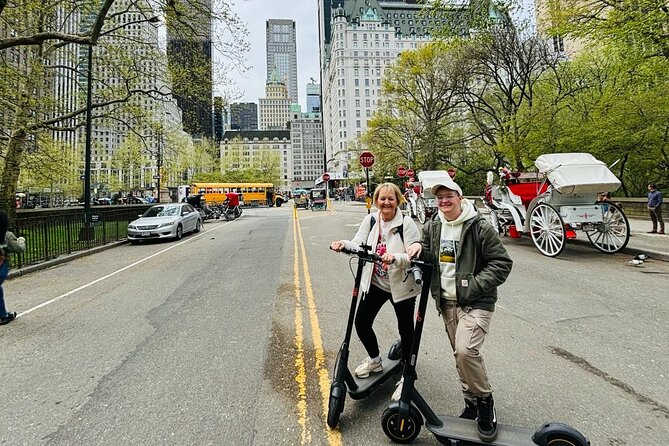
Electric scooters turn Central Park into a quick-witted sightseeing circuit. You’ll glide between major landmarks with stops built in, so you can see a lot without paying for it in sore legs. I especially like how the tour mixes famous icons with small details you’d usually miss while wandering.
Two things I’d bet you’ll love: the private guide who helps you make sense of what you’re seeing, and the easy pace with frequent photo breaks. It’s also set up with plenty of departure times, so you can usually fit it into a busy day.
One consideration: this experience depends on good weather, and Central Park can get cold fast. If conditions are rough, I’ve seen reports that the provider may switch to a pedicab for the same tour plan, which can be a relief if you’re not feeling steady on a scooter.
In This Review
- Key things that make this Central Park scooter tour worth it
- Scooter-first Central Park: what you actually get in ~2 hours
- Meeting at 1794 Broadway: start strong with Columbus Circle energy
- Carousel, Chess & Checkers House, and The Dairy: small classics with big context
- Umpire Rock to The Plaza: playground origins and movie-famed elegance
- Gapstow Bridge, Central Park Zoo, and Balto: water views and the heavy moment
- SummerStage and the Reservoir: performance season energy to running-loop views
- Belvedere Castle and Harlem Meer: classic views plus calm water time
- Museum Mile touchpoint and The Met: park walking with city-scale art
- Bethesda Fountain to Bow Bridge: the postcard route where people-watch wins
- Strawberry Fields and The Dakota: peace memorials and famous building form
- Tavern on the Green and Pinebank Arch: architecture finish with a practical food option
- Price and value: why $99 can make sense here
- Who this scooter tour fits best
- Should you book the Central Park electric scooter tour?
- FAQ
- How long is the Central Park guided electric scooter tour?
- Where does the tour start?
- Is the tour private?
- What’s included in the $99 per person price?
- What language is the tour offered in?
- Do I get a mobile ticket?
- Is admission included for the places you stop at?
- Does the tour require good weather?
- What fitness level do I need?
- Can I get a refund if my plans change?
- How far in advance is it usually booked?
Key things that make this Central Park scooter tour worth it
- E-scooter included: you’re not renting or figuring out gear before you even start sightseeing
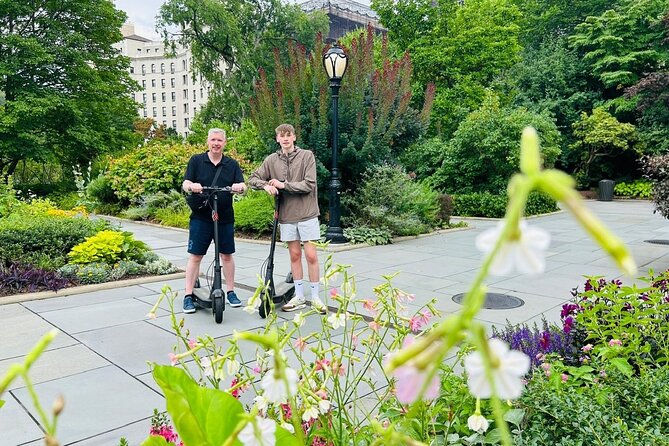
- Private guide attention: you go at your own pace, with someone steering you toward the best spots
- Lots of built-in stopping points: you’re set up for photos and quick breaks, not constant “keep moving” pressure
- Icon range across the park: from Columbus, to Bethesda Fountain, to Strawberry Fields and the Reservoir
- Great for mixing views and stories: bridges, monuments, and famous buildings each get context
- Multiple departure times: scheduling is usually easier than a single fixed run
More ways to see Central Park
- Central Park Pedicab Guided Tours
★ 5.0 · 7,108 reviews - Private Central Park Pedicab Tour
★ 5.0 · 6,981 reviews - NYC: Central Park Bike Rentals
★ 4.2 · 2,528 reviews - Official NYC Horse Carriage Rides in Central Park since 1979 ™
★ 5.0 · 2,365 reviews
Scooter-first Central Park: what you actually get in ~2 hours
Central Park is huge, and walking it all at once is a great way to turn your day into a marathon you didn’t sign up for. This tour solves that with electric scooter time plus a guide who acts like a shortcut to meaning. You’re covering major areas without the constant stop-start friction of navigating on foot.
At $99 per person for about 2 hours, the value comes less from “speed” and more from planning. The stops are spaced so you can look, learn, and photograph without feeling like you’re sprinting between landmarks. If you’re visiting New York with limited time, this is one of the more efficient ways to sample the park’s biggest hits.
You also get a private setup where only your group participates. That matters because you’re not stuck listening to a guide talk over a crowd while you’re trying to keep your balance. It’s easier to ask questions, and it’s easier to pause when the light is right.
Meeting at 1794 Broadway: start strong with Columbus Circle energy
The tour starts at 1794 Broadway, New York, NY 10019 and returns there at the end. This is a solid starting zone because it’s right in the action near the park’s western edge, meaning you can combine the tour with other plans nearby.
Your ride kicks off with a close-up view of a colossal Columbus figure: Columbus standing atop a column pierced by three boats (the Niña, the Pinta, and the Santa María). It’s a dramatic opener, and it helps you shift your mindset from random sightseeing to “Oh, this park has layers.”
From the first stop, you’ll notice the pattern the guide follows: quick orientation, then a clear reason to care about what you’re seeing. That style continues throughout the park.
Carousel, Chess & Checkers House, and The Dairy: small classics with big context
A big reason I like tours like this is they force you to notice the Central Park details that are easy to gloss over when you’re wandering. You’ll hit the carousel, first launched in 1871, with 250,000 riders each year. Even if you’re not riding, it gives you a concrete sense of how long this park tradition has been running.
Next comes the Chess & Checkers House, which today houses one of Central Park’s visitor centers run by the Central Park Conservancy. The octagonal brick structure is ringed by 24 game tables under a wooden trellis. This is one of those stops where you get to see a “park activity” building rather than just a view—useful if you like how parks function, not just how they look.
Then there’s The Dairy, the park’s largest gift shop at 65th Street. It’s positioned as mid-park and easy to access, and purchases support the Central Park Conservancy. That’s a practical stop too: if you need a souvenir, a snack, or a last-minute “we’ll actually remember this day” purchase, it’s right in the flow.
More days made simple with a guide




Umpire Rock to The Plaza: playground origins and movie-famed elegance
In the southwest corner you’ll stop at Umpire Rock, named for its place in Central Park’s first playground—an open meadow where kids could play games. It’s a quick reminder that Central Park started with recreation in mind, not just scenic beauty.
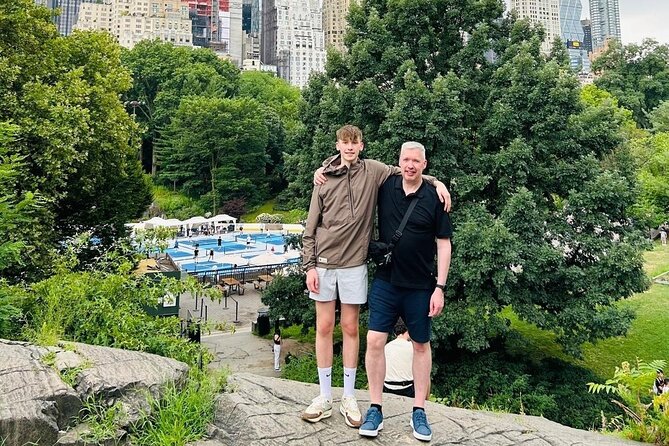
From the same area you can see Wollman Rink, which helps connect the “old playground idea” to the way the park keeps creating activities for different seasons.
Then you’ll roll toward The Plaza, described as a New York hotel that’s long been associated with being seen—kings, presidents, and stage-and-screen stars staying there over time. It’s also known for being filmed in the 1990s movie Home Alone. If you like spotting recognizable film locations or you’re traveling with family, this kind of pop-culture anchor gives the park stops a fun extra layer.
Gapstow Bridge, Central Park Zoo, and Balto: water views and the heavy moment
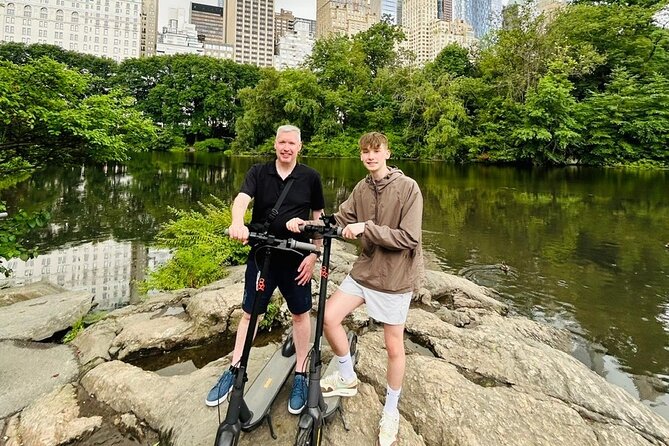
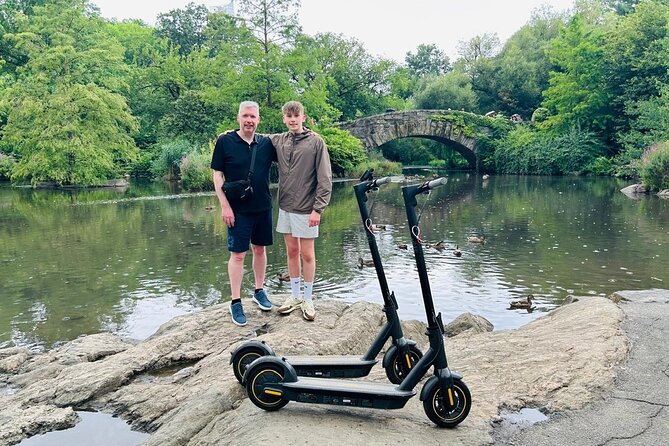
Bridges are where Central Park often feels most cinematic, and Gapstow Bridge is built for exactly that. The bridge crosses the narrow neck of the Pond and is a popular spot for a scenery overview and photographs. This is the kind of stop that’s short but satisfying—great for photos, and good for resetting your energy.
Next you’ll stop at the Central Park Zoo, which includes animals from tropical, temperate, and polar regions. A standout feature is the sea lion pool and tank, located in the courtyard and visible from outside the zoo. You’ll also see mention of exhibits including snow leopards, grizzly bears, and penguins, among others. Even if you don’t go in deeper, the tour framing helps you understand what kind of zoo this is.
After that, the mood shifts with the monument to Balto. Balto became famous for a heroic journey across Alaska. In January 1925, an outbreak of diphtheria threatened the town of Nome, and vaccines couldn’t be transported from Anchorage by plane due to weather. A relay of dog-sled teams and mushers was the alternative. This stop is emotionally weighty, but it’s also a great example of how Central Park stores real-world stories in plain sight.
SummerStage and the Reservoir: performance season energy to running-loop views
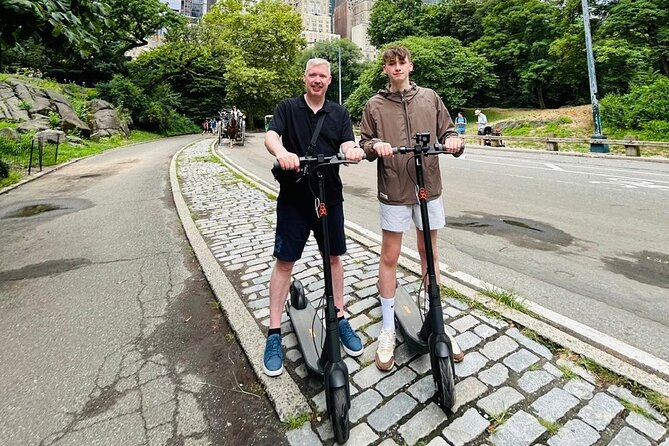
You’ll also pass Rumsey Playfield, where SummerStage runs as an outdoor concert and performance series organized by the City Parks Foundation. It’s a quick stop, but it’s one of the ways the park shows it’s not just for tourists—there’s a real program life happening there.
Then you’ll reach Jacqueline Kennedy Onassis Reservoir, the largest water body in Central Park and one of the most popular destinations for running. There’s a 1.58-mile track that loops around the Reservoir, often filled with runners and walkers. The Reservoir also draws birdwatching because of aquatic birds.
This stop is a smart “breather” in the middle of the ride. You’ll likely want a few extra minutes here, because the view changes as you move and because it’s easier to pause on the scooter and just take it in.
Belvedere Castle and Harlem Meer: classic views plus calm water time
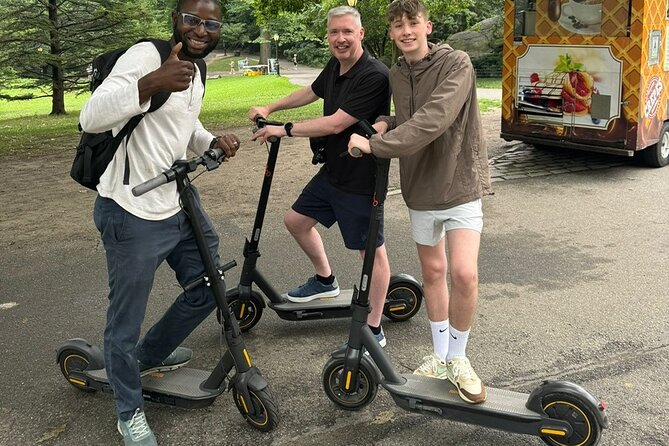
Belvedere Castle sits atop Vista Rock, described as the second highest natural point in Central Park. It’s one of the park’s iconic features, and its placement makes it a natural photo objective without needing to hunt for the spot.
After that, you’ll visit Harlem Meer, located in the northeast corner of the park. The setting is framed with paths lined by benches and lawns, giving you places to relax, picnic, or sit with the water view. The tour description also points out shoreline vegetation and wildlife, plus rocky bluffs to the south, called the Fort Landscape.
If you’ve been moving fast at the beginning of the day, this is where you can slow down. The Meer stop feels like the tour giving you permission to breathe, not just click photos.
Museum Mile touchpoint and The Met: park walking with city-scale art
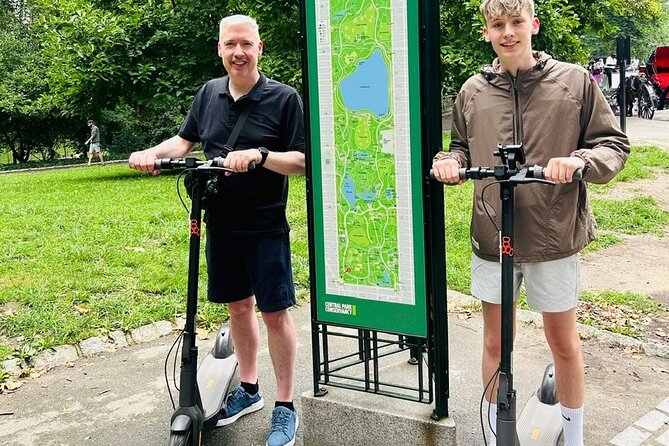
You’ll pass through the Upper East Side area along Madison Avenue, described as posh and residential with designer shops, fancy restaurants, and a mix of classic brownstones plus upscale high-rises. The tour also points out Museum Mile, the stretch of 5th Avenue next to Central Park that draws crowds to major cultural institutions.
In the same rhythm, you’ll stop at The Metropolitan Museum of Art (the Met). The Met is described as an encyclopedic art museum, the largest in the Americas and the fourth-largest in the world. Even if you’re not entering, this is a meaningful stop because it shows Central Park as part of a bigger cultural corridor—not isolated green space.
Bethesda Fountain to Bow Bridge: the postcard route where people-watch wins
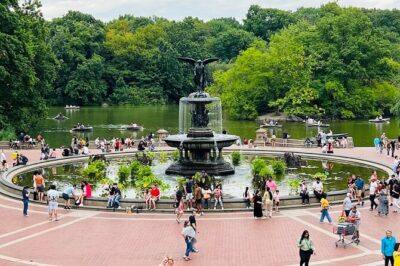
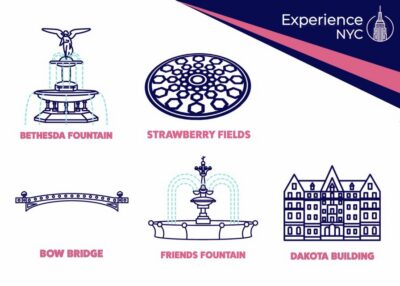
You’ll spend time around Bethesda Fountain, known as the Angel of the Waters. It’s set within a large plaza that has two levels, plus an arcade. The Terrace is described as a popular spot for relaxing and people-watching, which tells you what this area is best at: slow looking, not rushing.
Next is The Mall and Literary Walk. The Mall is a wide straight path lined with two rows of American elms. The southern section is called Literary Walk because it includes statues of writers added in the 19th century. This is one of those stops where the “what it is” matters: you’re not only seeing trees and a path, you’re seeing a planned collection of memorials.
Then comes Cherry Hill, named for cherry trees that bloom in spring. The view is toward the Lake, and the sloping lawn works well for picnicking and relaxing. In spring, it’s also known for the Yoshino cherry trees, which bloom pink and white.
After Cherry Hill, you’ll reach Bow Bridge, named for its graceful curve resembling the bow of an archer or violinist. It’s a prominent photo spot with expansive Lake views and is also described as a romantic location for wedding proposals. This is a good stop for couples, families, and anyone who wants one “I can see why people photograph this” moment.
Strawberry Fields and The Dakota: peace memorials and famous building form
The tour hits Strawberry Fields, a memorial to British rock musician and peace activist John Lennon (1940–1980). It includes the Imagine mosaic, where people come to pay tribute. The name refers to Lennon’s 1967 song Strawberry Fields Forever, so it’s not random branding—it’s a direct cultural connection.
From there, you’ll see The Dakota, located along Central Park West between 72nd and 73rd streets. It’s described as square in plan with apartments accessed through a central H-shaped courtyard. The building is also noted for historical prestige, based on a 1996 New York magazine reference describing it as one of the five top-tier apartment buildings on Central Park West.
Even if you’re not into architecture, the value here is pacing: the tour gives you a chance to step back from the trees and get a sense of how Central Park is framed by famous city buildings.
Tavern on the Green and Pinebank Arch: architecture finish with a practical food option
Toward the end, you’ll pass Tavern on the Green, located in a historic building once known as the Sheepfold. The restaurant has been a destination for fine dining in Central Park since the 1930s, and it reopened in 2014 after renovation where some additions were removed to expose more original structure and add variety to options. Even if you don’t eat, it’s a recognizable marker that helps you understand how long Central Park has supported visitor experiences.
The final major stop is Pinebank Arch, a cast-iron bridge spanning the bridle path. It’s designed to blend with the landscape, seeming to emerge from rock outcrops on both ends. The lacy ironwork is described as almost blending into surrounding foliage, and it’s often photographed.
If you’re the type who likes finishing with a visual that feels “earned,” Pinebank Arch is a strong closer. It gives you a quiet, architectural last look without forcing another long explanation.
Price and value: why $99 can make sense here
Let’s be blunt: $99 for about 2 hours sounds high if you’re thinking only about transportation. But this tour isn’t just “rent the scooter.” It includes use of the e-scooter and a private guide. The guide’s job is to turn your time into understanding, so you don’t spend your afternoon guessing what you’re looking at.
This price also works better than you’d expect if you’re traveling with kids or you hate the “we walked and we’re done” feeling. In one example, Daryl was described as brilliant with kids, with guides providing interesting history and keeping the mood fun. In another, Barry was praised for stopping all over, sharing history, and helping with photo opportunities.
Also, Central Park has lots of free sights, and this tour is built around stopping at major features without charging you for every entrance point. Many listed stops are marked as Admission Ticket Free, like Gapstow Bridge, Reservoir track views, Bethesda Fountain, Cherry Hill, Bow Bridge, and more.
The best “value test” is simple: if you’d otherwise spend half a day walking or riding around trying to pick stops yourself, the guide’s plan is what you’re buying.
Who this scooter tour fits best
This tour is a good match if you want big Central Park highlights in a single visit and you care about learning more than a self-guided wander would give you. It also suits people who don’t want to commit to a full-day hike but still want variety: monuments, bridges, fountains, zoo area, and iconic memorials.
The tour notes say you should have moderate physical fitness. That typically means you should be comfortable standing and moving at a gentle pace while riding and stopping frequently. If you’re unsure, plan to dress for the weather and keep your expectations realistic about how much time you’ll spend outside.
Should you book the Central Park electric scooter tour?
If your goal is to see Central Park’s top sights with less effort and more context, I’d say yes—especially if you’re on a tight schedule. The private guide, the scooter included, and the built-in stops make it feel like a guided plan rather than a random “ride around” activity.
Skip it only if you strongly prefer a slow, free-form wander where you can change your route constantly. Also, go in with weather in mind; this experience requires good weather, and options can change if conditions are uncomfortable.
If you’re ready to turn 2 hours into a focused Central Park highlight reel, this is a smart way to do it.
FAQ
How long is the Central Park guided electric scooter tour?
The tour runs for about 2 hours.
Where does the tour start?
You meet at 1794 Broadway, New York, NY 10019, USA.
Is the tour private?
Yes. It’s a private tour/activity, and only your group participates.
What’s included in the $99 per person price?
The tour includes use of an e-scooter and a private guide.
What language is the tour offered in?
The tour is offered in English.
Do I get a mobile ticket?
Yes, it’s listed as having a mobile ticket.
Is admission included for the places you stop at?
Many of the listed stops are marked as Admission Ticket Free, but the tour only guarantees the scooter and guide in the included section.
Does the tour require good weather?
Yes. It requires good weather; if it’s canceled due to poor weather, you’ll be offered a different date or a full refund.
What fitness level do I need?
You should have a moderate physical fitness level.
Can I get a refund if my plans change?
Yes. There’s free cancellation, and you can cancel up to 24 hours in advance for a full refund.
How far in advance is it usually booked?
On average, it’s booked about 30 days in advance.
More Tours in New York City
- Statue of Liberty and Ellis Island Tour: All Options★ 5.0 · 13,571 reviews
- New York in One Day Guided Sightseeing Tour★ 5.0 · 13,166 reviews
- Central Park Pedicab Guided Tours★ 5.0 · 7,108 reviews
- New York City: Manhattan Helicopter Tour★ 4.7 · 7,076 reviews
- Private Central Park Pedicab Tour★ 5.0 · 6,981 reviews
More Tour Reviews in New York City
- NYC: SUMMIT One Vanderbilt Tickets★ 4.7 · 51,195 reviews
- NYC: Empire State Building Tickets – Observatory & Museum★ 4.7 · 25,757 reviews
- New York City: Statue of Liberty & Ellis Island with Ferry★ 4.6 · 18,683 reviews
- New York City: American Museum of Natural History Ticket★ 4.5 · 15,447 reviews
- Statue of Liberty and Ellis Island Tour: All Options★ 5.0 · 13,571 reviews
More of Central Park
- Central Park Pedicab Guided Tours★ 5.0 · 7,108 reviews
- Private Central Park Pedicab Tour★ 5.0 · 6,981 reviews
- NYC: Central Park Bike Rentals★ 4.2 · 2,528 reviews
- Official NYC Horse Carriage Rides in Central Park since 1979 ™★ 5.0 · 2,365 reviews
- NYC: Central Park Bike Rental★ 4.1 · 1,651 reviews
Just in: the newest New York City reviews on our desk





Central Park Tours, compared.
 ★ 5.0Central Park Pedicab Guided ToursFrom $387,108 reviews
 ★ 5.0Private Central Park Pedicab TourFrom $386,981 reviews
 ★ 4.2Central Park Bike RentalsFrom $92,528 reviews
 ★ 5.0Official NYC Horse Carriage Rides in Central Park since 1979 ™From $992,365 reviews
 ★ 4.1Central Park Bike RentalFrom $81,651 reviews
 ★ 4.9Private Central Park Pedicab TourFrom $401,637 reviews
 ★ 4.7Central Park Bike RentalFrom $91,509 reviews
 ★ 4.0Carriage Ride in Central Park (VIP – PRIVATE) Since 1964™From $141,074 reviews
Browse the lists this tour appears in