
Reviewed · 1-DAY TOURS
New York City Fortune Tour 1-Day Sightseeing Adventure
New York, but explained through money. This day tour connects the dots between Lower Manhattan’s finance roots and today’s skyline—so you see landmarks as a story of ambition, not just a checklist. I especially like the way it strings together famous buildings with clear, guide-led context about how power got built.
I also like that you get multiple pickup options across Manhattan, Brooklyn, and Queens, plus a comfortable coach that keeps you moving without constant subway transfers. The tradeoff: the schedule is tight, with many stops around 6 minutes, so it works best if you’re okay with quick looks and photo breaks rather than long entries.
In This Review
- Key Things to Know Before You Go
- Finance-First NYC: What Makes This Tour Feel Different
- Pickup, Timing, and the Logistics That Matter
- Lower Manhattan Power Walk: Broadway to Wall Street
- Canyon of Heroes (Broadway)
- Woolworth Building, 15 Park Row, and Porter Building
- St. Paul’s Chapel and the Quiet Counterpoint
- The Telegraph and Communication as Money Power
- Equitable Building: Zoning Laws in Plain Sight
- Wall Street Institutions: Churches, Banks, Government, and the Market
- Trinity Church NYC
- Alexander Hamilton’s Bank Story: Bank of New York
- Federal Hall: Washington and Early Government
- NYSE Outside View
- Charging Bull for Market Mood
- Lower Manhattan to Midtown: Luxury Commerce and Big Media
- Customs House and Global Trade
- Standard Oil: Corporate Monopolies
- Cunard Line and Global Travel
- Rockefeller Center: Private Enterprise with Cultural Power
- Diamonds, Hotels, Times Square, and Nasdaq: The Modern “Fortune” Arc
- Diamond District and International Gem Tower
- Pulitzer Fountain and Grand Army Plaza
- Plaza Hotel
- Times Square and the Visibility Question
- Nasdaq MarketSite
- Optional Add-Ons: One World Observatory, Liberty Cruise, and RiseNY
- One World Trade Center Observatory (Optional)
- Liberty Cruise (Optional)
- RiseNY (Optional)
- Tickets, Cash, and How to Avoid Fee Confusion
- What It’s Like in Practice: A Realistic Expectation Set
- Who This Tour Suits Best (and Who Should Think Twice)
- Should You Book This New York City Fortune Tour?
- FAQ
- How long is the New York City Fortune Tour?
- Where are pickup locations available?
- Where will I be dropped off at the end?
- Are any admission tickets included?
- What optional attractions can I add?
- Do I need cash during the tour?
- Is the tour offered in English and is it suitable for kids?
Key Things to Know Before You Go
- Short stop times, big themes: lots of 6-minute “see it, understand it” moments, then off to the next area
- Pickup exists, drop-off details can vary: most departures return you to your pickup spot, but one early Brooklyn departure is pick-up only with drop-off at Chinatown
- Optional attractions cost extra: One World Observatory, Liberty Cruise, and RiseNY are add-ons if you select the ticket option
- Cash is sometimes necessary: bring it for certain attractions, shops, and tickets
- Group size is capped at 55: usually a manageable crowd, but it still feels like a group day
- Language can vary by guide: the tour is offered in English, but English ability can depend on the specific guide assigned
The big picture: more New York City sightseeing
- New York City: Statue of Liberty & Ellis Island with Ferry
★ 4.6 · 18,683 reviews - New York City: American Museum of Natural History Ticket
★ 4.5 · 15,447 reviews - New York City: Manhattan Helicopter Tour
★ 4.7 · 7,076 reviews - Top of the Rock Observation Deck New York City Ticket
★ 4.5 · 4,556 reviews
Finance-First NYC: What Makes This Tour Feel Different
This tour has one big idea: New York’s most powerful story isn’t only art, sports, or fashion. It’s money—how it moved, how it competed, and how it shaped the city’s buildings and rules.
That theme shows up immediately in Lower Manhattan, where the route starts in the area tied to American finance, then keeps radiating outward into Midtown’s corporate, media, and technology clout. Instead of memorizing facts on your own, you get a guide who is trying to help you read the city. You’ll see the skyline and then learn why each era wanted to build higher, faster, and more visibly.
Two big wins here for your enjoyment:
- The stops are chosen to explain systems: commerce, banking, communication, zoning, and international trade.
- The “power landmarks” mix old icons (churches, early banks, landmark architecture) with newer centers (Wall Street trading, major towers, and Nasdaq-area tech).
If you like guided context—especially about how cities get shaped by business decisions—this tour clicks.
Pickup, Timing, and the Logistics That Matter
This is a 6.5-hour tour on paper, and the operator notes the full day is about 7 hours once you include travel, traffic, and visit times. That difference matters because you’re planning a full-day block, not a casual half-day.
Pickup is offered in Manhattan, Brooklyn, and Queens, and you’re asked to arrive 5–10 minutes early. Your voucher start time might not match the guide’s actual pickup timing, so give yourself a buffer.
One detail to double-check right after booking: drop-off isn’t always the same as pickup. The general statement says you’ll be dropped off at your pick-up location, but there’s an exception noted for the 07:00 departure connected to 8th Ave, Brooklyn (TD Bank)—that one is pick-up only, and you’ll be dropped in Chinatown. If you have a hotel that’s not near Chinatown, confirm which departure you’re on and how drop-off works.
Also keep expectations realistic:
- The route uses professional vehicles, and the type can depend on group size.
- You’ll be moving between neighborhoods, often with quick exterior photo stops.
- Traffic and weather can change the return time.
Lower Manhattan Power Walk: Broadway to Wall Street
The tour begins in Lower Manhattan, and it’s a smart way to start because this area is packed with the city’s financial “origin story.”
Worth a look right next to this New York City pick:
Canyon of Heroes (Broadway)
Your first big “wow” is Canyon of Heroes, along Broadway. You’ll notice it’s lined with ticker-tape style markers honoring major icons—presidents, astronauts, and other global figures. The point of this stop is tone-setting: New York treats achievement like a public monument, and the tour uses that idea to frame what you’ll see next.
Woolworth Building, 15 Park Row, and Porter Building
Then the route shifts into architecture-as-economics. The tour hits several early commercial landmarks:
- Woolworth Building: Gothic design funded entirely in cash, positioned as an early peak of American capitalism.
- 15 Park Row: credited with being the world’s tallest building from 1899 to 1901, marking the city’s push into vertical ambition.
- Porter Building: another early commercial architecture stop tied to Lower Manhattan’s growth.
These are the kind of buildings you’ll appreciate more if you look up while you walk. The tour’s framing helps you see them as business propaganda—companies wanted to project permanence and prestige, not just profit.
St. Paul’s Chapel and the Quiet Counterpoint
Not every stop shouts wealth. St. Paul’s Chapel, one of Manhattan’s oldest surviving churches, creates contrast. Around it, the skyline is dramatic and modern; inside it’s a reminder that New York didn’t always look like a financial theme park. It’s an easy moment to reset your brain before you hit more Wall Street intensity.
The Telegraph and Communication as Money Power
Next is the Telegraph Building, presented as the story behind how communication sped up financial operations. Even if you already know the basics of telegraphs and early communication, a stop like this makes the point practical: when information moves faster, markets move faster—and cities change to match.
Equitable Building: Zoning Laws in Plain Sight
The Equitable Building is described as so massive it blocked sunlight dramatically enough that New York introduced zoning laws. That’s one of the most useful “how the city got its shape” lessons on the day. If you want one theme to carry from stop to stop, it’s this: New York didn’t just get tall because it could. It got tall because rules, technology, and competition forced it to.
Wall Street Institutions: Churches, Banks, Government, and the Market
Once the tour reaches the dense core of finance, it leans into a chain-of-power idea: faith and wealth, then banking and government, then the market engine.
Trinity Church NYC
Trinity Church sits in the Wall Street area and is framed as the intersection of faith, wealth, and power. Its historic graveyard is also part of the message: in this neighborhood, the land itself is tied to immense wealth. Even if you’re not a deep architecture fan, this stop gives you a better sense of why Wall Street has always felt both sacred and ruthless.
Alexander Hamilton’s Bank Story: Bank of New York
The stop around the Bank of New York / foundational U.S. finance gives you a direct line to Alexander Hamilton. It’s part of the tour’s theme that America’s financial system wasn’t accidental—it was designed, structured, and built over time.
Federal Hall: Washington and Early Government
At Federal Hall, the tour connects government to the financial district that grew nearby. George Washington’s inauguration as the first U.S. president anchors the stop, but the real value is the “politics meets markets” context.
NYSE Outside View
The tour also includes the New York Stock Exchange area. You’re standing where the world’s markets pulse. The practical benefit of this stop is a fast, guided orientation: you see what the space represents and how it fits into the larger “fortune machine.”
Charging Bull for Market Mood
Then comes a quick, iconic detour: Charging Bull. This is one of those places that’s popular because the symbol is easy. The tour uses it to represent market optimism and ambition. Even if you take the usual photos, you’ll appreciate why it’s placed here—NYC turns money into a visible character.
Lower Manhattan to Midtown: Luxury Commerce and Big Media
After the Wall Street run, the tour keeps momentum as it swings toward Midtown’s more consumer-facing power.
Customs House and Global Trade
Customs House, now home to the National Museum of the American Indian, is framed as a former trade-revenue powerhouse. The lesson here is that “trade” isn’t a side note in the American story—it’s one of the engines.
Standard Oil: Corporate Monopolies
The Standard Oil Building stop is tied directly to John D. Rockefeller and the rise of industrial wealth. This isn’t a neutral sightseeing moment; it’s a prompt to think about how corporate power reshapes the nation.
Cunard Line and Global Travel
The Cunard Building is connected to the age of ocean liners, linking finance with immigration, luxury travel, and international commerce. This is a good reminder that money in NYC often meant movement—people and goods crossing oceans.
Rockefeller Center: Private Enterprise with Cultural Power
Rockefeller Center is presented as a landmark of private enterprise with major media and cultural influence. If you’re the type who likes how buildings connect to entertainment and public life, this stop feels especially relevant.
Diamonds, Hotels, Times Square, and Nasdaq: The Modern “Fortune” Arc
Midtown brings a different flavor: not old-world banking architecture, but the face of power you can shop, photograph, and watch.
Diamond District and International Gem Tower
The tour stops in the Diamond District and at International Gem Tower. The framing is about specialization and high-stakes global luxury trade. Even if you don’t plan to buy anything, it’s useful to understand that this isn’t just a random shopping zone—it’s tied to an organized exchange economy.
Pulitzer Fountain and Grand Army Plaza
Pulitzer Fountain near Central Park ties influence to culture and public space. Grand Army Plaza then highlights the meeting point of luxury retail and historic monuments—basically the tour’s way of telling you how “prestige” becomes geography.
Plaza Hotel
The Plaza Hotel stop is about luxury as a lifestyle, not just money as a number. It’s a quick status marker on a day that’s already heavy on finance and architecture.
Times Square and the Visibility Question
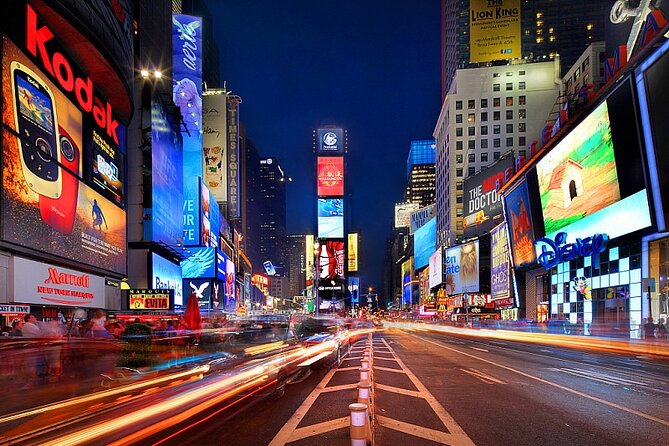
At Times Square, the tour makes a simple argument: visibility equals power. It’s also the kind of stop where you don’t need a long explanation—you can feel the shift from the quiet density of Wall Street to the loud, media-centered nerve center of modern NYC.
Nasdaq MarketSite
Finally, near the tech-and-trading future, the tour reaches Nasdaq MarketSite. It’s positioned as a high-tech trading hub, reflecting how technology now drives markets and media. This stop gives your “fortune story” a modern ending.
Optional Add-Ons: One World Observatory, Liberty Cruise, and RiseNY
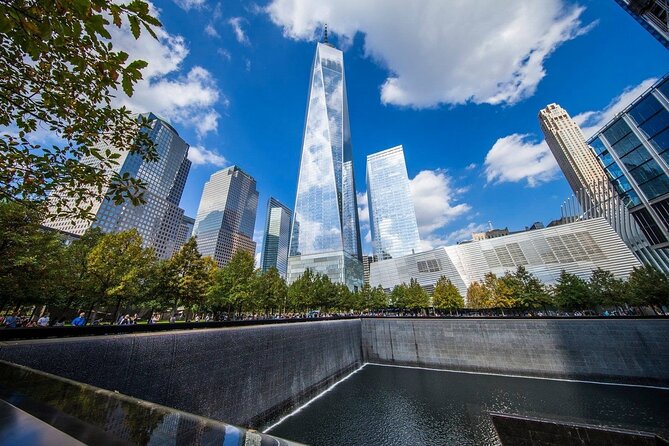
The base tour already covers a lot of ground. The optional add-ons are where you can personalize the meaning of the day—especially if you want views or a more immersive story.
One World Trade Center Observatory (Optional)
The One World Observatory add-on lasts about 1 hour 10 minutes and is described as offering sweeping, unobstructed views. Since the tour emphasizes New York’s resilience and rebuilding, this is the kind of stop that works best when you want perspective—not just buildings close up.
Liberty Cruise (Optional)
The Liberty Cruise option is about 1 hour and gives you a harbor ride past Statue of Liberty and Ellis Island, with narration tied to immigration, trade, and maritime power. If you’re tired of standing in crowds on land, this is the easiest way to change your pace while still staying on theme.
RiseNY (Optional)
RiseNY is described as immersive and multi-sensory, with museum-style galleries, film, and a ride over the city. Expect a more engineered experience compared with the street stops. If you like learning through audio-visual storytelling, it can be a strong complement.
Practical tip: these add-ons are optional admissions, and your total day cost depends on how many you select. The reviews show that people sometimes feel the day got more expensive once optional tickets get added, so decide early what you truly want versus what sounds nice in the moment.
Tickets, Cash, and How to Avoid Fee Confusion
Here’s the part that can make the difference between a smooth day and a stressful one.
- The tour includes certain admission tickets at specific stops (for example, Canyon of Heroes, Trinity Church, Bank of New York, Federal Hall, NYSE, Trump Tower area, Charging Bull, and others).
- Some stops are listed as free or with admission not required.
- If you select the ticket option for optional attractions (One World Observatory, Liberty Cruise, RiseNY), those admissions are included as part of that choice.
Still, the tour notes that cash is required for certain attractions, shops, and tickets. Bring enough for small purchases and any ticket situations that need on-the-spot payment.
Also be aware of a simple rule: third-party city passes aren’t accepted, and admission tickets must be purchased during booking or from your guide on the day of the tour. If you’re the type who likes buying attraction tickets yourself ahead of time, this tour may feel limiting.
One more practical note based on real-world issues: there can be mistakes about charges when optional items are added. I’d treat every added charge like a contract. Ask what it covers, how much it is, and whether it’s voluntary before you pay.
What It’s Like in Practice: A Realistic Expectation Set
Because so many stops are around 6 minutes, this tour works like a guided route through landmarks rather than a slow museum day. You’ll get:
- quick orientation at each site
- story-driven context
- time to take photos and move on
What you probably won’t get is long free wandering. If you want deep time inside buildings, you may prefer combining this tour with one or two self-guided follow-ups afterward.
Group experience also matters. The tour can run as a full coach. That means:
- expect a bit of waiting at stops
- listen closely at pickup and meeting points
- keep your day flexible if your guide adjusts timing
On language specifically: the tour is offered in English, but one caution is that English fluency can depend on the assigned guide. If language clarity is essential for you, ask your booking confirmation what languages will be used for your guide, or plan to rely on the written stop names and photos if needed.
Who This Tour Suits Best (and Who Should Think Twice)
This is a strong match if you:
- like guided city storytelling focused on money and power
- enjoy architecture and civic history but don’t want to plan dozens of stops on your own
- want a day that covers both Lower Manhattan and Midtown efficiently
- appreciate the option to add a view or a cruise without booking separate tours
It’s less ideal if you:
- want long, unhurried time in each building
- hate optional add-ons that increase the day’s total cost
- strongly prefer hotel door pickup and tight control over drop-off
If your trip is short and you want maximum “NYC meaning per hour,” the Fortune Tour does that well.
Should You Book This New York City Fortune Tour?
If you’re excited by the idea of seeing NYC as a money-and-power story, I think you’ll get value—especially because the day includes both classic landmarks and modern market symbols, all tied together with guide-led explanations. The coach ride and the structured route make it easy to cover huge territory without over-planning.
But book it with eyes open. Decide in advance whether you want optional add-ons like One World Observatory, Liberty Cruise, or RiseNY. Bring cash, wear comfortable shoes, and confirm pickup and drop-off for your exact departure time.
If you want, tell me your hotel neighborhood (or the nearest subway line) and whether you’re considering One World, the cruise, or RiseNY. I can help you judge which option combinations make the most sense for your day.
FAQ
How long is the New York City Fortune Tour?
The tour is listed at about 6 hours 30 minutes, and the overall duration is noted as approximately 7 hours once you include driving and visit times.
Where are pickup locations available?
Pickup options are available in New York City, including Manhattan, Brooklyn, and Queens. You should confirm your specific pickup location details after booking.
Where will I be dropped off at the end?
In general, you’ll be dropped off at your pick-up location. There is an exception for the 07:00 departure from the 8th Ave Brooklyn TD Bank location, where pick-up is provided but drop-off is at Chinatown.
Are any admission tickets included?
Yes. Some stops list admission tickets as included, and others are free of admission. Optional attractions can add additional admission fees if you select the ticket option.
What optional attractions can I add?
The optional ticketed add-ons listed are One World Observatory, Liberty Cruise, and RiseNY. These are included only if you select the corresponding ticket option.
Do I need cash during the tour?
The tour notes that cash is required for certain attractions, shops, and tickets. It’s smart to bring enough in advance.
Is the tour offered in English and is it suitable for kids?
The tour is offered in English. Travelers under 18 must be with an adult, and children under 6 may require a booster seat by law depending on the vehicle and local requirements.
All of New York City in One Day
- New York City: Statue of Liberty & Ellis Island with Ferry★ 4.6 · 18,683 reviews
- New York City: American Museum of Natural History Ticket★ 4.5 · 15,447 reviews
- New York City: Manhattan Helicopter Tour★ 4.7 · 7,076 reviews
- Top of the Rock Observation Deck New York City Ticket★ 4.5 · 4,556 reviews
- From New York City: Washington and Philadelphia 1-Day Tour★ 4.5 · 2,877 reviews
More Tours in New York City
- Statue of Liberty and Ellis Island Tour: All Options★ 5.0 · 13,571 reviews
- New York in One Day Guided Sightseeing Tour★ 5.0 · 13,166 reviews
- Central Park Pedicab Guided Tours★ 5.0 · 7,108 reviews
- New York City: Manhattan Helicopter Tour★ 4.7 · 7,076 reviews
- Private Central Park Pedicab Tour★ 5.0 · 6,981 reviews
More Tour Reviews in New York City
- NYC: SUMMIT One Vanderbilt Tickets★ 4.7 · 51,195 reviews
- NYC: Empire State Building Tickets – Observatory & Museum★ 4.7 · 25,757 reviews
- New York City: Statue of Liberty & Ellis Island with Ferry★ 4.6 · 18,683 reviews
- New York City: American Museum of Natural History Ticket★ 4.5 · 15,447 reviews
- Statue of Liberty and Ellis Island Tour: All Options★ 5.0 · 13,571 reviews
Just in: the newest New York City reviews on our desk



1-Day Tours, compared.
 ★ 5.0New York in One Day Guided Sightseeing TourFrom $9913,166 reviews
 ★ 4.7From NYC: Guided Day Trip to Washington DC by Van or BusFrom $1043,418 reviews
 ★ 4.5From New York City: Washington and Philadelphia 1-Day TourFrom $1042,877 reviews
 ★ 4.5Washington DC Highlights, 1-Day Tour from NYCFrom $1292,607 reviews
 ★ 5.0Washington DC & Philadelphia 1-Day Guided Tour from NYCFrom $1282,109 reviews
 ★ 4.5From New York City: Niagara Falls One Day TourFrom $1801,138 reviews
 ★ 4.5Niagara Falls 1 Day Tour from NYC with Maid of the Mist Boat RideFrom $691,049 reviews
 ★ 4.5From NYC: Day Trip to Philadelphia and Amish CountryFrom $149805 reviews
Browse the lists this tour appears in