
Reviewed · CITY TOURS
New York City: Tour of the ‘Most Dangerous’ Neighborhoods
You get the real street life feel of New York’s toughest-sounding corners. This tour is built around block-by-block stories and the contrast between reputation and reality as you move from Hell’s Kitchen to Harlem and beyond, with famous landmarks sprinkled in. I especially like how the guide stories make pop-culture points (Daredevil and Kingpin, the Joker stairs) connect to the places that inspired the myths.
The biggest potential drawback is simple: you’ll be on your feet a fair amount and the route includes subway travel, so it’s not suitable for mobility impairments or wheelchair users.
Key points to know before you go
- Hell’s Kitchen to Harlem as the first act: murals, a neighborhood coffee shop, and the Apollo Theater keep the pace interesting.
- Bronx stops that feel like New York TV: Yankee Stadium and the Joker stairs give you photo-ready moments with context.
- Brooklyn grounded in two eras: Al Capone’s birthplace and Notorious B.I.G.’s early criminal career territory frame the neighborhood through names you recognize.
- A guide who can actually tell the story: strong, well-prepared narration in multiple languages, including Italian, English, and Spanish.
- You’re paying for guidance and routing: the $69 price buys a structured 4-hour tour, plus a 10% discount at PizzArte.
- Bring practical stuff: comfortable shoes, water, and your public transport ticket matter more than you’d think.
In This Review
- Tour Vibe: Tough Reputations, Real People, and Story-Based Stops
- Getting Started at Times Square: Where You Meet and How to Prepare
- Hell’s Kitchen: Daredevil and Kingpin on Actual City Blocks
- Harlem Coffee Stop and the Apollo Theater Moment
- Riding the Subway to the Bronx: Yankee Stadium and Joker Stairs
- Brooklyn Finale: Al Capone Born Here, Notorious B.I.G. Moved Through Here
- Price and Value: Is $69 a Good Deal for Four Hours?
- The Guide Factor: What “Prepared” Storytelling Looks Like
- Who This Tour Suits Best, and Who Should Rethink It
- Should You Book This Tour?
- FAQ
- Where does the tour start?
- How long is the tour?
- How much does it cost?
- What neighborhoods are included?
- What major stops do we make?
- Is food included?
- Is transportation included?
- What’s included in the tour price?
- What languages is the live guide available in?
- Is this tour suitable for wheelchair users?
Tour Vibe: Tough Reputations, Real People, and Story-Based Stops
New York can be loud in more ways than one. This tour takes that idea seriously: it uses the neighborhoods people love to label as dangerous, then treats them like lived-in communities with music, sports, murals, and film connections. You’re not just checking boxes. You’re watching how a city’s image gets built and maintained.
What makes this work (and not just sound edgy on a brochure) is the structure. You start in Hell’s Kitchen, work your way north through Harlem, then head to the Bronx, and finally roll downtown to Brooklyn. Along the way, the guide ties big pop-culture reference points to street-level landmarks you can see right there.
I also like that the tour keeps reminding you that reputation is complicated. A place can have a notorious chapter and still be full of everyday routines, creativity, and pride. That’s a useful way to experience a city you thought you already knew.
The big picture: more New York City sightseeing
- New York City: Statue of Liberty & Ellis Island with Ferry
★ 4.6 · 18,683 reviews - New York City: American Museum of Natural History Ticket
★ 4.5 · 15,447 reviews - New York City: Manhattan Helicopter Tour
★ 4.7 · 7,076 reviews - Top of the Rock Observation Deck New York City Ticket
★ 4.5 · 4,556 reviews
Getting Started at Times Square: Where You Meet and How to Prepare
You’ll meet at the Hotel Riu Plaza New York Times Square, at 305 W 46th St (46th Street and 8th Avenue). Times Square is the last place most people want to linger, so arrive a bit early, get oriented, and then let the tour pull you away from the tourist noise.
This is a 4-hour outing, and it moves between neighborhoods using public transportation. That means your biggest comfort variable is what’s on your feet. Wear comfortable shoes you can walk in for hours, not trendy sneakers you only trust for an hour.
Also bring a water bottle and your public transport ticket, since transportation costs are not included. No food or drinks are included, so plan to grab something before or after rather than counting on snacks during the tour. If you’re traveling in colder months, dress for wind off the avenues.
Hell’s Kitchen: Daredevil and Kingpin on Actual City Blocks
The tour starts in Hell’s Kitchen, a neighborhood name people toss around like it’s just crime trivia. Here, you’ll get a grounded sense of how the reputation formed, and how that reputation stuck to the blocks long after the headlines faded.
You’ll hear references to Daredevil and Kingpin, but the point isn’t superhero cosplay. It’s that pop culture often borrows from real neighborhood stories, then amplifies them. Seeing the location in person makes that connection click fast.
Hell’s Kitchen also sets the camera habit. Your guide encourages photo stops for murals as you move through the area. That matters because it turns what could be a tense, awkward walk into something visually trackable and fun, even if you’re not a hardcore street photography person.
One practical note: Hell’s Kitchen is still Manhattan, so expect normal city pace. You’ll be navigating crowds near major streets at certain points. Keep your attention on where the group is moving, especially when you’re switching from walking to subway segments.
Harlem Coffee Stop and the Apollo Theater Moment
From Hell’s Kitchen, you continue to Harlem, and the tour’s rhythm shifts from “where the reputation comes from” to “what the neighborhood gave to the world.”
Early in Harlem, you’ll stop at a local coffee shop that’s famous in the neighborhood. This is one of those small-but-smart inclusions. It’s not about buying coffee. It’s about stepping into a place that’s part of the daily map, where residents gather and regular life continues.
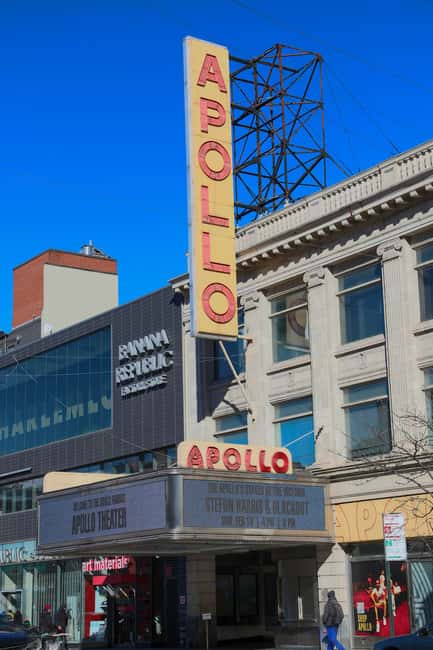
Then comes the Apollo Theater. This is where the tour earns its music credibility. You’ll stop at the theater itself, and you’ll have time to take photos and absorb the atmosphere. Even if you’re not a die-hard theater person, the Apollo has a cultural weight that’s hard to fake. Seeing it in context helps you understand why Harlem’s story isn’t only about crime headlines, but also about performance, ambition, and the way talent gets spotlighted.
Harlem is also where the tour’s narration tends to feel most personal. In the guided comments, you’ll hear storytelling shaped by Italian-American family memories and neighborhood tales passed down through generations. That kind of perspective turns the facts into something you can feel, not just memorize.



Riding the Subway to the Bronx: Yankee Stadium and Joker Stairs
Next you head to the Bronx by subway. The subway isn’t glamorous, but it’s part of the point. This tour is trying to show you how the city’s different worlds connect in real life, not just in guidebook chapters.
In the Bronx, you’ll stop at Yankee Stadium. Even if you’re not catching a game, the stadium anchors the tour with a major landmark that locals treat like a cultural gravity point. It’s a good contrast to the earlier stops because sports pride and neighborhood identity live close to each other here.
Later, you’ll check out the Joker stairs. This is a pop-culture location most people recognize from film. But what I like about including it is that it gives you a concrete visual target for your walking route. It’s a short stop that helps you keep the tour fun and varied, instead of only heavy-story stops.
The practical reality: stairs and standing for photos can add up. If you’re prone to knee or back discomfort, plan to take it slow, and use the moments when the group is stopped to rest your legs.
Brooklyn Finale: Al Capone Born Here, Notorious B.I.G. Moved Through Here
Then it’s back onto the subway and down to Brooklyn. Brooklyn is where the tour leans into naming. You’re going to see a neighborhood connected to Al Capone’s birth and also to Notorious B.I.G.’s early criminal career before he became a famous rapper.
That combination might sound like two different worlds, but it’s actually a good reminder that legends travel differently than facts. Places can be remembered through the people linked to them, even when the world later reframes those people into myths, songs, or movie scenes.
During this part of the tour, you’ll look at the blocks through that lens: how a neighborhood becomes part of someone’s story, then how that story gets repeated until it becomes public knowledge. It’s not a lesson in glamorizing crime. It’s a way to understand how street-level reality becomes pop culture reference material over time.
The tour ends in front of Spike Lee’s film production studio. That’s a fitting final note because Spike Lee is all about New York storytelling, and you’ll feel the theme clicking: reputations, narratives, and media all feed each other here.
Price and Value: Is $69 a Good Deal for Four Hours?
At $69 per person for a 4-hour guided tour, the price feels reasonable if you value routing and context over wandering. This isn’t just “walk to a few famous spots.” You’re getting a guided route that strings together multiple neighborhoods with subway travel and story-driven interpretation.
Here’s what you’re paying for, practically:
- A live guide (Italian, English, Spanish) who keeps the connections understandable.
- Stops at the Apollo Theater, Yankee Stadium, and the Joker stairs.
- A structured flow across Hell’s Kitchen, Harlem, the Bronx, and Brooklyn, which saves you from stitching it together yourself.
- A 10% discount at PizzArte at the end of the experience.
What’s not included matters for planning. Public transportation costs and food and drinks are on you. So your total trip cost depends on how you handle meals and how much subway you use outside the tour’s basic movement.
Bottom line: if you hate guesswork and want a guide to explain why these places got labeled the way they did, $69 is a fair way to buy clarity. If you prefer total freedom, you might find cheaper options, but you’ll lose the narrative glue that makes the stops click.
The Guide Factor: What “Prepared” Storytelling Looks Like
The quality of this kind of tour lives and dies on the guide, and the supplied experiences point to strong narration. The guide named Joseph is highlighted as very prepared, with storytelling rooted in what he learned from Italian-American relatives about the neighborhoods and how they felt.
That’s important because a tour like this can easily turn into name-dropping. When the guide is actually connecting details, you get something more useful: you understand not only what happened, but how people talk about it, remember it, and use it to explain the present.
You’ll also appreciate that the tour is available in Italian, English, and Spanish, which can make the experience feel less like a lecture and more like a conversation with a real person standing beside you.
Who This Tour Suits Best, and Who Should Rethink It
This tour is a good fit if you want:
- A guided way to see multiple boroughs in a few hours
- Landmarks like the Apollo Theater, Yankee Stadium, and the Joker stairs
- Street-life observations that go beyond postcards and Instagram filters
It’s also a smart option for teens and families who like stories. One highlight from the experiences shared is that the guide’s preparation and pacing held attention even on a cold day.
Who should skip it:
- If you have mobility impairments or need a wheelchair-friendly route, this one is not suitable.
- If you dislike walking and standing for photo stops, consider a more lightweight option.
Should You Book This Tour?
Yes, if you want your NYC to have edges but still make sense. This is one of those experiences where the tour doesn’t just throw out notorious names, it gives you context and a route that keeps things moving. If you like street art photos, historic cultural anchors like the Apollo, and pop-culture stops that you can see in real space, you’ll get your money’s worth.
Skip it if comfort and accessibility are top priorities for you, or if you’d rather explore with zero structure. Also factor in that you’ll need to handle subway costs and meals on your own.
If you’re looking for a guided four-hour story walk through Hell’s Kitchen, Harlem, the Bronx, and Brooklyn, this is a strong value pick.
FAQ
Where does the tour start?
You meet in front of the Hotel Riu Plaza New York Times Square at 305 W 46th St, New York, NY 10036 (46th Street and 8th Avenue).
How long is the tour?
The tour duration is 4 hours.
How much does it cost?
The price is $69 per person.
What neighborhoods are included?
The tour visits Hell’s Kitchen, Harlem, and neighborhoods in the Bronx and Brooklyn.
What major stops do we make?
You’ll stop at the Apollo Theater, Yankee Stadium, and the Joker stairs. You’ll also visit areas tied to Al Capone and Notorious B.I.G.
Is food included?
No. Food and drinks are not included.
Is transportation included?
Public transportation costs are not included, and you’ll need a public transport ticket.
What’s included in the tour price?
You get a guided tour of the neighborhoods, the Apollo Theater stop, visits related to Hell’s Kitchen and Harlem, stops at Yankee Stadium and the Joker stairs, and a 10% discount at PizzArte.
What languages is the live guide available in?
The live tour guide is available in Italian, English, and Spanish.
Is this tour suitable for wheelchair users?
No, it is not suitable for people with mobility impairments or wheelchair users.
All of New York City in One Day
- New York City: Statue of Liberty & Ellis Island with Ferry★ 4.6 · 18,683 reviews
- New York City: American Museum of Natural History Ticket★ 4.5 · 15,447 reviews
- New York City: Manhattan Helicopter Tour★ 4.7 · 7,076 reviews
- Top of the Rock Observation Deck New York City Ticket★ 4.5 · 4,556 reviews
- From New York City: Washington and Philadelphia 1-Day Tour★ 4.5 · 2,877 reviews
More Tours in New York City
- Statue of Liberty and Ellis Island Tour: All Options★ 5.0 · 13,571 reviews
- New York in One Day Guided Sightseeing Tour★ 5.0 · 13,166 reviews
- Central Park Pedicab Guided Tours★ 5.0 · 7,108 reviews
- New York City: Manhattan Helicopter Tour★ 4.7 · 7,076 reviews
- Private Central Park Pedicab Tour★ 5.0 · 6,981 reviews
More Tour Reviews in New York City
- NYC: SUMMIT One Vanderbilt Tickets★ 4.7 · 51,195 reviews
- NYC: Empire State Building Tickets – Observatory & Museum★ 4.7 · 25,757 reviews
- New York City: Statue of Liberty & Ellis Island with Ferry★ 4.6 · 18,683 reviews
- New York City: American Museum of Natural History Ticket★ 4.5 · 15,447 reviews
- Statue of Liberty and Ellis Island Tour: All Options★ 5.0 · 13,571 reviews
Just in: the newest New York City reviews on our desk





City Tours, compared.
 ★ 4.6Statue of Liberty & Ellis Island with FerryFrom $1918,683 reviews
 ★ 4.5American Museum of Natural History TicketFrom $3715,447 reviews
 ★ 4.7Manhattan Helicopter TourFrom $2997,076 reviews
 ★ 4.5Top of the Rock Observation Deck New York City TicketFrom $624,556 reviews
 ★ 4.5From New York City: Washington and Philadelphia 1-Day TourFrom $1042,877 reviews
 ★ 4.5Circle Line: 2hr – New York City Harbor Lights CruiseFrom $452,859 reviews
 ★ 4.5Full-Day Washington DC City Highlights TourFrom $1492,791 reviews
 ★ 4.5New York City One World Observatory Admission TicketFrom $302,636 reviews