
Reviewed · HIGH LINE & CHELSEA TOURS
New York City’s High Line: A Self-Guided Audio Tour
High above the street, the city tells better stories. This self-guided High Line audio tour turns a scenic walk into a guided narrative, from old rail-era danger to new design ideas, then down to the Hudson Yards buzz. It’s priced at $14.99 and designed to run about 1 hour 30 minutes, with the app leading you stop to stop.
Two things I really like: the commentary is built around storytelling, not a dry list of facts, and the app is simple to get going with offline audio and maps. One thing to consider is that the audio is timed to your walking pace, so if your speed varies, you may notice some spots feel slightly out of sync.
In This Review
- Key highlights worth knowing
- High Line from Gansevoort to Hudson Yards, one guided walk
- Price and what you get for $14.99
- Getting started at Friends of The High Line without fuss
- Stop-to-stop flow: how the story moves across the park
- The Whitney Museum stop: a built-in break in the middle of the walk
- Pier 57: where the High Line connects to the waterfront mood
- Chelsea Market: Food Network energy on a walking timeline
- General Theological Seminary and the turn toward Hudson Yards
- Hudson Yards: from design dreams to a destination crowd
- The Vessel finale: an Instagram icon with a heavy real-world note
- When to go and how to pace it
- Who this self-guided High Line tour suits best
- Should you book this High Line audio tour?
- FAQ
- How much does the High Line self-guided audio tour cost?
- How long does the tour take?
- What language is the tour available in?
- What’s included with the tour?
- What do I need to bring?
- Where do I start, and where do I finish?
- Can service animals join the tour?
- Is there a cancellation option if plans change?
- Is this a private tour?
Key highlights worth knowing

- Story-first narration that helps the High Line feel like a timeline, not just a path
- Offline-ready audio and maps through the VoiceMap app
- Takes you across the full emotional arc from Death Avenue to Vessel
- Great way to connect landmarks like Chelsea Market and Hudson Yards without rushing
- A clear end point back at the start, so you can plan your day easily
Along the rails: more High Line and Chelsea
- High Line and Chelsea Small Group Tour
★ 5.0 · 1,238 reviews - Chelsea Market and High Line Guided Food Tour
★ 5.0 · 827 reviews - Manhattan Adventure Sightseeing Boat Tour – from Chelsea Piers
★ 5.0 · 688 reviews - High Line Park and Greenwich Village Food Tour
★ 5.0 · 398 reviews
High Line from Gansevoort to Hudson Yards, one guided walk
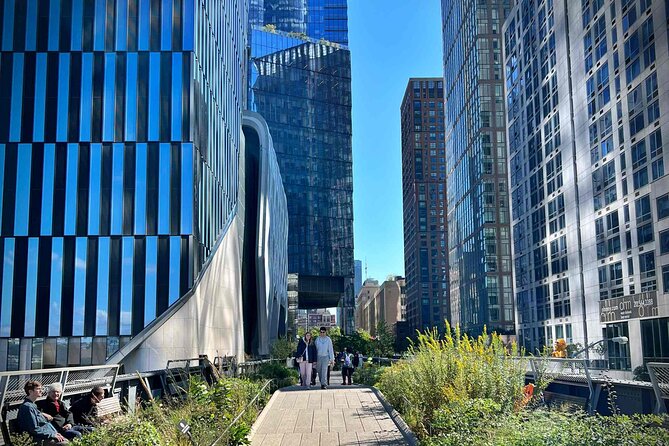
The best thing about doing this as a self-guided tour is control. You can keep your pace, pause for photos, and take side glances at the people and city life below—without a group waiting on you. The audio carries you along the High Line itself, starting at Gansevoort Street in the Meatpacking District and pushing all the way toward Hudson Yards.
You’ll also get the High Line as a kind of NYC mash-up: industrial past, art-minded reinvention, and today’s polished skyline theater. That mix is exactly why the narration works. Instead of treating the park like a single attraction, the tour frames it as a series of moments—each one explaining how we got from what was there to what you’re walking through now.
Timing-wise, plan on about 1.5 hours in motion. If you stop a lot for views, you can stretch it, but the route is still straightforward. And because you finish back at the start point, you don’t have to solve the ending part of your day.
Price and what you get for $14.99
At $14.99 per person, this is one of those deals that feels fair because it’s not just “audio for an hour.” What you’re really paying for is a guided experience that’s set up to work offline, on your schedule.
Here’s what’s included:
- Lifetime access to the tour in English
- VoiceMap application
- Offline access to audio, maps, and geodata
What’s not included is also important to know:
- You’ll need your smartphone and headphones
- Any stops along the way that have admission (if you choose to go inside) are not included
- Transportation and food/drink are on you
So the value math is pretty simple: if you like walking, prefer direction without dealing with a live group, and want a story that guides your attention to what you’re actually seeing, the price makes sense. If you hate using apps while traveling, or you don’t want to wear headphones on a long walk, this is less likely to feel worth it.
Getting started at Friends of The High Line without fuss
The start point is Friends of The High Line, 820 Washington St, New York, NY 10014. Your tour ends back at the meeting point, which I like because it removes one big stress: you’re not trying to guess how to get back after you finish.
In practice, the experience is built for a phone-in-your-hand workflow. You download, launch the VoiceMap app, and start the audio. One of the strongest positives is that people found the app easy to download and start, and the tour is designed so you’re not stuck figuring things out mid-walk.
The main practical warning is about walking-speed syncing. The audio can be tied to how fast you move, so if you’re stopping for every photo, detouring through crowds, or changing your pace a lot, you might feel a small timing mismatch in the commentary. It’s not a dealbreaker, but it’s the one place where the experience can feel less smooth.
My advice: if you want the best sync, keep a steady walking rhythm and treat short photo stops as breaks rather than constant micro-stops.
More days made simple with a guide




Stop-to-stop flow: how the story moves across the park
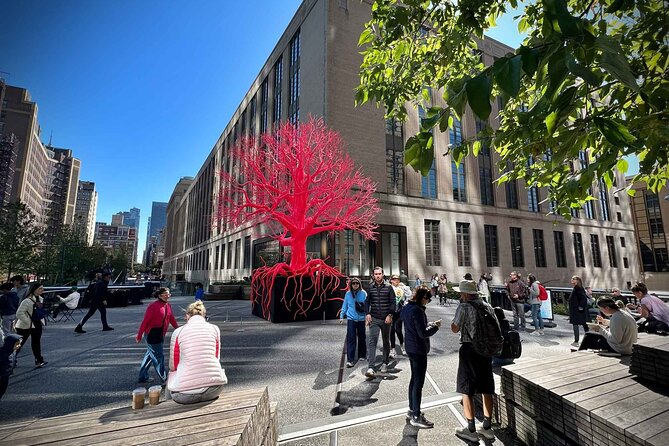
This walk is more than scenery. The narration is structured like chapters, and each chapter shifts your perspective on what you’re seeing.
The tour starts with a grim idea: the late-1800s street-level rail era, when the route was known as Death Avenue after so many pedestrians were killed. You’re not just hearing a spooky label—you’re being coached to understand how dangerous infrastructure shaped daily life, and how that background matters when you later watch people strolling where trains once ran.
Then the tour turns toward possibility. It brings up the fact that there were over 700 ideas submitted for repurposing the High Line—everything from a mile-long swimming pool to a rollercoaster threading between buildings. That part matters because it reframes the High Line as a design debate, not a guaranteed success. You get to see the park as the outcome of many visions, not a single master plan you’re simply inheriting.
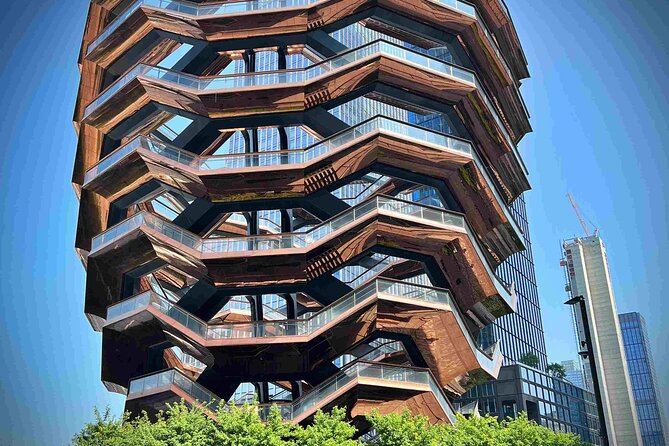
And then, as you approach the far end, the tone shifts again. The narration ends at Vessel, a sixteen-story structure often called the stairway to nowhere. It was designed to be a major visual icon for Instagram, and the tour also addresses its tragic association with suicides. That combination—playground-like design and real-world danger—is a lot to hold at once, and it changes how you move around the structure. I’d go into that section with a calm mindset and the ability to step away if the atmosphere feels heavy.
The Whitney Museum stop: a built-in break in the middle of the walk
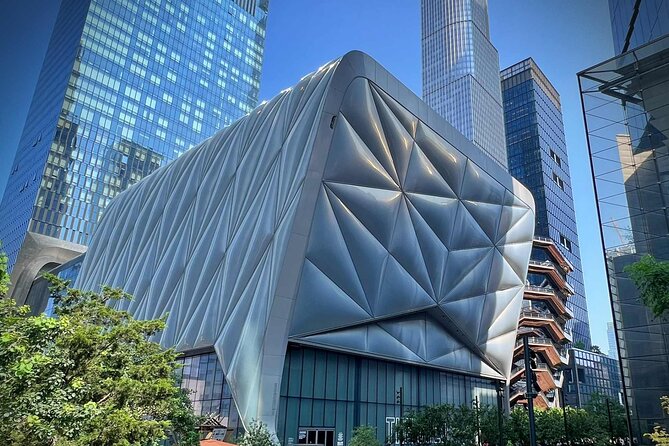
One of your stops along the route is the Whitney Museum of American Art. Even if you don’t enter, the audio cue here works like a natural reset. Museums tend to be landmarks people recognize instantly, so the narration moment helps you re-orient your attention: you’re not just walking; you’re transitioning to a new section of the High Line’s overall feel.
Practically, this is a good mental checkpoint. If you’ve been listening steadily from the start, the museum stop gives you a chance to pause, catch your breath, and decide how you want the rest of the walk to go—more photo stops, less photo stops, or a steady walk to protect the audio timing.
Also, since this is a self-guided format, you can choose to linger at the museum view longer than the audio expects. Just know that can affect sync if you’re trying to follow the narrative perfectly in real time.
Pier 57: where the High Line connects to the waterfront mood
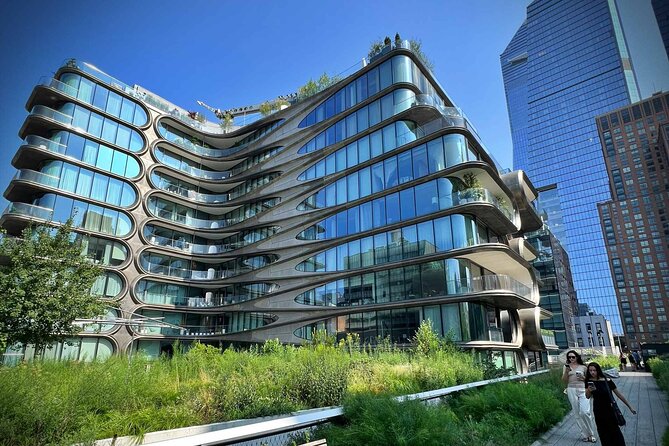
Another named stop is Pier 57. Even though the High Line is elevated, this kind of waterfront-adjacent pause changes the air of your walk. It’s a spot that often feels like the city is opening up again, and the narration helps you keep that sense of progression from old rail logic to modern public space.
This is also a helpful place to pay attention to what you hear beyond your headphones. If you keep your volume at a reasonable level, you’ll still catch street energy and nearby movement. The audio tour works well when it’s guiding your eyes, not shutting off the city.
If you’re the type who likes to take in photos without turning your whole body into a camera tripod, Pier 57 can be your “breathe and regroup” stop.
Chelsea Market: Food Network energy on a walking timeline
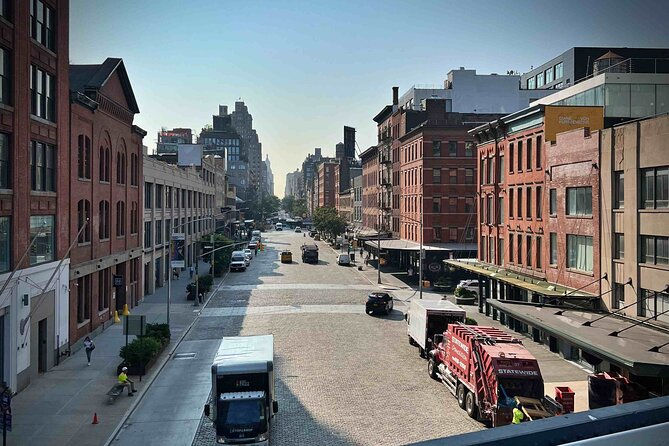
The tour specifically calls out Chelsea Market, including a detail that it’s where the Food Network films hit shows. That’s fun because it adds a pop-culture lens to a place you might otherwise treat like a backdrop.
But the bigger value is how Chelsea Market helps balance the mood of the High Line story. Early chapters are about infrastructure and repurposing ideas. Later chapters push into spectacle and design icons. Chelsea Market sits in between as a reminder that the High Line isn’t only art and architecture—it’s also everyday city life, food, and media.
As you’re near Chelsea Market, I’d recommend you do two things:
- Take a minute to look down at the street-level movement, then look ahead along the park.
- Let the narration connect the dots between where the High Line started and how it’s used now.
If you’re hungry, you might feel the urge to jump down for food. Since food costs aren’t included, it’s up to you. The audio tour doesn’t stop you—but it does mean you should expect your timing to shift if you break away.
General Theological Seminary and the turn toward Hudson Yards

Next up is General Theological Seminary. This stop matters mostly because it marks a shift in the urban rhythm of the walk. By the time you reach this area, you’re moving through a part of NYC where the city feels layered—historic institutions in the mix with newer development.
That makes the audio narration more interesting. When you hear the earlier chapters about old rail danger and the huge number of repurposing ideas, the later sections feel less like random sightseeing and more like a story about transformation.
It also helps you manage expectations about crowds. Hudson Yards and the end points can be busier, so using this stop as a calm “mid-course” moment is smart. Pause here, then decide how much energy you want to spend on the final stretch.
Hudson Yards: from design dreams to a destination crowd
The route continues to Hudson Yards before finishing at Vessel. Hudson Yards is the place where the High Line’s reinvention story lands in a big, modern way. Even without stepping off the path, the area feels like a different chapter of NYC.
For me, this is where the narration’s earlier points click. The idea that there were hundreds of ways people wanted to repurpose the High Line isn’t abstract anymore. You’re seeing what actually got built—and what kind of identity that choice created. The audio helps you notice the contrast between earlier themes and the final section’s design-centric, destination energy.
If you’re worried about timing, this is also where I’d stay a bit more consistent with your walking pace. The end of the tour has the most attention-grabbing structure, so it’s worth arriving without sprinting.
The Vessel finale: an Instagram icon with a heavy real-world note
Your last major destination is Vessel, a sixteen-story structure often described as the stairway to nowhere. The tour frames it as an Instagram magnet—something designed for views, angles, and that unmistakable photo geometry.
Then it adds a difficult layer: it became a tragic suicide magnet, and the narration doesn’t shy away from that context. That matters for how you experience the space. If you’re someone who gets unsettled easily in crowded places, I’d treat this section as one where you can take a wide stance, enjoy the views without lingering on the busiest parts, and step back when you need space.
Practical tip: if you’re going for photos, aim for a spot where you’re not blocking others. Vessel attracts people who are there for pictures, and the audio moment is also a “listen and reflect” section. You’ll get more out of it if you can balance both.
When the audio tour ends, you return to the meeting point. So you’re not left wondering where the experience finishes or how to manage the next part of your day.
When to go and how to pace it
Your best timing depends on how you like crowds and photos. The tour itself runs Monday through Sunday, listed as open all day in the provided details, so you can pick a time that fits your schedule.
If you want smoother audio syncing and a calmer walk, go when you can keep a steady pace. If you go during peak hours, expect more stop-and-go behavior around the busiest sections, which can nudge the audio timing.
What I like about this tour format is that it tolerates real life. You don’t need to be perfect. But you’ll enjoy it more if you treat it like a single continuous walk rather than ten separate errands.
Who this self-guided High Line tour suits best
This is ideal if:
- You want a story-driven walk through NYC rather than a plain route
- You like having offline audio and maps so you can roam without data stress
- You’re comfortable using a smartphone while walking
- You want to cover both ends of the High Line, including Hudson Yards and Vessel, without buying separate tickets
It might be less ideal if:
- You strongly prefer a live guide and Q&A
- You hate audio syncing with your movement
- You don’t want to use headphones in a public, busy park
If you’re visiting NYC for the first time, it’s a strong way to understand the High Line as a whole—past to present—because you’re not just looking at the park, you’re hearing why it exists.
Should you book this High Line audio tour?
I’d book it if you want a guided-feeling experience that’s flexible, offline-ready, and built around storytelling. The VoiceMap format is a big part of the win here, especially with the easy start and the way the narration keeps moving instead of turning into a lecture.
I’d hesitate only if you know you’ll constantly stop, wander off the path, or your phone/audio setup is usually a hassle. The one repeated friction point is audio syncing with walking speed, and it matters most if you’re the type to pause constantly.
If you want a practical way to experience the High Line end-to-end and actually understand what you’re looking at while you walk, this is a solid pick.
FAQ
How much does the High Line self-guided audio tour cost?
It costs $14.99 per person.
How long does the tour take?
The duration is approximately 1 hour 30 minutes.
What language is the tour available in?
The tour is offered in English.
What’s included with the tour?
You get lifetime access to the tour in English, the VoiceMap application, and offline access to audio, maps, and geodata.
What do I need to bring?
You need your own smartphone and headphones.
Where do I start, and where do I finish?
You start at Friends of The High Line, 820 Washington St, New York, NY 10014, and the tour ends back at the meeting point.
Can service animals join the tour?
Yes, service animals are allowed.
Is there a cancellation option if plans change?
No. The experience is non-refundable and cannot be changed for any reason.
Is this a private tour?
Yes. Only your group will participate.
More Tours in New York City
- Statue of Liberty and Ellis Island Tour: All Options★ 5.0 · 13,571 reviews
- New York in One Day Guided Sightseeing Tour★ 5.0 · 13,166 reviews
- Central Park Pedicab Guided Tours★ 5.0 · 7,108 reviews
- New York City: Manhattan Helicopter Tour★ 4.7 · 7,076 reviews
- Private Central Park Pedicab Tour★ 5.0 · 6,981 reviews
More Tour Reviews in New York City
- NYC: SUMMIT One Vanderbilt Tickets★ 4.7 · 51,195 reviews
- NYC: Empire State Building Tickets – Observatory & Museum★ 4.7 · 25,757 reviews
- New York City: Statue of Liberty & Ellis Island with Ferry★ 4.6 · 18,683 reviews
- New York City: American Museum of Natural History Ticket★ 4.5 · 15,447 reviews
- Statue of Liberty and Ellis Island Tour: All Options★ 5.0 · 13,571 reviews
The High Line and Chelsea, Continued
- High Line and Chelsea Small Group Tour★ 5.0 · 1,238 reviews
- Chelsea Market and High Line Guided Food Tour★ 5.0 · 827 reviews
- Manhattan Adventure Sightseeing Boat Tour – from Chelsea Piers★ 5.0 · 688 reviews
- High Line Park and Greenwich Village Food Tour★ 5.0 · 398 reviews
- NYC: High Line, Chelsea, & Meatpacking District Walking Tour★ 4.9 · 195 reviews
Just in: the newest New York City reviews on our desk





High Line & Chelsea Tours, compared.
 ★ 5.0High Line and Chelsea Small Group TourFrom $391,238 reviews
 ★ 5.0Chelsea Market and High Line Guided Food TourFrom $88827 reviews
 ★ 5.0Manhattan Adventure Sightseeing Boat Tour – from Chelsea PiersFrom $99688 reviews
 ★ 5.0High Line Park and Greenwich Village Food TourFrom $159398 reviews
 ★ 4.9High Line, Chelsea, & Meatpacking District Walking TourFrom $39195 reviews
 ★ 5.0Statue of Liberty Speedboat Tour – from Chelsea PiersFrom $60182 reviews
 ★ 5.0Foods of NY Tours Chelsea Market Food Tour & High Line ParkFrom $99141 reviews
 ★ 4.2Hudson Yards & High Line Tour with Optional Edge TicketFrom $49125 reviews
Browse the lists this tour appears in