
Reviewed · NYC BROADWAY SHOWS
NYC Broadway Tour: Backstage Stories & Theater Secrets
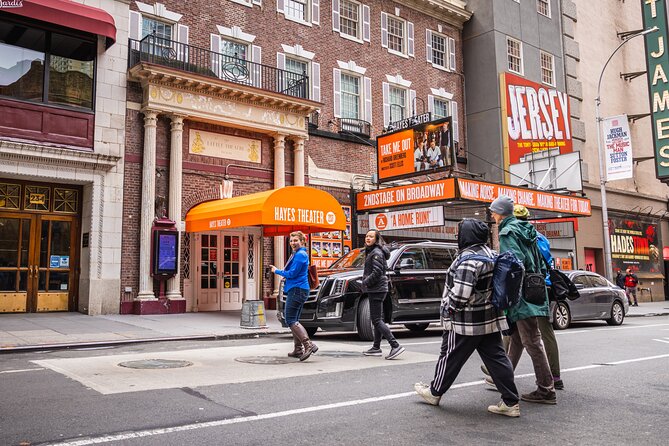
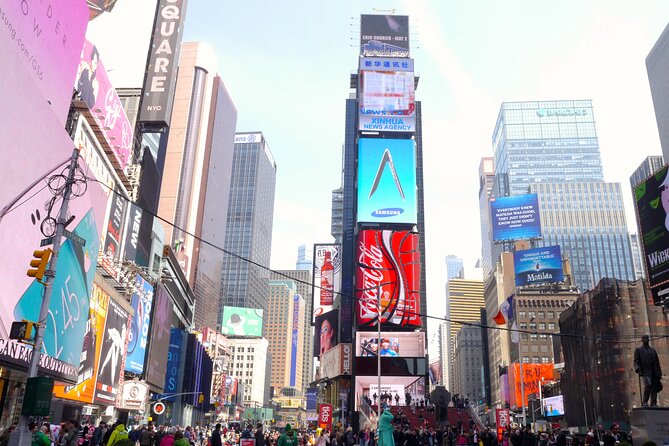
Broadway starts before the curtain rises. This 2-hour stroll through Times Square and the theater district is all about the stories behind the lights, from Longacre Square origins to what really happens in rehearsals, with personal attention in a group capped at 12. I like the way the guide ties what you see on the street to how shows get built, not just the headlines.
My favorite part is the visit to a working rehearsal studio, where you may get to watch live classes or rehearsals when they’re happening. One possible drawback: it’s not a guaranteed behind-stage peek at an active show, so if your fantasy is stepping into the wings during a current performance, plan to adjust your expectations to observation-first.
In This Review
- Key Takeaways Before You Go
- Starting at Winter Garden Theatre: get your bearings fast
- Times Square to Duffy Square: the history you can feel
- Broadway walk: seeing marquees like a pro
- A quick reality check on your route
- Richard Rodgers Theatre and Hamilton: where modern Broadway landed
- Why this stop is so good for first-timers
- Majestic Theatre and the big-stage spotlight
- The theaters and companies behind the shows: writers, plays, and tech
- Hell’s Kitchen rehearsal studio: what you really get to see
- A balanced expectation
- Off-Broadway neighborhood time: a change of pace from pure marquee-gazing
- Who this tour fits best
- How long, what to wear, and how to make it smooth
- Value check: is $50 a good deal for Broadway in 2 hours?
- Should you book this Broadway tour?
Key Takeaways Before You Go
- Small group, big attention: You get room for questions, not just marching orders.
- Times Square without the maze: You’ll orient fast and still learn why this area changed so much.
- TKTS at Duffy Square: A quick stop that helps you understand how the public gets last-minute tickets.
- Landmark theater stops: You’ll pass major marquees, including the Richard Rodgers Theatre for Hamilton.
- Working rehearsal studio visit: When available, you can watch classes or rehearsals in session.
- Hell’s Kitchen theater neighborhood: You’ll get out of the pure-tourist zone and see where theater people actually work.
Curtain up: more Broadway seats
- NYC: Aladdin the Musical on Broadway
★ 4.8 · 1,800 reviews - NYC: The Lion King on Broadway
1,609 reviews - NYC: MJ the Musical on Broadway
1,510 reviews - NYC: Moulin Rouge! the Musical on Broadway
1,329 reviews
Starting at Winter Garden Theatre: get your bearings fast
Your tour begins outside the Winter Garden Theatre at 1634 Broadway, right under its iconic marquee. From the first minutes, the guide helps you connect the geography: where you are, why this block matters, and how the theater district evolved.
This start point is useful because it frames everything that follows. You’re not just walking through photo spots; you’re learning how Broadway became Broadway, starting from a rougher, older Longacre Square that turned into a 20th-century entertainment magnet.
Times Square to Duffy Square: the history you can feel
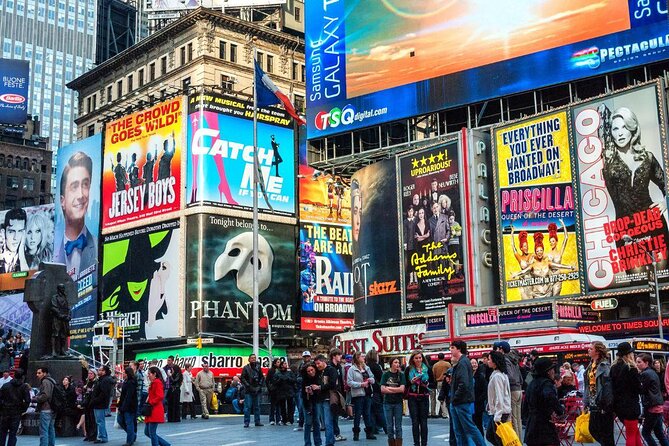
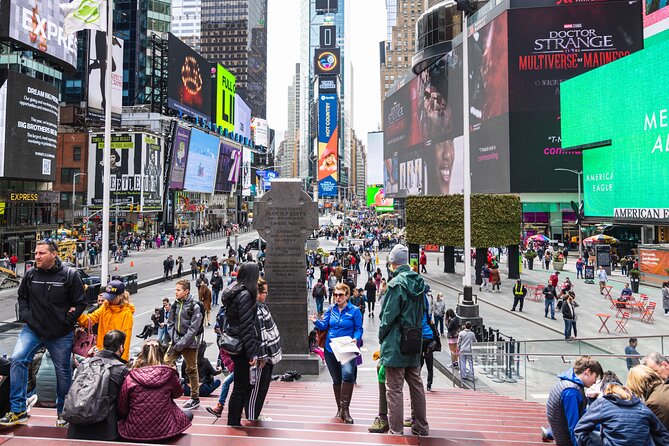
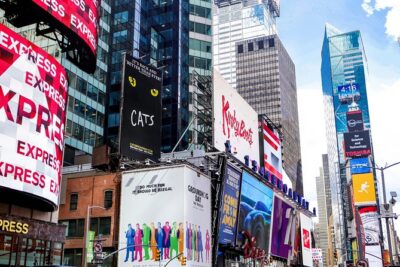
You’ll head into Times Square and the guide will put it in context, including the shift from its earlier identity as Longacre Square to the glittering theater heart people know today. That context matters, because it changes how you experience the noise. Instead of feeling like you’re stuck in chaos, you start noticing details with purpose—marquees, theater entrances, and the way crowds move around show schedules.
Then comes Duffy Square, just a short step away, where the TKTS booth sits. The stop is brief but practical: it’s there to show you how the public ticket lottery and discounted rush-ticket system feeds the daily Broadway rhythm. If you plan to catch a show later that same week, you’ll leave with a better sense of when and how people score those deals.
Broadway walk: seeing marquees like a pro
The core of the experience is a guided walk down Broadway through the theater district, with background on the venues you pass and the productions that made them famous. You’ll get the big-picture “what’s here and why it matters,” but also the kind of nuts-and-bolts trivia that makes you sound like you’ve lived here longer than 48 hours.
What I love about this section is how it turns a common stroll into a real learning loop. You glance up at a marquee, the guide tells you what it’s tied to, and you suddenly remember the show you’ve heard of—or realize you’ve never heard of a production that now deserves a spot on your list.



A quick reality check on your route
You’ll do moderate walking, and it’s a group experience, not a sit-down museum tour. Wear comfortable shoes. If your mobility is limited, contact in advance so the operator can advise what’s realistic for your pace.
Richard Rodgers Theatre and Hamilton: where modern Broadway landed
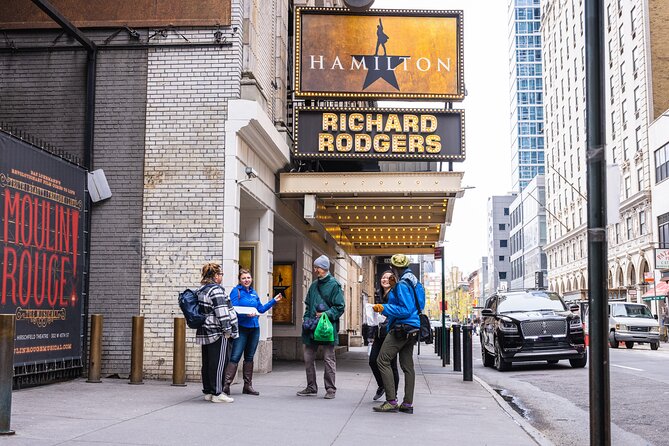
One of the most memorable stops is the Richard Rodgers Theatre, named for the composer behind classics like Oklahoma!, The Sound of Music, The King and I, and South Pacific. The guide makes that connection clear: this is not just a building nameplate, it’s a lineage of musical theater craftsmanship.
Since 2015, this venue has been the home of Lin-Manuel Miranda’s critically acclaimed Hamilton. Even if you’ve already seen the show, this stop gives you a “where it lives” moment—standing near the marquee turns the performance into a physical place you can point to later.
Why this stop is so good for first-timers
If you’re new to Broadway, Hamilton can be your entry point, but you’ll also learn how the theater district supports long runs and big productions. If you’re a repeat Broadway fan, you’ll still get value because the guide frames the theater as part of an ongoing system, not a one-off blockbuster.
Majestic Theatre and the big-stage spotlight
As you move along, you’ll also stroll past the Majestic Theatre, one of the larger names on the strip. The guide shares productions tied to its identity, including The Music Man, Camelot, and The Wiz.
This stop works especially well if you like comparing eras. Broadway isn’t one uniform style—it’s layers. Seeing a theater associated with musicals from different decades helps you notice how lighting, architecture, and storytelling changed over time, even when the audience expectations stayed intense.
The theaters and companies behind the shows: writers, plays, and tech
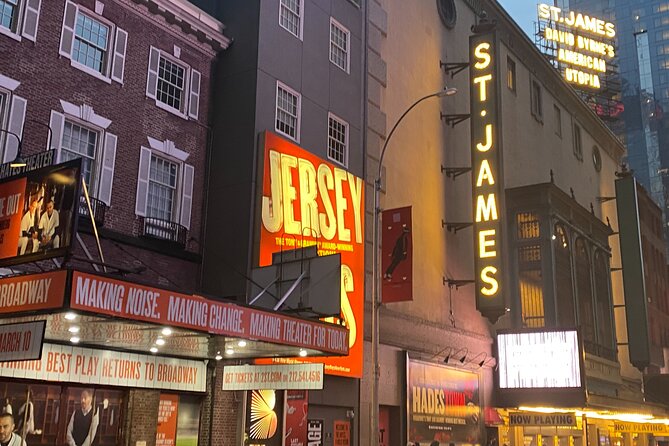
Midway through the walk, you’ll hear about other theater spaces tied to what happens off the main spotlight: development, playmaking, and production support. The tour highlights how Broadway is powered by writer-focused companies and venues that help characters make it to the stage.
You’ll learn about a theater company known for developing writer-focused plays and productions, and you’ll connect that to the Tony Award-winning musical Dear Evan Hansen. You’ll also hear how other spaces act like hubs for up-and-coming theater companies—places that can provide rehearsal space and tech support so work can grow beyond a first draft.
Finally, you’ll pass a venue known for staging more plays than musicals and for presenting titles such as Pulitzer Prize winners Driving Miss Daisy and The Flick. Even without a deep dive into every detail, the takeaway is clear: Broadway is not just big musicals. It’s a production pipeline for plays, new voices, and risky work that may or may not become the next headline.
Hell’s Kitchen rehearsal studio: what you really get to see
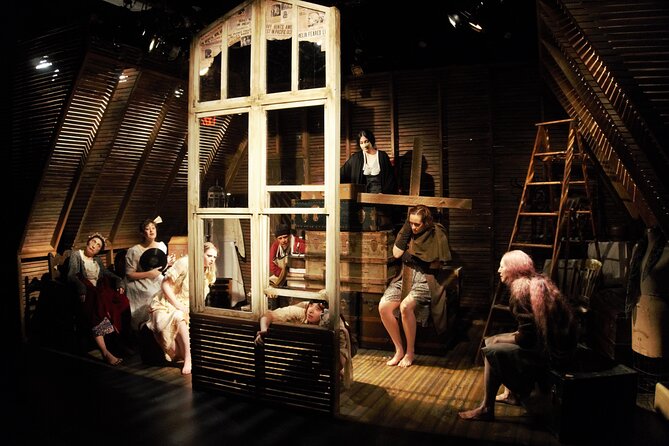
The tour’s “backstage energy” moment is the stop in Hell’s Kitchen at a working rehearsal studio. This part is designed to show you the performers, choreographers, and crew who bring Broadway to life—often unseen from the audience side.
When you arrive, the big question is timing: rehearsal schedules can vary. What you can expect, when available, is the chance to observe live classes or rehearsals. One of the best parts of this stop is that it tends to feel less like a scripted tour and more like you’re sharing a workspace with theater people.
This is also where the guide’s own theater background can shine. For example, I’ve seen guides with teaching and performing experience—like Jessie Fahay, who brings a teacher-style clarity—to help you understand what you’re watching, even if you’re not fluent in theater jargon.
A balanced expectation
Even with the rehearsal studio visit, this tour is not a full behind-the-scenes pass into an active stage during a show. If that’s the only version of backstage you’re excited about, you may want to treat this stop as observation-focused: you watch rehearsals happen, and you learn how the machine works.
Off-Broadway neighborhood time: a change of pace from pure marquee-gazing
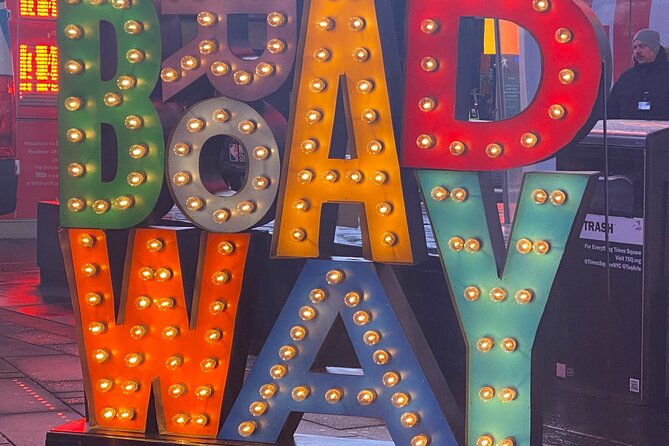
Beyond the headline theaters, the tour also points you toward Off-Broadway venues in the Hell’s Kitchen neighborhood. That shift is valuable because it shows you another side of New York theater: smaller stages, different production rhythms, and often a closer relationship between audiences and creators.
It’s also a nice breather from Times Square’s constant motion. You still get “Broadway buzz,” but it feels more grounded—like you’re standing near work, not just spectacle.
Who this tour fits best
This tour is a strong match if you:
- Love Broadway and want a guided way to learn what you’re seeing
- Want theater history without sitting in a classroom
- Prefer a small-group experience with time for questions
- Are bringing a teen or kid who wants backstage-adjacent stories
It also works well before you buy tickets. You’ll have theater names and production concepts in your head, so your show day feels more meaningful. One parent-style tip from the guides’ approach: ask questions about how rehearsals and staging translate into what you see later from your seat.
How long, what to wear, and how to make it smooth
The tour runs about 2 hours and includes moderate walking. You’ll want comfortable shoes for uneven sidewalks, and it helps to dress in weather-appropriate layers since you’ll spend real time outdoors.
It runs year-round and goes rain or shine unless conditions are unsafe. That means you should plan for umbrellas or light rain gear. The upside: theater districts don’t shut down their stories just because the sky does.
Value check: is $50 a good deal for Broadway in 2 hours?
At $50 per person, you’re paying for more than a generic highlight walk. You’re getting:
- A guided walking route through Times Square and the Broadway theater district
- Theater history and insider stories tied to specific venues
- A working rehearsal studio visit when schedules allow
- A chance to see Off-Broadway spaces in Hell’s Kitchen
For theater fans, the value is mostly in the guide’s ability to connect place to process. Guides like Lee, Lucy, Mickey, Hannah, Makayla, and others (each with their own theater angles) tend to turn “I saw buildings” into “I understand how shows get made.” And because the group is capped at 12, it often feels less like a lecture and more like a conversation you can steer.
What you should budget for: food and drinks are not included. Plan a snack before or after so you don’t end up making dinner decisions while you’re tired.
Should you book this Broadway tour?
I’d book it if you want the best possible mix of big-name landmarks and real theater-work context—especially if you’re going to see a show soon. The Times Square orientation and TKTS stop help you navigate your Broadway week with less guesswork, and the rehearsal studio visit is a true change from the usual “just take photos” tours.
I would hesitate only if your idea of backstage is strict and literal—like guaranteed entry into an active performance space. This tour focuses on access to working rehearsal settings when available and on the stories that explain how everything comes together.
If you want a smarter Broadway day—one where you learn while you walk—this is a solid choice.
More Tours in New York City
- Statue of Liberty and Ellis Island Tour: All Options★ 5.0 · 13,571 reviews
- New York in One Day Guided Sightseeing Tour★ 5.0 · 13,166 reviews
- Central Park Pedicab Guided Tours★ 5.0 · 7,108 reviews
- New York City: Manhattan Helicopter Tour★ 4.7 · 7,076 reviews
- Private Central Park Pedicab Tour★ 5.0 · 6,981 reviews
More Tour Reviews in New York City
- NYC: SUMMIT One Vanderbilt Tickets★ 4.7 · 51,195 reviews
- NYC: Empire State Building Tickets – Observatory & Museum★ 4.7 · 25,757 reviews
- New York City: Statue of Liberty & Ellis Island with Ferry★ 4.6 · 18,683 reviews
- New York City: American Museum of Natural History Ticket★ 4.5 · 15,447 reviews
- Statue of Liberty and Ellis Island Tour: All Options★ 5.0 · 13,571 reviews
More Nights on Broadway
- NYC: Aladdin the Musical on Broadway★ 4.8 · 1,800 reviews
- NYC: The Lion King on Broadway1,609 reviews
- NYC: MJ the Musical on Broadway1,510 reviews
- NYC: Moulin Rouge! the Musical on Broadway1,329 reviews
- NYC: Harry Potter and the Cursed Child on Broadway700 reviews
Just in: the newest New York City reviews on our desk



NYC Broadway Shows, compared.
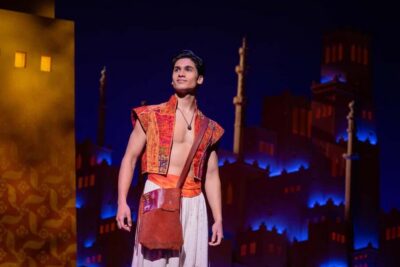 ★ 4.8Aladdin the Musical on BroadwayFrom $831,800 reviews
 The Lion King on Broadway1,609 reviews
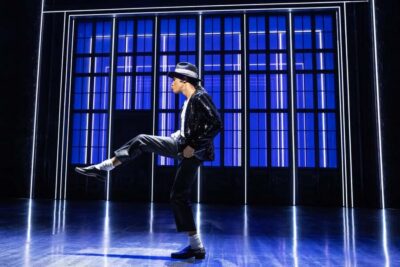 MJ the Musical on Broadway1,510 reviews
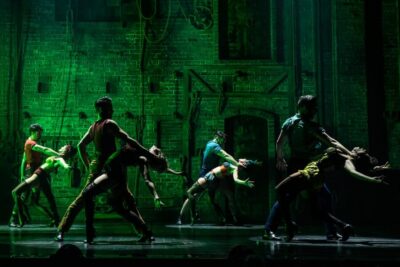 Moulin Rouge! the Musical on Broadway1,329 reviews
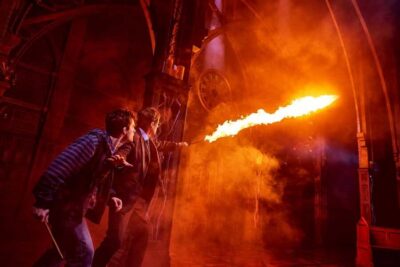 Harry Potter and the Cursed Child on Broadway700 reviews
 Chicago the Musical on Broadway687 reviews
 ★ 5.0Drunk Shakespeare Ticket NYC668 reviews
 ★ 5.0Broadway and Times Square Insider Tour with Theater ProfessionalFrom $39651 reviews
Browse the lists this tour appears in