
Reviewed · CENTRAL PARK TOURS
NYC Horse and Carriage Central Park Tours
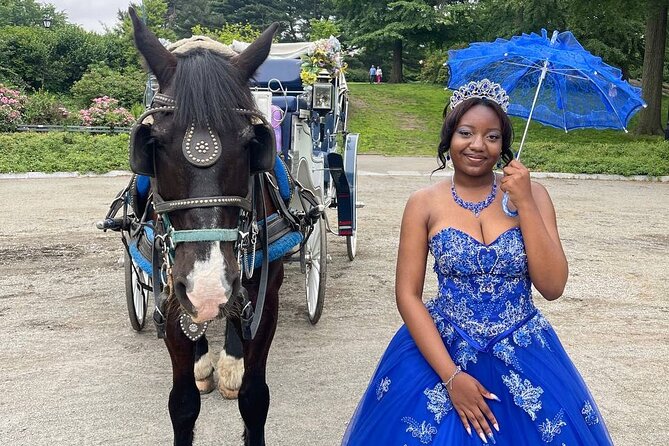
A horse and carriage in Central Park still feels like a movie set. I like that this tour gives you a private carriage for scenic photos and a calmer pace than walking, while the driver’s Central Park commentary turns big landmarks into quick stories you can actually remember. One thing to consider: the ride can feel a bit time-pressured for photos near the end, especially on busy days.
This is a practical way to see a lot of famous Central Park without doing the whole marathon of walking. You can also choose the time of day that fits your schedule, which matters in a city where plans change and crowds spike.
You’ll use a mobile ticket, and the activity runs as a private tour for your group only. It starts and ends at the Ritz-Carlton New York, Central Park at 50 Central Park S, and it’s near public transportation—so it’s easier to line up with the rest of your day.
In This Review
- Key Highlights Worth Your Time
- Private Carriage vs. Walking Central Park Without the Squeeze
- Where You Start: The Ritz-Carlton Spot and How to Keep the Ride Stress-Free
- Bethesda Fountain and Cherry Hill Fountains: The “You Have to See This” Zone
- Bethesda Fountain
- Cherry Hill Fountain
- Strawberry Fields and the West 72nd Street Detour You’ll Feel in Your Heart
- Balto, the Relay to Nome, and the Kind of Story You’ll Share Later
- The Park for All Ages: Carousel, Wollman Rink, Chess & Checkers, and the Children’s District
- Central Park Carousel (since 1871)
- Wollman Rink (opened in 1949)
- Chess & Checkers House (built in 1952)
- The Children’s District and the Dairy (completed in 1872)
- The Formal Promenade and American Elms: Where Olmsted and Vaux Still Matter
- Rumsey Playfield, Model Boat Pond, and Kerbs Boathouse: The “Tiny Boats” Moment
- Loeb Boathouse and Lake Views That Feel Like a Real Place
- Sheep Meadow, Tavern on the Green, Pinebank Arch, and Parade Energy
- Sheep Meadow
- Tavern on the Green (in the historic Sheepfold)
- Pinebank Arch
- The parade route connection
- Photo Stops, Bathroom Breaks, and Avoiding the Rushed Finish
- Weather and Comfort: What You Can Do to Make It Work
- Should You Book This Central Park Horse and Carriage Tour?
- FAQ
- How long is the Central Park horse and carriage tour?
- Where does the tour start and end?
- Is the tour private?
- Can I use a mobile ticket?
- What if the weather is poor?
- Are service animals allowed and is it suitable for most people?
Key Highlights Worth Your Time
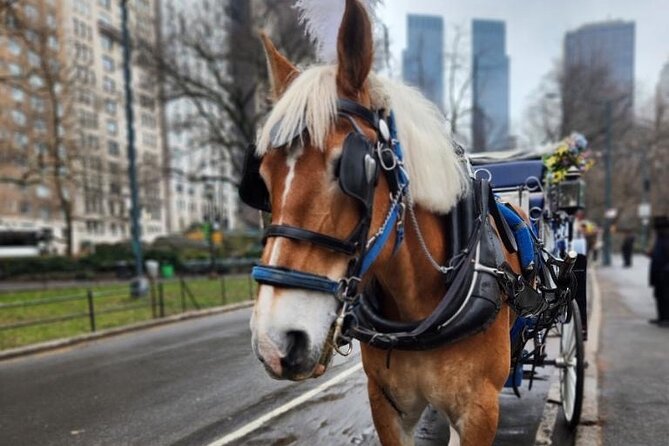
- Private carriage ride that keeps the experience quiet and photo-friendly
- Driver-led commentary that adds context to what you’re seeing
- Top Central Park stops like Bethesda Fountain, Cherry Hill, and Strawberry Fields
- Kid-and-family attractions passed along the way, from Chess & Checkers to the Children’s District
- Real Central Park “scenery stories” from the Balto legend to Rumsey Playfield’s boat pond world
- Mobile ticket convenience with confirmed details right at booking
More ways to see Central Park
- Central Park Pedicab Guided Tours
★ 5.0 · 7,108 reviews - Private Central Park Pedicab Tour
★ 5.0 · 6,981 reviews - NYC: Central Park Bike Rentals
★ 4.2 · 2,528 reviews - Official NYC Horse Carriage Rides in Central Park since 1979 ™
★ 5.0 · 2,365 reviews
Private Carriage vs. Walking Central Park Without the Squeeze
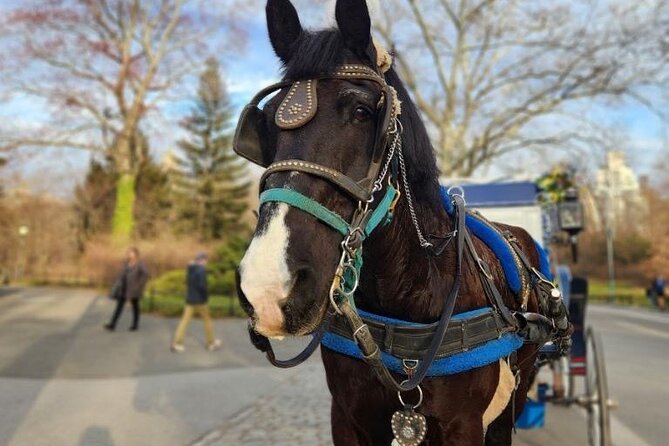
A Central Park walking tour can be great, but it also comes with friction: tight groups, constant bottlenecks at popular viewpoints, and lots of “wait while we catch up.” This horse-and-carriage format helps you skip that feeling. You get a smoother flow through the park and more chances to frame photos without craning your neck around other people.
What I especially like is that the ride is designed for short attention spans and big sights. You’re not trapped in one museum-style viewpoint for an hour. Instead, the driver brings you from landmark to landmark and offers narration tied to what you’re actually passing. It’s a simple way to build a mental map of Central Park fast—then, if you want, you can come back later and explore specific areas on foot.
Where You Start: The Ritz-Carlton Spot and How to Keep the Ride Stress-Free
Your meeting point is the Ritz-Carlton New York, Central Park (50 Central Park S). That’s useful, because it’s a clear address and it’s in the part of Manhattan where you can usually connect with public transportation without chaos.
Timing matters here. The ride is about 40 to 45 minutes, so if you’re late, you can feel it. I’d plan to arrive a little early and give yourself buffer time for NYC traffic and curbside logistics. If you’re traveling around a busy holiday period, this is also where a little extra patience pays off—because the park can be crowded and operations may run tight.
The tour runs as a private activity for your group, which also helps you move with less uncertainty. Service animals are allowed, and most travelers can participate, so it’s not a niche experience that requires special abilities beyond being comfortable seated and moving at a carriage pace.
Bethesda Fountain and Cherry Hill Fountains: The “You Have to See This” Zone
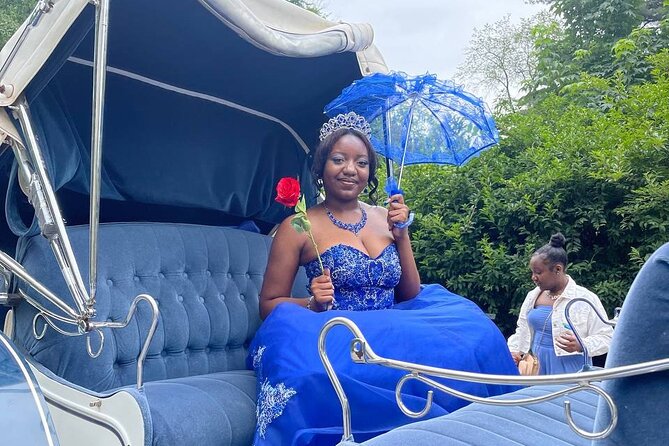
These two fountain stops are classic Central Park anchors, and they’re the kind of sights that instantly make you understand why the park became a world-famous refuge.
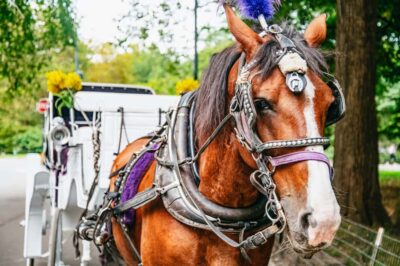
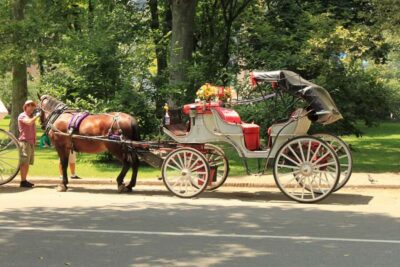
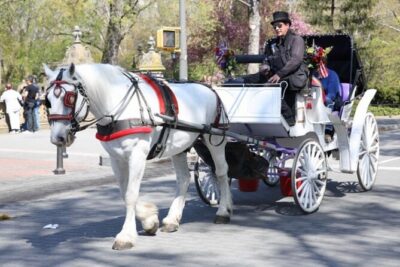
More clip-clop rides through the park
Bethesda Fountain
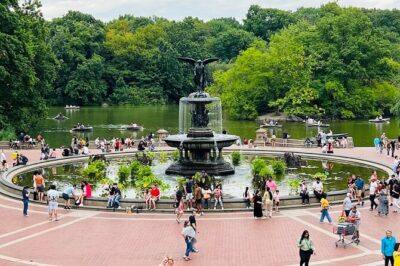
At the top of Bethesda Fountain, you’ll see the Angel of the Waters. The bronze angel steps onto a stone that spouts water, and the water cascades down into basins that fill a large circular pool below. Even if you’ve seen photos before, seeing the structure from a carriage viewpoint makes it feel more like a centerpiece than a background.
This stop is timed at about 5 minutes, and it’s listed as admission ticket free. That’s a good length for photos and a quick look without the pressure to “do everything” in one stop.
Cherry Hill Fountain
Cherry Hill’s fountain sits at the center of the carriage concourse at the top of Cherry Hill. It’s ornate and unusual, with a stone base topped by a finial that includes saucers where birds can drink, plus a light fixture with eight globes.
The water drips from the saucer down onto a granite-and-tile base before spilling into a bluestone basin. It’s the kind of detail you might miss if you’re only sprinting from one photo spot to another.
This is also around 5 minutes and free, making it an easy win: a distinctive fountain, quick stops, and enough time for a solid set of photos.
Strawberry Fields and the West 72nd Street Detour You’ll Feel in Your Heart
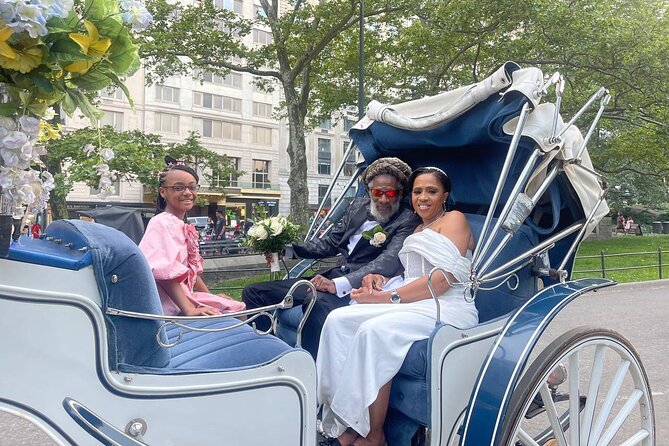
The carriage also reaches Strawberry Fields, a memorial to John Lennon and the peace activist side of his legacy. The memorial includes a five-acre landscape near the West 72nd Street entrance and features the Imagine mosaic, where people come to pay tribute.
Strawberry Fields is listed as about 3 minutes and free. Don’t treat that as too short. For a monument like this, a quick, respectful stop is often better than a long one. You get the emotional punch without turning it into an obligation.
If you like thinking about cities as lived-in places, this stop is a reminder that Central Park isn’t only about formal architecture and nature views. It’s also about culture, memory, and the way people claim meaning in public spaces.
Balto, the Relay to Nome, and the Kind of Story You’ll Share Later
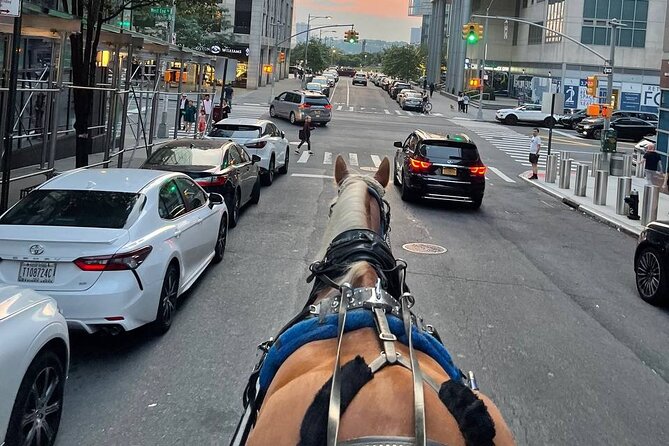
Central Park is full of monuments, but not all of them are “stand there and read a plaque.” One standout story included on this ride is Balto—the famous sled dog connected to a heroic Alaska journey.
Here’s the gist: in January 1925, an outbreak of diphtheria threatened Nome. Weather prevented vaccines from being transported from Anchorage by plane, so a relay of dog-sled teams and mushers carried the vaccine nearly 700 miles in blizzard conditions in just five days and seven hours. The dogs and handlers faced minus 30-degree Fahrenheit temperatures, ice floes, and roughly 5,000-foot mountain peaks.
That’s the kind of Central Park detail you can’t cram into a quick walking selfie. The driver’s narration makes it land, and it gives you something real to talk about after you’re out of the park.
The Park for All Ages: Carousel, Wollman Rink, Chess & Checkers, and the Children’s District
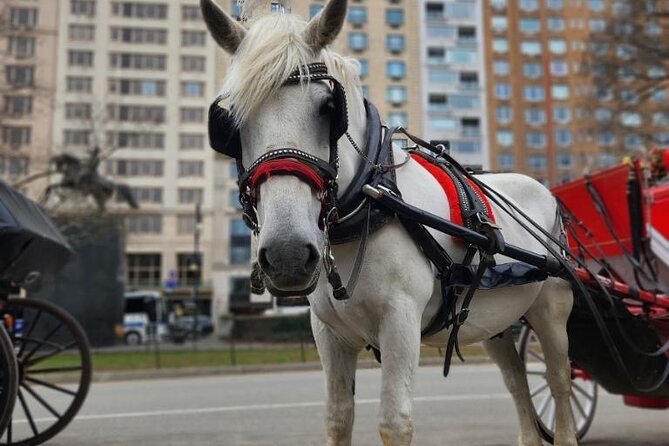
One of the smartest things about this kind of route is that it includes variety. Central Park isn’t one scene; it’s a whole collection of different “worlds.”
Central Park Carousel (since 1871)
The Central Park Carousel is one of the iconic rides in the park, operating since 1871. It’s also noted as having about 250,000 riders a year, which shows you it isn’t just a classic—it’s still a serious part of park life.
Even if you don’t ride it, watching it as part of the scenery helps you see the park’s ongoing role in everyday fun.
Wollman Rink (opened in 1949)
Wollman Rink opened in 1949 and is described as a longtime favorite. Ice skating in fall and winter is a top New York ritual, with the added thrill of gliding under a star-covered sky and seeing the Manhattan skyline.
This stop works best if you like season-based planning. Even if you’re visiting in warmer weather, knowing where the skyline-and-ice magic happens makes the park feel alive year-round.
Chess & Checkers House (built in 1952)
Chess & Checkers House dates to 1952 and was built to give visitors a place to play—kids and adults included. It’s an octagonal brick structure surrounded by 24 game tables shaded by a wooden trellis.
It’s the kind of place that makes Central Park feel less like a museum and more like a social playground.
The Children’s District and the Dairy (completed in 1872)
The Children’s District was originally conceived around the idea that kids needed a dedicated space. Playgrounds as we know them didn’t exist until the early 20th century, so the Children’s District—completed in 1872—was the only part of the park specifically intended for the youngest visitors.
This is a great stop to notice if you’re traveling with children. It’s not just “cute.” It shows how planning in the park evolved to serve different ages and needs.
The Formal Promenade and American Elms: Where Olmsted and Vaux Still Matter
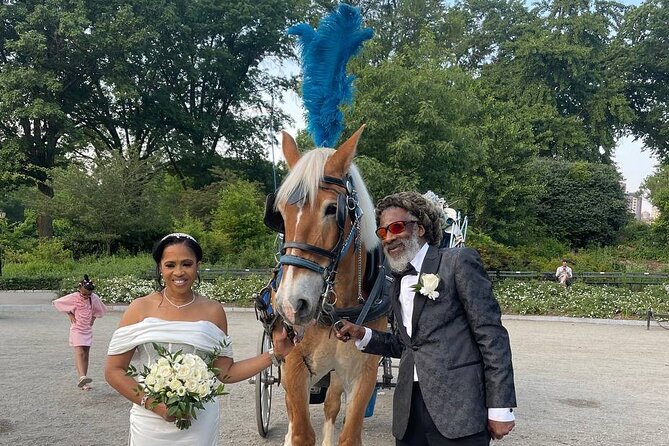
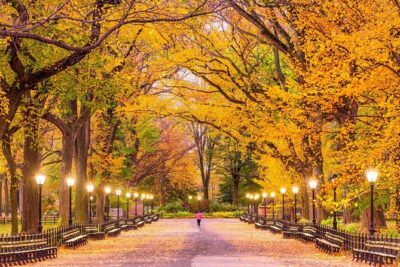
A big reason Central Park works is that it’s designed, not just planted. On this ride, you pass a wide, straight path lined by two rows of American elms—built by Park designers Frederick Law Olmsted and Calvert Vaux as a formal promenade and gathering space.
The description makes the point you should keep in mind: you’re getting a version of this landscape that feels similar to how it may have looked in the 19th century, where people strolled, sat, listened to music, admired trees, and watched each other.
This section is especially good for photography at slower speeds. When you’re not racing a walking crowd, you can line up symmetry and leading lines that are hard to do on foot.
Rumsey Playfield, Model Boat Pond, and Kerbs Boathouse: The “Tiny Boats” Moment
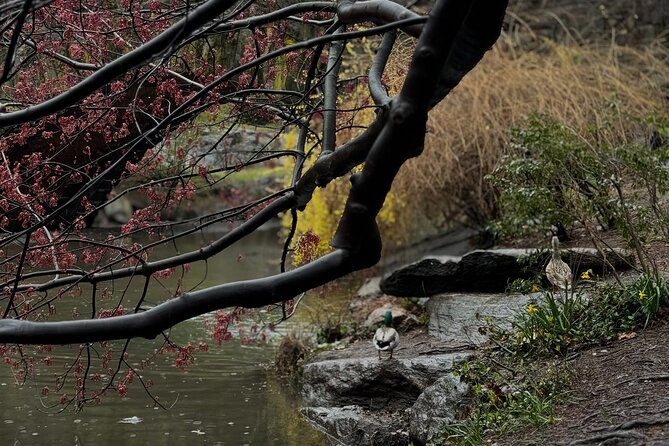
Central Park’s water features aren’t only about big views. They also support hobbies and kid-friendly play. Rumsey Playfield is highlighted as a place that has changed over time. It was originally associated with a restaurant created by park co-designer Calvert Vaux, known as the “Casino” (and the key detail: the name didn’t mean gambling).
Now, the main feature on this stretch is the ornamental pond—also called the Model Boat Pond—where children and hobbyists launch and race miniature sailboats and yachts. Boats are stored and rented at the nearby Kerbs Boathouse, which also houses a cafe.
If you like noticing the “in-between” Central Park details, this is a great reminder that the park has room for both big monuments and small passions.
Loeb Boathouse and Lake Views That Feel Like a Real Place
Loeb Boathouse is on the eastern edge of the lake and is best known as a launch point for rowboats. Even if you aren’t rowing, this stop helps you understand the lake as a living feature of the park, not just a backdrop.
From the carriage, you get those open-water viewpoints without needing to walk long distances. For many first-timers, that’s the difference between “Central Park is pretty” and “Central Park makes sense.”
Sheep Meadow, Tavern on the Green, Pinebank Arch, and Parade Energy
This part of the ride keeps Central Park grounded in its daily-life identity.
Sheep Meadow
Sheep Meadow is described as the upmost expression of the park’s purpose as a retreat from urban life. That’s a powerful way to describe it: it’s where the park feels like relief, not a stop on a checklist.
Tavern on the Green (in the historic Sheepfold)
Tavern on the Green sits in a historic building once known as the Sheepfold. It’s been a fine dining destination in Central Park since the 1930s. Even if you don’t eat there, passing it reinforces that the park mixes leisure, events, and iconic food culture.
Pinebank Arch
Pinebank Arch is an elegant cast-iron bridge spanning the bridle path. It’s the kind of photo spot that looks different depending on the angle, because the ironwork lines change how your eye moves through the scene.
The parade route connection
There’s also a note that this area is a shopping zone where the Macy’s parade goes through each year. That’s a reminder that Central Park isn’t always quiet and scenic. It also hosts major crowd moments.
Photo Stops, Bathroom Breaks, and Avoiding the Rushed Finish
The best part of a carriage ride is the photo potential. The drive-by and slow-roll pace helps you take scenic shots from a private carriage, and you’ll often get driver help placing you near standout landmarks.
Still, I’d go in with one expectation managed: timing can be tight. One experience noted a bathroom stop during the ride and only limited chances for additional photos once they were moving through the route. They also felt rushed at the end, with an offer of pictures afterward.
So here’s my practical advice: if photos are your goal, tell your driver early. Ask (politely) when the best windows are for pics. And if you want a souvenir moment, plan to use your best photo time during the scheduled landmark pauses, not only at the finish.
A 40–45 minute tour goes quickly. Your job is to be ready—phone charged, camera set, and you knowing which landmark you want to prioritize.
Weather and Comfort: What You Can Do to Make It Work
This experience requires good weather. That’s a clear heads-up: Central Park is open and exposed, and a carriage ride is happier when the ground isn’t slick and the sky is cooperating.
Comfort-wise, you should dress for NYC conditions and expect that you’ll be sitting for most of the ride. If you’re sensitive to cold or heat, pick your clothing with the time of day you choose. The advantage is you can choose the day and time that fits your schedule, which helps you avoid the worst extremes.
Should You Book This Central Park Horse and Carriage Tour?
I’d book this if you want a low-stress way to see major Central Park highlights with narration and a private carriage that’s easier for photos than walking. It’s also a strong choice for couples, families, and anyone who doesn’t want to spend half a day routing across the park.
I’d think twice if you’re the type who needs many extended photo moments or lots of long stops. The ride is short by design, and if the day is busy, the pace at the end can feel less relaxed than the magic at the beginning.
If you’re hoping for a “great introduction to Central Park,” this works well. You’ll learn the basic structure fast: fountains, cultural memorials, key paths, family attractions, and big open spaces like Sheep Meadow—without the walking fatigue.
FAQ
How long is the Central Park horse and carriage tour?
The ride is listed as about 40 to 45 minutes.
Where does the tour start and end?
It starts at the Ritz-Carlton New York, Central Park (50 Central Park S, New York, NY 10019) and ends back at the meeting point.
Is the tour private?
Yes. It’s a private tour/activity, and only your group participates.
Can I use a mobile ticket?
Yes. The tour includes a mobile ticket, and confirmation is received at the time of booking.
What if the weather is poor?
This experience requires good weather. If it’s canceled due to poor weather, you’ll be offered a different date or a full refund.
Are service animals allowed and is it suitable for most people?
Service animals are allowed, and most travelers can participate.
More Tour Reviews in New York City
- NYC: SUMMIT One Vanderbilt Tickets★ 4.7 · 51,195 reviews
- NYC: Empire State Building Tickets – Observatory & Museum★ 4.7 · 25,757 reviews
- New York City: Statue of Liberty & Ellis Island with Ferry★ 4.6 · 18,683 reviews
- New York City: American Museum of Natural History Ticket★ 4.5 · 15,447 reviews
- Statue of Liberty and Ellis Island Tour: All Options★ 5.0 · 13,571 reviews
Through the Park by Carriage
- Official NYC Horse Carriage Rides in Central Park since 1979 ™★ 5.0 · 2,365 reviews
- Carriage Ride in Central Park (VIP – PRIVATE) Since 1964™★ 4.0 · 1,074 reviews
- NYC: Guided Central Park Horse Carriage Ride★ 4.8 · 877 reviews
- NYC: Private Central Park Horse Carriage Ride with Guide★ 4.9 · 790 reviews
- Official Private NYC Central Park Horse Carriage Ride Since 1970™★ 4.5 · 447 reviews
More of Central Park
- Central Park Pedicab Guided Tours★ 5.0 · 7,108 reviews
- Private Central Park Pedicab Tour★ 5.0 · 6,981 reviews
- NYC: Central Park Bike Rentals★ 4.2 · 2,528 reviews
- Official NYC Horse Carriage Rides in Central Park since 1979 ™★ 5.0 · 2,365 reviews
- NYC: Central Park Bike Rental★ 4.1 · 1,651 reviews
Just in: the newest New York City reviews on our desk




Central Park Tours, compared.
 ★ 5.0Central Park Pedicab Guided ToursFrom $387,108 reviews
 ★ 5.0Private Central Park Pedicab TourFrom $386,981 reviews
 ★ 4.2Central Park Bike RentalsFrom $92,528 reviews
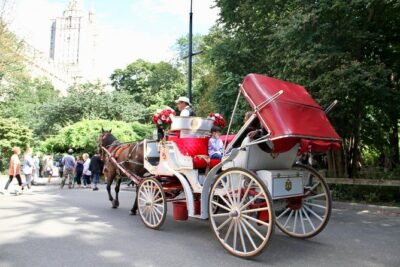 ★ 5.0Official NYC Horse Carriage Rides in Central Park since 1979 ™From $992,365 reviews
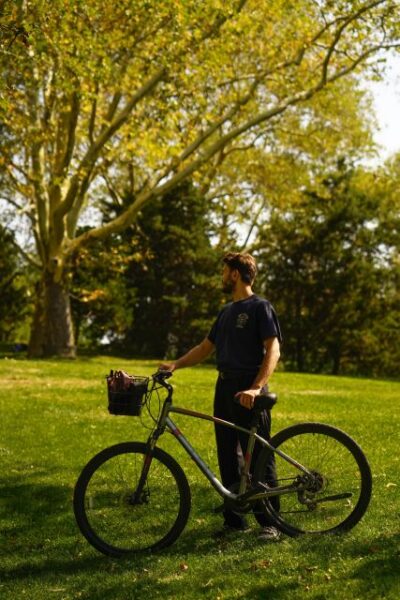 ★ 4.1Central Park Bike RentalFrom $81,651 reviews
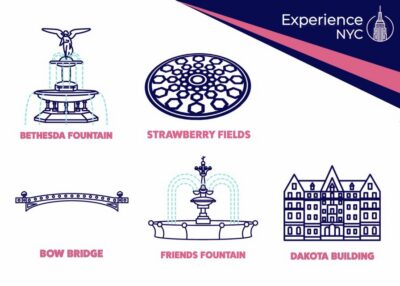 ★ 4.9Private Central Park Pedicab TourFrom $401,637 reviews
 ★ 4.7Central Park Bike RentalFrom $91,509 reviews
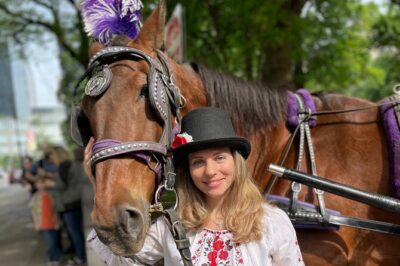 ★ 4.0Carriage Ride in Central Park (VIP – PRIVATE) Since 1964™From $141,074 reviews
Browse the lists this tour appears in