
Reviewed · CENTRAL PARK TOURS
NYC: Private Tour Secrets of Central Park
Central Park is the kind of place you think you know. Then a great guide points out the planning, the art, and the tiny design choices that make it work. I like that this tour is private and customizable, so you’re not stuck in a one-size-fits-all script. I also like the interactive, guided approach—it’s built to help you notice details you’d normally walk right past. The one possible drawback: if you mainly want quick, story-like vibes and very little facts, you may find the guide’s pacing (with lots of dates and context) a bit dry.
You’ll meet at Grand Army Plaza on Fifth Avenue, by the General William Tecumseh Sherman Monument, and then spend about two hours moving through some of Central Park’s most famous landmarks. The guide keeps it rain or shine, so wear comfortable shoes and bring weather-appropriate layers.
In This Review
- Key things that make this Central Park tour work
- Private isn’t just a luxury: it changes how you see Central Park
- Where you start: Grand Army Plaza and the Sherman Monument
- The Zoo stop: a quick way to understand Central Park’s variety
- Loeb Boathouse and The Pond: water views with architecture in mind
- Tavern on the Green: why the park has “city” energy too
- Sheep’s Meadow and The Great Lawn: the “why” behind open space
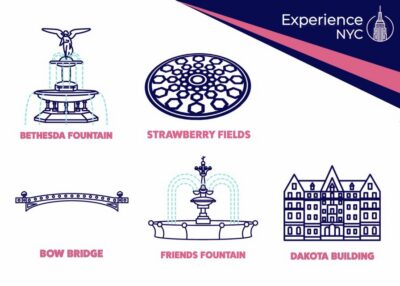
- Strawberry Fields: art, memory, and symbolism you can actually see
- The Mall: walking as a design feature
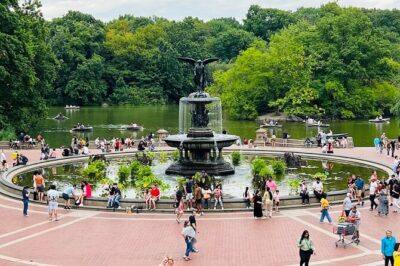
- Bethesda Terrace: where Central Park becomes architecture
- Bow Bridge and the art of “dramatic calm”
- Belvedere Castle: a viewpoint lesson, not just a castle photo
- Delacorte Theater and Shakespeare Gardens: culture as a park feature
- The Great Lawn finishes the story: your last big view
- Price and value: $149 for two hours is fair, if this is your style
- Weather, pace, and what to pack for a smooth 2-hour loop
- What kind of traveler should book this?
- Should you book NYC Private Tour Secrets of Central Park?
- FAQ
- How long is the Central Park private tour?
- Where do we meet for the tour?
- What does the tour include?
- Does the tour run in bad weather?
- How much does it cost?
- Is there a cancellation option?
Key things that make this Central Park tour work
- Private, customizable route: you can steer the focus toward what you care about most
- Licensed local guide: you get expert interpretation, not just a checklist of sights
- Design + art focus: you’ll look at sculptures, fountains, terraces, and architectural details
- Big Central Park hits: Grand Army Plaza, Bethesda Terrace, Bow Bridge, Belvedere Castle, and more
- Real recreation landmarks: from The Great Lawn to Sheep’s Meadow—this isn’t just photos
- Built for attention: you’re encouraged to notice how the park’s pieces connect
More ways to see Central Park
- Central Park Pedicab Guided Tours
★ 5.0 · 7,108 reviews - Private Central Park Pedicab Tour
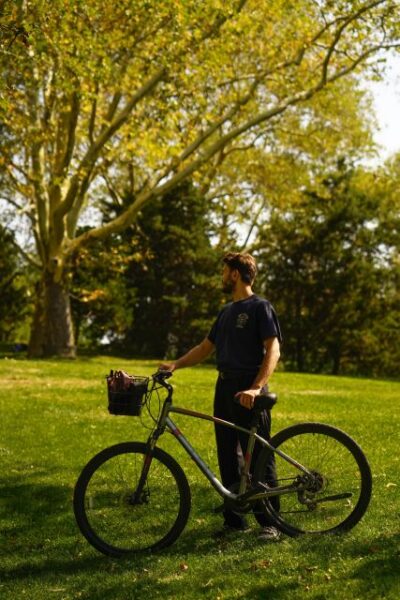
★ 5.0 · 6,981 reviews - NYC: Central Park Bike Rentals
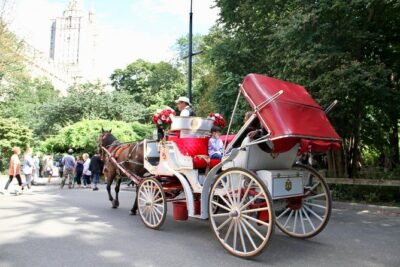
★ 4.2 · 2,528 reviews - Official NYC Horse Carriage Rides in Central Park since 1979 ™
★ 5.0 · 2,365 reviews
Private isn’t just a luxury: it changes how you see Central Park
Central Park can swallow time fast. You can “do” it by walking from one famous place to the next, and still miss what makes it special. This private setup helps because your guide can adjust the emphasis—more on architecture if that’s your thing, more on art and symbolism if you prefer that, or more on the park’s layout and why it feels so different block to block.
The tour is also interactive, which matters. Instead of you staring at the skyline while someone talks, you’re pushed to look at specific elements: the way sightlines open up, how pathways guide movement, and how decorative features hide practical engineering. You’ll come away with a new habit: seeing the park as a designed experience, not just a green rectangle.
And yes, it’s still a park. You’ll get stops that match the way people actually use Central Park—lingering by water, enjoying open lawns, and pausing in garden areas that feel like a different world inside Manhattan.
Where you start: Grand Army Plaza and the Sherman Monument
Most Central Park tours begin in the middle of the park. This one begins at the entrance space that sets the tone. At Grand Army Plaza on Fifth Avenue (between 59th and 60th Streets), standing in front of the General William Tecumseh Sherman Monument, you’ll get orientation fast.
Why this matters: Grand Army Plaza isn’t just a decorative threshold. It’s a formal start point where the city’s energy meets the park’s design. From here, you can understand how Central Park creates drama—wide views, ceremonial entrances, and a sense that you’re stepping into something intentional.
Expect your guide to frame what you’re about to see: famous landmarks like Bethesda Terrace, plus the quieter art-and-detail points that often get ignored when you’re only chasing the next photo.
The Zoo stop: a quick way to understand Central Park’s variety
Central Park’s Central Park Zoo is one of those places people recognize instantly, even if they don’t think about what it represents. Here, it’s useful not because you’ll be running through animal exhibits (the tour is only two hours), but because it shows how Central Park mixes recreation, learning, and spectacle.
What to look for: how the park can host a structured attraction while still feeling like part of a bigger landscape of paths, gardens, and buildings. The zoo area also helps anchor the tour’s bigger theme—Central Park isn’t only scenic walking. It’s built for different moods and uses.
A small consideration: if you’re expecting a deep, ticketed attraction visit, this is better seen as an interpretation stop rather than a full zoo day.
Just your group: more private options
Loeb Boathouse and The Pond: water views with architecture in mind
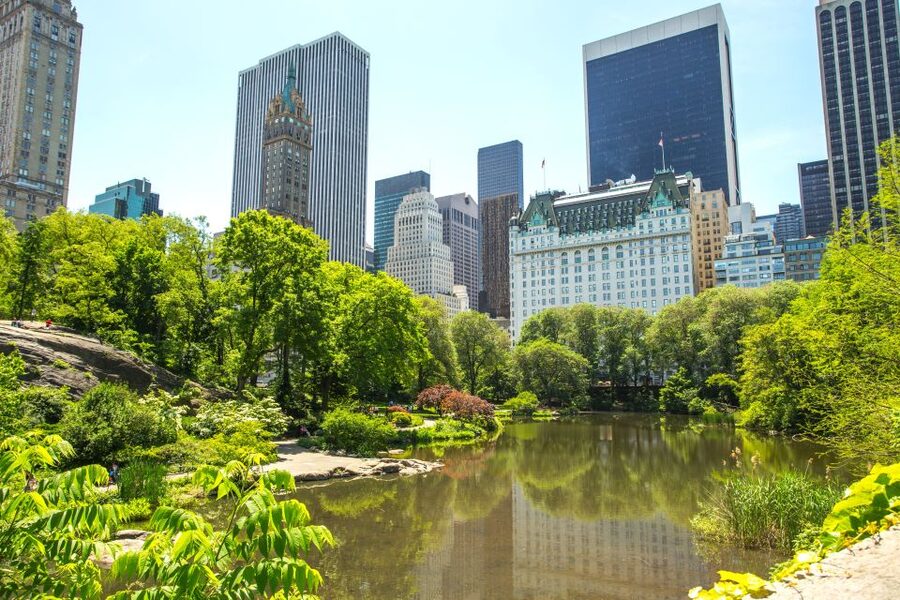
Central Park’s water always earns attention. The tour includes Loeb Boathouse and The Pond, which is a smart pairing because the setting is both scenic and structured.
This is where you’ll start to notice the park’s “engine room” thinking. Water features here don’t just look pretty—they shape movement, create mirror-like reflections, and define where people pause. The guide’s job is to help you read the space: what you’d call atmosphere is actually the result of design choices.
Practical tip: if the light is right, The Pond area is excellent for photos. But don’t rush—this part works best when you slow down and compare angles. You’ll likely be thinking about more than postcard views by the time the guide points out how the buildings, edges, and pathways frame what you see.
Tavern on the Green: why the park has “city” energy too
Tavern on the Green stands out because it feels like a restaurant destination inside a park, and that’s not an accident. This stop helps you understand how Central Park blends civic space with entertainment and everyday convenience.
It’s also a useful reminder: Central Park isn’t frozen in history. It has layers of use, and dining places are part of the modern rhythm. Your guide can connect this with the park’s evolution—how big public spaces survive by staying functional and attractive.
If you’re visiting with kids or you’re planning your day around breaks, this is also the kind of stop that signals where facilities and crowds tend to cluster.
Sheep’s Meadow and The Great Lawn: the “why” behind open space
Two of the park’s most famous open areas—Sheep’s Meadow and The Great Lawn—are perfect for learning how Central Park uses scale.
Here’s what I love about interpreting open lawns with a guide: you stop thinking of them as empty and start thinking of them as stages. These spaces host recreation, gatherings, and long views that make the surrounding architecture feel even more dramatic. When your guide explains design choices, the lawns become part of the park’s visual story rather than just places to walk across.
What to do: take a few minutes to watch how paths and sightlines work. You’ll notice how people naturally gravitate to specific edges or “best view” zones. Then, when you move on, those same ideas help you read the terraces, bridges, and castles later in the tour.
Strawberry Fields: art, memory, and symbolism you can actually see
Strawberry Fields is one of those places where the meaning can be bigger than the physical space. This tour includes it for a reason: it shows how Central Park isn’t only about pretty scenes—it’s also about public art and cultural memory.
You’ll want to spend time here focusing on what the space communicates rather than only snapping photos. A good guide ties together the symbolism and the way people interact with the area—how it functions as a pause point, a tribute, and a landmark all at once.
If you’re the type who likes context, this stop tends to be one of the most rewarding. If you prefer pure scenery with minimal interpretation, ask your guide to keep it short and focus on how the space is laid out.
The Mall: walking as a design feature
The Mall is essentially Central Park’s long, formal walking experience. It’s included because it teaches a lesson many people miss: central design often means controlled perspective.
As you walk along (or near) it, you’ll start to see how Central Park manages your eye—what gets framed, what gets softened, and how paths encourage a “slow approach” to major landmarks. Your guide’s interpretation can make the space feel more intentional, like the park is gently choreographing your movement.
A useful mindset here: don’t treat it like a corridor. Look at edges—trees, openings, and the way you can see farther than you expect.
Bethesda Terrace: where Central Park becomes architecture
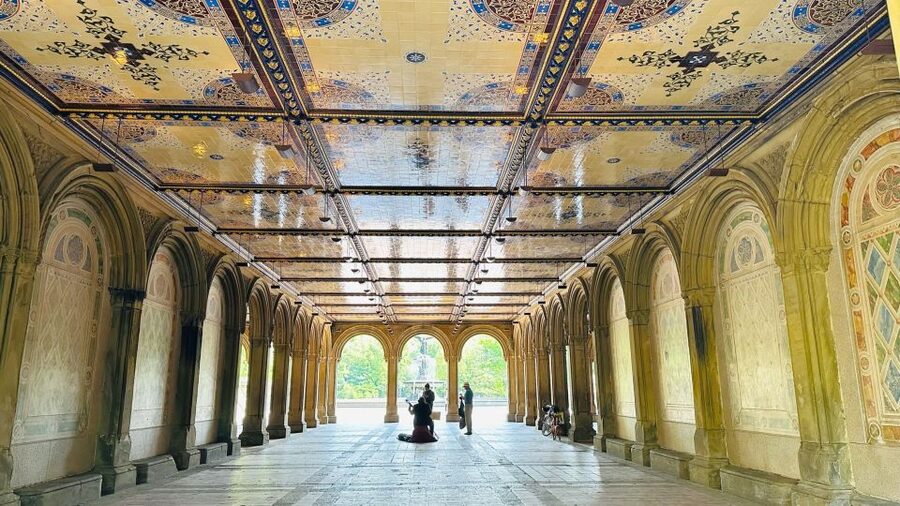
Bethesda Terrace is a highlight for a reason. It’s one of the most architectural parts of the park, and it’s a classic spot where people remember the look but not the why.
On this tour, Bethesda is where you’ll likely hear about the blend of grand design and lived-in atmosphere. The terrace acts like a hub—something between a viewpoint, a social pause, and a built-in landmark. It’s also a place where you can look both outward and within, which is perfect for understanding how Central Park balances city views with interior calm.
If you enjoy details—mosaics, sculptural elements, and the way steps and levels guide visitors—this is the kind of stop you’ll want to spend time at before moving on.
Bow Bridge and the art of “dramatic calm”
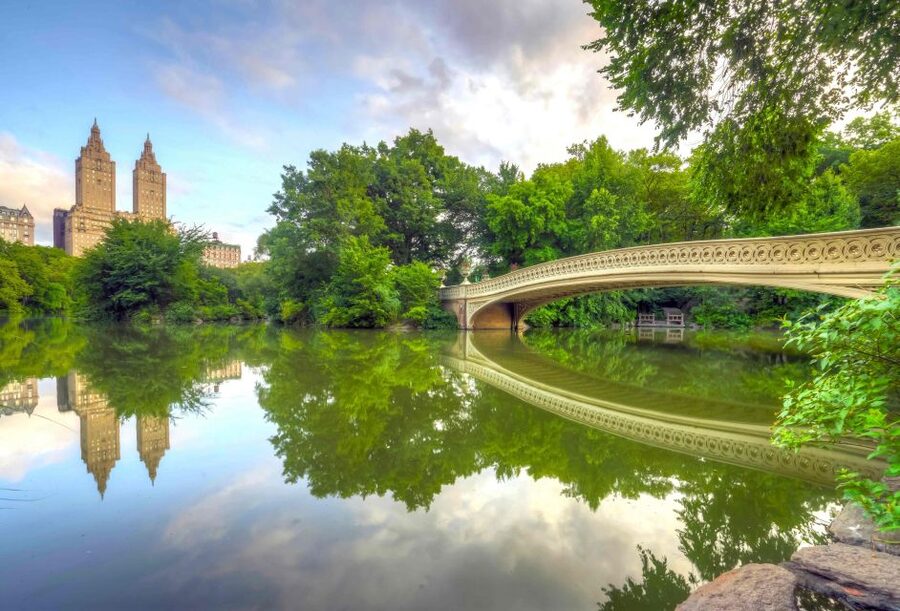
Bow Bridge is famous, and you’ll know the shape immediately. But the value of visiting it with a guide is what you learn to notice around it—how the bridge interacts with the water and the surrounding paths, and how the park gives you a moment of “storybook” without leaving real city life behind.
The tour approach here is practical: you’ll likely pause, look from multiple angles, and understand why people stop right where they stop. It’s not random foot traffic—it’s the result of how the view lines up.
If you’re visiting during busy periods, Bow Bridge can be crowded. A guide can help you time your looks so you aren’t stuck staring at the backs of other tourists the whole time.
Belvedere Castle: a viewpoint lesson, not just a castle photo
Belvedere Castle gives you a different kind of Central Park story. Even if you’ve seen pictures, you’ll get more from a guide’s interpretation because castles in parks tend to mean symbolism, viewpoints, and “architectural punctuation.”
This stop works well when you pay attention to how the park reveals itself from elevated or framed points. You’ll likely come away thinking about the park as a sequence of planned vantage moments—small changes in level and framing that make walking feel like progression.
Practical note: bring layers if it’s cooler near open viewpoints.
Delacorte Theater and Shakespeare Gardens: culture as a park feature
Delacorte Theater and Shakespeare Gardens add a different side of Central Park: performance and themed design. Even if you don’t attend a show, the spaces show how the park supports cultural life.
Your guide’s context here can help you see the gardens and theater area as more than decorations. It’s part of the park’s identity—an urban place that’s not just for recreation, but for art experiences too.
This stop is especially good if you like when parks become “outdoor rooms” for specific activities, like watching performances or exploring themed spaces at your own pace.
The Great Lawn finishes the story: your last big view
Ending (or circling toward) The Great Lawn is a smart choice because it resets your perception. After terraces, bridges, castles, and gardens, you get one of the park’s widest, most open spaces.
It’s the part where Central Park feels like Central Park in the simplest way: big views, long sightlines, and a sense that the city’s noise is far away even when you’re still inside Manhattan. If your guide connects the dots—how earlier stops fit into the park’s planning—you’ll feel like the whole walk made sense.
A consideration: open lawns can also be busy. If you’re sensitive to crowds, you’ll appreciate having a private guide because they can help you time pauses and choose where to stand for the best calm.
Price and value: $149 for two hours is fair, if this is your style
At $149 per person for 2 hours, this is not a budget group tour. But you’re paying for the things that actually change your experience: privacy, a guide who can tailor the focus, and an expert who can turn “I saw it” into “I understood it.”
Here’s when that value tends to make sense:
- You want more than photos and quick facts.
- You care about architecture, art, or symbolism in public spaces.
- Your group includes people with different interests, and you want the guide to steer.
Here’s when it might feel expensive:
- You mainly want a relaxed walk with minimal interpretation.
- You’d rather explore on your own and only need a few key landmarks.
- You dislike date-heavy explanations and prefer short, story-first commentary.
If that first drawback sounds like you, it’s worth asking the guide to focus on the visual details first and keep the dates lighter—this tour is customizable, so you can try to steer the tone.
Weather, pace, and what to pack for a smooth 2-hour loop
This tour runs rain or shine, which means your comfort matters. Wear comfortable shoes—Central Park is walk-heavy, and a two-hour guided route still adds up quickly.
Bring clothing suited to the weather, and plan for quick weather shifts. Even in nice seasons, parks can feel cooler near open areas or near water.
Pacing-wise, two hours is enough for a satisfying arc through major sights, but not enough for long breaks at every stop. That’s part of the trade: you’ll see a lot, and the guide’s structure keeps it from feeling scattered.
What kind of traveler should book this?
This is a strong fit if you:
- Love being guided through famous places with deeper meaning
- Want an interactive, private experience rather than a crowded script
- Prefer walking with context—architecture, art, and design details
- Are visiting Central Park for the first time and want the “big picture” fast
It’s less ideal if you:
- Want purely casual vibes and almost no historical context
- Prefer to go at your own speed without a structured guide
- Are only interested in one or two landmarks and can easily self-tour the rest
Should you book NYC Private Tour Secrets of Central Park?
I’d book it if you want Central Park to feel like a designed, meaningful place instead of just a pretty place to stroll. The stop choices—Grand Army Plaza, Bethesda Terrace, Bow Bridge, Belvedere Castle, Shakespeare Gardens, and the big open lawns—cover the park’s most teachable moments.
If you’re someone who gets impatient with long date-and-event narration, you can still make this work by setting expectations: ask your guide to emphasize the visual and architectural details and keep the timeline portion lighter. With that in mind, this tour is a solid way to get real value from a short visit.
FAQ
How long is the Central Park private tour?
The tour lasts 2 hours.
Where do we meet for the tour?
You meet at Grand Army Plaza, Fifth Avenue between 59th and 60th Street, in front of the General William Tecumseh Sherman Monument.
What does the tour include?
It includes a private customizable tour with a licensed local guide who provides live guidance in English.
Does the tour run in bad weather?
Yes. The tour takes place rain or shine.
How much does it cost?
The price is $149 per person.
Is there a cancellation option?
Yes. You can cancel up to 24 hours in advance for a full refund.
More Tours in New York City
- Statue of Liberty and Ellis Island Tour: All Options★ 5.0 · 13,571 reviews
- New York in One Day Guided Sightseeing Tour★ 5.0 · 13,166 reviews
- Central Park Pedicab Guided Tours★ 5.0 · 7,108 reviews
- New York City: Manhattan Helicopter Tour★ 4.7 · 7,076 reviews
- Private Central Park Pedicab Tour★ 5.0 · 6,981 reviews
More Tour Reviews in New York City
- NYC: SUMMIT One Vanderbilt Tickets★ 4.7 · 51,195 reviews
- NYC: Empire State Building Tickets – Observatory & Museum★ 4.7 · 25,757 reviews
- New York City: Statue of Liberty & Ellis Island with Ferry★ 4.6 · 18,683 reviews
- New York City: American Museum of Natural History Ticket★ 4.5 · 15,447 reviews
- Statue of Liberty and Ellis Island Tour: All Options★ 5.0 · 13,571 reviews
More of Central Park
- Central Park Pedicab Guided Tours★ 5.0 · 7,108 reviews
- Private Central Park Pedicab Tour★ 5.0 · 6,981 reviews
- NYC: Central Park Bike Rentals★ 4.2 · 2,528 reviews
- Official NYC Horse Carriage Rides in Central Park since 1979 ™★ 5.0 · 2,365 reviews
- NYC: Central Park Bike Rental★ 4.1 · 1,651 reviews
Just in: the newest New York City reviews on our desk





Central Park Tours, compared.
 ★ 5.0Central Park Pedicab Guided ToursFrom $387,108 reviews
 ★ 5.0Private Central Park Pedicab TourFrom $386,981 reviews
 ★ 4.2Central Park Bike RentalsFrom $92,528 reviews
 ★ 5.0Official NYC Horse Carriage Rides in Central Park since 1979 ™From $992,365 reviews
 ★ 4.1Central Park Bike RentalFrom $81,651 reviews
 ★ 4.9Private Central Park Pedicab TourFrom $401,637 reviews
 ★ 4.7Central Park Bike RentalFrom $91,509 reviews
 ★ 4.0Carriage Ride in Central Park (VIP – PRIVATE) Since 1964™From $141,074 reviews
Browse the lists this tour appears in