
Reviewed · HISTORICAL TOURS
NYC’s History of Comedy Tour
Comedy has a street address in Greenwich Village. This $30 walk links vaudeville, radio, and TV to the storefronts still standing today. You get small-group attention (up to 20 people), plus a guide who keeps the story grounded with photos and stop-by-stop context.
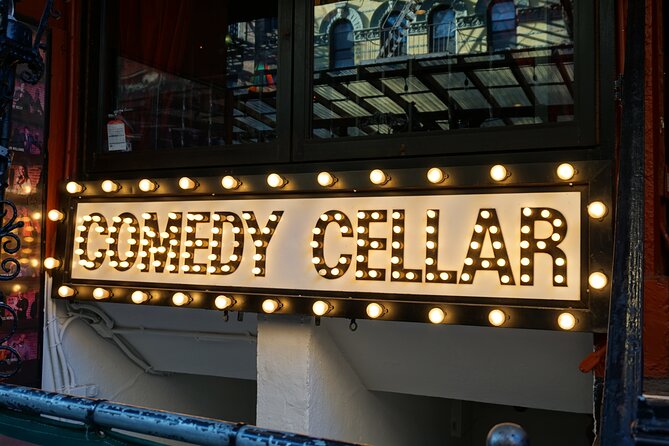
I also like how the tour builds in fun moments, like photo ops at the Comedy Cellar marquee and stories that connect clubs such as The Duplex and Cafe Wha? to the comics who came through them. One consideration: the walk is short, so you won’t get time to linger inside venues like a full show night does.
In This Review
- Key Takeaways
- Why Greenwich Village Comedy Still Feels Personal
- Price and Value: What You’re Really Paying For
- Where You’ll Start, Where You’ll End
- What a Small-Group Comedy Walk Feels Like
- Stop-by-Stop: Gay Street to the Comedy Cellar
- Stop 1: Gay Street (Christopher Street corner and the early era)
- Stop 2: The Duplex (a room that launched careers)
- Stop 3: Cafe Wha? (a Village stage with real credibility)
- Stop 4: Bitter End (The Cafe Au Go Go to The Bitter End thread)
- Stop 5: The Grisly Pear Comedy Club (TV’s rise and SNL connections)
- Stop 6: Comedy Cellar (marquee moment and photo time)
- Stop 7: Village Underground (second Comedy Cellar location + bonus show access)
- The Guide Experience: What to Expect from the Narration
- How to Make the Most of It (Before and After)
- Should You Book NYC’s History of Comedy Tour?
- FAQ
- How long is the NYC’s History of Comedy Tour?
- Where does the tour start and end?
- How much does the tour cost?
- What language is the tour offered in?
- Do I need to print a ticket?
- Are there different tour times during the day?
- Is there a group size limit?
- Does the tour include anything to do after the walk?
- What is the cancellation policy?
Key Takeaways
- Small group, max 20: easier questions, less waiting, and more time at each corner.
- Story runs from vaudeville to TV: early 1900s clubs through the 1960s shift that shaped Saturday Night Live.
- Iconic stops are tightly packed: Gay Street, The Duplex, Cafe Wha?, Bitter End, The Grisly Pear, and two Comedy Cellar spots.
- Photo moments are built in: you’ll be offered chances to get pics in front of a famous marquee.
- Bonus comedy access later: at the end, you’re pointed to a local stand-up show with free access that evening.
- Multiple time options: morning and afternoon tours make it easier to plug into your day.
More of old New York City, walked properly
- New York City: American Museum of Natural History Ticket
★ 4.5 · 15,447 reviews - NYC: Starship Landmark 90 Minute Sightseeing Cruise
★ 4.6 · 3,666 reviews - Starship Landmark 90 Minute Sightseeing Cruise
★ 4.5 · 2,073 reviews - American Museum of Natural History Admission Ticket
★ 4.0 · 1,931 reviews
Why Greenwich Village Comedy Still Feels Personal
Greenwich Village is where a lot of American comedy found its footing. Not in a museum way. In a streets-and-storefronts way, where the buildings look unchanged and the jokes still feel like they belong to the blocks.
What I like about this tour is how it turns those blocks into a timeline. You start with early 1900s vaudeville and move through the dinner-club and radio era, then you land in the big TV changes of the 1960s. The result is a walk that gives you a map of how comedy went from local stages to national screens.
If you love show business and want to understand what came before modern stand-up, this format does that without making you sit through a lecture. You’re on your feet, watching the neighborhood come into focus as the guide connects each venue to the next era.
Price and Value: What You’re Really Paying For
At $30, you’re not paying for entry tickets. Most stops are essentially walkthrough story stops, with the value coming from interpretation: who performed where, why those rooms mattered, and how comedy changed as media changed.
The real value is that you’re seeing a cluster of landmark venues in a compact time window (about 1 hour 15 minutes). Instead of hunting down addresses on your own, your guide points out the right corners and explains the “why this mattered” part.
You also get practical perks: a mobile ticket, English narration, and a free-access comedy benefit later that evening tied to the tour. When a tour throws in something to help you see comedy the same day, it tends to feel like more than just sightseeing.
Where You’ll Start, Where You’ll End
This tour begins at 13 Christopher St in New York City and ends at Village Underground, 130 W 3rd St. That means you start in one of the classic Village crossroads zones and finish near another notable comedy setting, so your walk has a natural flow.
It also means you can plan your rest of the evening intelligently. If you’re going out for food or another activity, the end point is easy to build from, since it’s still in the same Village area.
The tour runs in English and the experience notes that it’s designed for most travelers. It also allows service animals, and it’s near public transportation, which matters in NYC when you want flexibility.



What a Small-Group Comedy Walk Feels Like
With a maximum group size of 20 travelers, you’re more likely to get your questions answered than to be waved along. That small scale also helps the guide pace the story so you spend time at each stop instead of rushing through.
Another underrated factor: the tour offers morning and afternoon options. That gives you a choice based on your energy. If you’re sightseeing hard in the morning, an afternoon start can be a smart reset. If you prefer to get your “first look” done early, morning keeps you free later for shows.
Stop-by-Stop: Gay Street to the Comedy Cellar
Stop 1: Gay Street (Christopher Street corner and the early era)
You start at the famous intersection of Gay Street and Christopher Street. This opening is more than a scenic start—it sets the tone by placing the neighborhood’s comedy roots in the early 1900s.
The guide shares the evolution from vaudeville to later forms like the dinner clubs and the radio era. You also get visuals, so it’s not just names floating in the air. You’re looking at context while you’re standing where the story began to take shape.
Watch for: this first segment moves like a spark. You’ll absorb a lot quickly, so if you’re the type who likes to ask questions, this is a good place to do it.
Stop 2: The Duplex (a room that launched careers)
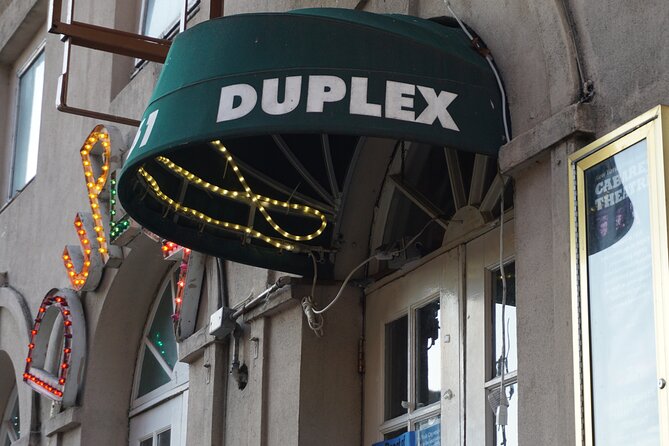
Next up is The Duplex. Here the narration focuses on comedy history tied to that venue and on the comedians who rose through this kind of stage.
Small clubs like The Duplex matter because they were often where timing got refined and styles hardened. Big media comes later, but these rooms shaped the voice and the craft that later audiences would recognize on TV or radio.
What you get here: a guided sense of lineage—how a specific venue fits into the bigger shift of American comedy.
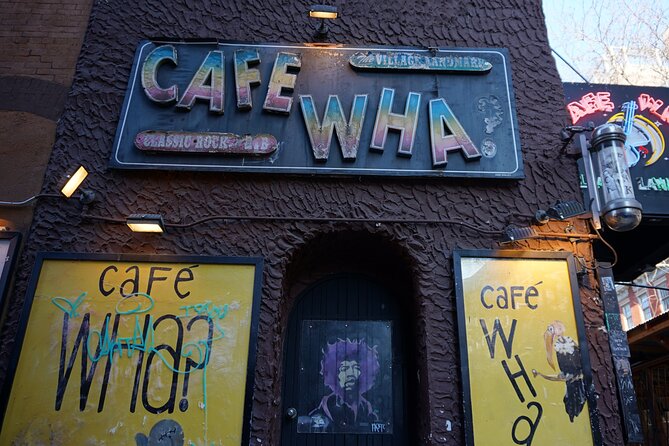
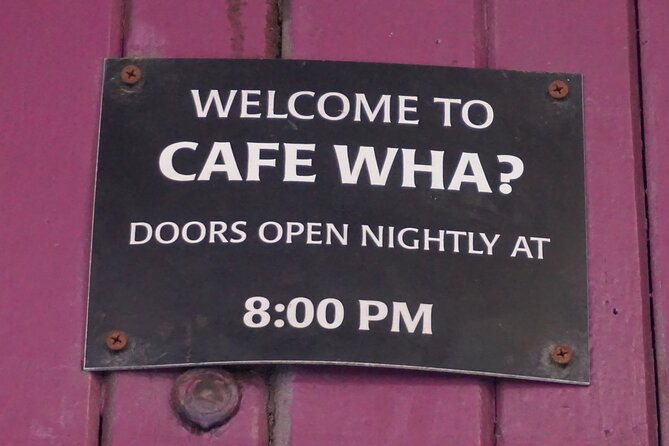
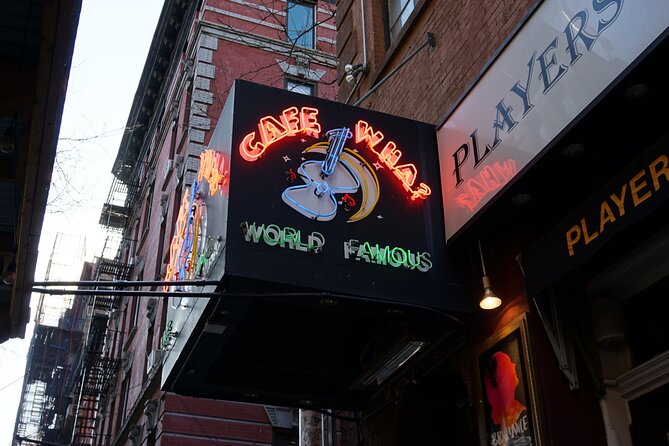
Stop 3: Cafe Wha? (a Village stage with real credibility)
At Cafe Wha?, the tour keeps building the same theme: comedy history plus the performers associated with the venue.
This stop works especially well if you enjoy the way cultural scenes cluster. The Village is not one isolated theatre story. It’s an ecosystem. The guide helps you see that Cafes and clubs weren’t just places to watch shows. They were places where the city tested new material and introduced audiences to evolving comedy styles.
Consideration: since the stop is short, you’ll leave wanting to see more. That’s not a problem, it’s a nudge to pair this tour with an actual comedy night.
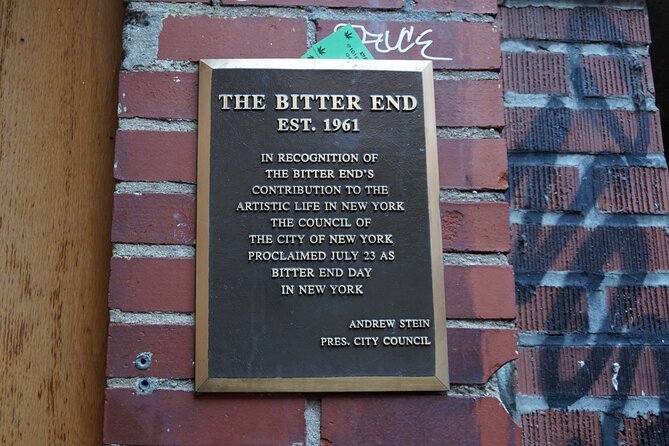
Stop 4: Bitter End (The Cafe Au Go Go to The Bitter End thread)
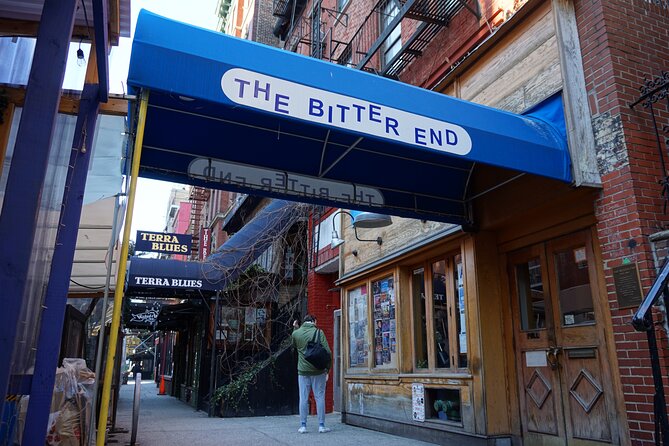
Then you move to Bitter End. The guide ties it to the Cafe Au Go Go and The Bitter End, and points out how those rooms helped launch famous comedians.
This stop adds value by showing that the comedy scene didn’t grow in a straight line. Different venues fed different audiences, and each room had its own personality. The guide uses photos to keep the story specific instead of generic.
Why it matters for you: you walk away with a better sense of how venues shaped the kind of comedy that got attention. That makes later club visits feel more meaningful.
Stop 5: The Grisly Pear Comedy Club (TV’s rise and SNL connections)
At The Grisly Pear Comedy Club, the narration shifts to the rise of television in the 1960s. This is where the tour connects the Village club scene to the national stage.
The guide also discusses the creation of Saturday Night Live and highlights African American contributions to comedy. This stop is a key turning point because it frames how TV changed what comedy looked like, how performers reached wider audiences, and how comedy formats evolved.
If you’re a comedy nerd: this stop is the payoff for people who want the “how did we get from there to here” story. The guide also notes modern comedy clubs in NYC, which helps you think beyond the past.
Stop 6: Comedy Cellar (marquee moment and photo time)
Next is Comedy Cellar. The guide covers the history of the venue and offers to take photos in front of the famous marquee.
That photo op isn’t just for fun. It’s a quick way to anchor what you heard. When you later think about what you learned, having a visual reminder of the stop helps the whole timeline stick.
Practical note: if you’re traveling with someone else, this is an easy moment to line up a couple of photos before you move on.
Stop 7: Village Underground (second Comedy Cellar location + bonus show access)
The final stop is Village Underground. The guide shows the second location of Comedy Cellar at Village Underground and points out a local stand-up comedy show you get free access to later that evening.
This is a big reason to book. You’re not only learning the story of comedy—you’re also being guided toward an actual comedy moment right after the walk. For many people, it turns the tour from history sightseeing into a live-night plan.
You’ll end near 130 W 3rd St, so it’s convenient to shift directly into dinner plans and then head to the show.
The Guide Experience: What to Expect from the Narration
The tour is structured around guide narration with photos at the stops. That visual support matters because it keeps you oriented through time jumps—from vaudeville years to later club eras to the TV era.
A guide like Joe is often described as friendly, funny, and engaged, and the experience is set up to be interactive. That shows up in how smoothly questions can fit into the walk, and how the guide seems to adjust to what you’re curious about.
In plain terms: you should expect a tour that talks like a person, not a script. When the guide takes time explaining the spots, you’ll feel less rushed and more connected to each venue.
How to Make the Most of It (Before and After)
If you’re planning your day, think of this tour as a warm-up. You’re building context for comedy, and the tour naturally feeds into a night of shows.
Here are a few smart moves:
- Wear comfortable shoes. You’re walking through a compact area, but you’ll still be on your feet the whole time.
- Bring a charged phone. You’ll have a mobile ticket, and you may want photos as you move.
- If you care about TV history, stay tuned through the Grisly Pear stop. That’s where the story pivots toward what you likely recognize from modern comedy.
- Plan for an evening comedy option. The tour includes free access to a local stand-up show later that evening.
Also, since the tour duration is about 1 hour 15 minutes, it’s easy to combine with other Village plans. You don’t have to clear your whole schedule to get a meaningful experience.
Should You Book NYC’s History of Comedy Tour?
You should book if you want:
- A compact Greenwich Village walk that connects club comedy to TV developments.
- A guide-led route through major venues like Cafe Wha?, Bitter End, and Comedy Cellar.
- A chance to get free access to a stand-up show later that evening.
- A small-group feel with up to 20 travelers.
You might skip it if you’re looking for a long, slow stroll with tons of time inside venues, because the tour is designed to cover a lot of ground quickly and keep moving between landmarks.
If you’re excited about understanding the roots of modern comedy—and you want a practical way to turn that into a real evening show plan—this is a strong fit. It’s history you can feel on the street, with enough fun built in to make it more than just facts.
FAQ
How long is the NYC’s History of Comedy Tour?
The tour lasts about 1 hour 15 minutes.
Where does the tour start and end?
It starts at 13 Christopher St, New York, NY 10014 and ends at Village Underground, 130 W 3rd St, New York, NY 10012.
How much does the tour cost?
The price is $30.00 per person.
What language is the tour offered in?
The tour is offered in English.
Do I need to print a ticket?
No. You’ll receive a mobile ticket.
Are there different tour times during the day?
Yes. There are both morning and afternoon tour options available.
Is there a group size limit?
Yes. The tour has a maximum of 20 travelers.
Does the tour include anything to do after the walk?
At the Village Underground stop, the guide notes a local stand-up comedy show you get free access to later that evening.
What is the cancellation policy?
You can cancel for a full refund up to 24 hours in advance. If you cancel within 24 hours of the start time, the amount paid is not refunded.
The Story of New York City
- New York City: American Museum of Natural History Ticket★ 4.5 · 15,447 reviews
- NYC: Starship Landmark 90 Minute Sightseeing Cruise★ 4.6 · 3,666 reviews
- Starship Landmark 90 Minute Sightseeing Cruise★ 4.5 · 2,073 reviews
- American Museum of Natural History Admission Ticket★ 4.0 · 1,931 reviews
- Top Rated Brooklyn Half-Day Food, History & Culture Tour via bus★ 5.0 · 758 reviews
More Tours in New York City
- Statue of Liberty and Ellis Island Tour: All Options★ 5.0 · 13,571 reviews
- New York in One Day Guided Sightseeing Tour★ 5.0 · 13,166 reviews
- Central Park Pedicab Guided Tours★ 5.0 · 7,108 reviews
- New York City: Manhattan Helicopter Tour★ 4.7 · 7,076 reviews
- Private Central Park Pedicab Tour★ 5.0 · 6,981 reviews
More Tour Reviews in New York City
- NYC: SUMMIT One Vanderbilt Tickets★ 4.7 · 51,195 reviews
- NYC: Empire State Building Tickets – Observatory & Museum★ 4.7 · 25,757 reviews
- New York City: Statue of Liberty & Ellis Island with Ferry★ 4.6 · 18,683 reviews
- New York City: American Museum of Natural History Ticket★ 4.5 · 15,447 reviews
- Statue of Liberty and Ellis Island Tour: All Options★ 5.0 · 13,571 reviews
Just in: the newest New York City reviews on our desk



Historical Tours, compared.
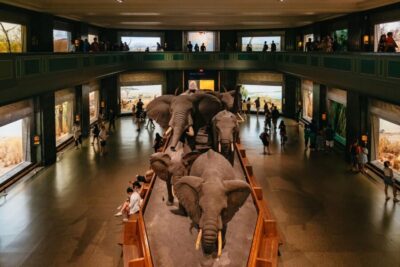 ★ 4.5American Museum of Natural History TicketFrom $3715,447 reviews
 ★ 4.6Starship Landmark 90 Minute Sightseeing CruiseFrom $343,666 reviews
 ★ 4.5Starship Landmark 90 Minute Sightseeing CruiseFrom $342,073 reviews
 ★ 4.0American Museum of Natural History Admission TicketFrom $371,931 reviews
 ★ 5.0Top Rated Brooklyn Half-Day Food, History & Culture Tour via busFrom $189758 reviews
 ★ 4.7Speakeasy Drinks and Prohibition History TourFrom $36474 reviews
 ★ 5.0The Original Greenwich Village Food & Cultural Tour Since 1999From $99254 reviews
 ★ 5.0The Speakeasy Adventure: A Tipsy Trip Through HistoryFrom $38220 reviews
Browse the lists this tour appears in