
Reviewed · QUEENS TOURS
Queens Corona’s Culinary Essentials Tour
A morning in Queens can feel like a passport stamp. This Queens Corona’s Culinary Essentials Tour stitches together breakfast pastries, a savory brunch, and dessert stops across Corona and Jackson Heights, with a group that stays small.
Two things I like a lot: the max group size of 7 means you get time to ask questions (and actually hear the stories), and the route avoids the heavy Manhattan foot traffic while still feeling like real New York. You also get breakfast, lunch, and soda/pop included, so the $95 is less about paying extra and more about sampling your way through neighborhoods.
One thing to think about: the food mix has a strong pastry-and-snack start, so if you prefer lots of classic sit-down-style courses, you’ll want to go in hungry and ready to snack, not just dine.
In This Review
- Key highlights worth showing up for
- Why Queens feels like the better food bet
- Corona Plaza: a pedestrian-only start that sets the tone
- What to know before you go
- Pit-roasted goat brunch with neighborhood families
- A practical note on comfort
- Roosevelt Avenue in Jackson Heights: where street food energy shows up
- Argentinean treats: a corner bakery stop with a sweet plan
- Cholado: a cold, fruity dessert that’s easy to love
- If you hate cold desserts
- A Veracruz shrimp cocktail at the edge of Jackson Heights
- Price and value: what $95 really buys you
- The guide factor: Sierra’s local connections
- Who this tour is best for (and who might want a different style)
- Tips to make your Queens walk easier
- Should you book Queens Corona’s Culinary Essentials Tour?
- FAQ
- How long is the Queens Corona’s Culinary Essentials Tour?
- How much does the tour cost?
- What’s the group size limit?
- Where do we meet, and where does the tour end?
- What time options are available?
- What language is the tour offered in, and do I get a ticket?
- What food and drinks are included?
- Is the tour dependent on weather, and what if I need to cancel?
Key highlights worth showing up for
- Small groups (up to 7) make it easier to connect with the guide and the people running the food stops
- Two morning start times give you scheduling flexibility without losing the half-day flow
- Corona + Jackson Heights covers two immigrant-heavy food worlds with Latin American flavors in the spotlight
- Pit-roasted goat brunch gives you a proper savory centerpiece, not only sweets
- Cholado (Colombian Snow Cone) is a fun, flavorful dessert stop that’s easy to remember
- Tastings plus meals included (breakfast, lunch, snacks, soda/pop) help the value pencil out quickly
Across the river: more of Queens
- NYC Bus Tour of Brooklyn, Bronx, Queens: Art, Food & Sports
★ 5.0 · 3,805 reviews - NYC Highlights Tour: Bronx, Brooklyn, Harlem, Queens & Coney
★ 4.5 · 2,846 reviews - NYC: Contrasts Tour of Harlem, The Bronx, Queens & Brooklyn
★ 4.5 · 2,167 reviews - From Manhattan: Bronx, Queens and Brooklyn Half-Day Tour
★ 4.3 · 1,321 reviews
Why Queens feels like the better food bet
Queens is where a lot of New York’s food energy lives day to day, not just in trend reports. This tour leans into that reality by focusing on Corona and Jackson Heights, two neighborhoods packed with Latin American community businesses and longtime family-run kitchens.
What you gain here is breathing room. The idea is simple: you’re still in NYC, but you’re walking in a part of town where the crowds tend to feel lighter than the big Manhattan loops. That makes it easier to enjoy street life, hear the guide’s context, and actually taste what’s in front of you.
And the small group size matters more than it sounds. With a maximum of 7 people, the pacing stays human. You’re less likely to feel rushed between stops or stuck in a line where nobody can hear.
Corona Plaza: a pedestrian-only start that sets the tone
The tour begins at Corona Plaza, at 40-04 National St in Corona. You’ll start the morning in a pedestrian-focused square that works like a natural meeting hub, the kind of place where locals actually pass through.
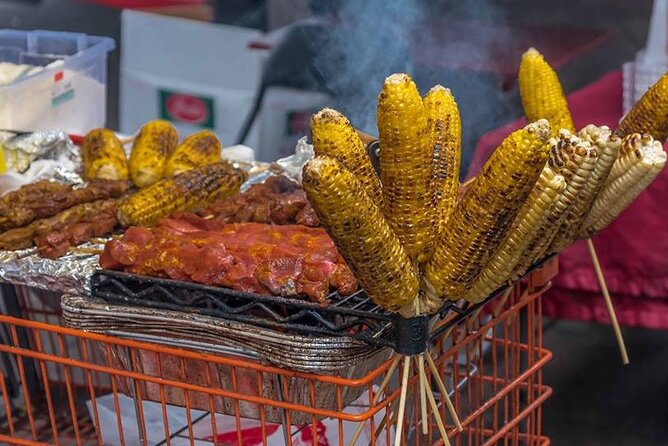
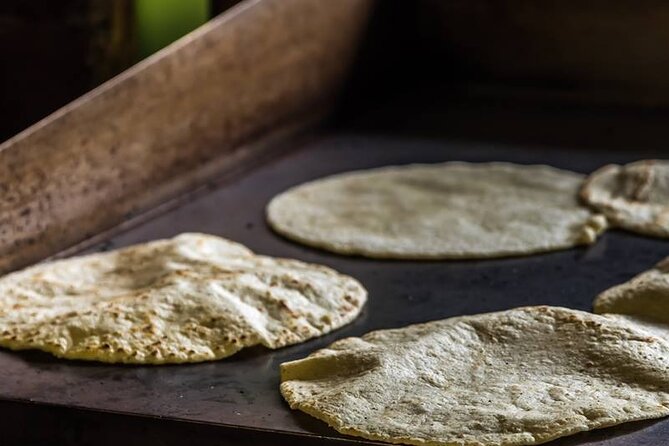
From there, you’ll hit a family-run Mexican bakery. This is the kind of place where the ritual is part of the tasting: you’ll see trays laid out with sweet breakfast pastries and rolls, and you’ll join that weekend pattern of picking what looks best. It’s a great opener because it warms up your palate before you move into bigger savory food later.
What I like about this approach is that it gives you something concrete to look for. Pastry isn’t just dessert here; it’s morning routine. You learn to pay attention to textures (crisp edges, soft interiors), not only sugar levels.
What to know before you go
This first stretch can be a lot of sweet smells at once. If you’re sensitive to strong cinnamon or sugary aromas, pace yourself and save your water for after the first bakery stop.
Still hungry? More New York City food tours

Pit-roasted goat brunch with neighborhood families
After the bakery, the tour moves to an out-of-the-way spot where you sit down with neighborhood families for a Mexican-style brunch built around pit-roasted goat. This is one of the biggest reasons the tour feels worth it: you get a centerpiece that’s savory, hearty, and tied to community eating, not just a quick bite-and-run tasting.
This stop also balances the morning’s pastry focus. Instead of treating food as a parade of snacks, you get a moment that looks and feels like a real meal. It’s the kind of lunch that fills you up enough to enjoy the rest of the walk without feeling snack-deprived.
A practical note on comfort
You’ll be doing a walking tour through two neighborhoods. Plan to wear shoes that handle uneven sidewalks, and consider bringing a small bottle of water, even if soda/pop is included later.
Roosevelt Avenue in Jackson Heights: where street food energy shows up
Next comes Jackson Heights, rolling along Roosevelt Avenue. On weekends, that street life comes alive with vendors from across Latin America. Even if you don’t stop at every cart, you get the sensory backdrop: chatter, cooking smells, and the sense that food is an everyday marketplace, not a performance.
This part of the tour matters because it connects the tasting stops to the street context. When you understand where food comes from and how it’s sold, the bakery samples feel less random and more like part of a system.
And because the group stays small, you’re less likely to feel squeezed while walking and looking at storefronts and vendors.
Argentinean treats: a corner bakery stop with a sweet plan
Toward the middle of the Queens walk, you’ll stop at an Argentinean corner bakery for traditional treats. The key here is variety. You’re moving across cuisines without the tour feeling like it’s switching topics every three minutes.
This stop works best if you enjoy comparison. Taste the textures, not just the flavors. Are the sweets more bread-like or more pastry-like? Are they airy or dense? Those small differences help the tour stick in your memory.
If you’re traveling with someone who likes desserts and someone who wants savory, this is a good compromise. You’ll both feel like you’re getting something you came for.
Cholado: a cold, fruity dessert that’s easy to love
The tour includes a stop for cholado, described as a hybrid frozen dessert and fruit salad, also known as the Colombian Snow Cone. It’s a fun choice because it’s both refreshing and playful, and it works well after earlier sweet pastries.
This is the kind of dessert that helps you reset your palate before the final stop. Expect a mix of fruit-forward flavors and a frosty texture that feels like a break from the earlier bites.
If you hate cold desserts
If frozen fruit salads or snow-cone-style textures aren’t your thing, you might still enjoy watching the table conversation around it. But it could be an obvious flavor preference test, so decide based on your own dessert style.
A Veracruz shrimp cocktail at the edge of Jackson Heights
The final food stop is at a small bodega opened by a man from Veracruz, Mexico. You’ll step inside for a celebratory shrimp cocktail, a satisfying savory finish after sweets and pastries.
This last stop also puts a sense of geography around the day. You end at the edge of Jackson Heights and Elmhurst, two immigrant neighborhoods that hold their own culinary riches. Even if you only scratch the surface during a half-day, the walk leaves you aware that Queens isn’t one food story. It’s many.
Then you return back to the meeting point. The loop design helps you feel like you accomplished a complete mini-journey without needing extra transit planning.
Price and value: what $95 really buys you
At $95 per person for about 4 hours, the big value question is whether this is just “a few tastes” or something more. Here’s how it stacks up from what you get included:
- Breakfast (at the Mexican bakery)
- Lunch (Mexican-style brunch featuring pit-roasted goat)
- Snacks across the route
- Soda/pop
- No extra admission costs for the listed tasting stops (marked as ticket-free)
So you’re paying for more than walking and storytelling. You’re paying for a guided plan that organizes multiple food moments into one coherent route. And because it caps at 7 people, you get more attention per person than large group tours.
Also, this is the kind of tour where private transportation is not included. That’s fine, because the meeting point is stated to be near public transportation and the tour is built for foot traffic.
The guide factor: Sierra’s local connections
A name that shows up in the strongest feedback is Sierra. People describe Sierra as engaging, well informed about the neighborhoods, and connected to the food owners serving the group.
There’s also mention of Anna (in training) helping out with cultural context and explaining differences between communities. If you like food tours where the guide ties what you taste to why it matters in that neighborhood, this kind of support can make the experience feel more thoughtful than a simple tasting march.
Who this tour is best for (and who might want a different style)
This works especially well if you:
- Want to eat across multiple Latin American-influenced food styles without bouncing across the city
- Prefer a small group and a more conversational pace
- Like food tours that include actual sit-down time, not only standing bites
It might feel less perfect if you:
- Want a heavy focus on soups, cheese plates, or lots of separate hot savory courses
- Are traveling with someone who only wants one kind of food (for example, only classic desserts or only meat-focused dishes)
The tour does include a major savory meal, but the overall flow does start with pastries and sweets. The upside: you won’t feel stuck waiting for savory. The first half just leans lighter.
Tips to make your Queens walk easier
A few practical habits help you get the most out of a half-day food tour like this:
- Wear shoes you can keep on for 4 hours of city walking.
- Don’t overpack your morning. If you eat a huge breakfast right before, you’ll feel the pastry part more than the goat part.
- Bring an open mind about dessert. Cholado is a specific style, and it’s part of the point.
- If the day looks wet, aim to have a light rain layer. The experience is described as weather-dependent, meaning it’s not purely indoors.
Should you book Queens Corona’s Culinary Essentials Tour?
I’d book this if your ideal New York food day includes a small group, real neighborhood stops, and a mix of breakfast, lunch, and desserts that actually follow a route instead of hopping randomly. The pricing feels more reasonable when you treat it as a planned food itinerary, not a snack sampler.
If you mainly want a long list of hot savory mains or you’re pastry-averse, then the overall food rhythm might not match your taste. In that case, look for a different format or plan a fuller meal after the tour.
For most people, though, this is a smart value choice: less Manhattan crowd energy, more Queens street food reality, and enough included food to genuinely feel like a meal day, not an appetizer tour.
FAQ
How long is the Queens Corona’s Culinary Essentials Tour?
It runs for about 4 hours.
How much does the tour cost?
The price is $95.00 per person.
What’s the group size limit?
This tour has a maximum of 7 travelers.
Where do we meet, and where does the tour end?
You start at Corona Plaza, 40-04 National St, Corona, NY 11368, USA, and the tour ends back at the same meeting point.
What time options are available?
The tour offers two morning start times for flexibility.
What language is the tour offered in, and do I get a ticket?
The tour is offered in English, and you’ll receive a mobile ticket.
What food and drinks are included?
The tour includes snacks, breakfast, lunch, and soda/pop.
Is the tour dependent on weather, and what if I need to cancel?
Yes, the experience requires good weather. It also has free cancellation up to 24 hours in advance for a full refund. If you cancel less than 24 hours before the start time, the amount you paid will not be refunded.
More Tour Reviews in New York City
- NYC: SUMMIT One Vanderbilt Tickets★ 4.7 · 51,195 reviews
- NYC: Empire State Building Tickets – Observatory & Museum★ 4.7 · 25,757 reviews
- New York City: Statue of Liberty & Ellis Island with Ferry★ 4.6 · 18,683 reviews
- New York City: American Museum of Natural History Ticket★ 4.5 · 15,447 reviews
- Statue of Liberty and Ellis Island Tour: All Options★ 5.0 · 13,571 reviews
Eat Your Way Through New York City
- NYC: Chinatown & Little Italy Food Tour with 7 Flavorful Tastings★ 5.0 · 2,733 reviews
- Original NYC Guided Food Tour of Chinatown and Little Italy★ 5.0 · 2,194 reviews
- NYC: Greenwich Village Food Tour with 6 Locals Favorites Dishes★ 5.0 · 1,812 reviews
- Greenwich Village Walking and Food Tasting Tour★ 5.0 · 1,572 reviews
- New York City Mafia and Local Food Tour led by NYPD Guides★ 5.0 · 1,197 reviews
Out in Queens
- NYC Bus Tour of Brooklyn, Bronx, Queens: Art, Food & Sports★ 5.0 · 3,805 reviews
- NYC Highlights Tour: Bronx, Brooklyn, Harlem, Queens & Coney★ 4.5 · 2,846 reviews
- NYC: Contrasts Tour of Harlem, The Bronx, Queens & Brooklyn★ 4.5 · 2,167 reviews
- From Manhattan: Bronx, Queens and Brooklyn Half-Day Tour★ 4.3 · 1,321 reviews
- NYC: Contrasts of Bronx, Queens, Brooklyn, & Manhattan Tour★ 4.7 · 1,110 reviews
Just in: the newest New York City reviews on our desk





Queens Tours, compared.
 ★ 5.0NYC Bus Tour of Brooklyn, Bronx, Queens: Art, Food & SportsFrom $843,805 reviews
 ★ 4.5NYC Highlights Tour: Bronx, Brooklyn, Harlem, Queens & ConeyFrom $462,846 reviews
 ★ 4.5Contrasts Tour of Harlem, The Bronx, Queens & BrooklynFrom $392,167 reviews
 ★ 4.3From Manhattan: Bronx, Queens and Brooklyn Half-Day TourFrom $791,321 reviews
 ★ 4.7Contrasts of Bronx, Queens, Brooklyn, & Manhattan TourFrom $561,110 reviews
 ★ 4.6Brooklyn, Bronx, Queens Sightseeing Bus TourFrom $84555 reviews
 ★ 4.0All Inclusive Airport Departure Transfer NYC/ Brooklyn/QueensFrom $152342 reviews
 ★ 4.5New York contrasts: Manhattan, The Bronx, Queens & BrooklynFrom $40223 reviews
Browse the lists this tour appears in