
Reviewed · CENTRAL PARK TOURS
Secret Places of Central Park
Central Park hides more than you think. This tour leads you off the main tracks and into quieter corners, where the park’s design choices feel personal and full of meaning. I especially like how it mixes secret spots with real context, so you’re not just passing scenery—you’re getting the story behind it.
Two things I really like: the small group format (maximum 15 travelers) and the fact that you spend time in Upper Central Park, not just the most famous loops. You’ll also walk away from crowds at just the right moments, then return to the more public park areas feeling like you actually explored instead of just walked.
One possible drawback: the route is about 3.25 miles over uneven, unpaved trails with rocks, some short steep hills, and slippery spots if the weather turns. Bring real walking shoes and expect a “park workout” more than a flat stroll.
In This Review
- Key things that make this Central Park tour worth your time
- Where you meet and how the 2.5-hour format feels in real life
- Getting started at The Pool: the park’s origin story, then the secret Grotto
- Glen Span Arch: a high stone passage with 1860s drama
- The Ravine and North Woods: manmade Adirondack feel with real bird sound
- Harlem Meer viewpoints: water, forts, and a calmer kind of sightline
- The Loch: walking beside a water feature in the North Woods
- The Blockhouse fort: War of 1812 history in an unexpected setting
- Conservatory Garden: French, English, and Italian formal gardens in one visit
- Andrew Haswell Green Bench: meeting a key figure behind New York’s park story
- Price and value: what $52.95 buys you (and why it’s not just a walk)
- Pace, terrain, and the shoe decision you’ll thank yourself for
- Weather and access reality: rain-or-shine, but with some flexibility
- Who this tour fits best (and who might prefer another style)
- Should you book Secret Places of Central Park?
- FAQ
- How long is the Secret Places of Central Park tour?
- What distance will we walk?
- How big is the group?
- Where does the tour start and end?
- Is the tour offered in English?
- Will we get a mobile ticket?
- Does the tour run in bad weather?
- Is there a cancellation window for a refund?
- Do I need to have good walking ability?
- Are service animals allowed?
Key things that make this Central Park tour worth your time
- Up to 15 people means a more personal pace and easier conversation with your guide
- Secret stops you won’t stumble on by accident, including The Pool and the Grotto area
- Upper Central Park focus keeps you away from the densest crowds for long stretches
- A tight 2.5-hour route that packs a lot in without feeling rushed
- French, English, and Italian Conservatory Garden visits built in the 1930s
More ways to see Central Park
- Central Park Pedicab Guided Tours
★ 5.0 · 7,108 reviews - Private Central Park Pedicab Tour
★ 5.0 · 6,981 reviews - NYC: Central Park Bike Rentals
★ 4.2 · 2,528 reviews - Official NYC Horse Carriage Rides in Central Park since 1979 ™
★ 5.0 · 2,365 reviews
Where you meet and how the 2.5-hour format feels in real life
This is a guided walking tour in New York City with a mobile ticket and English-language guide. It runs for about 2 hours 30 minutes and covers roughly 3.25 miles, ending back at the start near 405 Central Park West.
The format matters. A tour like this isn’t trying to “cover all of Central Park.” Instead, it chooses specific less-traveled places where the park’s design shows through. That’s how you get both variety and meaning: water features, stone structures, historic forts, and formal gardens in one connected walk.
You’ll also get a choice of departure times to fit your day. That’s helpful in NYC, where Central Park often fights you for time. If you pick a slot that avoids the busiest hours, you’ll feel the crowd-avoidance advantage even more.
Getting started at The Pool: the park’s origin story, then the secret Grotto
The tour begins at The Pool, and it starts with the big picture: who designed the park, why it was built, when it was built, and how construction was done. That’s not trivia for trivia’s sake. It gives you a framework for what you’ll see next, because Central Park isn’t a random green space—it’s a carefully engineered public landscape with “designed nature.”
Then you move along the paths and rolling terrain around The Pool. This is where the park starts to feel like a movie set made for real people: curves, sightlines, and surprises that reward a slower pace.
After that, you visit the secret Grotto waterfall and learn its purpose. The word secret is real here—not in a “you found treasure” way, but in a practical way: it’s not something most visitors time into their quick walk through the park. This is the kind of stop that makes you realize you’ve been looking at Central Park from the wrong angle.
What to expect: standing in one spot, listening, then walking again before the area gets busy. If you like learning why places exist—not only what they look like—this first stretch sets the tone.
Glen Span Arch: a high stone passage with 1860s drama
Next comes Glen Span Arch, a sensational stone arch designed in the 1860s. The wow moment here is the physical scale. You pass through a high arch where the stone feels built for theatrical framing, not just function.
This stop works for two reasons. First, it’s visually different from water and lawns. Second, it gives you a breather in the tour that still feels story-driven. Instead of only moving from viewpoint to viewpoint, you experience a structure that changes how the park “reads” around you.
Practical note: arches and stone areas can be a little slick if it’s wet. Take your time walking through, especially on rainy days.




The Ravine and North Woods: manmade Adirondack feel with real bird sound
Then you get the “leave the city behind” effect at The Ravine. This section is described as manmade Adirondack Mountain scenery inside Central Park, specifically the North Woods area. That contrast is part of the fun. You’re in Manhattan, but the design tries to create the feeling of a rugged mountain corner.
You’ll walk along the ravine route and see a waterfall, plus rustic bridges made of stone and wood. You’re also surrounded by trees and the sounds of birds, which makes the whole section feel less like a sightseeing checklist and more like you’re moving through a quiet habitat.
Why this stop is a standout: it’s not just pretty. It’s a demonstration of how Central Park uses crafted terrain to create different “rooms.” If you’ve ever wondered why Central Park feels so much more varied than its size suggests, this is where that question answers itself.
Downside to consider: this is one of the more uneven-feeling stretches due to dirt and mulch and the general nature of the park trails. Wear shoes that grip.
Harlem Meer viewpoints: water, forts, and a calmer kind of sightline
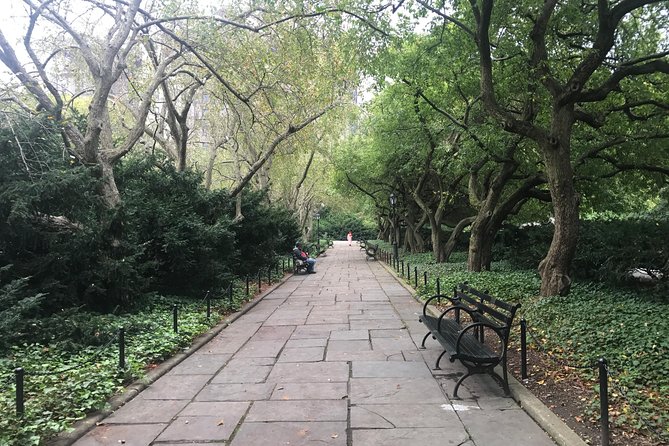
Next is Harlem Meer, a water body where you’ll get a great view from one of the forts. This part of the tour is short, but it gives you a useful change of pace: instead of walking continuously and constantly turning your head, you stop and take in a bigger view.
What makes it interesting is the combination of water and fort architecture. It’s a rare pairing in NYC at this level of walkable access, and it adds a “built history” layer to what could otherwise be a simple scenic stop.
If you’re traveling with someone who gets impatient with long explanations, this is the kind of stop that still offers something concrete while keeping momentum. And if you like photography, this is a good place to get wider framing before the tour shifts back into walking along water.
The Loch: walking beside a water feature in the North Woods
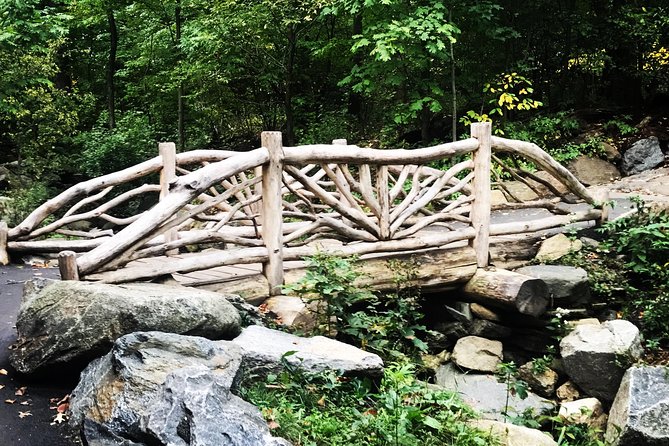
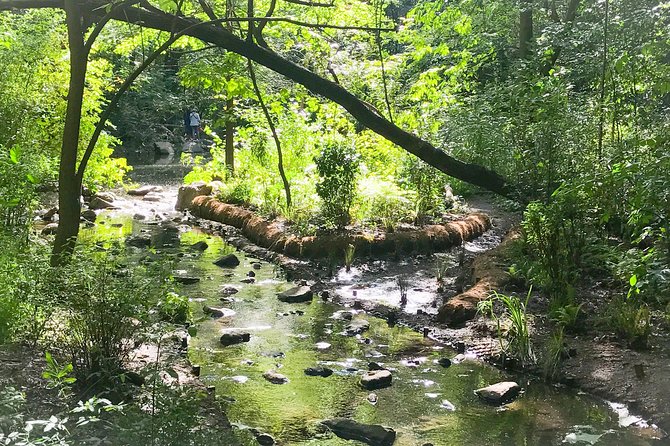
After Harlem Meer, you’ll head to The Loch and walk along this body of water in the North Woods. It’s a quieter, more lingering-feeling segment compared with the more structural surprise of Glen Span Arch.
This is where the tour earns its crowd-avoidance advantage. If you’ve only experienced Central Park from the most popular paths, The Loch can feel like a different park entirely—less “crossing through,” more “strolling beside.”
Practical tip: keep an eye on the ground surface here. Water-adjacent areas can be damp, and Central Park’s paths can be uneven even when they look smooth.
The Blockhouse fort: War of 1812 history in an unexpected setting
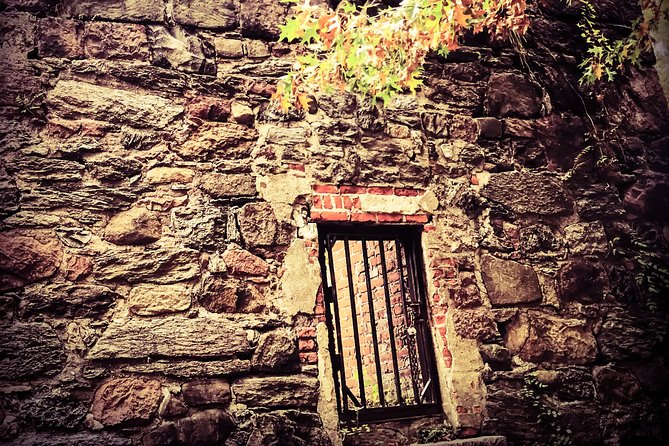
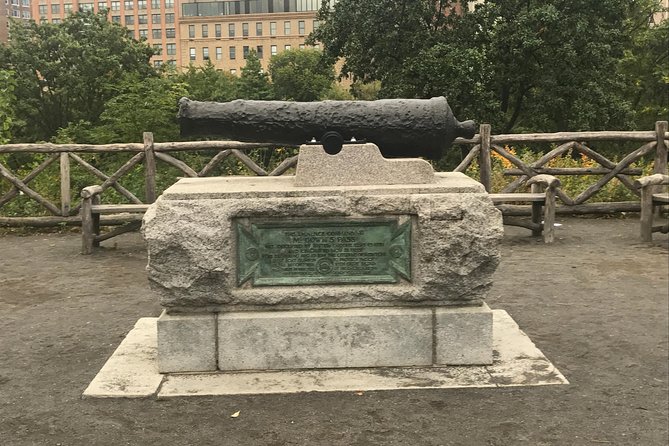
The tour then visits The Blockhouse, a War of 1812 fortification. This stop shifts the mood again—from park design and natural-feeling paths to military-era architecture and structure.
It’s worth paying attention to how the fort sits in the park. Central Park is known for being green and recreational, but it also has built-in history that can be easy to miss if you only skim the famous areas.
This is a great stop for history lovers and for anyone who likes to see why a park contains features that feel out of place—until you learn the logic behind them.
Conservatory Garden: French, English, and Italian formal gardens in one visit
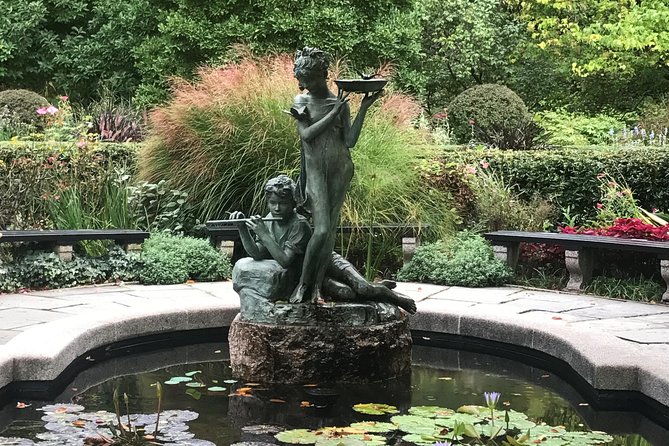
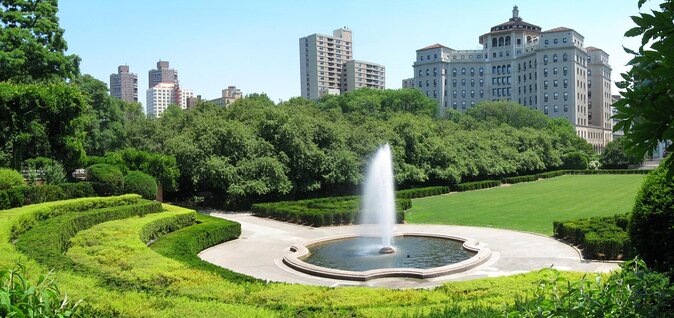
Then you arrive at Conservatory Garden, where you’ll see three formal gardens—French, English, and Italian—built in the 1930s. This is one of the most relaxing portions of the tour, because formal garden design naturally invites slower looking.
This stop also gives you a clean visual contrast to the more rugged-feeling sections like The Ravine and North Woods. The tour basically teaches your eyes how to read different Central Park “styles” back-to-back.
What I like about this stop from a visitor’s point of view: you don’t need to be an expert on garden design to enjoy it. The layout and pacing do the work for you. And because it’s formal, it’s also one of the easiest places to stop, regroup, and take a few photos without feeling like you’re holding up a fast group march.
Andrew Haswell Green Bench: meeting a key figure behind New York’s park story
The final named stop is the Andrew Haswell Green Bench. Here you hear about Andrew Haswell Green, described as a highly important figure in New York history that many people haven’t heard about.
Even without the “must-see” stamp that popular landmarks get, this is valuable because it changes how you think about parks. It reminds you that major public spaces usually come from real people pushing real plans, not just from nature deciding to grow.
Why it works as a tour ending: it’s reflective. After water, stone, trails, forts, and gardens, you finish with a human story that ties the park back to civic decision-making.
If your guide uses maps or pictures to connect dots between stops, this is often the moment when the information starts to click.
Price and value: what $52.95 buys you (and why it’s not just a walk)
At $52.95 per person, you’re paying for a guided walking experience that’s longer than a quick self-guided loop and smaller than typical mass tours. For the time—about 2.5 hours—you also get a lot of variety in one route: water features, stone architecture, fort history, and three formal gardens.
The value also comes from format. With a small group limited to 15 travelers, you’re more likely to get direct answers and to keep up at the right pace for photos and stops. If you’ve ever tried to “tour Central Park” solo, you know how easy it is to miss the exact things you’re most curious about—especially the less-trafficked areas.
One more detail that affects value: each stop lists admission ticket free, which means you’re not stacking extra paid entries on top of your tour cost. You’re paying for interpretation and route planning, not a bundle of separate attractions.
Pace, terrain, and the shoe decision you’ll thank yourself for
This tour is about 2.5 hours of walking that includes uneven terrain: unpaved trails, rocks, some steep but short hills, uneven stairs, and potentially slippery areas. That’s why the footwear advice is serious.
Here’s what I’d do if I were prepping:
- Wear shoes with grip, not fashion sneakers.
- Bring a layer for wind and temperature shifts. Central Park weather can feel different block to block.
- If it rains or snows, expect slower footing. Even if the tour runs, you’ll move carefully.
Good physical shape helps, but this isn’t a marathon. It’s more like a steady, active walk with occasional climbs and textured ground that slows you down in a normal way.
Weather and access reality: rain-or-shine, but with some flexibility
The tour runs rain, snow, and shine, and it notes there are no cancellations or rescheduling for rain or snow within 24 hours of the start. That means you should plan like it’s going to happen unless it’s clearly unsafe.
At the same time, some locations may not be open or accessible due to park closings or weather conditions. So you might get a slightly different experience at the edges of the route.
If you want a smooth day, check the forecast and dress for the conditions you’ll actually face on the ground—not the conditions in your head before you leave your hotel.
Who this tour fits best (and who might prefer another style)
This is a strong fit if you:
- Want Upper Central Park rather than only the famous, busy paths
- Love history that’s tied to what you see in front of you
- Prefer a small-group walk where the guide can answer questions
- Like a route with variety: water, stone, forts, and formal gardens
It’s also a good match for couples and friends who want something more interesting than a generic stroll.
It may be less ideal if you:
- Struggle with uneven, unpaved trails and short steep hills
- Need fully flat, fully paved walking paths
- Are expecting a fully accessible, barrier-free route across all stops
Should you book Secret Places of Central Park?
If you like the idea of Central Park as a designed, story-filled place—rather than just a big green rectangle—this tour is a smart buy. The small group size, the focused route, and the mix of features make it easy to feel like you learned something while also getting plenty of fresh air.
Also, the practical track record looks strong: it’s rated 5/5 with 74 reviews and recommended by 100% of people. That doesn’t replace your own judgment, but it does suggest the experience lands well with real visitors.
My take: book it if your main goal is to see quieter parts of the park with clear explanations and a manageable walking route. Skip it (or choose a gentler option) if your biggest priority is fully smooth, low-effort walking.
FAQ
How long is the Secret Places of Central Park tour?
It’s about 2 hours 30 minutes (approximately).
What distance will we walk?
The tour is approximately 3.25 miles.
How big is the group?
It’s a small group with a maximum of 15 travelers.
Where does the tour start and end?
The tour starts at 405 Central Park West and ends back at the same meeting point.
Is the tour offered in English?
Yes, the tour is offered in English.
Will we get a mobile ticket?
Yes, it includes a mobile ticket.
Does the tour run in bad weather?
Tours go out rain, snow, and shine. The only time cancellation/rescheduling applies is based on the tour’s weather requirements and conditions described by the provider.
Is there a cancellation window for a refund?
Free cancellation is available up to 24 hours in advance for a full refund.
Do I need to have good walking ability?
You should have a moderate physical fitness level. The route includes uneven terrain, unpaved trails, rocks, some steep short hills, uneven stairs, and potentially slippery areas. Suitable shoes are essential.
Are service animals allowed?
Yes, service animals are allowed. Children must be accompanied by an adult.
More Tour Reviews in New York City
- NYC: SUMMIT One Vanderbilt Tickets★ 4.7 · 51,195 reviews
- NYC: Empire State Building Tickets – Observatory & Museum★ 4.7 · 25,757 reviews
- New York City: Statue of Liberty & Ellis Island with Ferry★ 4.6 · 18,683 reviews
- New York City: American Museum of Natural History Ticket★ 4.5 · 15,447 reviews
- Statue of Liberty and Ellis Island Tour: All Options★ 5.0 · 13,571 reviews
More of Central Park
- Central Park Pedicab Guided Tours★ 5.0 · 7,108 reviews
- Private Central Park Pedicab Tour★ 5.0 · 6,981 reviews
- NYC: Central Park Bike Rentals★ 4.2 · 2,528 reviews
- Official NYC Horse Carriage Rides in Central Park since 1979 ™★ 5.0 · 2,365 reviews
- NYC: Central Park Bike Rental★ 4.1 · 1,651 reviews
Just in: the newest New York City reviews on our desk





Central Park Tours, compared.
 ★ 5.0Central Park Pedicab Guided ToursFrom $387,108 reviews
 ★ 5.0Private Central Park Pedicab TourFrom $386,981 reviews
 ★ 4.2Central Park Bike RentalsFrom $92,528 reviews
 ★ 5.0Official NYC Horse Carriage Rides in Central Park since 1979 ™From $992,365 reviews
 ★ 4.1Central Park Bike RentalFrom $81,651 reviews
 ★ 4.9Private Central Park Pedicab TourFrom $401,637 reviews
 ★ 4.7Central Park Bike RentalFrom $91,509 reviews
 ★ 4.0Carriage Ride in Central Park (VIP – PRIVATE) Since 1964™From $141,074 reviews
Browse the lists this tour appears in