
Reviewed · STREET ART
Street Art Tour in New York City with Local Expert Guide
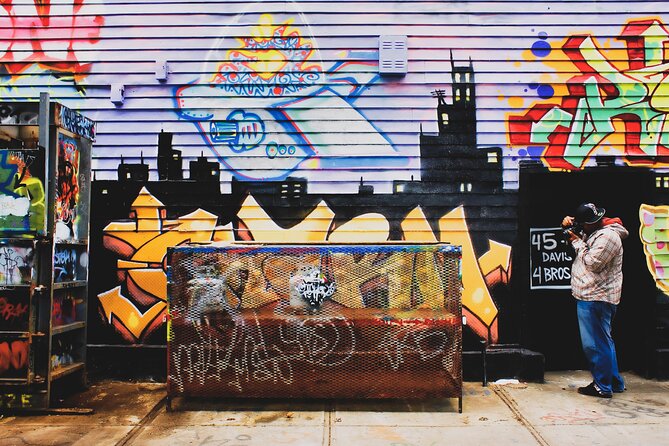
Street art in NYC can feel random. This tour gives it a map, a context, and a local voice as you hop borough to borough. You’ll start with DUMBO Walls, then keep rolling through spots where murals and tags sit right alongside daily city life.
What I like most is the focus on street-level variety. You see graffiti, painted pieces, and digital/modern work in the same outing, and the route is designed so the art is the main event—not a side stop.
One thing to consider: this is street art, not a museum tour. Some walls lean more toward tagging and vandal marks than polished murals, so if you want only clean, gallery-style street art, you’ll want to set expectations.
In This Review
- Key highlights that make this tour worth your time
- Why this street art walk feels different from a typical NYC tour
- Price and value: what $159 buys you (and why it can be fair)
- Timing, walking pace, and how the route works in practice
- Stop-by-stop: DUMBO Walls, Little Italy, the Lower East Side, SoHo, and the High Line
- Stop 1: DUMBO Walls in Brooklyn (20 Jay St.)
- Stop 2: Little Italy’s L.I.S.A. Project on Mulberry St.
- Stop 3: Freeman Alley on the Lower East Side
- Stop 4: Bowery Mural at 76 E Houston St.
- Stop 5: First Street Green Cultural Park at 33 E First St.
- Stop 6: Centre-Fuge Public Art Project on E First St.
- Stop 7: SoHo’s mural honoring hip-hop roots and break dancing culture
- Stop 8: High Line Linear Park and Highline Art on the West Side
- What to do with your photos and what to look for as you walk
- Where to go after the tour: keep your art day going
- Who this street art tour is best for
- Should you book this street art tour in NYC?
- FAQ
- How long is the street art tour?
- What time does it start?
- Is pickup available?
- What’s the group size?
- Is the tour offered in English?
- Are there entrance fees or food included?
- Can I cancel and get a full refund?
Key highlights that make this tour worth your time
- Small group of up to 10 people, so you can hear the guide and actually look closely
- 8-wall DUMBO Walls stop with major artists tied to the project
- Lower East Side graffiti alleys like Freeman Alley, where the art feels tucked into real life
- Bowery Mural with Keith Haring roots, plus global artists added over time
- Construction-site canvases through the Centre-Fuge Public Art Project
- High Line street art with big-name public works near iconic city views
More days made simple with a guide
- Brooklyn Heights, DUMBO and Brooklyn Bridge guided tour in French
★ 5.0 · 117 reviews - Brooklyn: Sightseeing Bike Tour with Local Guide
★ 4.8 · 84 reviews - Private Harlem Tour in New York with Local Expert Guide
★ 4.5 · 17 reviews - Brooklyn Heights and DUMBO Self-Guided Walking Tour
★ 4.0 · 10 reviews
Why this street art walk feels different from a typical NYC tour
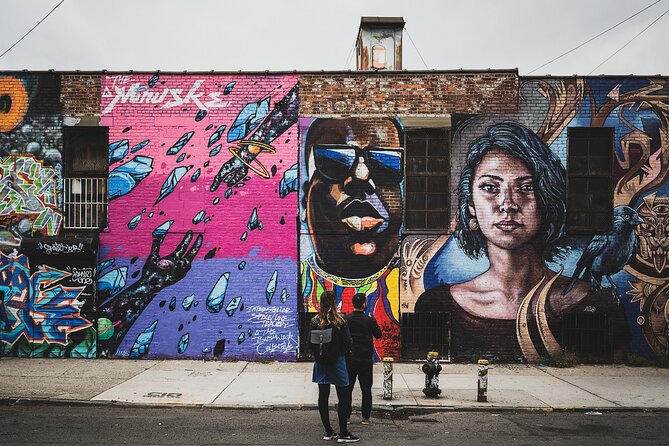
Street art in New York isn’t one style. It’s a moving mix of bold murals, big signatures, paste-ups, and layered histories that keep getting added to. I like that this tour treats all of it as part of the same city conversation—so you don’t just see pretty walls. You learn why they’re there.
The small group matters more than you might think. With a maximum of 10 people, the guide can pause, explain what to look for, and still keep the group together. That turns the experience into a real looking exercise, not a sprint where you’re stuck taking photos from the back.
Also, the tour isn’t only about art. The route threads through neighborhoods in a way that helps you get bearings fast—how bridges, streets, and older blocks shape what you see. If you finish the walk with better city instincts, that’s a win.
Price and value: what $159 buys you (and why it can be fair)
At $159 per person for about two hours, you’re paying for a few things that add up in NYC:
- A friendly local expert guide who helps you read the walls, not just point at them
- All fees and taxes included, which makes the final cost easier to track
- Access to off-the-beaten-path spots that are harder to find on your own
- Recommendations for what to do next, so you don’t end up wandering with no plan
Street art tours can vary wildly. If you’re the type who enjoys learning the stories behind public work—artists involved, what kind of wall it is, and what the project is trying to do—this price starts to feel reasonable. You’re buying context plus momentum, and that saves time.
Still, keep your own preferences in mind. This tour follows real neighborhood art, so some stops can lean raw and messy. You’re not paying for “perfect” curated murals only.
Timing, walking pace, and how the route works in practice
The tour runs for about 2 hours, starting at 9:00 am. Pickup is offered, and you’ll use a mobile ticket. It’s in English, and it’s set up for people with moderate physical fitness, since it’s a lot of walking and short viewing stops.
Because the route spreads across multiple neighborhoods, you may spend time moving between areas. The details provided emphasize being near public transportation, and the stops include places across different parts of NYC. To avoid surprises, I’d plan to bring transit fare if you think you’ll need it, or at least ask the operator what’s required for movement between stops.
One practical note: even if you love street art, you’ll still want good shoes. These stops are short, but the total walking adds up over two hours.
The big picture: more Brooklyn sightseeing

Stop-by-stop: DUMBO Walls, Little Italy, the Lower East Side, SoHo, and the High Line
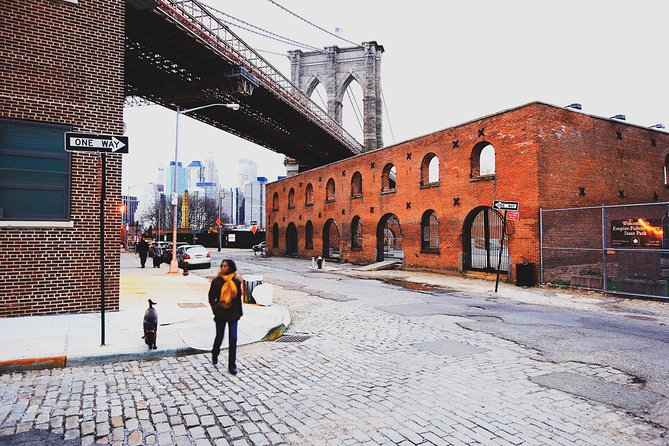
This is the heart of the tour. Each stop is chosen for a reason—project walls, alley graffiti, or public art attached to a neighborhood story.
Stop 1: DUMBO Walls in Brooklyn (20 Jay St.)
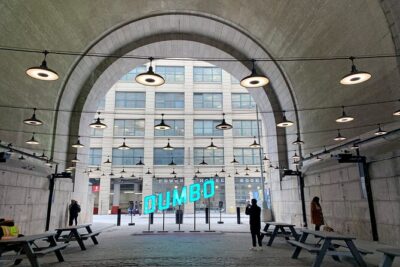
You start at DUMBO Walls, a space made up of eight walls tied to a well-known local project. It’s a setup that feels both playful and intentional: big public murals where you can stand close enough to see paint layers and styles without crowds swallowing the art.
A major plus here is the artist mix. The project has hosted artists including CAM, DALeast, Eltono, Shepard Fairey, Faith47, MOMO, Stefan Sagmeister, and Yuko Shimizu. That’s a strong range, and it helps you understand how street art ranges from graphic illustration to portrait-like mural work.
This stop also puts you near practical city-life fun. The Brooklyn Flea is nearby, and the area is the kind of place where you can pause to watch normal weekend routines—families, vendors, and people making their own plans. If you’re crossing toward Manhattan later, you can also use the area’s bridges and architecture as a natural photo moment.
Stop 2: Little Italy’s L.I.S.A. Project on Mulberry St.
Next you head to L.I.S.A. Project NYC on Mulberry St. This one is built around global artists, with work commissioned in collaboration with local merchants. The idea is street art as public culture that sticks to neighborhood streets instead of living behind gallery doors.
Artists listed for the project include Sonny Sundancer, Nick Walker, GATS, KaNOkid, Crash, and BKFOXX. Seeing that set of names right in the middle of Little Italy helps you notice how street art spreads stylistically—different countries, different approaches, one shared public stage.
You’ll also pass by a pair of museums in the same general zone: the Tenement Museum and the International Center of Photography Museum. That’s useful because you can keep your art day going without planning a whole separate outing.
Stop 3: Freeman Alley on the Lower East Side
At Freeman Alley, the vibe shifts. This is the kind of place where street art feels less like a festival and more like a lived-in hallway of walls. It’s described as a hidden pathway with graffiti energy on the brick facade.
Artists connected to the space include ASVP, Army of One, and Hanksy. And then there’s the most recent mural mentioned: James Goldcrown’s Love Wall, featuring colorful spray-painted hearts. That’s exactly the kind of detail that makes a short stop worth it—you’ll see texture, layering, and the way a mural can change the mood of a narrow corridor.
On the way to the next stop, you also pass the Basilica of St. Patrick’s Old Cathedral. It’s one of those built-spaces that reminds you you’re not just walking between murals. You’re walking through the city’s older architecture while younger art keeps taking over the street edges.
Stop 4: Bowery Mural at 76 E Houston St.
If you want a street art story with roots, this stop is it: the Bowery Mural at 76 E Houston St. The key origin detail here is that Keith Haring placed his work there nearly 40 years ago. After that, the concrete canvas didn’t stay still—countless artists vandalized it with tags.
That’s also why the curatorial twist matters. Curator Jeffrey Deitch worked with Tony Goldman of Goldman Global Arts to bring in acclaimed artists worldwide to create new street art on the wall. The mix shows how street art can be both rebellious and community-shaped.
Artists named as contributors include Os Gemeos, Shepard Fairey, Kenny Scharf, and Ron English. You can use this stop to practice a quick skill: look for the difference between spontaneous tagging energy and murals that were made for a specific wall program.
Stop 5: First Street Green Cultural Park at 33 E First St.
Now you move into more open public space: First Street Green Cultural Park on the Lower East Side. It’s an open art area founded in 2008, where you can see murals and public work outside a traditional museum setting.
This stop’s value is in the list of mural competition winners, because it signals a long-running local art ecosystem. Names included Vernon O’Meally, Karlis Rekevics, Jeromy Velasco, Alexis Duque, Emily Noelle Lambert, Justin Rodier, Marc Pelletier, Paul Paddock, Robert Plater, Phlegm, and See One.
One practical note: parks change what you can do with the time. You get a slightly more relaxed moment to look at work without feeling like you’re always pressed up against foot traffic.
Stop 6: Centre-Fuge Public Art Project on E First St.
Next is Centre-Fuge Public Art Project, started in 2011 by Lower East Side natives Jonathan Neville and Pebbles Russell. Their concept is simple and smart: turn boring construction sites into canvases for colorful murals.
This is one of the more useful stops if you care about how street art interacts with the modern city. Construction trailers often get treated as pure logistics. Here, they become part of neighborhood identity, with artists mentioned like Cycle 21, Julia Cocuzza, Mike Kuhn, Damien Miksza, Col Wallnuts, and Kwue Molly.
The takeaway: you’ll start noticing similar opportunities around NYC once you see this project model in action.
Stop 7: SoHo’s mural honoring hip-hop roots and break dancing culture
Then you head into SoHo for a mural described as honoring people who kept hip-hop alive. The details point to the 1970s break dancing era, and the artwork includes specific references you can track with your eyes.
The description calls out a graffiti-bombed subway train on the cap area, a boombox playing Planet Rock by Afrika Bambaataa, and a Mugsy pin painted by Doze Green of Rock Steady Crew.
What I like about this kind of stop is that it gives you a checklist. You can connect street art symbols to music history and visual culture, and you’re not stuck asking What am I looking at? The mural itself points the way.
It also places you near several art-adjacent spots: the Whitney Museum of American Art, Ground Zero Museum Workshop, and David Zwirner are mentioned as close by. That’s helpful if you want to keep going after the walking tour ends.
Stop 8: High Line Linear Park and Highline Art on the West Side
You finish at the High Line area, with Highline Art connected to the elevated park. The High Line is already famous for views, but this version of the park experience adds public art placed near the walkway.
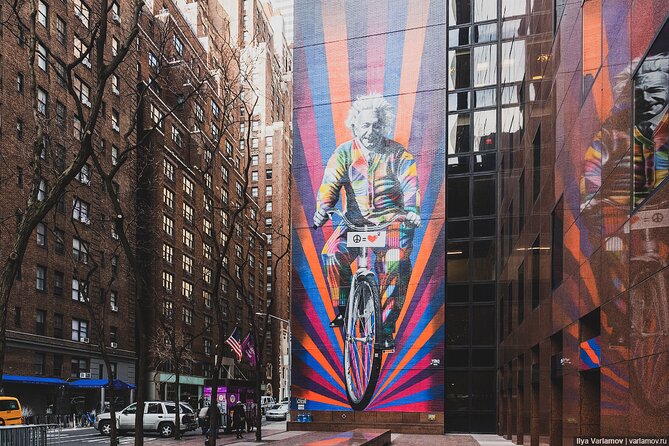
The program is described as inviting artists from around the world, with named works such as JR’s Inside Out Project in 2011 and a colorful mural by Kobra in 2012 inspired by Alfred Eisenstaedt’s 1945 photograph, known as V-J Day.
This stop works as a strong finale because you get two things together: art and skyline perspective. It’s also where the experience shifts from “find the wall” to “look at the city.” If you plan your timing right, you can catch photo angles while you’re still riding the momentum from the earlier stops.
What to do with your photos and what to look for as you walk
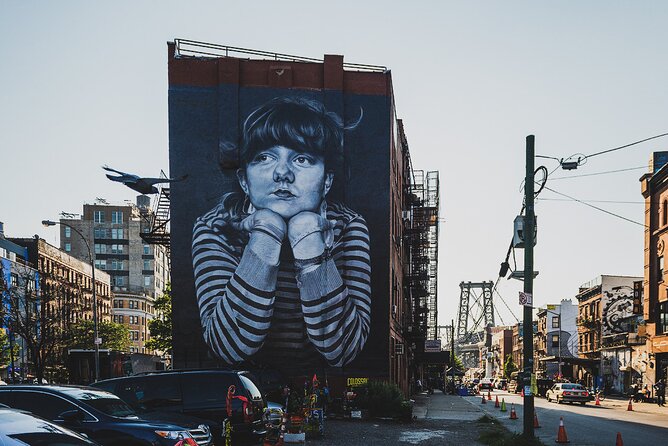
Street art photos are tricky. Up close, paint texture can look amazing. From farther away, you might miss what makes a piece meaningful.
Here’s how I’d use this tour to train your eye:
- Look for references inside the artwork, like the music and character details in the SoHo mural. Those are often the clues to the artist’s intent.
- Notice project structure. Some walls are part of organized programs (like the DUMBO Walls and Bowery Mural background), while others feel more like alley storytelling.
- Pay attention to layers. Even when the subject is bold, the “history marks” can be part of the design story.
Also, keep a little flexibility in your brain. If you only expect polished murals, some stops will feel rougher than you pictured. If you accept that tagging and vandal marks are part of street art’s reality, the walk makes more sense.
Where to go after the tour: keep your art day going
One of the practical value points is that you get recommendations for what to do after the tour. Even without extra planning, the route naturally ends you near big-name options.
For example, after the High Line stop, you’re already in an area where you can keep walking for views and other public work. Earlier, the tour passes by museum-adjacent areas like Tenement Museum and the International Center of Photography Museum near Little Italy, plus the Whitney, David Zwirner, and Ground Zero Museum Workshop close to SoHo.
If you’re the type who wants a smooth plan, take the guide’s suggestions right after the walk while your brain is still in art-watching mode. I always find that fresh recommendations land better when the neighborhoods are still familiar.
Who this street art tour is best for
This works especially well if you want:
- A guided map through neighborhoods where street art is everywhere but not always obvious
- Small group attention, so you can ask questions and see details
- A balance of famous mural programs and more improvisational street corners
- City learning alongside art—how architecture and neighborhood history shape what gets painted
It’s also a good fit if you’re comfortable walking for a couple hours and want a morning plan that doesn’t turn into a long transit day.
If you only want “perfect” gallery-style murals and clean walls, this might not match your taste. The whole point is street art in real life, which can include rougher marks.
Should you book this street art tour in NYC?
I’d book it if your idea of fun is learning how NYC street art works across different neighborhood types. The small group size, the mix of major project walls (DUMBO Walls, Bowery Mural), and the creative formats (construction trailers at Centre-Fuge, the High Line art program) make it a strong use of two hours.
I’d skip or approach cautiously if you hate walking, or if you’re looking for only polished murals and nothing else. Street art here can be raw, layered, and sometimes messy by design.
If you do book, go in with comfortable shoes and a curious eye. You’ll come away seeing more than paint. You’ll see how a city edits itself in public.
FAQ
How long is the street art tour?
The tour lasts about 2 hours.
What time does it start?
It starts at 9:00 am.
Is pickup available?
Yes, pickup is offered.
What’s the group size?
The tour is limited to a maximum of 10 participants.
Is the tour offered in English?
Yes, it is offered in English.
Are there entrance fees or food included?
Entrance fees are not included, and food and drinks are not included. The stops listed indicate free admission tickets.
Can I cancel and get a full refund?
Yes. You can cancel up to 24 hours in advance for a full refund.
Let a Guide Handle It
- Brooklyn Heights, DUMBO and Brooklyn Bridge guided tour in French★ 5.0 · 117 reviews
- Brooklyn: Sightseeing Bike Tour with Local Guide★ 4.8 · 84 reviews
- Private Harlem Tour in New York with Local Expert Guide★ 4.5 · 17 reviews
- Brooklyn Heights and DUMBO Self-Guided Walking Tour★ 4.0 · 10 reviews
- Brooklyn: 2-Hour Prospect Park Guided Walking Tour★ 5.0 · 6 reviews
More Tours in Brooklyn
- Brooklyn Food Walking Tour: Local Eats & Family‑Run Shops★ 5.0 · 592 reviews
- Brooklyn Bridge & DUMBO Food Tour: Local Eats & Landmarks★ 5.0 · 478 reviews
- Brooklyn: Bushwick Street Art Walking Tour★ 4.7 · 462 reviews
- From Manhattan: 2-Hour Brooklyn Bridge Bike Tour★ 4.4 · 230 reviews
- NYC: Brooklyn Bridge and Dumbo District Walking Tour★ 4.7 · 200 reviews
More Tour Reviews in Brooklyn
- Brooklyn Food Walking Tour: Local Eats & Family‑Run Shops★ 5.0 · 592 reviews
- NYC: Brooklyn Graffiti Workshop with Local Artist★ 4.8 · 570 reviews
- Brooklyn Bridge & DUMBO Food Tour: Local Eats & Landmarks★ 5.0 · 478 reviews
- Brooklyn: Bushwick Street Art Walking Tour★ 4.7 · 462 reviews
- All Inclusive Airport Departure Transfer NYC/ Brooklyn/Queens★ 4.0 · 342 reviews
Just in: the newest Brooklyn reviews on our desk



Street Art, compared.
 ★ 4.8Brooklyn Graffiti & Street Art Walking Tour in BushwickFrom $32492 reviews
 ★ 4.7Brooklyn: Bushwick Street Art Walking TourFrom $20462 reviews
 ★ 5.0Graffiti & Street Art Walking Tour in BrooklynFrom $32255 reviews
 ★ 4.5Brooklyn Street Art TourFrom $25164 reviews
 ★ 5.0Brooklyn street art and hipster culture tour in FrenchFrom $62132 reviews
 ★ 5.0Private Graffiti & Street Art Walking TourFrom $20022 reviews
 ★ 5.0Street Art & Graffiti Tour in NYC Private TourFrom $2507 reviews
 ★ 5.0Street art tour at Soho7 reviews
Browse the lists this tour appears in