
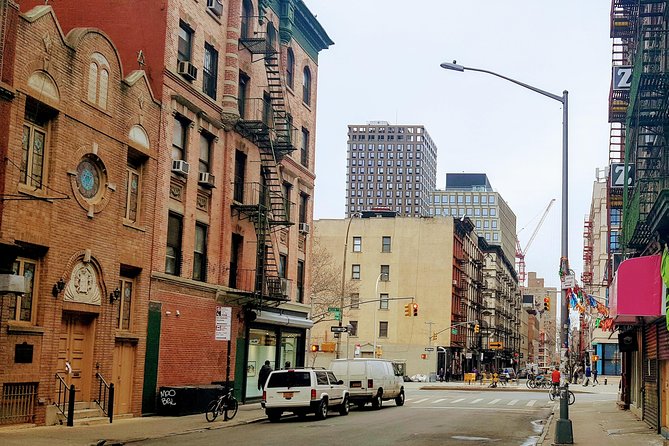
Reviewed · HISTORICAL TOURS
Tenement History and Immigrant Life in the Lower East Side
A street corner can teach you a lot. This Lower East Side tenement history tour connects immigrant life to the buildings you see today, with photo-based storytelling and a finish that lets you spot building eras from above. I like the small group size (up to 5) and the way the guide uses visual aids to make laws and housing changes feel real; I also like the mix of Jewish, Italian, and Chinese heritage across the same walk. The one drawback is simple: it’s a moderate walking tour, mostly outdoors, so plan for weather and comfy shoes.
You’ll start near Foley Square and work your way through corners tied to Five Points-style poverty, then forward through tenement evolution over decades. You’ll also pause for architectural standouts like the Eldridge Street Synagogue and end with a rooftop view from Hotel Indigo that helps you “read” the neighborhood at a glance.
In This Review
- Key things you’ll notice on this Lower East Side tenement history walk
- Foley Square to Columbus Park: the immigrant story starts with survival geography
- Tenement buildings: how you learn to read housing changes block by block
- East Broadway and Chinatown views: where heritage meets the street you walk today
- Eldridge Street Synagogue: Jewish immigrant experience, architecture, and meaning
- Columbus Park photos and the Jewish newspaper stop: history you can picture
- Tenement Museum exterior context: why passing it still matters
- DeLancey Street and the Allen Street bath house: the everyday side of survival
- Rooftop finale at Hotel Indigo: identify tenement eras from above
- Price and value: is $59 a fair deal?
- Who this tour fits best (and who should choose something else)
- Should you book this Lower East Side tenement history tour?
- FAQ
- How long is the Lower East Side tenement history tour?
- What’s the group size?
- Where does the tour start and end?
- Is the tour offered in English?
- Do I need to buy tickets for the synagogue, parks, or museum stops?
- Are service animals allowed?
- What happens if weather is bad or the minimum number of travelers isn’t met?
Key things you’ll notice on this Lower East Side tenement history walk
- Up to 5 travelers keeps questions flowing and the pace easier to manage
- Tenement evolution by law and era helps you spot different building types as you walk
- Jacob Riis photo connections turn history books into street-level clues
- Eldridge Street Synagogue and Jewish institutions explain a major thread of immigrant life
- Bath house and DeLancey Street stops show daily survival and neighborhood commerce
- Rooftop finale at Hotel Indigo gives a bird’s-eye way to compare tenement forms
More of old New York City, walked properly
- New York City: American Museum of Natural History Ticket
★ 4.5 · 15,447 reviews - NYC: Starship Landmark 90 Minute Sightseeing Cruise
★ 4.6 · 3,666 reviews - Starship Landmark 90 Minute Sightseeing Cruise
★ 4.5 · 2,073 reviews - American Museum of Natural History Admission Ticket
★ 4.0 · 1,931 reviews
Foley Square to Columbus Park: the immigrant story starts with survival geography
Most Lower East Side tours start with scenery. This one starts with where people got stuck—and why that mattered.
You begin at Foley Square, near the former sites of The Five Points and Mulberry Bend. These weren’t just vague “bad areas.” They were notorious slums in New York’s early history, and the tour uses this point to frame what tenements were built to do: house working-class families, many of them poor immigrants, as they tried to make a living in a new city.
From there you head to Columbus Park. This stop is short, but it’s smart: it’s where Jacob Riis helps you connect images to geography. Riis’ work, How the Other Half Lives, is famous because it made hidden hardship visible—so the tour uses the park area to bring those communities back into focus, even though the landscape has changed.
Why this helps you: Starting with place names like Five Points and Mulberry Bend gives you a mental map. By the time you’re looking at tenement blocks later, you know the neighborhood wasn’t just “old.” It was working infrastructure—and it evolved under pressure.
Tenement buildings: how you learn to read housing changes block by block
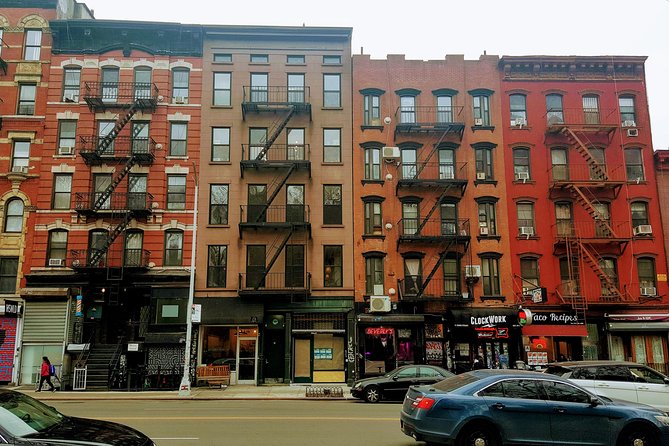
The heart of the tour is the walk across the Lower East Side blocks packed with tenements. You’ll hear about purpose-built working-class housing from the mid-19th century through the early-20th century, and how conditions could vary even within the category of tenement housing.
What makes this section click is the focus on tenement types from different periods and the long process of tenement evolution after changing housing laws. Instead of treating all tenements as one thing, the guide points out that the rules shaped the buildings—and those shapes show up in what you see: light, air, layout, and how closely homes were built together.
One practical note: because you’re using street views and building fronts as your “text,” this is the kind of tour where looking up pays off. If you can, slow down for a few seconds when the guide points—your eyes will catch details that you would normally walk past.
Possible downside to keep in mind: This portion is mostly outside, and it can feel like a lot of information at once. Bring water, and don’t hesitate to ask the guide to repeat how one building type differs from another.
East Broadway and Chinatown views: where heritage meets the street you walk today
You don’t stay locked in the past. The tour uses the neighborhood as a living timeline.
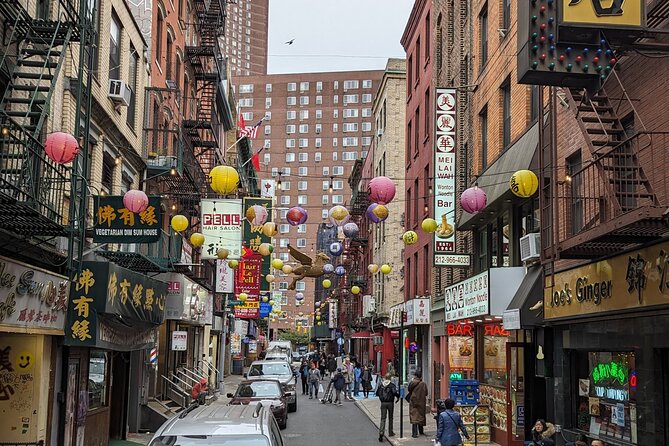
At one point you’ll get a stunning view that includes major downtown architecture—like the Municipal Building and the Woolworth Building—and then you move into one of the most dynamic parts of the walk: East Broadway and the Chinatown street scene.
The guide calls out historic details in plain sight. That matters, because Chinatown today can feel like its own world. Here, you get a framework for seeing it as part of a broader immigrant story: new groups arriving, old communities shifting, and commercial streets keeping moving.
Why you’ll like this segment: It prevents “museum brain.” Instead of treating immigrant life as something sealed in time, you see how later waves and daily routines take over the same streets and reshape them.



Eldridge Street Synagogue: Jewish immigrant experience, architecture, and meaning
The Eldridge Street Synagogue is one of New York’s most striking historic buildings, and this stop uses that beauty for a purpose.
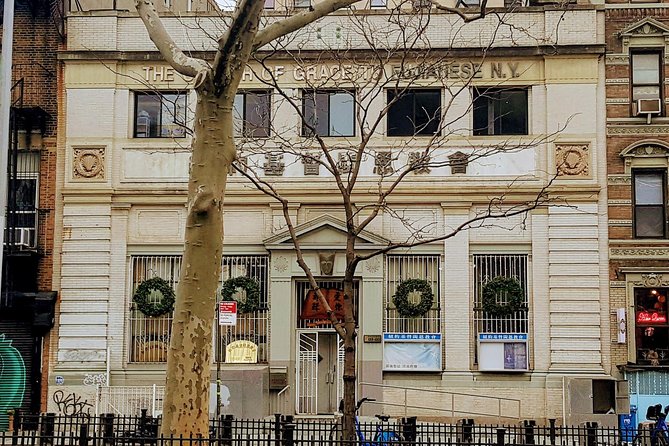
You’ll discuss the Jewish experience in the Lower East Side—a community that followed its own path while also being shaped by the massive waves of immigration that transformed Manhattan. The synagogue gives you a clear anchor point: this wasn’t only about apartments and overcrowding. It was also about institutions, identity, and community spaces that helped people build stable lives.
If you care about how faith and neighborhood life connect, this is one of the best moments of the tour. It also helps that the guide ties the stop to the broader theme: tenements may be the housing story, but religion, newspapers, and social structures are how communities held together.
Columbus Park photos and the Jewish newspaper stop: history you can picture
Back near Columbus Park, you’ll spend time around photos from Jacob Riis’ How the Other Half Lives. Since the photos are already embedded in your imagination if you’ve ever studied Riis, the value here is physical: you’re matching images with a real street area and seeing how the guide frames what changed—and what didn’t.
Later, you’ll also see a historic newspaper institution for the Jewish community. The tour doesn’t treat media as trivia. It frames newspapers as part of how immigrant groups read the city, argued with the world, and maintained community ties while adapting to a new country.
What to do on this part: Slow down. This is where you’ll get the clearest explanations about daily life and community networks, and those ideas make the tenement details you saw earlier start to “click.”
Tenement Museum exterior context: why passing it still matters
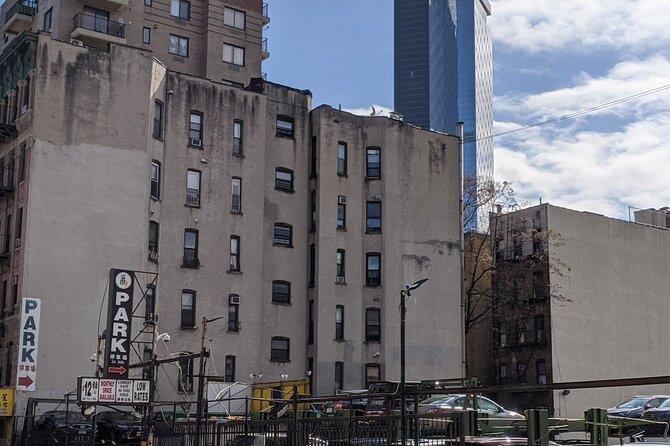
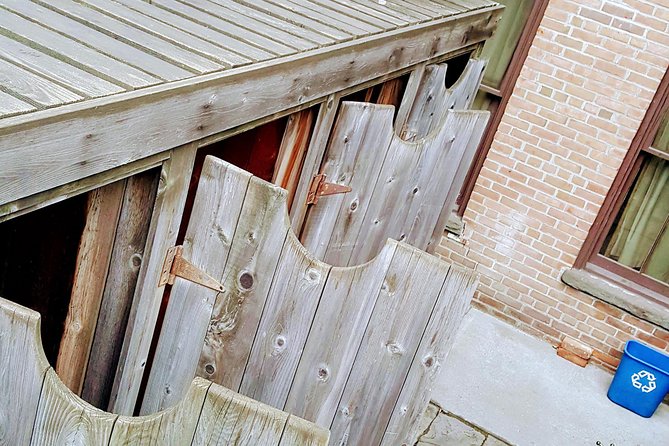
You’ll pass the back of the museum where tenement life is replicated—things like outhouses and clothes lines that transport you back in time.
Even if you don’t plan a museum visit, this stop works as a visual bridge. The guide’s story about tenement evolution is easier to hold in your head when you get a few reminder objects you can picture: how space worked, what was shared, and what daily routines looked like.
Also, a helpful clarification from how the tour is set up: this walking tour is not the same as a full ticketed Tenement Museum experience. It’s designed to give you the neighborhood context around the tenement idea, then let you see a slice of what the museum recreates from outside.
DeLancey Street and the Allen Street bath house: the everyday side of survival
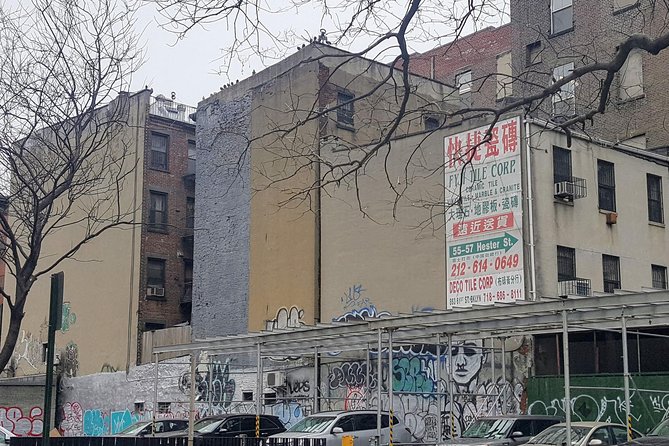
Two of the most practical stops on the walk are tied to daily life—water, clothing, and bargain commerce.
First, you’ll pass DeLancey Street, which the tour frames as the clothing discount outlet center of the past. This isn’t just “shopping history.” It’s about how immigrant neighborhoods handled needs—getting clothing, stretching budgets, and building a supply chain that worked in crowded conditions.
Then you’ll get to the Allen Street bath house, which functioned as a bath house from 1905 until 1975. The building later got converted to a church, which adds another layer: these were long-term neighborhood services, not short-lived experiments.
If you’re the kind of traveler who likes the nitty-gritty—what people did to keep clean, wash clothes, and manage health—these stops are going to feel real fast. They also reinforce the tenement theme: housing wasn’t only about walls. It was about access to basics.
Rooftop finale at Hotel Indigo: identify tenement eras from above
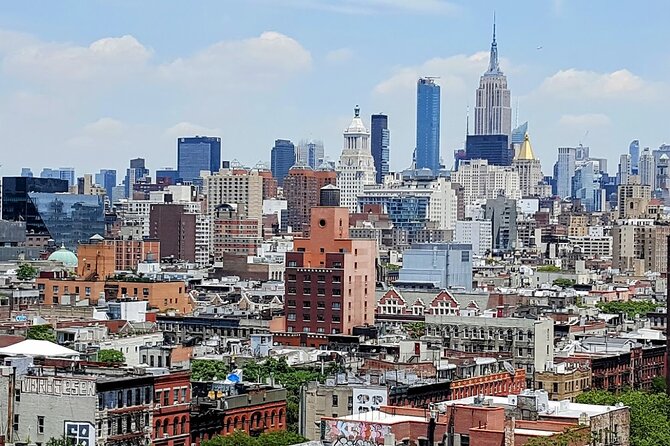
The tour ends at the rooftop of Hotel Indigo Lower East Side by IHG, at 171 Ludlow St. It’s a clean way to wrap up: you’ve walked street level for hours, and now you can compare forms from a height.
From the rooftop, you can see the neighborhood and pick out different tenement types by era—exactly what the guide has been teaching you as you go. You also get a spectacular view toward Midtown, which makes the final minutes feel like a reward instead of a hard stop.
Why rooftop endings work: They help your brain build a map. Once you can see how blocks relate to each other, the tour stops feel connected rather than like separate facts.
Price and value: is $59 a fair deal?
At $59 per person for about 2 to 3 hours, this tour sits in the mid-range for guided walks in New York. Here’s the value equation that matters:
- You get a professional local guide and a group cap of 5 travelers, which usually means more attention than larger group tours.
- You get a specific theme—tenements and immigrant life—and the guide connects it to multiple neighborhood threads: Jewish, Italian, and Chinese heritage.
- You also get a strong visual method: photo references to Jacob Riis and building-to-law explanations that help you interpret what you’re seeing.
If you’re doing Ellis Island and want the next chapter, this tour helps you understand what happened on the ground after arrival—how people lived, worked, washed up, and built institutions.
Who this tour fits best (and who should choose something else)
This is a great match if you:
- Like walking tours that go beyond “pretty building” stops
- Want the housing story tied to immigration and neighborhood systems
- Enjoy photos and maps as learning tools
- Travel with a friend, partner, or family group and prefer a smaller format
It may be less ideal if you:
- Want mostly indoor stops or lots of museum time
- Don’t enjoy walking for a couple of hours (it lists a moderate physical fitness level)
- Are traveling with very limited mobility needs, since the emphasis is on outdoor streets and transitions
Also, plan for comfort. Wear comfortable walking shoes, and bring water and a snack if you know you get hungry during long walks.
Should you book this Lower East Side tenement history tour?
I’d book it if your goal is to understand the Lower East Side as a real living system—housing laws, immigrant waves, and daily survival—rather than just a set of photo ops. The small group size, the visual way the guide explains tenement change, and the rooftop wrap-up make it feel structured without feeling stiff.
I’d think twice only if you hate outdoor walking or you’re looking for a museum ticket experience. This is a neighborhood walk built to teach you how to read the city you’re standing in.
FAQ
How long is the Lower East Side tenement history tour?
The tour runs about 2 to 3 hours.
What’s the group size?
This tour has a maximum of 5 travelers.
Where does the tour start and end?
It starts at Foley Square near the Lafayette Street and Worth Street area (Centre St/Lafayette St area). It ends at the Hotel Indigo Lower East Side rooftop at 171 Ludlow St.
Is the tour offered in English?
Yes, it’s offered in English.
Do I need to buy tickets for the synagogue, parks, or museum stops?
The listed stops are marked as admission ticket free, and the tour description focuses on discussions and viewing along the route. The tour does include passing the back of a museum where tenement life is replicated, but your tour time is still the walking experience.
Are service animals allowed?
Yes, service animals are allowed.
What happens if weather is bad or the minimum number of travelers isn’t met?
The experience requires good weather; if it’s canceled due to poor weather, you’ll be offered a different date or a full refund. If it’s canceled because the minimum number of travelers isn’t met, you’ll be offered a different date/experience or a full refund.
The Story of New York City
- New York City: American Museum of Natural History Ticket★ 4.5 · 15,447 reviews
- NYC: Starship Landmark 90 Minute Sightseeing Cruise★ 4.6 · 3,666 reviews
- Starship Landmark 90 Minute Sightseeing Cruise★ 4.5 · 2,073 reviews
- American Museum of Natural History Admission Ticket★ 4.0 · 1,931 reviews
- Top Rated Brooklyn Half-Day Food, History & Culture Tour via bus★ 5.0 · 758 reviews
More Tour Reviews in New York City
- NYC: SUMMIT One Vanderbilt Tickets★ 4.7 · 51,195 reviews
- NYC: Empire State Building Tickets – Observatory & Museum★ 4.7 · 25,757 reviews
- New York City: Statue of Liberty & Ellis Island with Ferry★ 4.6 · 18,683 reviews
- New York City: American Museum of Natural History Ticket★ 4.5 · 15,447 reviews
- Statue of Liberty and Ellis Island Tour: All Options★ 5.0 · 13,571 reviews
Just in: the newest New York City reviews on our desk





Historical Tours, compared.
 ★ 4.5American Museum of Natural History TicketFrom $3715,447 reviews
 ★ 4.6Starship Landmark 90 Minute Sightseeing CruiseFrom $343,666 reviews
 ★ 4.5Starship Landmark 90 Minute Sightseeing CruiseFrom $342,073 reviews
 ★ 4.0American Museum of Natural History Admission TicketFrom $371,931 reviews
 ★ 5.0Top Rated Brooklyn Half-Day Food, History & Culture Tour via busFrom $189758 reviews
 ★ 4.7Speakeasy Drinks and Prohibition History TourFrom $36474 reviews
 ★ 5.0The Original Greenwich Village Food & Cultural Tour Since 1999From $99254 reviews
 ★ 5.0The Speakeasy Adventure: A Tipsy Trip Through HistoryFrom $38220 reviews
Browse the lists this tour appears in