

Reviewed · HISTORICAL TOURS
The Story Behind NY’s Evolving Skyline An Architectural Journey Through History
NYC skyline gets a history lesson. This on-demand video plus self-guided walk turns what you see outside into a timeline—from the city’s early Dutch roots to today’s tower-filled horizon—guided by Kitt Garrett’s organized storytelling. I especially love the downloadable PDF you can use on the street, and I also love the architectural clues that help you spot building styles and materials as you walk.
One possible drawback: since it’s self-paced, you won’t get live answers in the moment. So you’ll want to plan a calm walking window between Castle Clinton National Monument and your end point near 20 Hudson Yards.
In This Review
- Key points to know before you start
- What this NYC architecture tour really is (and why it works)
- Price and what you actually get for $25 per group
- The route anchor points: Castle Clinton to 20 Hudson Yards
- Learning to spot architectural styles you’ll recognize later
- Urban planning lessons: zoning, neighborhoods, parks, and transit
- The waterfront transformation: from industry to recreation
- How to use the PDF and mobile ticket so it sticks
- Who this tour is best for (and who might want something else)
- Logistics you should plan around for a smooth, 1 hour 58 minute session
- The bottom line: book it if you want to look up with purpose
- FAQ
- How long is the NYC architecture journey?
- What does the tour cost?
- Where does the tour start and where does it end?
- Is there a downloadable document for the self-guided portion?
- How do tickets work?
- Is the tour private and are service animals allowed?
Key points to know before you start
- On-demand video + self-guided walking means you control the pace instead of matching someone else’s step count.
- Kitt Garrett’s methodical narration focuses on why styles changed, not just what to look at.
- Downloadable tour document (PDF) helps you keep addresses and stories handy while you’re outside.
- Urban planning themes connect skyscrapers to zoning, parks, and public transportation.
- Old waterfront to new destinations comes through as a neighborhood-by-neighborhood transformation.
- Built-in architecture ID skills: you learn what to look for in materials and design patterns.
More of old New York City, walked properly
- New York City: American Museum of Natural History Ticket
★ 4.5 · 15,447 reviews - NYC: Starship Landmark 90 Minute Sightseeing Cruise
★ 4.6 · 3,666 reviews - Starship Landmark 90 Minute Sightseeing Cruise
★ 4.5 · 2,073 reviews - American Museum of Natural History Admission Ticket
★ 4.0 · 1,931 reviews
What this NYC architecture tour really is (and why it works)

This experience is built for people who like their sightseeing with context. Instead of handing you a list of “must-see” buildings, it gives you a way to read the city. You watch an on-demand architecture journey, then you take the walk on your own, picking up clues as you go.
The big value here is that you learn to see like a designer—or at least like someone who can look up and form a smart guess. The tour covers how NYC evolved from a small Dutch settlement into a major metropolis, and it links that story to architecture styles and the decisions that shaped the skyline over time. If you’ve ever walked past a landmark and thought, I know this matters, but I don’t know why, this format is made for that moment.
The other key strength is pacing. You’re not stuck in a rushy group flow. If you want to stop to photograph a facade detail, you can. If you want to keep moving and save slower looks for later, you can do that too.
Price and what you actually get for $25 per group
The price is listed as $25.00 per group, up to 15 people. That makes a difference in how to judge value. For a couple, it’s cheap enough to feel like a low-risk way to upgrade your NYC walk with real context. For a family or friend group, it can be a budget-friendly activity that still feels educational.
This tour also avoids the common trap of paying for “content” that never sticks. The downloadable PDF matters, because it gives you a way to retain the names, locations, and story beats while you’re on the sidewalk. And the duration is about 1 hour 58 minutes, which is enough time to get a solid overview without wiping out an entire day.
One small caution on value: because it’s a self-guided walking experience, your satisfaction will depend a lot on how you like to travel—whether you enjoy guiding yourself with a document and then slowing down to notice details.
The route anchor points: Castle Clinton to 20 Hudson Yards
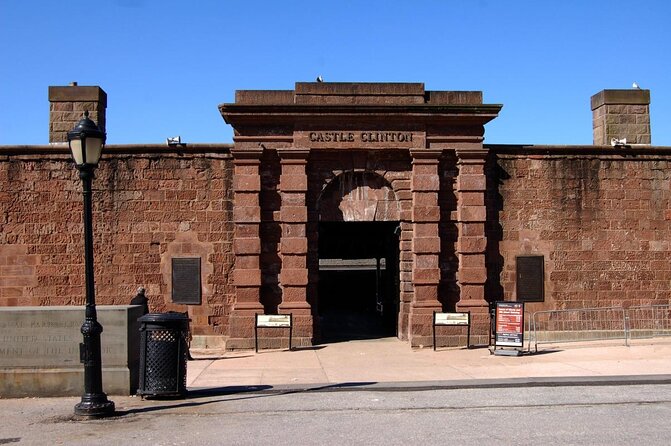
You start at Castle Clinton National Monument (10 minutes, with admission ticket marked as free). That start point is a smart choice because it connects the earliest harbor-era story to the idea of change over time. From there, the tour leads you toward the modern cityscape around your end point near 20 Hudson Yards, which is a natural contrast: early waterfront history on one end, skyline evolution and modern development on the other.
Practical tip: use the start and end points to plan your timing. Since the experience is about 1 hour 58 minutes total, think of it as a focused session rather than a full-day wandering mission. You’ll get more out of it if you don’t schedule it between two other tight commitments.
Also, the “good point to stop” note near 20 Hudson Yards is worth noticing. You’ll have a convenient place to wrap up near shopping, restaurants, and restrooms, which reduces the stress of ending a walking experience.



Learning to spot architectural styles you’ll recognize later
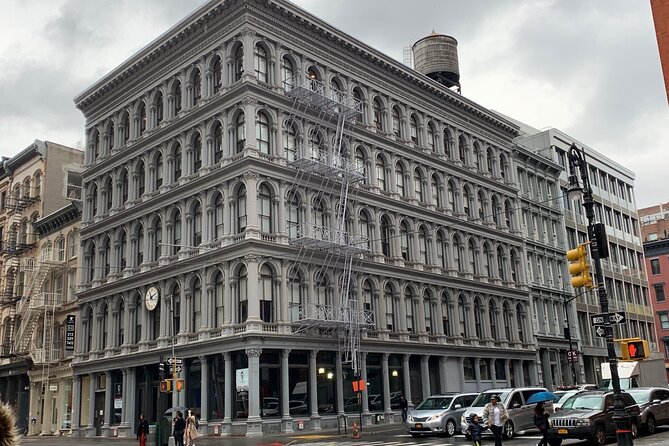
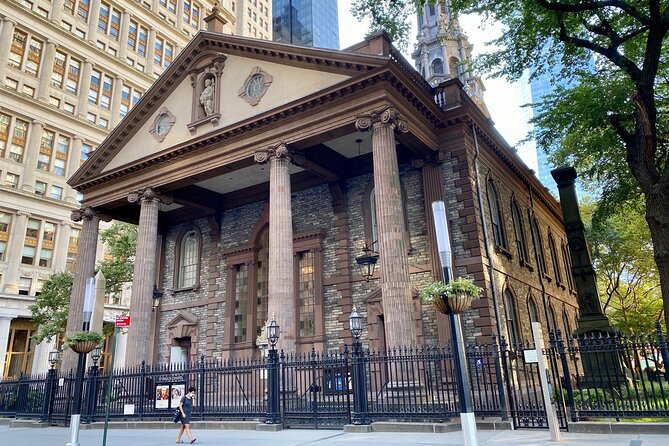
One of the tour’s strongest themes is architectural evolution—how styles changed as the city grew and as needs shifted. The experience explicitly calls out a long list of style periods, so you’re not left with vague phrases like classic or old-fashioned. You’ll hear about Georgian, Federal, Greek Revival, Romanesque Revival, Italianate, Renaissance Revival, Gothic Revival, Queen Anne, Neo-Classical, and the modern period.
Even if you don’t remember every label perfectly, you’ll start noticing patterns. That’s the real win: you build a framework. When you see a certain kind of arch, roofline, or facade rhythm, you’ll have a better sense of the time period and why it looked that way.
The tour also teaches you how to identify building materials and design cues. That’s huge in a place like New York where buildings mix layers: newer renovations sit next to older forms, and landmarked areas sit beside developments that were shaped by very recent planning decisions.
If you’re the type who loves matching what you see to a reason, this is where the tour shines. If you’re hoping for purely postcard views with zero homework, you might find yourself stopping to read notes and look up at details a bit more than expected. In a good way, though.
Urban planning lessons: zoning, neighborhoods, parks, and transit
A big chunk of the experience isn’t just architecture—it’s how the city decides what gets built where. The tour highlights urban planning and zoning, and it connects those rules to real-life outcomes in neighborhoods, parks, and public transportation systems.
This matters because the skyline isn’t only the story of famous architects. It’s also the story of constraints and negotiations: what developers can build, how tall they can go, what kinds of uses fit a location, and how the city plans for people who work and live side by side.
You’ll get a clearer understanding of why some places feel dense and vertical while others remain more open. You’ll also come away with a better lens for reading the city in motion—how public and private partnerships can reshape waterfronts into destinations, and how zoning can influence what you experience at street level.
A review mentioned air rights, and that topic fits right into this planning mindset. Even if you only catch the core idea, you’ll start noticing how New York’s vertical growth is tied to legal and economic decisions as much as to design.
The waterfront transformation: from industry to recreation
The harbor story is a through-line. The experience frames New York as a hub of trade and commerce from the early days onward, then it points to how the waterfront has been transforming over time—from industrial uses toward recreational neighborhoods.
Why this matters for your walk: when you understand the waterfront shift, modern development makes more sense. You stop treating new public space as random and start seeing it as a long-term neighborhood redesign. It’s also a reminder that skyline change doesn’t happen only when someone breaks ground on a tower. It often starts with how people reclaim space along the water.
If you like “cause and effect” explanations, this part of the tour will probably click quickly. You’ll be more alert to how the environment around buildings changes—where people gather, where movement is easy, and what kinds of destinations replace older industry.
How to use the PDF and mobile ticket so it sticks
This tour is set up as “watch, then walk,” but the smart move is to use your tools so you don’t lose the thread.
Here’s how I’d approach it:
- Before you head out, check your mobile ticket so you know where to access the on-demand content.
- Download the document/PDF to your device so you can reference street locations and story beats while you’re outside.
- During the walk, pause when you see something that matches what you just heard. The tour is built for that kind of pattern-matching.
I love that the experience encourages you to keep the tour material with you. New York is fast. If you don’t capture the names and locations while you’re near them, it’s easy for the learning to fade.
There’s also a neat idea in the supporting materials around creating your own photo memory book. The tour references using the free Tripcast app to upload images, which can help you turn your architecture scavenger hunt into a souvenir you’ll actually remember.
Who this tour is best for (and who might want something else)

This works for first-time visitors because it gives you a citywide reading guide. It also works for local New Yorkers, including people who have lived in Manhattan for years, because it teaches you to see new layers and connect details to bigger planning and architectural shifts.
It’s also a good match if you:
- like architecture but hate feeling lost in jargon
- enjoy city planning as much as building design
- want a structured but self-guided experience
- want value you can use with friends or family (since it’s per group)
You might want a different style of tour if you strongly prefer a live guide answering questions on the fly. The self-guided format means you’re the one steering the timing and the pauses.
Logistics you should plan around for a smooth, 1 hour 58 minute session
The duration is about 1 hour 58 minutes, so plan a window where you’re not rushing toward dinner or another activity. Treat it like a focused “learning walk,” not just a casual stroll.
The start and end points also give you a built-in structure:
- Start at Castle Clinton National Monument (free admission ticket noted)
- Finish near 20 Hudson Yards, where shopping, restaurants, and restrooms are convenient
It’s also near public transportation, so you can use that to adjust on the fly if you need to break your session into smaller chunks. Service animals are allowed, and the experience notes that most travelers can participate.
One more practical note: since it’s described as a private tour/activity for your group, it’s a good fit for friend groups and small family units who want a shared activity without merging into a larger crowd.
The bottom line: book it if you want to look up with purpose
If you like the idea of learning how NYC’s skyline got built—architectural styles, materials, and the planning rules underneath—this is an easy yes. The combination of on-demand narration and a self-guided walk is also a strong fit for people who don’t want to scramble to keep up with a group schedule.
I’d recommend booking if you want:
- a fast but detailed overview of how architectural eras show up in the city
- a downloadable reference (PDF) you can use while you’re outside
- a framework for spotting design and planning clues, not just a list of places
I wouldn’t push it for you if you need live interaction the whole time or if you hate self-guided experiences. But if you’re willing to slow down, look up, and let the stories guide your noticing, this tour is a smart way to upgrade a NYC walk without wasting the day.
FAQ
How long is the NYC architecture journey?
It runs for about 1 hour 58 minutes.
What does the tour cost?
It’s $25.00 per group (up to 15 people).
Where does the tour start and where does it end?
It starts at Castle Clinton National Monument (New York, NY 10004) and ends near 20 Hudson Yards (New York, NY 10001).
Is there a downloadable document for the self-guided portion?
Yes. A document of the virtual tour can be downloaded to your device.
How do tickets work?
You receive a mobile ticket.
Is the tour private and are service animals allowed?
It’s private, meaning only your group participates. Service animals are allowed, and it’s near public transportation. Confirmation is received at booking time.
The Story of New York City
- New York City: American Museum of Natural History Ticket★ 4.5 · 15,447 reviews
- NYC: Starship Landmark 90 Minute Sightseeing Cruise★ 4.6 · 3,666 reviews
- Starship Landmark 90 Minute Sightseeing Cruise★ 4.5 · 2,073 reviews
- American Museum of Natural History Admission Ticket★ 4.0 · 1,931 reviews
- Top Rated Brooklyn Half-Day Food, History & Culture Tour via bus★ 5.0 · 758 reviews
More Tour Reviews in New York City
- NYC: SUMMIT One Vanderbilt Tickets★ 4.7 · 51,195 reviews
- NYC: Empire State Building Tickets – Observatory & Museum★ 4.7 · 25,757 reviews
- New York City: Statue of Liberty & Ellis Island with Ferry★ 4.6 · 18,683 reviews
- New York City: American Museum of Natural History Ticket★ 4.5 · 15,447 reviews
- Statue of Liberty and Ellis Island Tour: All Options★ 5.0 · 13,571 reviews
Just in: the newest New York City reviews on our desk





Historical Tours, compared.
 ★ 4.5American Museum of Natural History TicketFrom $3715,447 reviews
 ★ 4.6Starship Landmark 90 Minute Sightseeing CruiseFrom $343,666 reviews
 ★ 4.5Starship Landmark 90 Minute Sightseeing CruiseFrom $342,073 reviews
 ★ 4.0American Museum of Natural History Admission TicketFrom $371,931 reviews
 ★ 5.0Top Rated Brooklyn Half-Day Food, History & Culture Tour via busFrom $189758 reviews
 ★ 4.7Speakeasy Drinks and Prohibition History TourFrom $36474 reviews
 ★ 5.0The Original Greenwich Village Food & Cultural Tour Since 1999From $99254 reviews
 ★ 5.0The Speakeasy Adventure: A Tipsy Trip Through HistoryFrom $38220 reviews
Browse the lists this tour appears in