
Reviewed · NYC OBSERVATION DECKS
The Story of the High Line Elevated Park and Hudson Yards
The High Line feels different when you know why it exists. This experience walks you through the rail line’s shift from freight route to abandoned track, then to today’s public park stretching above the streets—and it connects those changes to the Meatpacking District, Chelsea, and the rise of Hudson Yards. You get a virtual talk and a PDF you can use while you explore on your own pace.
I especially liked how the presentation makes the park’s design make sense, not just look pretty. I also like the way Kitt Garrett weaves in city change—trade, neighborhood growth, and architecture—so you notice the details you’d normally miss on a first pass.
One consideration: because it’s not a live step-by-step guide on the walkway, you’ll want to download and use the materials at the right time. If your video link has a tech hiccup, you may need to troubleshoot or use an alternate link provided by the team.
In This Review
- Key points worth your attention
- Why the High Line story starts with freight, not art
- Your $25 group ticket: virtual talk plus a map you keep
- What you do during the experience (and what you do after)
- Entering the story at the High Line Park and 30 feet in the air
- What to watch for once you’re on-site
- The Meatpacking District revival: why this corridor mattered
- Chelsea-to-Hudson Yards: the view becomes a timeline
- The PDF map: your best tool for a self-guided walk
- A small strategy that works
- Who this tour fits best (and who might want something else)
- Price and logistics: what matters day-of
- Should you book this High Line and Hudson Yards experience?
- FAQ
- What is the price of the experience?
- How long is the experience?
- Is the ticket mobile?
- Where does the experience start?
- Where does the experience end?
- Does it include a PDF for self-guided exploring?
- Is it a private tour?
- Are service animals allowed?
- What are the listed opening hours?
- Is the experience refundable if I cancel?
- What if I need confirmation after booking?
Key points worth your attention
- Kitt Garrett’s block-by-block framing helps the High Line click in your head as you walk.
- A PDF map with addresses makes it easier to match what you watched to what you see.
- Meatpacking District to Chelsea to Hudson Yards is explained as one continuous story of redevelopment.
- Architecture and engineering context makes viewpoints and plantings feel intentional.
- Bonus city-facts and side stories (including Dutch origins and other surprising connections) keep it lively.
Higher still: other New York City observation decks
- NYC: SUMMIT One Vanderbilt Tickets
★ 4.7 · 51,195 reviews - New York Explorer Pass: Top Attractions including Edge
★ 4.6 · 7,872 reviews - NYC Empire State Building Observation Deck Ticket
★ 4.5 · 6,916 reviews - SUMMIT One Vanderbilt Experience Ticket
★ 4.5 · 5,398 reviews
Why the High Line story starts with freight, not art
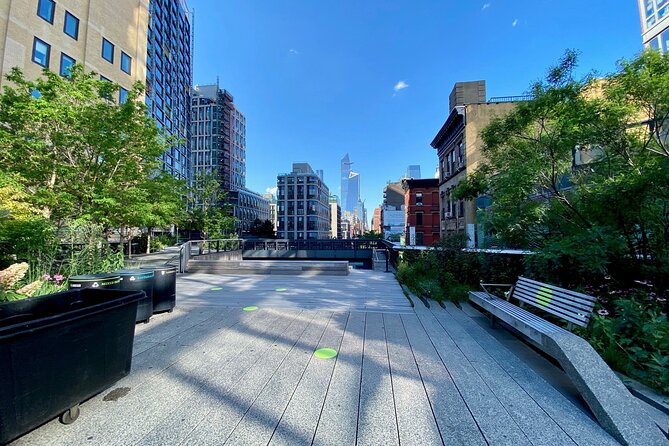
Most people meet the High Line as a scenic walk. This experience flips that order in a helpful way: it starts with how goods moved into Manhattan. You’re shown how a rail line became a kind of working backbone for businesses and neighborhoods, and why the line eventually needed to rise above street level.
Once that clicks, the park’s layout starts to feel logical. You begin to read it like infrastructure that got repurposed—pathways where rail tracks once were, and design choices that reflect what the space used to do. Even if you already know the High Line by reputation, you’ll likely find yourself slowing down because the place now has reasons behind it.
You also get a clear connection to the surrounding neighborhoods. The Meatpacking District isn’t treated like a random backdrop. It’s part of the sequence: industrial function, later abandonment, then a revival that pulled attention—and development—toward this stretch of west Manhattan.
Your $25 group ticket: virtual talk plus a map you keep
This is priced at $25.00 per group, up to 15 people. That group pricing matters in real life. If you’re traveling with family or friends, the cost per person drops fast, and you’re not paying a premium just to hear a short explanation.
The experience also includes a mobile ticket, which is convenient in a city where you’re bouncing between subway lines and reservations. Instead of scrambling for a desktop link at home, you can keep everything on your phone.
The big “value move” here is the PDF. A lot of tours give you a quick orientation and then you’re done. This one gives you a self-guided tool you can use when you’re ready to walk, linger, photograph, and come back to what you missed.
You should expect about 1 hour 48 minutes of content. That’s long enough to make the High Line feel like a story with characters and turning points, not just a list of facts.
What you do during the experience (and what you do after)
The format is a video talk plus guided virtual touring, and it ends with you exploring using what you downloaded. The itinerary is built around one core idea: learn the “why” first, then walk the “where.”
Start point is Gansevoort Street (Gansevoort St, New York, NY 10014). The ending reference is in the Hudson Yards area, near 20 Hudson Yards, where you’ll find shops, restaurants, and restrooms.
Even though this is described as a virtual experience, the practical benefit is that it prepares you to walk smarter. You’re not guessing what to look for. You’re watching the story unfold and then using the PDF to reconnect the blocks in real life.
If you’re the type who loves planning, this setup is great. If you’re more “show up and wander,” the PDF still helps you steer your curiosity without turning the day into homework.
Along the rails: more High Line and Chelsea



Entering the story at the High Line Park and 30 feet in the air

Your session focuses on the High Line as a linear park running about 30 feet in the sky. That height isn’t just a fun trivia point. It’s a key reason the High Line could survive long enough to be reinvented: it’s removed from street-level traffic while staying embedded in the urban grid.
As the talk progresses, you learn how the line relates to the history of bringing goods into Manhattan. Then you get the shift: from active use, to abandonment, to the moment people realized the structure could be more than a relic.
From there, the narrative turns to the neighborhoods it threads through. The story moves through the Meatpacking District and then into Chelsea, with the explanation of why this corridor became a magnet for design-forward changes. When you walk later, you’ll be more aware of transitions—how the feel of the block changes as the city’s priorities changed.
What to watch for once you’re on-site
When you go, you can use the talk as a checklist in your own head:
- Where you see industrial shapes, you’re seeing the ghost of freight and rail logic.
- Where the plantings and walkways feel curated, you’re seeing the reuse of an existing path.
- Where the skyline suddenly feels more “new,” you’re often watching the ripple effects of major development nearby.
The Meatpacking District revival: why this corridor mattered
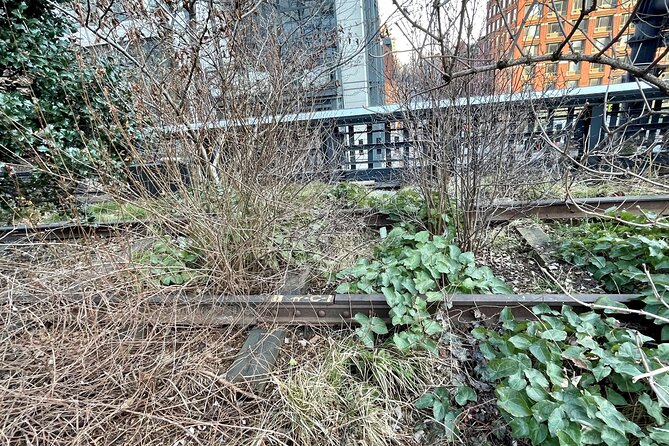
The High Line’s makeover is tied directly to the Meatpacking District’s revival. In this experience, that isn’t treated like an inspirational poster line. It’s explained as a sequence of neighborhood change where the rail line became a visible symbol of transformation.
I like this approach because it avoids the common trap: thinking the High Line is the project, and everything around it simply benefitted. Instead, the talk frames it as one part of a larger redevelopment story, including why artists, architects, and community advocates mattered in the conversion from unused infrastructure to public space.
There’s also something useful for urban “nerds,” even if you don’t call yourself that. The talk connects geography and city economics: where value shifted, what made this stretch attractive for new investment, and why redevelopment got a foothold here.
That context changes your mood while walking. You’re not just admiring design. You’re noticing how cities reinvent themselves block by block.
Chelsea-to-Hudson Yards: the view becomes a timeline

One of the most practical parts of this experience is how it treats the High Line as a bridge between eras. The talk follows the corridor through Chelsea and then into the bigger story of Hudson Yards.
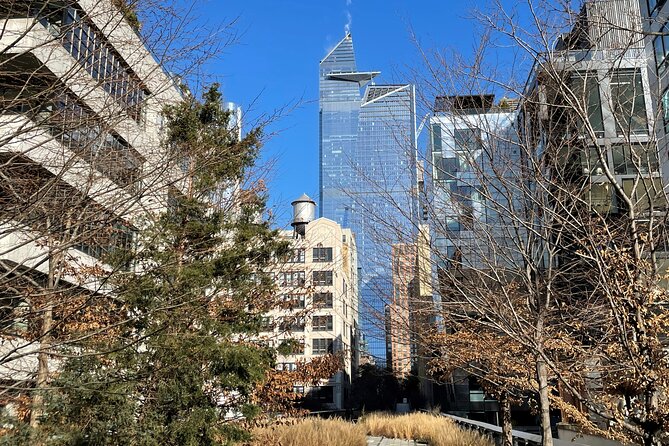
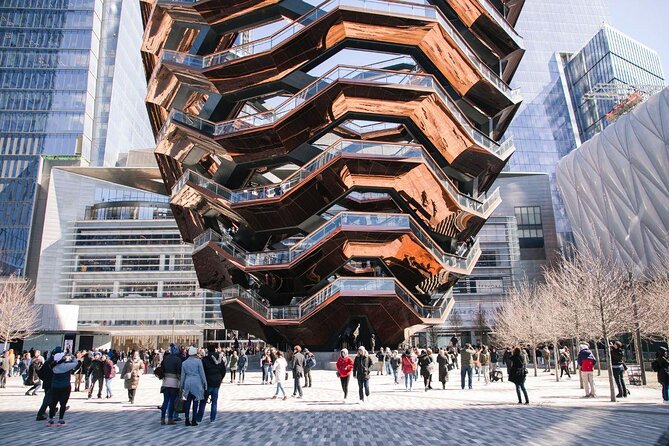
Hudson Yards is described as the largest private construction project in U.S. history. You don’t need to memorize that statistic to get the point. The point is that the skyline near the end of your route isn’t only “new architecture.” It’s a major shift in what the city decided it wanted in this part of Manhattan.
So when you reach the Hudson Yards side, your vantage points start to feel like they’re telling two stories at once:
1) what the High Line carried forward from the rail era, and
2) what the surrounding development added in the modern era.
This is where you’ll feel the value of the virtual block-by-block approach. If you’ve visited the High Line before, you may already know the big photo spots. What this experience helps with is understanding how the corridor and the neighborhoods beside it evolved together.
The PDF map: your best tool for a self-guided walk
The talk includes a PDF you can use for a self-guided tour. This is where I think you’ll get the most satisfaction if you plan even a little.
The PDF is designed to help you identify what you’re seeing. In particular, it includes a map and addresses so you can match buildings and features to what you watched in the talk.
That matters because the High Line can be visually “busy.” Without a guide, you might take great photos but miss the reasons those places are there. With the PDF, you can slow down and pick out details: architectural styles, neighborhood cues, and the way sightlines change as you move.
The guide also encourages using your photos to create a memory book via Tripcast. Even if you don’t care about the app part, the real tip is the underlying one: photograph while you’re oriented, not when you’re rushed.
A small strategy that works
Do your walking in two passes:
- First pass: follow the PDF map and notice the story points.
- Second pass (or later): return to the spots you liked and take more time with details you now recognize.
Who this tour fits best (and who might want something else)
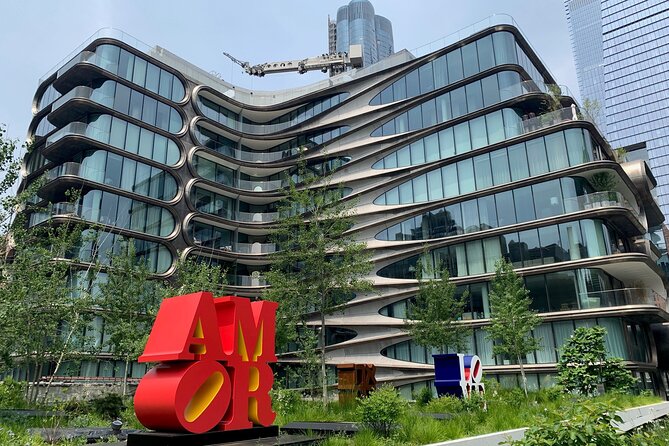
This is a strong fit if you like city history you can use. If you’re the kind of person who reads plaques, notices design details, or enjoys understanding why a place looks the way it does, you’ll probably get a lot out of it.
It’s also good for people who want a flexible plan. Since the format is virtual and self-guided after the talk, you’re not locked into a tight group schedule.
I also think it helps families and multi-generation groups. One review specifically said it’s especially useful if you bring kids—mostly because it gives context that turns the walk into a real conversation rather than just scenery.
Where it might not be perfect is if you want a live guide standing with you on the High Line explaining each moment in real time. This experience is more about giving you the framework so you can walk with better eyesight.
Price and logistics: what matters day-of
Here’s how to judge whether it’s worth it for you. If you’re traveling solo, $25 is still reasonable for the mix of virtual explanation plus the keep-you PDF. If you’re in a group, it gets much better fast since it’s per group up to 15.
The logistics are built to be easy:
- Mobile ticket
- Private tour/activity so only your group participates
- Near public transportation
- Service animals allowed
- Most travelers can participate
- You receive confirmation at booking
One more practical note: the provider’s opening hours list is essentially all day (12:00 AM to 11:30 PM). Still, you’ll want to plan when you’ll actually walk so daylight and energy levels match your schedule.
And if you hit a technical snag with the video link, there’s at least one documented case where the guide responded with a working link and even issued a refund for that person. That’s not the same thing as a general guarantee, but it’s a good sign that the team is paying attention when links break.
Should you book this High Line and Hudson Yards experience?
Book it if you want the High Line to make sense to you, not just look nice in photos. I think it’s especially worth it if you plan to walk the route yourself afterward. The combination of Kitt Garrett’s storytelling and the PDF with map and addresses turns a casual stroll into a guided-by-context experience.
Skip it or choose something else if you mainly want a live, on-the-spot guide who walks with your group and handles questions in real time. This one gives you the brain upgrade first, then you go use it.
If you’re curious about how the High Line connects to the broader evolution of Manhattan—from freight to public space to the Hudson Yards era—this experience is a strong, practical way to get there.
FAQ
What is the price of the experience?
It costs $25.00 per group, up to 15 people.
How long is the experience?
The duration is about 1 hour 48 minutes.
Is the ticket mobile?
Yes, the tour uses a mobile ticket.
Where does the experience start?
It starts on Gansevoort Street (Gansevoort St, New York, NY 10014).
Where does the experience end?
It ends in the Hudson Yards area at 20 Hudson Yards (with shops, restaurants, and restrooms).
Does it include a PDF for self-guided exploring?
Yes. The experience includes a PDF you can use to go deeper on a self-guided tour.
Is it a private tour?
Yes. It’s private, and only your group participates.
Are service animals allowed?
Yes, service animals are allowed.
What are the listed opening hours?
The listed opening hours are Monday through Sunday, 12:00 AM to 11:30 PM.
Is the experience refundable if I cancel?
No. The experience is non-refundable and cannot be changed for any reason.
What if I need confirmation after booking?
You will receive confirmation at the time of booking.
More Tour Reviews in New York City
- NYC: SUMMIT One Vanderbilt Tickets★ 4.7 · 51,195 reviews
- NYC: Empire State Building Tickets – Observatory & Museum★ 4.7 · 25,757 reviews
- New York City: Statue of Liberty & Ellis Island with Ferry★ 4.6 · 18,683 reviews
- New York City: American Museum of Natural History Ticket★ 4.5 · 15,447 reviews
- Statue of Liberty and Ellis Island Tour: All Options★ 5.0 · 13,571 reviews
The High Line and Chelsea, Continued
- High Line and Chelsea Small Group Tour★ 5.0 · 1,238 reviews
- Chelsea Market and High Line Guided Food Tour★ 5.0 · 827 reviews
- Manhattan Adventure Sightseeing Boat Tour – from Chelsea Piers★ 5.0 · 688 reviews
- High Line Park and Greenwich Village Food Tour★ 5.0 · 398 reviews
- NYC: High Line, Chelsea, & Meatpacking District Walking Tour★ 4.9 · 195 reviews
Best Views in New York City: More Decks
- NYC: SUMMIT One Vanderbilt Tickets★ 4.7 · 51,195 reviews
- New York Explorer Pass: Top Attractions including Edge★ 4.6 · 7,872 reviews
- NYC Empire State Building Observation Deck Ticket★ 4.5 · 6,916 reviews
- SUMMIT One Vanderbilt Experience Ticket★ 4.5 · 5,398 reviews
- Top of the Rock Observation Deck New York City Ticket★ 4.5 · 4,556 reviews
Just in: the newest New York City reviews on our desk





NYC Observation Decks, compared.
 ★ 4.7SUMMIT One Vanderbilt TicketsFrom $4751,195 reviews
 ★ 4.6New York Explorer Pass: Top Attractions including EdgeFrom $847,872 reviews
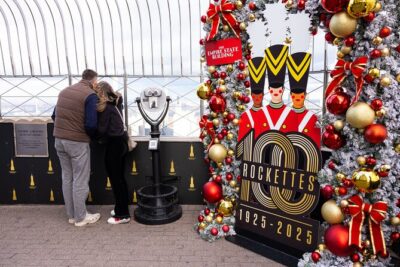 ★ 4.5NYC Empire State Building Observation Deck TicketFrom $476,916 reviews
 ★ 4.5SUMMIT One Vanderbilt Experience TicketFrom $475,398 reviews
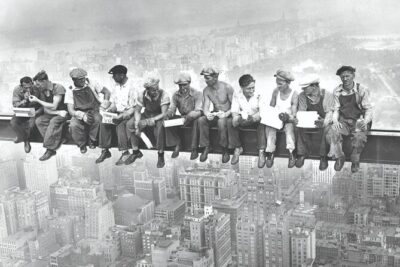 ★ 4.5Top of the Rock Observation Deck New York City TicketFrom $624,556 reviews
 ★ 4.6New York Pass®: 100+ Attractions including Edge NYCFrom $1522,465 reviews
 ★ 4.0NYC Edge Observation Deck at Hudson Yards Admission TicketFrom $392,242 reviews
 ★ 4.0Go City: New York Explorer Pass: 100+ Things to Do Including EdgeFrom $891,895 reviews
Browse the lists this tour appears in