
Reviewed · TOURS
Twilight Tour: Death in New York (Lower Manhattan)
Death has been walking with NYC for centuries. This twilight tour threads that story through Lower Manhattan’s most famous views, with a small-group pace and a guide who keeps it clear and human, not spooky-for-spooky’s-sake. I love how the tour makes you look at familiar places with new context, and I love that it stays factual while still being funny and engaging.
You start with big horizons—Staten Island, the Statue of Liberty, Governor’s Island—and then keep shrinking down to burial sites, epidemics, and the messy systems cities use to handle death. One possible drawback: if you’re only looking for ghosts or paranormal thrills, you may find this more history-and-culture than chills.
In This Review
- Key points worth your attention
- Twilight Tour: Death in New York in Lower Manhattan at 7:00 pm
- The guide style: Krombie’s smart, lightly spooky storytelling (without the paranormal act)
- Walking the FiDi and Battery Park area: your stop-by-stop route
- Stop 1: Statue of Liberty View Point and the Lenape before the city
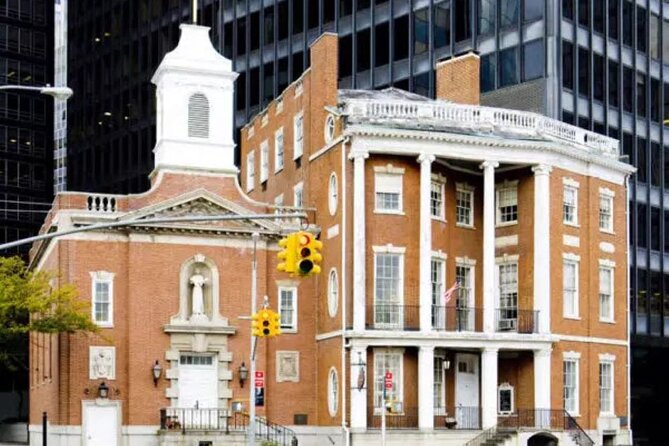
- Stop 2: Seton Shrine and how Catholics think about dying
- Stop 3: Battery Park City and the cenotaph’s Titanic link
- Stop 4: National Museum of the American Indian and funerary acquisitions
- Stop 5: Charging Bull and the first city cemetery under New Amsterdam
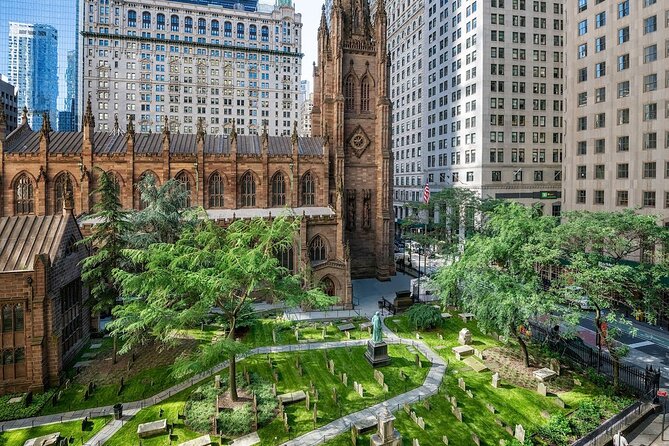
- Stop 6: Trinity Church NYC and epidemics, burial prohibitions, potter’s fields
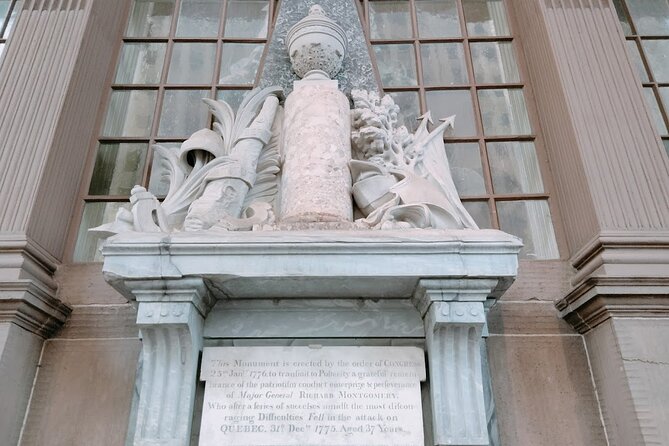
- Stop 7: St. Paul’s Chapel and Irish representation in the graveyard
- Stop 8: St. Peter’s Church and the Catholic ban in New York
- Stop 9: City Hall Park and NYC’s almshouse, Bellevue, and Lincoln’s funeral
- What makes this tour feel different from a typical walking tour
- The real value: why the $36 price makes sense here
- Practical tips so you enjoy it more
- Who should book Twilight Tour: Death in New York
- FAQ
- How long is the Twilight Tour: Death in New York?
- What does it cost?
- Where does the tour start, and where does it end?
- What time does it begin?
- Is this tour offered in English, and do I get a ticket for it?
- How big is the group?
- Is there anything I should know about cancellation or refunds?
- Should you book this Death in New York twilight tour?
Key points worth your attention
- A 15-person max group keeps the walk easy to follow and question time actually useful
- Iconic stops with serious backstories, from cemeteries under Wall Street to potter’s fields and epidemics
- Factual, not ghostly storytelling, with humor that keeps the tone light
- Short walks between stops through the Financial District and Battery Park area at night
- Death as a social system, including saints, prisons, prisoners of war, burial rules, and public health
Not sold yet? Here is how this one lines up against other New York City picks:
- NYC: SUMMIT One Vanderbilt Tickets
★ 4.7 · 51,195 reviews - NYC: Empire State Building Tickets – Observatory & Museum
★ 4.7 · 25,757 reviews - New York City: Statue of Liberty & Ellis Island with Ferry
★ 4.6 · 18,683 reviews - New York City: American Museum of Natural History Ticket
★ 4.5 · 15,447 reviews
Twilight Tour: Death in New York in Lower Manhattan at 7:00 pm
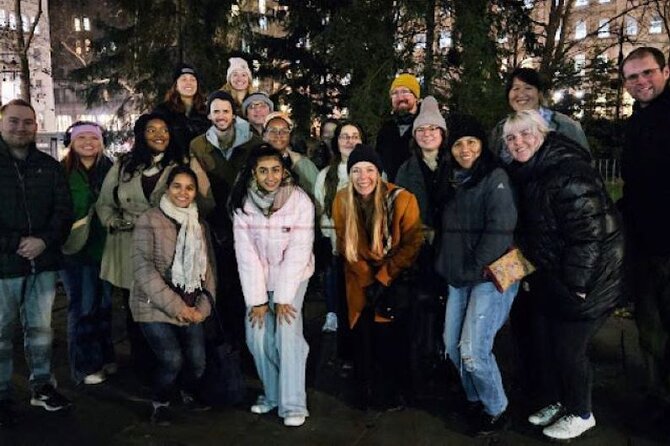
There’s a strange comfort in doing this at twilight. Daytime Lower Manhattan can feel like you’re rushing between landmarks. At night, the same streets feel calmer, and the tour has room to slow your brain down and notice details.
This is a 1 hour 45 minutes (approx.) walking experience that starts at 7:00 pm at Whitehall Terminal 4, Whitehall St and ends in City Hall Park at Broadway & Chambers St. The pace is set for people with at least moderate physical fitness, since you’re on your feet for most of the route. The tour is also capped at 15 travelers, which matters in a place where it’s easy to get separated in a big crowd.
Price is $36.00 per person. For me, the value comes from how tightly it connects sites you’ll recognize instantly with stories that are easy to forget once you’ve moved on. You’re paying for the walk, the interpretation, and the fact that each stop explains a different piece of how New York handled death—religiously, politically, and practically.
The guide style: Krombie’s smart, lightly spooky storytelling (without the paranormal act)
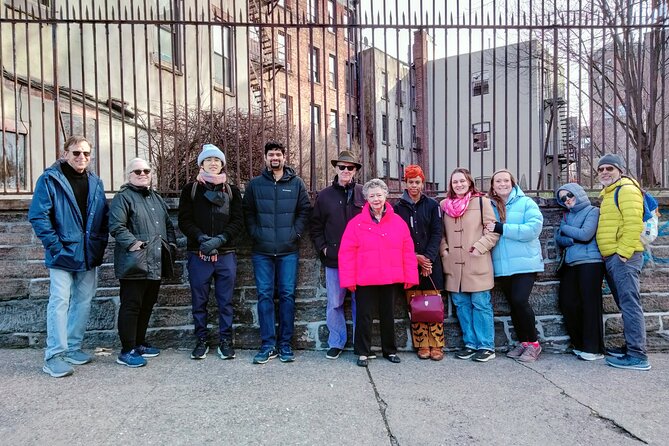
If you’re choosing a death-history tour, the guide matters. One of the standout themes from people who’ve done this tour is that Krombie delivers the material with a mix of warmth, humor, and accuracy. The tone is often described as quirky macabre—not classic ghost-hunt energy.
That matters because it changes how you absorb the content. Instead of listening to shock value, you get the “who, how, why” behind topics like prison and execution history, epidemics, and burial restrictions. And because the guide is open to questions (and generally keeps the mood playful), the tour feels like a conversation with NYC, not a lecture.
Walking the FiDi and Battery Park area: your stop-by-stop route
This tour is built around turning famous Lower Manhattan scenery into a kind of open-air textbook. Here’s how the route unfolds, and why each stop is worth paying attention to.



Stop 1: Statue of Liberty View Point and the Lenape before the city
Your first stop gives you a wide view—Staten Island, the Statue of Liberty, and Governor’s Island—and then flips the story back in time. You’ll hear about Lenape history and ancient burial sites, which is a powerful way to start because it reminds you this location wasn’t always a skyline stage.
The tour also connects the area to later eras, including the last NYC pirate execution and Civil War prisoners. That’s a useful contrast: the same geography that later became “iconic” also carried older burial practices and harsher political realities.
Watch-for: this is the kind of story where you may need a second or two to adjust your mental picture of what you’re seeing. That’s normal. Let the guide do the framing.
Stop 2: Seton Shrine and how Catholics think about dying
Next you’ll visit Seton Shrine, where you’ll see a Catholic shrine to a New York saint. The tour connects the site to the canonization of saints and to the Catholic way of framing death.
This stop matters because it covers a different answer to the same question: what happens when life ends? In many city history tours, religion shows up as architecture. Here, religion shows up as ritual, beliefs, and meaning.
Tip: pay attention to how the guide links faith to everyday structures—because that’s a big theme of the tour.
Stop 3: Battery Park City and the cenotaph’s Titanic link
At Battery Park City, you’ll visit a cenotaph and hear Titanic history that relates to it. A cenotaph is a special kind of memorial: it’s meant to mark loss even when you can’t hold the body.
That makes it a smart bridge from personal death to public memory. It’s not just a story about a ship—it’s a story about how societies cope when catastrophe turns mourning into policy and symbolism.
Stop 4: National Museum of the American Indian and funerary acquisitions
The tour then heads to the National Museum of the American Indian, where you’ll hear more Indigenous history. You’ll also get stories tied to funerary museum acquisitions, which puts serious ethical questions on the table.
This is one of the most consequential parts of the route. It’s not death trivia. It’s about who gets to keep objects connected to burial, how institutions formed over time, and what it means to collect remains or related items.
If you prefer your death history strictly chronological and simple, this stop may feel heavier. If you want the real-world impact of museums and memory, it’s essential.
Stop 5: Charging Bull and the first city cemetery under New Amsterdam
Then the tour pivots to something you can’t miss: Charging Bull (Wall Street Bull). Here the story turns from modern landmark to older ground. You’ll learn about New Amsterdam burial history by visiting the site of the first city cemetery.
That’s the kind of “wait, really?” moment this tour is built for. It trains your eyes to ask: what’s under the street? What did people fear? Where did they place the dead when the city was still becoming itself?
Small consideration: this stop sits in a high-visibility area, so it can feel more “touristy” in the literal sense—though the guide keeps the meaning focused.
Stop 6: Trinity Church NYC and epidemics, burial prohibitions, potter’s fields
At Trinity Church NYC, you’ll hear about epidemic history and burial prohibitions, plus potter’s fields. This is the practical side of death history: when disease spreads, cities often change rules. When resources run out, the burial system changes too.
You’ll leave this stop understanding that death isn’t just a tragedy. It’s also a trigger—one that pushes governments, churches, and communities into action.
Stop 7: St. Paul’s Chapel and Irish representation in the graveyard
Next is St. Paul’s Chapel, where the tour highlights Irish representation at St. Paul’s graveyard. This brings immigration-era identity into the story of who gets remembered and where communities laid their dead.
If you like social history, this is a good stop. It turns a church setting into a mirror for ethnic presence and changing NYC demographics over time.
Stop 8: St. Peter’s Church and the Catholic ban in New York
At St. Peter’s Church, you’ll hear Catholic history tied to the New York ban on Catholicism and the first New York Catholic burial ground.
This stop is especially helpful if you think of religion as private. Here, you see how religious identity shaped burial access and public rules. The tour connects those dots for you, rather than leaving you to guess.
Stop 9: City Hall Park and NYC’s almshouse, Bellevue, and Lincoln’s funeral
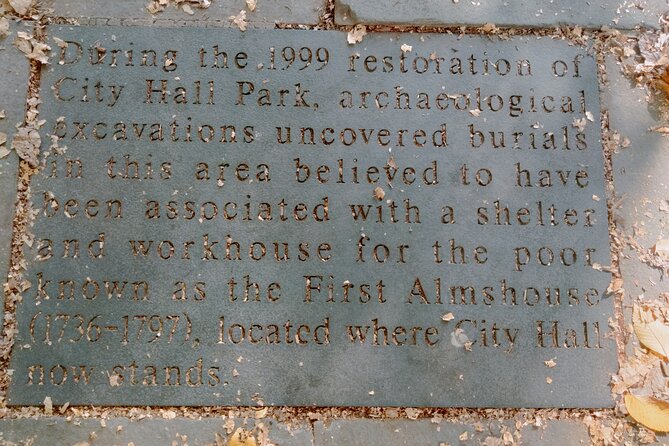
The final stop is City Hall Park, where you’ll visit the site of the first NYC almshouse. You’ll also hear stories linked with Bellevue Hospital, embalming, and President Lincoln’s funeral—plus the idea of excavating the dead.
This ending is effective because it pulls multiple threads together: poverty, illness, death logistics, and national history. It’s also a reminder that “the city” is built on layers. Even after buildings go up, people are still buried—sometimes literally under later construction.
What makes this tour feel different from a typical walking tour
Most Lower Manhattan walking tours give you names and dates. This one uses those facts to explain how New York dealt with death across eras. You’ll move from Indigenous burial context to pirate executions and Civil War prisoners, then to saints and Catholic burial policies, then to epidemics, potter’s fields, and institutional responses like hospitals and almshouses.
In other words, you’re not only seeing locations—you’re learning the systems.
The real value: why the $36 price makes sense here
At $36 for about 1 hour 45 minutes, you’re paying for:
- a small-group format (max 15)
- an evening route with short walking distances between stops
- stop-by-stop interpretation that connects famous places to death history you won’t typically get from a quick museum trip or a standard guidebook scan
You’re also not fighting a “stand in line” problem at most of these sites, since the stops are listed as free admission in the tour outline. That helps if you’re trying to keep your NYC costs under control.
Practical tips so you enjoy it more

This is a night walking tour, and Lower Manhattan can be loud. You’ll likely hear street traffic at times. Bring patience for that. Also:
- Wear shoes that handle uneven sidewalks and curb cuts.
- Dress for an evening walk, even if the daytime forecast looks mild.
- Have curiosity ready, not just a thrill-seeking mindset. This works best when you’re open to stories that feel human and sometimes uncomfortable—without turning into gore.
Who should book Twilight Tour: Death in New York
This tour is a great fit if you:
- like history with context, especially social and religious history
- want to understand how death shaped NYC institutions like hospitals and burial grounds
- enjoy story-driven walking tours where you’re not stuck listening to one long monologue
You might pass if you only want:
- paranormal content
- a purely macabre or ghostly experience
- minimal walking
FAQ
How long is the Twilight Tour: Death in New York?
It runs for about 1 hour 45 minutes (approx.).
What does it cost?
The price is $36.00 per person.
Where does the tour start, and where does it end?
It starts at Whitehall Terminal 4, Whitehall St, New York, NY 10004 and ends at City Hall Park, Broadway & Chambers St, New York, NY 10007.
What time does it begin?
The start time listed is 7:00 pm.
Is this tour offered in English, and do I get a ticket for it?
Yes, it’s offered in English, and you receive a mobile ticket. Confirmation is received at booking.
How big is the group?
The tour has a maximum of 15 travelers.
Is there anything I should know about cancellation or refunds?
You can cancel for a full refund if you cancel at least 24 hours before the experience start time. If you cancel less than 24 hours before, the amount paid is not refunded.
Should you book this Death in New York twilight tour?
If you want a Lower Manhattan experience that goes beyond skyline photos, I think this is a smart pick. The mix of iconic views and burial-ground-and-public-health stories gives you a fresh way to understand the city, and the small group plus guide tone (including Krombie’s approachable, lightly humorous style) keeps it enjoyable even when the subject turns serious.
Book it if you’re curious about how people handled death in NYC, from saints and cemeteries to epidemics and famous national moments. Skip it if you’re chasing ghost thrills or want a comfortable, light “best-of” walk with no heavy themes.
More Tours in New York City
- Statue of Liberty and Ellis Island Tour: All Options★ 5.0 · 13,571 reviews
- New York in One Day Guided Sightseeing Tour★ 5.0 · 13,166 reviews
- Central Park Pedicab Guided Tours★ 5.0 · 7,108 reviews
- New York City: Manhattan Helicopter Tour★ 4.7 · 7,076 reviews
- Private Central Park Pedicab Tour★ 5.0 · 6,981 reviews
More Tour Reviews in New York City
- NYC: SUMMIT One Vanderbilt Tickets★ 4.7 · 51,195 reviews
- NYC: Empire State Building Tickets – Observatory & Museum★ 4.7 · 25,757 reviews
- New York City: Statue of Liberty & Ellis Island with Ferry★ 4.6 · 18,683 reviews
- New York City: American Museum of Natural History Ticket★ 4.5 · 15,447 reviews
- Statue of Liberty and Ellis Island Tour: All Options★ 5.0 · 13,571 reviews
Just in: the newest New York City reviews on our desk





Tours, compared.
 ★ 5.0Statue of Liberty and Ellis Island Tour: All OptionsFrom $6913,571 reviews
 ★ 5.0New York in One Day Guided Sightseeing TourFrom $9913,166 reviews
 ★ 5.0Central Park Pedicab Guided ToursFrom $387,108 reviews
 ★ 4.7Manhattan Helicopter TourFrom $2997,076 reviews
 ★ 5.0Private Central Park Pedicab TourFrom $386,981 reviews
 ★ 5.09/11 Memorial, Ground Zero Tour with Optional 9/11 Museum TicketFrom $396,381 reviews
 ★ 4.2Hop-on Hop-off Sightseeing Tour by Open-top BusFrom $445,863 reviews
 ★ 4.8Manhattan Sightseeing Helicopter TourFrom $2995,826 reviews