
Reviewed · GUIDED
Upper West Side: Your Guide to Understanding NYC
Movies live right on the sidewalk. This private half-day walk through the Upper West Side turns famous locations from Ghostbusters and You’ve Got Mail into a real sense of neighborhood change, from Irish and Italian roots to the way New York built itself. I love the film-location storytelling and the chance to ask questions as you go. One thing to consider: it’s a walking tour that can run toward the 6-hour end, so plan your schedule with breathing room.
You’ll start near Times Square and finish around Gray’s Papaya, with your guide steering you between grand pre-war blocks, riverside streets, and a couple of food-and-culture stops like Zabar’s. The private group format also matters here: it keeps the pace human and lets you spend extra time on whatever you care about most, from architecture to immigrant history.
In This Review
- Quick Hits: What Makes This Upper West Side Tour Work
- Upper West Side, But With Context and Story in Every Block
- Getting Started: From Times Square to a Private Half-Day Flow
- Stop 1 at 225 W 86th St: Movie-Film Real Estate You Can Actually See
- Riverside Drive and West End Avenue: Pre-War Grandeur Along the Water
- Zabar’s: Italian Market Culture and Everyday New York Food Energy
- Verdi Square: A Small Park With Broadway’s Shape Built In
- Broadway Theatre Area and the Grand Central-Inspired Bank Look
- What You’ll Learn Beyond the Photos
- Price and Value: Why $575 per Group Can Make Sense
- Who This Tour Is Best For
- Should You Book This Upper West Side Tour?
- FAQ
- How long is the Upper West Side tour?
- What does the tour cost?
- Is this a private tour or a shared group?
- Where does the tour start and end?
- Is pickup available, and do I get a mobile ticket?
- Is the tour offered in English?
- Are there admission fees at the stops?
- Is lunch included?
- What movies or TV shows are referenced during the tour?
- What’s the cancellation policy?
Quick Hits: What Makes This Upper West Side Tour Work
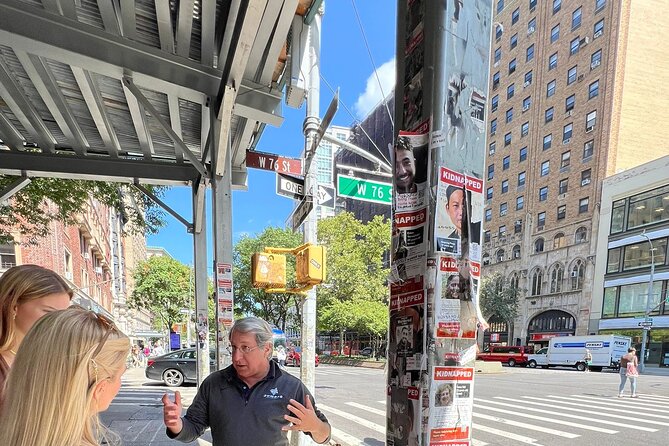
- Private, question-friendly format with a professional NYC guide who will slow down for your curiosity
- Movie and TV filming sites including Ghostbusters, You’ve Got Mail, Seinfeld, How I Met Your Mother, and Only Murders in the Building
- Pre-war streets with “readable” architecture along Riverside Drive and West End Avenue
- Zabar’s market stop that grounds the neighborhood’s everyday culture in food and community
- Verdi Square and Broadway’s curve—small public space, big design story
- Broadway-area architecture details near a bank with Grand Central–style inspiration
More days made simple with a guide
- New York in One Day Guided Sightseeing Tour
★ 5.0 · 13,166 reviews - Central Park Pedicab Guided Tours
★ 5.0 · 7,108 reviews - From NYC: Guided Day Trip to Washington DC by Van or Bus
★ 4.7 · 3,418 reviews - NYC: Statue of Liberty and Ellis Island Guided Tour
★ 4.6 · 2,765 reviews
Upper West Side, But With Context and Story in Every Block
If you only visit the Upper West Side as a list of sights, you miss the point. The charm here isn’t just pretty buildings. It’s how the neighborhood’s streets, institutions, and immigrant communities shaped the daily rhythm of Manhattan.
This tour’s sweet spot is that it connects three things you can easily see: architecture, movie/TV locations, and the neighborhood’s cultural roots. And because it’s private, your guide can tune the stories toward your interests, not just deliver a scripted speech.
You can also expect the pacing to feel like a real walk with explanations, not a museum lecture. Each stop is short, but the guide’s context is what sticks—why a building looks the way it does, how a street corner functioned, and what changed over time.
Getting Started: From Times Square to a Private Half-Day Flow
You’ll meet around Times Square (Manhattan, NY 10036) and end around Gray’s Papaya (2090 Broadway). There’s also pickup offered, which is a nice help if you don’t want to fight subway transfers before you start walking.
The tour uses a mobile ticket, so you don’t need to hunt for paper. And since it’s offered in English and described as near public transportation, it fits easily into a typical NYC trip plan.
Duration is listed as 3 to 6 hours (approx.), and that range matters. In practice, this kind of neighborhood storytelling tour often stretches when you ask questions or when the group moves slower to absorb architecture. If you’re the type who likes to take photos and read street-level details, you’ll likely gravitate toward the longer end.
Stop 1 at 225 W 86th St: Movie-Film Real Estate You Can Actually See
This is the kind of stop that makes the Upper West Side feel cinematic without being fake.
At 225 W 86th St, you’ll look at a brownstone tied to You’ve Got Mail and a building connected to Ghostbusters. The same area also connects you to filming locations for Seinfeld, How I Met Your Mother, and Only Murders in the Building. Even if you only recognize one show, it’s still fun, because the guide will show you how these productions picked visually specific streets and facades.
The value here isn’t only nostalgia. It’s learning how New York’s residential architecture gets repurposed on screen. You start noticing details like stoops, window rhythms, and the way a building’s face relates to the sidewalk. After this stop, you’ll look at the next blocks with more “eyes open” attention.
The only consideration: filming-location sightseeing is inherently exterior. You’ll be outside, reading the street-level cues, and you won’t get inside buildings unless you’re in a spot where access is possible. Still, the listed admission is ticket free, which keeps it low-stress.

Riverside Drive and West End Avenue: Pre-War Grandeur Along the Water
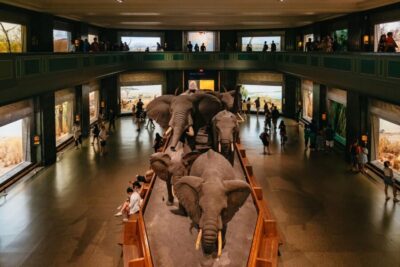
Next you head toward Riverside Drive and West End Avenue, two corridors that help you understand what makes the Upper West Side feel distinct.
This part is about “big-city elegance” you can walk through. West End Avenue runs along long stretches of grand pre-war buildings, and Riverside Drive parallels Riverside Park, giving you that classic Manhattan sense of buildings facing an open green edge.
The guide’s job here is to make you notice patterns. Pre-war streets often have a logic: uniform height, repeating window design, and an overall rhythm that signals a specific era of development. Once you learn to spot that, you can almost date parts of the neighborhood by sight alone.
Timing for this section is short (listed around 20 minutes per segment), so use it to get your bearings. If you want longer photo time, ask your guide to slow the group here. You’ll get more out of it than rushing through.
Zabar’s: Italian Market Culture and Everyday New York Food Energy
Then it’s time for a stop that grounds the tour in local culture, not just scenery.
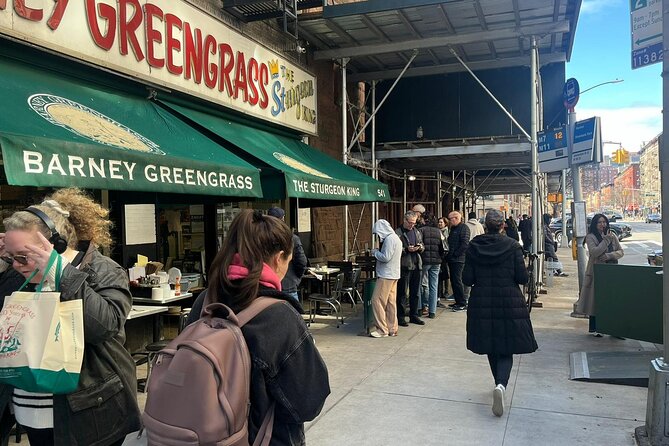
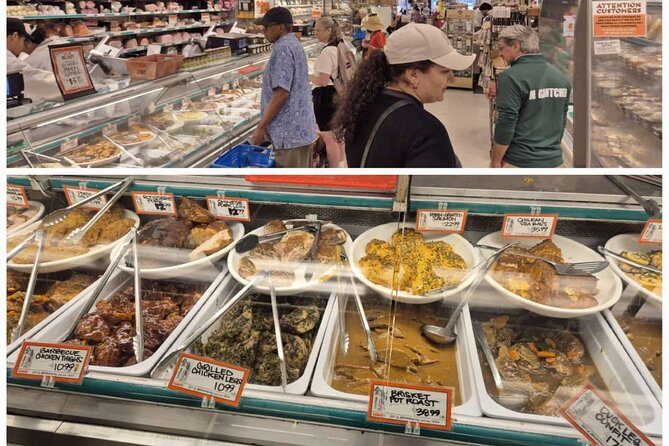
Zabar’s is listed as a century-old Italian market stop (with the address commonly given as 2245 Broadway). Even if you’re not a dedicated food shopper, this kind of place tells you something big: how immigrant communities shaped commerce, and how Broadway became a commercial spine.
What I like about including Zabar’s in a film-and-architecture tour is that it breaks the spell. You’re not just watching New York from a distance. You’re stepping into the “actually lived here” feeling, where people buy ingredients, browse counters, and move at neighborhood speed.
Some guides around the city connect this kind of market stop to classic bites nearby, and based on what you’ll hear during this tour, you may get recommendations for things like bagels, hot dogs, and cookies. If you’re trying to eat like a New Yorker for a day, this is one of the more practical places to start.
Consideration: because markets can be busy and because you’ll be standing and moving inside, wear comfortable shoes. This is usually the point where people appreciate having a tight itinerary rather than wandering independently.
Verdi Square: A Small Park With Broadway’s Shape Built In
After the commercial intensity of Zabar’s, you shift into a quieter pocket.
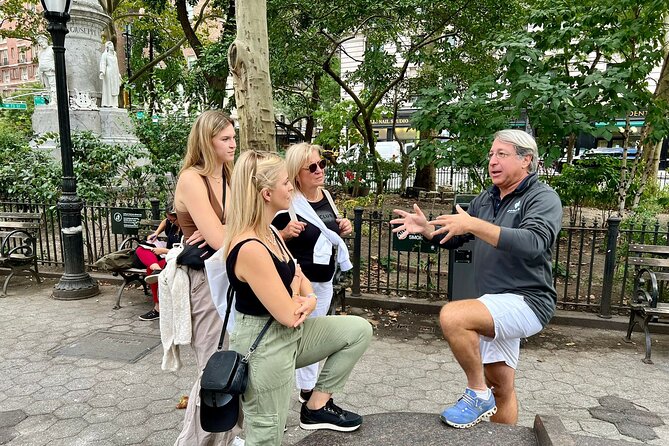
Verdi Square is described as a hidden park shaped by Broadway’s curve. That detail matters. Instead of a typical straight-edged park, it feels like the city’s geometry decided to become a public space. It’s exactly the kind of place where a guide can explain how streets and public planning create “micro-neighborhood” identity.
This stop is about noticing how public space works in Manhattan. You don’t just pass it; you see how the curve of Broadway influences where people stand, pause, and look. In a city that often feels like pure transit, this is a reminder that there are intentional pauses built into the grid.
If you’re traveling with kids or someone who gets tired, this stop is also a good mental reset. It’s short, but it’s not just standing around for photos.
Broadway Theatre Area and the Grand Central-Inspired Bank Look
The final stretch leans into architecture again, but with a twist: you’re looking at a space that people often ignore because it’s not a traditional museum.
This stop points you to the Broadway Theatre area and a bank that’s described as having Grand Central–inspired architecture, with Apple Bank for Savings (2100 Broadway) used as an example. That comparison is useful because it teaches you what to look for: elevated interior/entry design, a sense of ceremonial grandeur, and the idea that finance spaces borrowed from major public landmarks.
The payoff is big if you like visual clues. You’ll walk away with a sharper eye for “New York style” outside the obvious tourist targets. And because the tour is focused on Upper West Side context, this isn’t random architecture spotting. It’s part of understanding how Manhattan carries design cues across neighborhoods.
Again, admission is listed as ticket free, which means you’re likely doing exterior viewing and quick interior glimpses where access allows. Even without that, you can still appreciate the design details your guide points out.
What You’ll Learn Beyond the Photos
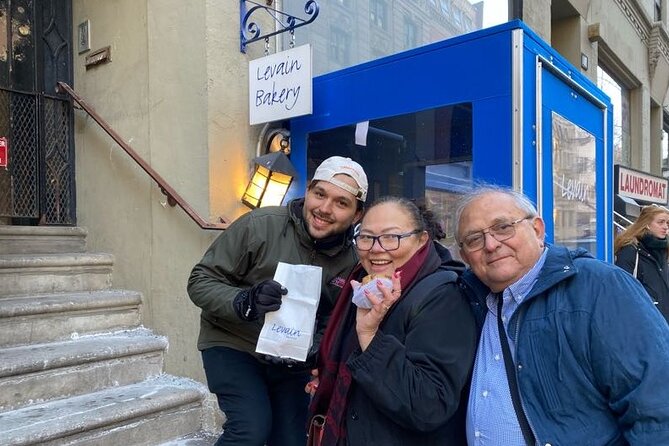
This tour is built for people who want to understand New York, not just check boxes. The guide’s approach, based on consistent feedback, tends to connect these dots:
- How immigrant communities influenced neighborhood development and everyday life
- How social and economic forces shaped where people lived and worked
- How architecture reflects planning choices, from residential building logic to public-facing design
You’ll also hear a lot of practical, street-level insight. For example, it’s not only about what a building is, but how the neighborhood operates: why certain areas feel built for community life, and how streets and storefronts fit into routines.
If you like learning, this tour will satisfy you without turning into a long lecture. If you’re more interested in movies and atmosphere, it won’t feel forced either, because the film locations give you an easy entry point.
Price and Value: Why $575 per Group Can Make Sense
The price is listed as $575.00 per group (up to 6). That means you’re paying for a private guide experience rather than per person admission or per stop fees.
Here’s the value math that tends to matter in real life:
- If you’re traveling as a small group (or family), you’re essentially buying shared access to a guide who can tailor the pace.
- Because the tour is ticket-free at the listed sights and doesn’t include lunch, you’re not stacking hidden museum costs on top.
- The guide’s focus on practical neighborhood context can save time later. Instead of guessing where things are or what matters, you get a framework for understanding what you’re seeing.
If you’re one person going solo, it can still be worthwhile because you’re getting private attention. But the cost is clearly built for groups up to six, so you’ll get the best value by pairing up with friends or coordinating plans with another traveler.
Who This Tour Is Best For
This fits best if you want at least one of these:
- You love movie and TV locations and want them explained in real neighborhood terms
- You care about architecture and want to learn how to read it quickly
- You want a small, private walking experience instead of a big group bus tour
- You’re hungry for a mix of culture, streets, and food stops like Zabar’s
It’s also friendly for mixed ages if everyone can comfortably walk for several hours. Since it’s described as most travelers can participate, it’s a solid option for many visitors. Just plan for weather and footwear, because you’re out on Manhattan sidewalks.
Should You Book This Upper West Side Tour?
If you’re the type of traveler who wants to see the Upper West Side and also understand it, I’d book this. The combination of famous filming streets, practical neighborhood storytelling, and stops that feel connected to daily life (like Zabar’s) makes it more than a photo walk.
Book it if your group likes asking questions, and if you can spare a half-day without rushing. Skip it only if you want purely tourist-style sightseeing with no story or if you don’t do well with walking for 3 to 6 hours.
FAQ
How long is the Upper West Side tour?
It runs about 3 to 6 hours, depending on the pace and how much time you spend at each stop.
What does the tour cost?
The price is $575.00 per group, up to 6 people.
Is this a private tour or a shared group?
It’s a private tour/activity. Only your group participates.
Where does the tour start and end?
It starts near Times Square in Manhattan (NY 10036) and ends around Gray’s Papaya at 2090 Broadway (New York, NY 10023).
Is pickup available, and do I get a mobile ticket?
Pickup is offered, and the tour uses a mobile ticket.
Is the tour offered in English?
Yes, it’s offered in English.
Are there admission fees at the stops?
The listed stops are marked as admission ticket free, so you won’t be paying standard attraction entry fees at each stop.
Is lunch included?
No. Lunch is not included.
What movies or TV shows are referenced during the tour?
You’ll see filming locations connected to Ghostbusters, You’ve Got Mail, Seinfeld, How I Met Your Mother, and Only Murders in the Building.
What’s the cancellation policy?
You can cancel for a full refund up to 24 hours before the experience’s start time, with free cancellation included.
Let a Guide Handle It
- New York in One Day Guided Sightseeing Tour★ 5.0 · 13,166 reviews
- Central Park Pedicab Guided Tours★ 5.0 · 7,108 reviews
- From NYC: Guided Day Trip to Washington DC by Van or Bus★ 4.7 · 3,418 reviews
- NYC: Statue of Liberty and Ellis Island Guided Tour★ 4.6 · 2,765 reviews
- Original NYC Guided Food Tour of Chinatown and Little Italy★ 5.0 · 2,194 reviews
More Tour Reviews in New York City
- NYC: SUMMIT One Vanderbilt Tickets★ 4.7 · 51,195 reviews
- NYC: Empire State Building Tickets – Observatory & Museum★ 4.7 · 25,757 reviews
- New York City: Statue of Liberty & Ellis Island with Ferry★ 4.6 · 18,683 reviews
- New York City: American Museum of Natural History Ticket★ 4.5 · 15,447 reviews
- Statue of Liberty and Ellis Island Tour: All Options★ 5.0 · 13,571 reviews
Just in: the newest New York City reviews on our desk



Guided, compared.
 ★ 5.0New York in One Day Guided Sightseeing TourFrom $9913,166 reviews
 ★ 5.0Central Park Pedicab Guided ToursFrom $387,108 reviews
 ★ 4.7From NYC: Guided Day Trip to Washington DC by Van or BusFrom $1043,418 reviews
 ★ 4.6Statue of Liberty and Ellis Island Guided TourFrom $592,765 reviews
 ★ 5.0Original NYC Guided Food Tour of Chinatown and Little ItalyFrom $1302,194 reviews
 ★ 4.5Statue of Liberty and Ellis Island Guided Tour with FerryFrom $592,189 reviews
 ★ 5.0Washington DC & Philadelphia 1-Day Guided Tour from NYCFrom $1282,109 reviews
 ★ 4.0Gray Line New York Fully Guided 5 Hour Sightseeing TourFrom $1091,119 reviews