
Reviewed · NEW YORK CITY
Visit in French the must-see neighborhoods of NYC
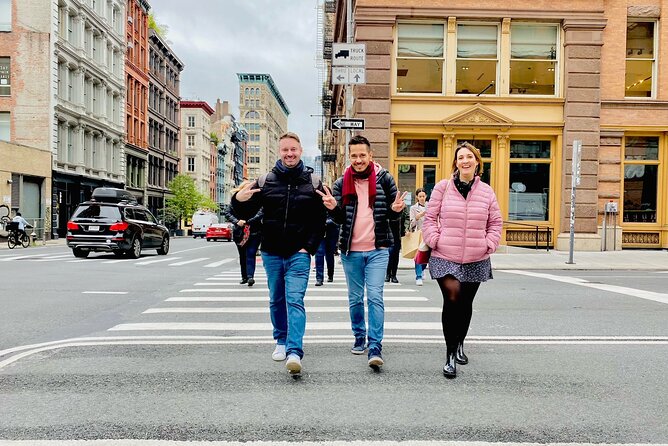
Four Manhattan neighborhoods, one smart morning walk. I love the French guides who know the city from daily life, and I love the small group pace that keeps everything human and interactive. The only catch: it depends on good weather and you do cover a fair bit of sidewalk in about 3.5 hours.
You start at Washington Square Park at 9:00 am and end at Columbus Park near Mulberry & Baxter. I also appreciate that you get a mobile ticket and a post-visit email to help you remember the streets, stories, and spots you’ll want to revisit.
In This Review
- Key things to know before you go
- Four neighborhoods, one efficient morning on Manhattan’s map
- Greenwich Village: movie streets, classic homes, and calm residential blocks
- SoHo’s cast-iron look: shopping streets with real architectural clues
- Little Italy’s remnants: what’s left, and why it mattered
- Chinatown: a city within a city, through all your senses
- The guide experience: French storytelling with a local eye
- Price and group size: is $69 really fair for this 3.5-hour value?
- Where you start and where you finish: setting yourself up for the rest of your day
- Who should book this tour (and who might skip it)
- Should you book this French neighborhood walk?
- FAQ
- Which neighborhoods are included?
- How long is the tour?
- What time does it start, and where do we meet?
- Where does the tour end?
- Is the guide in French?
- Do we have to pay for admissions at the stops?
- Is the tour dependent on weather?
- How big is the group, and are service animals allowed?
Key things to know before you go
- French guides living in NYC bring film, architecture, and neighborhood context into plain language.
- Four neighborhoods in one pass: Greenwich Village, SoHo, Little Italy, and Chinatown.
- Movie-and-TV vibes in Greenwich Village plus classic residential street scenes.
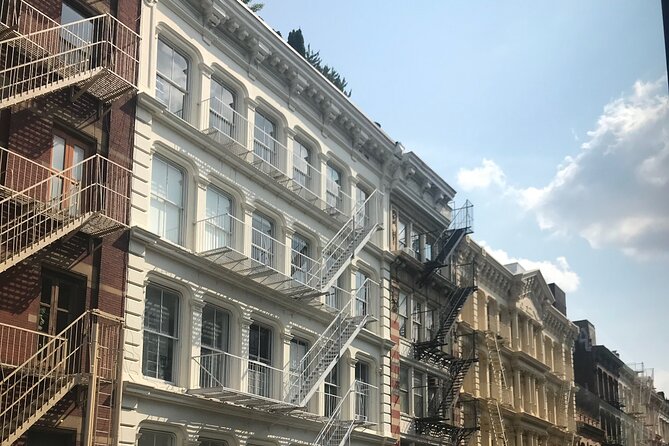
- SoHo’s cast-iron details set you up to look at shopfronts like a designer, not just a tourist.
- Chinatown as a full-sensory area where the street experience becomes the point.
Not sold yet? Here is how this one lines up against other New York City picks:
- NYC: SUMMIT One Vanderbilt Tickets
★ 4.7 · 51,195 reviews - NYC: Empire State Building Tickets – Observatory & Museum
★ 4.7 · 25,757 reviews - New York City: Statue of Liberty & Ellis Island with Ferry
★ 4.6 · 18,683 reviews - New York City: American Museum of Natural History Ticket
★ 4.5 · 15,447 reviews
Four neighborhoods, one efficient morning on Manhattan’s map
This is the kind of tour that helps you get your bearings fast on a first visit. Instead of hopping between random sights, you move through four areas that each feel like a different city. And because your guide is French and has lived in New York for years, you get explanations that feel grounded in how the neighborhoods actually work.
I like the timing: a 9:00 am start usually means you can see more before the day gets heavy. The total time (about 3 hours 30 minutes) is long enough to learn, but not so long that it turns into pure endurance. For the price, the value is that you’re paying for context, not just footsteps. You’ll get stories tied to buildings, street layouts, and cultural history—especially in Greenwich Village and SoHo.
One practical consideration: this experience is weather-dependent. In rain, you’ll still be walking and reading the streets, not museum-hopping under a roof. So bring a packable layer and shoes you can trust on wet pavement.
Greenwich Village: movie streets, classic homes, and calm residential blocks
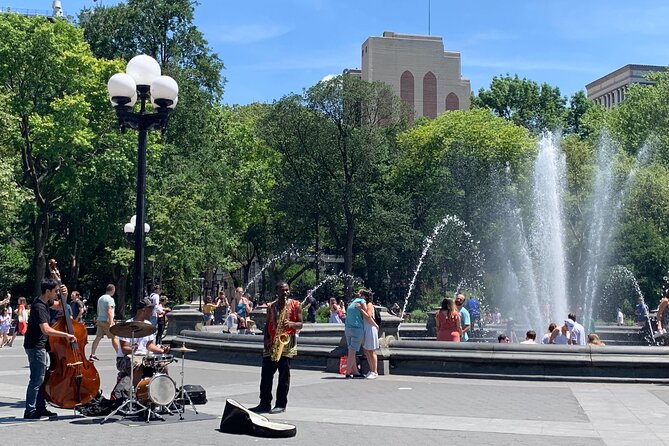
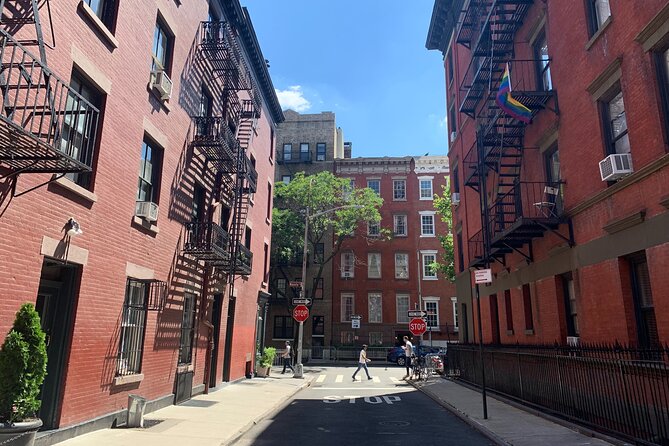
Greenwich Village is where New York feels artsy, old-school, and a little mysterious—even if you’ve never studied a map. Here, the tour focuses on the historic district feel: the sense of film-set familiarity when you cross certain blocks. It’s also one of Manhattan’s most popular residential neighborhoods, which means you’re not just seeing “attractions.” You’re seeing how people actually live.
What I love about this stop is the contrast: you get the pop-culture angle (Greenwich Village has served as a setting for films and TV series), then you slow down and look at the neighborhood like architecture. Even when the streets look familiar from screens, you start noticing the details that make the area distinctive—street geometry, the way blocks connect, and the lived-in look of single-family homes.
A tip for your own eyes: while your guide talks, don’t try to memorize every street name. Instead, pick one or two visual anchors—like building shapes, windows, or street widths. Those are what will help you recognize the neighborhood later when you’re wandering on your own.
Potential drawback: because Village is a residential area, the “main sights” aren’t one big monument. You’ll get the most out of this stop if you’re happy reading streets and facades, not only chasing iconic landmarks.
SoHo’s cast-iron look: shopping streets with real architectural clues
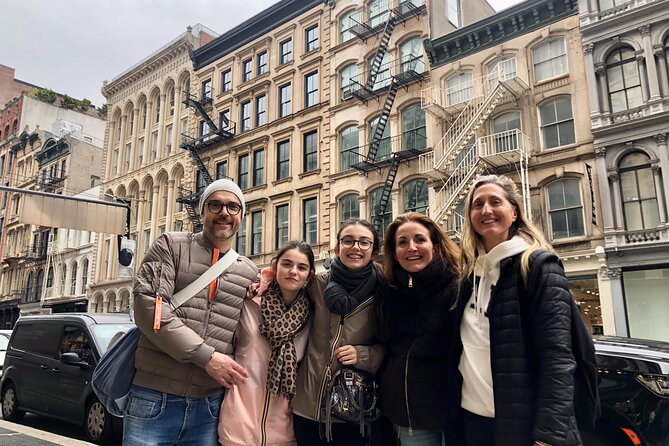
SoHo can be fun even if you don’t buy anything. But this stop adds a layer that makes it more than window-shopping. The tour highlights the famous “cast-iron” buildings—iron-framed facades that now hold luxury boutiques.
Here’s the practical value: once you learn what you’re looking at, SoHo changes. Instead of a blur of storefronts, you start seeing rhythm—repeating lines, ordered facades, and the kind of details that explain why this neighborhood became a destination. It’s also a good reminder that SoHo’s current image (fashion, design, chic streets) comes from a physical past.
This is also a nice breather compared to the heavier intensity of Chinatown. You’ll have time to watch how the neighborhood flows and how people move through it. If you like photography, this is a good area for street-level compositions because the buildings are visually “designed” for close viewing.
Small watch-out: if you’re visiting on a day with major foot traffic, SoHo can feel crowded around storefronts. Keep your pace with the group and focus on the facades your guide points out. That way you don’t get stuck in a slow-moving line of spectators.




Little Italy’s remnants: what’s left, and why it mattered
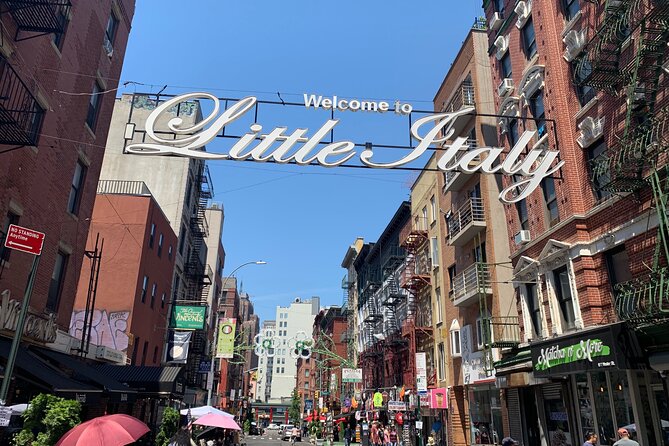
Little Italy is one of those places where the name still pulls weight, even if the neighborhood has changed. In this stop, you’ll see the remains of Little Italy’s atmosphere—and you’ll learn the role of organized crime that once cast a long shadow over the area.
I like that the tour doesn’t pretend the past is frozen in place. It treats the neighborhood like a timeline: what lingers in street character, what’s gone, and what those changes mean. The mafia angle is handled as part of the history of the place, not as sensational trivia. It gives you context for why certain streets and stories became part of New York’s broader mythology.
How to get the most here: don’t just scan for plaques or famous corners. Look at the street scale and the flow—how pedestrians move, how storefronts line up, and where the neighborhood “opens” or narrows. Even if Little Italy isn’t what it used to be, the street logic still shows you something.
Possible drawback: if you’re expecting a fully intact “old neighborhood” with no evolution, you might feel slightly underwhelmed. That’s not a reason to skip it—just a heads-up. The value is in understanding transition and memory.
Chinatown: a city within a city, through all your senses
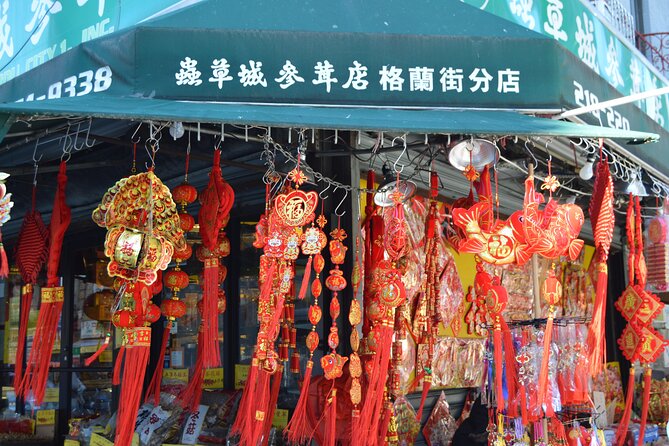
Chinatown can hit you immediately—colors, sounds, and the feeling that you’ve crossed into a different rhythm of life. This stop is built around that idea: Chinatown is described as a city within a city, and it really does awaken the senses as you walk through.
What you’ll likely enjoy most is the atmosphere. Greenwich Village and SoHo give you architectural and cinematic context. Chinatown does something different: it teaches you how to experience a neighborhood where daily life is the attraction. Instead of a single “photo spot,” the whole environment becomes the lesson.
Practical advice: go slower than you think you need here. Chinatown moves quickly, and it’s easy to feel rushed. If you take your time at a few key points while your guide explains what you’re seeing, you’ll come away with a deeper sense of place.
One consideration: Chinatown can be compact and busy depending on the time of day. The tour’s short blocks of walking keep things manageable, especially with a group size limited to a maximum of 10 people.
The guide experience: French storytelling with a local eye
This tour’s biggest advantage is the guide. The format is simple—walk, stop, explain—but the difference comes from perspective. You’re not getting a script. You’re getting a French guide who has spent years living in New York, and that shows in how they connect streets to stories.
I’m especially glad the guide experience leans into things you can’t easily Google: how neighborhoods formed, why certain areas look the way they do, and how film and architecture tie into real street identity. In particular, Greenwich Village’s film/TV references make the area feel instantly legible. You don’t just see streets; you understand why certain streets became famous.
You’ll also get practical guidance after the tour. The included post-visit email of the neighborhoods is a useful way to keep momentum. When your brain is full of names and street details, that follow-up helps you remember what mattered and where you might want to return.
If you’re traveling with adults and kids, this structure tends to work well. The neighborhood themes (history, culture, architecture, atmosphere) aren’t dry, and the stops keep the walk from turning into one long lecture.
Price and group size: is $69 really fair for this 3.5-hour value?
At $69 per person for about 3 hours 30 minutes, you’re paying for a guided route through four major Manhattan districts. That’s not just “walking with someone.” You’re buying interpretation—especially in places like SoHo, where cast-iron architecture is easier to appreciate with a guide pointing out what matters.
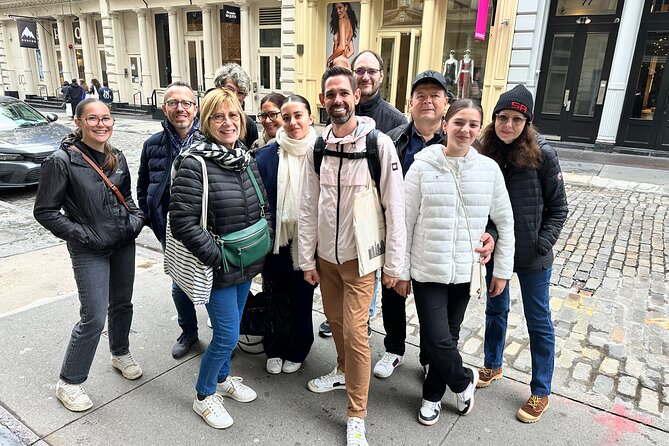
The small group limit (up to 10 travelers) is a quiet but important value point. It keeps questions possible and makes it easier for the guide to adjust pace. In big crowds, you lose context. Here, the size helps you stay connected to what the guide is saying.
Also, notice the booking pattern: it’s often reserved around a month in advance. That usually means the route is popular for good reason—this is a tight selection of neighborhoods that many first-time visitors want in one morning.
Where you start and where you finish: setting yourself up for the rest of your day
You meet at Washington Square Park at 9:00 am, then you work your way through the four neighborhoods and finish near Columbus Park at Mulberry Street & Baxter Street. That finish point is helpful because it sits in an area where you can keep exploring without having to backtrack across Manhattan.
A smart move: plan your next activity for after lunch. You’ll come out with a better sense of which streets feel worth revisiting. With neighborhoods like Village and Chinatown, you’ll also likely start noticing details on your own on the walk back to your hotel.
Bring a phone charger if you’re the type to save photos. A mobile ticket means you’ll use your phone for entry, and you’ll probably want your camera ready—especially around SoHo’s building details.
Who should book this tour (and who might skip it)
This tour is a great fit if you want a guided “neighborhood sampler” that goes beyond the obvious. It’s especially good for first-time visitors who want Greenwich Village, SoHo, Little Italy, and Chinatown covered in one shot.
Book it if you:
- like walking tours with story and street-reading
- want French-language guidance and a small-group pace
- care about architecture details and film-set context
- prefer learning first, then exploring freely on your own after
You might consider skipping if you:
- hate walking in the rain or cold and can’t adjust your schedule
- only want single, landmark-style attractions
- need a totally low-stimulation experience, because Chinatown is sensory by design
Should you book this French neighborhood walk?
If you’re planning a first Manhattan trip and you want four major neighborhoods explained with local street context, I’d book this. It’s priced like a serious walking tour, but the value is in the guide’s living-in-NYC perspective and the way the route connects architecture, history, and atmosphere.
The decision comes down to one question: are you okay walking for about 3.5 hours, and are you flexible if weather shifts? If yes, this is a very efficient way to understand New York beyond postcards—starting in Greenwich Village and ending in Chinatown, where the city’s energy really turns up.
FAQ
Which neighborhoods are included?
The tour covers Greenwich Village, SoHo, Little Italy, and Chinatown.
How long is the tour?
It runs for about 3 hours 30 minutes.
What time does it start, and where do we meet?
The start time is 9:00 am at Washington Square Park (Washington Square, New York, NY 10012).
Where does the tour end?
It ends at Columbus Park near Mulberry Street & Baxter Street (New York, NY 10013).
Is the guide in French?
Yes. The experience includes a French guide.
Do we have to pay for admissions at the stops?
No. Each stop shows admission ticket free, so you’re not paying extra entry fees for these parts.
Is the tour dependent on weather?
Yes. The tour requires good weather, and if it’s canceled due to poor weather you’ll be offered a different date or a full refund.
How big is the group, and are service animals allowed?
The group has a maximum size of 10 travelers, and service animals are allowed.
More Tour Reviews in New York City
- NYC: SUMMIT One Vanderbilt Tickets★ 4.7 · 51,195 reviews
- NYC: Empire State Building Tickets – Observatory & Museum★ 4.7 · 25,757 reviews
- New York City: Statue of Liberty & Ellis Island with Ferry★ 4.6 · 18,683 reviews
- New York City: American Museum of Natural History Ticket★ 4.5 · 15,447 reviews
- Statue of Liberty and Ellis Island Tour: All Options★ 5.0 · 13,571 reviews