

Reviewed · 9/11 MEMORIAL & GROUND ZERO TOURS
9/11 Memorial & Ground Zero Tour with Optional Museum Admission
You’ll walk through memory in 1 hour 40. This small-group 9/11 Memorial & Ground Zero tour helps you navigate Lower Manhattan without getting stuck with a map, and the included headsets make sure you can actually hear the story as you walk. One heads-up: the 9/11 Museum is only included if you select the upgrade, so choose based on how much depth you want beyond the memorial site.
I like that the pacing works like a smart orientation—stop by stop, you’re grounded in what you’re looking at and why it matters. You finish right by the museum entrance, so if you booked the ticket option, you can keep the momentum going while everything is still fresh in your mind.
In This Review
- Key highlights to look for
- A headset-guided walk that keeps you oriented
- St. Paul’s Chapel: starting with survival, not sightseeing
- The Oculus: modern transit as a symbol of renewal
- Brookfield Place and the Winter Garden pause
- Liberty Park: Survivor Tree, overlooked views, and quiet space
- The FDNY Memorial Wall: names up close, no fluff
- The 9/11 Memorial & Reflecting Pools: what you’re really looking at
- One World Trade Center: the skyline marker at the edge of the story
- If you add the 9/11 Museum, plan for emotional weight
- Price and value: why $29 can be a smart buy
- What the best guides tend to do well
- Who should book this tour (and who might skip it)
- Should you book this 9/11 Memorial & Ground Zero tour?
Key highlights to look for
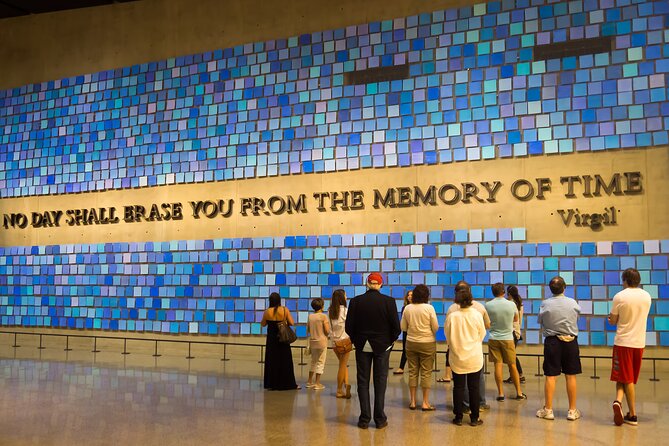
- Headsets included so commentary stays clear, even in street noise and crowds
- Small group (max 20) for a calmer walk and easier attention from the guide
- Guided route through major landmarks that tour buses can’t cover as closely
- Optional Museum ticket that turns your outdoor visit into a deeper, below-ground experience
- First stop is St. Paul’s Chapel (1766), an early emotional anchor before you reach the core site
More ways to visit Ground Zero and the memorial
- NYC: One World Observatory Skip-the-Line Ticket
★ 4.7 · 12,329 reviews - 9/11 Memorial, Ground Zero Tour with Optional 9/11 Museum Ticket
★ 5.0 · 6,381 reviews - 9/11 Memorial Museum Admission Ticket
★ 4.5 · 6,376 reviews - All-Access 9/11: Ground Zero Tour, Memorial and Museum, One World Observatory
★ 5.0 · 4,886 reviews
A headset-guided walk that keeps you oriented
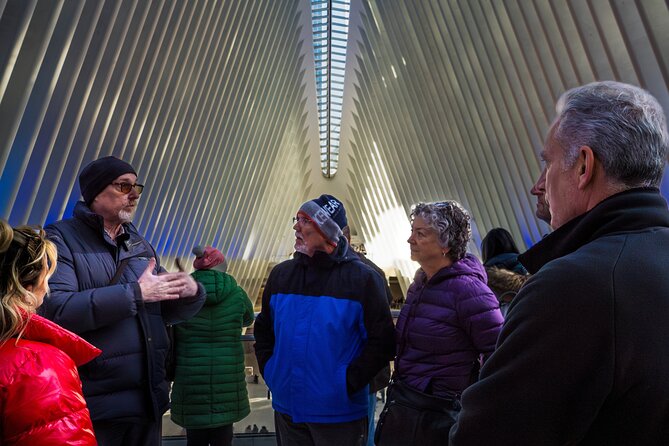
This is a walking tour with a practical goal: get you oriented in the World Trade Center area quickly, with a guide handling the tricky parts—where to stand, what to look for, and how to connect the buildings and memorial elements into one coherent story.
The big comfort win is the included headsets. Lower Manhattan has plenty of noise, and if you’ve ever done a “listen-and-walk” tour without good audio, you know how much detail you miss. Here, you can keep your eyes on what matters and still catch every point the guide makes.
The other thing that makes this feel worth the money is the structure. You’re not wandering between landmarks. You’re moving from one stop to the next with context, so the memorial doesn’t feel like a list of famous places—it feels like a sequence of meaning.
The route is also built for people who want to cover ground efficiently. Total time is about 1 hour 40 minutes, so you’ll get a full sense of the area without losing your whole day.
St. Paul’s Chapel: starting with survival, not sightseeing
The tour begins at St. Paul’s Chapel, dating back to 1766. It’s known as the oldest surviving church in New York City, but on this route it’s not just “historic background.” It sets the tone for the entire visit.
Right around 9/11, St. Paul’s Chapel served as a relief and support center for first responders and recovery workers. The remarkable detail is that it survived without damage even though it’s only blocks from Ground Zero. The guide’s framing here matters: you start with a place that actively helped people in the aftermath, so you’re not walking into the memorial experience as spectators.
If you’re the kind of traveler who needs a calm entry point before the heavier sights, this stop is your breather. And it’s also a useful orientation marker—when you leave the chapel, you start understanding the geography of Lower Manhattan in a more grounded way.
The Oculus: modern transit as a symbol of renewal
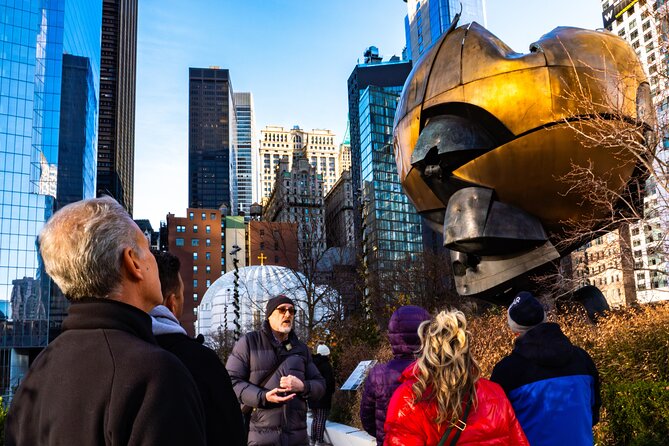
Next comes The Oculus, the striking white transit hub at the World Trade Center site. Designed by Santiago Calatrava and opened in 2016, it’s hard to miss: it looks like a bird in flight, and the inside is light-filled with a ribbed roof that draws your gaze upward.
This stop is more than an architectural photo op. The guide connects the building’s futuristic design to the larger theme of recovery and hope after the attacks. You’ll also feel why this site functions as both transportation and civic space—the building is designed to move people, and that momentum is part of its meaning.
Practical note: even though the stop is short, it’s one of those places where you’ll naturally pause for a moment, just to take in the scale and light. It’s a good contrast after the emotional weight of St. Paul’s Chapel.
More halls and galleries worth the hours




Brookfield Place and the Winter Garden pause
From there, you head to Brookfield Place, a modern complex with office towers, shopping, and dining. The key feature on this tour stop is the Winter Garden Atrium, a glass-enclosed space with lush palm trees and a tall ceiling.
This is one of the smartest pacing choices in the whole route. You’re walking a serious memorial story, and then you get a quick reset: somewhere light, sheltered, and visually calm. If your group has kids, older family members, or anyone who needs a moment to regain their footing, this kind of break helps keep the day from feeling like nonstop intensity.
You’ll also get a sense of how the area looks now, including views toward the Hudson River and the Statue of Liberty. That contrast can be hard to process in the abstract, but seeing it from street level helps it “click” rather than just sit in your head as facts.
Liberty Park: Survivor Tree, overlooked views, and quiet space
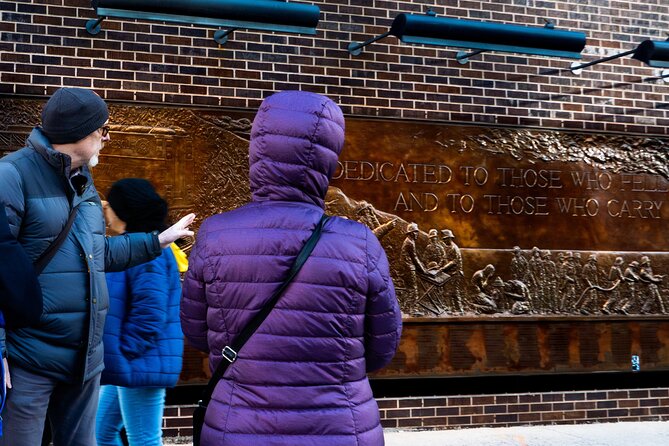
Your next stop is Liberty Park, near the National 9/11 Memorial and Museum. This is a green pocket in the middle of Lower Manhattan, with walking paths and seating that invite you to slow down.
A couple of specific elements stand out here:
- The Liberty Park Overlook, which gives you a different angle on the historic site area
- The Survivor Tree, a symbol of resilience that survived the attacks
What makes Liberty Park valuable on a guided walk is that it gives your brain a place to rest while still staying in the memorial zone. You’re not leaving the story—you’re catching your breath inside it.
One small caution: parks involve uneven paving and time spent standing. If you’re traveling with someone who tires easily, tell the guide what you need early. The tour format is short-stop, but a pause still takes effort.
The FDNY Memorial Wall: names up close, no fluff
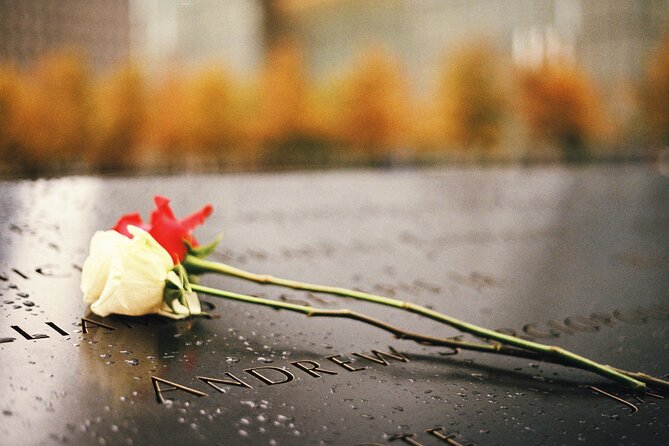
Then you reach the FDNY Memorial Wall at the FDNY headquarters on Pearl Street. Dedicated in 2004, it honors 343 fallen firefighters with engraved plaques.
This stop is the definition of a “stop you can feel.” There’s no staging or performance, just names. For many first-time visitors, this is where the memorial experience shifts from general tragedy to personal sacrifice—because you see the scale of loss as a list of people.
Even if you’re not a firefighting history buff, the wall works emotionally and practically. It reminds you that 9/11 wasn’t only about the moment of impact. It included the ongoing danger faced by people responding afterward.
The 9/11 Memorial & Reflecting Pools: what you’re really looking at
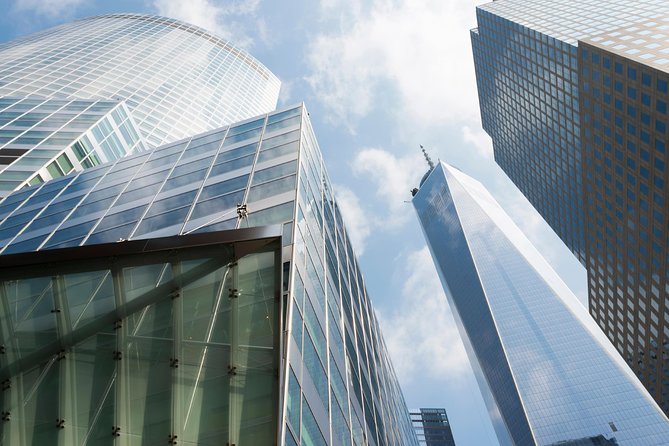
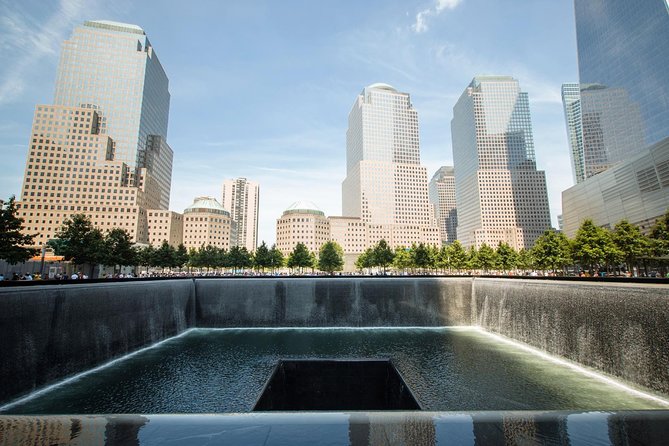
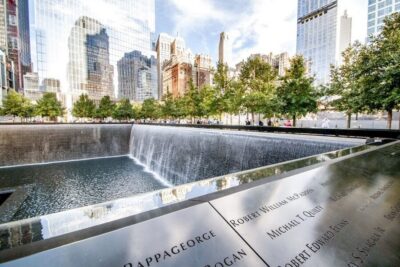
The centerpiece is, of course, the National 9/11 Memorial and Reflecting Pools. The reflecting pools sit within the footprints of the original Twin Towers. Each pool is nearly an acre, and the design includes cascading waterfalls described as the largest man-made waterfalls in North America.
The bronze panels around the pools bear the names of the victims of the nearly 3,000 people who died in the September 11, 2001 attacks, plus the six people killed in the 1993 World Trade Center bombing.
Here’s what I find most important for your visit: don’t rush the naming. The design gives you space to absorb grief in small units—one name at a time—rather than only as one massive, abstract number. If you’re prone to reading quickly, slow down. Let the guide’s points anchor you, then take a few minutes yourself.
If you’re booking the museum option, this is also your emotional “platform.” You’ll have a much easier time following museum exhibits later because you’ve already connected the memorial design to the people it remembers.
One World Trade Center: the skyline marker at the edge of the story
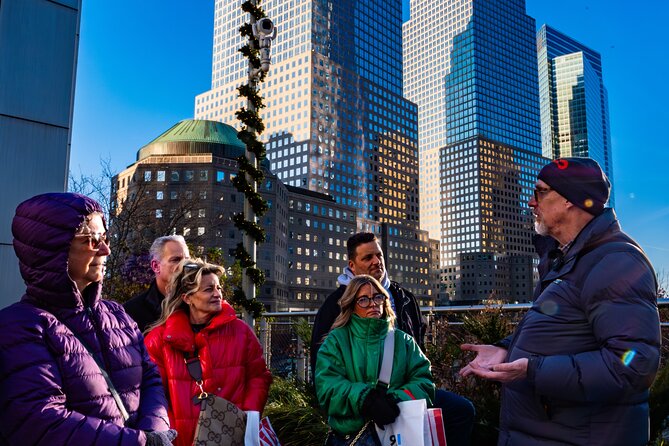
As the tour nears its end, you’ll stop at the foot of One World Trade Center, also called the Freedom Tower. It stands at 1,776 feet, and the guide will connect its height and completion in 2013 to the idea of American independence and the site’s renewal.
This part matters because it gives you a modern anchor in the skyline. The memorial is downward-looking and reflective; One World Trade Center is upward-looking and symbolic. Seeing both in sequence helps you understand the difference between remembrance and rebuilding.
The One World Observatory isn’t included on this tour. If you want that 360-degree view, you’d need separate admission.
If you add the 9/11 Museum, plan for emotional weight
Here’s how the upgrade works: your guided portion ends at the museum entrance, and the guide hands you the entry ticket (when you select the museum option). You then visit at your own pace.
The museum is located beneath the memorial at the World Trade Center site, opened in 2014. It’s known for telling the story through exhibits that include artifacts from the Twin Towers, personal belongings, photographs, and oral histories.
What you might not expect is how much the building itself contributes to the impact. The exhibits are housed in the archaeological remnants of the original World Trade Center site, including the Survivor Stairs and exposed steel called the Last Column. Those details make the museum feel less like a slideshow and more like a place where the past is physically present.
If you’re deciding whether to upgrade, think about what you need:
- If you want a meaningful overview without spending a long time indoors, the outdoor memorial portion may be enough.
- If you want the “how did it happen” and “what happened next” side—with artifacts and guided context already laid out—then the museum upgrade is a very good use of your time.
Also, if anyone in your group gets overwhelmed, the museum gives you control. You can move slowly, take breaks, and choose which galleries to prioritize.
Price and value: why $29 can be a smart buy
At $29 per person, this tour is priced like a budget-friendly experience—but it doesn’t feel like a stripped-down deal.
You’re paying for three things that usually cost extra on your own:
- A guide who handles routing and points out what to see (so you’re not piecing it together on the fly)
- Headsets that make the narration actually usable
- Optional museum admission (when you select it), which can turn the outdoor memorial into a longer, deeper visit
And because the group stays under 20 people, you’re less likely to get the “herding cats” feeling that sometimes comes with bigger groups.
One reason this works well is that Ground Zero is easy to visit but hard to interpret quickly. This tour gives you that interpretation fast.
What the best guides tend to do well
From recent feedback patterns, certain guide styles really land with people. Guides like Sara, Ron Ng, and Mike D are noted for clarity and for caring about pacing—especially when someone needs to sit, rest, or go more slowly.
If you’re traveling with an older parent or someone with mobility limits, this matters. The tour’s route still involves walking between stops, but good guidance can reduce stress by reading the group’s needs and adjusting when possible.
When you book, look for a time when you can walk comfortably and don’t plan another big timed activity right after. This site can take more out of you than you’d expect.
Who should book this tour (and who might skip it)
This tour is a great match if you:
- Want a structured introduction to Lower Manhattan’s 9/11 memorial area
- Prefer a guided walk with headsets rather than trying to self-guide through signage
- Appreciate short stops where a guide explains what you’re seeing before you move on
- Might upgrade to include the museum for the full story
It might not be the best fit if you:
- Only want museum time and would rather avoid a walking route first
- Have limited ability to handle steady walking between several key stops
- Are hoping for a bus-style loop. This is a walking tour with close access.
Should you book this 9/11 Memorial & Ground Zero tour?
Yes—if you want a clear, guided route that connects the memorial’s design, nearby landmarks, and the museum’s deeper context. At $29, the value is strong because you’re not paying just for entry points. You’re paying for interpretation, plus headsets that keep the experience from turning into guesswork.
Choose the museum upgrade if you feel the outdoor memorial won’t satisfy your questions. Skip it only if you know you’d rather spend your time elsewhere or you want a lighter, less indoor-focused visit.
Whatever you choose, go in with comfortable shoes, a bit of patience, and the willingness to slow down at the pools. This is one of those places where the details matter more than speed.
More Tour Reviews in New York City
- NYC: SUMMIT One Vanderbilt Tickets★ 4.7 · 51,195 reviews
- NYC: Empire State Building Tickets – Observatory & Museum★ 4.7 · 25,757 reviews
- New York City: Statue of Liberty & Ellis Island with Ferry★ 4.6 · 18,683 reviews
- New York City: American Museum of Natural History Ticket★ 4.5 · 15,447 reviews
- Statue of Liberty and Ellis Island Tour: All Options★ 5.0 · 13,571 reviews
Indoors Done Right: More Museums
- NYC: Empire State Building Tickets – Observatory & Museum★ 4.7 · 25,757 reviews
- New York City: American Museum of Natural History Ticket★ 4.5 · 15,447 reviews
- NYC: Museum of Modern Art (MoMA) Entry Ticket★ 4.6 · 12,540 reviews
- 9/11 Memorial, Ground Zero Tour with Optional 9/11 Museum Ticket★ 5.0 · 6,381 reviews
- 9/11 Memorial Museum Admission Ticket★ 4.5 · 6,376 reviews
Back to Ground Zero: More to Book
- NYC: One World Observatory Skip-the-Line Ticket★ 4.7 · 12,329 reviews
- 9/11 Memorial, Ground Zero Tour with Optional 9/11 Museum Ticket★ 5.0 · 6,381 reviews
- 9/11 Memorial Museum Admission Ticket★ 4.5 · 6,376 reviews
- All-Access 9/11: Ground Zero Tour, Memorial and Museum, One World Observatory★ 5.0 · 4,886 reviews
- New York City One World Observatory Admission Ticket★ 4.5 · 2,636 reviews
Just in: the newest New York City reviews on our desk





9/11 Memorial & Ground Zero Tours, compared.
 ★ 4.7One World Observatory Skip-the-Line TicketFrom $3012,329 reviews
 ★ 5.09/11 Memorial, Ground Zero Tour with Optional 9/11 Museum TicketFrom $396,381 reviews
 ★ 4.59/11 Memorial Museum Admission TicketFrom $366,376 reviews
 ★ 5.0All-Access 9/11: Ground Zero Tour, Memorial and Museum, One World ObservatoryFrom $1094,886 reviews
 ★ 4.5New York City One World Observatory Admission TicketFrom $302,636 reviews
 ★ 4.5NYC City Tour: Statue of Liberty, 9/11 Memorial, Wall StreetFrom $392,059 reviews
 ★ 5.0NYC in a Day Tour: Lady Liberty, Times Square, Freedom TowerFrom $891,735 reviews
 ★ 4.7Ground Zero 9/11 Memorial Tour & Optional 9/11 Museum TicketFrom $391,584 reviews
Browse the lists this tour appears in