
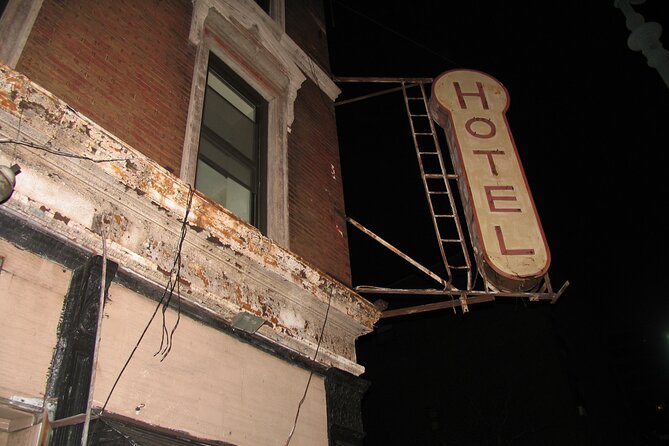
Reviewed · NYC GHOST & TRUE CRIME TOURS
Gritty NYC True Crime Tour with a Lawyer
A good murder story needs facts. This tour pairs case-file research with a lawyer’s walk-through of what happened and why it shook New York City from the 1960s through the 1990s.
What I like most is the way the guide uses out-of-print books and case details to make each stop feel grounded, not made-for-TV. I also like that you’re not just looking at buildings; you’re getting a sense of day-to-day city life in the neighborhoods where these events unfolded.
One thing to consider: this is mostly outdoors and you’ll spend a lot of time standing at stops. If you’re cold, uncomfortable, or you hate long listening blocks, plan for layers and bring patience.
In This Review
- Key Things To Know Before You Go
- How This Lawyer-Led True Crime Tour Actually Works
- East Village to Greenwich Village: Your Murder-Map Route
- Why walking the neighborhoods matters
- A caution on comfort and attention
- What the Guide Adds: Case Files, Legal Perspective, and Real City Context
- 1) The murder explanations aren’t just dramatic
- 2) Research shows up in small details
- 3) You learn what New York felt like then
- Visuals and Story Delivery: Listening, Not Just Looking
- The Stop Rhythm: 20 Minutes Each, Built for Clarity
- How to get the most from each stop
- Price and Value: Is $79.95 Fair for a 2-Hour Walking Tour?
- Who This Tour Fits Best (And Who It Might Not)
- Practical Tips to Make Your Afternoon Smoother
- Show up with a plan
- Dress for the weather
- Bring curiosity, not distractions
- Should You Book This True Crime Walking Tour?
- FAQ
- FAQ
- How long is the tour?
- Where does the tour start and end?
- What’s the meeting time?
- How many people are on the tour?
- Is it in English?
- Do I need a print ticket?
- Is the tour mostly outdoors?
- What if the weather is bad?
- What’s the cancellation timeframe?
Key Things To Know Before You Go
- Lawyer-led explanations of the murders, not just spooky narration
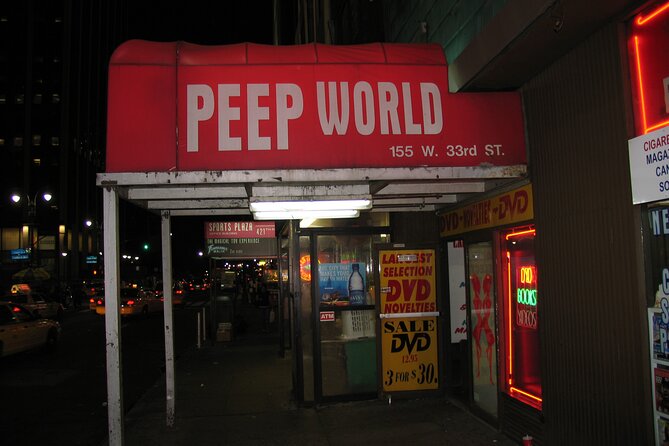
- Four real cases tied to actual locations in the East Village and Greenwich Village
- Small group size (max 12) that leaves room for questions and back-and-forth
- About 2 hours total, with shorter 20-minute story blocks at each stop
- Mobile ticket in English, easy to use while you’re walking
- Weather matters, since the experience runs outside between locations
More dark corners and cold cases
- New York Catacombs by Candlelight
★ 4.5 · 2,863 reviews - New York City Mafia and Local Food Tour led by NYPD Guides
★ 5.0 · 1,197 reviews - Gangsters and Ghosts Tour New York City
★ 5.0 · 905 reviews - True Crime NYC: Mafia Walk w/Ret. NYPD Detective and Local Food
★ 5.0 · 848 reviews
How This Lawyer-Led True Crime Tour Actually Works
This is a walking tour built around a simple idea: show you the street-level places where major cases played out, then explain them with legal clarity and strong research.
You’ll follow a route in two neighborhoods you can easily connect with subway lines: the East Village and then Greenwich Village near Washington Square Park. The tour runs about 2 hours, starting at 2:00 pm, and it ends in the heart of Greenwich Village at 171 MacDougal St. The start point is 137 Ave. C, New York, NY 10009.
The pace is steady. Each stop is roughly 20 minutes, which gives the guide enough time to explain the case without sprinting you from one cliffhanger to the next. In a genre like true crime, that matters. If the story only gets a quick summary, you lose the “why it mattered” part. Here, you get enough detail to understand motives, timelines, and how the investigation unfolded.
Another practical plus: with a maximum of 12 travelers, you’re not buried in a crowd. That small-group setup makes it easier to hear the explanation and easier to ask questions if something doesn’t fit together in your head.
And yes, it’s gritty. You’re dealing with murders, and the content can feel dark and unsettling because the crimes happened in real places. If you go in expecting a light comedy version of true crime, you’ll be disappointed. If you want a serious, fact-forward walk through the city’s darker chapters, it’s the right tone.
East Village to Greenwich Village: Your Murder-Map Route
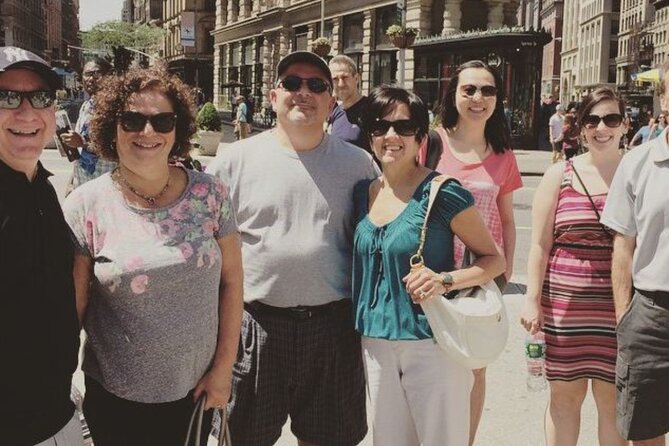
The tour focuses on the “Gritty City” years—the 1960s through the 1990s—and it uses the neighborhoods as part of the explanation. The East Village is where you start, then you move into Greenwich Village to finish near Washington Square Park.
Even though the exact addresses of every story stop aren’t listed here, the structure is clear: multiple real-world locations in the East Village, followed by a final set of locations in Greenwich Village. Over the route, you’ll cover four horrific and bizarre and mysterious murders tied to that era.
Here’s what that means for you on the ground.
Why walking the neighborhoods matters
A lot of true crime content stays in headlines or studio reenactments. This tour brings you back to street scale: sidewalks, corners, building edges, and the way people actually moved through the city.
That’s useful because the city environment affects the story. In older cases especially, your understanding often improves once you picture where a person would have been walking, how public spaces were used, and how the neighborhood looked when the event happened.




A caution on comfort and attention
You should plan to stand outdoors while the story plays out at each stop. One review-style takeaway was that you need to concentrate to follow story lines, and that there’s quite a bit of standing. That’s not a dealbreaker, but it is a reality.
If you tend to get restless, I’d suggest wearing shoes you can stand in comfortably for a couple of hours, and bringing a layer for wind or cold. If you’re the type who likes to multitask while listening, this won’t be your tour. You’ll get more out of it if you lock in.
What the Guide Adds: Case Files, Legal Perspective, and Real City Context
The star ingredient is the guide’s approach: the stories are explained by a lawyer who’s lived in New York City.
In practice, that changes the experience in a few ways.
1) The murder explanations aren’t just dramatic
Some tours toss out facts like a recap. This one aims for clarity—what happened, what investigators focused on, and what made the case complicated. When a lawyer talks through a crime, the story tends to be structured around evidence and logic. That helps you follow even when the subject matter is heavy.
2) Research shows up in small details
The tour description highlights research pulled from case files and out-of-print books. That’s a big deal for a true crime fan because it suggests the guide isn’t repeating the same top-of-the-podcast facts every time.
You can also feel the human side. One review praised the way the guide brings humanity to both victims and perpetrators. That matters because good true crime storytelling treats people as people, not just characters.
3) You learn what New York felt like then
Another key theme is learning about life in New York City across decades—from the 1960s to the 1990s—not just the murder itself. That adds context. When you understand the city’s rhythms and social conditions, the case stops feeling like a random shock and starts feeling like something that happened inside a specific time and place.
That context is a practical payoff. It helps you connect the dots between behavior, opportunity, and how the city shaped people’s lives.
Visuals and Story Delivery: Listening, Not Just Looking
The tour uses an iPad with visuals to support the storytelling. That comes up in the feedback style, including one comment asking for visuals updated in color and mix-it-up additions like music.
So here’s what you should expect: the tour isn’t only a walk with pure verbal narration. The guide has an on-device aid to help you visualize parts of the cases.
Is it a cinematic show? Not really. It’s still a walking tour. You’ll spend most of your time outside, focused on the street scene and the guide’s explanation. The iPad visuals are there to clarify, not replace, the walk.
If you like audio-led storytelling with occasional visual reinforcement, you’ll probably enjoy the format. If you’re expecting a fully produced multimedia experience, set your expectations lower.
The Stop Rhythm: 20 Minutes Each, Built for Clarity
The schedule is structured in blocks. Each stop is about 20 minutes, and each one is built around a specific set of real locations and details tied to the cases.
Two East Village stops happen, then the route shifts to Greenwich Village. That pattern matters because it keeps the tour from becoming one long monologue. You get a beginning, a middle, and an end—story-wise—while still maintaining the walk-and-talk flow.
How to get the most from each stop
I recommend you treat each 20-minute block like a mini lesson:
- Arrive ready to listen (put your phone away for a minute)
- Look at the spot you’re standing near as part of the explanation
- If you have theories, save your questions until the guide opens the conversation
One review described the tour as more of a conversation than a rigid script. That’s another reason the small group size matters. It turns the experience into something you can steer a bit.
Price and Value: Is $79.95 Fair for a 2-Hour Walking Tour?
At $79.95 per person for about 2 hours, this isn’t a bargain-basement activity. But for New York City, it’s not automatically overpriced for what you’re getting.
You’re paying for three value drivers that are hard to replicate on your own:
- A lawyer-led explanation that adds legal structure
- Deep research referenced in case files and hard-to-find sources
- A route that physically connects the stories to real street locations
If you’ve ever tried to piece together true crime just by reading online, you know how quickly it becomes scattered and frustrating. A guided route saves you from chasing leads, and the explanation gives you a coherent story arc.
Also, the cap of 12 travelers is part of the pricing logic. This is not a mass-market churn tour. It’s closer to a small class.
Is it worth it for everyone? No. If you don’t like true crime, or if you hate standing outdoors to hear detailed explanations, you’ll likely feel the price more than the value.
But if you do care about stories with research behind them, and if you want to understand the city’s changing landscape from the 1960s to the 1990s, this pricing lands more in the “reasonable” category than the “too much” category.
Who This Tour Fits Best (And Who It Might Not)
This works best if you’re one of these types:
- You enjoy true crime documentaries or crime TV, but you want the facts tied to real places
- You like stories that go beyond the famous cases and cover crimes that feel less repeated
- You want a guide who can answer questions and discuss theories, not just recite a script
- You’re curious about how New York’s neighborhoods shaped people and events
It may not be your best match if:
- You want a purely entertaining, light activity
- You struggle with uncomfortable subject matter
- You dislike listening for long stretches while standing outside
One more practical note. A review mentioned a moment where a start area felt unsafe to them. That doesn’t tell you that the tour is dangerous in general, but it is a reminder: use your eyes when you arrive. If you feel unsure walking to the meeting point, consider using a nearby well-lit subway exit and approach calmly.
Practical Tips to Make Your Afternoon Smoother
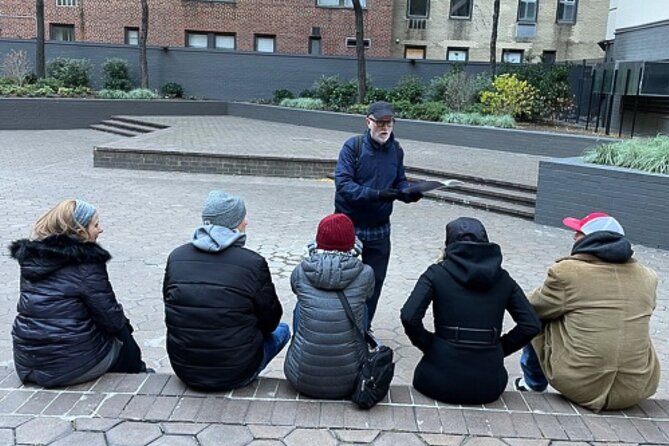
Here’s how you’ll set yourself up for a better experience.
Show up with a plan
The tour starts at 137 Ave. C at 2:00 pm, and it ends at 171 MacDougal St near Washington Square Park. Those exact spots matter because the tour is walking and time-based.
I’d give yourself extra minutes to orient and find the right group instead of trying to sprint in at the last second.
Dress for the weather
The experience requires good weather and can be rescheduled or refunded if canceled due to poor weather. Since you’re standing outside between points, check the forecast and dress for discomfort avoidance.
Bring curiosity, not distractions
The guide’s style leans on detail and analysis. If you keep checking messages, you’ll miss the threads that make the storytelling work.
Should You Book This True Crime Walking Tour?
If you want an East Village-to-Greenwich Village walk that treats true crime as serious storytelling, with a lawyer’s explanation and research that reaches beyond the usual cliff notes, I think this is a smart booking choice.
I’d say it’s especially worth it if you’re a crime fan who likes lesser-known cases and wants to understand how the city and the decades shaped the events.
Skip it if you’re looking for a casual stroll, a family-friendly scare-free outing, or something that feels like a show rather than a guided explanation. Also skip it if you know you can’t stand outdoors for a while without losing focus.
FAQ
FAQ
How long is the tour?
It lasts about 2 hours.
Where does the tour start and end?
It starts at 137 Ave. C, New York, NY 10009 and ends at 171 MacDougal St, New York, NY 10011, near Washington Square Park.
What’s the meeting time?
The tour starts at 2:00 pm.
How many people are on the tour?
There’s a maximum of 12 travelers.
Is it in English?
Yes, the tour is offered in English.
Do I need a print ticket?
No. You’ll use a mobile ticket.
Is the tour mostly outdoors?
Yes. The route involves walking between real locations, and you’ll spend time standing at each stop.
What if the weather is bad?
The tour requires good weather. If it’s canceled due to poor weather, you’ll be offered another date or a full refund.
What’s the cancellation timeframe?
You can cancel for a full refund up to 24 hours before the experience starts. Less than 24 hours before the start is not refunded.
More Tours in New York City
- Statue of Liberty and Ellis Island Tour: All Options★ 5.0 · 13,571 reviews
- New York in One Day Guided Sightseeing Tour★ 5.0 · 13,166 reviews
- Central Park Pedicab Guided Tours★ 5.0 · 7,108 reviews
- New York City: Manhattan Helicopter Tour★ 4.7 · 7,076 reviews
- Private Central Park Pedicab Tour★ 5.0 · 6,981 reviews
More Tour Reviews in New York City
- NYC: SUMMIT One Vanderbilt Tickets★ 4.7 · 51,195 reviews
- NYC: Empire State Building Tickets – Observatory & Museum★ 4.7 · 25,757 reviews
- New York City: Statue of Liberty & Ellis Island with Ferry★ 4.6 · 18,683 reviews
- New York City: American Museum of Natural History Ticket★ 4.5 · 15,447 reviews
- Statue of Liberty and Ellis Island Tour: All Options★ 5.0 · 13,571 reviews
After Dark: Ghosts and Cold Cases
- New York Catacombs by Candlelight★ 4.5 · 2,863 reviews
- New York City Mafia and Local Food Tour led by NYPD Guides★ 5.0 · 1,197 reviews
- Gangsters and Ghosts Tour New York City★ 5.0 · 905 reviews
- True Crime NYC: Mafia Walk w/Ret. NYPD Detective and Local Food★ 5.0 · 848 reviews
- New York City Ghost Tour of Greenwich Village★ 4.5 · 466 reviews
Just in: the newest New York City reviews on our desk





NYC Ghost & True Crime Tours, compared.
 ★ 4.5New York Catacombs by CandlelightFrom $382,863 reviews
 ★ 5.0New York City Mafia and Local Food Tour led by NYPD GuidesFrom $1091,197 reviews
 ★ 5.0Gangsters and Ghosts Tour New York CityFrom $39905 reviews
 ★ 5.0True Crime NYC: Mafia Walk w/Ret. NYPD Detective and Local FoodFrom $75848 reviews
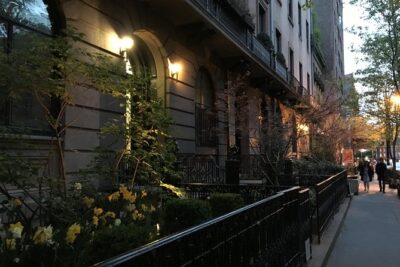 ★ 4.5New York City Ghost Tour of Greenwich VillageFrom $39466 reviews
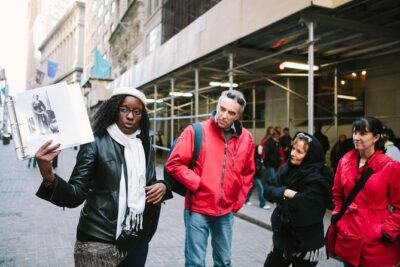 ★ 5.0New York City Slavery and Underground Railroad TourFrom $49411 reviews
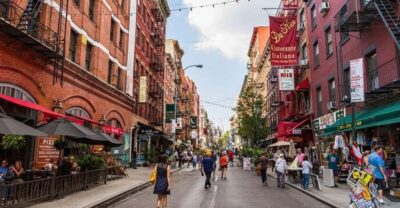 ★ 4.6True Crime New York: NYPD-Guided Mafia Walking Tour w/ FoodFrom $75318 reviews
 ★ 4.6Greenwich Village Ghost TourFrom $39173 reviews
Browse the lists this tour appears in