
Reviewed · NYC MUSEUM TOURS
Metropolitan Museum Guided Group Tour
The Met can feel like a museum-sized maze, but this guided tour turns it into a smart hit list. I love the way a guide steers you through major highlights fast, and I also love that the stories connect art to real history at eye level. One heads-up: it’s a walking tour with a moderate pace, so if you want to linger for long stretches, you’ll need to plan extra time on your own afterward.
Inside, you’ll meet at the museum steps and then follow a route built to reduce overwhelm: key stops, clear explanations, and enough momentum to keep you from burning hours just finding your next room. The good news is that the small group stays intimate (max 18 people), and reviews call out guides like Rob, Jett, Phil, Stephan, Katie, and Cherie for making the time fly. The trade-off is that on busy days, the experience can feel packed and fast, so it’s best for visitors who want an overview with a plan to return.
In This Review
- Key things I’d circle before you go
- Entering the Met with a plan instead of a panic
- Meeting at 1000 5th Ave and handling security like a pro
- The 2–3 hour highlight route: how it feels in real time
- Stop-by-stop: what you’ll actually see inside the Met
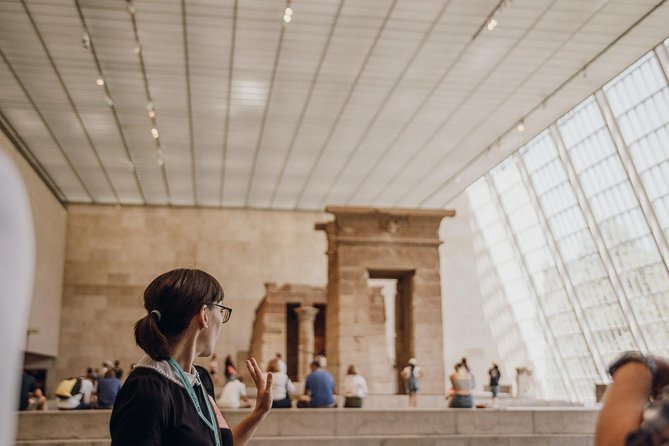
- Temple of Dendur: an ancient landmark with a modern setting
- Tudor-era armor and the drama behind royal objects
- The Antioch Chalice and the Holy Grail legend
- Greek and Roman statuary: seeing emperors up close
- John Singer Sargent’s Madame X and the scandal lesson
- A few hidden gems, not just the famous hits
- Guides make the difference: examples from real experiences
- What you should do after the tour ends
- Who this tour is best for
- Should you book it?
- FAQ
- FAQ
- How long is the Metropolitan Museum guided group tour?
- How much does it cost?
- Is admission included?
- Where do we meet and where does the tour end?
- What language is the tour offered in?
- Is the tour mostly walking?
- Are photos allowed?
- What should I do to avoid missing the start?
- If I cancel, do I get my money back?
Key things I’d circle before you go
- Small group size (up to 18): easier questions and less time lost in the crowd
- Skip-the-line ticket: saves effort at entry, even though you still face security
- A guided highlight route: Egyptian, Tudor, Greek/Roman, and Sargent in one flow
- Story-rich stops: you’re not just looking; you’re learning what changed and why it mattered
- Two time options (2 or 3 hours): choose based on how quickly you want to move
More halls and galleries worth the hours
- NYC: Empire State Building Tickets – Observatory & Museum
★ 4.7 · 25,757 reviews - New York City: American Museum of Natural History Ticket
★ 4.5 · 15,447 reviews - NYC: Museum of Modern Art (MoMA) Entry Ticket
★ 4.6 · 12,540 reviews - 9/11 Memorial, Ground Zero Tour with Optional 9/11 Museum Ticket
★ 5.0 · 6,381 reviews
Entering the Met with a plan instead of a panic

The Metropolitan Museum of Art is massive. You can absolutely wander for hours and still leave feeling like you saw only a fraction. This is where a guided group tour earns its keep: you get a route that moves you from one landmark area to the next, without turning your day into a navigation game.
The price is $65 per person for about 2 to 3 hours, and that math mostly comes down to time. If you like museums but hate spending half your visit figuring out where to go next, you’re buying momentum. Add in the skip-the-line ticket and the fact that you’re guided in English by a local guide, and the value becomes pretty straightforward: fewer wasted minutes, more meaningful stops.
One thing to keep in mind: you still need to be there early enough to keep things smooth. The meeting time is 15 minutes prior to the start, and late arrivals can’t get refunds if they miss the start. This matters at the Met because there’s also a security check that can take up to 15 minutes, even with tickets.
Meeting at 1000 5th Ave and handling security like a pro
Your starting point is the Met itself: 1000 5th Ave, New York, NY 10028. The tour ends back at the meeting point, so you’re not dealing with complicated drop-offs.
Here’s how to make the start painless:
- Arrive 15 minutes early so you’re not rushed by the security line.
- If you’re bringing a bag, use the bag check and give yourself extra time.
- Plan for a short walk and group coordination right at the entrance area.
Photography rules inside are clear: non-flash photography is allowed, but no selfie sticks are permitted. Also, the guide may need to adjust if a gallery is closed or unavailable that day, so don’t be surprised if the exact sequence shifts.
And since this is a walking tour, you’ll want shoes that can handle indoor floors and a decent pace. The tour is described as moderate pace, and most people can participate, but if your mobility is limited, bring that up early so the route can match what the group can access.
The 2–3 hour highlight route: how it feels in real time
The tour is built as an overview. That means you get the best-known stops and the most memorable stories, but you don’t get to slow down for every single detail the way you could on a self-guided day.
That sounds like a drawback, but it’s also the point. When I want a museum to feel manageable, I like a guide that sets a framework. After that, you can return to the rooms you loved and spend real time there.
Reviews also reinforce this “overview rhythm.” Some guides were praised for pace—Rob and Stephan, for example—and other feedback pointed out that if you want deeper sitting time, you’ll need to schedule it for later. In other words, treat this tour like a map and a shortlist, not the full final version of the Met.
Group size helps here. With a maximum of 18 travelers, you’re not stuck in a huge herd. That makes it easier to hear the guide, see what they’re pointing out, and ask quick questions without losing the thread.
More days made simple with a guide




Stop-by-stop: what you’ll actually see inside the Met
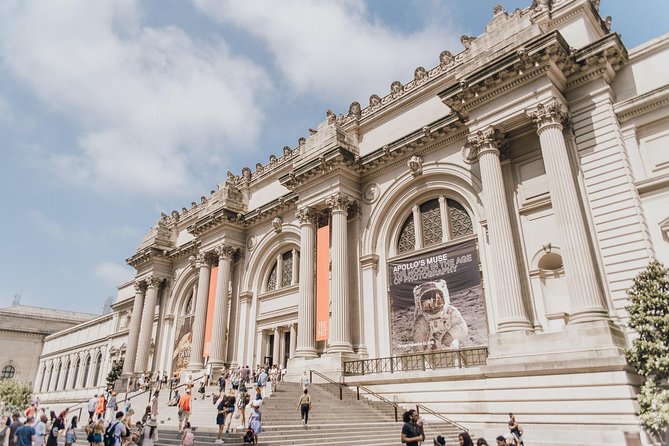
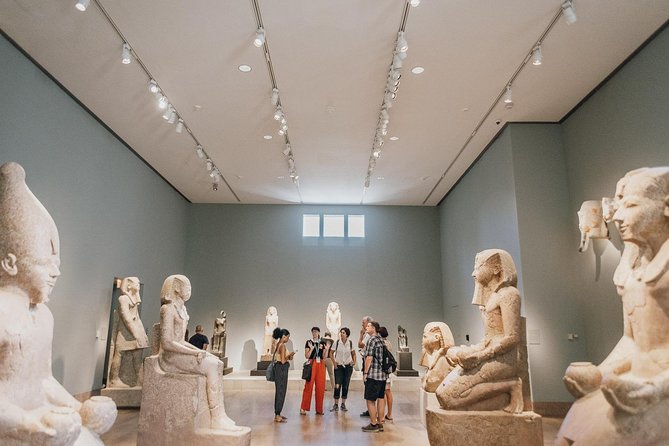
Your guided route centers on the museum’s big signature areas, with stops that connect across time periods. The tour focuses on art you’ll recognize, plus objects with stories you might not guess on your own.
Temple of Dendur: an ancient landmark with a modern setting
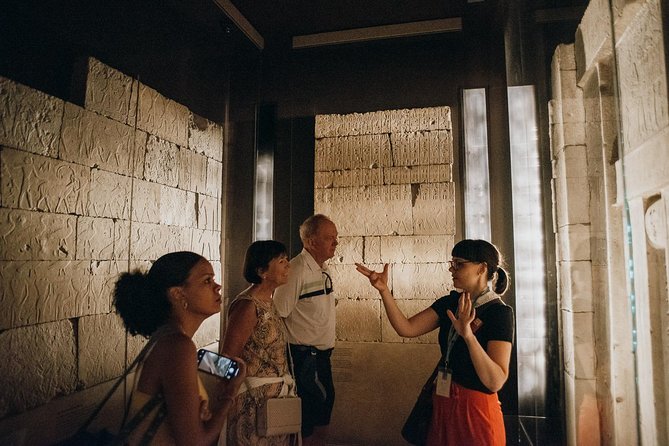
One of the headline moments is your walk toward the Temple of Dendur, linked to a long-ago Egyptian story. The guide leads you by the models of Egyptian tombs and then to the temple itself, which dates to 15 BC.
This stop is special for two reasons:
- It’s the kind of landmark that’s hard to appreciate without context, because the building looks like a sculpture and a ruin at the same time.
- It forces you to think about how the Met displays world culture—what’s preserved, what’s explained, and how your eye moves from fragment to structure.
If you’re the type who likes to understand the why before the what, this is a great early win. It also sets a tone for the rest of the tour: you’ll start connecting objects to people and power, not just aesthetics.
Tudor-era armor and the drama behind royal objects
Next comes a shift across centuries, including King Henry VIII’s suit of armor. Tudor material culture can feel dry if you only see it as old metal, but with the right guide, it becomes an entry point into status, conflict, and display.
Why this works on a highlight tour: armor is visual. You can instantly see form and craftsmanship, then you get the story behind the object—how it was meant to function and how legends cling to it.
The Antioch Chalice and the Holy Grail legend
Another standout stop is the Antioch Chalice, tied to a legend that it’s the Holy Grail. Even if you approach the story as myth, it’s a useful lesson in how symbols travel through time.
This is one of those moments where the guide’s storytelling matters. A good guide helps you separate what the object is from what people later decided it meant. That turns a single artifact into a mini history of belief, not just an item in a glass case.
Greek and Roman statuary: seeing emperors up close
Then you move into Greek and Roman statuary, plus associated areas featuring emperors’ busts and other classical details. The tour also references ancient frescoes and the general atmosphere of the rooms—exactly the kind of environment that can blur together if you’re rushing.
A guide helps you notice differences: posture, style, realism vs. idealism, and the way busts were used to project authority. It’s also a good mid-tour reset because classical rooms often give you a rhythm—look, listen, compare—without the constant pressure of decision-making on where to go next.
John Singer Sargent’s Madame X and the scandal lesson
Later, you’ll hear about the scandal connected to John Singer Sargent’s Madame X. This is one of those art history topics that can be genuinely fun, because it gives you a hook: why people reacted, what changed in reputation, and why a single painting could become a cultural event.
This stop is a reminder that art isn’t created in a vacuum. When the guide links the painting to the reaction around it, you end up looking differently. You don’t just see brushwork; you see how society reads images.
A few hidden gems, not just the famous hits
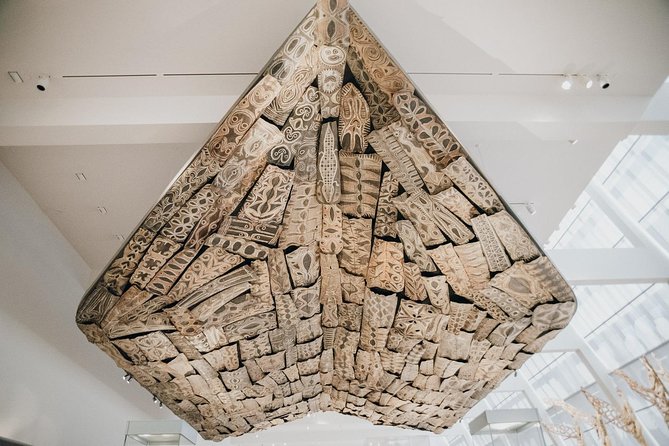
The tour promise includes highlights and even a few lesser-noticed stops, depending on what’s open that day. That’s important at the Met, because the museum’s scale makes it easy to miss the good stuff that doesn’t scream for attention.
Even if you leave wanting more, a highlight route that includes a couple of surprises makes your post-tour self-guided time better. Instead of aimless roaming, you can follow your instincts toward the rooms that already hooked you.
Guides make the difference: examples from real experiences

One thing that really pops in the feedback is how much the guide style shapes the day. Different guides can steer the group at different speeds, and the story tone can shift from humor to deeper analysis.
Here are a few specific guide examples mentioned in feedback:
- Rob: praised for anecdotes and storytelling that blend art and history.
- Jett: praised for adapting quickly to what the group wanted and making the route feel responsive.
- Phil: praised for being friendly and explaining details clearly.
- Stephan: praised for strong knowledge and enthusiasm, with a pace aimed at covering many key areas.
- Katie: praised for a tour that felt inspiring and fast, with stories that made famous works feel more alive.
- Cherie: praised for making the museum feel engaging and fun.
- Kevin and Ryan: praised for making the visit memorable and easy to follow, especially for people who are seeing the Met for the first time.
The practical takeaway: if you care about storytelling, ask yourself if you want a facts-heavy experience or a more narrative, question-friendly walk. Either can work, but the right guide makes the highlights land.
What you should do after the tour ends

When the tour finishes back at the meeting point, you’re free to keep exploring. This is one of the best parts of this type of tour: you get a foundation, then you choose your own pace.
Here’s how I’d spend the rest of your day to maximize value:
- Revisit just 1 or 2 areas where a story grabbed you.
- Look for related objects nearby, since your guide’s context will help you spot patterns faster.
- Give yourself at least one slow window to sit, read labels, and do nothing for a minute.
The Met rewards repeat attention. A highlight tour gives you the first layer. Your follow-up self-guided time is where you make it personal.
Who this tour is best for
This guided Met highlight tour is a strong fit if:
- You’re visiting New York with limited museum time.
- You want a fast overview across major collections.
- You’re a first-timer and want to avoid feeling lost in the scale.
- You like guided stories that connect art to people and events.
It may be less ideal if:
- Your priority is long, slow looking at a handful of works only.
- You need frequent rest breaks and a very flexible schedule.
- You want a deeply customized route with lots of detours (this is a set highlight plan).
If you’re traveling with kids, it can also work well, as feedback noted that guides can keep children engaged and make a huge museum feel more manageable.
Should you book it?
Yes—if you want to see the Met’s most memorable highlights without turning your day into a map-reading contest. The $65 price makes sense when you treat it as time-saving plus context. The skip-the-line entry and the small group limit help, and the tour’s focus on objects like Temple of Dendur, Henry VIII’s armor, the Antioch Chalice legend, and Madame X gives you a well-rounded arc.
Book it especially if:
- This is your one Met visit (for now).
- You want to come away with a mental framework you can build on afterward.
- You like museums more when someone gives you the story first.
If you have multiple days at the Met, you’ll still like this. Just remember this tour is your entry point. The real joy comes after, when you go back to the rooms that stuck with you.
FAQ
FAQ
How long is the Metropolitan Museum guided group tour?
It runs about 2 to 3 hours.
How much does it cost?
The price is $65.00 per person.
Is admission included?
Yes. The tour includes skip-the-line tickets to the Metropolitan Museum of Art.
Where do we meet and where does the tour end?
You meet at 1000 5th Ave, New York, NY 10028, and the tour ends back at the meeting point.
What language is the tour offered in?
The tour is offered in English.
Is the tour mostly walking?
Yes. It is a walking tour at a moderate pace.
Are photos allowed?
Non-flash photography is allowed, but selfie sticks are prohibited. Security rules still apply and you may need to wait in line before entry.
What should I do to avoid missing the start?
Arrive 15 minutes prior to the start time. Late arrivals may not be eligible for refunds if you miss the start.
If I cancel, do I get my money back?
Cancellation is free up to 24 hours in advance for a full refund. Canceling less than 24 hours before the start time is not refundable.
More Tours in New York City
- Statue of Liberty and Ellis Island Tour: All Options★ 5.0 · 13,571 reviews
- New York in One Day Guided Sightseeing Tour★ 5.0 · 13,166 reviews
- Central Park Pedicab Guided Tours★ 5.0 · 7,108 reviews
- New York City: Manhattan Helicopter Tour★ 4.7 · 7,076 reviews
- Private Central Park Pedicab Tour★ 5.0 · 6,981 reviews
More Tour Reviews in New York City
- NYC: SUMMIT One Vanderbilt Tickets★ 4.7 · 51,195 reviews
- NYC: Empire State Building Tickets – Observatory & Museum★ 4.7 · 25,757 reviews
- New York City: Statue of Liberty & Ellis Island with Ferry★ 4.6 · 18,683 reviews
- New York City: American Museum of Natural History Ticket★ 4.5 · 15,447 reviews
- Statue of Liberty and Ellis Island Tour: All Options★ 5.0 · 13,571 reviews
Indoors Done Right: More Museums
- NYC: Empire State Building Tickets – Observatory & Museum★ 4.7 · 25,757 reviews
- New York City: American Museum of Natural History Ticket★ 4.5 · 15,447 reviews
- NYC: Museum of Modern Art (MoMA) Entry Ticket★ 4.6 · 12,540 reviews
- 9/11 Memorial, Ground Zero Tour with Optional 9/11 Museum Ticket★ 5.0 · 6,381 reviews
- 9/11 Memorial Museum Admission Ticket★ 4.5 · 6,376 reviews
Just in: the newest New York City reviews on our desk





NYC Museum Tours, compared.
 ★ 4.7Empire State Building Tickets – Observatory & MuseumFrom $4725,757 reviews
 ★ 4.5American Museum of Natural History TicketFrom $3715,447 reviews
 ★ 4.6Museum of Modern Art (MoMA) Entry TicketFrom $3012,540 reviews
 ★ 5.09/11 Memorial, Ground Zero Tour with Optional 9/11 Museum TicketFrom $396,381 reviews
 ★ 4.59/11 Memorial Museum Admission TicketFrom $366,376 reviews
 ★ 5.0All-Access 9/11: Ground Zero Tour, Memorial and Museum, One World ObservatoryFrom $1094,886 reviews
 ★ 4.7Intrepid Museum Entry TicketFrom $384,687 reviews
 ★ 4.7Madame Tussauds Entry TicketsFrom $423,625 reviews
Browse the lists this tour appears in