

Reviewed · NYC MUSEUM TOURS
New York City: Museum of Illusions Entry Ticket
Illusions here play tricks on you fast. Museum of Illusions in Chelsea turns your senses into the main attraction, with 50+ interactive exhibits built around optical effects and hands-on challenges. You’re not just looking at tricks; you’re testing how your brain decides what is real—room by room.
What I like most is the way the museum mixes big, visual set pieces (like illusion rooms and hologram-style effects) with simple, touch-and-try stations that don’t require any museum knowledge. The other standout for me is the science angle: it’s educational in a very approachable way, explaining how perception can be fooled when your eyes and brain don’t agree.
One consideration: the museum can feel short or small relative to the $35 ticket. A few people also ran into day-of timing headaches when plans didn’t match what they found at the venue, so it’s worth double-checking before you head over.
In This Review
- Key highlights to know before you go
- Finding Museum of Illusions at 77 8th Ave
- What the $35 ticket actually gets you
- The exhibits: 50+ hands-on illusions (and why they work)
- Illusion rooms and holograms: the brain vs. the eyes match-up
- A practical flow: how to pace a 1-day visit
- Who this fits best (and who might want to think twice)
- The value debate: is $35 worth it in NYC?
- Tips that help you avoid a wasted trip
- Should you book Museum of Illusions NYC?
- FAQ
- Where is the Museum of Illusions in New York?
- How much is the entry ticket?
- How long is the experience?
- What’s included with the ticket?
- What can I expect to see inside?
- Is the museum wheelchair accessible?
- Is the ticket refundable?
Key highlights to know before you go

- Chelsea location near 8th Ave and W 14th St, easy to pair with other Manhattan stops
- 50+ hands-on exhibits built for active play, not just photo ops
- Illusion rooms and hologram-style effects that make your body part of the experiment
- A perception-and-science focus that helps you understand why things look wrong
- Wheelchair accessible so more visitors can enjoy the interactive layout
More halls and galleries worth the hours
- NYC: Empire State Building Tickets – Observatory & Museum
★ 4.7 · 25,757 reviews - New York City: American Museum of Natural History Ticket
★ 4.5 · 15,447 reviews - NYC: Museum of Modern Art (MoMA) Entry Ticket
★ 4.6 · 12,540 reviews - 9/11 Memorial, Ground Zero Tour with Optional 9/11 Museum Ticket
★ 5.0 · 6,381 reviews
Finding Museum of Illusions at 77 8th Ave
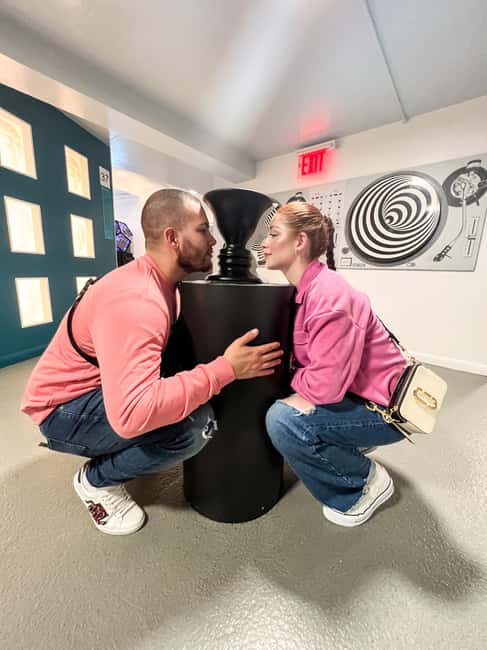
Museum of Illusions is in the Chelsea area of Manhattan. The address to use is 77 8th Ave, and the entrance is on the corner of W 14th St and 8th Ave. This part matters because Chelsea can be a little block-to-block confusing if you’re relying on memory.
Once you arrive, the setup is designed for fast flow: tickets in, then you start moving from exhibit to exhibit. No complicated orientation is required, which is great when you’re with kids, friends who don’t want a slow museum day, or anyone who just wants to try the next thing.
If you’re planning a wider day, this is a solid stop because it fits into a normal NYC walking route. You won’t feel “stuck” there for a whole day if you’re not in the mood for it.
What the $35 ticket actually gets you
This is a straight entry ticket experience, priced at $35 per person. The listing says the experience is valid for one day, and you should check availability to see starting times.
So here’s the honest value question I’d ask: do you want interactive, sense-bending play more than a long museum visit? If yes, $35 can feel fair because you’re paying for participation—your actions change what you see, and the exhibits are designed to be worked through.
If you’re expecting a big, multi-gallery museum day, you might feel underwhelmed. Some visitors describe it as short or small, which matches the general vibe: this is a concentrated experience. Think of it less like a half-day “deep museum research” project, and more like a playful attraction that rewards curiosity.
The exhibits: 50+ hands-on illusions (and why they work)
Museum of Illusions centers on visual, sensory, and educational experiences. The goal is to challenge your perceptions using the science behind optical illusions. In practice, that means you’ll see effects that seem to break logic—shapes that behave strangely, perspectives that shift, and setups that make your own body the “measuring tool.”
The museum describes over 50 immersive, hands-on exhibits, including:
- illusion rooms and installations
- hologram-style effects
- interactive scenes that let you defy expectations (like effects that make you look like you’re growing or shrinking, and larger-than-life visuals like a life-size kaleidoscope experience)
Why this is more than entertainment: your brain constantly predicts what should be happening based on lighting, angles, and prior experience. Optical illusions work because they exploit those predictions. When you walk into a scene where the visual rules are “wrong,” your brain tries to fix it—and you end up feeling the mismatch.
That’s also why this kind of place is great for group energy. Everyone has different reactions, and you’ll start comparing what you think you saw. You’ll leave with that slightly amazed, slightly skeptical look that says: my eyes may be lying.
Worth a look right next to this New York City pick:

Illusion rooms and holograms: the brain vs. the eyes match-up

The most memorable moments usually come from exhibits that force you to change position, look again, or recheck your own assumptions. The museum highlights illusion rooms and hologram-style elements, and that combination is where a lot of the “mind-bending” payoff comes from.
Illusion rooms are effective because they give you a physical environment to test. You’re not just watching; you’re standing inside a setup that plays with depth and perspective. When your body moves a few steps, the illusion may intensify or shift, which makes you notice how much of “reality” is interpretation.
Hologram-style visuals (as described in the experience overview) add another layer. Even when you know it’s a trick, hologram effects can still feel eerie or impossible because they manipulate how your brain tracks form and motion. It’s the kind of exhibit that turns into a quick back-and-forth with your group: who sees it one way, who sees it another, and why.
A practical flow: how to pace a 1-day visit
Your ticket is valid for one day, and you’ll want to align your visit with the starting time you choose. Beyond that, the museum doesn’t ask for a strict timed schedule in the information provided—so your best strategy is pacing.
Here’s a simple way to get the most without rushing:
- Start with the biggest “wow” rooms first, while you’re fresh and your group energy is high.
- Then move into smaller hands-on stations at a slower pace.
- Finally, circle back if there are effects where you want a second try.
This pacing matters because optical illusions sometimes depend on timing and angle. If you’re sprinting, you might miss the exact moment where the trick is at its strongest. And if you’re moving too slowly, you risk leaving some exhibits behind entirely—especially if you’re on a tight schedule.
Also: set expectations for yourself. The $35 price can sting if you show up thinking it’s a long museum circuit. If you show up treating it like an interactive, concentrated experience, the rhythm feels better.
Who this fits best (and who might want to think twice)
This museum is built for people who like playful learning and interactive stops. It’s described as perfect for family adventures, friend groups, date nights, and group outings, and I agree with that direction.
It can be especially good if:
- you’re traveling with kids who like hands-on activities
- your group loves trying “how did they do that?” moments
- you want a date that doesn’t require a loud, all-meaningful conversation
- you prefer visual, sensory experiences over lecture-heavy museums
It may be less satisfying if:
- you’re looking for a classic, sprawling museum with lots of galleries and long reading stops
- you’re the type who gets frustrated when a place requires you to move, touch, or take turns
- you’re expecting hours and hours of content from one ticket
That last point is where some negative reactions come in. A few visitors say it feels short or that there isn’t much inside for the price. I’d treat that as a real signal: plan the visit as a highlight, not a full-day anchor unless your group really wants to keep playing.
The value debate: is $35 worth it in NYC?
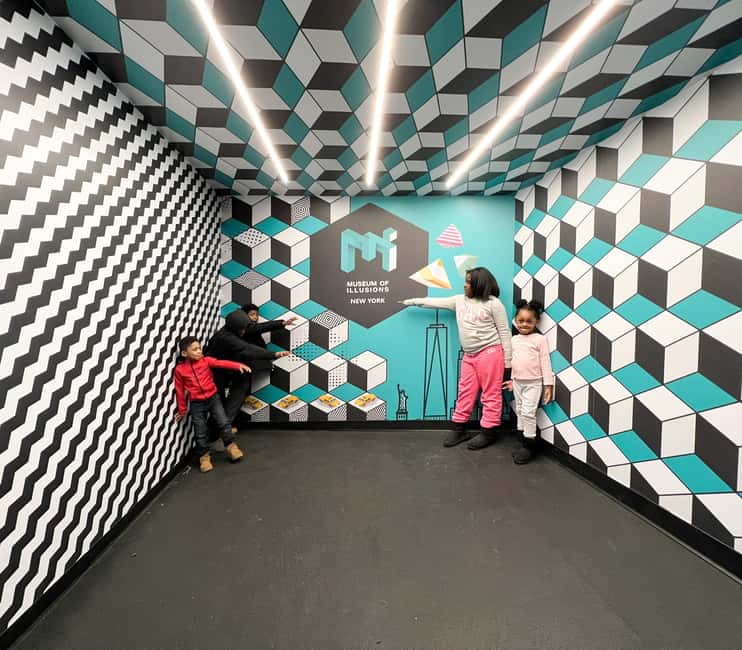
Let’s talk straight about money. The ticket is $35 per person for entry, and in NYC that’s not an impulse-level price. So the value depends on your mindset.
If you enter wanting to participate—touch the exhibits, test the perspective tricks, and slow down for the illusion rooms—then the cost can feel justified. You’re paying for 50+ interactive exhibits that are designed to be experienced, not just viewed.
If you want a “walk-through museum” where you can quietly observe at your own pace, you might feel like the time doesn’t stretch enough. Some people also described the museum as small or not much to do. That doesn’t mean it’s “bad.” It means you should match expectations to the format: it’s closer to an attraction than a full museum campus.
My practical suggestion: build it into a day where you have other nearby things lined up. Then even if you finish sooner than you planned, you’re not stuck wondering what went wrong.
Tips that help you avoid a wasted trip

A few practical ideas can make a big difference here.
- Go in with the right expectations. This is interactive perception play, not a deep historical museum day.
- Watch timing day-of. One reported issue involves ticket plans not matching what was posted at the venue, including changes to closing times. I can’t control that, but you can reduce stress by checking the most current hours before you leave.
- Bring your patience for shared exhibits. Interactive setups often mean waiting your turn, especially with families.
- Wear comfy shoes. You’ll likely walk and reposition a lot, since these illusions often depend on angle and distance.
- Plan for photos, but don’t only chase them. Some of the most satisfying moments happen when you try the illusion, not only when you frame it for a picture.
And if you’re in a wheelchair, good news: the museum is listed as wheelchair accessible, which matters for a hands-on layout where barriers can be a real problem elsewhere.
Should you book Museum of Illusions NYC?
Book it if you want a fun, brainy experience in Manhattan where you can touch, test, and laugh at what your eyes insist is true. The strongest selling points are the illusion rooms, the hologram-style visual effects, and the 50+ interactive exhibits that turn perception into something you can play with.
Skip or rethink if you’re expecting a long, big-museum day for $35. The price is only worth it if you’re genuinely there for the interactive format—and you’re okay with the idea that it may not take all day.
If you decide to go, treat it like a high-energy stop in your NYC itinerary. Pair it with other Chelsea or nearby Manhattan plans, and you’ll feel far more satisfied even if you move through the exhibits faster than you imagined.
FAQ
Where is the Museum of Illusions in New York?
The museum is at 77 8th Ave in the Chelsea area. The building entrance is on the corner of W 14th St and 8th Ave.
How much is the entry ticket?
The entry ticket price is $35 per person.
How long is the experience?
It’s listed as 1 day. The ticket is valid for one day, and you should check availability to see starting times.
What’s included with the ticket?
The ticket includes entry to the Museum of Illusions.
What can I expect to see inside?
You can expect 50+ interactive exhibits, including illusion rooms, installations, and holograms, with hands-on experiences that challenge your sense of perception.
Is the museum wheelchair accessible?
Yes. The museum is listed as wheelchair accessible.
Is the ticket refundable?
No. The activity is listed as non-refundable.
More Tickets in New York City
- NYC: SUMMIT One Vanderbilt Tickets★ 4.7 · 51,195 reviews
- NYC: Empire State Building Tickets – Observatory & Museum★ 4.7 · 25,757 reviews
- New York City: American Museum of Natural History Ticket★ 4.5 · 15,447 reviews
- NYC: Museum of Modern Art (MoMA) Entry Ticket★ 4.6 · 12,540 reviews
- NYC: One World Observatory Skip-the-Line Ticket★ 4.7 · 12,329 reviews
More Tour Reviews in New York City
- NYC: SUMMIT One Vanderbilt Tickets★ 4.7 · 51,195 reviews
- NYC: Empire State Building Tickets – Observatory & Museum★ 4.7 · 25,757 reviews
- New York City: Statue of Liberty & Ellis Island with Ferry★ 4.6 · 18,683 reviews
- New York City: American Museum of Natural History Ticket★ 4.5 · 15,447 reviews
- Statue of Liberty and Ellis Island Tour: All Options★ 5.0 · 13,571 reviews
Indoors Done Right: More Museums
- NYC: Empire State Building Tickets – Observatory & Museum★ 4.7 · 25,757 reviews
- New York City: American Museum of Natural History Ticket★ 4.5 · 15,447 reviews
- NYC: Museum of Modern Art (MoMA) Entry Ticket★ 4.6 · 12,540 reviews
- 9/11 Memorial, Ground Zero Tour with Optional 9/11 Museum Ticket★ 5.0 · 6,381 reviews
- 9/11 Memorial Museum Admission Ticket★ 4.5 · 6,376 reviews
Just in: the newest New York City reviews on our desk





NYC Museum Tours, compared.
 ★ 4.7Empire State Building Tickets – Observatory & MuseumFrom $4725,757 reviews
 ★ 4.5American Museum of Natural History TicketFrom $3715,447 reviews
 ★ 4.6Museum of Modern Art (MoMA) Entry TicketFrom $3012,540 reviews
 ★ 5.09/11 Memorial, Ground Zero Tour with Optional 9/11 Museum TicketFrom $396,381 reviews
 ★ 4.59/11 Memorial Museum Admission TicketFrom $366,376 reviews
 ★ 5.0All-Access 9/11: Ground Zero Tour, Memorial and Museum, One World ObservatoryFrom $1094,886 reviews
 ★ 4.7Intrepid Museum Entry TicketFrom $384,687 reviews
 ★ 4.7Madame Tussauds Entry TicketsFrom $423,625 reviews
Browse the lists this tour appears in