
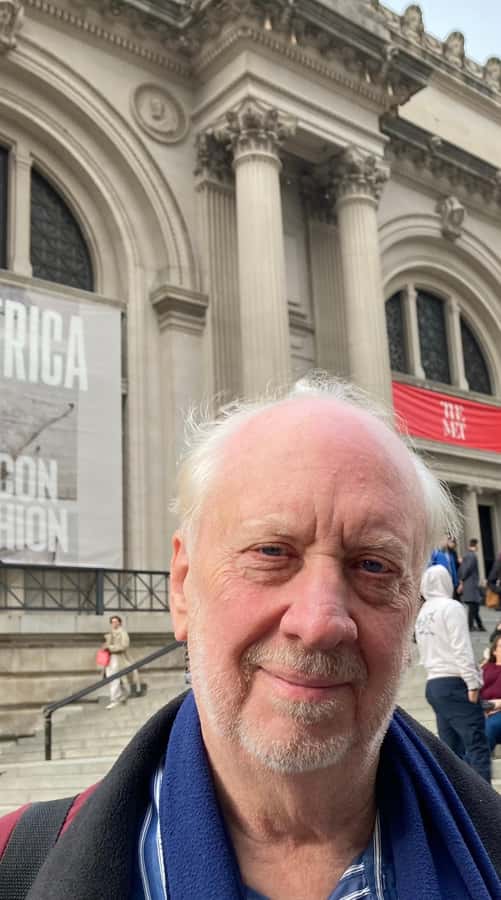
Reviewed · NYC MUSEUM TOURS
New York City: The Bible at the Metropolitan Museum of Art
Bible stories come alive in museum galleries. At the Met, I like the way the tour uses the Egyptian section to frame the Exodus and the dignity it brought to humanity.
I also like how the tour stays non-sectarian while still being rich in connections, led by Mel Lehman, who brings a warm, kind, humorous style and adapts to questions on the fly. One thing to plan for: at two hours, you’ll get focused highlights, not an all-day walkthrough of the entire museum.
In This Review
- Key highlights to look for
- Meeting at the Great Hall: The Pharaoh statue wayfinding trick
- Egyptian galleries: Seeing the Exodus in tangible form
- Greek and Roman rooms: Why Bible stories link to later empires
- Bible-inspired art: The painter’s way of telling scripture
- Mel Lehman’s style: Warm, humorous, and actually responsive
- What to do during the rest of your Met time
- Price and value: Is $60 worth it?
- Who should book this tour (and who might not)
- Should you book The Bible at the Met?
- FAQ
- Where is the meeting point?
- How long is the tour?
- What’s included in the price?
- Is flash photography allowed?
- What should I bring to the tour?
- Can I cancel for a refund?
Key highlights to look for
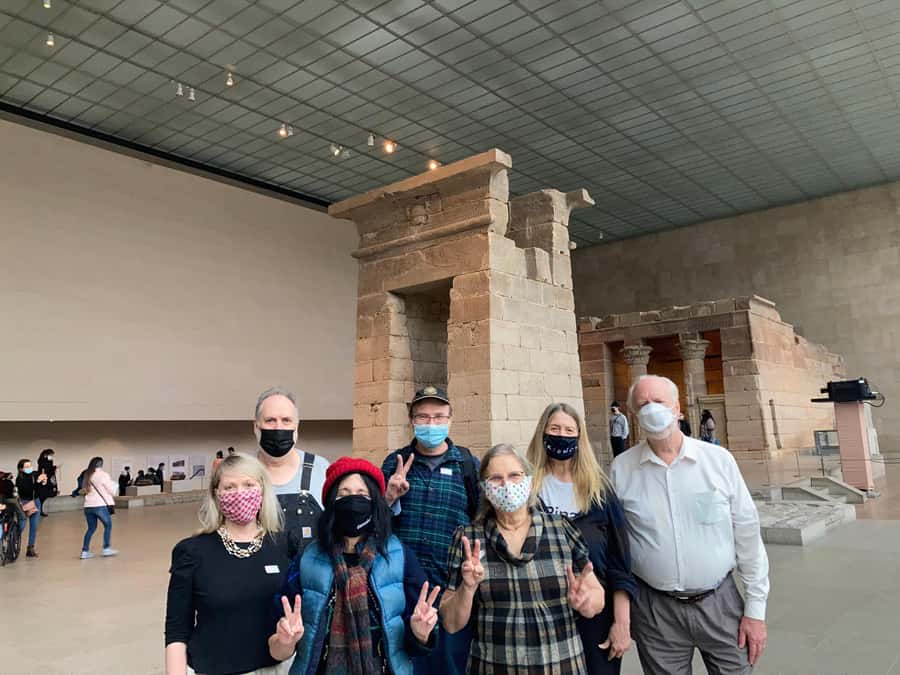
- The Pharaoh statue meeting point in the Great Hall makes it easy to start strong
- Exodus in ancient Egypt is grounded in real artifacts you can see
- Egyptian, Greek, and Roman galleries help you track how Bible themes traveled
- Bible-inspired paintings show how later artists interpreted scripture
- Mel Lehman’s flexible pacing means you can ask questions and take small breaks
- An artifact-to-Bible-passage brochure helps you keep the connections after the tour
More halls and galleries worth the hours
- NYC: Empire State Building Tickets – Observatory & Museum
★ 4.7 · 25,757 reviews - New York City: American Museum of Natural History Ticket
★ 4.5 · 15,447 reviews - NYC: Museum of Modern Art (MoMA) Entry Ticket
★ 4.6 · 12,540 reviews - 9/11 Memorial, Ground Zero Tour with Optional 9/11 Museum Ticket
★ 5.0 · 6,381 reviews
Meeting at the Great Hall: The Pharaoh statue wayfinding trick
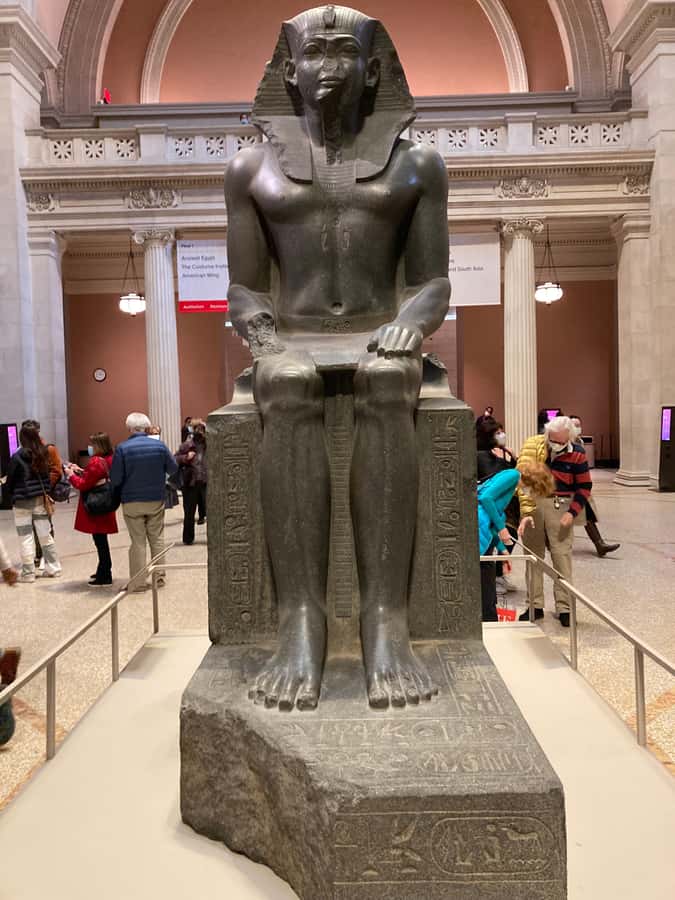
The tour starts right where you want to be: at the Statue of Pharaoh in the Met’s Great Hall entrance. That sounds like a small detail, but it matters in a place this big. You don’t waste your first 10 minutes wandering for the group. You get your bearings fast, then get moving.
You’ll also appreciate the skip-the-ticket-line benefit. Even if you’re the kind of person who likes browsing entrances and ticket desks, saving time at the start lets you spend your energy on the galleries that tie directly to the Bible.
Duration is about 2 hours. That’s long enough for a real guided arc through multiple sections, but short enough that you’ll want a plan for the rest of your day. The good news: your ticket works for the remaining part of the day, so the tour isn’t your only bite of the Met.
Egyptian galleries: Seeing the Exodus in tangible form
The Egyptian section is the anchor for this experience. The connection isn’t just thematic; it’s visual and material. You’re seeing the ancient world that shaped some of the Bible’s earliest settings. The tour highlights the Exodus in a way that connects to dignity and humanity, rather than treating it like a distant religious summary.
As you walk these rooms, the guide’s job is to connect objects on the wall or artifacts in the space to the stories people know from scripture. That can be surprisingly powerful even if you already have a Bible in your head. Instead of relying only on text, you’re watching the setting become real: older cultures, older art styles, and the physical evidence of how people lived.
If you’re religious, this kind of framing can deepen reflection without lecturing. If you’re not, it still works because you’re looking at history and human storytelling: how one tradition described struggle, deliverance, and identity in a specific ancient context.
Greek and Roman rooms: Why Bible stories link to later empires
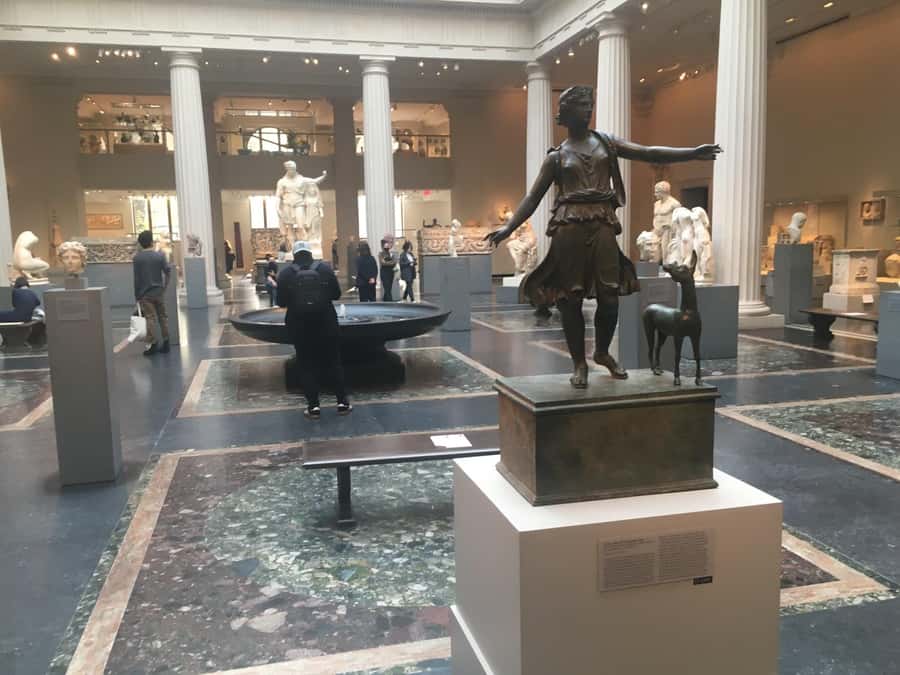
The Bible doesn’t stay in one place. It grows, travels, and picks up context as it moves through time. That’s where the Greek and Roman sections matter. The tour treats them as part of the Bible’s broader setting, because both regions play important roles in the story as it develops.
In practical terms, this means you’re not only staring at Egyptian artifacts. You’re switching mental gears from one world to another. That shift can be a plus, especially in a museum like the Met where your brain can otherwise get stuck in one “mode” (pure chronology, pure art, or pure architecture).
The best use of the Greek and Roman rooms is to listen for how the guide ties what you’re seeing to Bible themes. You’ll likely notice the difference between objects that feel like background and objects that feel like interpretation. That’s a valuable lesson for anyone who wants to understand how history and belief get braided together.
A small consideration: these rooms are still part of a huge museum complex. If you’re someone who wants absolute silence and slow contemplation every step of the way, you may want to mentally “pace yourself” during this 2-hour push. The guide can help with that—especially if you ask for a moment to stand and look.
The big picture: more New York City sightseeing


Bible-inspired art: The painter’s way of telling scripture
One of the smartest ideas in this tour is that it doesn’t stop at archaeology. You also see art by major painters inspired by the Bible. That section changes the tone. Here, the Bible isn’t only a historical setting. It becomes a subject that artists interpreted, staged, and transformed for their own audiences.
This is where non-sectarian matters. The tour is appropriate for people of faith and people of no faith alike because the focus is on how scripture becomes visual culture. Even if you can’t stand the theological debates, you can still enjoy the craft: composition, emotion, symbolism, and the way artists choose what moment to depict.
I like this approach because it helps you understand something important about Bible art: it’s not just decoration. Over centuries, painters used biblical scenes to teach, to provoke, to comfort, and to communicate moral ideas in a language most people could recognize.
If you’re the type who loves art, plan to slow down here. This is the part where taking photos without flash can be especially fun. Just remember: no flash photography.
Mel Lehman’s style: Warm, humorous, and actually responsive
The experience gets a big lift from the guide. In this case, that guide is Mel Lehman, and the style is consistent: warm, kind, humorous, and flexible. You feel it when you ask questions and he doesn’t treat them like interruptions.
You’ll also notice the tour adapts to your rhythm. People with different energy levels can appreciate this. If you need a break, you’re not forced to sprint from gallery to gallery. That flexibility is real value in a museum setting where everyone starts out excited—and then the legs quietly start negotiating.
Another standout: Mel provides help that goes beyond what you see on wall labels. One particularly useful detail is that you get a brochure listing artifacts with the corresponding Bible passages. That’s excellent because it helps you turn what you saw into something you can review later, at home, when your memory needs a nudge.
What to do during the rest of your Met time
After the guided portion, you still have access for the remaining part of the day. That’s not just a perk. It’s how you turn a good tour into a great day.
Here’s how I’d use it:
- Return to any Egyptian, Greek, or Roman objects the guide pointed out and look again with your new context.
- If the Bible-inspired art section hooked you, spend time there without guide pressure. Let your own eye take over for a bit.
- If you’re new to the Met, use the rest of your day to find other favorites. This tour doesn’t cover the entire museum, and that’s fine. The point is to leave with a “way of seeing,” then let the rest unfold.
Practical tips help a lot. Bring comfortable shoes; you’ll walk. Bring a camera, but keep it to no flash. Bring water, because there aren’t water fountains to rely on—so plan on using what you bring.
Price and value: Is $60 worth it?
The price is $60 per person for a 2-hour guided experience, and that includes more than just a conversation with a guide.
Here’s what you’re really paying for:
- A structured path through the Met’s sections that connect directly to Bible themes (Egyptian, Greek, Roman, plus Bible-inspired art)
- A live English guide who can connect artifacts to Bible passages and answer questions in the moment
- A ticket that stays valid for the rest of the day, so your money supports both the tour and your independent exploration
Whether $60 feels like a deal depends on your style of museum visiting. If you like wandering with a loose plan, this might feel pricey. If you want someone to help you connect what you’re seeing to what you already care about—Bible stories, cultural history, or art interpretation—then the value is strong.
The guide also matters. A flexible, humor-forward approach isn’t a luxury detail; it changes how much you take in during a short, time-limited window.
Who should book this tour (and who might not)
This is a good fit if you want Bible connections without a hard sell. The tour is non-sectarian and works for people of faith and people of no faith. It’s also a strong match if you enjoy museums but want help turning “things on display” into meaningful links.
You might especially enjoy it if:
- You like history you can see and touch through archaeology
- You’re curious about how ancient settings relate to later Bible narratives
- You want the art angle—how painters portrayed biblical moments across time
- You appreciate when a guide answers questions and adjusts pacing
You might choose differently if:
- You want a deep, long-form Bible lecture without museum pacing
- You prefer quiet self-guided exploration with no group movement
- You’re expecting every major Met gallery to be included in two hours (it won’t be)
Still, even if you’re unsure, the structure is designed to be manageable: meet, tour with a focus, then explore on your own with the same ticket.
Should you book The Bible at the Met?
If you like museums that connect art and objects to ideas you already care about, I think you’ll be happy booking this. The biggest reasons are practical: a focused 2-hour guide, clear links between what you see and Bible passages (thanks to the brochure), and an approach that welcomes both faith and non-faith perspectives.
Book it if you want a guided “starter framework” for the Met’s ancient-world collections and Bible-inspired art. Skip it only if you’re determined to do the Met purely at your own pace and don’t want guidance in the mix.
If you do book, go in with comfortable shoes, a camera you can use without flash, and a willingness to ask questions. That’s when the tour becomes more than a highlight reel and turns into something you can carry home.
FAQ
Where is the meeting point?
You meet at the Statue of Pharaoh in the Great Hall entrance of the Metropolitan Museum of Art.
How long is the tour?
The tour runs for about 2 hours.
What’s included in the price?
You get a guided tour of the Metropolitan Museum of Art, viewing of archaeology and art related to the Bible, and a ticket that’s valid for the remaining part of the day after the tour.
Is flash photography allowed?
No. Flash photography is not allowed, but photography without flash is permitted.
What should I bring to the tour?
Bring comfortable shoes, a camera, and water. Water fountains are not available, so it’s a good idea to bring a bottle.
Can I cancel for a refund?
Yes. You can cancel up to 24 hours in advance for a full refund.
All of New York City in One Day
- New York City: Statue of Liberty & Ellis Island with Ferry★ 4.6 · 18,683 reviews
- New York City: American Museum of Natural History Ticket★ 4.5 · 15,447 reviews
- New York City: Manhattan Helicopter Tour★ 4.7 · 7,076 reviews
- Top of the Rock Observation Deck New York City Ticket★ 4.5 · 4,556 reviews
- From New York City: Washington and Philadelphia 1-Day Tour★ 4.5 · 2,877 reviews
More Tour Reviews in New York City
- NYC: SUMMIT One Vanderbilt Tickets★ 4.7 · 51,195 reviews
- NYC: Empire State Building Tickets – Observatory & Museum★ 4.7 · 25,757 reviews
- New York City: Statue of Liberty & Ellis Island with Ferry★ 4.6 · 18,683 reviews
- New York City: American Museum of Natural History Ticket★ 4.5 · 15,447 reviews
- Statue of Liberty and Ellis Island Tour: All Options★ 5.0 · 13,571 reviews
Indoors Done Right: More Museums
- NYC: Empire State Building Tickets – Observatory & Museum★ 4.7 · 25,757 reviews
- New York City: American Museum of Natural History Ticket★ 4.5 · 15,447 reviews
- NYC: Museum of Modern Art (MoMA) Entry Ticket★ 4.6 · 12,540 reviews
- 9/11 Memorial, Ground Zero Tour with Optional 9/11 Museum Ticket★ 5.0 · 6,381 reviews
- 9/11 Memorial Museum Admission Ticket★ 4.5 · 6,376 reviews
Just in: the newest New York City reviews on our desk





NYC Museum Tours, compared.
 ★ 4.7Empire State Building Tickets – Observatory & MuseumFrom $4725,757 reviews
 ★ 4.5American Museum of Natural History TicketFrom $3715,447 reviews
 ★ 4.6Museum of Modern Art (MoMA) Entry TicketFrom $3012,540 reviews
 ★ 5.09/11 Memorial, Ground Zero Tour with Optional 9/11 Museum TicketFrom $396,381 reviews
 ★ 4.59/11 Memorial Museum Admission TicketFrom $366,376 reviews
 ★ 5.0All-Access 9/11: Ground Zero Tour, Memorial and Museum, One World ObservatoryFrom $1094,886 reviews
 ★ 4.7Intrepid Museum Entry TicketFrom $384,687 reviews
 ★ 4.7Madame Tussauds Entry TicketsFrom $423,625 reviews
Browse the lists this tour appears in