
Reviewed · GRAND CENTRAL TERMINAL TOURS
NYC: Grand Central Terminal and/or Penn Station – Private
Two great stations, one smart route. That’s the feel of this private walk with Rayn, an urban planner who treats Penn Station and Grand Central Terminal like living systems you can read. You’ll compare old plans and lost spaces, then connect the dots to how the subway actually moves people.
I really like two things here: Rayn’s AICP-certified planning brain, and the way the tour uses the stations as real-world examples, not just postcard stops. The second big win is the built-in comfort tech—ear pieces—so you can hear explanations without craning your neck.
One thing to consider: this is a walking-and-stairs tour through underground areas. If you don’t do well with steps, or you need step-free access, this probably won’t work for you.
In This Review
- Key highlights worth your time
- Penn Station and Grand Central: two terminals that read like different cities
- Meet Rayn and use the stations like a map
- Penn Station’s 1910 past: standing where the old plan used to be
- What might catch you off guard
- Remnants and lost artifacts: noticing what survived the rebuild
- The included subway ride: connecting Penn and Grand like a pro
- The practical trade-off
- Grand Central Terminal’s hidden layers: more than the main hall
- Why these stops feel different
- Glass walkways, underground entrances, and whispering walls
- How long is enough for two terminals?
- Price and value for groups up to 15
- Who this tour fits best
- Practical tips to make your tour easier and better
- Should you book NYC: Grand Central Terminal and/or Penn Station — Private?
- FAQ
- What is the duration of the private tour?
- What’s included during the tour?
- Is this tour private?
- What areas does the tour visit?
- Does the tour involve a subway ride?
- What should I wear or bring?
- Is the tour suitable for people with mobility impairments?
Key highlights worth your time
- Penn Station before-and-after: you’ll compare the original 1910 structure to what stands there now, using your actual position as the reference point
- Moynihan Train Hall + remnants: you’ll spot lost-artifact clues and see how the newer space fits the bigger story
- A subway ride built into the plan: you connect the two terminals by taking an iconic ride, while learning why the system works the way it does
- Grand Central beyond the obvious: secret bar vibes, glass walkways, a hidden tennis court, an old theater, and more
- Urban-planner style observations: whispering walls, underground entrances, and details that explain design choices you can feel with your own eyes
More secrets of Grand Central, booked ahead
- Secrets of Grand Central Station Walking Tour New York City
★ 5.0 · 1,796 reviews - NYC: The Secrets of Grand Central Terminal
★ 4.8 · 718 reviews - NYC: Official Grand Central Terminal Tour
★ 5.0 · 458 reviews - NYC: Official Grand Central Terminal Guided Tour
★ 4.6 · 251 reviews
Penn Station and Grand Central: two terminals that read like different cities
New York loves to reinvent itself. This tour shows you that lesson in a way you can’t get from a quick lobby photo. Penn Station and Grand Central are both transportation powerhouses, but they grew from different eras and design priorities—so your experience changes depending on where you stand.
What I find most useful is the comparison approach. You’re not just told that one place was grander once. You’re guided to stand in spots where the story connects to what used to be there. That makes the demolition-era decisions feel real, not abstract.
And then the tour keeps the momentum by linking those station stories to subway operations. It’s the same city, but different layers: rail halls above, subway tech underneath, and design choices everywhere.
Meet Rayn and use the stations like a map
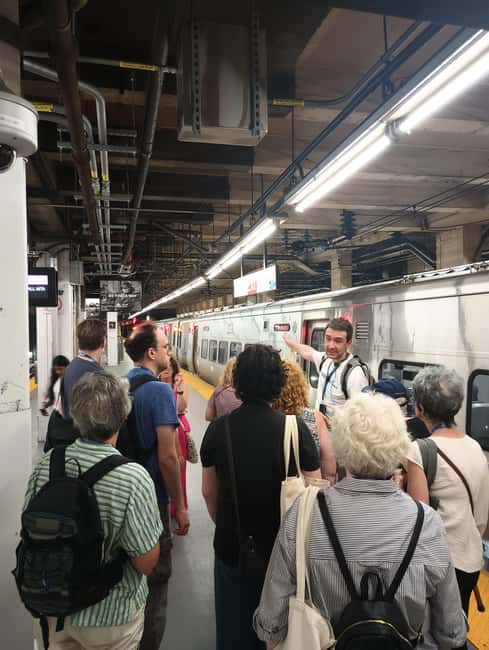
This is a private tour, so you’re not lost in a big group shuffle. Rayn is not just a guide who likes trains—he’s an accredited urban planner, and he’s AICP certified. That matters because his explanations focus on how people, space, and infrastructure interact.
From the moment you start, you’re encouraged to ask questions and request clarifications. The guide’s explanations use history, design, and how the network functions as a single thread. You’ll also get individual ear pieces, which makes the tour feel surprisingly easy to follow, especially in echo-y terminal spaces.
Best of all, you get a planner-style habit: looking for the logic behind what’s built. You’ll notice how stations handle movement, how technology affects passenger flow, and why certain spaces were shaped the way they were.
Penn Station’s 1910 past: standing where the old plan used to be
The Penn Station portion is built around a simple but powerful idea: location is memory. Rayn helps you understand Penn Station’s history and then compares your exact locations to what was originally located there in the famously demolished 1910 structure.
So you’re not just hearing a timeline. You’re doing a kind of on-the-spot urban archaeology. That means you’ll be paying attention to geometry—where paths would have led, how circulation likely worked, and how the station’s role in the city shifted over time.
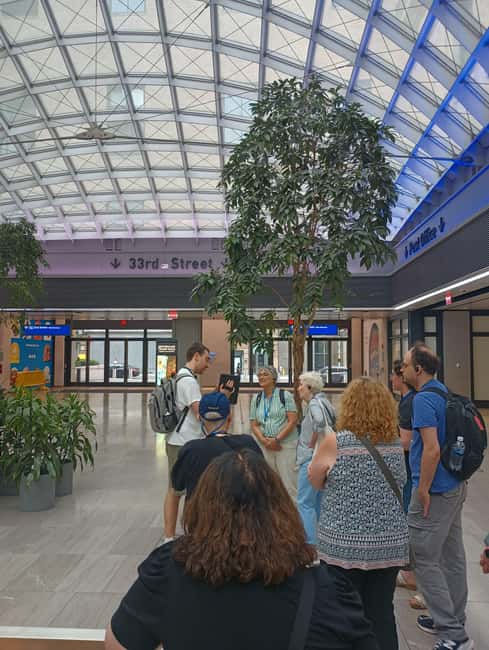
You’ll also look at the new Moynihan Train Hall as part of that ongoing evolution. Moynihan isn’t treated like a separate project; it’s framed as how the same corridor and passenger needs got updated for a modern era. It’s a helpful way to understand why renovations and reconstructions happen even when people feel attached to the old.
Just your group: more private options




What might catch you off guard
Penn Station is active, and you’ll be walking in public areas with real foot traffic around you. It’s not a museum you wander slowly. Expect to move at a tour pace, with some waiting at key spots for explanations.
Remnants and lost artifacts: noticing what survived the rebuild
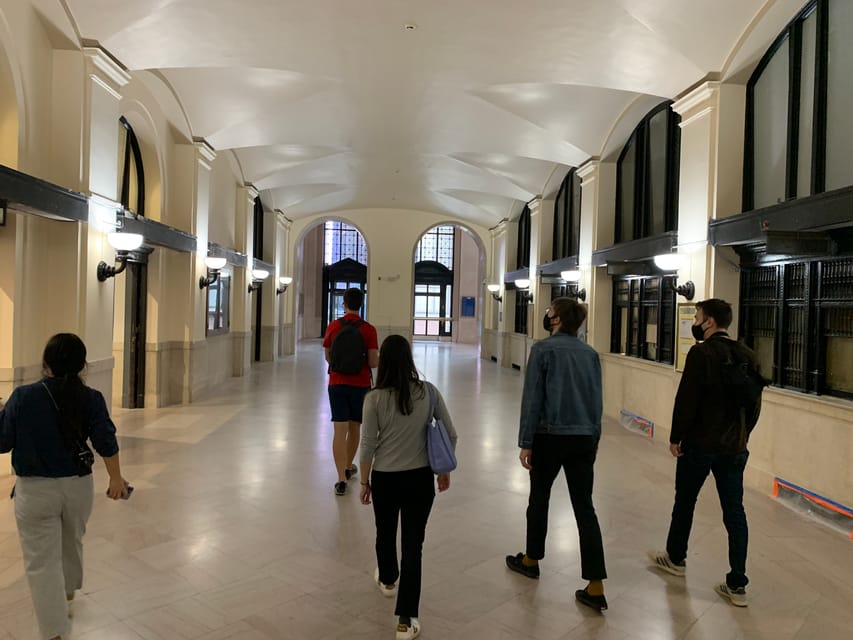
One of the most compelling moments on this tour is the hunt for remnants. Even when major construction changes everything, pieces of the story can remain—details, layout clues, and artifacts that are easy to miss if you’re only focused on signage and your next connection.
Rayn helps you spot those lost-to-time elements and tie them back to the original Penn Station layout. This is where the tour becomes fun in a different way. It’s not only history; it’s detective work with your eyes.
You’ll also learn how to interpret the modern fixtures you see around you. Instead of treating changes as random, you start to see them as decisions made for capacity, operations, or passenger experience. That’s a huge mental upgrade, especially if you’ve ever walked through stations feeling like you were just trying to survive the crowd.
The included subway ride: connecting Penn and Grand like a pro
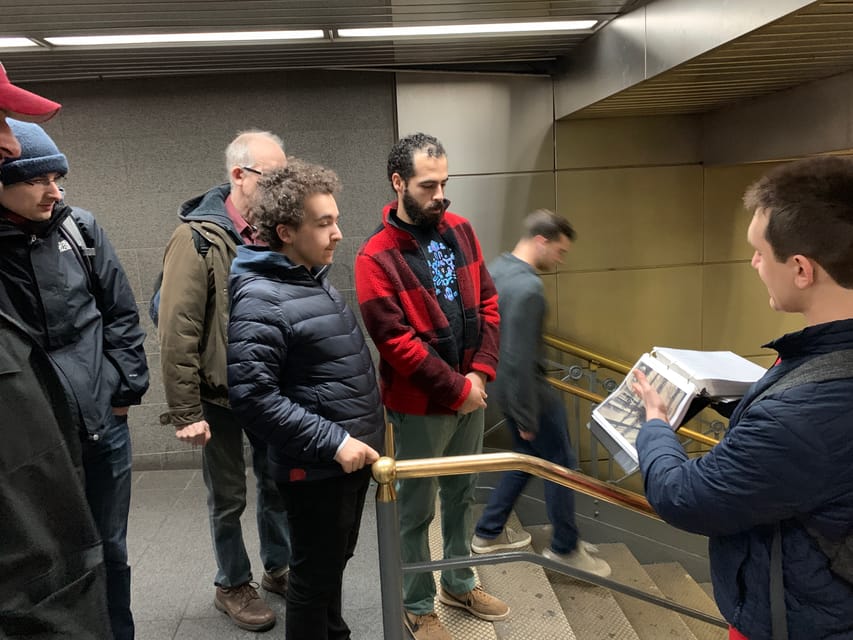
Here’s a smart part of the plan: the tour doesn’t treat the subway as a transfer. You’ll take an iconic subway ride between Penn Station and Grand Central Terminal as part of the experience.
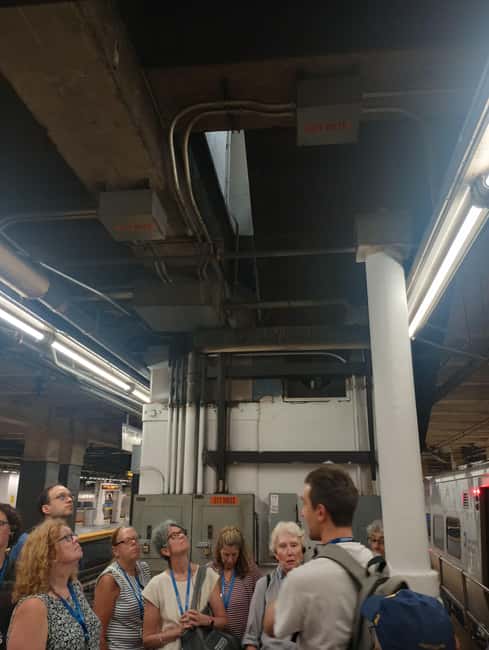
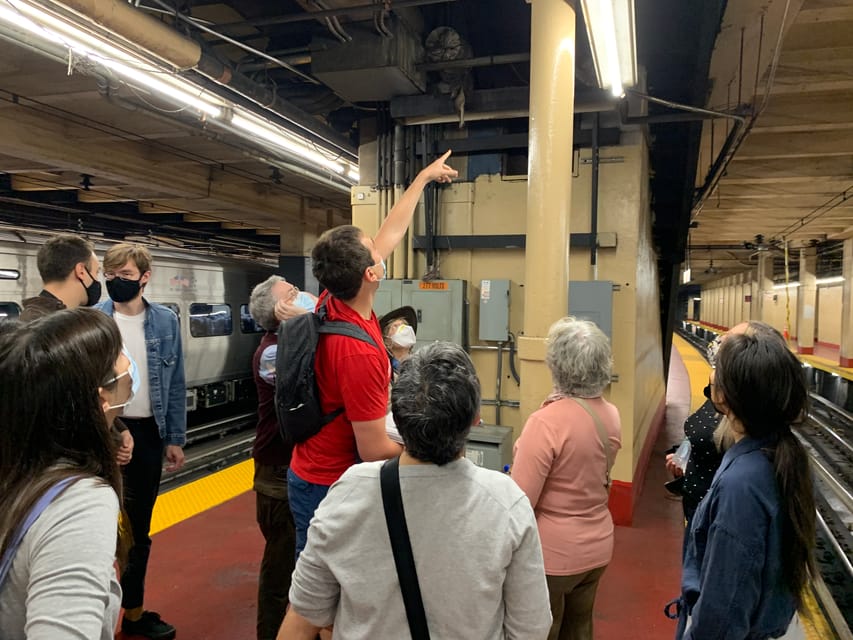
Along the way, Rayn shares NYC subway secrets from original stations dating to the 1904 era. Even without technical jargon overload, you’ll come away understanding how the network operates. You’ll also learn about technology you can see on platforms—equipment and systems that affect how trains run and how passengers move through stations.
For many visitors, a subway ride is just a ride. For you on this tour, it becomes a moving classroom. You’ll feel the difference between infrastructure you only pass through and infrastructure you can actually read with a guide’s framing.
The practical trade-off
Because you’re riding subway cars and moving between levels, the schedule depends on MTA weekend conditions. You’ll want to build a little wiggle room around your day, even if you’re only doing this for 1.5 to 2.5 hours.
Grand Central Terminal’s hidden layers: more than the main hall
Then you swing into Grand Central, and the tone shifts from comparison to exploration. Yes, you’ll see the famous spaces, but the tour really shines when it goes beyond the obvious.
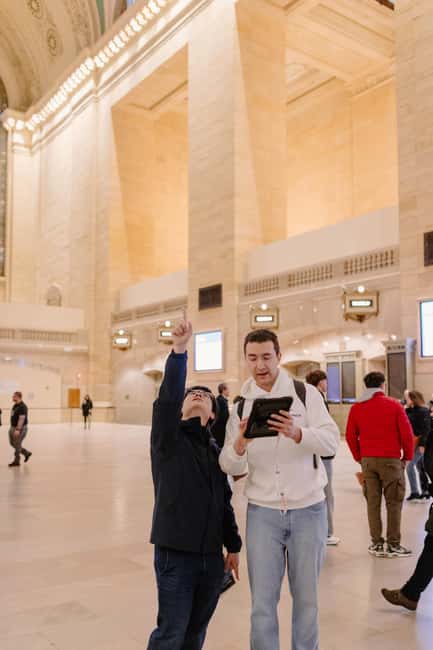
Rayn leads you to secret bar areas, glass walkways, a hidden tennis court, and an old theater. Those details work because they reveal how Grand Central functions as a city-within-a-city, not just a transit stop. You start to notice how entertainment, circulation, and access points all fit into the bigger design.
You’ll also learn about whispering walls and underground entrances. The whispering walls aren’t just a quirky stop. They’re a reminder that architecture can guide behavior—people talk, gather, and listen differently when a space is designed to affect acoustics.
Why these stops feel different
This isn’t a checklist. Rayn ties each feature to the larger idea of planning: who the space was meant to serve, what movement patterns were expected, and how design details support operational needs.
Glass walkways, underground entrances, and whispering walls
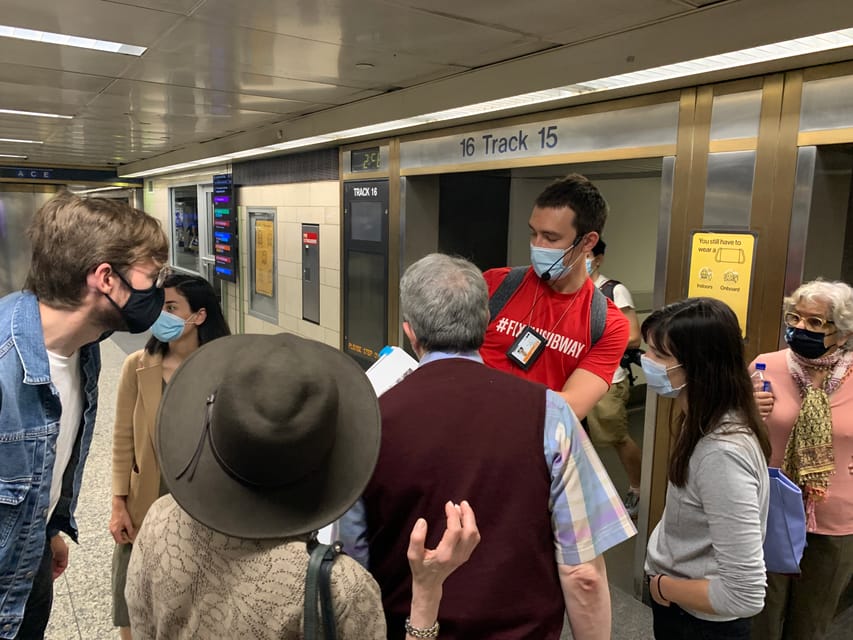
Grand Central can feel like a single grand room until you start seeing the levels. On this tour, you’ll be walking up and down steps in underground and lower-access areas, and you’ll get oriented to how those hidden connections work.
The underground entrances are especially helpful because they explain how you can transition between transit systems and pedestrian routes without thinking about it too much later. You get practical familiarity, not only sightseeing.
The whispering walls are a fun break in the middle of technical discussions. They’re also a good example of how station design can be both functional and theatrical. You’ll likely start noticing other small design choices—angles, materials, sight lines—that affect how people flow through crowds.
And when you’re shown places like the hidden tennis court, it’s a reminder that Grand Central has always had a social layer. Stations weren’t only for commuting; they were built to shape daily life in and around them.
How long is enough for two terminals?

The duration is listed as 1.5 to 2.5 hours, depending on starting times. That range matters because Penn Station and Grand Central are both huge, and this tour tries to pack a lot into a short window: history, comparisons, a subway ride, and several “look closer” stops.
In my opinion, the shortest options work best if you’re mainly there for the big contrasts and a taste of the secrets. If you can, give yourself the longer end of the range, because Rayn’s explanations take time—and they’re the heart of what makes the tour feel different.
Also, it’s a walking tour with stairs and underground segments. Even if you’re in good shape, you’ll feel it in the shoes. Comfortable footwear isn’t optional here—it’s the difference between enjoying the details and rushing to survive the day.
Price and value for groups up to 15
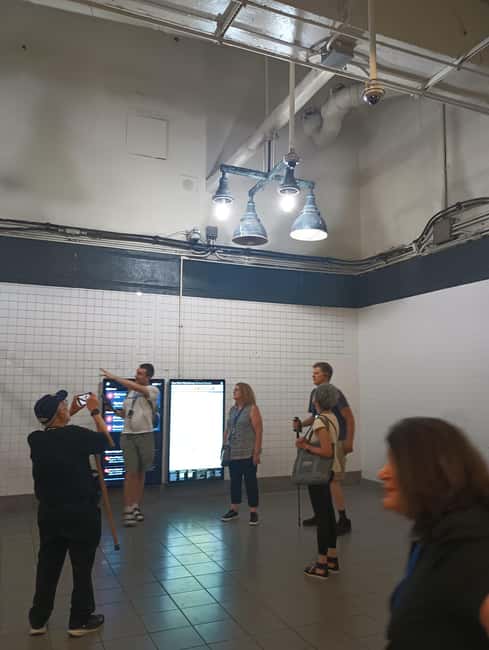
The price is $200 per group up to 15 people. That’s a key value point because you’re not paying per head for Rayn’s planning brain, you’re paying per group for a private format. If you’re traveling with family, friends, or a small tour cohort, the cost per person can become quite reasonable for what you get: a subway ride plus station-specific guidance in two major terminals.
If you’re a solo traveler or a couple, it may feel steep compared with a standard walking tour price. But you’ll also likely feel the benefit of privacy and the ability to ask questions without competing for attention.
The best way to think about value is this: terminals like these are expensive in time. You can spend hours bouncing around on your own and still miss what matters. Here, the guide sets the lens so your time has direction.
Who this tour fits best
This tour is a great match if you like any mix of:
- Architecture and urban design (especially when it changes over time)
- Subway systems and how they operate, not just where they go
- People who enjoy hidden details, especially in very busy places
It’s also a good choice if you want a New York experience that doesn’t rely on lining up for the same famous views. You’ll see the stations in a new way: as functional infrastructure with stories encoded in their layouts.
One clear note: the tour isn’t suitable for people with mobility impairments. The underground environments and steps are part of the experience, so plan accordingly.
Practical tips to make your tour easier and better
Bring the basics—comfortable shoes, water, and a camera—because you’ll be moving and you’ll want to capture details you might miss later.
Wear shoes you trust. This is not just “walk a bit around a building.” It’s stairs, levels, and indoor walking in large transit spaces. If your legs fatigue fast, pick a day when you’re not already doing a heavy sightseeing schedule.
For photos, aim to shoot during the short stops when Rayn is explaining a specific element. Otherwise, you’ll lose the moment while adjusting angles. The explanations add meaning to what you photograph.
And if you’re the type who likes questions, bring them. The guide’s style is built for back-and-forth, and you’ll get more from the tour when you ask what you’re curious about—especially if you care about how transportation planning affects everyday life.
Should you book NYC: Grand Central Terminal and/or Penn Station — Private?
If you’re the kind of traveler who likes your sightseeing with context, book it. This tour is one of the stronger ways to understand New York’s transit centers as design decisions over time, with a real subway ride and a guide who can connect history to how the system works today.
I’d pass only if you need step-free access or you hate underground walking. Also, if you’re rushing and only have a tight schedule, the station scale may make the shorter end of the 1.5-hour window feel rushed.
For everyone else, the format does what it promises: you’ll come away seeing Penn Station and Grand Central as more than iconic backdrops.
FAQ
What is the duration of the private tour?
The tour duration is listed as 1.5 to 2.5 hours, depending on available starting times.
What’s included during the tour?
Your subway fare is provided, and you’ll also receive individual ear pieces so everyone can hear the guide clearly.
Is this tour private?
Yes. It’s a private group experience.
What areas does the tour visit?
The tour visits public areas only and does not access restricted areas.
Does the tour involve a subway ride?
Yes. It includes an iconic subway ride between Penn Station and Grand Central Terminal.
What should I wear or bring?
Wear comfortable shoes for walking and stairs. Bring a camera and water.
Is the tour suitable for people with mobility impairments?
No, the tour is not suitable for people with mobility impairments because it involves walking up and down steps and traversing underground areas.
Your Group Only, No Strangers
- Private Central Park Pedicab Tour★ 5.0 · 6,981 reviews
- Private Transfer from Manhattan to NYC Airports (JFK/EWR/LGA)★ 3.5 · 1,683 reviews
- New York City: Private Central Park Pedicab Tour★ 4.9 · 1,637 reviews
- Carriage Ride in Central Park (VIP – PRIVATE) Since 1964™★ 4.0 · 1,074 reviews
- NYC: Private Central Park Horse Carriage Ride with Guide★ 4.9 · 790 reviews
More Tour Reviews in New York City
- NYC: SUMMIT One Vanderbilt Tickets★ 4.7 · 51,195 reviews
- NYC: Empire State Building Tickets – Observatory & Museum★ 4.7 · 25,757 reviews
- New York City: Statue of Liberty & Ellis Island with Ferry★ 4.6 · 18,683 reviews
- New York City: American Museum of Natural History Ticket★ 4.5 · 15,447 reviews
- Statue of Liberty and Ellis Island Tour: All Options★ 5.0 · 13,571 reviews
Under the Clock: More Grand Central
- Secrets of Grand Central Station Walking Tour New York City★ 5.0 · 1,796 reviews
- NYC: The Secrets of Grand Central Terminal★ 4.8 · 718 reviews
- NYC: Official Grand Central Terminal Tour★ 5.0 · 458 reviews
- NYC: Official Grand Central Terminal Guided Tour★ 4.6 · 251 reviews
- SUMMIT One Vanderbilt with Grand Central Terminal Tour★ 4.1 · 98 reviews
Just in: the newest New York City reviews on our desk





Grand Central Terminal Tours, compared.
 ★ 5.0Secrets of Grand Central Station Walking Tour New York CityFrom $391,796 reviews
 ★ 4.8The Secrets of Grand Central TerminalFrom $39718 reviews
 ★ 5.0Official Grand Central Terminal TourFrom $39458 reviews
 ★ 4.6Official Grand Central Terminal Guided TourFrom $39251 reviews
 ★ 4.1SUMMIT One Vanderbilt with Grand Central Terminal TourFrom $11998 reviews
 ★ 5.0NYC Secrets of Grand Central Private Walking TourFrom $15681 reviews
 ★ 5.0Best NYC Sightseeing Tour: Times Square, Grand Central, & More46 reviews
 ★ 4.4SUMMIT One Vanderbilt Ticket and Grand Central TourFrom $13527 reviews
Browse the lists this tour appears in