
Reviewed · NYC MUSEUM TOURS
Private Art and Crime Tour at the Metropolitan Museum of Art
A strange mix of beauty and crime. This private Met tour turns art history into a real detective story, with the museum’s most disputed pieces alongside famous works by artists who’ve been copied for centuries. I love how it tackles art crime and repatriation as more than a headline, and I also like that you’ll hear clear, practical stories tied to how museums handle risk and evidence.
One thing to consider: the tour is only as easy to follow as your position in the group. In one review, the guide was hard to hear at times due to accent, so plan to stand where you can hear comfortably.
In This Review
- Key takeaways before you go
- Why the Met works for an art crime tour
- Where you’ll start at 1000 5th Ave (and how that affects your time)
- Stop 1 at the Met: questionable holdings and what the guide is really teaching
- Rembrandt and Van Gogh: the famous fakers the tour uses as learning tools
- How museums determine authenticity (and why provenance is the loudest clue)
- Looted and stolen works: the repatriation stories that make it real
- The guide’s role: art history plus practical listening
- Private group dynamics: pacing, questions, and why it changes the feel
- Price and value: what you’re really paying for
- Practical tips for enjoying the Met while staying on theme
- Who should book this tour
- Should you book this private Art and Crime tour at the Met?
- FAQ
- FAQ
- How long is the Private Art and Crime Tour at the Metropolitan Museum of Art?
- Is this tour private?
- Where does the tour start and end?
- Is the tour offered in English?
- What’s included in the tour price?
- What is not included?
- Is admission covered?
- Is there free cancellation?
- Is confirmation provided after booking?
Key takeaways before you go
- Questionable holdings at the Met: You’ll focus on parts of the collection that spark debate about authenticity.
- Why Rembrandt and Van Gogh get targeted: The tour explains why the most famous styles attract the most fakes.
- How authenticity is assessed: Expect discussion of the ways experts try to separate genuine works from forgeries.
- Looting and return stories: You’ll hear about stolen or looted works and what happens when ownership is restored.
- A private group experience: Only your group joins, so you can keep the pace and questions aligned.
- Olga’s art-and-city bonus: One guide name comes up—Olga—and she also shared other local art suggestions.
More halls and galleries worth the hours
- NYC: Empire State Building Tickets – Observatory & Museum
★ 4.7 · 25,757 reviews - New York City: American Museum of Natural History Ticket
★ 4.5 · 15,447 reviews - NYC: Museum of Modern Art (MoMA) Entry Ticket
★ 4.6 · 12,540 reviews - 9/11 Memorial, Ground Zero Tour with Optional 9/11 Museum Ticket
★ 5.0 · 6,381 reviews
Why the Met works for an art crime tour
The Met is usually sold as a giant museum where you can wander, pick favorites, and call it a day. This experience flips that idea. It treats the museum like a living archive with problems to solve—some historical, some legal, and some scientific.
That matters because “authentic” is not a vibe. It’s a status that can change. A painting can be reattributed. A sketch can be questioned. A work can be accepted for years and later challenged when new evidence surfaces. When you see that laid out in a museum setting, it’s easier to understand why collectors, governments, and institutions take provenance so seriously.
And the Met is a perfect classroom for this theme. The museum holds works from many regions, eras, and acquisition pathways, so you get lots of real-world examples of how collections are built—and how they can go wrong.
Where you’ll start at 1000 5th Ave (and how that affects your time)
You meet at the Metropolitan Museum of Art at 1000 5th Ave, New York, NY 10028. The tour ends back at the meeting point, so you don’t lose time recalculating your exit.
The total run time is about 2 hours 30 minutes. In a museum that big, that’s enough time for meaningful context without turning the experience into a sprint. Since it’s offered in English and described as a private tour/activity, you’ll generally get a smoother flow with fewer distractions than a large public tour.
Practical thought: pick a start-of-tour position where you can hear. This isn’t about being in front for ego. It’s about reducing strain. One review flagged hearing difficulty when the guide’s accent was harder to catch, and in a quiet museum gallery you can fix a lot of that just by choosing a better spot.
Stop 1 at the Met: questionable holdings and what the guide is really teaching
The tour’s first core focus is the Met’s questionable holdings—works in the collection that some experts think might be inauthentic. That framing is important, because you’re not just being shown suspicious objects. You’re learning how doubt gets formed.
Here’s the useful angle: museums don’t argue about authenticity because they love controversy. They do it because art decisions have consequences—financial, scholarly, and sometimes legal. When you’re standing in front of a disputed work, you start connecting three things that often feel separate in normal museum visits:
- how attribution works (who painted it, when, and from what evidence)
- what authenticity claims rely on
- why provenance—the work’s documented history—can make or break a case
This is also where you get the clearest “detective story” feeling. Some pieces entered the museum in ways that are now viewed differently. You’ll hear how those entry points get questioned, and how the museum or experts approach evidence when a label is no longer the final word.
If you like structured museum tours, you’ll appreciate this stop. It gives your attention a job: watch for clues, listen for reasoning, and connect details to bigger ethics.
Just your group: more private options




Rembrandt and Van Gogh: the famous fakers the tour uses as learning tools
A big part of the experience is centered on authentic works by artists who are heavily targeted by forgers—including Rembrandt and Vincent van Gogh.
That might sound backwards at first. Why spend time on the fakes when you can see the real thing? The answer is that forgeries often copy what people can’t resist: style, subject matter, and signature flourishes tied to big reputations.
So by pairing the Met’s disputed holdings with authentic masterpieces by famous “repeat targets,” the tour helps you understand the psychology of forgery. Fraud isn’t random. It’s built to look plausible to the buyers and institutions of its era. The tour uses that pattern to teach you what experts look for when they’re trying to spot where plausibility ends and evidence begins.
Also, it’s an easy way to stay emotionally engaged. You’re not stuck only in controversy. You’re still seeing top-tier works; you’re just learning to read them with an extra layer of skepticism, not a mood of cynicism.
How museums determine authenticity (and why provenance is the loudest clue)
The tour explains methods used to determine whether a work is genuine or a forgery. Even without getting overly technical, you’ll come away with a strong sense of how museums approach verification: they treat authenticity as a chain of evidence, not a single moment of certainty.
What this means for you in the galleries:
- You’ll likely hear how experts compare style and materials to established knowledge.
- You’ll hear how the work’s documented history can support or undermine its attribution.
- You’ll get a sense of how past decisions can be revisited as scholarship and testing improve.
The most valuable takeaway is that authenticity isn’t just about what the object looks like today. It’s about what can be supported across time. That’s why provenance stories show up in this tour. When you understand provenance, you stop thinking of museums as passive storehouses and start seeing them as active investigators.
It’s also a good antidote to a common museum habit: assuming that what’s in the collection must be settled. This tour encourages you to hold a more realistic thought: museums manage uncertainty as part of their job.
Looted and stolen works: the repatriation stories that make it real
One of the most compelling parts of the experience is the discussion of stories where stolen or looted works were returned to the museum or to rightful owners.
This is where the tour becomes more than art-technique talk. Looted art is tied to human decisions and human losses. And repatriation is where those decisions play out in practice—through investigations, claims, negotiations, and legal processes that can take years.
On a normal museum visit, repatriation is often reduced to a short label line. Here, the tour treats it like a plot with cause-and-effect. You’ll hear how objects move, how institutions respond, and why documentation matters.
Even if you’re not an art-law person, you’ll find the logic easy to follow: evidence matters, paperwork matters, and the story doesn’t end when a work is acquired. Sometimes it ends when ownership is restored.
This section also gives you a more mature way to enjoy art. You can still admire the craft while understanding the baggage that can travel with it.
The guide’s role: art history plus practical listening
This tour is led by a professional tour guide described as an art historian, which is exactly the right skill set for this topic. You’re asking the museum to speak in a language of attribution, evidence, and ethics. An art historian can translate that without turning it into a lecture you can’t process while standing in front of objects.
One review highlights Olga by name and praises her for being extremely knowledgeable and for offering useful city art recommendations. That’s a great bonus when you’re in New York and want ideas that go beyond the “see the skyline” checklist.
One review also includes a drawback: Olga was difficult to hear at times due to accent. So treat this as a listening tip. If your group forms a tight cluster, you may get stuck in the back or behind people’s shoulders. Choose a position with a clear line to the guide, and don’t be afraid to angle your body so you can hear better.
Private group dynamics: pacing, questions, and why it changes the feel
Because it’s a private tour/activity with only your group, you don’t have to merge your questions into someone else’s conversation. That matters for a topic like authenticity, where it’s common to want to ask:
- Why is something questioned now?
- What kind of evidence would change the label?
- How does a museum balance scholarship with legal risk?
Private format also helps with pacing. The tour runs about 2.5 hours, and the guide can adjust how quickly you move based on interest. If your group leans toward art history, you can focus on interpretation. If your group is more curious about the crime/ethics side, the guide can keep the discussion tied to those processes.
This format tends to suit visitors who want more than a surface-level tour but don’t necessarily want a full college-style seminar.
Price and value: what you’re really paying for
The tour includes entrance fees and a professional tour guide (art historian), with a total duration of 2.5 hours. It also says mobile ticket is used, and that group discounts are available.
Even if the headline price isn’t shown here, you can judge value by what’s included:
- You’re not paying separately for museum entry.
- You’re paying for a guide who has the subject focus—art crime, disputed works, and repatriation—not just general Met commentary.
- You’re getting an experience theme that you usually don’t find on standard museum tours.
Not included items are clearly flagged: hotel pickup/drop-off and gratuities (optional). If you’re staying near Fifth Avenue or already planning to take public transit, not needing hotel transport can actually make it better value for your day.
Practical tips for enjoying the Met while staying on theme
This is a museum tour, but it’s not “everything, everywhere, all at once.” It’s about reading the Met through one lens: authenticity and its consequences.
Here’s how to get more from that lens without getting overwhelmed:
- Arrive with a little curiosity about provenance. Even one or two questions will make the discussion stick.
- Be ready to shift from visual appreciation to analytical listening. You’ll still see art, but you’ll also be asked to think about how decisions are made.
- If you’re traveling with teens or older high school students, this theme can work well because it’s story-driven and built around high-stakes questions.
And if you’re a first-time Met visitor, don’t worry. This tour doesn’t demand you already know the full collection map. The guide’s job is to connect the dots.
Who should book this tour
I’d especially recommend it if you:
- love art history but want a smarter angle than labels alone
- are interested in museum ethics, provenance, and cultural property issues
- enjoy detective-style storytelling that’s grounded in real institutions and processes
- want a private experience where your group can focus without being swallowed by a big crowd
It’s also a good choice for adults and older teens, since the subject matter can get complex but is explained in a way that keeps moving.
If you dislike controversy entirely or only want pure aesthetic sightseeing, this may feel heavy. But if you can handle moral and factual complexity, you’ll likely find it fresh and memorable.
Should you book this private Art and Crime tour at the Met?
Book it if you want the Met to feel like a living, argumentative place—not a static gallery of unquestioned masterpieces. This tour has strong value because you get a structured theme, a dedicated art historian guide, and a clear focus on how authenticity is judged and how disputed works can be handled.
Skip it (or reconsider) if hearing a guide in a crowded museum is a major concern for you. The one drawback that comes up is that the guide may be hard to hear at times due to accent. If you can’t reliably position yourself for sound, you may miss parts of the story that make the tour worth it.
FAQ
FAQ
How long is the Private Art and Crime Tour at the Metropolitan Museum of Art?
It lasts about 2 hours 30 minutes (approximately).
Is this tour private?
Yes. It’s a private tour/activity, so only your group participates.
Where does the tour start and end?
The tour starts at the Metropolitan Museum of Art, 1000 5th Ave, New York, NY 10028, and it ends back at the same meeting point.
Is the tour offered in English?
Yes, it’s offered in English.
What’s included in the tour price?
Included items are a professional tour guide (art historian), entrance fees, and the tour duration of about 2.5 hours.
What is not included?
It does not include hotel pickup or drop-off, and it does not include gratuities (optional).
Is admission covered?
Yes, entrance fees are included.
Is there free cancellation?
Yes. You can cancel for a full refund if you cancel at least 24 hours before the experience starts.
Is confirmation provided after booking?
Confirmation is received at the time of booking.
More Tours in New York City
- Statue of Liberty and Ellis Island Tour: All Options★ 5.0 · 13,571 reviews
- New York in One Day Guided Sightseeing Tour★ 5.0 · 13,166 reviews
- Central Park Pedicab Guided Tours★ 5.0 · 7,108 reviews
- New York City: Manhattan Helicopter Tour★ 4.7 · 7,076 reviews
- Private Central Park Pedicab Tour★ 5.0 · 6,981 reviews
More Tour Reviews in New York City
- NYC: SUMMIT One Vanderbilt Tickets★ 4.7 · 51,195 reviews
- NYC: Empire State Building Tickets – Observatory & Museum★ 4.7 · 25,757 reviews
- New York City: Statue of Liberty & Ellis Island with Ferry★ 4.6 · 18,683 reviews
- New York City: American Museum of Natural History Ticket★ 4.5 · 15,447 reviews
- Statue of Liberty and Ellis Island Tour: All Options★ 5.0 · 13,571 reviews
Indoors Done Right: More Museums
- NYC: Empire State Building Tickets – Observatory & Museum★ 4.7 · 25,757 reviews
- New York City: American Museum of Natural History Ticket★ 4.5 · 15,447 reviews
- NYC: Museum of Modern Art (MoMA) Entry Ticket★ 4.6 · 12,540 reviews
- 9/11 Memorial, Ground Zero Tour with Optional 9/11 Museum Ticket★ 5.0 · 6,381 reviews
- 9/11 Memorial Museum Admission Ticket★ 4.5 · 6,376 reviews
Just in: the newest New York City reviews on our desk





NYC Museum Tours, compared.
 ★ 4.7Empire State Building Tickets – Observatory & MuseumFrom $4725,757 reviews
 ★ 4.5American Museum of Natural History TicketFrom $3715,447 reviews
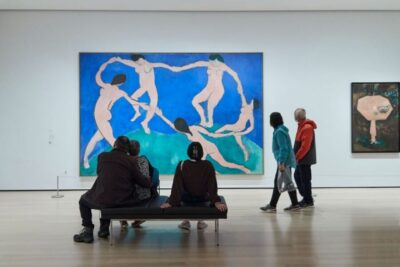 ★ 4.6Museum of Modern Art (MoMA) Entry TicketFrom $3012,540 reviews
 ★ 5.09/11 Memorial, Ground Zero Tour with Optional 9/11 Museum TicketFrom $396,381 reviews
 ★ 4.59/11 Memorial Museum Admission TicketFrom $366,376 reviews
 ★ 5.0All-Access 9/11: Ground Zero Tour, Memorial and Museum, One World ObservatoryFrom $1094,886 reviews
 ★ 4.7Intrepid Museum Entry TicketFrom $384,687 reviews
 ★ 4.7Madame Tussauds Entry TicketsFrom $423,625 reviews
Browse the lists this tour appears in