
Reviewed · NYC MUSEUM TOURS
Self-Guided Tour of the Museum at Eldridge Street
A synagogue museum in one hour.
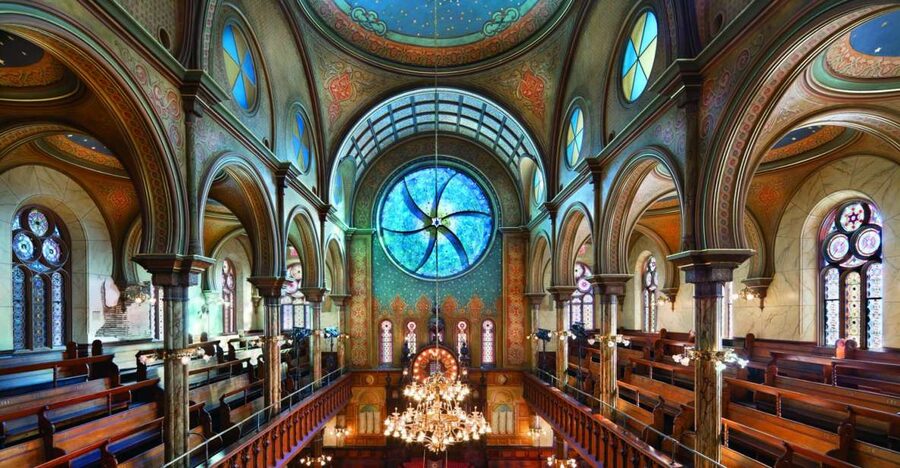
That quick visit gets you inside the restored Eldridge Street Synagogue, where Moorish Revival architecture, historic stained glass, and modern window art tell the story of Jewish immigrants on the Lower East Side. It’s a National Historic Landmark, built in 1887, and it still feels big—partly because the building was designed for a community ready to build permanence.
I especially love the 60 historic stained-glass windows and how they turn the main space into something light-driven and moving. I also like the way the museum connects worship and everyday life, from overcrowded tenements to the long fight for preservation after neglect threatened the building. One possible drawback: it’s self-guided, so if you want a live storyteller, you’ll need to slow down and read carefully on your own.
In This Review
- Key Things I’d Make Sure You Notice
- Why the Eldridge Street Synagogue Still Hits Hard
- Your 1-Hour Self-Guided Walk: What You Actually Do
- Small practical tip that matters
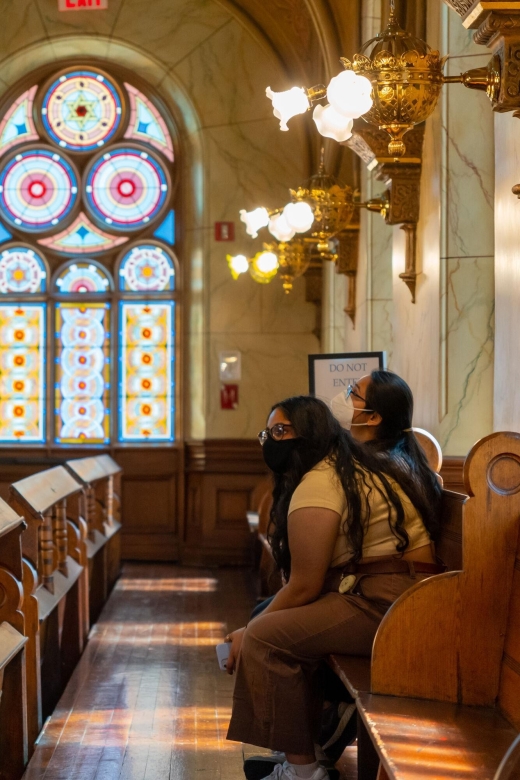
- Moorish Revival Architecture and the Stained Glass Showpiece
- The Modern Window Art: Kiki Smith and Deborah Gans
- The Immigration Story: Worship, Community, and Permanence
- Temporary Exhibits and Permanent Collection: How to Use Your Hour
- Price and Value: Getting a Landmark Experience for $7
- Practical Rules to Know Before You Go
- Who This Fits Best—and Who Might Want More Guidance
- Should You Book This Self-Guided Tour?
- FAQ
- How long is the self-guided museum tour?
- Where do I enter?
- What does the ticket include?
- Which languages are available for the self-guided tour?
- Is the museum wheelchair accessible?
- Can I take photos?
- Are food and drinks allowed?
- What items are not allowed, or need to be checked?
Key Things I’d Make Sure You Notice
- Moorish Revival details: patterned, dramatic design that makes the synagogue feel ceremonial and grand.
- Sixty historic stained-glass windows: a major visual feature you can take in at your own pace.
- Modern window art: see works by artists Kiki Smith and Deborah Gans.
- The immigration-and-preservation arc: built for immigrant aspirations, endangered by later policy, then restored through a major effort.
- A true museum visit in the building: you’re walking through history, not just looking at photos.
- Four floors with an elevator: built for access, not just stairs.
More halls and galleries worth the hours
- NYC: Empire State Building Tickets – Observatory & Museum
★ 4.7 · 25,757 reviews - New York City: American Museum of Natural History Ticket
★ 4.5 · 15,447 reviews - NYC: Museum of Modern Art (MoMA) Entry Ticket
★ 4.6 · 12,540 reviews - 9/11 Memorial, Ground Zero Tour with Optional 9/11 Museum Ticket
★ 5.0 · 6,381 reviews
Why the Eldridge Street Synagogue Still Hits Hard
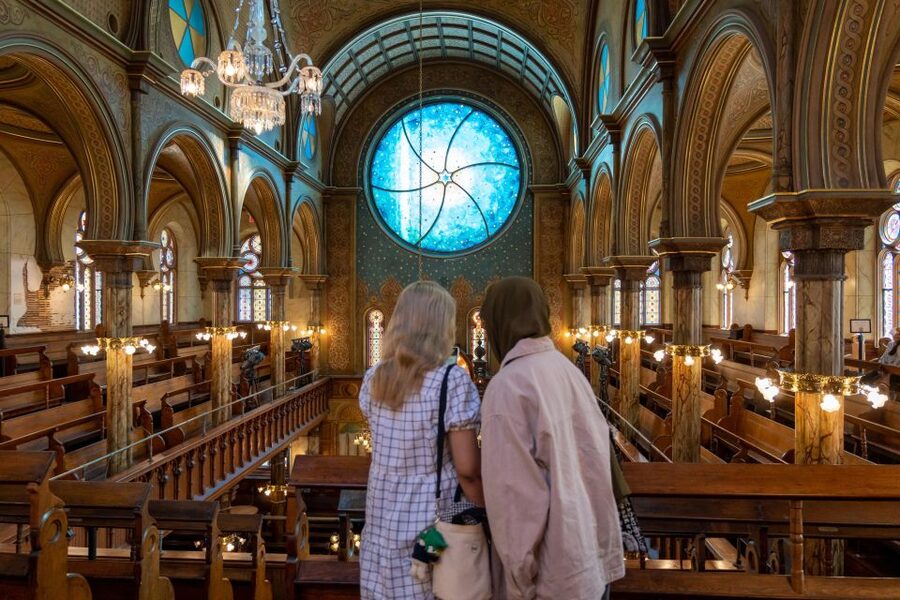
The Museum at Eldridge Street is housed inside the Eldridge Street Synagogue, a National Historic Landmark that dates to 1887. That matters because you’re not touring a recreated set. You’re inside the real building where Eastern European Jewish immigrants gathered to pray, organize community life, and signal they were putting down roots.
The synagogue’s story is built into the setting. On the Lower East Side, newcomers lived among dense streets and crowded tenements. This synagogue offered something different: a purpose-built, grand space that reflected ambition and stability. Even if you only spend an hour, the building’s scale and details help you understand why a place like this would mean so much.
Then comes the second punch: history didn’t stay kind. The museum explains that immigration quotas in the 1920s affected the community, and the synagogue was nearly lost to neglect. A long restoration effort—20 years and about $20 million—brought it back to public use. You can feel that recovery in what you see now: the museum isn’t just showing artifacts. It’s showing why preservation is a form of respect.
Your 1-Hour Self-Guided Walk: What You Actually Do
This is a self-guided museum visit with an option to slow down or speed up. Plan for about 1 hour total, and treat it like a focused circuit rather than a “read everything forever” assignment.
When you arrive, go to the main entrance at the bottom of the left-hand (downward) staircase. That’s your start point. You’ll be greeted on-site, but the tour itself is designed for you to explore independently, using the museum’s self-guided materials at your own pace.
From there, you can expect a straightforward flow:
- You enter the synagogue museum space and orient yourself to the room and its design.
- You spend time on the biggest visual draw: stained glass and the surrounding architecture.
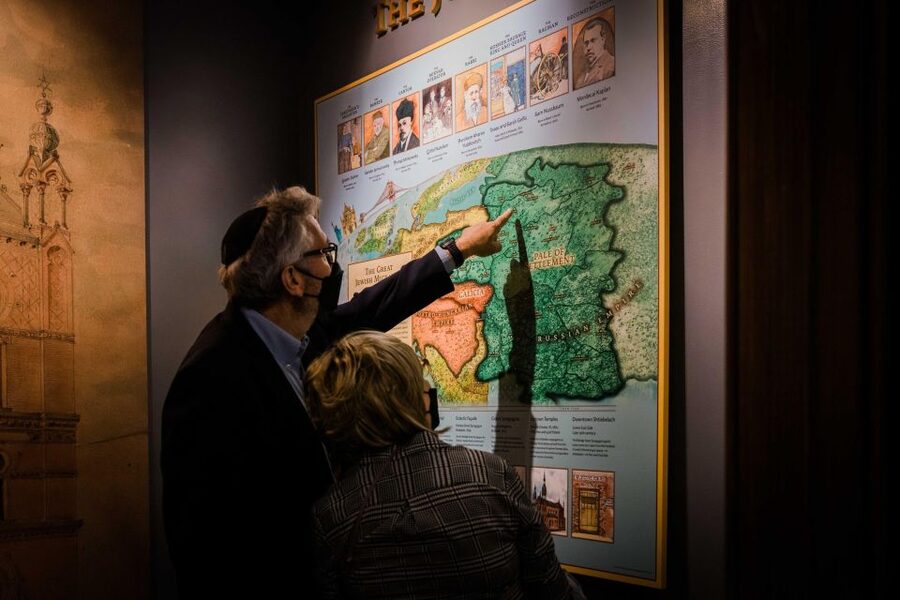
- You move through the museum areas that interpret immigration life and how the synagogue evolved over time.
- You wrap up with time for the temporary exhibit and the permanent collection, since both are included.
There’s no need to rush, but there’s also no “wandering for half a day” requirement. The building is accessible and organized enough that you can get the core experience in your hour.
Small practical tip that matters
Keep your hands free and your focus on the space. Food and drinks (other than water) aren’t allowed, and strollers and backpacks are searched and checked in on arrival. If you show up with a bag, you’ll lose time at the check-in point, so travel light if you can.
More days made simple with a guide




Moorish Revival Architecture and the Stained Glass Showpiece
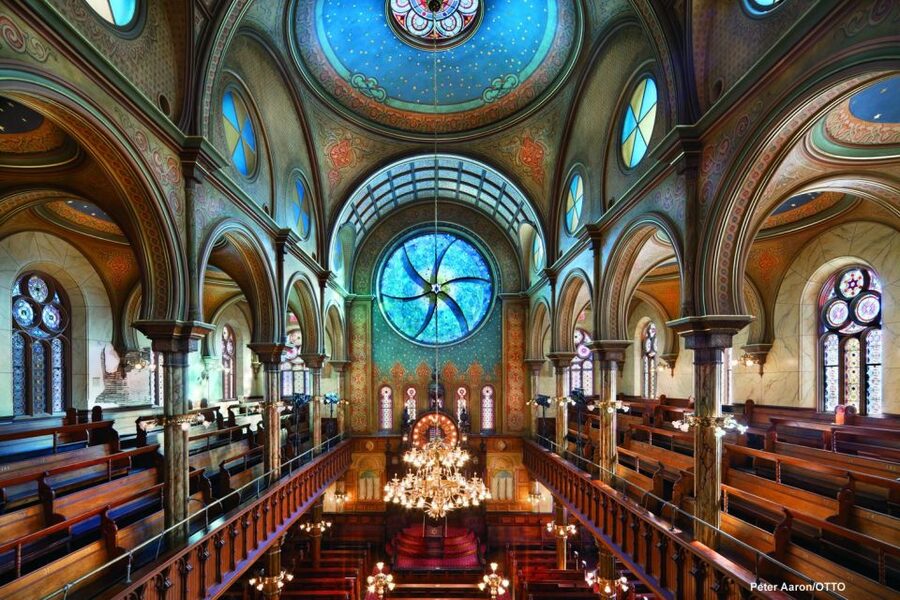
If you’re the type who loves buildings with personality, this is your stop. The synagogue’s style is Moorish Revival, and it shows up in the way the interior feels designed for spectacle—arches, patterned surfaces, and strong visual structure that pulls your eye upward.
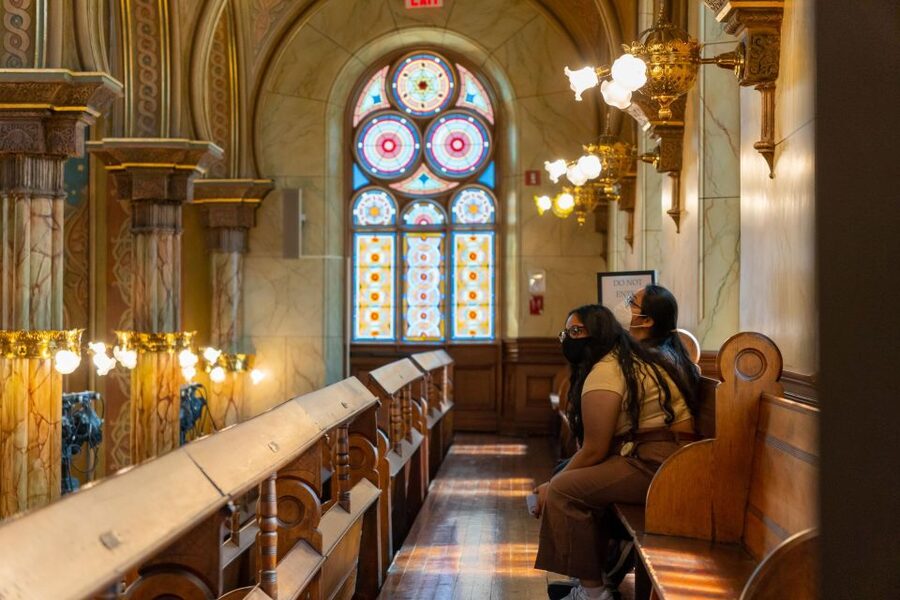
But for many people, the main event is the stained glass. The museum features 60 historic stained-glass windows, and that number isn’t just impressive on paper. These windows change the mood of the room as your eyes move across them. You’ll likely find yourself pausing at different angles, because light and color make the same window look different depending on where you stand.
A practical note: photography rules are simple but strict. Flash photography is not allowed, and professional cameras aren’t permitted. The museum does welcome personal, non-commercial photography, so if you want a few memories for your phone, you’re fine—just keep it natural-light.
The Modern Window Art: Kiki Smith and Deborah Gans
One of the smarter parts of this museum experience is the way it doesn’t lock you in the past. You’ll also encounter a modern window by artists Kiki Smith and Deborah Gans. That creates a useful contrast: the historic stained glass gives you the original visual language, and the modern work shows how the building can keep speaking today.
I like this approach because it helps the visit feel more relevant. You’re not just viewing history like it’s frozen in a glass case. You’re seeing how contemporary art can sit inside a historic house of worship and still feel connected to the place’s purpose.
Because this is a museum visit (not a worship service), you can take your time to notice how the modern work fits the structure around it. That’s where the building’s restoration and ongoing use make sense: a preserved synagogue isn’t meant to be silent.
The Immigration Story: Worship, Community, and Permanence
The museum’s heart is the human story behind the architecture. You’ll learn about Jewish immigrant life around the turn of the 20th century, and how the synagogue functioned beyond worship. It was a place to build community—an anchor for families trying to survive, connect, and eventually feel settled.
This is where the Lower East Side context matters. The synagogue was built as a first grand synagogue purpose-built by Eastern European Jewish immigrants in the United States. That phrase is important because it points to a major moment: large-scale migration, major cultural change, and the need for institutions that could grow with a new community.
You’ll also learn about the broader forces that shaped decline and recovery. The museum explains that strict immigration quotas in the 1920s contributed to the community’s challenges, and that neglect nearly erased the building’s future. The restoration story is part of the museum too, which means you leave with a better grasp of why historic sites don’t last automatically. They need people—and funding—on purpose.
I think that makes the visit more than just scenic. It gives you a reason to care when you look at details. You’re not only seeing windows and walls. You’re seeing choices made by real people.
Temporary Exhibits and Permanent Collection: How to Use Your Hour
Both the temporary exhibit and the permanent collection are included, which is a real value boost for a short visit. The only downside is that, with one hour, you can’t treat everything equally. You’ll want to choose your priorities so you don’t end up rushing through the parts that actually matter to you.
Here’s a good way to decide:
- If stained glass and architecture are your main interest, spend most of your time on the main spaces first, then skim the exhibit areas.
- If you want the immigration-and-community story more than the visuals, allocate more time to the interpretive spaces and save the stained glass for a slower second pass.
- If you like mixing art and history, make sure you spend time with the modern window art by Kiki Smith and Deborah Gans before you move on.
Either way, keep your expectations realistic. This isn’t a lecture. It’s a museum tour where you learn by reading, looking, and moving through the preserved building.
Price and Value: Getting a Landmark Experience for $7
At $7 per person, this is priced like a bargain for what you get: admission to a National Historic Landmark museum, access to both the temporary exhibit and the permanent collection, and a guided-by-signage experience that fits neatly into one hour.
It also feels like good value because the “product” isn’t generic. You’re paying for the privilege of being inside an 1887 building that survived neglect and then received a large restoration effort. You’re also getting a high-impact visual element (those 60 stained-glass windows) plus modern window art in the same visit.
This is also the kind of activity that works even if your schedule is tight. In a city where museum entry fees can spike, $7 keeps it easy to justify when you want something meaningful without committing half a day.
Practical Rules to Know Before You Go
To make your visit smoother, plan around the on-site rules:
- No flash photography.
- No professional cameras.
- Bikes and scooters aren’t allowed.
- Food and drinks are not allowed (water is allowed).
- Strollers and backpacks are searched and checked in on arrival.
On the good-news side, the museum is wheelchair accessible. There’s an elevator that reaches all four floors, so you shouldn’t feel forced to choose between “see the museum” and “stay comfortable.”
Who This Fits Best—and Who Might Want More Guidance
This museum is ideal if you:
- Want a compact, history-rich visit that doesn’t take over your day.
- Love architecture and want to see a building that was designed to be seen.
- Like museum interpretation you can control at your own pace.
It may feel less ideal if you’re the type who gets lost without a live explainer. Since it’s self-guided, you’ll get the best experience if you’re willing to spend a few extra minutes reading labels and looking closely. Think of it as a quiet museum walk where you’re your own guide.
Should You Book This Self-Guided Tour?
Yes, I’d book it if you want a high-value, low-commitment museum stop in New York that feels real—inside a landmark building with meaningful immigrant history and stand-out visual design. At $7 for an hour, you’re buying an efficient dose of architecture, stained glass, and preservation story, with modern art in the mix.
If you hate self-guided experiences or you need a live narrative to stay engaged, you might want an option that includes a guide. But if you can enjoy reading along and letting the building do the talking, this is exactly the kind of visit that leaves you thinking about how communities build, endure, and restore their spaces.
FAQ
How long is the self-guided museum tour?
The visit is designed to take about 1 hour.
Where do I enter?
The museum is in the synagogue. Find the main entrance at the bottom of the left-hand (downward) staircase.
What does the ticket include?
Your admission includes entry to the museum (Eldridge Street Synagogue), plus access to both the temporary exhibit and the permanent collection.
Which languages are available for the self-guided tour?
The self-guided tour is available in English, Spanish, and Chinese.
Is the museum wheelchair accessible?
Yes. The museum is fully accessible, with an elevator reaching all four floors.
Can I take photos?
You can take personal, non-commercial photography. Flash photography is not allowed, and professional cameras are not allowed.
Are food and drinks allowed?
No food and no drinks are allowed except water.
What items are not allowed, or need to be checked?
Strollers and backpacks will be searched and checked in on arrival. Bikes and scooters are not allowed.
More Tours in New York City
- Statue of Liberty and Ellis Island Tour: All Options★ 5.0 · 13,571 reviews
- New York in One Day Guided Sightseeing Tour★ 5.0 · 13,166 reviews
- Central Park Pedicab Guided Tours★ 5.0 · 7,108 reviews
- New York City: Manhattan Helicopter Tour★ 4.7 · 7,076 reviews
- Private Central Park Pedicab Tour★ 5.0 · 6,981 reviews
More Tour Reviews in New York City
- NYC: SUMMIT One Vanderbilt Tickets★ 4.7 · 51,195 reviews
- NYC: Empire State Building Tickets – Observatory & Museum★ 4.7 · 25,757 reviews
- New York City: Statue of Liberty & Ellis Island with Ferry★ 4.6 · 18,683 reviews
- New York City: American Museum of Natural History Ticket★ 4.5 · 15,447 reviews
- Statue of Liberty and Ellis Island Tour: All Options★ 5.0 · 13,571 reviews
Indoors Done Right: More Museums
- NYC: Empire State Building Tickets – Observatory & Museum★ 4.7 · 25,757 reviews
- New York City: American Museum of Natural History Ticket★ 4.5 · 15,447 reviews
- NYC: Museum of Modern Art (MoMA) Entry Ticket★ 4.6 · 12,540 reviews
- 9/11 Memorial, Ground Zero Tour with Optional 9/11 Museum Ticket★ 5.0 · 6,381 reviews
- 9/11 Memorial Museum Admission Ticket★ 4.5 · 6,376 reviews
Just in: the newest New York City reviews on our desk





NYC Museum Tours, compared.
 ★ 4.7Empire State Building Tickets – Observatory & MuseumFrom $4725,757 reviews
 ★ 4.5American Museum of Natural History TicketFrom $3715,447 reviews
 ★ 4.6Museum of Modern Art (MoMA) Entry TicketFrom $3012,540 reviews
 ★ 5.09/11 Memorial, Ground Zero Tour with Optional 9/11 Museum TicketFrom $396,381 reviews
 ★ 4.59/11 Memorial Museum Admission TicketFrom $366,376 reviews
 ★ 5.0All-Access 9/11: Ground Zero Tour, Memorial and Museum, One World ObservatoryFrom $1094,886 reviews
 ★ 4.7Intrepid Museum Entry TicketFrom $384,687 reviews
 ★ 4.7Madame Tussauds Entry TicketsFrom $423,625 reviews
Browse the lists this tour appears in