

Reviewed · NYC GHOST & TRUE CRIME TOURS
Slavery and African American History Private Tour in NYC
New York has buried stories in plain sight. This private slavery and African American history tour takes you past the streets, docks, churches, and public buildings tied to enslaved labor, with a guide who turns tough facts into a walk you can follow. Starting by the Benjamin Franklin Statue sets a sharp contrast before you reach the African Burial Ground area, where the city’s story gets honest fast.
I love the way the tour’s guides make the information usable. Ronald is noted for digesting details clearly, so you don’t feel lost, and Joseph is praised for blending strong historical knowledge with clear delivery. You’ll also get the kind of storytelling that connects daily life, resistance, and rebellion to the real places you’re seeing—not just dates on a page.
One consideration: this is a walking-focused experience, and the African Burial Ground Visitor Center involves mandatory security checks. If you don’t like long walks or you’re tight on time, pick the right tour length.
In This Review
- Key things I’d highlight
- The Route: From Franklin’s Statue to Fraunces Tavern
- Stop-by-Stop: What You’ll Learn at Each Key Moment
- Stop 1: Benjamin Franklin Statue (easy start, big contrast)
- Stop 2: African Burial Ground National Monument area (the anchor)
- The route through Lower Manhattan: roads, docks, churches, and civic power
- Pearl Street and the Fraunces Tavern area (wrap-up with context)
- 2-Hour vs. 3-Hour Options: Choosing the Right Fit
- The Guide Factor: Clear Storytelling on Heavy Topics
- Price and Value: Is $192.90 Worth It?
- Logistics That Matter on a Walk Like This
- Who This Tour Is Best For (and Who Should Rethink It)
- FAQ
- How long is the tour?
- What is the difference between the 2-hour and 3-hour options?
- Where does the tour start?
- Where does the tour end?
- Is this tour private?
- Do I need to go through security checks?
- What language is the tour offered in?
- What’s the cancellation policy?
- Should You Book This Slavery and African American History Tour in NYC?
Key things I’d highlight
- Two tour lengths let you choose between a faster overview or adding time at the African Burial Ground Visitor Center
- African Burial Ground National Monument is built for understanding, with a movie, images, artifacts, and exhibits (included on the 3-hour option)
- You pass major historic sites tied to enslaved labor, including churches and civic buildings, not just memorials
- The route is designed to show how slavery shaped the city’s infrastructure—roads, docks, and buildings
- You end near Fraunces Tavern, a strong place to get your bearings after the walk
More dark corners and cold cases
- New York Catacombs by Candlelight
★ 4.5 · 2,863 reviews - New York City Mafia and Local Food Tour led by NYPD Guides
★ 5.0 · 1,197 reviews - Gangsters and Ghosts Tour New York City
★ 5.0 · 905 reviews - True Crime NYC: Mafia Walk w/Ret. NYPD Detective and Local Food
★ 5.0 · 848 reviews
The Route: From Franklin’s Statue to Fraunces Tavern
The tour meets you at the Benjamin Franklin Statue, opposite Pace University, at One Pace Plaza. It’s a straightforward, easy-to-find start point, and it puts you right in the center of Lower Manhattan, where the city’s early growth and power still show up in the street layout.
As you move along, the guide’s job is to connect the dots between what you can see now and what the area was doing centuries ago. That matters, because you’ll notice how many NYC landmarks sit on top of earlier labor systems. In a typical session, you’ll pass through areas linked to colonial trade and civic authority, with the focus staying on enslaved Africans and African Americans—the people whose work built infrastructure and supported the city’s rise.
The ending is near the historic Fraunces Tavern area, after you pass Pearl Street. One detail to keep in mind: the tour description also says it ends back at the meeting point. In practice, it’s common for walking tours to wind down near a major landmark, so check your exact day-of instructions by email.
Stop-by-Stop: What You’ll Learn at Each Key Moment
Stop 1: Benjamin Franklin Statue (easy start, big contrast)
You begin at the Benjamin Franklin Statue opposite Pace University. Admission here is free, and that’s mostly a practical choice—get everyone together in one place, then start the story.
Why this start works: Benjamin Franklin’s name is everywhere in American civic life, but the tour uses that visibility as a contrast. The guide sets the tone early that the city’s founding-era progress came with violence and forced labor. It’s a quick way to shift your mindset before you reach the sites tied to enslaved life and death.
Just your group: more private options


Stop 2: African Burial Ground National Monument area (the anchor)
This is the centerpiece. The tour route takes you past the African Burial Ground National Monument, and the story you hear around this stop is blunt: during the colonial period, as many as 20 percent of New Yorkers were enslaved Africans, and they carried out almost all the heavy labor that built the city’s infrastructure.
You’ll also learn that about 15,000 Africans were buried between the 1690s and 1794. That number matters because it reframes the place from a memorial you’ve seen in headlines into something rooted in real bodies, real families, and real loss.
Depending on the option you choose, you may also add a visit to the Visitor Center on the 3-hour route. That Visitor Center is designed for learning: there’s a movie, images, artifacts, and exhibits focused on enslaved African Americans—male and female—and their journey from Africa to North America.
A practical note: all visitors to the Visitor Center have to go through mandatory security checks. That’s normal, but plan a little extra time and patience.
The route through Lower Manhattan: roads, docks, churches, and civic power
From this area, the guide weaves you through a set of major landmarks tied to enslaved labor and the institutions that benefited from it. You’ll pass places such as:
- New York City Hall
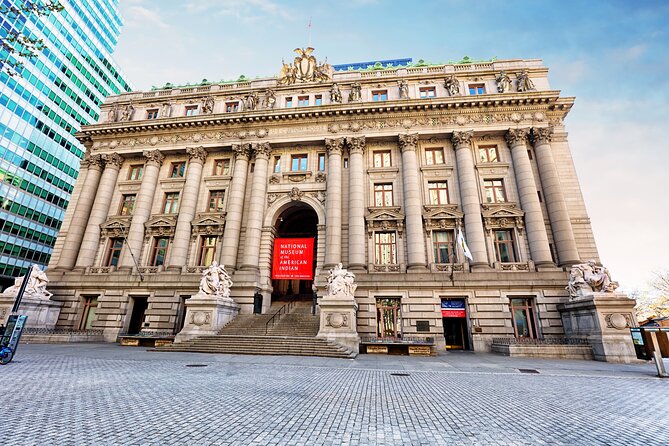
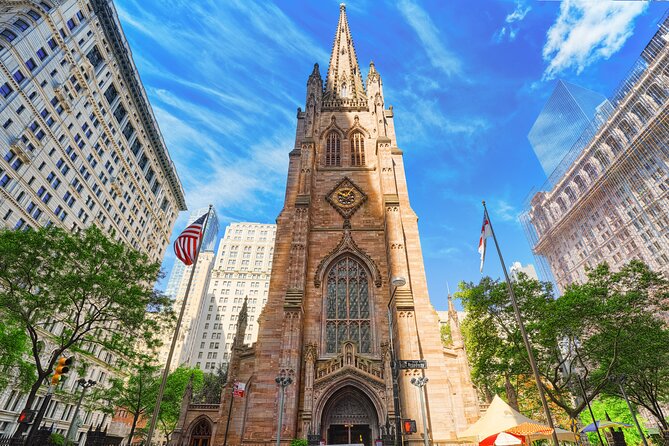
- St. Paul’s Chapel and Trinity Church (the tour notes these were originally built by enslaved people)
- The corridor around Wall Street, including the slave-built wall connected to the origin of the Wall Street name
- The former slave market location, where enslaved people were held for sale
The value here is not just naming buildings. The guide explains how the built environment reflects labor systems: who was forced to do the work, how the city used that work, and how African Americans responded, including through resistance and rebellion. You’ll come away with a sharper sense of why modern NYC streets can feel like neutral scenery when they actually record cruelty.
One more detail that adds weight: the tour is specifically positioned to discuss not only slavery as a legal system, but also the daily life of enslaved people—what they faced, how the system operated, and what people did to fight back.
Pearl Street and the Fraunces Tavern area (wrap-up with context)
Near the end, you pass Pearl Street and finish outside the historic Fraunces Tavern area, tied to George Washington’s early leadership period. This doesn’t erase the heaviness of the earlier stops. It gives your brain a place to reset and connect the dots to broader American history—how founding-era figures and institutions grew in the same city shaped by slavery.
2-Hour vs. 3-Hour Options: Choosing the Right Fit
You’ve got a shorter path and a longer one, and your choice mainly affects whether you include the African Burial Ground Visitor Center.
- 2-hour option: You’ll still see and hear the slavery-focused route and major passes tied to enslaved labor, but admission to the African Burial Ground National Monument is not included on this shorter version.
- 3-hour option: This includes free admission to the African Burial Ground National Monument, and you get time inside the Visitor Center with the film and exhibits.
For me, the decision is about your learning style. If you like getting the facts at the pace of a museum—images, artifacts, and guided interpretation—choose the 3-hour option. If you want the streetscape storytelling without the extra indoor component, the 2-hour option can work well.
Also, the longer version may mean more walking and more time in one focused area. If you’re sensitive to fatigue or you’re traveling with someone who needs breaks, this matters.
The Guide Factor: Clear Storytelling on Heavy Topics
This tour leans hard on the guide’s ability to explain complex, painful material without losing you. That’s not a small thing. Slavery history can sound like a list of events, but the best tours make it feel like a human story—how the system worked day to day, and how enslaved people resisted.
From the way this experience is described, guides like Ronald and Joseph are singled out for delivery: digesting information clearly, connecting the impact of Black lives to the spaces you’re seeing, and keeping the narrative understandable. That’s what you want in a private tour: not just facts, but the pacing and framing to process them.
Ask yourself a simple question before booking: do you want a guided interpretation of how these sites connect? If yes, a history expert guide fluent in English is the right match.
Price and Value: Is $192.90 Worth It?
At $192.90 per person, this isn’t a budget stroll. But value comes from a few specific things the tour includes:
- A history expert guide for a private experience
- A route purpose-built for African American history in NYC, focused on places tied to slavery and its institutions
- Free admission to the African Burial Ground Visitor Center on the 3-hour option
- Stops built around major buildings and the way slavery shaped infrastructure—roads, docks, churches, and civic power
So the “worth it” equation depends on how you travel. If you’re going as a small group, private tours can start to feel reasonable because you’re not splitting the experience with strangers. If you’re traveling solo, you’ll feel the cost more, but the guide-led format can still be worth it if you value clarity and context over wandering on your own.
Also consider timing. It’s booked about 47 days in advance on average, which suggests it’s popular around typical travel seasons. If your dates are fixed, booking earlier gives you more control.
Logistics That Matter on a Walk Like This
This is a private tour/activity, meaning only your group participates. That’s helpful when your goal is deeper questions rather than a broad, one-size-fits-all approach.
It’s also near public transportation, which makes it easier to start and stop without complicated transfers. Still, it’s walking-first. One note from descriptions: it may not be for you if you don’t like to walk much.
Finally, expect a day-before email with important information. That’s useful here because the Visitor Center involves security checks, and timing can matter for a smooth experience.
Who This Tour Is Best For (and Who Should Rethink It)
This is a strong fit if you want:
- A guided walk focused on slavery and African American history in NYC
- An explanation of how slavery shaped roads, docks, churches, and civic institutions
- A meaningful anchor stop at the African Burial Ground Visitor Center (best on the 3-hour option)
It’s less ideal if:
- You have limited mobility or you prefer minimal walking
- You’d rather read on your own without a guide connecting sites to a larger story
- You strongly dislike security screening steps, since the Visitor Center requires mandatory checks
If you’re unsure, pick the length that matches your stamina. The shorter option still covers major stops, while the longer option gives you the museum-style context at the Visitor Center.
FAQ

How long is the tour?
It runs about 2 to 3 hours, depending on which option you choose.
What is the difference between the 2-hour and 3-hour options?
The 3-hour option includes a visit to the African Burial Ground National Monument Visitor Center with free admission. The 2-hour option does not include free admission to the African Burial Ground.
Where does the tour start?
Meet at the Benjamin Franklin Statue, opposite Pace University, at One Pace Plaza, New York, NY 10038.
Where does the tour end?
The tour ends outside the historic Fraunces Tavern area after passing Pearl Street, though the activity also notes it ends back at the meeting point. Check your day-of instructions for the exact finish.
Is this tour private?
Yes. It’s a private tour/activity, and only your group participates.
Do I need to go through security checks?
Yes. All visitors to the African Burial Ground National Monument Visitor Center must pass mandatory security checks.
What language is the tour offered in?
The tour is offered in English.
What’s the cancellation policy?
There’s free cancellation, and you can cancel up to 24 hours in advance for a full refund.
Should You Book This Slavery and African American History Tour in NYC?
If you want NYC history that doesn’t soften the edges, this tour is a strong choice—especially the 3-hour option for time at the African Burial Ground Visitor Center. It’s also a good fit if you value clear guided storytelling on tough subjects, not just sightseeing.
If walking is a challenge for you, choose the option and timing that match your comfort level. For most people who can handle a focused urban walk, this is the kind of experience that helps you see Lower Manhattan with new eyes—and a lot more truth.
More Tours in New York City
- Statue of Liberty and Ellis Island Tour: All Options★ 5.0 · 13,571 reviews
- New York in One Day Guided Sightseeing Tour★ 5.0 · 13,166 reviews
- Central Park Pedicab Guided Tours★ 5.0 · 7,108 reviews
- New York City: Manhattan Helicopter Tour★ 4.7 · 7,076 reviews
- Private Central Park Pedicab Tour★ 5.0 · 6,981 reviews
More Tour Reviews in New York City
- NYC: SUMMIT One Vanderbilt Tickets★ 4.7 · 51,195 reviews
- NYC: Empire State Building Tickets – Observatory & Museum★ 4.7 · 25,757 reviews
- New York City: Statue of Liberty & Ellis Island with Ferry★ 4.6 · 18,683 reviews
- New York City: American Museum of Natural History Ticket★ 4.5 · 15,447 reviews
- Statue of Liberty and Ellis Island Tour: All Options★ 5.0 · 13,571 reviews
After Dark: Ghosts and Cold Cases
- New York Catacombs by Candlelight★ 4.5 · 2,863 reviews
- New York City Mafia and Local Food Tour led by NYPD Guides★ 5.0 · 1,197 reviews
- Gangsters and Ghosts Tour New York City★ 5.0 · 905 reviews
- True Crime NYC: Mafia Walk w/Ret. NYPD Detective and Local Food★ 5.0 · 848 reviews
- New York City Ghost Tour of Greenwich Village★ 4.5 · 466 reviews
Just in: the newest New York City reviews on our desk





NYC Ghost & True Crime Tours, compared.
 ★ 4.5New York Catacombs by CandlelightFrom $382,863 reviews
 ★ 5.0New York City Mafia and Local Food Tour led by NYPD GuidesFrom $1091,197 reviews
 ★ 5.0Gangsters and Ghosts Tour New York CityFrom $39905 reviews
 ★ 5.0True Crime NYC: Mafia Walk w/Ret. NYPD Detective and Local FoodFrom $75848 reviews
 ★ 4.5New York City Ghost Tour of Greenwich VillageFrom $39466 reviews
 ★ 5.0New York City Slavery and Underground Railroad TourFrom $49411 reviews
 ★ 4.6True Crime New York: NYPD-Guided Mafia Walking Tour w/ FoodFrom $75318 reviews
 ★ 4.6Greenwich Village Ghost TourFrom $39173 reviews
Browse the lists this tour appears in