
Reviewed · AUDIO TOURS
A Gilded Age Audio Guide: New York’s Millionaire Row
A one-hour audio walk turns Fifth Avenue into a story.
This self-guided GPS audio tour lets you explore New York’s so-called Millionaire Row at your own pace, with narration tied to what you’re actually looking at. You’ll pass the big names and big money—then end at the Met so your walk connects directly to world-class art.
I especially like two things: the automatic, location-based playback (it cues the next section as you move), and the fact you can pause, rewind, and take breaks without feeling rushed. One note to consider: you’ll need to bring your own smartphone and headphones, and you’ll want a charged phone battery for the GPS and offline audio.
In This Review
- Key points at a glance
- Why Millionaire Row works better as an audio walk
- Price and logistics: what $14.99 really buys you
- Start at the Metropolitan Club: set the tone on East 60th Street
- Fifth Avenue and the Knickerbocker Club: wealth as a street address
- A quick breather: Central Park glimpses from the money side
- The Arsenal and the Central Park Conservancy story angle
- Beekman Mansion and the Vanderbilt-era details you can spot
- Frick Collection: when the walking route turns into European art
- Architecture tributes: Richard Morris Hunt and the Upper East Side lineup
- Stuyvesant Fish and James B Duke House: big name legacy on the route
- Ending at The Met: the perfect finale for art lovers
- Timing, pacing, and how long you’ll really walk
- Who this tour suits best (and who might want another format)
- Should you book this Millionaire Row audio tour?
- FAQ
- How long is the Millionaire Row audio tour?
- Where does the tour start and end?
- What is the price?
- Is the tour available in English?
- Do I need my own phone and headphones?
- Does it work offline?
- Is it a guided group tour with a person?
- Can I use it more than once?
- Can I listen without doing the walk?
- What if I go off route?
- Is this tour easy to participate in for most people?
Key points at a glance
- GPS-guided narration helps you know when to cross and where to look
- Self-paced walking means no exact meeting time pressure once you start
- Offline access for audio, maps, and geodata keeps you flexible
- Unlimited, lifetime use of the tour for before and after your booking date
- Restroom and off-track awareness cues reduce the usual city-walking stress
- Ends at The Met (Metropolitan Museum of Art), a natural “big finale”
More days made simple with a guide
- New York in One Day Guided Sightseeing Tour
★ 5.0 · 13,166 reviews - Central Park Pedicab Guided Tours
★ 5.0 · 7,108 reviews - From NYC: Guided Day Trip to Washington DC by Van or Bus
★ 4.7 · 3,418 reviews - NYC: Statue of Liberty and Ellis Island Guided Tour
★ 4.6 · 2,765 reviews
Why Millionaire Row works better as an audio walk
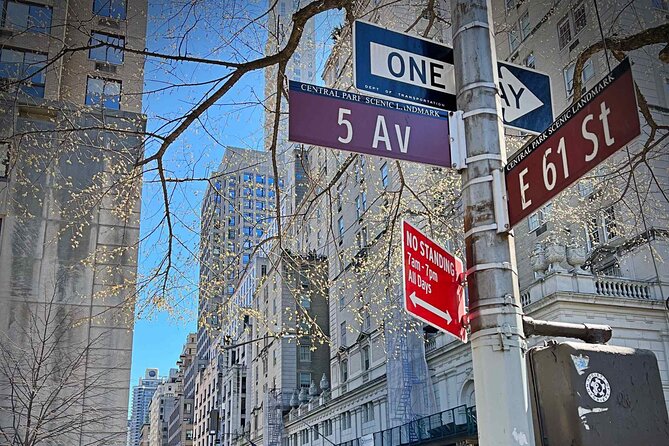
Fifth Avenue can feel like a blur: storefronts, traffic lights, and shiny buildings that all look like they cost a fortune. This tour turns that blur into a sequence—like reading a chapter-by-chapter travel book while you walk.
You start outside the Metropolitan Club on East 60th Street, which is already a strong hint about the theme: this was the kind of private world built by New York’s top-tier wealth. From there, the audio keeps you focused on what the city’s most famous addresses were designed to signal—and who made those signals matter.
The best part is the rhythm. Instead of waiting for a live guide to finish a sentence, you get continuous narration as you move. That’s great if you like going at your own speed or you just prefer not to talk to strangers while walking.
Price and logistics: what $14.99 really buys you
For $14.99 per person, you’re paying for more than one walk. The tour includes unlimited, lifetime use of the audio before your booking date and after it, plus a virtual playback option so you can listen like an audiobook from anywhere.
In practice, this can make the value better if you’re visiting NYC more than once, or if you want to revisit the same route later when you notice new details. And because you get offline audio, maps, and geodata, you’re not stuck relying on spotty data service.
Here’s the reality check: you must bring a smartphone and headphones, and you’ll want your phone charged. If you dislike battery anxiety, use a power bank before you leave the hotel.
Start at the Metropolitan Club: set the tone on East 60th Street
The tour begins outside the Metropolitan Club (East 60th Street). It’s a fitting opening because it frames the whole Gilded Age story as private power made visible—built by elite networks and then cemented into New York’s architecture and street presence.
Once you start, you’ll get directions so you know you’re in the right place before the narration begins. That matters on a city street where a “nearby landmark” can still mean a 10-minute detour.
Then the walk pulls you onto Fifth Avenue, where the audio guides your attention line by line—like it’s helping you read the skyline. You’ll be looking at grand mansions and luxury boutiques, but the narration pushes past the surface to explain what these addresses meant.
Worth a look right next to this New York City pick:


Fifth Avenue and the Knickerbocker Club: wealth as a street address
After your opening, you’ll stroll along Fifth Avenue and get a steady stream of stories about the Gilded Age “robber barons” and their influence on the city. Even if you’ve heard general Gilded Age talk before, this keeps it anchored to actual blocks and buildings you can see.
A key moment is when you pass by the Knickerbocker Club, described as a private social club synonymous with the elite of New York City. That’s important because it shows how wealth wasn’t only about buildings—it was about access, circles, and invitations.
You’ll also move through a stretch where the city’s money is both architectural and commercial. So as you walk, try to notice how the look of the street balances old-world grandeur with high-end shopping. The tour helps you catch that contrast instead of just walking past it.
A quick breather: Central Park glimpses from the money side

The route includes a glimpse of Central Park from the Fifth Avenue corridor. That small slice of greenery matters because it gives context to why this neighborhood was so attractive to wealthy residents.
In terms of your walking comfort, this kind of pause can break up the intensity of a focused “rich buildings only” theme. You get a calmer view before you head back into more architecture and institutions.
If you like photos, this is a decent place to slow down. Even without a full park detour, the narration gives you a reason to look at what’s framed around you.
The Arsenal and the Central Park Conservancy story angle
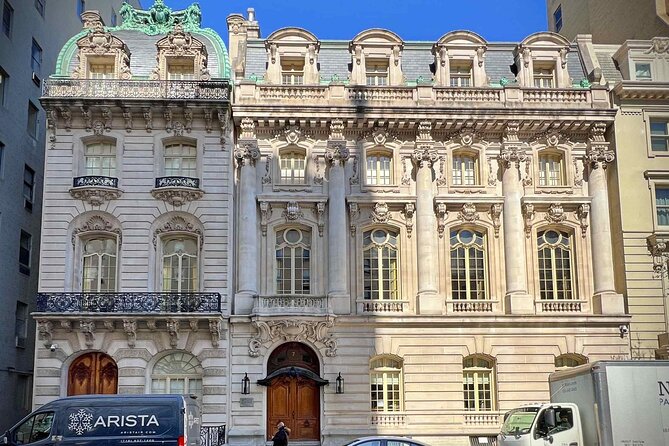
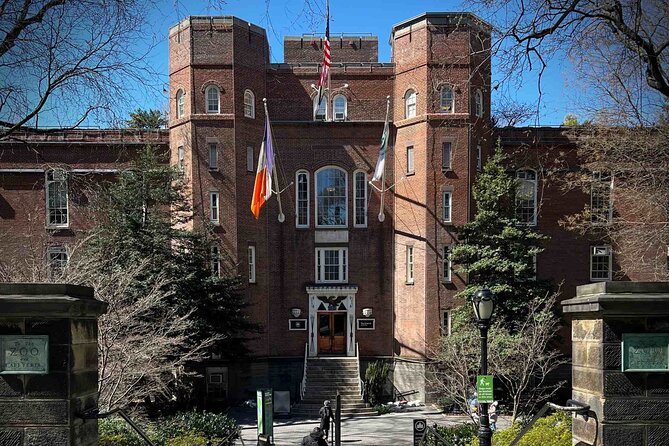
As you continue, you’ll pass The Arsenal, which is noted as a historic building that once served as a military arsenal and now houses the Central Park Conservancy. That’s a useful pivot in the tour’s storytelling: it links old power structures to ongoing preservation.
This stop also helps you understand why New York keeps reusing its buildings. You’re seeing how the city can repurpose a structure tied to authority and then assign it a new role tied to stewardship.
Practically, you’ll also appreciate the tour’s pacing here. You’re not hustled from stop to stop. The audio keeps talking while you walk, so you don’t feel like you’re constantly waiting for the next “moment.”
Beekman Mansion and the Vanderbilt-era details you can spot
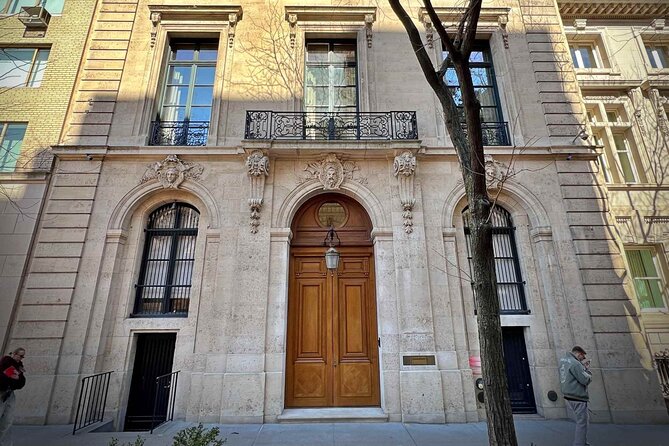
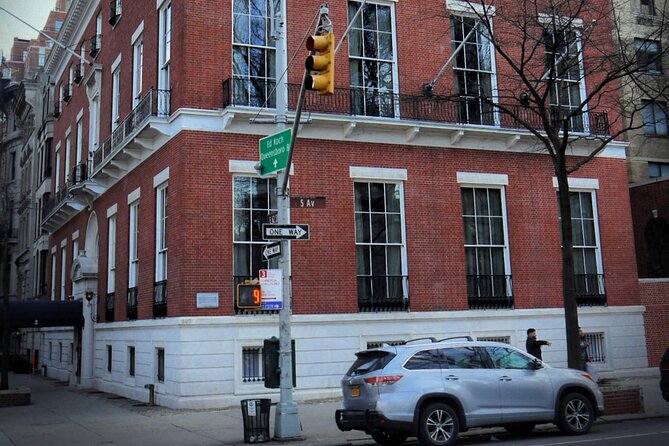
Next up is the Beekman Mansion, another example of Gilded Age architecture. Then the tour moves to the Emily Thorn Vanderbilt Sloane White Mansion, described as a splendid edifice reflecting the wealth and social status of its former owners.
What makes these stops work on foot is that the narration is paired with sightlines you can actually check. You’re not asked to imagine what the building looked like in 1890. You’re looking at the present-day facade and being told how it functioned as status in its time.
If you’re into architecture, this section is where your brain starts to “see” the differences: how the buildings communicate grandeur through scale, materials, and ornament. If you’re not an architecture nerd, it’s still worth it because the audio ties design to the social world.
Frick Collection: when the walking route turns into European art
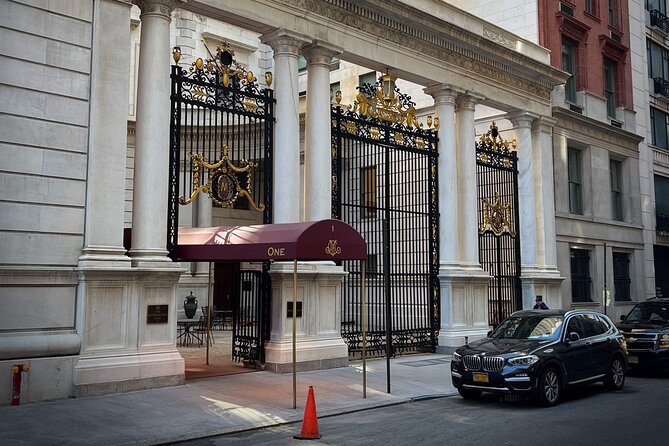
One of the most satisfying transitions happens when you pass by The Frick Collection. This museum is housed in the former residence of industrialist Henry Clay Frick, and the narration connects the mansion setting to the European masterpieces inside.
This is a smart move on the tour route. You finish a string of homes and clubs, then you get a place where wealth is redirected into public art. It’s the same theme—money and taste—but with a different outcome.
If you’re the type who likes to end tours with something you can actually enter, the Frick stop is a bonus “mental download.” Even if you don’t go in, the stop prepares you for a bigger art finale later at The Met.
Architecture tributes: Richard Morris Hunt and the Upper East Side lineup
The tour also includes the Richard Morris Hunt Memorial, dedicated to an architect who played a significant role shaping New York’s architectural landscape. That pause is helpful because it reminds you that these iconic streets weren’t just built by wealth. Design choices and planning shaped what you see today.
After that, you’ll pass several more Gilded Age-era architectural landmarks, including the Herbert N Strauss House and the Edward S Harkness House. The narration frames these as architectural splendors of the Upper East Side.
Then you’ll cross into Madison Avenue, where the focus shifts to upmarket shops and luxury boutiques. This section is great for people who like contrast: the neighborhood isn’t only “old money monuments.” It’s also the modern shopping corridor riding on the same prestige.
Try this trick while you walk: look at how the street “feels” before you look at the buildings. Then let the narration explain why that feeling is part of the story.
Stuyvesant Fish and James B Duke House: big name legacy on the route
A themed stop in this stretch is the legacy of Stuyvesant Fish, tied to his social and political role during the Gilded Age. The audio uses that kind of figure to connect architecture and clubs to real influence.
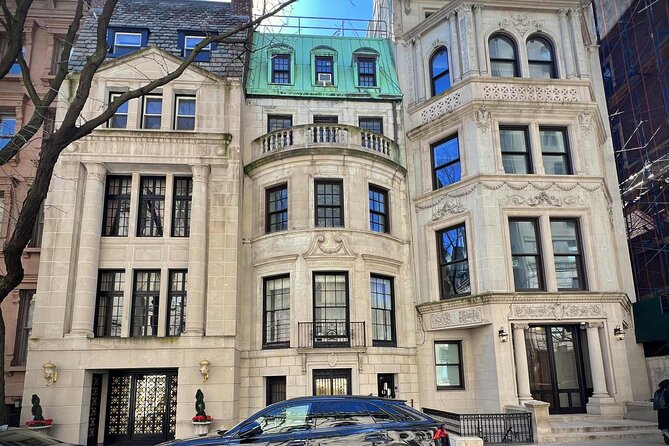
Then you’ll see the James B Duke House, described as a magnificent mansion that once belonged to tobacco tycoon and philanthropist James B. Duke, showcasing Beaux-Arts architecture. The tour’s wording here matters: it links wealth to both business and giving, and it gives you a concrete architectural label to listen for while you look.
At this stage, you may feel like you’ve been “under a single theme umbrella” for a while. That’s normal. When the route stays cohesive like this, your job is just to keep noticing details—windows, entrances, symmetry, and how the buildings face the street.
Ending at The Met: the perfect finale for art lovers
The tour ends at The Metropolitan Museum of Art, one of the world’s largest and most prestigious art museums. That ending is more than convenient. It turns your walk into a full loop: Gilded Age wealth shows up in architecture, then it hands you off to art on the inside.
If you like to keep momentum, this works well. You can step from “outside-the-museum wealth stories” into a museum where you can spend as much time as you want.
The Met is also the kind of place where you can instantly reward your curiosity. Even if you only catch a few galleries, you’ll feel like the walk didn’t just pass through history—it led somewhere.
Timing, pacing, and how long you’ll really walk
The stated duration is about 1 hour 20 minutes to 1 hour 40 minutes. That range matters because it hints at the walking time between locations plus the time you’ll naturally spend looking.
The GPS narration is designed to play automatically when you arrive at the right spot, and it also cues when you should cross the street or shift your attention left or right. That helps you keep moving without feeling like you’re constantly checking your screen.
One practical win from the experience: the audio includes a way to know if you walk off track, and it’s set up to keep you talking so you’re not stuck in silent gaps while you move from one landmark to the next.
If you like a slower pace, you can pause, rewind, or resume anytime. You don’t have to wait for a group to regroup, because it’s private and self-guided.
Who this tour suits best (and who might want another format)
This is a strong fit if you want the freedom of solo time with structured storytelling. The format is also a good match for people who dislike rushing or dislike being tied to a live guide’s schedule.
It’s also a good option if you’re the type who uses public transport and likes routes that are easy to start and end near major spots. The meeting point is near public transportation, and the tour ends at The Met, which is a major destination whether you’re visiting museums or just passing through.
It’s less ideal if you hate using tech while walking. Since headphones and a smartphone aren’t included, you’ll need to be comfortable managing your device and battery.
Should you book this Millionaire Row audio tour?
Book it if you want a calm, self-paced way to understand what Fifth Avenue and the Upper East Side were built to communicate. The $14.99 price makes sense when you factor in lifetime access, offline audio, and the fact that it keeps you oriented with GPS cues.
Skip it (or consider a different tour style) if you’d rather have a live guide talking face-to-face, or if you know you’ll be frustrated by needing your own phone and headphones.
If you’re curious about the Gilded Age and you like walking with guidance but without crowds, this one’s a smart way to spend a morning or early afternoon.
FAQ
How long is the Millionaire Row audio tour?
It takes about 1 hour 20 minutes to 1 hour 40 minutes.
Where does the tour start and end?
It starts outside the Metropolitan Club on East 60th Street and ends at The Metropolitan Museum of Art at 1000 5th Ave.
What is the price?
The price is $14.99 per person.
Is the tour available in English?
Yes, the tour is offered in English.
Do I need my own phone and headphones?
Yes. Smartphone and headphones are not included, so you’ll need to bring both.
Does it work offline?
Yes. You get offline access to audio, maps, and geodata.
Is it a guided group tour with a person?
No. It’s self-guided with GPS. Your group is private, but there’s no live guide included.
Can I use it more than once?
You get unlimited, lifetime use of the tour, including before your booking date and after it.
Can I listen without doing the walk?
Yes. There’s a virtual playback option that lets you listen like an audiobook from anywhere.
What if I go off route?
The GPS tracks your location and can warn you if you’ve walked off track.
Is this tour easy to participate in for most people?
It’s listed as suitable for most travelers, and service animals are allowed.
More Self-Guided Tours in New York City
- Skyline Night Bus Audio Narrated Tour Experience★ 4.5 · 138 reviews
- NYC: Metropolitan Museum of Art Guided or Self-Guided Tour★ 4.0 · 56 reviews
- NYC: St. Patrick’s Cathedral Official Self-Guided Audio Tour★ 3.5 · 45 reviews
- NYC Central Park Self-Guided Walking Tour★ 5.0 · 27 reviews
- Statue Of Liberty & Ellis Island Skip The Queue Audio Guide Tour★ 5.0 · 19 reviews
Let a Guide Handle It
- New York in One Day Guided Sightseeing Tour★ 5.0 · 13,166 reviews
- Central Park Pedicab Guided Tours★ 5.0 · 7,108 reviews
- From NYC: Guided Day Trip to Washington DC by Van or Bus★ 4.7 · 3,418 reviews
- NYC: Statue of Liberty and Ellis Island Guided Tour★ 4.6 · 2,765 reviews
- Original NYC Guided Food Tour of Chinatown and Little Italy★ 5.0 · 2,194 reviews
More Tour Reviews in New York City
- NYC: SUMMIT One Vanderbilt Tickets★ 4.7 · 51,195 reviews
- NYC: Empire State Building Tickets – Observatory & Museum★ 4.7 · 25,757 reviews
- New York City: Statue of Liberty & Ellis Island with Ferry★ 4.6 · 18,683 reviews
- New York City: American Museum of Natural History Ticket★ 4.5 · 15,447 reviews
- Statue of Liberty and Ellis Island Tour: All Options★ 5.0 · 13,571 reviews
Just in: the newest New York City reviews on our desk





Audio Tours, compared.
 ★ 4.5Skyline Night Bus Audio Narrated Tour ExperienceFrom $49138 reviews
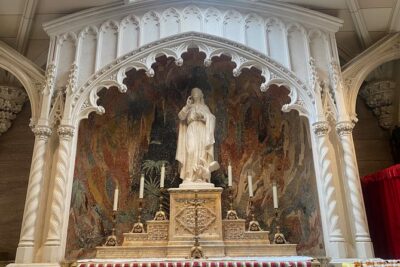 ★ 3.5St. Patrick’s Cathedral Official Self-Guided Audio TourFrom $2045 reviews
 ★ 5.0Statue Of Liberty & Ellis Island Skip The Queue Audio Guide TourFrom $10119 reviews
 ★ 5.0Guided Tour (with Audio) Hamilton Musical in Lower Manhattan NYCFrom $4411 reviews
 ★ 4.5New York City’s Financial District: A Self-Guided Audio TourFrom $88 reviews
 ★ 5.0New York City’s High Line: A Self-Guided Audio TourFrom $144 reviews
 ★ 4.0New York’s Iconic Central Park: A Self-Guided Audio TourFrom $144 reviews
 ★ 5.0West Village’s Flappers, Freaks & Punks: A Self-Guided Audio TourFrom $114 reviews
Browse the lists this tour appears in