
Reviewed · LGBTQ-FRIENDLY
Before Stonewall Secret Gay History of New York City
Stonewall didn’t start with Stonewall. This 2-hour LGBTQ history walk takes you from the Sip-Ins era to the Stonewall Inn neighborhood, with real context for how change happened on the street level. I like the way the tour pauses for stories without turning into a lecture, and I also love the small-group feel, capped at 25 people, so you can ask questions. One drawback to plan around: it’s an outdoors-heavy walk, so weather matters.
I also appreciate the practical rhythm of the route: you start at 640 Broadway and end at Julius’ Bar at 159 W 10th St, with a natural flow through the Lower Manhattan LGBTQ core. The tour uses a mobile ticket, it’s offered in English, and the guide-led format means you’re not just guessing what you’re looking at.
In This Review
- Key highlights you’ll remember
- Meet at Broadway, end at Julius’ Bar: how the walk plays out
- Sip-Ins and early bar activism: the pre-Stonewall lesson that clicks
- The Stonewall Inn area: riots, a landmark, and an added twist about power
- A major NYC park as a community anchor
- Following the main corridor of LGBTQ visibility
- From secret speakeasies to today’s comedy, cafes, and quick bites
- Guide style that keeps the story moving (even in cold weather)
- Price and value: $39 for a guided 2-hour LGBTQ storyline
- What to bring and how to get the most from the route
- Who this tour fits best
- Should you book? My practical take
- FAQ
- FAQ
- How long is the tour?
- What does the tour cost?
- Where does the tour start and what time is it?
- Where does the tour end?
- Is the tour offered in English?
- What’s included in the price?
- Is transportation included?
- How big is the group?
- What is the cancellation policy?
- Are service animals allowed?
Key highlights you’ll remember
- Pre-Stonewall Sip-Ins context at a bar tied to earlier activism
- Stonewall Riots landmark stop with the added angle about mob ownership
- A major park that acted as a community center for LGBTQ New York
- A main visibility corridor where you can connect history to the street today
- Secret-speakeasy street stories paired with today’s comedy, music, and snacks
- Guide pacing and Q&A with built-in rest moments and flexibility in tough weather
The big picture: more New York City sightseeing
- New York City: Statue of Liberty & Ellis Island with Ferry
★ 4.6 · 18,683 reviews - New York City: American Museum of Natural History Ticket
★ 4.5 · 15,447 reviews - New York City: Manhattan Helicopter Tour
★ 4.7 · 7,076 reviews - Top of the Rock Observation Deck New York City Ticket
★ 4.5 · 4,556 reviews
Meet at Broadway, end at Julius’ Bar: how the walk plays out
This is a guided, 2-hour walking experience through New York’s LGBTQ history center, starting at 640 Broadway and finishing at 159 W 10th St at Julius’ Bar. It starts at 11:00 am, which is nice because you’re not rushing into the evening crowd. The group size is kept to a maximum of 25, so it feels more like a focused neighborhood walk than a huge bus tour.
You’ll move block to block through the Lower Manhattan area where so much of the story is attached to specific corners, entrances, and street layouts. The route is designed so you get regular breaks—one of the best parts is that the guide doesn’t force you to keep walking nonstop. When the history requires explanation, you stop. When it’s time to move, you move.
Also, since the tour includes an expert licensed tour guide and uses mobile ticketing, you should expect a structured format with a clear story arc. What you won’t get is private transportation or an air-conditioned vehicle; it’s a walking tour first.
Sip-Ins and early bar activism: the pre-Stonewall lesson that clicks

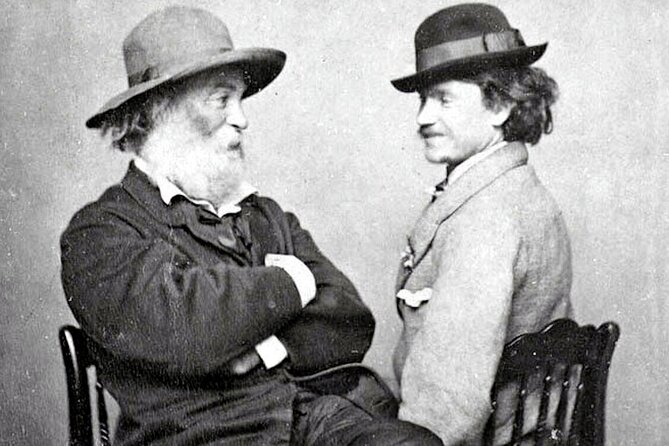
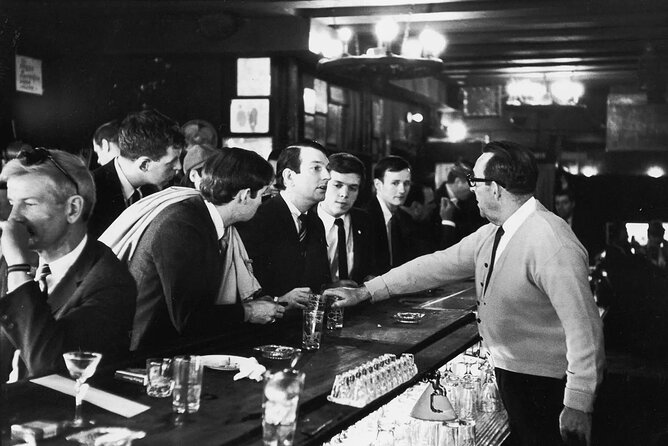
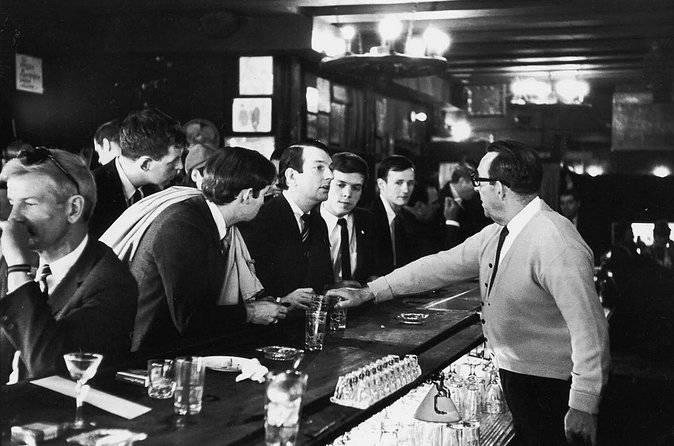
The first stop is at a well-known LGBTQ bar connected to the Sip-Ins—an event that predates Stonewall and helped shift how service laws treated LGBTQ patrons. This isn’t just a “this happened” moment. It’s where the tour gives you the why behind the later uprising.
Here’s what I like about starting before Stonewall: you can see patterns. You learn that conflict wasn’t random, and it wasn’t sudden. It was built from repeated refusals, biased policies, and a community pushing back where it had the most leverage: at the places people actually gathered.
The guide frames this as activism in real life, not distant symbolism. You’re looking at a venue that represents both community and confrontation. That makes the next stops hit harder, because you realize Stonewall didn’t appear out of thin air—it arrived after years of people being treated unfairly and deciding they were done.
The Stonewall Inn area: riots, a landmark, and an added twist about power
The second stop is the location of the 1969 Stonewall Riots. Today it’s a popular LGBTQ bar and a recognized National Landmark, which means you’re walking through a place with layers: daily life now, and a turning point event back then.
A detail I appreciate in this kind of tour is how it doesn’t stop at the headline. This one also brings up the idea that the Mob owned it, which adds a complicated lens on how control, business, and law tangled together around the neighborhood. Even when you already know the basic Stonewall story, that kind of angle helps you understand why the crackdown and the backlash played out the way they did.
The tone here matters. You’re not just looking at a bar and moving on. You’re being guided to think about the setting: why a specific venue could become a flashpoint, and why a neighborhood could swing from survival to confrontation.
More of old New York City, walked properly


A major NYC park as a community anchor
Next you’ll hit one of New York’s most popular parks, presented as a center of LGBTQ life and community. This stop is important because it changes the focus from “institutions” (bars, streets) to “public space” and where people could exist openly—or at least find each other.
Parks in this area weren’t just scenery. They worked as meeting points, gathering places, and practical social infrastructure. When you see the park in the middle of the walking route, it helps you connect how the community moved through the city. It’s the difference between thinking of LGBTQ life as something only happening indoors versus seeing the street-and-park network that supported people day to day.
The best part is that this isn’t treated as a generic photo stop. It’s used to explain community rhythms. You leave understanding why certain places became magnets.
Following the main corridor of LGBTQ visibility
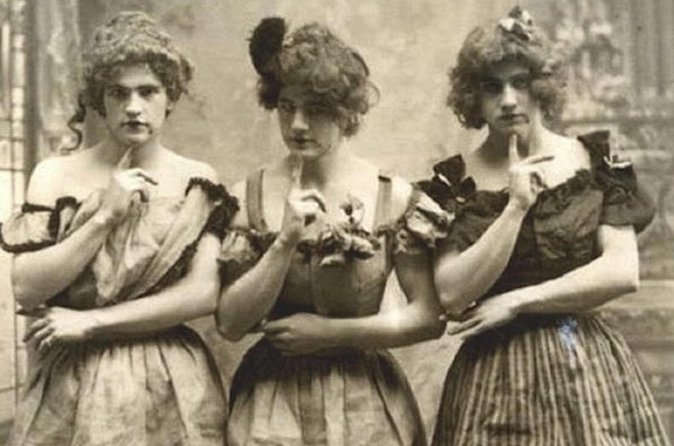
After the park, you’ll walk along the main thoroughfare of LGBTQ visibility in New York City. This is where the tour becomes very “walk it to get it” because a major street makes history physical. You can see how people flow, how businesses line up, and how visibility works in real time.
What I like here is that it gives you a practical way to read the neighborhood. Even if you’re not trying to remember every date, you can notice the mix of old and new: the way the street still functions as a connector, not a dead-end museum.
This stop is also good for questions, because you’ll probably notice something specific and want context—why a block feels different from the next, or how the street’s identity formed.
From secret speakeasies to today’s comedy, cafes, and quick bites
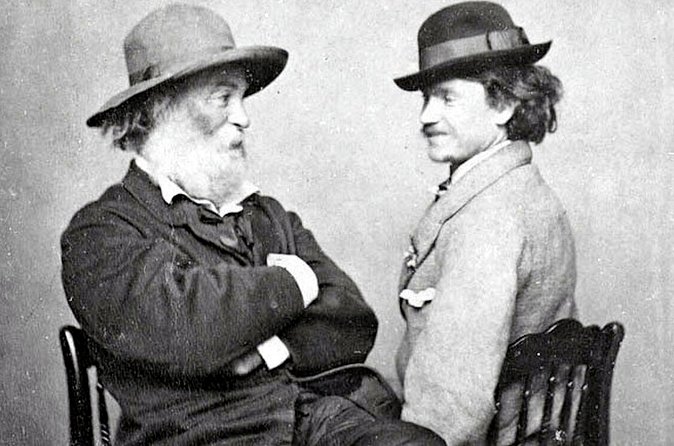
The last part of the route focuses on a street that used to be filled with secret speakeasies and tearooms catering to LGBTQ community members. Today that same energy shows up differently: it’s one of the most popular streets for comedy clubs, cafes, music venues, and quick bites.
That contrast is one of the reasons this tour is such good value. You’re not stuck imagining the past. You’re standing in the present and being told what used to happen here. That makes the story feel local and human.
It also gives you an easy way to continue the day after the tour ends. Since the finish is near Julius’ Bar at 159 W 10th St, you can keep it light: grab a bite, talk with whoever you’re with, and decide if you want to keep exploring on your own.
Guide style that keeps the story moving (even in cold weather)
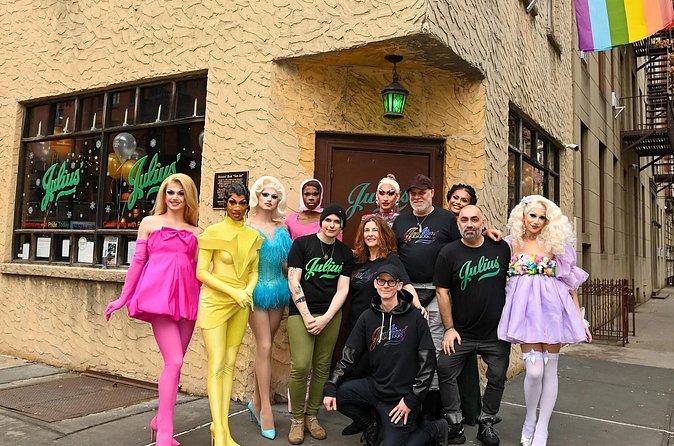
A walking tour succeeds or fails on pacing, and this one clearly gets that part right. There are longer pauses for stories and history, but the walking itself isn’t overdone. You get rest moments built into the flow.
I also like the tone described by people who’ve done it: serious when it needs to be, with occasional whimsy that makes details stick. One person pointed out the guide showing off a meat rack in a way that made the point without turning it into a stunt. The result: you remember the small elements because they were used to explain bigger ideas.
Weather can ruin plans on neighborhood tours, especially if devices freeze or batteries drain. In bitter cold conditions, the guide was able to switch access to photos and information using a phone when a tablet stopped working. That kind of flexibility matters, because it means you still get the visuals that help the stories land.
Price and value: $39 for a guided 2-hour LGBTQ storyline
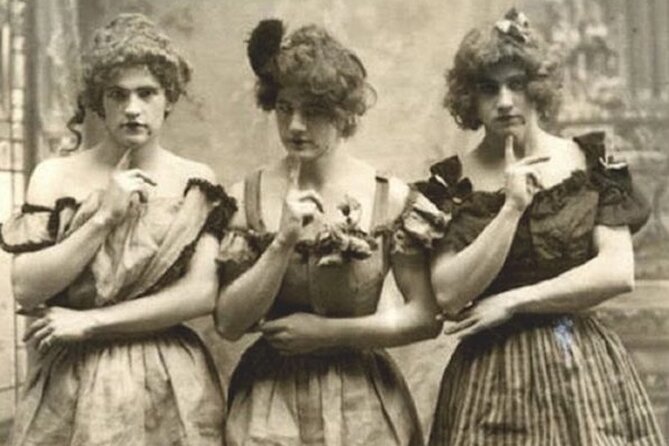
At $39 per person for about 2 hours, this is priced like a specialty tour, not a casual stroll. The value comes from the fact that it’s guided by an expert licensed tour guide and you’re getting interpretation, not just landmarks.
You’ll also feel the difference between this and a DIY walk. A self-guided route might show you where famous sites are, but it won’t connect the dots between the Sip-Ins, the Stonewall Riots site, the role of a major park, and the way the neighborhood’s streets evolved from coded spaces to public visibility.
The cost makes more sense when you consider what’s not included. There’s no private transportation and no air-conditioned vehicle, so you’re paying for guidance and context, not comfort logistics. If you want the air-conditioned ride option, this won’t be that. If you’re okay with walking and you want real meaning attached to corners, the price is fair.
What to bring and how to get the most from the route
Since this is a neighborhood walking tour with rest breaks, you can prepare like you’re doing a very focused day walk in the city:
- Wear comfortable shoes. You’re covering multiple stops in about 2 hours.
- Dress for weather. Cold snaps can hit hard on open streets and parks.
- Bring a charged phone. The tour uses mobile ticketing, and devices may be part of the storytelling.
- Have a simple snack plan. The route ends near spots where you can grab a treat right away (including gelato/ice cream mentioned by someone who did the tour).
One extra tip: if you care about the deeper visitor materials, I’d consider doubling back for the Stonewall Inn Visitor Center after you finish. The suggestion came up for a reason—it’s a gorgeous add-on if you want more than street-level context.
Who this tour fits best
This is a great match if you:
- want LGBTQ history in a tight, walkable format instead of a long museum day
- like learning how activism evolved before the headline events
- enjoy guided interpretation that includes both facts and street-level context
- are traveling with someone who wants the story, but also wants time to move and absorb
It may be less ideal if you:
- want mostly indoor time
- need private transportation or climate-controlled comfort
- prefer a very academic, date-by-date approach without pauses for the human side of the story
Should you book? My practical take
Yes—if you’re looking for a short, focused LGBTQ history walk that connects pre-Stonewall activism to Stonewall and then into how the neighborhood shows up today, this is a solid choice. For $39, you get an expert guide, a small group, and a route that makes the story feel tied to place, not just a timeline.
If you’re already a superfan of the topic, you still may find useful new angles, because the tour doesn’t treat Stonewall as the only event that matters.
FAQ
FAQ
How long is the tour?
The tour is about 2 hours.
What does the tour cost?
It costs $39.00 per person.
Where does the tour start and what time is it?
It starts at 640 Broadway, New York, NY 10012 at 11:00 am.
Where does the tour end?
It ends at 159 W 10th St, New York, NY 10014, at Julius’ Bar.
Is the tour offered in English?
Yes, it is offered in English.
What’s included in the price?
The tour includes an expert licensed tour guide.
Is transportation included?
No. Private transportation and an air-conditioned vehicle are not included.
How big is the group?
The tour has a maximum of 25 travelers.
What is the cancellation policy?
You can cancel for a full refund up to 24 hours before the experience’s start time.
Are service animals allowed?
Yes, service animals are allowed.
If you want, tell me what month you’re going and whether you prefer a slower or brisker pace, and I’ll suggest what to wear and how to pair this walk with nearby stops.
The Story of New York City
- New York City: American Museum of Natural History Ticket★ 4.5 · 15,447 reviews
- NYC: Starship Landmark 90 Minute Sightseeing Cruise★ 4.6 · 3,666 reviews
- Starship Landmark 90 Minute Sightseeing Cruise★ 4.5 · 2,073 reviews
- American Museum of Natural History Admission Ticket★ 4.0 · 1,931 reviews
- Top Rated Brooklyn Half-Day Food, History & Culture Tour via bus★ 5.0 · 758 reviews
All of New York City in One Day
- New York City: Statue of Liberty & Ellis Island with Ferry★ 4.6 · 18,683 reviews
- New York City: American Museum of Natural History Ticket★ 4.5 · 15,447 reviews
- New York City: Manhattan Helicopter Tour★ 4.7 · 7,076 reviews
- Top of the Rock Observation Deck New York City Ticket★ 4.5 · 4,556 reviews
- From New York City: Washington and Philadelphia 1-Day Tour★ 4.5 · 2,877 reviews
More Tour Reviews in New York City
- NYC: SUMMIT One Vanderbilt Tickets★ 4.7 · 51,195 reviews
- NYC: Empire State Building Tickets – Observatory & Museum★ 4.7 · 25,757 reviews
- New York City: Statue of Liberty & Ellis Island with Ferry★ 4.6 · 18,683 reviews
- New York City: American Museum of Natural History Ticket★ 4.5 · 15,447 reviews
- Statue of Liberty and Ellis Island Tour: All Options★ 5.0 · 13,571 reviews
Just in: the newest New York City reviews on our desk




LGBTQ-Friendly, compared.
 ★ 5.0Pride Tours NYC’s LGBTQ Historical Walking TourFrom $3089 reviews
 ★ 5.0Two-Hour NYC LGBTQ+ History Walking TourFrom $4935 reviews
 ★ 5.0NYC Greenwich Village LGBTQ+ History And Food TourFrom $8917 reviews
 ★ 5.0Greenwich Village LGBTQ+ Pride Walking TourFrom $493 reviews
Browse the lists this tour appears in