
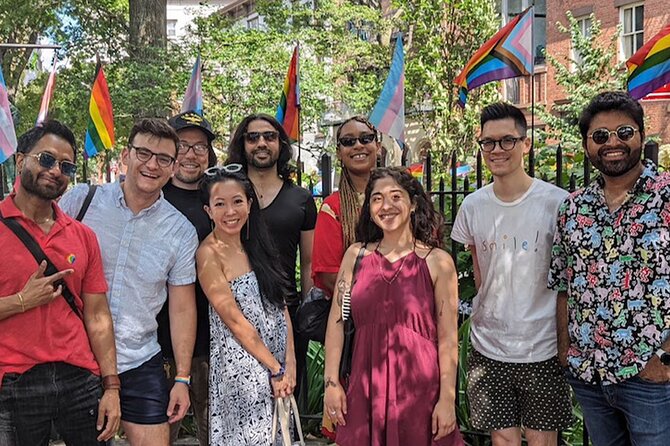
Reviewed · NYC WALKING TOURS
Two-Hour NYC LGBTQ+ History Walking Tour
Greenwich Village keeps receipts in plain sight. This two-hour LGBTQ+ history walking tour strings together major landmarks in a tight route, with stories that connect before Stonewall to later symbols of pride and resistance. I especially like the way the guide makes the neighborhood feel readable, not like a random list of plaques.
Two things I really like: the tour covers the big turning points (like the 1966 Sip-In and Stonewall) without making it feel like a textbook, and it’s built for real questions with an engaging, responsive guide. One possible drawback: you’re walking the whole time and the experience needs good weather, so plan for streets, stops, and some outdoor standing.
You also get a practical payoff—after the tour, you’ll understand where you are in the Village. I found the pacing thoughtful for a 2-hour window, but if you prefer long museum-style stops, some sites here are quick photo-and-story moments.
In This Review
- Key reasons this walk is worth $49
- Two hours through Greenwich Village that actually makes sense
- Where you start and where you finish (and why it matters)
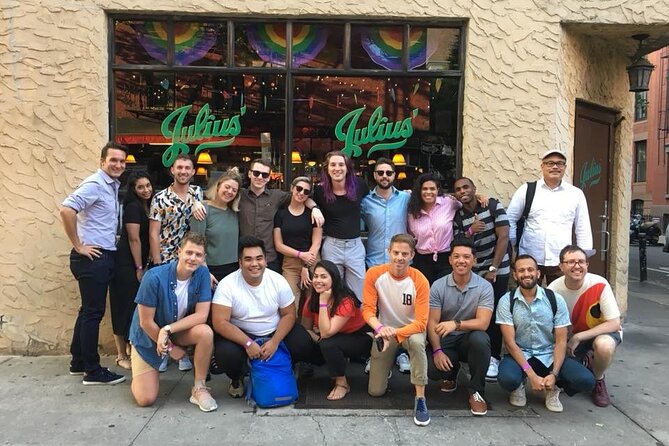
- Stop 1: Julius’ and the 1966 Sip-In you can’t ignore
- Stop 2: Greenwich Letterpress and what it means to have a bookstore
- Stop 3: Gay Street for photos and the street-name story
- Stop 4: Stonewall National Monument and the Gilbert Baker rainbow flag
- Stop 5: Stonewall Inn stories—what you’re really listening for
- Stop 6: Stonewall National Monument Visitor Center and the exhibit context
- Stop 7: The Gay Liberation Monument (1992) and how public art holds memory
- Stop 8: The Lesbian, Gay, Bisexual & Transgender Community Center
- Stop 9: The NYC AIDS Memorial and activism that spread outward
- Price and value: what $49 buys you for two hours
- Pacing, questions, and what to bring
- Who this tour fits best (and who might want something else)
- Should you book? My straight answer
- FAQ
- How long is the NYC LGBTQ+ history walking tour?
- How much does it cost?
- Where do I meet the guide, and where does the tour end?
- Is the tour offered in English?
- What’s the group size limit?
- What stops are included?
- What if the weather is bad?
Key reasons this walk is worth $49
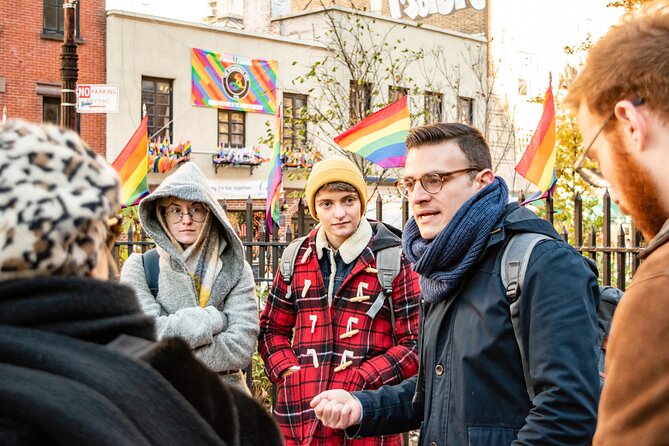
- 1966 Mattachine Society Sip-In story at Julius’, a pre-Stonewall moment you can actually picture in context
- Photo-friendly stops like Gay Street and the Stonewall area, without turning it into a selfie-only loop
- The 1978 Gilbert Baker rainbow flag connection at Stonewall National Monument, tied to why it mattered
- Stonewall Inn + Visitor Center pairing, so the street-level moment lands with exhibit context
- Gay Liberation Monument (1992) and public art that helps keep names and meanings in public memory
- Final stretch to the NYC AIDS Memorial, connecting local activism to a wider movement
New York City at street level, a few more walks
- SoHo, Little Italy, and Chinatown Walking Tour in New York
★ 5.0 · 3,153 reviews - Secrets of Grand Central Station Walking Tour New York City
★ 5.0 · 1,796 reviews - Greenwich Village Walking and Food Tasting Tour
★ 5.0 · 1,572 reviews - Artistic, Alternative Greenwich Village Walking Tour
★ 5.0 · 971 reviews
Two hours through Greenwich Village that actually makes sense
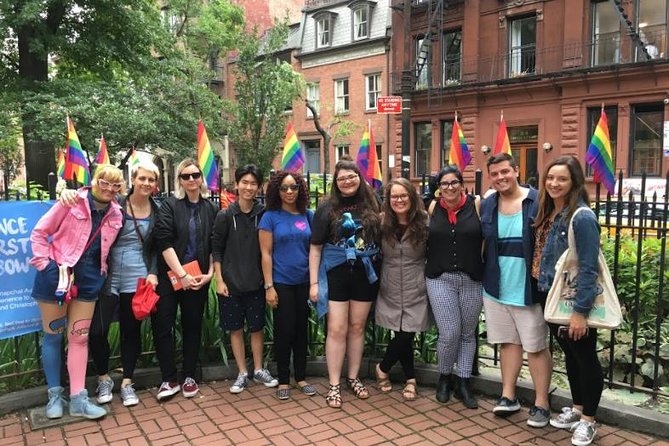
This tour is designed for people who want orientation plus meaning, without getting stuck in one place for half a day. You’ll move through Greenwich Village and the immediate Stonewall area in about two hours, with each stop timed to deliver the key story before you drift away or lose momentum.
The route is smart because it clusters related themes. You start with earlier organizing and coded resistance, then you move into Stonewall-era symbolism, and you finish with public memory and activism that keeps unfolding. By the end, you’re not just seeing sites—you’re understanding why they’re connected.
The guide’s role matters here. You’ll get commentary that’s engaging and question-friendly, which is often the difference between a tour that’s “facts on a sidewalk” versus one that helps you make emotional and historical sense of what you’re looking at.
Where you start and where you finish (and why it matters)
The tour begins at McCarthy Square at Charles St & Waverly Pl in New York City. Ending at 208 W 13th St at the Lesbian, Gay, Bisexual & Transgender Community Center is a nice choice because you end where the story isn’t only historical. That area is active and community-focused, so the walk doesn’t feel like it stops at a riot and then ends.
There’s also a small extra bonus window at the end: you’ll have time to view an original Keith Haring mural and browse an LGBTQ-owned bookshop. That’s not just decorative. It gives you a tangible bridge from landmark to present-day culture—art, books, and community spaces that keep the story moving.
You’re using a mobile ticket, and confirmation comes at booking. It’s one less thing to manage when you’re navigating subways, street crossings, and New York pacing.
Stop 1: Julius’ and the 1966 Sip-In you can’t ignore

Your first real “wait, this happened here?” moment lands at Julius’. You’ll hear the story of the 1966 Sip-In organized by the Mattachine Society, described as a pivotal pre-Stonewall protest for LGBTQ+ rights.
Why this matters for you: starting with 1966 changes how you’ll read Stonewall later. Instead of treating Stonewall as a sudden spark, you understand it as part of a longer chain of organizing, risk, and public confrontation. It also sets the tone that history here isn’t abstract—it’s tied to real people taking real chances.
Timing is tight here (about 15 minutes), so come in ready to listen rather than hunt for extra details on your own. If you like starting with the “why before the what,” this first stop will click fast.
New York City on foot, a few more routes

Stop 2: Greenwich Letterpress and what it means to have a bookstore
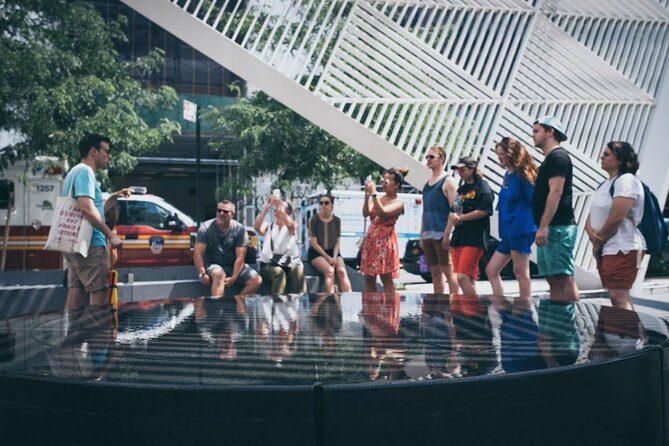
Next you stop at Greenwich Letterpress, the former site of what’s described as the first LGBTQ+ bookstore on the east coast. You’ll learn why the location matters and how LGBTQ+ literature connected communities and ideas.
This is one of the quietly powerful stops on the route. Bookshops are where language, identity, and community start to feel less lonely. Even if you don’t buy anything, you’ll leave with a better grasp of how stories traveled—through paper, authors, and shared reads—at a time when public visibility could be dangerous.
The stop is brief (around 10 minutes), but it’s likely to stick with you because it adds another dimension beyond protests and monuments. It shows that culture-building is also activism.
Stop 3: Gay Street for photos and the street-name story
You’ll get to see Gay Street and take photos, plus learn the history attached to the name. It’s an easy moment on the walking loop, but it’s also a smart one for grounding the tour. Street names and signage are where history becomes part of everyday navigation.
In a city like New York, you can pass the same block a dozen times without noticing what it represents. This stop is the reminder to slow down for the obvious things that are often loaded with meaning.
Plan to take photos quickly. This is a 10-minute stop, so you’ll want your phone ready and your angles chosen early, then spend the rest of the time listening.
Stop 4: Stonewall National Monument and the Gilbert Baker rainbow flag
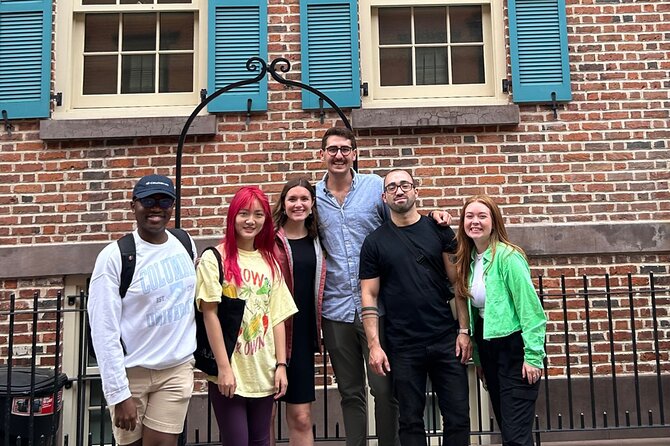
Then you move to Stonewall National Monument. Here, you learn about the original 1978 Gilbert Baker rainbow flag and how it became a symbol of pride and resistance.
This stop helps you connect the dots between street-level events and lasting icons. A flag isn’t just a design—it’s a portable statement people can carry into parades, protests, and daily life. Hearing the rainbow flag story in this specific place changes it from a generic symbol you’ve seen online into something with origin, risk, and intention.
Timing is short (about 5 minutes), so think of this as the “symbol moment” on the route. You’ll get the core explanation, then you’ll be back into walking.
Stop 5: Stonewall Inn stories—what you’re really listening for
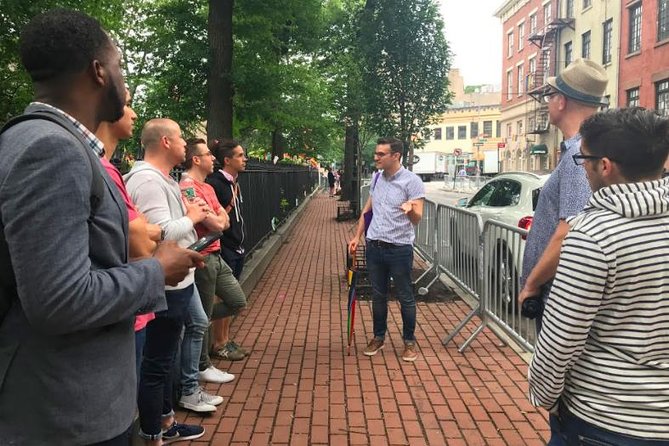
At The Stonewall Inn, you hear stories of the Stonewall Riots of 1969, including key figures and the lasting global impact.
This is the emotional anchor for the whole walk. It’s also the reason the tour is structured the way it is: by the time you reach this stop, you’ve already had earlier context (like the 1966 Sip-In) and you’ve had time to understand why symbols matter.
The stop is around 15 minutes, which is long enough to absorb the human details the guide shares, but short enough that you’re not trapped in one spot while the rest of the story waits nearby.
Stop 6: Stonewall National Monument Visitor Center and the exhibit context
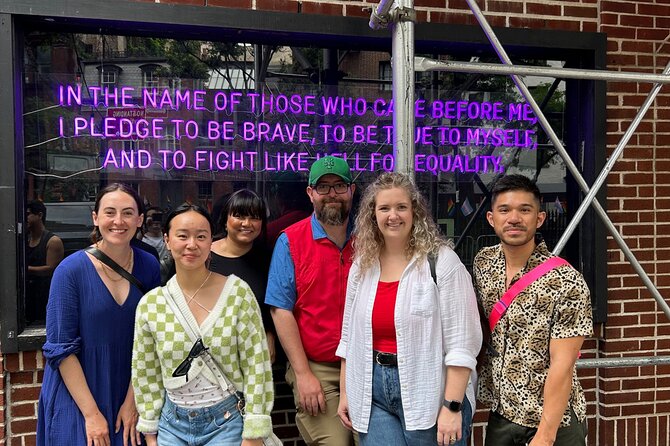
Right after Stonewall Inn, you visit the Stonewall National Monument Visitor Center to explore curated exhibits. This is where the tour tightens the loop: you see the place, then you get exhibit-level interpretation.
Why this pairing works: street stories can feel big and immediate, but exhibits help you understand chronology and meaning. Even if you don’t read every label, you’ll get the framework that makes the earlier stories less vague.
This stop runs about 10 minutes. Keep your pace gentle here. The goal is to catch the main themes the guide points you toward, not to try to do museum homework in ten minutes.
Stop 7: The Gay Liberation Monument (1992) and how public art holds memory
At the Gay Liberation Monument, you’ll reflect on what it means and note its dedication in 1992. You’ll also talk about how public art helps preserve LGBTQ+ stories.
Public art can feel like decoration, until you learn what it’s doing in the public record. Here, the monument functions as a reminder that history isn’t only archived—it’s displayed. That matters because it puts identity and resistance in the same visual language as everything else your city chooses to honor.
The time is about 10 minutes, which works well because you’ll likely get a guided explanation and then you can take a few minutes to just look.
Stop 8: The Lesbian, Gay, Bisexual & Transgender Community Center
Your next stop is the Lesbian, Gay, Bisexual & Transgender Community Center. You’ll explore rotating art and history displays, learn about the Center’s role in the fight for LGBTQ+ rights, and discover how it continues to support the community through programs and events.
This is a meaningful shift from “past landmarks” to “present support.” Even though your walk is historical, the Center reinforces that LGBTQ+ rights efforts are not frozen in time. Programs and events signal ongoing work, not a closed chapter.
This stop is about 10 minutes. It’s short, but it’s enough to orient you to what the Center is and how it contributes today.
Stop 9: The NYC AIDS Memorial and activism that spread outward
The final stop is the New York City AIDS Memorial, where you’ll learn the history of the memorial and how AIDS activism started in NYC and became a global movement.
This ending is powerful because it changes your sense of where LGBTQ+ history leads. It’s not only about protests and pride symbols. It’s also about organizing in the face of crisis, grief, and urgent public need—then pushing that energy beyond city limits.
You’ll spend about 15 minutes here, which gives you enough time to absorb the significance before the tour ends.
Price and value: what $49 buys you for two hours
At $49.00 per person for about two hours, the price makes sense if you value guided context. You’re not just paying for walking directions—you’re paying for a live guide connecting multiple sites into a coherent story.
Several stops are described with admission ticket free, which helps keep the experience from turning into an add-on-cost situation. The tour also caps at a maximum of 20 travelers, which is a big deal in a city where big groups can turn into a shuffle.
And because you’re using a walking format, you’re seeing how these landmarks sit next to everyday streets. That’s often where the value lives: you stop getting lost in “major names” and start noticing the neighborhood shape.
Pacing, questions, and what to bring
This is a walking tour, so comfort matters. Wear shoes you trust for sidewalks. Plan for wind and sun. The experience requires good weather, so if conditions are off, you might be offered a different date or a full refund.
Since the guide answers questions and keeps commentary engaging, bring curiosity rather than a rigid script of what you want to know. If something makes you pause—like a street name, a monument, or a symbol—chances are that’s exactly where the guide can give you extra clarity.
Also, save your camera battery. There are multiple photo opportunities, especially around Gay Street and the Stonewall area.
Who this tour fits best (and who might want something else)
This tour is a good fit if you want a guided overview of LGBTQ+ landmarks in a concentrated route. It works for first-timers who want context without getting overwhelmed, and it works for returning visitors who want the neighborhood story stitched together instead of remembered in fragments.
It’s also well-suited if you’re the type who likes learning through places—where a guide’s narrative helps you look at the street itself like a document.
If you prefer longer stays inside museums and don’t like quick stops, you might feel some moments are short. But the structure keeps the walk moving so you finish with a sense of the whole arc rather than one isolated topic.
Should you book? My straight answer
Yes, I think you should book this Greenwich Village and Stonewall LGBTQ+ history walking tour if you want real context in a manageable time block. The best reason is the way it links early organizing, iconic symbols, public memory, and activism into one route you can walk without getting lost.
Book it if you like:
- two-hour orientation with a live guide
- photo-friendly stops that still come with explanations
- ending at a community space tied to today’s work
Hold off if you need:
- long indoor time at every stop
- a schedule that’s flexible beyond weather constraints
If your goal is to leave with a sharper sense of the Village and why these landmarks matter, this tour is a solid use of a morning or afternoon.
FAQ
How long is the NYC LGBTQ+ history walking tour?
The tour lasts about two hours.
How much does it cost?
It costs $49.00 per person.
Where do I meet the guide, and where does the tour end?
The tour starts at McCarthy Square, Charles St & Waverly Pl, New York, NY 10014 and ends at the Lesbian, Gay, Bisexual & Transgender Community Center, 208 W 13th St, New York, NY 10011.
Is the tour offered in English?
Yes. It’s offered in English.
What’s the group size limit?
The tour has a maximum of 20 travelers.
What stops are included?
The tour includes stops at Julius’, Greenwich Letterpress, Gay Street, Stonewall National Monument, Stonewall Inn, the Stonewall National Monument Visitor Center, the Gay Liberation Monument, the LGBT Community Center, and the NYC AIDS Memorial.
What if the weather is bad?
The experience requires good weather. If it’s canceled due to poor weather, you’ll be offered a different date or a full refund.
More Tours in New York City
- Statue of Liberty and Ellis Island Tour: All Options★ 5.0 · 13,571 reviews
- New York in One Day Guided Sightseeing Tour★ 5.0 · 13,166 reviews
- Central Park Pedicab Guided Tours★ 5.0 · 7,108 reviews
- New York City: Manhattan Helicopter Tour★ 4.7 · 7,076 reviews
- Private Central Park Pedicab Tour★ 5.0 · 6,981 reviews
More Tour Reviews in New York City
- NYC: SUMMIT One Vanderbilt Tickets★ 4.7 · 51,195 reviews
- NYC: Empire State Building Tickets – Observatory & Museum★ 4.7 · 25,757 reviews
- New York City: Statue of Liberty & Ellis Island with Ferry★ 4.6 · 18,683 reviews
- New York City: American Museum of Natural History Ticket★ 4.5 · 15,447 reviews
- Statue of Liberty and Ellis Island Tour: All Options★ 5.0 · 13,571 reviews
New York City, One Block at a Time
- SoHo, Little Italy, and Chinatown Walking Tour in New York★ 5.0 · 3,153 reviews
- Secrets of Grand Central Station Walking Tour New York City★ 5.0 · 1,796 reviews
- Greenwich Village Walking and Food Tasting Tour★ 5.0 · 1,572 reviews
- Artistic, Alternative Greenwich Village Walking Tour★ 5.0 · 971 reviews
- Brooklyn Bridge & DUMBO Neighborhood Tour – from Manhattan to Brooklyn★ 5.0 · 826 reviews
Just in: the newest New York City reviews on our desk





NYC Walking Tours, compared.
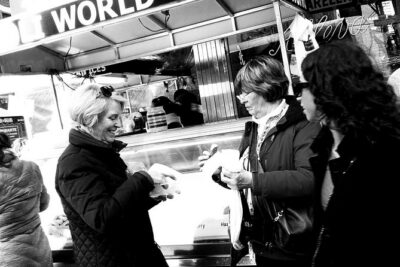 ★ 5.0SoHo, Little Italy, and Chinatown Walking Tour in New YorkFrom $393,153 reviews
 ★ 5.0Secrets of Grand Central Station Walking Tour New York CityFrom $391,796 reviews
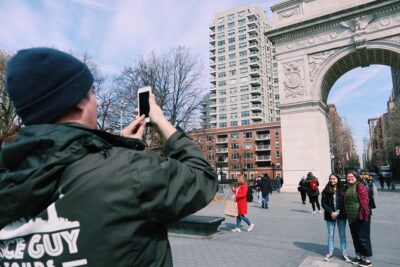 ★ 5.0Greenwich Village Walking and Food Tasting TourFrom $941,572 reviews
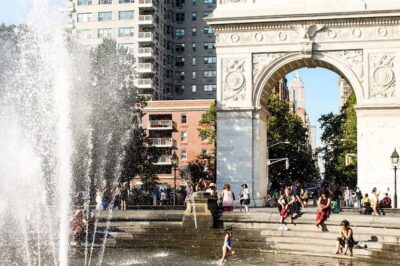 ★ 5.0Artistic, Alternative Greenwich Village Walking TourFrom $39971 reviews
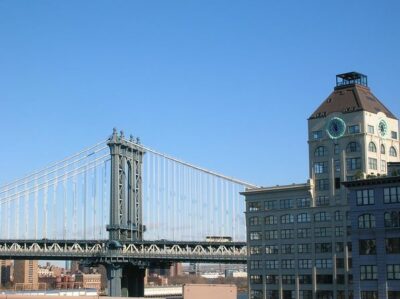 ★ 5.0Brooklyn Bridge & DUMBO Neighborhood Tour – from Manhattan to BrooklynFrom $49826 reviews
 ★ 5.0Central Park Guided Walking TourFrom $44774 reviews
 ★ 4.6Private Walking Tour with a LocalFrom $55771 reviews
 ★ 5.0NYC Lower East Side Walking and Food TourFrom $94646 reviews
Browse the lists this tour appears in