
Reviewed · NYC WALKING TOURS
Broadway the Tour- NYC Guided Immersive Historic Walking Tour
Broadway has a backstory you can walk through. What I love most is the free audio headsets that keep the stories synced to each stop, and the way you hear Broadway actors plus recordings from hit shows. One consideration: you’ll be on your feet for about 2 hours 10 minutes and you should expect to walk and stand unaided most of the time.
This tour is built for people who want the why behind the marquee names, not just a list of theaters. You’ll get live in-person narration from historic tour guides, plus a mobile ticket and an Ask the Guide text service if you want follow-ups. And if you book the morning start (it runs at 10:00am), you’re done early enough to keep the rest of your day for Broadway tickets, museums, or just wandering.
In This Review
- Key things that make Broadway the Tour work
- How the audio headset tour keeps you in the moment
- Museum of Broadway: your orientation stop before the lights
- Lyceum Theatre and the Times Square reset: jokes, history, photos
- 42nd Street and the Great White Way photo runway
- New Amsterdam and New Victory: Art Nouveau glamour and entertainment change
- The smaller, intimate theaters: Helen Hayes and why size changed the art
- Imperial and St. James: when the marquee becomes the story
- Shubert Theatre and Shubert Alley: power behind the curtains
- Majestic Theatre to Al Hirschfeld: modern mega-musicals plus the art behind them
- Schmackary’s and Hamilton: a sweet break before the biggest names
- George M. Cohan to the Palace Theatre: early American musical theater prestige
- Wicked and beyond: modern themes tied to Broadway’s changing identity
- Why Times Square keeps changing: engineering, redevelopment, and preservation
- Theatre Circle: the easy wrap-up stop for playbills and posters
- Who this tour is best for
- Should you book Broadway the Tour?
- FAQ
- How long is Broadway the Tour?
- Where does the tour start and end?
- What language is the tour offered in?
- Do you get audio headsets?
- Is there live narration, or is it only recordings?
- Is there an Ask the Guide option?
- Does the tour include tickets or admission for stops?
- Is ASL interpretation available?
- How big is the group?
- Can I cancel, and what happens if weather is bad?
Key things that make Broadway the Tour work

- Headsets included so you hear live narration and audio clips clearly while you walk
- Small group size (max 20) helps the guide keep the pacing and questions under control
- You get actor and show recordings that turn theater names into real scenes and voices
- A smart mix of landmark theaters and lesser-known houses so you see more than just the obvious ones
- Photo-friendly Midtown stops with clear moments for quick pics in front of major marquees
- A few included extras (like Schmackary’s and the Cohan Statue) so you’re not only paying attention—you’re also enjoying
New York City at street level, a few more walks
- SoHo, Little Italy, and Chinatown Walking Tour in New York
★ 5.0 · 3,153 reviews - Secrets of Grand Central Station Walking Tour New York City
★ 5.0 · 1,796 reviews - Greenwich Village Walking and Food Tasting Tour
★ 5.0 · 1,572 reviews - Artistic, Alternative Greenwich Village Walking Tour
★ 5.0 · 971 reviews
How the audio headset tour keeps you in the moment
The headsets are the backbone of this experience. You don’t have to lean in, guess what you missed, or stop moving to look for the guide. The narration blends live commentary with audio recordings and sound effects, which is especially helpful in a noisy place like Times Square where normal walking tours can get swallowed by traffic and crowds.
I also like the structure: the guide doesn’t just point at buildings. They give you context first, then you hear the punchy story beats as you pass each theater. That makes the Theater District feel like one connected story instead of separate “checkpoints.”
One more practical win: the tour includes an Ask the Guide text-a-guide service. If something sparks your curiosity—an actor, a composer, a show you want to see—you can ask without waiting for the next group question.
Museum of Broadway: your orientation stop before the lights
You start at the Museum of Broadway on West 45th Street, and that first stretch matters. The guide uses it to set the stage: the history of New York, the early beginnings of Broadway, and the basic “lay of the land” so the later theaters make sense in relation to each other.
What I like here is that it turns you from a tourist into a reader of the neighborhood. Midtown theater blocks can feel like a maze until you understand the geography and how Broadway developed. Even if you’ve visited Times Square before, this orientation helps you notice patterns—where certain eras left their marks and how entertainment “moved” over time.
You should know one small logistics detail: the Museum of Broadway admission isn’t included for this stop. The stop is about getting the overview and beginning your walk, not turning it into a separate full museum day.
Lyceum Theatre and the Times Square reset: jokes, history, photos
Next up is the Lyceum Theatre, one of Broadway’s older continuously operated houses. The narration connects its storied proscenium and decades of stage life with what’s playing there now—Cole Escola’s production Oh Mary!
This stop is a great example of how the tour keeps time layers visible. The guide uses the theater’s age to talk about secrets, continuity, and why certain houses became long-term magnets for audiences and performers.
Then you get a Times Square moment where the guide zooms out to the bigger story: how Longacre Square became a central hub of Broadway’s hustle and bustle. You also have a chance to snap a photo with the One Times Square building, home to the iconic New Year’s Eve ball drop. It’s the kind of photo stop that doesn’t feel random because the guide explains why that spot matters.
Curtain up: more Broadway seats

42nd Street and the Great White Way photo runway
On 42nd Street, the tour shifts into the early-history mode: immigrant-inspired theater, vaudeville, operas, and early musicals. You also get a walk along the lights that helped earn the nickname The Great White Way.
This is the stop where you start recognizing the “language” of Broadway. The guide’s job is to translate what you see—marquees, street geometry, and theater density—into what it meant for audiences in earlier decades.
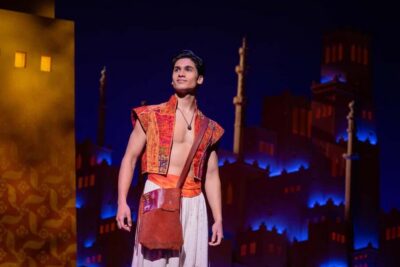
A practical plus: this part includes a quick run of photo opportunities in front of multiple historic playhouses, including the current home of Aladdin. And the stop is listed with free admission, which keeps the pace light.
If you’re the type who hates rushing through photo ops, you’ll probably appreciate that the guide gives brief time blocks and still keeps moving. You get your pics without the tour turning into a 45-minute standing session.
New Amsterdam and New Victory: Art Nouveau glamour and entertainment change
The New Amsterdam Theatre stop is built around one of Broadway’s most striking visuals. The guide points out its Art Nouveau architecture and the fact that it opened in 1903. You’ll hear how it became a hub for major productions, including the legendary Ziegfeld Follies, and how it continues as a major musical house today—currently home to Disney’s Aladdin.
This is one of the best “stop and look up” moments on the route. Broadway history isn’t only about stories; it’s also about design choices that signal importance and money. The tour uses architecture as a clue.
Then you swing by the New Victory Theatre, which the guide explains as a slightly different kind of house than a classic Broadway theater. It has a history that reflects shifts in what New York wanted from its entertainment—vaudeville and burlesque, then a later stint as a haven for adult films—before being revitalized as a children’s theater. That arc helps you see Times Square as something that adapts, not just something that preserves.
The smaller, intimate theaters: Helen Hayes and why size changed the art
One of my favorite kinds of theater stops is when the guide explains how form affects storytelling. The tour includes the Helen Hayes Theatre, originally known as The Little Theatre. Built in 1912 as a rebellion against the grandeur of larger theaters, it’s presented as an intimate space that encouraged experimental or up-and-coming work.
Even without going inside, you get the point: Broadway wasn’t always only about spectacle. There’s a long tradition of smaller venues shaping new writing, new acting styles, and new risks. On this stop, the guide helps you understand why that matters when you look at the big modern musical machines around you.
If you’re interested in theater craft—casting, staging, and how directors and actors used different room sizes—this is the moment that connects the dots.
Imperial and St. James: when the marquee becomes the story
You’ll also hit the Imperial Theater area with Les Misérables as the anchor. The narration frames it as one of Manhattan’s most iconic playhouses and prompts you to snap a photo at the marquis while hearing stories of productions that didn’t share the same long-run fate.
Then the tour heads to the St. James Theatre, the one opened in 1927. Here you get a look at the era when Broadway’s reputation hardened into a global brand—Oklahoma! and Hello, Dolly! are part of the guide’s highlights, along with its role as a stage for celebrated performers and groundbreaking productions.
This pair of stops is valuable because it teaches you something subtle: Broadway history isn’t only about what survived. It’s also about what failed, closed, and changed the odds for what came next. The guide’s framing makes the marquee feel like a record, not just an advertisement.
Shubert Theatre and Shubert Alley: power behind the curtains
Shubert Theatre is where the tour leans into the people side of Broadway. The narration covers early movers in Manhattan—Hammerstein & Cohan, Ziegfeld, and Fanny Brice—and it talks about the underbelly of Broadway’s birth, including the syndicates and how those structures evolved into powerful unions.
This part is especially useful if you’ve ever wondered why Broadway seems so organized compared to other art scenes. The guide paints it as a system: companies, labor, production, risk, and negotiation. Even if you’re mostly here for the shows, this gives you a deeper map of how theater businesses work.
Then comes Shubert Alley, the narrow passageway between the Shubert and Booth Theatres. The tour explains it was created in 1912 to meet fire safety regulations, but it became a real hub for theatrical ambition—aspiring actors hoping to get noticed and producers and directors doing business nearby. It’s a behind-the-scenes glimpse in plain sight, and it makes the term Broadway lore feel less like a phrase and more like daily reality.
Majestic Theatre to Al Hirschfeld: modern mega-musicals plus the art behind them
As you move toward the Majestic Theatre, the guide works the musical lineage: songs and show stories connected to Rodgers and Hammerstein, plus photo opportunities in front of several major houses. The narration points to productions like Gypsy, Dear Evan Hansen, Funny Girl, Les Misérables, and Phantom of the Opera. That last one—longest running musical in American history—is used to show how longevity shapes Broadway’s identity.
Next is the Al Hirschfeld Theatre, now associated with Moulin Rouge the musical. The guide uses the theater name as a doorway into art history: Al Hirschfeld, the caricaturist linked to Broadway, and how his drawings of theater luminaries became famous, including the detail of hiding his daughter Nina’s name in the lines.
This stop is smart if you like theater beyond the stage. Hirschfeld’s influence is one reason Broadway’s “look” extends into posters, press, and visual culture.
Schmackary’s and Hamilton: a sweet break before the biggest names
The tour includes a stop at Schmackary’s, a Broadway-area bakery founded by an aspiring actor. Here, you get a cookie connection to the show world—whimsical creations inspired by popular musicals—and the idea that cast and crew share these treats too.
This is more than a snack stop. It’s a reminder that theater isn’t only artists and investors. It’s also the small routines that make production days run: crew energy, cast breaks, and community norms.
Right after that, you’ll be in the street where Hamilton happens. The guide explains why Hamilton changed the Broadway conversation: a blend of hip-hop, R&B, and pop with traditional musical theater storytelling, and a reimagining of Alexander Hamilton that makes early American history feel accessible to a new generation.
If you’re trying to understand why Broadway remains a cultural force, this tour’s choice to include Hamilton makes sense. It shows how modern sound and modern audiences reshaped what “Broadway” could be.
George M. Cohan to the Palace Theatre: early American musical theater prestige
The George M. Cohan Statue stop gives you a more foundational view of Broadway’s roots. The narration frames Cohan as a major early mover—songwriter, composer, playwright, producer, and performer—credited with helping revolutionize American musical theater. You’ll hear about patriotic hits like Over There and how his blend of music, dance, and drama helped set the template for modern musicals.
This stop also includes admission, so it’s not just another photo moment.
Then you hit the Palace Theatre, tied to the vaudeville era. The guide positions it as a pinnacle of prestige in the early 20th century, where playing the Palace was the dream for performers. Again, even from outside, you get the sense that Broadway didn’t begin as movie-star glamour—it began as show-business excellence and a ladder for rising talent.
Wicked and beyond: modern themes tied to Broadway’s changing identity
The tour continues with Wicked, since its Broadway debut in 2003. You’ll hear about Stephen Schwartz’s score and the themes the musical pushes—friendship, prejudice, and the tricky boundary between good and evil. The point isn’t only that Wicked is popular; it’s that it reshaped modern musical theater expectations.
Then the narration moves into the music-industry engine behind Broadway: the Brill Building. The guide calls it the center of American music industry work in the 1960s, a songwriter’s factory with publishers and studios producing major pop hits. The takeaway is how Broadway and pop music increasingly borrowed from each other over time, changing what audiences expected from musical storytelling.
From there, the route includes a stop about the Winter Garden Theatre, originally built as a horse exchange for William Vanderbilt before becoming a theater in 1911. It’s described as hosting major productions—from the Ziegfeld Follies to Cats and Mamma Mia!—and as a place that pushed theatrical innovation.
Why Times Square keeps changing: engineering, redevelopment, and preservation
One of the more thought-provoking segments is when the guide addresses how Times Square shifted from the 20th to the 21st century. The narration covers tensions between civil engineering, city planning, corporate America, and the business reality of the arts. You also learn about the importance of historic overlays and efforts to help fight the shrinking of Broadway’s remaining historic theaters.
This is the part of the tour that makes it feel less like a photo walk and more like a lesson in urban history. Midtown changes fast, and theaters are expensive to keep. When you understand that pressure, you start to see why some houses survive while others disappear.
There’s also a storytelling angle about what it takes to make it on Broadway, including a mention of the smash hit Six playing currently and how the Horne became one of the most recently renamed theaters in the city. The guide also touches on the Gershwin Theater—renamed in 1983 for composer George Gershwin—and frames it as a product of 1970s redevelopment of Midtown Manhattan.
Theatre Circle: the easy wrap-up stop for playbills and posters
The tour ends at Theatre Circle, described as one of the iconic “gift shop” stops for the Broadway district. You get a guided finish in a small retail space that sells theater memorabilia—playbills, posters, autographed photos, and rare books.
What I like about ending here is that it turns the last minutes into a personal souvenir choice. If you’re the type to buy a playbill or a poster when you learn the backstory, this shop pairs naturally with the tour’s theme: Broadway as culture you can take home.
It also includes a ticket for this stop, which means you’re not walking away feeling like the entire experience is only paid attention.
Who this tour is best for
This is a strong fit if you:
- Want Broadway context fast, especially if you’re short on time in Midtown
- Like theater stories that connect to music history, not just show titles
- Appreciate audio guidance in busy areas (Times Square traffic and noise are real)
- Prefer a small group experience over a massive bus-load of faces
If you’re already obsessed with stage history and want deep scholarly detail, you might still find it fun—but the structure is designed for clarity and momentum, not academic length.
Should you book Broadway the Tour?
I’d book it if your goal is simple: understand Broadway and Times Square as a living story you can walk through in a morning. The headsets matter, the live guide narration matters, and the way the route mixes huge-name theaters with smaller houses keeps the walk from feeling repetitive.
Pass if you want mostly inside-theater time or long museum-style stops. This tour is about streets, marquees, and storytelling moments, so you’ll get your best value if you’re happy to be outside most of the time and use your time to orient yourself for the rest of your Broadway day.
FAQ
How long is Broadway the Tour?
It runs about 2 hours 10 minutes.
Where does the tour start and end?
It starts at Museum of Broadway, 145 W 45th St, New York, NY 10036, and ends back at the meeting point.
What language is the tour offered in?
The tour is offered in English.
Do you get audio headsets?
Yes. The tour includes free audio headsets so you can hear the narration, audio, and sound effects.
Is there live narration, or is it only recordings?
There is live, in-person narration from NYC’s historic tour guides, plus audio elements through the headset.
Is there an Ask the Guide option?
Yes. The tour includes access to an Ask the Guide text-a-guide service.
Does the tour include tickets or admission for stops?
Some stops list admission as not included, while others are listed as free or included (for example, Schmackary’s, George M. Cohan Statue, and Theatre Circle). The tour notes which stops are free and which are not included.
Is ASL interpretation available?
ASL interpretation is available with advance notice.
How big is the group?
The tour has a maximum of 20 travelers.
Can I cancel, and what happens if weather is bad?
You can cancel for free up to 24 hours before the experience start time for a full refund. If it’s canceled due to poor weather, you’ll be offered a different date or a full refund.
More Tour Reviews in New York City
- NYC: SUMMIT One Vanderbilt Tickets★ 4.7 · 51,195 reviews
- NYC: Empire State Building Tickets – Observatory & Museum★ 4.7 · 25,757 reviews
- New York City: Statue of Liberty & Ellis Island with Ferry★ 4.6 · 18,683 reviews
- New York City: American Museum of Natural History Ticket★ 4.5 · 15,447 reviews
- Statue of Liberty and Ellis Island Tour: All Options★ 5.0 · 13,571 reviews
More Nights on Broadway
- NYC: Aladdin the Musical on Broadway★ 4.8 · 1,800 reviews
- NYC: The Lion King on Broadway1,609 reviews
- NYC: MJ the Musical on Broadway1,510 reviews
- NYC: Moulin Rouge! the Musical on Broadway1,329 reviews
- NYC: Harry Potter and the Cursed Child on Broadway700 reviews
New York City, One Block at a Time
- SoHo, Little Italy, and Chinatown Walking Tour in New York★ 5.0 · 3,153 reviews
- Secrets of Grand Central Station Walking Tour New York City★ 5.0 · 1,796 reviews
- Greenwich Village Walking and Food Tasting Tour★ 5.0 · 1,572 reviews
- Artistic, Alternative Greenwich Village Walking Tour★ 5.0 · 971 reviews
- Brooklyn Bridge & DUMBO Neighborhood Tour – from Manhattan to Brooklyn★ 5.0 · 826 reviews
Just in: the newest New York City reviews on our desk



NYC Walking Tours, compared.
 ★ 5.0SoHo, Little Italy, and Chinatown Walking Tour in New YorkFrom $393,153 reviews
 ★ 5.0Secrets of Grand Central Station Walking Tour New York CityFrom $391,796 reviews
 ★ 5.0Greenwich Village Walking and Food Tasting TourFrom $941,572 reviews
 ★ 5.0Artistic, Alternative Greenwich Village Walking TourFrom $39971 reviews
 ★ 5.0Brooklyn Bridge & DUMBO Neighborhood Tour – from Manhattan to BrooklynFrom $49826 reviews
 ★ 5.0Central Park Guided Walking TourFrom $44774 reviews
 ★ 4.6Private Walking Tour with a LocalFrom $55771 reviews
 ★ 5.0NYC Lower East Side Walking and Food TourFrom $94646 reviews
Browse the lists this tour appears in