
Reviewed · HARLEM TOURS
Central Harlem African-American Culture Walking Tour
Want a smarter way to see Harlem? This Central Harlem culture walk uses a licensed guide and a small group to connect street corners to big moments in American music and politics, from the Apollo Theater area to the 145th Street edge of the neighborhood. I especially like the small-group size (max 15) and the way the route pairs landmark stories with the architecture you’d otherwise miss. One thing to plan for: it’s a walking tour and it can run long if the group starts late.
You meet at 700 St Nicholas Ave and start at 10:00 am, then you finish at the Apollo Theater area on 125th Street. The tour runs about 2 hours, uses a mobile ticket, and it’s close to public transportation, which makes it easier to plug into a day in Manhattan.
In This Review
- Key Highlights I’d Prioritize
- Two Hours of Harlem from 145th to 125th
- Price and Logistics: Why $30 Feels Fair
- Meeting Point: Starting at St Nicholas Ave and Ending at Apollo
- The Apollo Theater Stop: 125th Street’s Biggest Storytelling Stage
- Harlem School of the Arts and the Idea of Cultural Futures
- Strivers Row: Learning to Read Architecture Like a Local
- Harlem Hospital Murals: Street Art as Storytelling
- Schomburg Center: Where Research Becomes Part of the Street
- Astor Place and the 125th Street Finale
- Who Should Book This Tour (and Who Might Not)
- Should You Book Central Harlem African-American Culture Walking Tour?
- FAQ
- What is the meeting point and start time?
- How long is the walking tour?
- How much does it cost?
- What’s included in the tour?
- Does the tour include church visits or music?
- What is the cancellation policy?
Key Highlights I’d Prioritize
- Max 15 people: you get real back-and-forth, not a lecture from 30 feet away
- Apollo Theater focus: why 125th Street matters from the Harlem Renaissance to Civil Rights and today
- Schomburg Center stop: history and education tied to Black culture research
- Strivers Row and historic architecture: you learn to read the neighborhood’s looks, not just its dates
- Harlem Hospital murals and other public art: street-level visuals that carry stories
- It stays neighborhood-only: it does not include church or music, so expectations stay clear
More of Harlem, from gospel to soul food
- NYC Highlights Tour: Bronx, Brooklyn, Harlem, Queens & Coney
★ 4.5 · 2,846 reviews - NYC: Contrasts Tour of Harlem, The Bronx, Queens & Brooklyn
★ 4.5 · 2,167 reviews - NYC: Harlem Hallelujah! Gospel Wednesday Concert
★ 4.7 · 1,638 reviews - New York City: Harlem Gospel Live Music Concert
★ 4.7 · 1,479 reviews
Two Hours of Harlem from 145th to 125th
This tour is designed like a focused stroll through Central Harlem’s key story sites. The route runs roughly from 145th Street down to 125th Street, so you get a sense of the neighborhood’s scale without turning the day into a marathon.
In plain terms, you’ll spend your time doing two things at once. First, you’ll learn how major periods in Black American culture left fingerprints on real places. Second, you’ll look at the built environment more closely. Harlem isn’t just a name; it’s block-by-block architecture, institutions, and public spaces that have shaped everyday life.
The pacing generally fits a 2-hour window, but I suggest you keep your schedule flexible. One review noted delays that pushed the tour past the expected finish time, and that’s enough of a pattern to plan a buffer if you’ve got a second activity.
Price and Logistics: Why $30 Feels Fair
At $30 per person, this is a solid value for a guided, small-group walk. You’re not paying for bus time or a ticketed museum. You’re paying for a licensed guide and local context while you cover multiple major stops efficiently.
A big value point here is group size. When the cap is 15 travelers, you can actually ask questions and get answers that match what you’re seeing. Several reviews mention guides like George, William, Keith/Dr. Keith Taylor, and Jo, and the common thread is engagement: clear explanations plus room for conversation.
You should also be ready for the practical reality of walking tours:
- Wear comfortable shoes
- Expect some sidewalk walking and moderate exertion
- If you’re physically challenged, be prepared the tour is labeled moderately difficult
And one more practical note: the tour does not include visits to a church or live music. If you want a religious service or a performance, you’ll need a different plan.
Meeting Point: Starting at St Nicholas Ave and Ending at Apollo
You start at 700 St Nicholas Ave, New York, NY 10031 with a 10:00 am start time. From there, you work your way through Central Harlem toward the Apollo Theater area at 233 W 125th St, 3rd Floor, New York, NY 10027.
Why does this matter for you? Because walking tours go smoother when you arrive early enough to find the group without stress. If you’re the type who likes coffee first, do it before you show up. Once the walk begins, the whole thing moves as a unit.
The tour uses a mobile ticket and is offered in English. It’s also near public transportation, which is helpful if you want to pair it with other Harlem stops later in the day.
New York City at street level, a few more walks



The Apollo Theater Stop: 125th Street’s Biggest Storytelling Stage
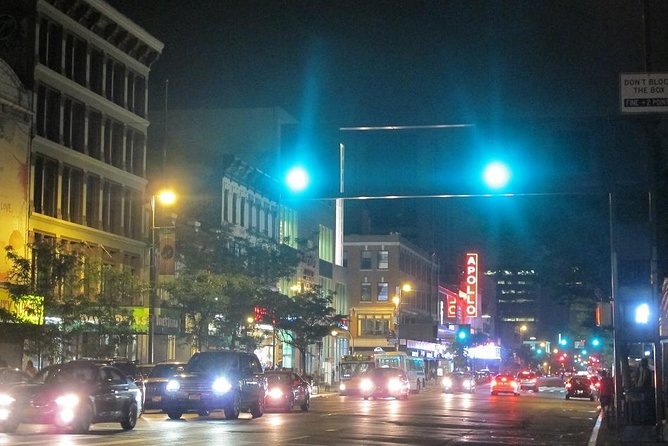
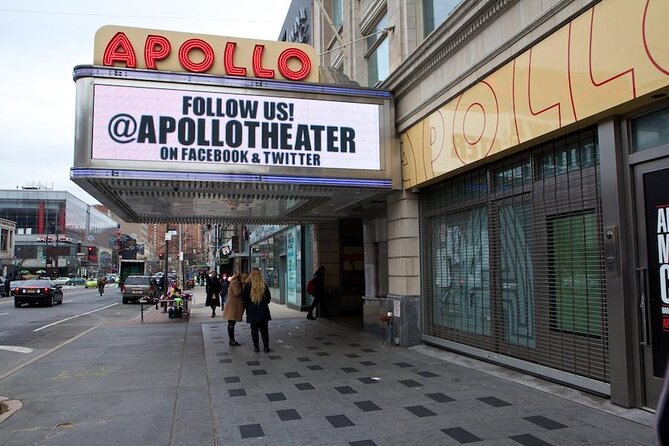
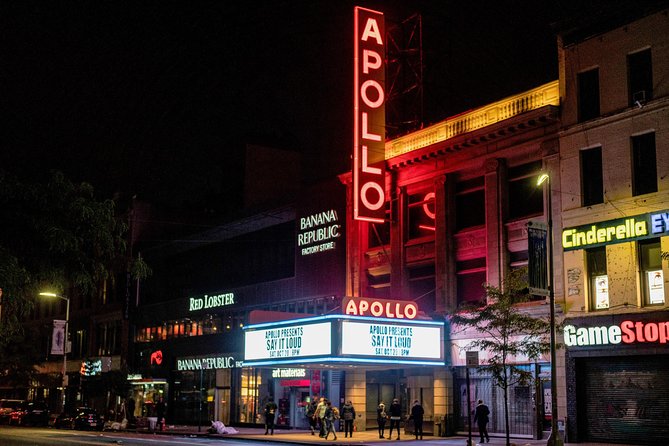
The tour anchors its opening with the Apollo Theater and the surrounding world around 125th Street. This is where you get the neighborhood’s “why” before you get the “what.” You’ll hear how the Apollo area ties into major eras such as the Harlem Renaissance and the Civil Rights era, plus what’s changing in the neighborhood right now.
Even if you’ve heard of the Apollo Theater, you’ll likely learn something different when the guide connects it to the street itself. Think of 125th Street as a living corridor: commerce, culture, and public identity all moving together over time.
From this starting point, you’ll also walk key nearby sights, including:
- the 125th Street shopping corridor
- the African Market in Little Senegal
- the Speaker’s Corner area
- landmarks like Hotel Theresa
This is the part of the tour where you’ll probably feel the strongest “context shock” in a good way. You see the scale of the block and then the guide gives you the bigger timeline. It’s easier to understand why certain institutions matter when you’re standing right where the story played out.
And yes: the Apollo Theater stop is listed as free admission for the tour, meaning you’re not expected to pay extra entry fees just to participate in this segment.
Harlem School of the Arts and the Idea of Cultural Futures
As the walk continues, you get into Harlem’s institutions beyond just the music legend. One of the stops is the Harlem School of the Arts.
Why this matters: cultural history isn’t only what happened decades ago. It’s also what institutions keep building for the next generation. A school focused on the arts naturally becomes part of that story because it turns heritage into training, and training into future creators.
Even if you’re not an education-nerd, this stop gives you a useful lens. When you pair it with the Apollo Theater opening, you start seeing the neighborhood as a system: stages, schools, organizations, and public spaces all reinforcing each other.
Strivers Row: Learning to Read Architecture Like a Local
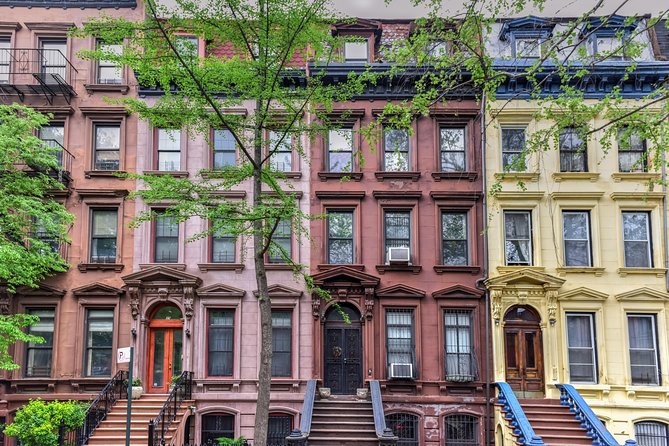
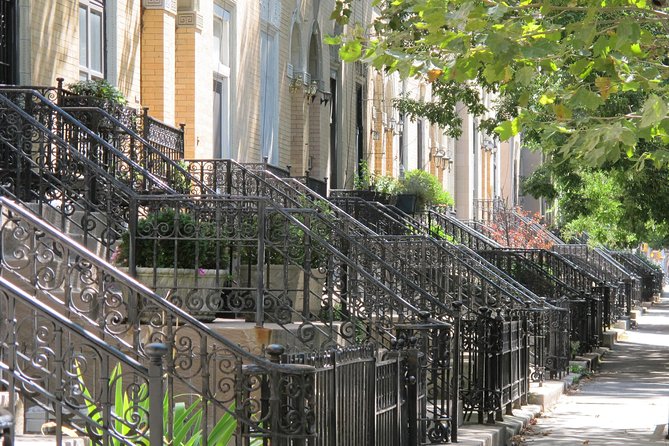
One of the most enjoyable parts of this tour is that it doesn’t treat buildings like background props. You’ll stop at Strivers Row, and the guide will point out why these blocks have become so linked with Harlem’s identity.
Here’s the practical benefit for you: when you learn to notice architectural details, Harlem stops feeling like a single “attraction zone.” You start to see layers—economic shifts, style trends, and how prominent streets communicated status.
It’s also a nice change from the more museum-style history talking. You’ll be walking while learning how to look. That’s when tours start feeling less like work.
Harlem Hospital Murals: Street Art as Storytelling
Another stop in the tour route is Harlem Hospital Murals. This is one of those locations where public art helps you understand a neighborhood’s emotional map, not just its timeline.
Murals often carry community memory: identity, resilience, and major social themes. In a tour like this, they serve as a reminder that culture isn’t confined to theaters and galleries. It shows up on walls where people live, work, and care.
If you like photography, this is a good place to pause and really study. The guide’s commentary helps you frame what you’re looking at, which turns random visuals into meaningful symbols.
Schomburg Center: Where Research Becomes Part of the Street
No Central Harlem walk feels complete without the Schomburg Center for Research in Black Culture. This stop shifts the focus from performance and public life to preservation, study, and scholarship.
Why it’s valuable: if you only connect Harlem to famous artists, you miss the infrastructure that keeps culture documented and accessible. A research-focused center tells you that this neighborhood’s legacy isn’t only told through songs. It’s also carried by archives, stories, and study.
Even if you don’t go inside (the tour is walking-focused), the guide’s framing helps you understand why this institution belongs on a culture route. You’ll likely connect it back to other places like the Apollo and public gathering spots such as Speaker’s Corner—different formats, same purpose.
Astor Place and the 125th Street Finale
The tour route also includes a stop around Astor Place, then continues toward the 125th Street-Apollo Theater area where the walk ends.
That final stretch is important because it gives your brain the “wrap-up moment.” You’re moving through the neighborhood toward the same big stage you started near, and now you’ve got a stronger framework for what you’re seeing.
If you’ve planned photos, this is the time for them. If you’re planning dinner, this is a practical moment to ask your guide for suggestions—several guides are described as helpful with getting people pointed in the right direction at the end of the tour.
Who Should Book This Tour (and Who Might Not)
This is a great fit if you want:
- a walking introduction to Central Harlem with real context
- history tied to specific places along 125th Street
- small-group pacing with time for questions
- neighborhood focus rather than a formal museum day
You might want to skip it or choose a different option if:
- you want live music or a church visit (this tour does not include either)
- you need a fully seated experience or very low-effort walking, since it’s labeled moderately difficult for physically challenged travelers
- you hate scheduling flexibility and must be back at a precise minute after exactly 2 hours
This also works well for first-time Harlem visitors who want a start point. The route covers multiple “anchors,” so you leave with a mental map of where things are and why they matter.
Should You Book Central Harlem African-American Culture Walking Tour?
If you like history that’s tied to sidewalks, building fronts, murals, and institutions, I’d say yes. For $30, you’re getting a licensed guide who’s also described as a Harlem resident in the tour details, plus the practical advantage of a max 15-person group.
My main caution is time. I’d avoid booking another time-critical event right after the tour. If you do need to catch something, build a buffer. Once you factor that in, this is one of the cleaner, more efficient ways to understand Central Harlem beyond surface-level sightseeing.
FAQ
What is the meeting point and start time?
The tour starts at 700 St Nicholas Ave, New York, NY 10031. Start time is 10:00 am.
How long is the walking tour?
It runs for about 2 hours (approx.).
How much does it cost?
The price is $30.00 per person.
What’s included in the tour?
You get a guided tour by a licensed tour guide who is also a Harlem resident.
Does the tour include church visits or music?
No. This tour focuses on neighborhood history and does not include visits to church or music.
What is the cancellation policy?
You can cancel for a full refund up to 24 hours in advance of the experience start time. The experience may also be rescheduled or refunded if canceled due to poor weather or if minimum traveler requirements aren’t met.
More Tour Reviews in New York City
- NYC: SUMMIT One Vanderbilt Tickets★ 4.7 · 51,195 reviews
- NYC: Empire State Building Tickets – Observatory & Museum★ 4.7 · 25,757 reviews
- New York City: Statue of Liberty & Ellis Island with Ferry★ 4.6 · 18,683 reviews
- New York City: American Museum of Natural History Ticket★ 4.5 · 15,447 reviews
- Statue of Liberty and Ellis Island Tour: All Options★ 5.0 · 13,571 reviews
New York City, One Block at a Time
- SoHo, Little Italy, and Chinatown Walking Tour in New York★ 5.0 · 3,153 reviews
- Secrets of Grand Central Station Walking Tour New York City★ 5.0 · 1,796 reviews
- Greenwich Village Walking and Food Tasting Tour★ 5.0 · 1,572 reviews
- Artistic, Alternative Greenwich Village Walking Tour★ 5.0 · 971 reviews
- Brooklyn Bridge & DUMBO Neighborhood Tour – from Manhattan to Brooklyn★ 5.0 · 826 reviews
Uptown Sundays: More of Harlem
- NYC Highlights Tour: Bronx, Brooklyn, Harlem, Queens & Coney★ 4.5 · 2,846 reviews
- NYC: Contrasts Tour of Harlem, The Bronx, Queens & Brooklyn★ 4.5 · 2,167 reviews
- NYC: Harlem Hallelujah! Gospel Wednesday Concert★ 4.7 · 1,638 reviews
- New York City: Harlem Gospel Live Music Concert★ 4.7 · 1,479 reviews
- Harlem Sunday Morning Gospel Tour★ 4.0 · 995 reviews
Just in: the newest New York City reviews on our desk





Harlem Tours, compared.
 ★ 4.5NYC Highlights Tour: Bronx, Brooklyn, Harlem, Queens & ConeyFrom $462,846 reviews
 ★ 4.5Contrasts Tour of Harlem, The Bronx, Queens & BrooklynFrom $392,167 reviews
 ★ 4.7Harlem Hallelujah! Gospel Wednesday ConcertFrom $251,638 reviews
 ★ 4.7Harlem Gospel Live Music ConcertFrom $281,479 reviews
 ★ 4.0Harlem Sunday Morning Gospel TourFrom $85995 reviews
 ★ 4.04-hour Harlem Gospel Tour in New York CityFrom $79935 reviews
 ★ 3.9Harlem: Central Harlem Sunday Gospel with LocalsFrom $25499 reviews
 ★ 4.3Sunday Harlem Gospel Guided TourFrom $89438 reviews
Browse the lists this tour appears in