
Reviewed · CENTRAL PARK TOURS
Central Park New York Guided Walking Tour Semi-Private 12ppl Max
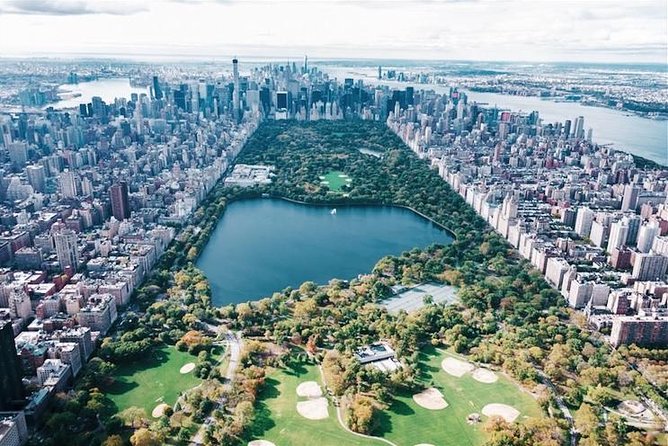
Central Park can feel like a maze. This semi-private guided walk (up to 12 people) lays out the park’s best-known sights with a smart route that also swings past big-city landmarks right beside the greenery.
What I like most is the small-group feel: you’re close enough to ask questions and actually track where you are without feeling rushed. I also really enjoy how the tour blends park art and architecture—statues, fountains, bridges—with city views from spots like 432 Park Avenue and the Time Warner Center area.
One consideration: most of this is outside sight-to-sight walking, and some places can’t be entered because of security. If you were hoping for inside access at many stops, you’ll want to keep expectations focused on what you can see from the path.
In This Review
- Key things you’ll notice right away
- A Semi-Private Central Park Route That Keeps You Oriented
- Stop-by-Stop: How the Route Hits Central Park’s Big Moments
- Central Park South to Gapstow Bridge, Zoo direction, and statue spotting
- The Mall and literary figure talk, then Bethesda Terrace and Fountain
- Bow Bridge crossings, Strawberry Fields, and a Dakota connection
- Tavern on the Green and Sheep Meadow as the “real day in Central Park” section
- 432 Park Avenue: Big City Views and a Very Specific Horse Fountain
- Time Warner Center: When the Architecture Crowd Meets the Park Crowd
- Bow Bridge and Gapstow Bridge: Skyline Frames You’ll Remember
- Bow Bridge: cast iron elegance with extra detail
- Gapstow Bridge: a classic skyline viewpoint
- Turtle Pond, the Great Lawn, and Why Bethesda Terrace Works for Photos
- Turtle Pond and the quiet pond-side pause
- Great Lawn: the picnic and people-watching area
- Bethesda Terrace and the angel: public art with a specific story
- John Lennon in the Dakota and the Quiet Rules of Strawberry Fields
- The Dakota: an 1884 building with a very specific connection
- Strawberry Fields: 2.5 acres of calm
- Central Park Zoo Finale: Wrap Up or Keep Exploring
- Price and Value: What $51.94 Gets You in 2.5 Hours
- Who This Tour Fits Best
- Should You Book This Semi-Private Central Park Walk?
- FAQ
- How long is the Central Park guided walking tour?
- What is the group size limit?
- Is the tour in English?
- Does the tour run rain or shine?
- Where do I meet the guide?
- Where does the tour end?
- Is admission included for all stops?
- What should I wear or bring?
- Can children join the tour?
- Are there restrictions on bags?
Key things you’ll notice right away
- 12 people max keeps the pace friendly and questions easy
- Bridges as navigation tools: Gapstow and Bow Bridge become your skyline viewpoints
- Landmarks tied to stories: Lennon stops, public art, and statue clusters all connect
- Park + city architecture in one loop (432 Park Ave and Time Warner Center)
- Weather-ready routing: it runs rain or shine, with practical guidance along the way
- Tour ends where the park opens up at the Central Park Zoo area, with subway help available
More ways to see Central Park
- Central Park Pedicab Guided Tours
★ 5.0 · 7,108 reviews - Private Central Park Pedicab Tour
★ 5.0 · 6,981 reviews - NYC: Central Park Bike Rentals
★ 4.2 · 2,528 reviews - Official NYC Horse Carriage Rides in Central Park since 1979 ™
★ 5.0 · 2,365 reviews
A Semi-Private Central Park Route That Keeps You Oriented
Central Park is famous, but it can also be disorienting. Paths curve, viewpoints change fast, and the park’s landmarks don’t line up like a tidy checklist. This tour helps you get your bearings fast by putting the sights in an order that makes sense on foot over about 2.5 hours.
Because it’s capped at 12 people, you’re not stuck listening from far back. The guide can point things out, adjust pace, and help you notice details you’d miss if you were just following a map. The overall focus stays practical: you get the park’s top hits, plus the “why does this matter?” context that turns scenery into stories.
The tour is also built for real life. It runs rain or shine, and you’ll get reminders that some stops may be visual only (inside access can be restricted). That’s a good match for a first-time Central Park visit where you want the highlights without turning the day into logistics.
Stop-by-Stop: How the Route Hits Central Park’s Big Moments
The heart of the tour is a long Central Park segment that moves you from statues and terraces to bridges, Lennon sites, and classic lounging areas. Even if you’ve seen photos of Central Park, the order on this walk helps them click into place.
Central Park South to Gapstow Bridge, Zoo direction, and statue spotting
You start in Central Park and head into a part of the park that’s known for its “escape from the city” feeling. The guide’s narration matters here. Instead of treating statues like random extras, you’ll learn how the park uses prominent figures and themes across areas you’re walking through.
You’ll also get opportunities to spot playful and pop-culture connections—things like Balto and Alice in Wonderland-related features—alongside more historical monument-style sculptures. If you care about art in public space, this mix is one reason the tour feels more than just sightseeing.
As you move along, you cross Gapstow Bridge, which is also a natural step in the walk toward the Central Park Zoo area. Crossing a bridge on foot changes the view instantly, and this one gives you a way to see how the park folds the city skyline into its scenery.
New York City at street level, a few more walks

The Mall and literary figure talk, then Bethesda Terrace and Fountain
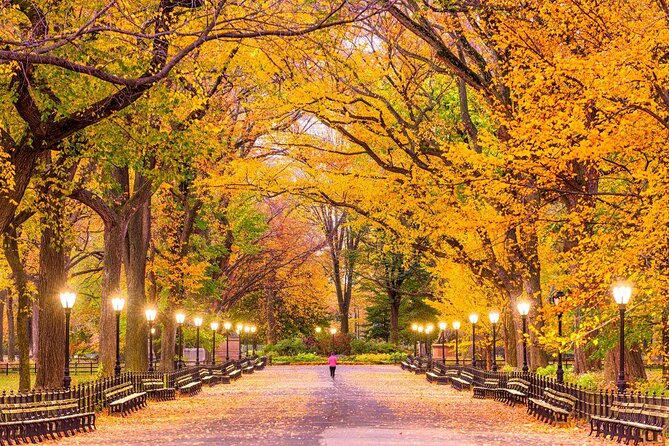
From there, you stroll the tree-lined Mall. The guide connects the walking route to the idea of literary and cultural figures placed along the way, so the path feels purposeful rather than simply scenic.
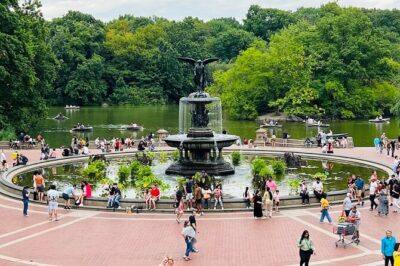
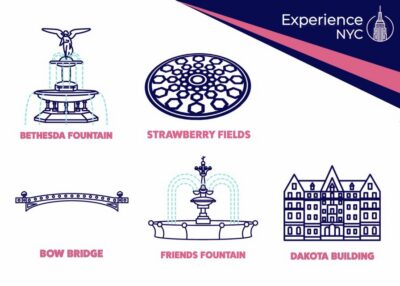
Then you reach Bethesda Terrace and Bethesda Fountain, one of the park’s most recognizable “stop and look up” areas. The centerpiece is the angel atop the fountain, and you’ll learn that this angel became New York City’s first major piece of public art commissioned from a woman. That detail turns a familiar photo into something you’ll remember.
A bonus you might catch depending on timing: the guide may pause around the Bethesda Arcade area, where the acoustics can make street music feel extra vivid. If that happens, it’s one of those small moments that makes the park feel alive instead of staged.
Bow Bridge crossings, Strawberry Fields, and a Dakota connection
On the run to Strawberry Fields you’ll cross toward the Bow Bridge and also pass the Dakota area tied to John Lennon’s story. The Dakota stop is later in the route with more emphasis, but you’ll see it before you get there—helpful for placing everything in your mental map.
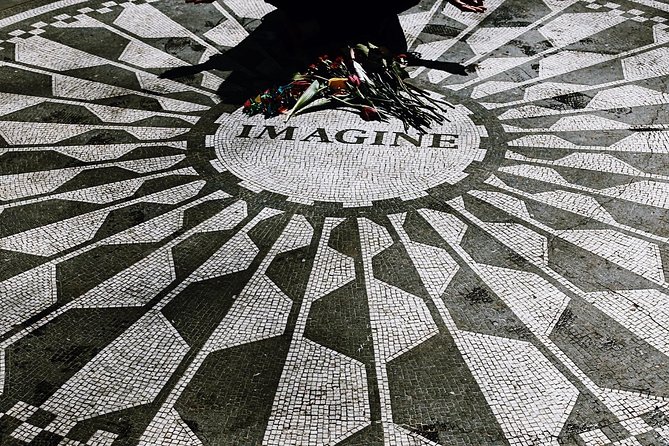
Strawberry Fields itself is a 2.5-acre tribute space meant to feel quiet and reflective. The guide frames it as a designated calm area, and you’ll see it lined with plantings and rocks. It’s the kind of place where you’ll naturally slow down, which is exactly what you want in the middle of a walking tour.
Tavern on the Green and Sheep Meadow as the “real day in Central Park” section
Near the middle-to-late portion of the Central Park loop, you’ll pass by Tavern on the Green—a useful heads-up if you’re planning dinner later. You’ll also reach Sheep Meadow, which is one of those classic “locals kick back here” Central Park spots. If your group mood wants a break, this is where the park makes it easy to shift from tour mode to just enjoying being there.
432 Park Avenue: Big City Views and a Very Specific Horse Fountain
The second portion of the walk shifts from the park’s internal scenes to the skyscraper edge that makes Central Park feel even more dramatic.
You meet at the corner of 6th Avenue and 59th Street, near the Latin America History equestrian statues, and then you enter the park from that side. One of the first things you’ll spot is a surviving ASPCA horse drinking fountain (installed in 1912). The guide’s point is simple and memorable: it’s the only place in the city where you can bring a horse to drink water—if you happen to have one.
From there, the walking route heads west for views across residential skyscrapers that overlook the park. This is where you start seeing why this park is so unique: the “nature break” sits directly beside some of Manhattan’s most expensive-looking towers.
You’ll also point out the second tallest building in New York behind One World Trade Center—the skyline landmark most associated with this stop.
Time Warner Center: When the Architecture Crowd Meets the Park Crowd
You then pass Time Warner Center, a complex of two towers linked by a multi-story atrium. Even if you’re not a design nerd, the setup is easy to appreciate from the walking viewpoint: it’s a big urban shell with the kind of space where retail and people-traffic are built into the building.
The complex includes upscale retail shops, plus office and residential components. In practice, what this adds to the tour is variety. After the park’s open-air feel, you get a quick architectural jolt—still close enough to the greenery that you don’t lose the flow.
Photo tip: this stop is short, so if you want pictures, be ready to take them as you’re passing rather than trying to “find the perfect spot” later.
Bow Bridge and Gapstow Bridge: Skyline Frames You’ll Remember
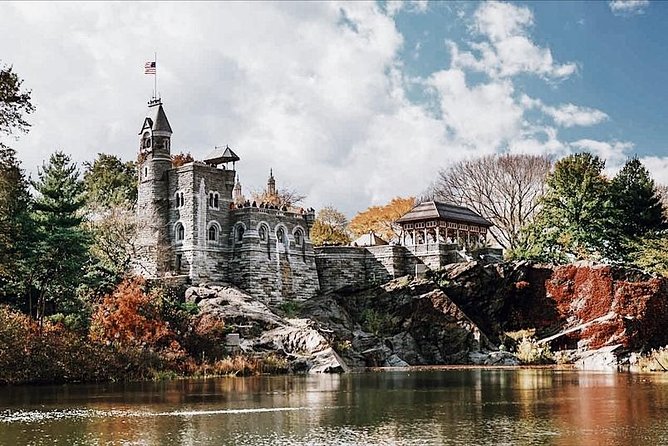
Bridges are part of Central Park’s signature experience, and this tour uses them as visual anchors so you can track where you are.
Bow Bridge: cast iron elegance with extra detail
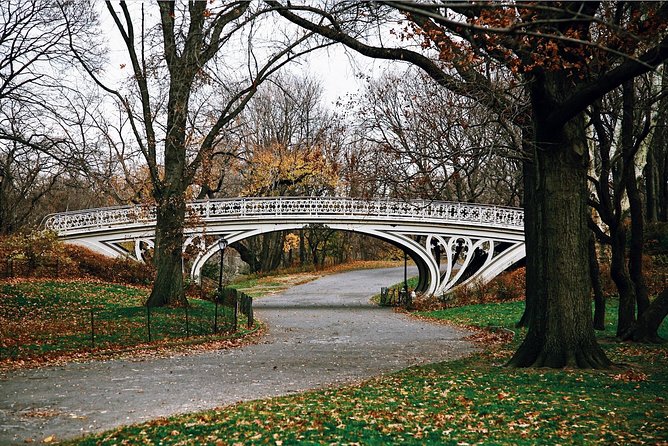
You visit Bow Bridge, described as the largest bridge in the park. It’s a cast iron bridge with a classical, Greek-style refinement. A key detail is that unlike some other bridges that feel like background, this one is designed to be noticed.
You’ll also see the bridge’s decorative elements, including the interlocking circles banister and intricate features under the arch span. The practical upside: once you know where Bow Bridge is in the park’s layout, you’ll start recognizing nearby landmarks faster, which makes exploring after the tour easier.
Gapstow Bridge: a classic skyline viewpoint
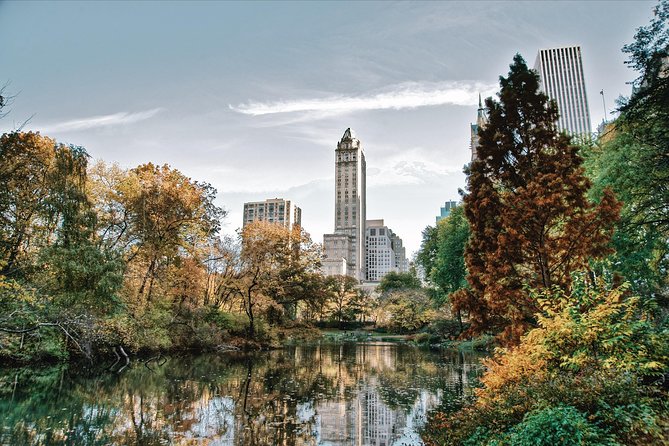
Then you return to Gapstow Bridge, originally built in 1874. This bridge is famous for offering one of the best views of the New York City skyline from within the park.
What makes this stop worth your attention is the perspective. The skyline view feels curated because you’re looking at it through the park’s natural framing. Even if you’ve seen the city from above before, this angle—city behind greenery—hits differently.
Turtle Pond, the Great Lawn, and Why Bethesda Terrace Works for Photos
This stretch of the tour reinforces two Central Park truths: you can plan a picnic, and you can find public art that makes the whole place feel “intentional.”
Turtle Pond and the quiet pond-side pause
You can make your way toward the Great Lawn area, and nearby you’ll see Turtle Pond, where many turtles live. This is one of those “small, real Central Park” moments. It’s not the most famous landmark in a photo montage, but it gives you a sense of daily life in the park, not just iconic architecture.
Great Lawn: the picnic and people-watching area
The Great Lawn is a 55-acre stretch often considered one of the most famous lawns in the world. It’s a good place to mentally switch gears. If the weather’s nice, you can imagine a spring afternoon picnic or summer sun time.
Even on a guided day, this is where you’ll feel the scale of Central Park. That scale is part of the value: without a guide, people sometimes underestimate how big the park actually feels once you’re inside it.
Bethesda Terrace and the angel: public art with a specific story
Earlier you reach Bethesda Fountain, but it’s worth repeating how the tour frames it. You’re not just looking at a popular photo spot—you learn the angel is tied to a meaningful milestone: the first major piece of public art commissioned from a woman for New York City. That detail gives the fountain weight, even if you’re not usually into statues.
If you catch any music pause around the nearby arcade area, it becomes the kind of moment that makes Bethesda feel less like a “viewing stop” and more like a place where people gather.
John Lennon in the Dakota and the Quiet Rules of Strawberry Fields
Two stops make the Lennon storyline feel real instead of distant: the Dakota and Strawberry Fields. This part of the tour is also emotionally different from the rest of the park.
The Dakota: an 1884 building with a very specific connection
The Dakota is one of the most famous cooperative buildings in the city, built in 1884, and still maintains much of its original character. The guide connects that history to John Lennon, who lived there until his murder in 1980, with that event tied to the building’s archway area.
What I like about how the tour approaches this: it doesn’t turn it into a gloomy lecture. It’s factual, tied to place, and you’re given time to look at the setting. That matters, because the Dakota is best understood as part of the park’s surrounding atmosphere.
Strawberry Fields: 2.5 acres of calm
Strawberry Fields covers 2.5 acres and is designed as a quiet area. You’ll see plantings—elm trees, shrubs, flowers—and rock features that make it feel like a small sanctuary within the park.
This stop works well because it gives your brain a rest from constant “next landmark” motion. Even if you’re not a Beatles fan, it’s a meaningful design of space: it tells you what the park wants you to feel, and you’ll likely slow down without trying.
Central Park Zoo Finale: Wrap Up or Keep Exploring
The tour ends at the Central Park Zoo, in the southeast corner of the park. You’ll have an option: stay and enjoy the surrounding landscapes, or your guide can accompany you to the nearest subway.
This matters for planning. Central Park is too big to “finish” neatly unless you have a clear exit. Ending at a zoo-adjacent point gives you a realistic off-ramp either way—keep wandering on your own, or switch to transit and move on with your day.
Price and Value: What $51.94 Gets You in 2.5 Hours
At $51.94 per person, the tour sits in a reasonable range for a guided walking experience in Manhattan, especially because it stays semi-private with a 12-person maximum. You’re paying for something harder to DIY: the route logic plus the interpretation at key landmarks.
Here’s where the value shows:
- A professional guide keeps the time focused on major sights and good stories
- Most stops are listed with admission free tickets, so you’re not hit with surprise entry costs during the walk
- The tour runs rain or shine, which reduces the risk that you waste a planned Central Park window
- The included route coverage is dense for 2.5 hours, meaning you get a strong overview without feeling like you spent half a day commuting between places
The one thing to account for: the Central Park Zoo admission is not included. If you want to go inside the zoo, you’ll need to add that ticket separately.
Who This Tour Fits Best
This is a smart choice if you:
- Want a first solid Central Park overview without doing a self-guided maze
- Like when a guide connects art, bridges, and famous buildings to real stories
- Appreciate a small-group pace (maximum 12 people) where you can ask questions
You might want to consider a different plan if you:
- Need lots of inside access at attractions (security can limit entry)
- Are traveling with large bags or suitcases (those aren’t allowed)
- Have very limited walking tolerance; the tour asks for moderate physical fitness
It also works well for families in a practical way: children must be accompanied by an adult, so plan on having adult supervision and keeping younger kids close.
Should You Book This Semi-Private Central Park Walk?
If your goal is to see Central Park’s main icons and leave with a clearer sense of how the park connects—statues, bridges, Bethesda, Lennon sites, and skyline views—this tour is a strong bet.
I’d book it if you care about the “why” behind what you’re seeing. The guides associated with the tour (including Mark, sometimes referred to as Manhattan Mark, and Jeff) are praised for making the park feel real through stories that blend history, art details, and even moments of music and smart visuals. The pacing also seems designed for a sweet spot: long enough to matter, short enough to keep your afternoon open.
Just go in knowing it’s mostly an outdoor walking experience, not a museum crawl. If that matches your style, this is a well-priced way to experience Central Park like you’re getting oriented for a real second visit.
FAQ
How long is the Central Park guided walking tour?
It lasts about 2 hours 30 minutes.
What is the group size limit?
The tour is semi-private with a maximum of 12 people.
Is the tour in English?
Yes, it’s offered in English.
Does the tour run rain or shine?
Yes, it runs rain or shine.
Where do I meet the guide?
You meet at Central Park South (Central Park S), New York, NY.
Where does the tour end?
The tour ends on Central Park West (Central Prk W), New York, NY.
Is admission included for all stops?
Most included stops are listed with admission ticket free. The Central Park Zoo admission is not included.
What should I wear or bring?
Wear comfortable shoes and bring a bottle of water. The tour also recommends an umbrella for rain and a hat during summer.
Can children join the tour?
Yes, but children must be accompanied by an adult.
Are there restrictions on bags?
Yes. No large bags or suitcases are allowed during the tour.
More Tour Reviews in New York City
- NYC: SUMMIT One Vanderbilt Tickets★ 4.7 · 51,195 reviews
- NYC: Empire State Building Tickets – Observatory & Museum★ 4.7 · 25,757 reviews
- New York City: Statue of Liberty & Ellis Island with Ferry★ 4.6 · 18,683 reviews
- New York City: American Museum of Natural History Ticket★ 4.5 · 15,447 reviews
- Statue of Liberty and Ellis Island Tour: All Options★ 5.0 · 13,571 reviews
New York City, One Block at a Time
- SoHo, Little Italy, and Chinatown Walking Tour in New York★ 5.0 · 3,153 reviews
- Secrets of Grand Central Station Walking Tour New York City★ 5.0 · 1,796 reviews
- Greenwich Village Walking and Food Tasting Tour★ 5.0 · 1,572 reviews
- Artistic, Alternative Greenwich Village Walking Tour★ 5.0 · 971 reviews
- Brooklyn Bridge & DUMBO Neighborhood Tour – from Manhattan to Brooklyn★ 5.0 · 826 reviews
More of Central Park
- Central Park Pedicab Guided Tours★ 5.0 · 7,108 reviews
- Private Central Park Pedicab Tour★ 5.0 · 6,981 reviews
- NYC: Central Park Bike Rentals★ 4.2 · 2,528 reviews
- Official NYC Horse Carriage Rides in Central Park since 1979 ™★ 5.0 · 2,365 reviews
- NYC: Central Park Bike Rental★ 4.1 · 1,651 reviews
Just in: the newest New York City reviews on our desk





Central Park Tours, compared.
 ★ 5.0Central Park Pedicab Guided ToursFrom $387,108 reviews
 ★ 5.0Private Central Park Pedicab TourFrom $386,981 reviews
 ★ 4.2Central Park Bike RentalsFrom $92,528 reviews
 ★ 5.0Official NYC Horse Carriage Rides in Central Park since 1979 ™From $992,365 reviews
 ★ 4.1Central Park Bike RentalFrom $81,651 reviews
 ★ 4.9Private Central Park Pedicab TourFrom $401,637 reviews
 ★ 4.7Central Park Bike RentalFrom $91,509 reviews
 ★ 4.0Carriage Ride in Central Park (VIP – PRIVATE) Since 1964™From $141,074 reviews
Browse the lists this tour appears in