
Reviewed · CENTRAL PARK TOURS
Central Park: Scandal & Vice Walking Tour
Central Park has a second story. On this Central Park Scandal & Vice Walking Tour, you walk past famous landmarks while your guide connects them to dark history and odd scandals most sightseeing tours skip. It’s designed for people who want the park’s real-life edge, not just perfect postcard views.
Two things I really like: the pace leaves room for questions, and the stops are specific enough that you start spotting patterns in the park. With a max group size of 15, you’re not swallowed by the crowd, and you can actually ask why certain places became famous for trouble.
One possible drawback: the subject matter leans toward violence, crime, and indecency, plus talk of “vice” at night. If you want a gentle, family-only nature stroll, this isn’t that kind of tour.
In This Review
- Key Things You’ll Notice on This Walk
- Why This Central Park Scandal & Vice Tour Feels Different
- Price and Value: What $40 Buys in New York
- The Flow From the Arsenal to the Ramble (and Why It Works)
- Starting at the Arsenal: Evictions and 19th-Century Violence
- Central Park Zoo Origins and Arrests for Indecency
- Balto Statue Controversies and the Dark Side of Memorials
- Rumsey Playfield: Quarrels, the Wisteria Pergola, and a Prohibition-Era Nightclub
- Bethesda Terrace: Jacob Wrey Mould and Crime That Sparked a Fix
- Sheep Meadow and the Great Depression: Hooverville and Protest
- Strawberry Fields: Murder, Class, and Subculture
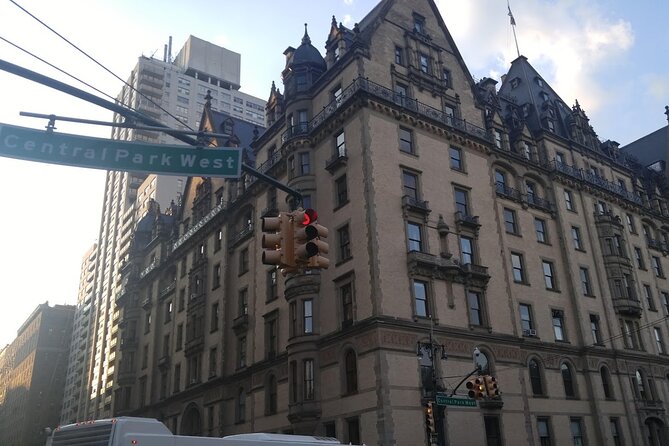
- The San Remo: Accidents, Stunts, and Suspicious Deaths
- American Museum of Natural History: A Heist and a Witness Protection Twist
- The Ramble: Cruising History, Night Incidents, and Police Raids
- Small Group Touring: Why It Improves This Kind of Story
- What to Bring (So the Walk Stays Fun)
- Who This Tour Is For (and Who Might Skip It)
- Should You Book the Central Park Scandal & Vice Walking Tour?
- FAQ
- How long is the Central Park Scandal & Vice walking tour?
- What is the meeting point and start time?
- Where does the tour end?
- Is the tour English-only?
- What is the group size?
- How much does the tour cost?
- What’s included in the price?
- Is bottled water provided?
- What is the cancellation policy?
Key Things You’ll Notice on This Walk
- A small group (max 15) means more back-and-forth with your English-speaking guide
- 10 stop sequence across the park keeps the story moving instead of circling the same spots
- Short, focused segments at each location so you’re not stuck listening for ages
- Scandal themes repeat: evictions, enforcement, public image, and punishment
- A night-history stop in the Ramble turns the park’s quiet reputation on its head
More ways to see Central Park
- Central Park Pedicab Guided Tours
★ 5.0 · 7,108 reviews - Private Central Park Pedicab Tour
★ 5.0 · 6,981 reviews - NYC: Central Park Bike Rentals
★ 4.2 · 2,528 reviews - Official NYC Horse Carriage Rides in Central Park since 1979 ™
★ 5.0 · 2,365 reviews
Why This Central Park Scandal & Vice Tour Feels Different
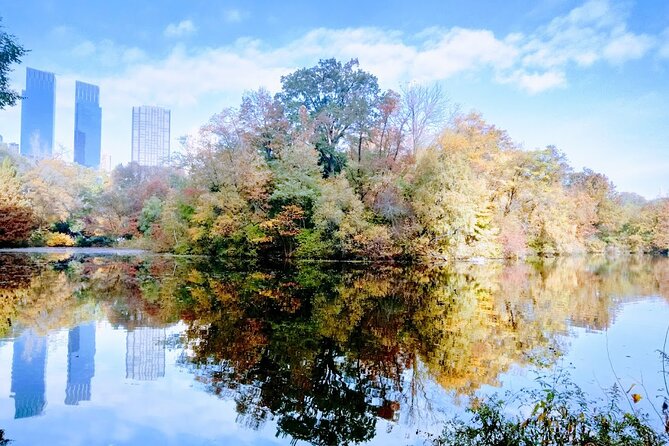
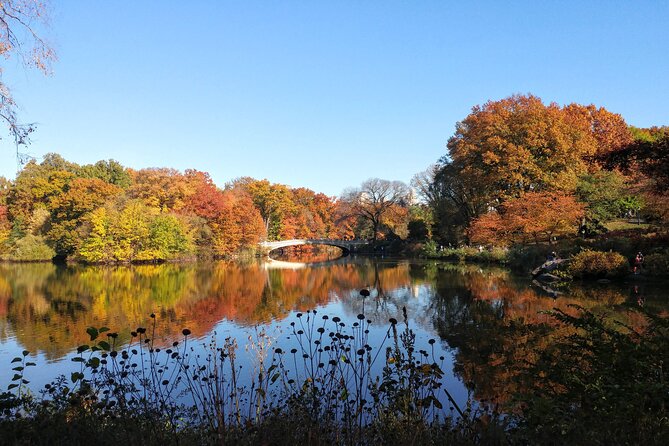
Central Park is used like a stage. Today it’s joggers, families, and photographers. But beneath that shiny surface, the park has always been shaped by conflict—who got pushed out, who got policed, and what people did when the lights went down.
What makes this tour click is that it doesn’t just toss out “did you know” trivia. You connect the dots between land, design, and behavior. The route nudges you to notice that the park’s layout and popularity didn’t happen in a vacuum. It grew alongside real-world tension.
If you like history that has consequences—actual people, actual trouble—this is the kind of walk that keeps you alert. And because it’s a walking tour, you get a sense of movement, not just a list of stops.
Price and Value: What $40 Buys in New York
$40 for about two hours doesn’t sound wild on paper, but it’s the structure that matters. You’re paying for an on-the-ground guide who can frame each stop’s controversy, plus the time to ask questions in a small group.
Also, all fees and taxes are included. That means fewer surprise add-ons when you’re trying to budget your NYC days. The only thing not included is bottled water, so bring your own bottle if you tend to get thirsty on walks.
One more value point: this tour tends to be booked ahead (on average around 9 days). So if you’re traveling during a busy season, it’s smart to reserve early rather than gamble on last-minute availability.
The Flow From the Arsenal to the Ramble (and Why It Works)
You meet at the Arsenal, 830 5th Ave, with the tour starting at 11:00 am. From there, you head through Central Park toward the Ramble area near the Stone Arch. The tour ends there, and you’ll be escorted out unless you want to stay longer on your own.
That ending matters. The Ramble is the part of Central Park people associate with privacy and shadowy night stories. By the time you reach it, you’ve already heard how enforcement, public behavior, and reputation all shaped the park. It’s a strong payoff.
The tour is offered in English, and it runs in person with a mobile ticket. It’s also near public transportation, which is handy for building into a longer NYC day.
New York City at street level, a few more walks

Starting at the Arsenal: Evictions and 19th-Century Violence
Your first stop is the Arsenal, where you get a quick grounding in Central Park’s early history. You also hear how evictions of the Central Park area happened before construction, and how that early period fed into a reputation for infamy and violence.
This matters because it reframes the park from day-one ideal to contested land. Once you understand that the park replaced something—and that replacement wasn’t peaceful—you’ll read everything you see afterward with sharper eyes.
The Arsenal segment is brief, but it sets the tone. You’re basically being told: don’t treat the park like a blank canvas. People fought over it, and that conflict doesn’t just vanish.
Central Park Zoo Origins and Arrests for Indecency
Next you’re at the Central Park Zoo, and the story turns from land history to social behavior. You’ll hear about the strange origins of the zoo and arrests for indecency that occurred there.
It’s a fascinating angle because we usually think of zoos as family-friendly. Here, you’re learning how public spaces still had strict boundaries—even in places meant for entertainment.
You’ll likely leave this stop with a question you didn’t have before: who policed what, and why? That theme keeps returning all through the walk.
Balto Statue Controversies and the Dark Side of Memorials
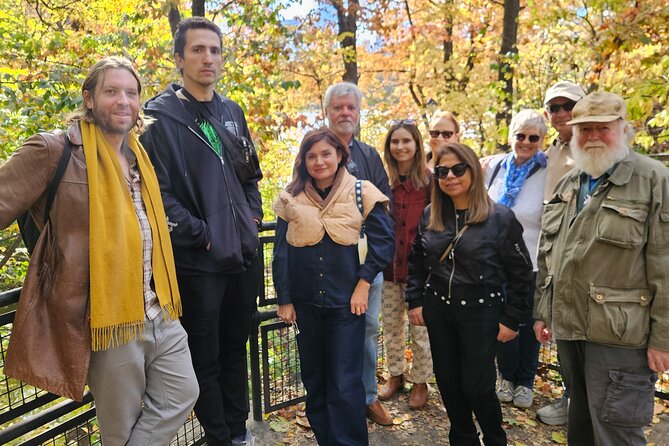
Then you hit the Balto statue. The topic: controversy around the city’s first dog statue, plus scandalous stories tied to other Central Park statues.
This stop is a reminder that even monuments can be messy. A statue can be about honor. It can also be about ego, money, politics, and public pressure. In a park full of symbols, controversy sticks in a way that plain old “look and pose” tours miss.
It also helps you understand how the city manages its image. The scandals aren’t random. They’re part of how public meaning gets manufactured.
Rumsey Playfield: Quarrels, the Wisteria Pergola, and a Prohibition-Era Nightclub
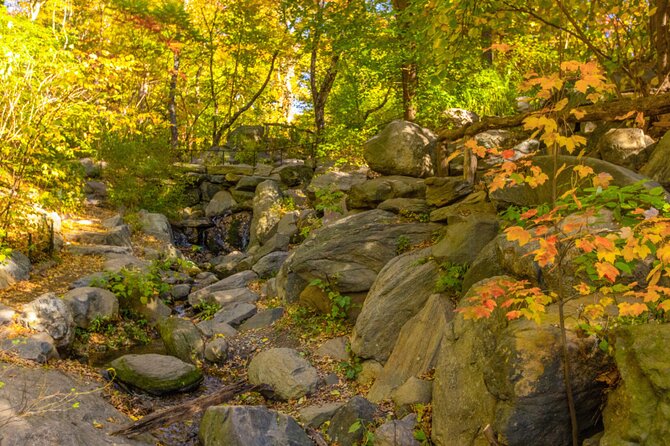
At Rumsey Playfield, the emphasis shifts to quarrels involving the Wisteria Pergola—and the existence of a prohibition-era nightclub in the park.
This is where the park starts feeling less like a single attraction and more like a living neighborhood. People argue over space and style, and when the city changes laws, those changes show up in what happens after dark.
One caution: because the tour covers vice topics, the stories can feel more adult than you’d expect from “a park walk.” If you’re sensitive to that kind of content, it’s worth setting your expectations early.
Bethesda Terrace: Jacob Wrey Mould and Crime That Sparked a Fix
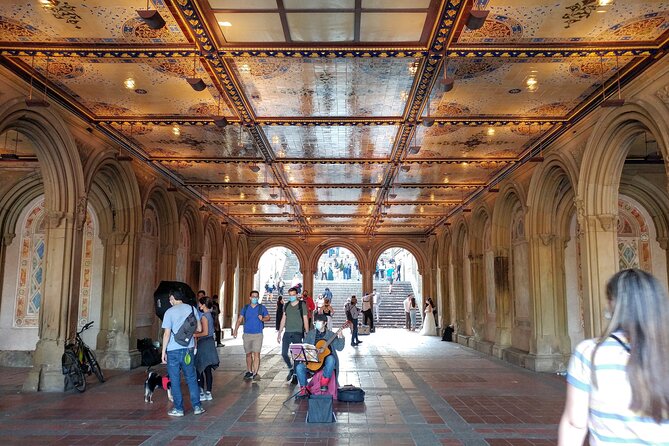
At Bethesda Terrace, you hear about Jacob Wrey Mould, described as the unsung third designer of Central Park, and then the story widens into crime and vandalism. That damage becomes the catalyst for the Central Park Conservancy.
This stop is important for a reason beyond the drama. It’s a case study in what happens when neglect—and misuse—forces a community response. The Conservancy story connects past trouble to present-day care.
If you’ve ever wondered why Central Park feels both historic and maintained, this is one of the places where the “why” becomes obvious.
Sheep Meadow and the Great Depression: Hooverville and Protest
Sheep Meadow brings you into the Great Depression with the story of Hooverville. You also get the history of protests and demonstrations tied to this area.
This is the most “social history” feeling stop on the route. The park stops being a backdrop for art and becomes a stage for survival and resistance.
If you like history where the setting isn’t decorative, Sheep Meadow delivers. It shows how people use public space when they have no other options.
Strawberry Fields: Murder, Class, and Subculture
Then comes Strawberry Fields, where you hear about a gruesome murder connected with this area. The story also intersects with class and subculture.
That combination is exactly why this tour works. It doesn’t treat crime as isolated shock value. You’re shown how social groups, status, and identity can shape what gets noticed, judged, and remembered.
Again, it’s not a gentle stop. But it’s also not random. The tour keeps threading a needle between personal stories and larger patterns.
The San Remo: Accidents, Stunts, and Suspicious Deaths
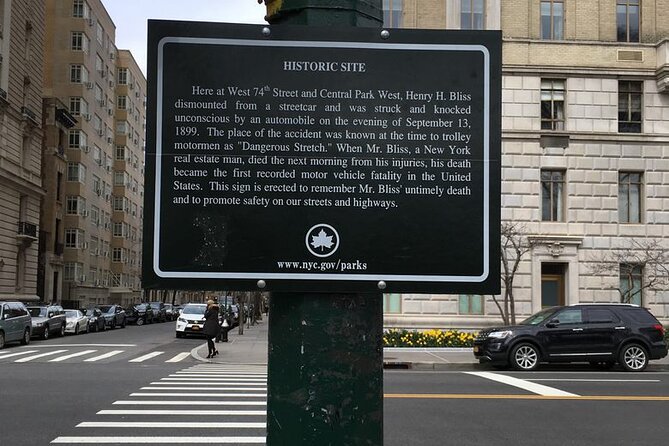
At the San Remo area, the theme becomes interconnecting history—accidents, stunts, and suspicious deaths linked to Central Park.
This is where your guide’s storytelling style matters. The information feels like puzzle pieces at first. Then you start seeing how city life, proximity, and notoriety can tangle together fast.
The key takeaway: the park isn’t just “in” the city. It draws attention from the surrounding world, and that attention comes with risk.
American Museum of Natural History: A Heist and a Witness Protection Twist
Near the American Museum of Natural History, you get a story about a notorious park-adjacent heist, plus another tale involving a witness protection incident that went wrong.
This stop adds a modern-feeling layer. Even if the scandals you hear are older, the mechanics sound familiar: secrecy, fear, and consequences.
If you like your history with plot turns, this is a strong one. If you prefer purely chronological storylines, you may notice the tour swaps time periods to keep the themes tight.
The Ramble: Cruising History, Night Incidents, and Police Raids
Finally, you reach the Ramble, where you hear about cruising history, nighttime incidents, and police raids. You also learn about films and TV shows that this activity inspired.
This stop is both the boldest and the most reflective. It forces you to confront how the park functioned after dark—and how law enforcement shaped behavior. The fact that media picked up the story also shows how private life can become public narrative.
You end around the Stone Arch area, and you’ll be escorted out of the Ramble at the end of the tour (unless you want to stay). If you plan to continue exploring, it’s useful to know there’s a nearby exit toward West 77th Street and Central Park West, close to the 81 St–Museum of Natural History station served by B and C trains.
Small Group Touring: Why It Improves This Kind of Story
For a tour like this, a small group is a big deal. With a max of 15 people, you get a better chance to ask questions when something feels unclear or too weird to let go.
And since the tour is built from short segments—often around five to fifteen minutes—you’re less likely to zone out. The guide keeps you moving, but the pace still leaves room for human curiosity.
In a city like New York, where you can easily get stuck listening to a monologue, this format helps the story land.
What to Bring (So the Walk Stays Fun)
This is an outdoor walking experience, and bottled water isn’t included, so plan for hydration. Wear comfortable shoes. You’ll be covering a decent stretch across Central Park.
Also, because the content includes vice, crime, and violence, I’d treat it like an adults-only history tour. If you’re bringing a friend who hates dark topics, you might want to check in first.
Who This Tour Is For (and Who Might Skip It)
Book this if you want NYC history with an edge. You’ll likely enjoy it if you:
- Prefer stories with real people and consequences
- Like Central Park as a cultural space, not just a scenic one
- Want a small-group format with time for questions
I’d skip it if you’re after a purely relaxing, family-friendly park stroll. This tour includes indecency, criminal incidents, and nighttime themes, and it’s meant to be honest about Central Park’s controversies.
Should You Book the Central Park Scandal & Vice Walking Tour?
If you’ve done the standard “top sights” tour already, this is a smart next step. It changes your relationship with the park. After this walk, Central Park feels less like a single attraction and more like a city within a city—complete with enforcement, scandal, and people pushing boundaries.
At $40 for about two hours, with a small group and a guide who can answer questions, it’s solid value if you’re the type who likes history with bite. I’d recommend booking ahead since spots move quickly, especially if you’re traveling in peak season.
If you can handle dark stories and want the park’s less-polished side, this is one of the most memorable ways to spend a half day in Manhattan.
FAQ
How long is the Central Park Scandal & Vice walking tour?
It runs for about 2 hours.
What is the meeting point and start time?
You meet at the Arsenal, 830 5th Ave, and the tour starts at 11:00 am.
Where does the tour end?
It ends at the Ramble area near the Stone Arch. You’ll be escorted out of the Ramble at the end of the tour unless you choose to stay.
Is the tour English-only?
Yes, it’s offered with an English guide.
What is the group size?
The tour has a maximum of 15 travelers.
How much does the tour cost?
The price is $40.00 per person.
What’s included in the price?
All fees and taxes are included, plus an English in-person guide.
Is bottled water provided?
No, bottled water is not included.
What is the cancellation policy?
You can cancel for a full refund up to 24 hours in advance of the experience’s start time.
More Tour Reviews in New York City
- NYC: SUMMIT One Vanderbilt Tickets★ 4.7 · 51,195 reviews
- NYC: Empire State Building Tickets – Observatory & Museum★ 4.7 · 25,757 reviews
- New York City: Statue of Liberty & Ellis Island with Ferry★ 4.6 · 18,683 reviews
- New York City: American Museum of Natural History Ticket★ 4.5 · 15,447 reviews
- Statue of Liberty and Ellis Island Tour: All Options★ 5.0 · 13,571 reviews
New York City, One Block at a Time
- SoHo, Little Italy, and Chinatown Walking Tour in New York★ 5.0 · 3,153 reviews
- Secrets of Grand Central Station Walking Tour New York City★ 5.0 · 1,796 reviews
- Greenwich Village Walking and Food Tasting Tour★ 5.0 · 1,572 reviews
- Artistic, Alternative Greenwich Village Walking Tour★ 5.0 · 971 reviews
- Brooklyn Bridge & DUMBO Neighborhood Tour – from Manhattan to Brooklyn★ 5.0 · 826 reviews
More of Central Park
- Central Park Pedicab Guided Tours★ 5.0 · 7,108 reviews
- Private Central Park Pedicab Tour★ 5.0 · 6,981 reviews
- NYC: Central Park Bike Rentals★ 4.2 · 2,528 reviews
- Official NYC Horse Carriage Rides in Central Park since 1979 ™★ 5.0 · 2,365 reviews
- NYC: Central Park Bike Rental★ 4.1 · 1,651 reviews
Just in: the newest New York City reviews on our desk





Central Park Tours, compared.
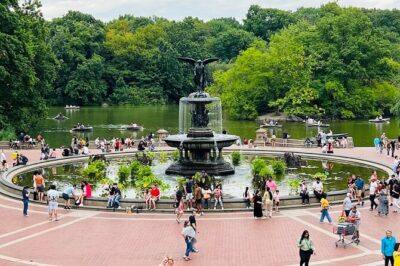 ★ 5.0Central Park Pedicab Guided ToursFrom $387,108 reviews
 ★ 5.0Private Central Park Pedicab TourFrom $386,981 reviews
 ★ 4.2Central Park Bike RentalsFrom $92,528 reviews
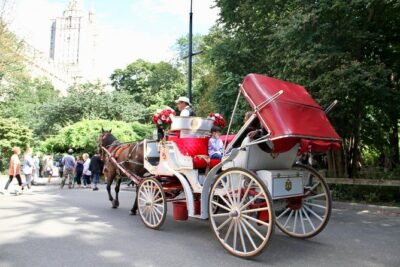 ★ 5.0Official NYC Horse Carriage Rides in Central Park since 1979 ™From $992,365 reviews
 ★ 4.1Central Park Bike RentalFrom $81,651 reviews
 ★ 4.9Private Central Park Pedicab TourFrom $401,637 reviews
 ★ 4.7Central Park Bike RentalFrom $91,509 reviews
 ★ 4.0Carriage Ride in Central Park (VIP – PRIVATE) Since 1964™From $141,074 reviews
Browse the lists this tour appears in