
Reviewed · HIGH LINE & CHELSEA TOURS
Chelsea and the High Line NYC Architecture Walking Tour
High Line views get way better with a good guide. This Chelsea, NYC architecture walk connects the High Line with Hudson Yards and landmark designers, with personal headsets so you don’t miss the details. I really like how it turns big buildings into understandable ideas, including how guide Ivan Shumkov explains topics like air rights and public-space funding.
My only heads-up: this is a 2-hour walk with lots of short stops, so if you want long looks or deep museum time, you’ll need to save that for outside the tour.
In This Review
- Key things that make this tour worth your time
- Why Chelsea and the High Line work so well on foot
- Price and logistics: what $49 buys you in real terms
- The route in human terms: quick stops, big landmarks
- Stop 1: The High Line and the idea of a reused city
- Possible drawback at the High Line
- Whitney Museum area and The Standard: art and design close together
- Why these short stops still matter
- Little Island Park and Jean Nouvel’s 100 11th Avenue
- Watch for one thing
- Zaha Hadid’s 520 West 28th Street: why the famous name is worth seeing
- The Shed, The Vessel, and the start of Hudson Yards energy
- What makes this stretch valuable
- 15 Hudson Yards and the Spiral by BIG: modern architecture, two angles
- How to get the most from a 2-hour architecture walk
- Who this tour suits best (and who might skip it)
- Should you book the Chelsea and High Line architecture tour?
- FAQ
- FAQ
- How long is the tour?
- What does the tour cost?
- What’s included in the price?
- Where is the meeting point, and where does it end?
- What time does the tour start?
- How many people are in the group?
- Is admission included for stops like the High Line and other landmarks?
- Do I get headsets to hear the guide?
- Does the tour use a mobile ticket?
- What happens if the weather is bad?
- Can I cancel for a full refund?
Key things that make this tour worth your time
- Small-group cap (15 guests max) keeps the guide’s explanations feeling direct, not rushed.
- Individual headsets help you hear clearly as you move through loud city blocks.
- A tight route from Whitney to Hudson Yards makes it easy to fit into a busy New York schedule.
- Designers named by the buildings: you’ll see works tied to Zaha Hadid, Jean Nouvel, Bjarke Ingels (BIG), and more.
- You get both park and skyline in one continuous walk: the High Line plus the Hudson Yards complex.
Along the rails: more High Line and Chelsea
- High Line and Chelsea Small Group Tour
★ 5.0 · 1,238 reviews - Chelsea Market and High Line Guided Food Tour
★ 5.0 · 827 reviews - Manhattan Adventure Sightseeing Boat Tour – from Chelsea Piers
★ 5.0 · 688 reviews - High Line Park and Greenwich Village Food Tour
★ 5.0 · 398 reviews
Why Chelsea and the High Line work so well on foot
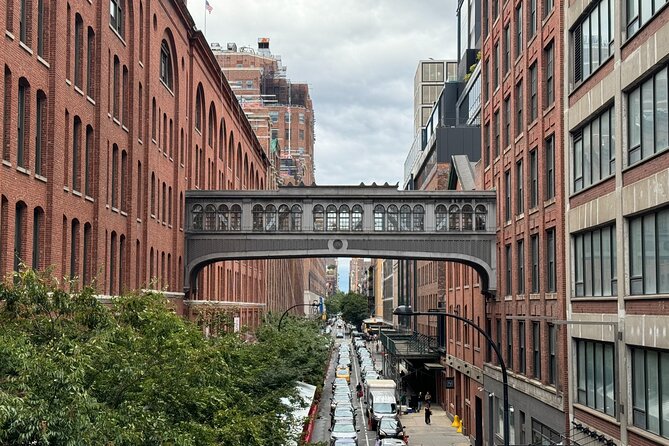
Chelsea has changed faster than most neighborhoods in Manhattan, and the High Line is the headline act of that story. What I like about doing it with an architecture-focused guide is that you start seeing patterns: old industrial infrastructure repurposed, new buildings rising nearby, and public space stitched into a dense city fabric.
This tour gives you that combo in a practical way. You’re not just walking for views. You’re walking to understand why the High Line exists where it does, and how the surrounding development—especially Hudson Yards—uses design as a kind of language. In a couple hours, you get a sense of how Manhattan’s biggest projects often begin with planning decisions that feel invisible at street level.
You’ll also pass gallery-heavy blocks, hotel architecture, and newer cultural venues. That mix matters, because it shows how the neighborhood keeps reinventing itself without fully losing its identity.
Price and logistics: what $49 buys you in real terms
At $49 per person for about 2 hours, this tour is priced like an experience, not just a stroll. The value bump is the combination of (1) a professional guide and (2) personal headsets for each guest. In Manhattan, hearing a guide across foot traffic can be a mess. Headsets fix that, and you spend less time straining or guessing what you missed.
It’s also capped at 15 travelers, which helps. Larger groups can turn architecture tours into a queue. Smaller groups make it easier to keep attention on the buildings and the design themes your guide is linking together.
A final practical detail: the tour uses a mobile ticket, starts at 2:00 pm, meets at the Whitney Museum of American Art (99 Gansevoort St), and ends at 20 Hudson Yards. That matters because you can plan the rest of your day without complicated backtracking.
The route in human terms: quick stops, big landmarks
This walk is built from short, high-impact moments. You’ll spend about 1 hour on the High Line, then move through a sequence of stops where you’re mostly looking from the sidewalk or nearby entrances.
Here’s what that means for you:
- You’ll get enough time to form a clear mental map of the area.
- You’ll also feel the pace. Some stops are only 5 minutes, so bring your curiosity and your camera, but don’t expect a slow, lingering pace at every single building.
If you thrive on structure—someone guiding you to exactly what matters—this format is a good match. If you prefer to wander and read plaques at your own rhythm, you might want to pair this with a less scheduled block of time afterward.
New York City at street level, a few more walks

Stop 1: The High Line and the idea of a reused city
The tour centers on the High Line, with about 1 hour there. This is the “why” stop. The High Line isn’t just a pretty elevated park—it’s a lesson in how cities can change what they do with old infrastructure.
What makes it especially valuable on an architecture tour is that you learn to look beyond greenery. Your guide points out how the design handles movement through the space, how it frames skyline views, and how it changes the experience of a whole stretch of Manhattan. Even if you’ve seen the High Line photos online, being guided helps you notice the decisions that create the feel of the walk.
You’ll also come away with a better sense of how public projects can depend on complicated development mechanics. In the way Ivan Shumkov explains things, you don’t just hear about design—you hear about the funding logic that makes design possible in the first place. That’s one of the most praised parts of this experience: the guide connects the park to the larger city system around it.
Possible drawback at the High Line
Because it’s a popular park, expect the usual city mix of walkers and photo stops. The headset helps you keep up, but you’ll still be moving in shared space rather than having the park to yourself.
Whitney Museum area and The Standard: art and design close together
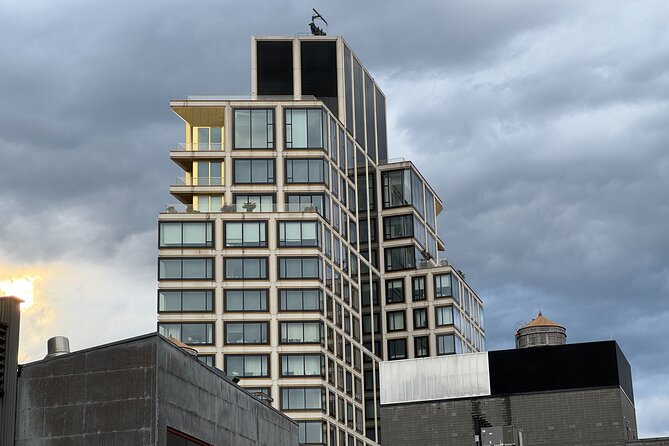
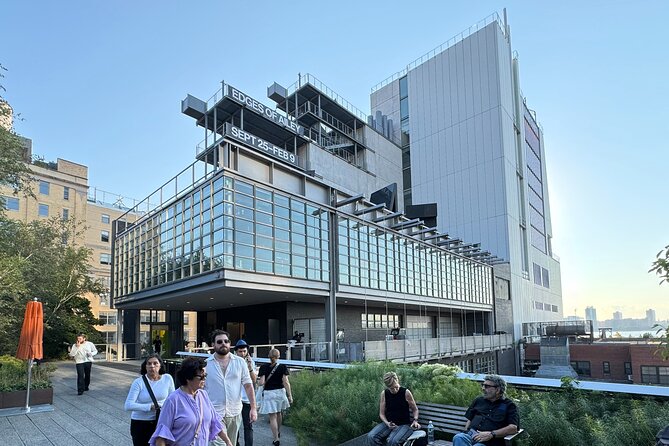
After the High Line segment, you head toward the Whitney Museum of American Art for a quick look (about 5 minutes). Since you’re not doing a full museum visit here, the goal is orientation and context—how the museum fits into the neighborhood’s evolution and why this area became such a magnet for culture.
Then you pass the Standard, High Line for another brief viewing moment. This stop is about contrast: you’re stepping from the public feel of the park into the more controlled world of hotel architecture and branding. It’s a reminder that in this part of Manhattan, “architecture” isn’t only about galleries and museums. It’s also about how institutions and hospitality firms shape what you see from the street.
Why these short stops still matter
Even when time is tight, these moments help you stitch the story together. They show how the neighborhood’s cultural pull is paired with a steady stream of built form—so the High Line isn’t floating in isolation. It’s part of a bigger design ecosystem.
Little Island Park and Jean Nouvel’s 100 11th Avenue
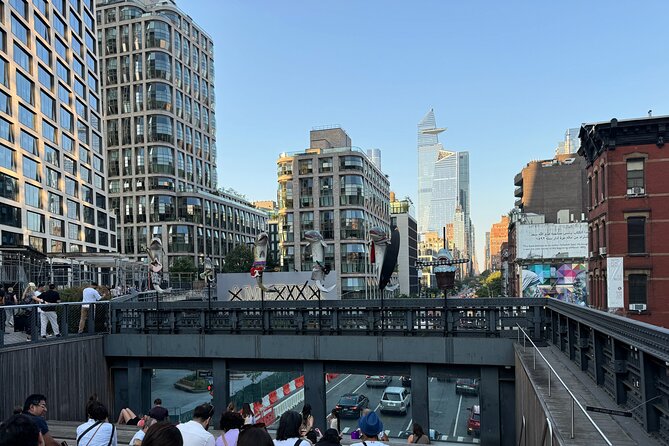
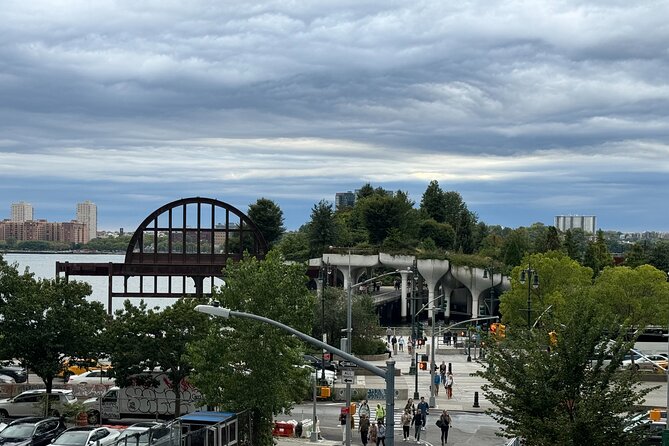
You’ll also take in Little Island Park in the Hudson River area. It’s a quick stop, but the value is that it broadens your view of what “public space” can mean in Manhattan. Instead of only thinking in terms of parks that follow traditional shapes, you start noticing that newer projects often experiment with form and how people experience space from different angles.
Then you’ll see 100 11th Avenue by Jean Nouvel. Jean Nouvel is known for bold design language, and the stop gives you a chance to connect a name to a building you can actually point to. Even with limited time, it helps you learn how to read architecture: look at how the façade behaves, how the building’s presence changes the street feel, and how it relates visually to the nearby modern projects.
Watch for one thing
Because these are brief viewing stops, you may want to arrive mentally ready to look quickly. If you tend to slow down for every detail, you might find yourself a bit squeezed by the pace.
Zaha Hadid’s 520 West 28th Street: why the famous name is worth seeing
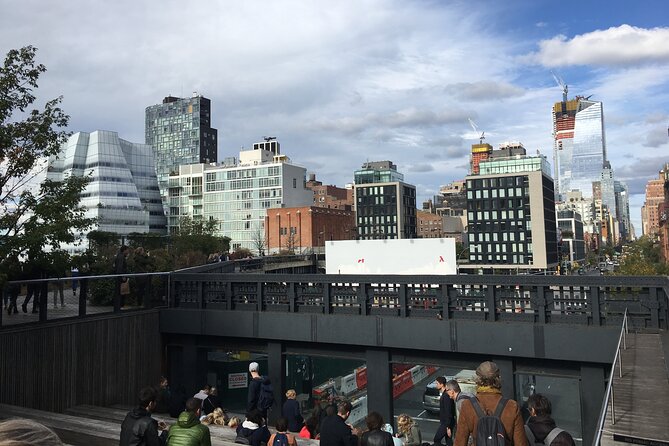
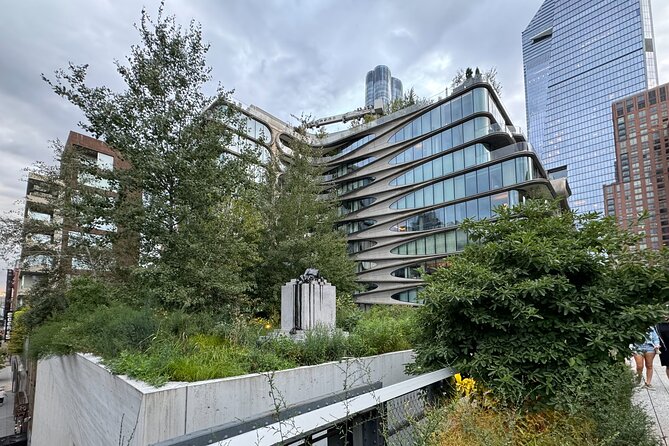
One of the clearest “architecture-celebrity” moments is 520 West 28th Street by Zaha Hadid Architects. You’ll spend about 5 minutes at this stop, but it’s the kind of building that rewards even a quick look when you know what to focus on.
Zaha Hadid’s work often plays with motion and geometry, and this stop is useful because it ties a signature design style to an actual site in Chelsea. Instead of the building staying abstract in your mind, you can see how the design looks at street level—where lines, angles, and the building’s mass communicate presence.
A major plus of doing it with headsets and a guide: you don’t just get a name. You get an explanation of what the design is trying to do and how it fits the larger neighborhood story.
The Shed, The Vessel, and the start of Hudson Yards energy
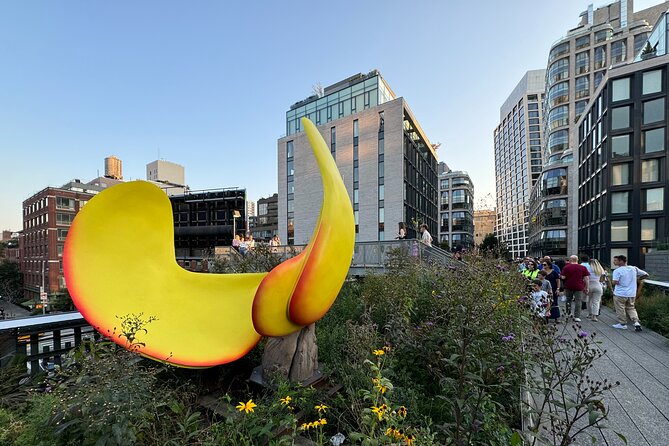
Next up are a set of landmark cultural and mega-project stops that shift the vibe toward the Hudson Yards area.
- The Shed comes first (about 5 minutes). This stop is about understanding how new cultural venues can be built to signal the neighborhood’s future.
- Then you’ll see The Vessel (about 5 minutes). The point here is impact. The Vessel is instantly recognizable, and it works well as a reference point for how iconic forms get used in major developments.
- After that, you spend around 10 minutes at Hudson Yards itself. This is your larger-scale overview moment—time to step back and connect multiple buildings into a single mental picture.
What makes this stretch valuable
Hudson Yards can feel like a lot all at once. A guide helps you separate “wow factor” from “why it’s built this way.” You start noticing how development complexes often create internal destinations—public plazas, visual corridors, and design landmarks that help people orient themselves.
15 Hudson Yards and the Spiral by BIG: modern architecture, two angles
The tour continues through more of the Hudson Yards skyline, including:
- 15 Hudson Yards by Diller Scofidio + Renfro (about 5 minutes)
- The Spiral by BIG (Bjarke Ingels Group) from 2021 (about 5 minutes)
These are short but memorable stops. The value is that you get two different looks at modern design thinking in one short area:
- A project connected with a broader design philosophy at 15 Hudson Yards
- A more distinctive, movement-oriented, spiral-like form with BIG’s Spiral
Even if you’re not an architecture person, these are the kinds of buildings you’ll remember later. And because the route is guided, the explanations give your photos a purpose. Instead of shooting randomly, you start capturing the angles that support what you’re learning.
How to get the most from a 2-hour architecture walk
This is an efficient tour by design, and that’s great when you’re time-crunched. To enjoy it fully:
- Plan to move fast at some stops. The tour is built on short looks, so think of each stop as a briefing, not a museum gallery.
- Use your attention wisely during the High Line hour. That’s where you’ll get the most explanatory value and the best chance to connect ideas to actual views.
- Wear comfortable walking shoes. This is a walking tour with continuous city movement, and your legs will drive your enjoyment.
Also, build a mindset that matches the format: you’re collecting design clues. By the end, you should feel like you can name the neighborhood’s architectural “characters” and explain how they connect.
Who this tour suits best (and who might skip it)
You’ll likely love this if you:
- care about architecture and design, not just landmarks
- want a structured overview of Chelsea and Hudson Yards in a short time
- prefer hearing clear guidance through personal headsets
- like walking tours that stay active and make you look closely
You might pass if:
- you want long stays at each stop (this tour is built for short, efficient viewing)
- you’re expecting a full museum experience—this focuses on seeing major buildings and areas from the outside and nearby viewpoints
Should you book the Chelsea and High Line architecture tour?
If your goal is a smart, guided orientation of Chelsea’s transformation—High Line to Hudson Yards—this is a strong pick. The $49 price becomes easier to justify when you factor in the headsets and the guide’s ability to make complicated topics like air rights and public-space funding feel clear.
The pace is the one trade-off. If you’re the type who wants to slow down, you’ll still leave with a lot, but you may feel a bit rushed during the 5-minute stops. For most people, though, that’s a fair trade for seeing a concentrated set of top architecture names and places in just about 2 hours.
FAQ
FAQ
How long is the tour?
The tour lasts about 2 hours.
What does the tour cost?
It costs $49.00 per person.
What’s included in the price?
The tour includes the guide, all fees and taxes, and professional individual headsets for each guest.
Where is the meeting point, and where does it end?
You start at the Whitney Museum of American Art, 99 Gansevoort St, New York, NY 10014, and the tour ends at 20 Hudson Yards, New York, NY 10001.
What time does the tour start?
The start time is 2:00 pm.
How many people are in the group?
This tour has a maximum of 15 travelers.
Is admission included for stops like the High Line and other landmarks?
The stops listed on the route show admission as free, so you typically will not pay separate admission for those specific stops during the walk.
Do I get headsets to hear the guide?
Yes. Professional individual headsets are provided for each guest.
Does the tour use a mobile ticket?
Yes. The tour features a mobile ticket.
What happens if the weather is bad?
The experience requires good weather. If it’s canceled due to poor weather, you’ll be offered a different date or a full refund.
Can I cancel for a full refund?
Yes. You can cancel for a full refund up to 24 hours before the experience starts. If you cancel less than 24 hours before, the amount paid will not be refunded.
More Tour Reviews in New York City
- NYC: SUMMIT One Vanderbilt Tickets★ 4.7 · 51,195 reviews
- NYC: Empire State Building Tickets – Observatory & Museum★ 4.7 · 25,757 reviews
- New York City: Statue of Liberty & Ellis Island with Ferry★ 4.6 · 18,683 reviews
- New York City: American Museum of Natural History Ticket★ 4.5 · 15,447 reviews
- Statue of Liberty and Ellis Island Tour: All Options★ 5.0 · 13,571 reviews
New York City, One Block at a Time
- SoHo, Little Italy, and Chinatown Walking Tour in New York★ 5.0 · 3,153 reviews
- Secrets of Grand Central Station Walking Tour New York City★ 5.0 · 1,796 reviews
- Greenwich Village Walking and Food Tasting Tour★ 5.0 · 1,572 reviews
- Artistic, Alternative Greenwich Village Walking Tour★ 5.0 · 971 reviews
- Brooklyn Bridge & DUMBO Neighborhood Tour – from Manhattan to Brooklyn★ 5.0 · 826 reviews
The High Line and Chelsea, Continued
- High Line and Chelsea Small Group Tour★ 5.0 · 1,238 reviews
- Chelsea Market and High Line Guided Food Tour★ 5.0 · 827 reviews
- Manhattan Adventure Sightseeing Boat Tour – from Chelsea Piers★ 5.0 · 688 reviews
- High Line Park and Greenwich Village Food Tour★ 5.0 · 398 reviews
- NYC: High Line, Chelsea, & Meatpacking District Walking Tour★ 4.9 · 195 reviews
Just in: the newest New York City reviews on our desk





High Line & Chelsea Tours, compared.
 ★ 5.0High Line and Chelsea Small Group TourFrom $391,238 reviews
 ★ 5.0Chelsea Market and High Line Guided Food TourFrom $88827 reviews
 ★ 5.0Manhattan Adventure Sightseeing Boat Tour – from Chelsea PiersFrom $99688 reviews
 ★ 5.0High Line Park and Greenwich Village Food TourFrom $159398 reviews
 ★ 4.9High Line, Chelsea, & Meatpacking District Walking TourFrom $39195 reviews
 ★ 5.0Statue of Liberty Speedboat Tour – from Chelsea PiersFrom $60182 reviews
 ★ 5.0Foods of NY Tours Chelsea Market Food Tour & High Line ParkFrom $99141 reviews
 ★ 4.2Hudson Yards & High Line Tour with Optional Edge TicketFrom $49125 reviews
Browse the lists this tour appears in