
Reviewed · NYC MUSEUM TOURS
Edward Hopper House Museum Entry Ticket
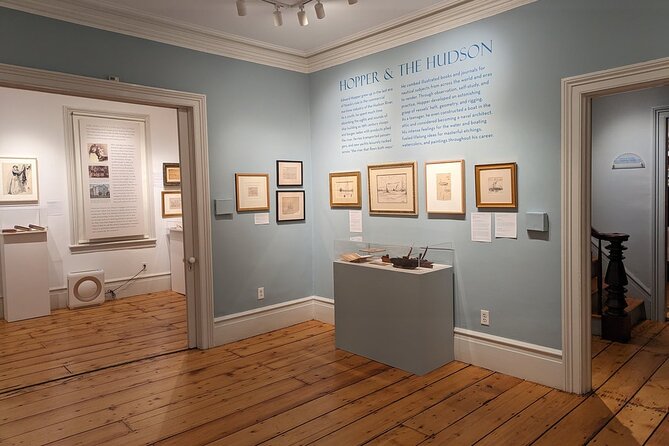
A small house can teach you a lot. At the Edward Hopper House Museum & Study Center, you get Hopper’s early world in Nyack, plus rotating art and family artifacts tied to how his eye formed. It’s a focused visit with just enough context to make the work make sense.
I especially like the way the museum links place to paintings. You’ll start with the historic residence and then move into exhibits that place Hopper’s early work alongside family items and outside voices influenced by his legacy.
One possible drawback: the house is compact, and not every room is open like a full period home. If you’re hoping for lots of household rooms as it looked in Hopper’s day, you might feel a little shorted by the size.
In This Review
- Key takeaways before you go
- Edward Hopper House Museum & Study Center: A 1858 Home With a Clear Purpose
- Hopper’s Nyack on Screen: The Film and Historic Maps That Speed Up Understanding
- Rotating Early-Work Displays and Contemporary Echoes
- The Human Part: Enthusiastic Hosts and Helpful Explanations
- Practical Details That Affect Your Comfort (Restroom, Stairs, and What to Bring)
- Price and Value: Is $10 Worth It?
- Who Should Book (and Who Might Skip This Stop)
- Should You Book the Edward Hopper House Museum Entry Ticket?
- FAQ
- How long does the Edward Hopper House Museum entry ticket take?
- What does the ticket include?
- Is the ticket mobile?
- Are coffee or bottled water included?
- Is there an ADA restroom?
- Is the second floor accessible?
- Can I cancel for a full refund?
Key takeaways before you go
- Nyack roots first: you’re shown where Hopper was born and raised and how that setting shaped his early vision
- Orientation film + maps: quick context that helps you picture Hopper’s world in 1900s Nyack
- Rotating displays: early work, family artifacts, and shows by artists inspired by Hopper
- Staff energy (including Eileen): hosts who explain with warmth and clear enthusiasm
- Second floor is trickier: a historic staircase gets you up, but it can feel steep
More halls and galleries worth the hours
- Edward Hopper House Museum Entry Ticket
★ 4.5 · 33 reviews
Edward Hopper House Museum & Study Center: A 1858 Home With a Clear Purpose
The Edward Hopper House Museum & Study Center sits in a historic 1858 residence tied directly to Hopper’s life before he moved to New York City. That sounds simple, but it’s the core of why this ticket works. You’re not just looking at art in a vacuum. You’re standing in the kind of place that formed his habits: light, stillness, streetscape edges, and everyday moods.
Here’s the honest expectation-setting. The museum is not trying to be a full, room-by-room recreation of the exact household as it existed in Hopper’s time. The house was saved from demolition in the late 1960s, and there weren’t many original household items left to preserve as a perfect period display. So instead of a museum that pretends every corner is exactly as it was, you get a structured look at Hopper’s early life, plus thoughtfully presented exhibits.
That approach can be a win for you if you like interpretation over replica furniture. You get the sense of a lived-in start, then you get direction on what matters: his origins in Nyack, the timeline that leads to 1908, and how his early work connects to what comes later.
Also, the visit is sized for real life. The whole experience runs roughly 30 minutes to 1.5 hours, so you’re not stuck for hours in a small facility. It’s a good stop if you’re building a day around Nyack and want something art-focused that doesn’t swallow the schedule.
Hopper’s Nyack on Screen: The Film and Historic Maps That Speed Up Understanding
One of the smartest parts of the visit is the way it gets you oriented early. Before you drift through the exhibits like a tourist pinball, you’ll watch an orientation film and look at historic maps of Hopper’s Nyack. That matters because Hopper’s paintings often feel quiet, even when they’re emotionally loaded. Context helps you see what’s going on beneath the calm surfaces.
The film and maps do a practical job: they help you connect location to themes. Nyack isn’t just a backdrop in this story. You’ll learn that Hopper lived there until 1908, when at age 26 he relocated to New York City. That timeline is a helpful anchor. Without it, you can end up appreciating the art but missing the how and why.
I like this setup because it’s efficient. You’re not handed a textbook. Instead, you get a quick grounding that makes the rest of your time feel guided. By the time you’re looking at early work and artifacts, you’ll have a clearer sense of what you’re actually studying: the early influences tied to a place and a moment.
If you’re the type who wants to understand before you interpret, this part of the visit will make your time feel more productive.
Rotating Early-Work Displays and Contemporary Echoes
After the orientation, the museum shifts into exhibits: rotating displays of Hopper’s early work and family artifacts, plus exhibitions by well-known artists inspired by Hopper’s legacy. This is where the ticket becomes more than a house stop.
The reason you should care about early works is simple: Hopper’s mature style didn’t appear out of nowhere. Seeing earlier pieces lets you trace the beginnings of his themes and the choices that later became signature. The museum doesn’t force you to “study like a professor,” but the structure encourages you to look closely and compare.
Then there’s the contemporary layer. You’ll see shows by artists influenced by Hopper, which turns the visit into a conversation across time. You get to ask the fun question: what does Hopper still do for modern artists, and why does his way of seeing remain useful?
A balanced note: not every exhibit will hit every person equally. One visitor-style highlight was comparing Hopper’s work with the work of his wife Jo, which suggests the museum sometimes helps you think in that direction. If that interests you, you’ll likely enjoy the way the displays hint at relationships and artistic contexts rather than treating Hopper as a lone genius in a windowed room.
If your goal is only to see Hopper paintings and nothing else, you might want to treat this as a curated mix rather than a giant Hopper archive. It’s a small museum with a smart selection, not a warehouse.
Worth a look right next to this New York pick:

The Human Part: Enthusiastic Hosts and Helpful Explanations
Small museums live or die by their people, and this one leans hard into that. The hosts at the Edward Hopper House Museum & Study Center tend to bring serious energy and clear stories to the room. One name that shows up in standout moments is Eileen, a staff member visitors remember for sharing context and explanations in a friendly way.
What I like about this kind of hosting is that it reduces the guesswork. You’re not wandering the house trying to figure out what you’re supposed to notice. You’re guided toward what connects to the bigger story: where Hopper grew up, how the timeline moves, and why the exhibits are arranged the way they are.
Even if you don’t ask questions, the staff tone helps. You’ll get the sense that they want the art to click for you without making it feel heavy or academic.
This is also a good point if you’re traveling with mixed interests. If someone in your group is more history-minded, the explanations bring in family artifacts and place. If someone is more art-minded, the displays and comparisons keep it focused on what Hopper did with light, space, and human feeling.
Practical Details That Affect Your Comfort (Restroom, Stairs, and What to Bring)
Before you go, plan around a few details that genuinely affect comfort.
The museum has an ADA restroom on the ground floor, which is good to know if stairs are a concern. The building also has a second floor, but access is via a historic staircase. Some visitors may find those stairs steep, so if mobility is limited or you don’t enjoy tight staircases, you’ll want to consider whether you’re comfortable with that ascent.
Other practical notes are straightforward:
- The museum is near public transportation, so you’re not locked into a car.
- Service animals are allowed.
- The experience is offered in English.
- The ticket is mobile, which makes entry easier on a phone.
One small planning point that many people forget: coffee and bottled water aren’t included. The ticket price covers museum admission and the tour experience, but you’ll want to grab a drink before you arrive or plan for a quick stop afterward.
Finally, because the duration is short-to-moderate, it’s easy to underestimate how much you’ll want to linger. I suggest building in a little buffer even if you think you’ll be fast. The exhibits move at a comfortable pace, but you’ll get more out of it if you take your time with the early works and the rotation on view.
Price and Value: Is $10 Worth It?
At $10.00 per person, the ticket is priced like a practical add-on, not a splurge. For many visitors, that’s exactly what it should feel like: an art stop that gives you meaning without costing the day.
Here’s how I judge the value. You’re paying for four things that work together:
1) Entry to a historic Hopper-related home
2) Orientation film and contextual material (maps of Hopper’s Nyack)
3) Exhibits that mix early work, family artifacts, and artists inspired by Hopper
4) A guided tour format that helps you interpret instead of just look
The big value move is context. If you’ve ever walked into a museum and felt like you were staring at labels while the story slipped away, this kind of setup is designed to prevent that. Even if you only spend 30–45 minutes, the film-and-maps foundation makes the rest of your time feel purposeful.
But here’s the balanced part: since the home is small, you shouldn’t expect a huge number of rooms open for wandering. The museum is described as a jewel-like look into Hopper’s beginnings, not a massive period-house walkthrough. If your personal preference is lots of space and lots of rooms, you might feel like you got a quick hit rather than a long immersion.
Still, for the money and the time range, it’s hard to argue with the value. It’s also a smart booking option if your schedule is tight. The experience is often booked about 8 days in advance, which suggests it’s popular enough that planning ahead helps.
Who Should Book (and Who Might Skip This Stop)
This experience is a strong fit if:
- You love Hopper’s paintings and want a place-based starting point.
- You like seeing early work and understanding how a style develops.
- You want a short museum visit that still gives you context.
- You’ll appreciate rotating exhibits and an “influenced by Hopper” angle, not just one artist’s greatest hits.
It may be less satisfying if:
- You expected a large, room-by-room period recreation with lots of household rooms open.
- You hate stairs and want to avoid the chance of climbing to the second floor.
- You prefer museum visits packed with extensive collections that take hours.
If you’re building a Nyack day, this ticket behaves well as a focused anchor. It won’t overrun your schedule, and it gives you something you can’t replicate just by looking at paintings online.
Should You Book the Edward Hopper House Museum Entry Ticket?
Yes, book it if you want a compact, meaningful Hopper stop. The best reason is the combination of place + context + guided interpretation. For around $10 and up to about 1.5 hours, you get more than visuals—you get the story of Hopper’s Nyack years, including the key move in 1908 to New York City.
If you’re the type who needs endless rooms and hours of wandering, you might be happier choosing a larger museum. But if you’re ready for something smaller, thoughtfully presented, and easy to plug into your day, this ticket is a solid choice.
You’ll walk out with a clearer sense of where Hopper started, and you’ll likely see his work with different eyes afterward.
FAQ
How long does the Edward Hopper House Museum entry ticket take?
Plan for about 30 minutes to 1.5 hours, depending on how long you spend on the orientation film, exhibits, and the house areas that are open.
What does the ticket include?
Your admission includes the tour.
Is the ticket mobile?
Yes. The entry ticket is mobile.
Are coffee or bottled water included?
No. Coffee and/or tea, and bottled water are not included.
Is there an ADA restroom?
Yes. There is an ADA restroom on the ground floor.
Is the second floor accessible?
There is a second floor, but it is only accessible via a historic staircase, which some people may find steep.
Can I cancel for a full refund?
You can cancel up to 24 hours in advance for a full refund. If you cancel less than 24 hours before the start time, the amount paid is not refunded.
If you want, tell me what day you’re going and what else is on your Nyack or New York City plan, and I’ll help you fit the Hopper House visit into a smart route.
More Tickets in New York
- LEGOLAND® New York Theme Park Admission Ticket★ 4.0 · 1,396 reviews
- Museum of the City of New York General Admission Ticket★ 4.5 · 93 reviews
More Tour Reviews in New York
- LEGOLAND® New York Theme Park Admission Ticket★ 4.0 · 1,396 reviews
- Museum of the City of New York General Admission Ticket★ 4.5 · 93 reviews
- Guided Lilymoore Alpaca Farm Tour★ 5.0 · 38 reviews
- Buffalo New York Food Tasting Tour★ 4.5 · 7 reviews
- Taste the Hudson Valley with Gourmet Beacon Food Tour★ 5.0 · 6 reviews
Indoors Done Right: More Museums
- Museum of the City of New York General Admission Ticket★ 4.5 · 93 reviews
Just in: the newest New York reviews on our desk




NYC Museum Tours, compared.
 ★ 4.7Empire State Building Tickets – Observatory & MuseumFrom $4725,757 reviews
 ★ 4.5American Museum of Natural History TicketFrom $3715,447 reviews
 ★ 4.6Museum of Modern Art (MoMA) Entry TicketFrom $3012,540 reviews
 ★ 5.09/11 Memorial, Ground Zero Tour with Optional 9/11 Museum TicketFrom $396,381 reviews
 ★ 4.59/11 Memorial Museum Admission TicketFrom $366,376 reviews
 ★ 5.0All-Access 9/11: Ground Zero Tour, Memorial and Museum, One World ObservatoryFrom $1094,886 reviews
 ★ 4.7Intrepid Museum Entry TicketFrom $384,687 reviews
 ★ 4.7Madame Tussauds Entry TicketsFrom $423,625 reviews
Browse the lists this tour appears in