
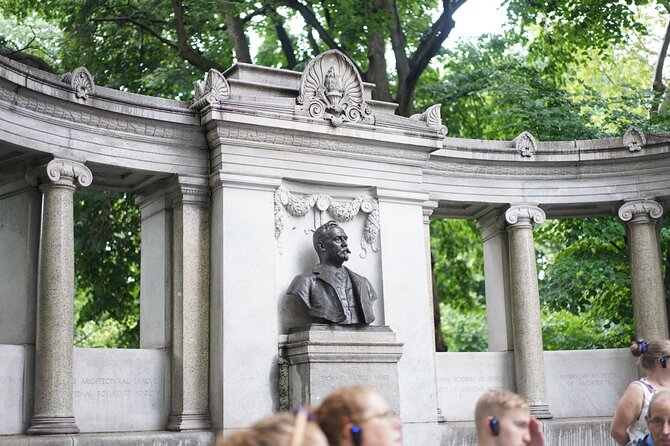
Reviewed · NYC WALKING TOURS
Fifth Avenue Gilded Age Mansions Walking Tour
Fifth Avenue gets a makeover—Gilded Age style. This walking tour strings together millionaire-era architecture with major Upper East Side landmarks, using included earpieces so you don’t miss the details. It’s the kind of tour that helps you look up from your phone and actually read the buildings.
I especially like how the route mixes the showy (Fifth Avenue facades) with the quieter context around it (Central Park edges and cultural institutions). Another big win for me is the guide setup: a local New Yorker leads, and the group is kept small (max 17), which makes the pace feel controlled and personal.
One thing to consider: this is mainly an outside architecture walk. If you’re hoping for lots of mansion interior time or a heavy connection to the TV version of The Gilded Age, set expectations for mostly street-level storytelling—and pack for a lot of walking.
In This Review
- Key things that make this tour worth your time
- Fifth Avenue mansions, minus the museum crowds
- Central Park edges that make the whole story make sense
- Arsenal and Zoo stop: when the tour goes practical, not fancy
- Temple Emanu-El and the Frick Collection: faith and culture on the same block
- Albertine and The Met: from private elegance to public grandeur
- Bergdorf Goodman and the Ukrainian Institute: the street as a living brand
- Earpieces and guide style: what to expect, plus one common issue
- How long it really takes and how to prepare
- Value check: is $39 a good deal for this route?
- Should you book the Fifth Avenue Gilded Age Mansions walk?
- FAQ
- Is this tour in English?
- How long is the Fifth Avenue Gilded Age Mansions walking tour?
- How much does it cost?
- Do I need a paper ticket?
- Are ear pieces included?
- How big is the group?
- Where does the tour start and end?
- Is admission included for the stops?
- Is the tour near public transportation?
- Can I bring a service animal?
- What’s the cancellation policy?
Key things that make this tour worth your time
- Earpieces are included, so you can hear the guide even when the group stretches out on busy sidewalks.
- Small group size (max 17) helps the walk stay organized and questions feel welcome.
- A focused Fifth Avenue corridor, built around the Gilded Age vibe from 19th-century wealth.
- Central Park and iconic institutions are woven into the story, not treated like random stops.
- Strong guide performance showed up again and again, with names like Bill Shaffer, AJ, Richard, Roe, Katie, Rose, and Hazel mentioned in recent feedback.
- Expect a moderate, steady walk (often around the 2-mile range for many participants), so comfortable shoes matter.
New York City at street level, a few more walks
- SoHo, Little Italy, and Chinatown Walking Tour in New York
★ 5.0 · 3,153 reviews - Secrets of Grand Central Station Walking Tour New York City
★ 5.0 · 1,796 reviews - Greenwich Village Walking and Food Tasting Tour
★ 5.0 · 1,572 reviews - Artistic, Alternative Greenwich Village Walking Tour
★ 5.0 · 971 reviews
Fifth Avenue mansions, minus the museum crowds
This tour is built for one main reason: you want to understand what you’re looking at on Fifth Avenue. From the sidewalk, the street reads like a timeline—big money, big ambition, and big design choices made visible in stone, scale, and ornament.
You start with a stroll along Fifth Avenue during the Gilded Age, when grand homes of wealthy families lined the avenue. The value here isn’t just seeing impressive buildings. It’s learning what the facades were trying to communicate—status, taste, and power—at a time when New York was becoming a serious global city.
And because you’re walking, you get quick visual angles you’d miss from a car. You notice rhythm: how windows align, how entrances are framed, and how architecture signals what matters to the family behind the walls.
The “good to know” part? This isn’t a slow parade of mansion selfies. It’s a guided route with a clear rhythm, and the tour aims to keep you moving for about two hours.
Central Park edges that make the whole story make sense
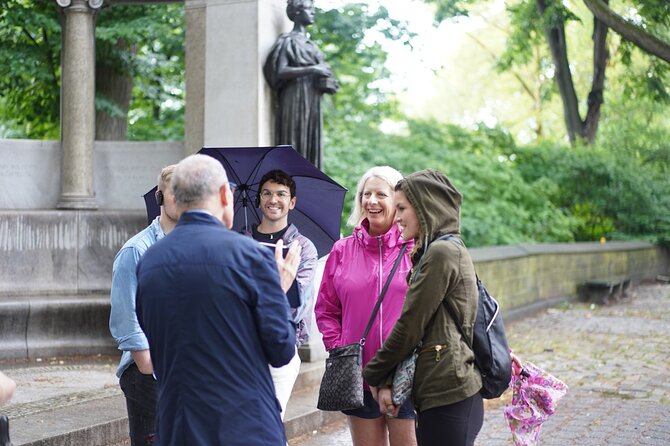
After the Fifth Avenue start, the tour taps into Central Park. This matters more than it sounds. In the Gilded Age, the park wasn’t just a pretty background—it was part of the lifestyle pitch for living on the Upper East Side.
You’ll pass through the park area between the Upper West and Upper East Sides, with a short stop that’s timed for context. Think of it like a breather for your legs and a reset for your understanding: wealth, leisure, and city planning all intersect here.
If you love architecture and history, these park moments help connect dots. The mansions weren’t just isolated showpieces. They were meant to feel connected—to nature, to social life, and to the city’s most visible civic space.
Arsenal and Zoo stop: when the tour goes practical, not fancy
Next up is the Arsenal at 830 5th Ave, followed by a Central Park Zoo stop near East 64th Street. These aren’t the usual “only mansions” sightseeing choices, and that’s exactly why I like this tour’s design.
The Arsenal stop adds texture to the Upper East Side story. Even without going inside, the setting helps you understand how the area developed beyond pure residential luxury. It’s part of the city’s bigger machine: civic buildings, institutional spaces, and the changing use of land around the park.
The zoo stop does the same thing in a different way. It reminds you that Central Park is not just for rich views. It’s a public space, and the way people relate to it today grows out of how the city organized itself over time.
The potential drawback: if your ideal tour is only ornate building exteriors tied to millionaire lore, these stops may feel like side quests. But they do work when you want a fuller picture of why this neighborhood looks the way it does.
New York City on foot, a few more routes

Temple Emanu-El and the Frick Collection: faith and culture on the same block
On the route, you’ll reach Temple Emanu-El (1 E 65th St) and then the Frick Collection (1 E 70th St). These stops are great because they show another layer of Gilded Age power: the way wealthy families shaped culture and institutions.
Temple Emanu-El anchors the religious story. In wealthy eras, houses of worship weren’t only spiritual centers—they also signaled community leadership and influence. The exterior and location help you see how faith and civic identity blended into neighborhood life.
Then comes the Frick Collection, which fits perfectly into a Gilded Age narrative: art collecting, private collections, and the transformation of wealth into lasting public culture. You’re learning how the wealthy converted personal taste into institutions people still visit.
What you won’t get here is a “hands-on art moment” the way a museum tour would. The payoff is understanding the architecture and the intent behind the buildings’ presence.
Albertine and The Met: from private elegance to public grandeur
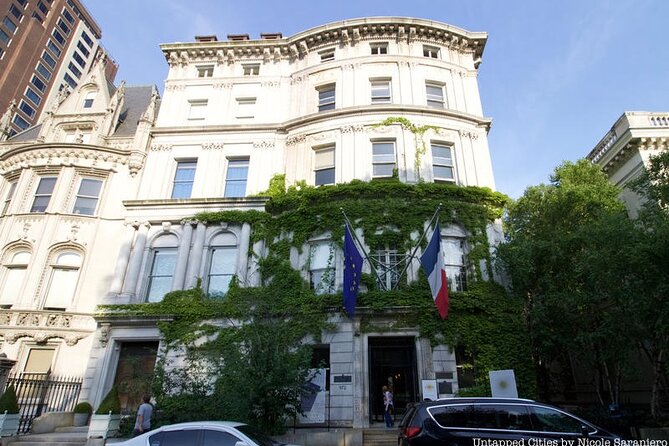
Two stops that tend to land well for architecture lovers are Albertine (972 5th Ave) and the Metropolitan Museum of Art (1000 5th Ave). Even if you’re not planning to go inside the Met that day, the location alone is a statement—how culture anchored the Upper East Side.
Albertine gives you a change of pace: instead of a single mega-attraction, you’re moving through a stretch that represents residential and institutional density. It helps you see how the neighborhood evolved from grand private residences into a mix of living, learning, and public-facing spaces.
Then the Met stop ties it back to spectacle and legacy. The Gilded Age was obsessed with permanence—building things meant to outlast the fortunes that created them. The Met is the kind of destination that makes that idea feel real.
One practical note: these are short stops (about ten minutes each), so use the time to orient yourself—street grid, landmarks, and how everything lines up along Fifth Avenue—rather than expecting long explanations at one address.
Bergdorf Goodman and the Ukrainian Institute: the street as a living brand

As you continue, Bergdorf Goodman and the Ukrainian Institute of America (2 E 79th St) bring the story into a more modern frame. This is where Fifth Avenue stops feeling like history frozen in place and starts feeling like a living corridor.
Bergdorf Goodman represents the “retail power” side of the story—how Fifth Avenue became a stage for luxury after the mansion era began to shift. Even from the sidewalk, the presence of a major brand changes how you read the street: wealth doesn’t disappear; it relocates and rebrands.
The Ukrainian Institute adds another dimension: immigration, community institutions, and how different groups made the area home over time. It’s not only about old mansions—it’s about who the neighborhood serves and how those institutions keep shaping it.
If you like city history that keeps moving forward, these stops feel like the right kind of closure.
Earpieces and guide style: what to expect, plus one common issue
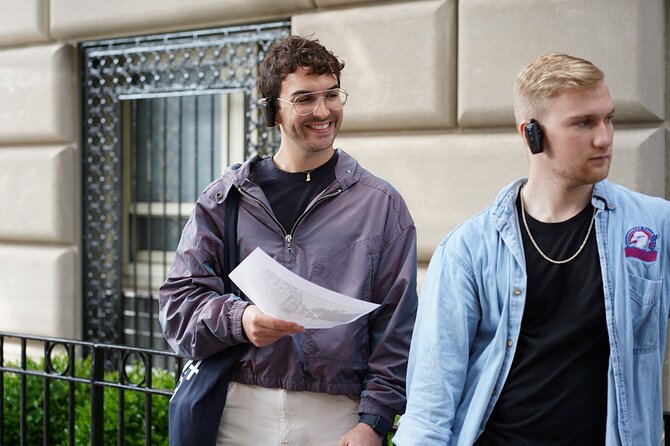
The tour includes earpieces, which is a big deal on a windy avenue or a noisy sidewalk. The point isn’t just volume. It’s clarity. When the guide talks while the group pauses at different distances, you’re not stuck playing guesswork.
That said, one practical caution showed up in recent feedback: some people found the earpiece didn’t stay put and needed adjustment. So if your ears are picky with earbuds, bring a small amount of patience—and be ready to re-seat the piece if it slips.
On guide quality, the names popping up in recent feedback are a strong clue about what you’re likely to experience. People mentioned Bill Shaffer, AJ, Richard, Roe, Katie, Rose, Hazel, and Ben, and several highlighted how guides used stories, photos, and “quirky” facts to keep the group engaged.
Even better: you’re not just getting lectures. The tour design keeps moving, and guides are praised for pace and keeping everyone accounted for. For many people, that’s what turns a “two-hour walk” into a “finished, and I’m glad I did it.”
How long it really takes and how to prepare
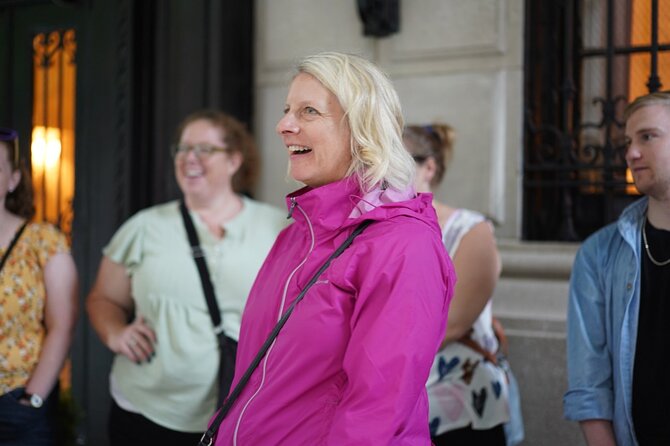
The tour runs about two hours. Time at each point is short—roughly ten minutes for most stops, with the Fifth Avenue stretch starting the show for about twenty minutes. In other words: you’ll see a lot, but you won’t hang out long anywhere.
That’s why your prep matters. Wear comfortable shoes you trust for a couple miles at a moderate pace. If it’s cold or blustery, plan for it; some participants noted that weather can affect focus, especially in wind.
I’d also prepare mentally for an on-foot mix of street views and a few park/institution edges. You’re basically touring how the Upper East Side “reads” from the outside, with a guided narrative stitched through it.
Value check: is $39 a good deal for this route?
At $39 per person for about two hours, this is priced like a solid “story and context” tour rather than a museum ticket bundle. The value comes from three things you actually feel during the walk:
1) The earpieces: hearing the guide cleanly changes everything on a busy street.
2) The small group size (max 17): it supports good pace and keeps it from turning into a blob.
3) The guide storytelling: the best part of this kind of tour is connecting addresses to meaning. The recent feedback is heavy on that.
You should be aware of one expectation mismatch risk: not every version is a full mansion interior experience. One piece of feedback specifically noted there isn’t a big TV-show tie-in and that many stops are outside. So if your priority is walking inside multiple mansions, this may not hit that fantasy.
But if you want to learn how Fifth Avenue got its prestige—and how nearby institutions and Central Park fit into the same narrative—this price feels reasonable.
Should you book the Fifth Avenue Gilded Age Mansions walk?
I’d book this if you want a guided architecture/history walk that’s easy to follow, keeps your attention with a live local story, and helps you understand the Upper East Side beyond the obvious highlights. It’s a good pick for history buffs, architecture lovers, and anyone who wants to read Fifth Avenue like a chapter, not a random photo line.
Skip it (or adjust expectations) if you’re aiming for lots of mansion interiors or a deep, hands-on experience inside historic homes. This tour’s strength is the outside look—paired with context—more than it is a door-to-door, room-by-room mansion visit.
If you’re the type who likes to ask questions, you’ll probably enjoy it more. And if your schedule is tight, this is also a manageable way to cover a big stretch of Upper East Side sights in one go.
FAQ
Is this tour in English?
Yes. The tour is offered in English.
How long is the Fifth Avenue Gilded Age Mansions walking tour?
It runs about 2 hours (approx.).
How much does it cost?
The price is $39.00 per person.
Do I need a paper ticket?
No. You get a mobile ticket.
Are ear pieces included?
Yes. Ear pieces are included so you can hear the guide clearly.
How big is the group?
The tour has a maximum of 17 travelers.
Where does the tour start and end?
It starts at 764 Doris C Freedman Pl, New York, NY 10019, USA and ends at 975 5th Ave, New York, NY 10075, USA.
Is admission included for the stops?
The stops listed show admission ticket free.
Is the tour near public transportation?
Yes, it is near public transportation.
Can I bring a service animal?
Yes. Service animals are allowed.
What’s the cancellation policy?
Free cancellation is available up to 24 hours in advance for a full refund. If you cancel less than 24 hours before the start time, the amount you paid is not refunded.
More Tours in New York City
- Statue of Liberty and Ellis Island Tour: All Options★ 5.0 · 13,571 reviews
- New York in One Day Guided Sightseeing Tour★ 5.0 · 13,166 reviews
- Central Park Pedicab Guided Tours★ 5.0 · 7,108 reviews
- New York City: Manhattan Helicopter Tour★ 4.7 · 7,076 reviews
- Private Central Park Pedicab Tour★ 5.0 · 6,981 reviews
More Tour Reviews in New York City
- NYC: SUMMIT One Vanderbilt Tickets★ 4.7 · 51,195 reviews
- NYC: Empire State Building Tickets – Observatory & Museum★ 4.7 · 25,757 reviews
- New York City: Statue of Liberty & Ellis Island with Ferry★ 4.6 · 18,683 reviews
- New York City: American Museum of Natural History Ticket★ 4.5 · 15,447 reviews
- Statue of Liberty and Ellis Island Tour: All Options★ 5.0 · 13,571 reviews
New York City, One Block at a Time
- SoHo, Little Italy, and Chinatown Walking Tour in New York★ 5.0 · 3,153 reviews
- Secrets of Grand Central Station Walking Tour New York City★ 5.0 · 1,796 reviews
- Greenwich Village Walking and Food Tasting Tour★ 5.0 · 1,572 reviews
- Artistic, Alternative Greenwich Village Walking Tour★ 5.0 · 971 reviews
- Brooklyn Bridge & DUMBO Neighborhood Tour – from Manhattan to Brooklyn★ 5.0 · 826 reviews
Just in: the newest New York City reviews on our desk





NYC Walking Tours, compared.
 ★ 5.0SoHo, Little Italy, and Chinatown Walking Tour in New YorkFrom $393,153 reviews
 ★ 5.0Secrets of Grand Central Station Walking Tour New York CityFrom $391,796 reviews
 ★ 5.0Greenwich Village Walking and Food Tasting TourFrom $941,572 reviews
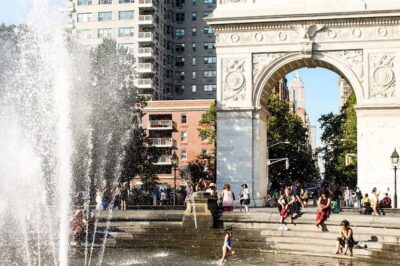 ★ 5.0Artistic, Alternative Greenwich Village Walking TourFrom $39971 reviews
 ★ 5.0Brooklyn Bridge & DUMBO Neighborhood Tour – from Manhattan to BrooklynFrom $49826 reviews
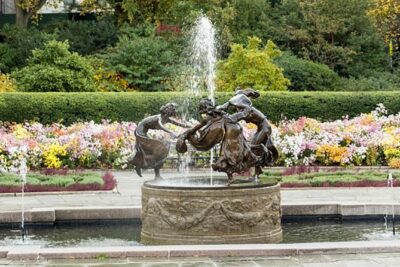 ★ 5.0Central Park Guided Walking TourFrom $44774 reviews
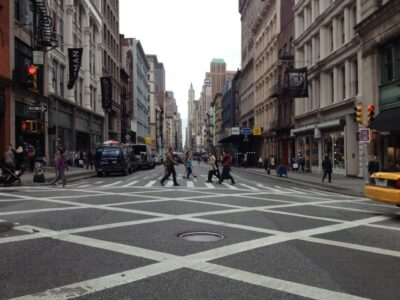 ★ 4.6Private Walking Tour with a LocalFrom $55771 reviews
 ★ 5.0NYC Lower East Side Walking and Food TourFrom $94646 reviews