
Reviewed · NYC WALKING TOURS
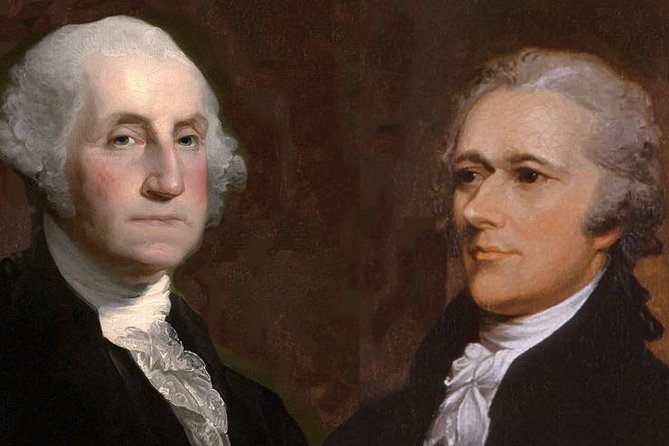
Hamilton and Washington Revolutionary Walking Tour
Lower Manhattan is where the story turns. This 3-hour walking tour connects Washington and Hamilton to real Revolutionary-era corners of the city, with stopovers that click directly with the Hamilton musical.
Two things I especially like: you get a licensed NYC guide who talks history like a story you can follow, and the route stays packed with recognizable landmarks instead of vague “somewhere around here” stops. I also like the small-group format, capped at 16 people, which keeps questions from getting lost.
One thing to consider: it’s a lot of walking and standing for about three hours. If you’re prone to getting cold (or just hate winter sidewalks), plan for weather and wear shoes you trust.
In This Review
- Key things to know before you go
- Lower Manhattan’s Revolutionary trail: what the tour is really like
- Start at Bowling Green: lead statue drama, Revolutionary momentum
- Alexander Hamilton U.S. Custom House: the first Treasury idea in real stone
- Peter Minuit Plaza: New York’s early pivot and Hamilton’s origins
- Fraunces Tavern Museum: Washington’s farewell and why it felt unusual
- New York Stock Exchange area: Hamilton’s finance plan meets the modern icon
- Wall Street: the Bank of New York and Aaron Burr’s ambition
- Federal Hall: Constitution-era firsts and Washington’s inauguration
- Trinity Church NYC: where the Hamiltons and other heroes are buried
- The guide makes or breaks this tour (and here, it’s the strong point)
- Pace, comfort, and what to wear in every season
- Tickets, admissions, and planning for costs
- Who this tour is best for
- Should you book the Hamilton and Washington Revolutionary Walking Tour?
Key things to know before you go

- Small group size (max 16): easier pace and more chances to ask questions.
- Licensed guide storytelling: you’ll connect Hamilton and Washington to the actual sites.
- Hamilton musical touchpoints: you’ll see places referenced in the show and learn what happened there.
- Mixed stop access: some spots may require your own admission ticket for entry.
- A tight Lower Manhattan route: lots of early U.S. history in a small area.
- Guide experience shows up in the details: clear explanations and strong organization.
New York City at street level, a few more walks
- SoHo, Little Italy, and Chinatown Walking Tour in New York
★ 5.0 · 3,153 reviews - Secrets of Grand Central Station Walking Tour New York City
★ 5.0 · 1,796 reviews - Greenwich Village Walking and Food Tasting Tour
★ 5.0 · 1,572 reviews - Artistic, Alternative Greenwich Village Walking Tour
★ 5.0 · 971 reviews
Lower Manhattan’s Revolutionary trail: what the tour is really like

This is a focused walk through Lower Manhattan, built around two of the most famous names in America’s founding story: George Washington and Alexander Hamilton. You’re not just looking at plaques. You’re getting the “why this mattered” behind the places, with explanations that help the city make sense as you move.
The tour runs for about three hours, and it’s paced for a small group. That matters here because you’ll stop often—enough to read, listen, and ask questions—yet you still cover a lot of ground. Bring patience for the pace, and you’ll get a lot out of it.
Also, if you’re a fan of the Hamilton musical, you’ll feel an extra layer of satisfaction. Several stops line up with spots referenced in the show, and the guide’s narration helps you match lyrics to real-world locations.
Start at Bowling Green: lead statue drama, Revolutionary momentum
You begin at 1 Bowling Green. This spot is famous for the political spark in the lead-up to open conflict. Expect your guide to talk through the events that pushed New York toward the Revolutionary War, including the destruction of a 4,000-pound lead statue of King George III.
Even if you’re not a “statue person,” it sets the tone. You’re seeing how power, propaganda, and public space collided. And it frames what comes next: New York as a decision-making hub, not a background setting.
Practical tip: Bowling Green is a great place to start, because it’s also easy to orient yourself for the rest of the walk. You’ll get your bearings quickly, which helps later when the sites turn dense with names.
Alexander Hamilton U.S. Custom House: the first Treasury idea in real stone
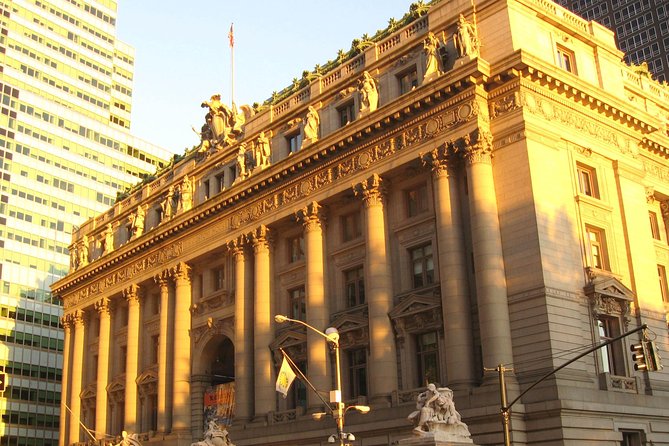
Next up is the Alexander Hamilton U.S. Custom House. This is one of the more “Hamilton-forward” stops on the route, and it’s timed at about 20 minutes. Admission isn’t included, so if you want to go inside, plan to handle tickets separately.
Your guide’s focus here is Hamilton’s role as the first Secretary of the Treasury and why a place like this mattered for the early U.S. In plain terms: the founding wasn’t just speeches and battles. It was paperwork, money, and systems trying to survive.
Why this stop works for you: it turns Hamilton from a musical character into an operator. You’ll hear the logic behind the finances, and you’ll understand why the early government needed strong revenue and credible planning.
Potential drawback: because this stop may involve admission on your dime, it can be a little more “pay-as-you-go” than the free outdoor stops. If you’re trying to keep the trip fully low-cost, you may choose to view from outside and prioritize the narration.
New York City on foot, a few more routes

Peter Minuit Plaza: New York’s early pivot and Hamilton’s origins
Then you head to Peter Minuit Plaza (about 20 minutes). This stop is free, and the narration ties New York’s early wartime setting to Alexander Hamilton’s beginnings.
This is the kind of location where a guide really changes the experience. A plaza is a plaza unless you know why the people there mattered. With the guide’s story, the stop becomes a bridge between “what the city looked like” and “who Hamilton was becoming.”
You’ll likely appreciate this segment most if you want context, not just names. It helps you follow the thread from city events to the people who eventually shaped policy at a national level.
Fraunces Tavern Museum: Washington’s farewell and why it felt unusual
Fraunces Tavern Museum comes next, with about 15 minutes allotted. Admission isn’t included here, so again, if you want to enter, expect separate tickets.
The key story: this tavern is where George Washington bade farewell to his officers. Your guide also discusses his departure as a military leader in a way that emphasizes how rare or notable it was—plus other stories connected to the site.
This is one of the stops where you get the human side of the founding story. Washington isn’t just a symbol. He’s a commander dealing with the emotional weight of leaving and handing power to something else.
Tip for enjoying it: if your group likes history in “people mode,” pay attention during this portion. It’s short, but the tone usually becomes more reflective than the earlier money-and-politics stops.
New York Stock Exchange area: Hamilton’s finance plan meets the modern icon
After that, you’ll look at the New York Stock Exchange area (about 15 minutes). Admission isn’t included. The focus here is Hamilton’s financial plan and his connection to the institution.
This stop is useful because it links past and present in a way that feels real. You’ll see how the idea of financing and markets connects to the early government’s need to function. For many people, this is the “wait, Hamilton built the money system?” moment.
Practical consideration: the NYSE is an active, modern place. Expect a more city-and-traffic feel compared with the more memorial or museum-like stops. It’s still worth it, but keep your expectations grounded: the guide’s words are the main “ticket” for this segment.
Wall Street: the Bank of New York and Aaron Burr’s ambition
Wall Street is one of the most story-dense stops on the route (about 20 minutes), and it’s free. Here you’ll hear about Hamilton’s Bank of New York and also stories tied to Aaron Burr’s political aspirations.
This portion is a chance to understand the founding era as full of rivalry, negotiation, and ambition—not just idealism. Washington and Hamilton may dominate the narrative, but the guide’s framing keeps you aware of the competitive politics swirling alongside them.
Why you’ll probably like it: it turns big names into active players. And it explains how financial institutions and political careers were linked in early America.
If you’re traveling with kids, this is a good stop to listen closely at. The “who wanted what” angle tends to land well with younger ears when the guide keeps it clear and story-driven.
Federal Hall: Constitution-era firsts and Washington’s inauguration
Federal Hall is a major stop, timed at about 20 minutes. Admission isn’t included, and there’s an important heads-up: the building is closed on weekends.
Your guide will point out why the site is so central: it served as the first Capitol of the United States under the Constitution, hosted the first meeting of Congress, and is tied to Washington’s inauguration.
This stop gives you the “this is where the country started” feeling—without requiring you to memorize a timeline. You’ll leave with a better sense of what “the new government” actually meant, and why New York got stuck with such a big job.
Practical tip: if your trip date falls on a weekend, plan for the possibility that you won’t be able to access the building itself. The guide can still connect the dots, but your experience may lean more exterior than interior.
Trinity Church NYC: where the Hamiltons and other heroes are buried
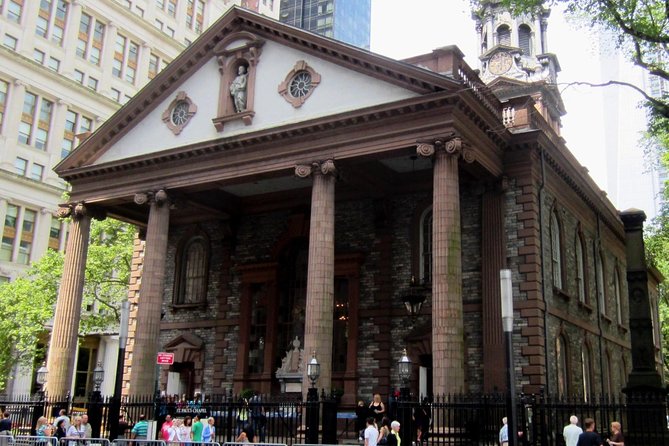
The tour ends at Trinity Church NYC, near 89 Broadway. This last stop is about 20 minutes and is free, but entry depends on the church’s open days and times—you’ll enter on those schedules.
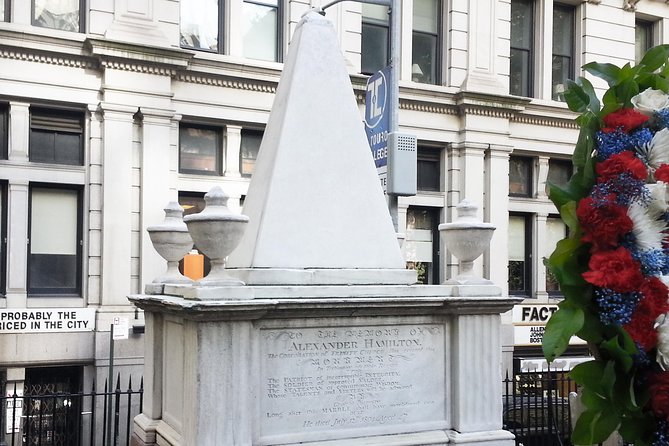
This is the graveyard segment. You’ll visit the resting place of Alexander Hamilton and Eliza Hamilton, along with other notable Revolutionary War figures such as Hercules Mulligan.
It’s a powerful ending because the walk moves from meetings and money to legacy. You get a sense of scale: history isn’t only in documents and buildings. It’s also in the people who built the country—and the people who never got to see how it turned out.
If you want the best closing moments: be ready to stand quietly and listen. This part usually lands hardest when you don’t rush.
The guide makes or breaks this tour (and here, it’s the strong point)
The biggest “signal” from the experience is the quality of the guide. In many past departures, the guide has been named Bruce, and the pattern in the feedback is consistent: clear explanations, strong organization, and a storytelling style that keeps the group engaged.
The guide also tends to handle questions well and adjust to mixed ages. In particular, there’s praise for how approachable the guide is with younger people in the group, and for being entertaining without turning history into nonsense.
So what does that mean for you? It means you’re not relying on your own knowledge to make the walk work. You can show up with only a basic familiarity with Washington and Hamilton and still come away with real understanding—and a mental map of where everything fits.
Pace, comfort, and what to wear in every season
This tour includes multiple stops, and each one involves standing and listening. One review-style note that matters in real life: there can be a lot of walking and standing, even though the area stays relatively small.
If it’s cold, you’ll be outside for a couple hours near the southern tip of Manhattan, which can feel sharper than you’d expect. Dress like you mean it: hat, layers, and gloves if you run cold.
If it’s hot and sticky, bring water and expect to need shade when you can get it. The best part is that the guide’s narration helps pass time—but your body still has to get you to each stop.
Tickets, admissions, and planning for costs
The tour price is $52.95 per person for the 3-hour experience. For that, you’re paying for a licensed NYC tour guide and a smaller-group format limited to 16 people, with a set route that hits multiple major Revolutionary and Hamilton-linked locations.
Most stops are free to view, but several are marked as admission ticket not included. That doesn’t automatically mean you’ll be stuck outside at those places—it means the cost of entry, if offered/needed, is on you.
Here’s how I suggest you think about it:
- If you want mostly outdoor stops and enjoy the stories from the sidewalk, you can keep spending low.
- If you want to go inside museums/buildings at stops like the U.S. Custom House, Fraunces Tavern Museum, NYSE-area sites, and Federal Hall, budget for separate admissions.
If you’re trying to avoid surprise expenses, check what access you want at each stop before you go.
Who this tour is best for
This is a strong fit if you fall into any of these groups:
- You’re a fan of Alexander Hamilton and George Washington and want the city locations that connect to both the real story and the Hamilton musical references.
- You like history told through places—what happened here, not just who’s famous.
- You want a small-group format with a licensed guide and a narrative that keeps moving.
It’s also a good option for families, especially if your kids can handle a structured walk. The route stays in one tight area, but it’s still a walking tour, so plan breaks mentally.
Should you book the Hamilton and Washington Revolutionary Walking Tour?
Book it if you want a smart, tightly focused Lower Manhattan history walk. The price feels reasonable for what you get: a licensed guide, a maximum of 16 people, and a route that ties Washington and Hamilton to specific city stops you can actually point to afterward.
Skip or rethink it if you know you can’t handle a few hours of standing and walking, or if you’re expecting a mostly seated experience. Also consider your day of travel for Federal Hall, since it’s closed on weekends, and remember that some stops have admission ticket costs not included.
If you want my practical bottom line: this is the kind of tour that rewards curiosity. Show up with comfortable shoes and a willingness to listen, and you’ll leave with a much clearer picture of how Washington and Hamilton shaped early America—right from the streets where it happened.
More Tours in New York City
- Statue of Liberty and Ellis Island Tour: All Options★ 5.0 · 13,571 reviews
- New York in One Day Guided Sightseeing Tour★ 5.0 · 13,166 reviews
- Central Park Pedicab Guided Tours★ 5.0 · 7,108 reviews
- New York City: Manhattan Helicopter Tour★ 4.7 · 7,076 reviews
- Private Central Park Pedicab Tour★ 5.0 · 6,981 reviews
More Tour Reviews in New York City
- NYC: SUMMIT One Vanderbilt Tickets★ 4.7 · 51,195 reviews
- NYC: Empire State Building Tickets – Observatory & Museum★ 4.7 · 25,757 reviews
- New York City: Statue of Liberty & Ellis Island with Ferry★ 4.6 · 18,683 reviews
- New York City: American Museum of Natural History Ticket★ 4.5 · 15,447 reviews
- Statue of Liberty and Ellis Island Tour: All Options★ 5.0 · 13,571 reviews
New York City, One Block at a Time
- SoHo, Little Italy, and Chinatown Walking Tour in New York★ 5.0 · 3,153 reviews
- Secrets of Grand Central Station Walking Tour New York City★ 5.0 · 1,796 reviews
- Greenwich Village Walking and Food Tasting Tour★ 5.0 · 1,572 reviews
- Artistic, Alternative Greenwich Village Walking Tour★ 5.0 · 971 reviews
- Brooklyn Bridge & DUMBO Neighborhood Tour – from Manhattan to Brooklyn★ 5.0 · 826 reviews
Just in: the newest New York City reviews on our desk





NYC Walking Tours, compared.
 ★ 5.0SoHo, Little Italy, and Chinatown Walking Tour in New YorkFrom $393,153 reviews
 ★ 5.0Secrets of Grand Central Station Walking Tour New York CityFrom $391,796 reviews
 ★ 5.0Greenwich Village Walking and Food Tasting TourFrom $941,572 reviews
 ★ 5.0Artistic, Alternative Greenwich Village Walking TourFrom $39971 reviews
 ★ 5.0Brooklyn Bridge & DUMBO Neighborhood Tour – from Manhattan to BrooklynFrom $49826 reviews
 ★ 5.0Central Park Guided Walking TourFrom $44774 reviews
 ★ 4.6Private Walking Tour with a LocalFrom $55771 reviews
 ★ 5.0NYC Lower East Side Walking and Food TourFrom $94646 reviews