
Reviewed · HARLEM TOURS
Hamilton Heights-West Harlem Walking Tour
Harlem at walking speed is pure storytelling. This Hamilton Heights–West Harlem tour links colonial-era streets to the Harlem Renaissance, with stops that highlight big architecture and even bigger personal stories.
I especially like two things. First, you’ll spend real time at Hamilton Grange National Memorial (Alexander Hamilton’s summer home), not just admire it from across the street. Second, the tour leans into neighborhood voices and jazz-era context, including stories shared by a Harlem resident guide.
One possible drawback: this is neighborhood history only. If you want a church stop or live music, you won’t get that here—and it is a 2-hour walk, so wear good shoes.
In This Review
- Key points to know before you go
- Hamilton Heights and West Harlem: why this walk works
- Morning logistics: meeting at Harlem School of the Arts and ending near Hispanic Society
- Hamilton Grange National Memorial: the Alexander Hamilton setting that changes the view
- City College of New York: neo-Gothic architecture plus the immigrant education story
- Jazz-era Harlem streets and the architecture you might otherwise miss
- What’s included in the $30 price (and why it can be a good value)
- What you should know before booking (so expectations match reality)
- Photo and listening tips for a better Hamilton Heights experience
- Who this tour is for—and who might prefer something else
- Should you book the Hamilton Heights–West Harlem Walking Tour?
- FAQ
- What is the duration of the Hamilton Heights–West Harlem walking tour?
- How much does the tour cost?
- Where does the tour start and end?
- What time does the tour begin?
- Is admission included for the stops?
- How many people are in the group?
- Does the tour include a church visit or music?
- Is the tour suitable if I have mobility concerns?
Key points to know before you go
- Hamilton Grange stop first: you start with Alexander Hamilton’s country-home setting and the surrounding district feel
- Small group, max 20: easier conversation and less time lost to bottlenecks
- Neo-Gothic architecture moment: City College’s campus is part of the story, not just a backdrop
- Jazz and Harlem Renaissance connections: you’ll see former residences connected to that cultural era
- Licensed guide from the neighborhood: you’re listening to someone who knows the area in a practical, personal way
More of Harlem, from gospel to soul food
- NYC Highlights Tour: Bronx, Brooklyn, Harlem, Queens & Coney
★ 4.5 · 2,846 reviews - NYC: Contrasts Tour of Harlem, The Bronx, Queens & Brooklyn
★ 4.5 · 2,167 reviews - NYC: Harlem Hallelujah! Gospel Wednesday Concert
★ 4.7 · 1,638 reviews - New York City: Harlem Gospel Live Music Concert
★ 4.7 · 1,479 reviews
Hamilton Heights and West Harlem: why this walk works
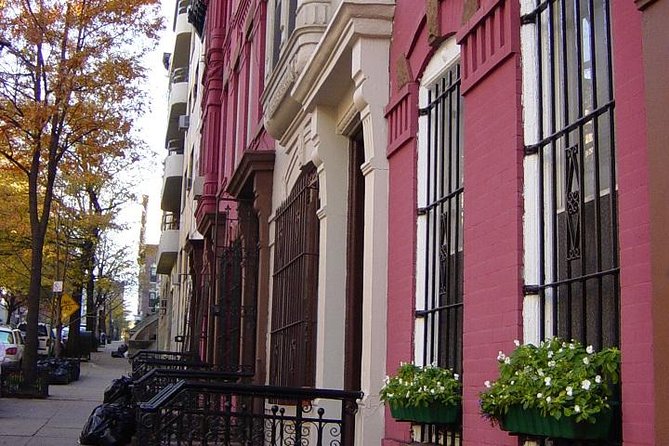
Hamilton Heights and parts of West Harlem can feel like they have layers stacked on top of each other. You’ll see that right away. The neighborhood is named for one of America’s founding fathers, but the streets you walk are also where later generations made their mark—especially during the Harlem Renaissance and the jazz golden era.
What I like about this tour is the way it turns architecture into plot. Those 19th-century rowhouses and the neo-Gothic landmarks aren’t treated like postcard scenery. Your guide connects them to the people who lived, studied, and created culture here. That approach matters because Manhattan’s neighborhoods can blur together if you only look at them from a distance.
Also, the pacing is leisurely. This isn’t a marathon of stops. It’s a guided walk designed for absorbing details—street corners, building fronts, and the historical “why” behind what you’re seeing.
Morning logistics: meeting at Harlem School of the Arts and ending near Hispanic Society

The tour starts at 10:00 am at Harlem School of the Arts, 645 St Nicholas Ave. It ends at 613 W 155th St, at the Hispanic Society of America. So you’re getting a genuine neighborhood walk, not a round-trip slog to the same block.
It runs about 2 hours with a mobile ticket, and there’s a maximum of 20 travelers. That group size is a sweet spot in a place like Harlem: small enough to keep questions moving, big enough that the tour doesn’t feel like a private lecture.
Plan on public transit being nearby, which helps because upper Manhattan mornings can be easier when you avoid driving. And because this is a walking tour, your morning outfit matters. This one can be moderately difficult for the physically challenged, so if you’re mobility-limited, factor in steady walking time and street crossing.
Hamilton Grange National Memorial: the Alexander Hamilton setting that changes the view
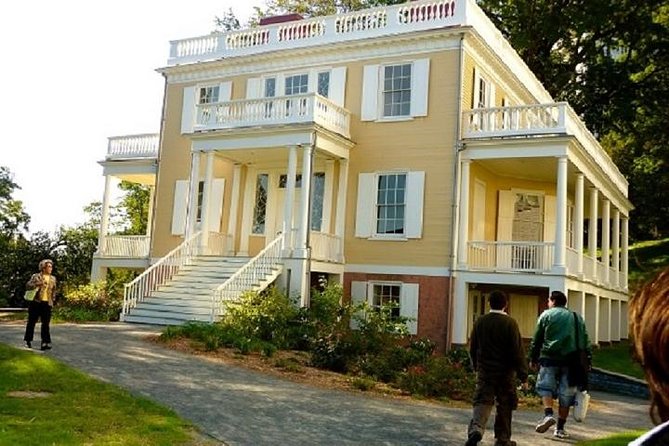
The tour’s first major stop is Hamilton Grange National Memorial. You’re not just looking at an old building. You’re entering the setting of Alexander Hamilton’s summer home, which helps you understand why Hamilton Heights developed the way it did.
Here’s why this stop is valuable: Hamilton Grange acts like a time machine. Once you’ve got that countryside-outpost idea in your head, the surrounding neighborhood reads differently. Rowhouses and institutions start to feel connected to a bigger story of land use, development, and prestige—rather than random skyline variety.
You’ll also spend time viewing impressive 19th-century row houses and institutions from the exterior. There’s a lot you can learn even without going deep into museums, and the tour’s framing makes the architecture feel purposeful.
Admission for this memorial stop is listed as free, which is part of what makes the overall price feel reasonable (more on that later). The bigger tip: stand where your guide can explain sightlines. When you know what you’re looking at, even a quick exterior view becomes memorable.
New York City at street level, a few more walks


City College of New York: neo-Gothic architecture plus the immigrant education story
Next you’ll head to The City College of New York (CCNY) for about 15 minutes. This isn’t just a campus cameo. CCNY is presented as part of a broader story of access to education in New York, serving generations of immigrants since it was established in 1847 as The Free Academy.
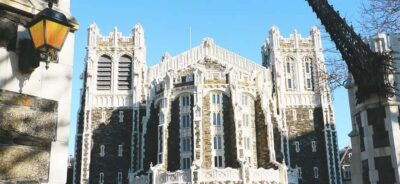
The architecture component matters here too. You’ll see the neo-Gothic landmark of the campus, including details you might miss if you were just passing by for sightseeing photos. The guide frames the buildings as outcomes of social ambition—who got educated, what it enabled, and why it mattered.
It also helps that the campus has serious name recognition. Your guide may point out notable alumni associated with politics, arts, science, and more, including Colin Powell, Eli Wallach, Henry Miller, Mario Puzo, Jonas Salk, Alfred Stieglitz, and Ira Gershwin. Even if you don’t know every name, it’s a reminder that this place shaped American culture far beyond New York.
One practical note: CCNY time is short by design. You’re there for focus—architecture plus education context—so don’t expect a long, museum-style visit. Come ready to listen and look.
Jazz-era Harlem streets and the architecture you might otherwise miss
Between Hamilton Grange and CCNY, you’ll get a guided walk through the Hamilton Heights Historic District, with plenty of opportunities to take in turn-of-the-century architecture and the general feel of this upper Manhattan pocket.
What makes this part work is the way your guide connects the scenery to cultural eras. You’ll learn about the Harlem Renaissance and the golden era of jazz, including stories tied to the area through a neighborhood resident.
You’ll also see former residences of notable Harlem residents associated with jazz and the Harlem Renaissance. The tour doesn’t try to turn this into a scavenger hunt with names for every building. Instead, it uses the streets as anchors for larger themes: neighborhood evolution, artistic change, and how communities grow around talent and opportunity.
In the strongest tours, the guide’s personal knowledge makes the walking feel like a conversation. Two guide names have stood out in past tours—William and George—with both praised for connecting architecture, history, and local lives in a way that makes the story stick. If your guide has extra familiarity with CCNY in particular, you might even hear about or get access to interesting campus spaces beyond the usual outside view; that has happened for at least one guide with CCNY connections.
What’s included in the $30 price (and why it can be a good value)
At $30 per person, this walking tour sits in a reasonable midrange for NYC, but the value comes from what’s bundled and what’s free.
You’re getting:
- a licensed tour guide
- a Harlem resident guiding perspective
- the core walking experience (about 2 hours)
- stops tied to major landmarks with free admission noted for the Hamilton Grange memorial
The free admission part matters. If you were to visit those landmarks on your own, you’d likely spend more time figuring out what to see and how to connect it historically. Here, you’re paying for direction, context, and pacing—plus the benefit of a small group (max 20).
And with a tour this short, you’re also saving time compared with stacking multiple subway hops and solo museum research. You’re essentially buying a focused “story route” that gives you a coherent narrative across neighborhood eras.
What you should know before booking (so expectations match reality)
This tour is designed for people who like neighborhood history and street-level storytelling. It’s not aiming to be a church or music experience, even though Harlem’s cultural fame can make it tempting to expect that.
Also, because it’s moderately difficult for some mobility needs, you should think about whether you can comfortably do a steady 2-hour walk with street crossings. The itinerary includes a quick stop at CCNY, but the overall format is still walking-heavy.
Finally, like any organized group activity, there’s always a small risk of operational hiccups. One past attendee reported a guide not showing up, while the provider later addressed it with an apology and refund. Your best defense is simple: be at the meeting point on time, and keep your confirmation details handy in case you need to contact the provider quickly.
Photo and listening tips for a better Hamilton Heights experience
If you want your time to pay off, here’s how to get the most from a walking format like this:
- Wear comfortable shoes. You’re on your feet for roughly 2 hours.
- Dress for the weather. Upper Manhattan can feel cooler and windier, especially in open areas.
- Stay close enough to hear the guide. With history tours, one missed sentence can flatten the story.
- Look up as much as you look forward. The neo-Gothic features and rowhouse details are part of the point.
- Use the quiet seconds. When your guide pauses, that’s when you’ll spot small architectural clues that explain the bigger theme.
If you’re into jazz or American history, this is also the kind of tour where it helps to ask questions. The best moments often come when you connect the story to what you already know—then the guide fills in the gaps.
Who this tour is for—and who might prefer something else
This tour is a strong fit if:
- you want Hamilton Heights and Harlem storylines tied together
- you enjoy architecture that has a purpose, not just a pretty façade
- you like learning the “how did this happen” side of neighborhood evolution
- you want a guided route that’s short enough to fit into a packed NYC day
You might skip it if:
- you’re hoping for a church visit or a music-focused stop (the tour doesn’t include those)
- you need a more relaxed pace with frequent seating breaks
- you prefer large museum-style interiors over street and exterior viewing
Should you book the Hamilton Heights–West Harlem Walking Tour?
I’d book it if you want a compact, guided way to understand how Hamilton Heights and Harlem connect—from Hamilton Grange to CCNY to the jazz-and-Renaissance era streets. The licensed, neighborhood-based guide approach, the small-group size, and the inclusion of free admission for key stops make the $30 price feel less like a generic walking tour fee and more like a well-structured history route.
If your main goal is music or churches, you’ll likely feel like the tour is moving in the wrong direction. But for architecture, neighborhood history, and the cultural logic of Harlem, this is an efficient and genuinely interesting plan.
FAQ
What is the duration of the Hamilton Heights–West Harlem walking tour?
The tour lasts about 2 hours.
How much does the tour cost?
It costs $30.00 per person.
Where does the tour start and end?
It starts at Harlem School of the Arts, 645 St Nicholas Ave, and ends at 613 W 155th St (Hispanic Society of America).
What time does the tour begin?
The start time is 10:00 am.
Is admission included for the stops?
Admission is listed as free for the Hamilton Grange National Memorial stop and also free for the City College of New York stop.
How many people are in the group?
The tour has a maximum of 20 travelers.
Does the tour include a church visit or music?
No. The tour focuses on neighborhood history and does not include a church or music stop.
Is the tour suitable if I have mobility concerns?
The tour is described as moderately difficult for the physically challenged, so you should consider your walking comfort before booking.
More Tour Reviews in New York City
- NYC: SUMMIT One Vanderbilt Tickets★ 4.7 · 51,195 reviews
- NYC: Empire State Building Tickets – Observatory & Museum★ 4.7 · 25,757 reviews
- New York City: Statue of Liberty & Ellis Island with Ferry★ 4.6 · 18,683 reviews
- New York City: American Museum of Natural History Ticket★ 4.5 · 15,447 reviews
- Statue of Liberty and Ellis Island Tour: All Options★ 5.0 · 13,571 reviews
New York City, One Block at a Time
- SoHo, Little Italy, and Chinatown Walking Tour in New York★ 5.0 · 3,153 reviews
- Secrets of Grand Central Station Walking Tour New York City★ 5.0 · 1,796 reviews
- Greenwich Village Walking and Food Tasting Tour★ 5.0 · 1,572 reviews
- Artistic, Alternative Greenwich Village Walking Tour★ 5.0 · 971 reviews
- Brooklyn Bridge & DUMBO Neighborhood Tour – from Manhattan to Brooklyn★ 5.0 · 826 reviews
Uptown Sundays: More of Harlem
- NYC Highlights Tour: Bronx, Brooklyn, Harlem, Queens & Coney★ 4.5 · 2,846 reviews
- NYC: Contrasts Tour of Harlem, The Bronx, Queens & Brooklyn★ 4.5 · 2,167 reviews
- NYC: Harlem Hallelujah! Gospel Wednesday Concert★ 4.7 · 1,638 reviews
- New York City: Harlem Gospel Live Music Concert★ 4.7 · 1,479 reviews
- Harlem Sunday Morning Gospel Tour★ 4.0 · 995 reviews
Just in: the newest New York City reviews on our desk





Harlem Tours, compared.
 ★ 4.5NYC Highlights Tour: Bronx, Brooklyn, Harlem, Queens & ConeyFrom $462,846 reviews
 ★ 4.5Contrasts Tour of Harlem, The Bronx, Queens & BrooklynFrom $392,167 reviews
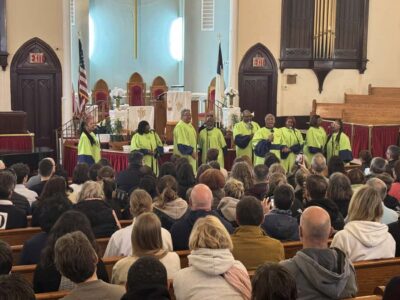
 ★ 4.7Harlem Hallelujah! Gospel Wednesday ConcertFrom $251,638 reviews
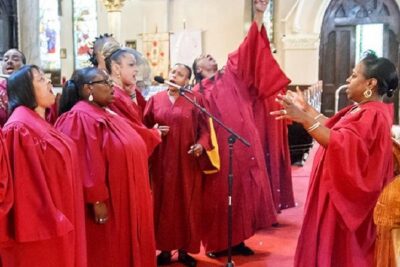
 ★ 4.7Harlem Gospel Live Music ConcertFrom $281,479 reviews
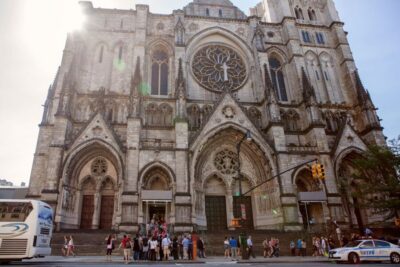
 ★ 4.0Harlem Sunday Morning Gospel TourFrom $85995 reviews
 ★ 4.04-hour Harlem Gospel Tour in New York CityFrom $79935 reviews
 ★ 3.9Harlem: Central Harlem Sunday Gospel with LocalsFrom $25499 reviews
 ★ 4.3Sunday Harlem Gospel Guided TourFrom $89438 reviews
Browse the lists this tour appears in